

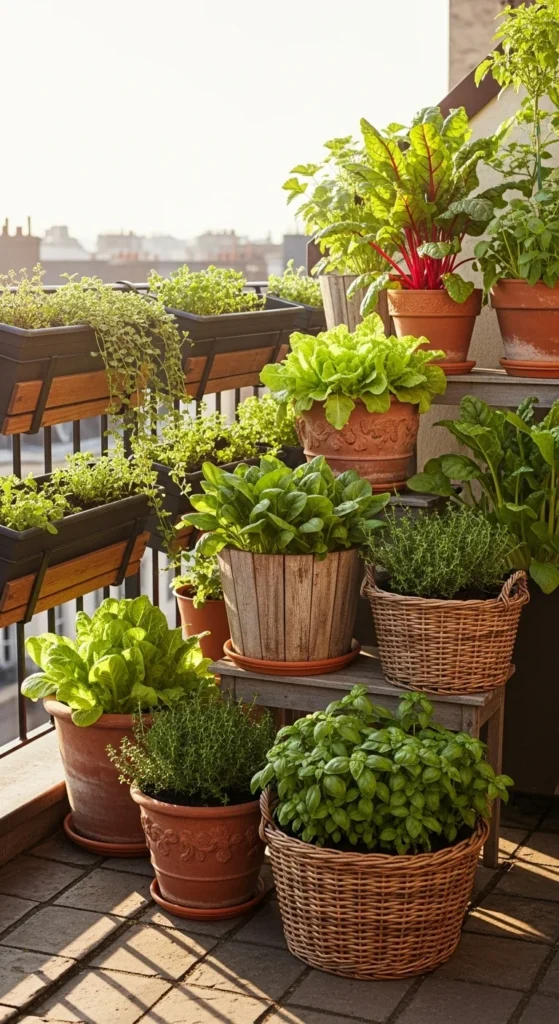
Container gardening on terraces helps you grow a productive vegetable patch without needing large outdoor space. With the right pot sizes, smart arrangements, and simple planting tricks, you can turn even a narrow terrace into a functional setup. These ideas focus on practical layouts, lightweight materials, and crops that adapt well to containers. They’re easy to replicate and friendly for beginners, giving you a clear path to consistent terrace harvests all year.
1. Tiered Pot Stand for Leafy Greens
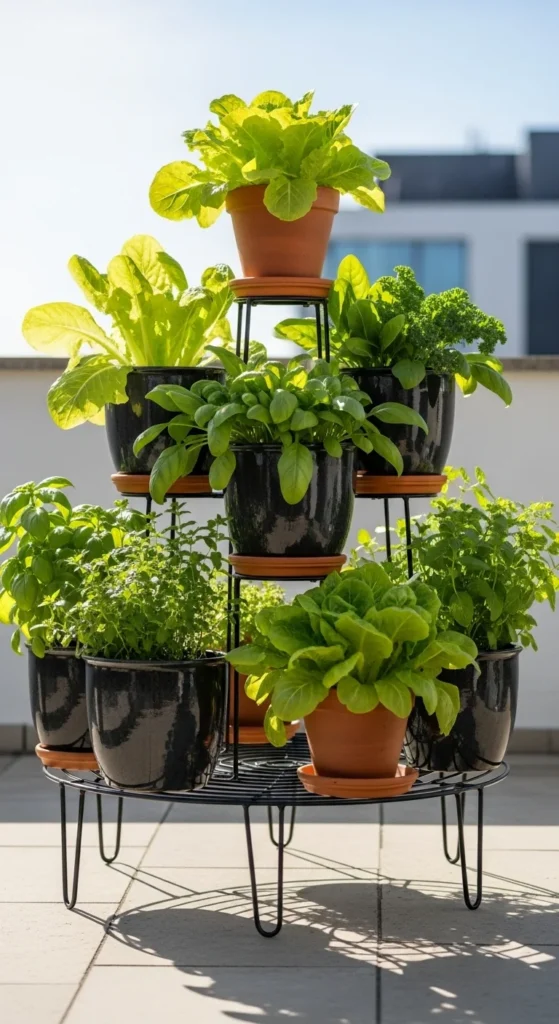
Tiered stands help you multiply growing space without clutter. Each level gets its own light, making it great for lettuce, spinach, or arugula. Use medium containers to keep soil moist longer.
You can create your own stand using stacked wooden crates or a simple steel rack. Paint or seal the wood so it lasts through seasonal changes. Place the heaviest pots at the bottom for balance. Keep the stand near a wall to protect plants from wind. Water lightly every morning so leaves stay crisp. Add a tray under each level to catch drips and keep the terrace clean.
2. Hanging Bucket Garden Along Terrace Railings
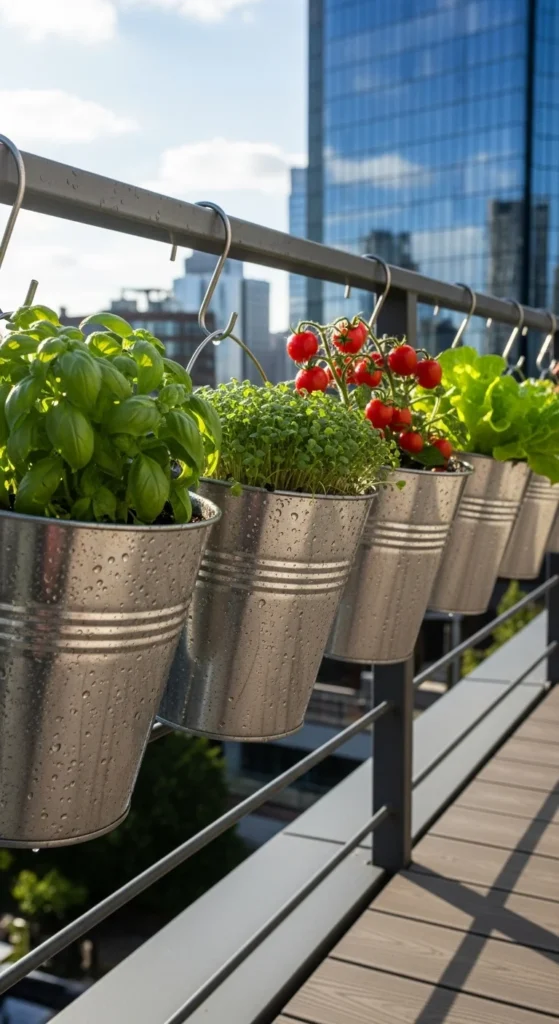
Railings are perfect for hanging containers. Buckets with small holes make ideal pots for herbs, peppers, or cherry tomatoes. They catch enough sun while staying secure.
Use S-hooks or zip ties to attach the buckets. For a low-cost version, paint old paint buckets or food-grade containers. Add a layer of gravel at the bottom to keep drainage flowing. Space the buckets slightly apart to give plants room to breathe. If wind is strong, tie the handles with rope so they don’t sway too much.
3. Stackable Plastic Planter Tower for Vertical Growing
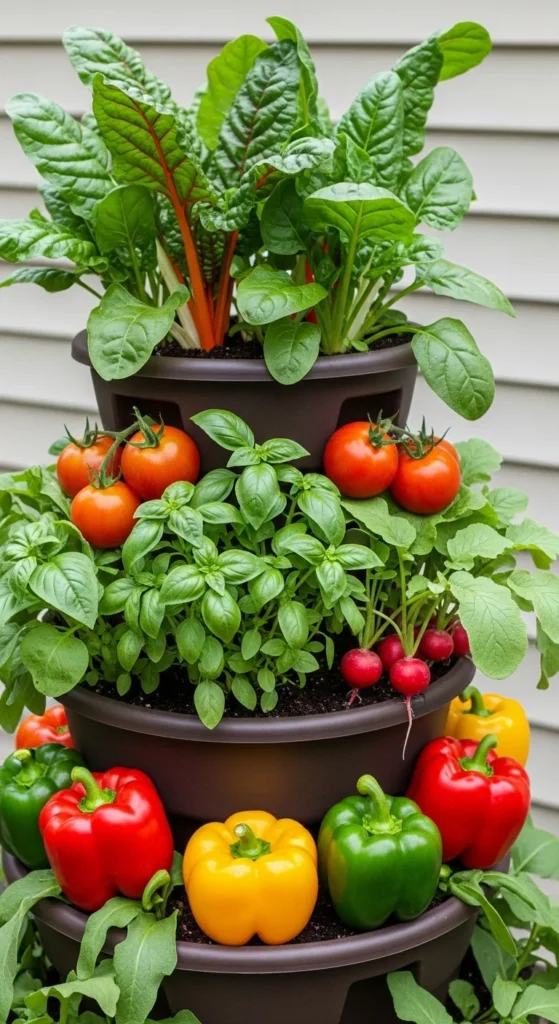
Stackable planters let you grow many vegetables in a compact column. They suit strawberries, basil, bok choy, and small peppers.
You can purchase a tower or make one using stackable plastic bins with side holes. Rotate the tower weekly so all sides get even sunlight. Add coco peat to lighten the soil mix. If the terrace is small, place the tower in a corner so it doesn’t block movement. Water from the top and let moisture trickle down through each layer.
4. Wooden Crate Box Beds for Root Vegetables
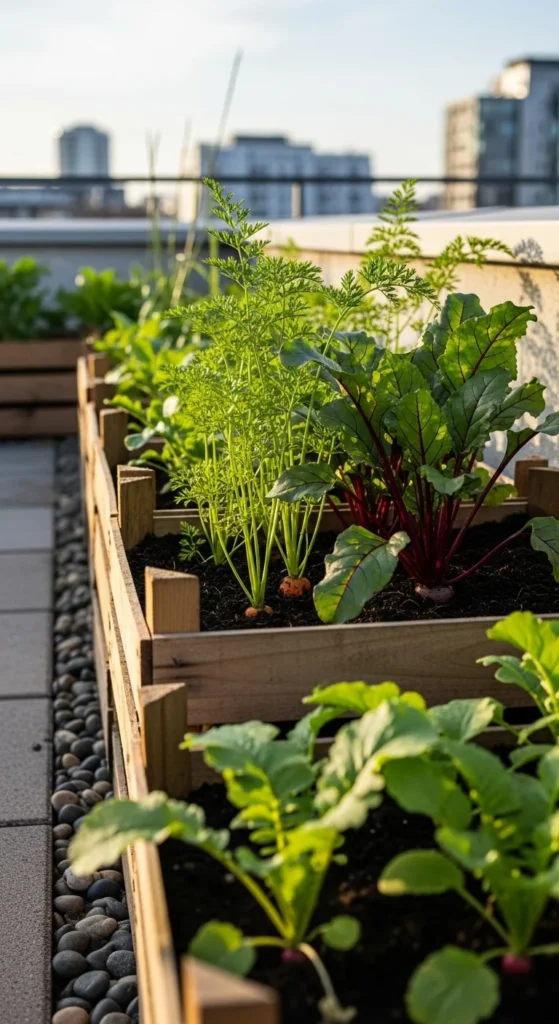
Crates give enough depth for carrots, radishes, and beets. They’re light, easy to move, and look attractive in small spaces.
Line each crate with burlap or landscape fabric to hold soil. Fill with loose, airy soil so roots grow straight. For a budget-friendly approach, reuse fruit crates from markets. Place the crates near the terrace edge where sunlight is strongest. Harvest roots regularly to free space for new batches.
5. Grow Bags Clustered in a Corner for Dense Planting
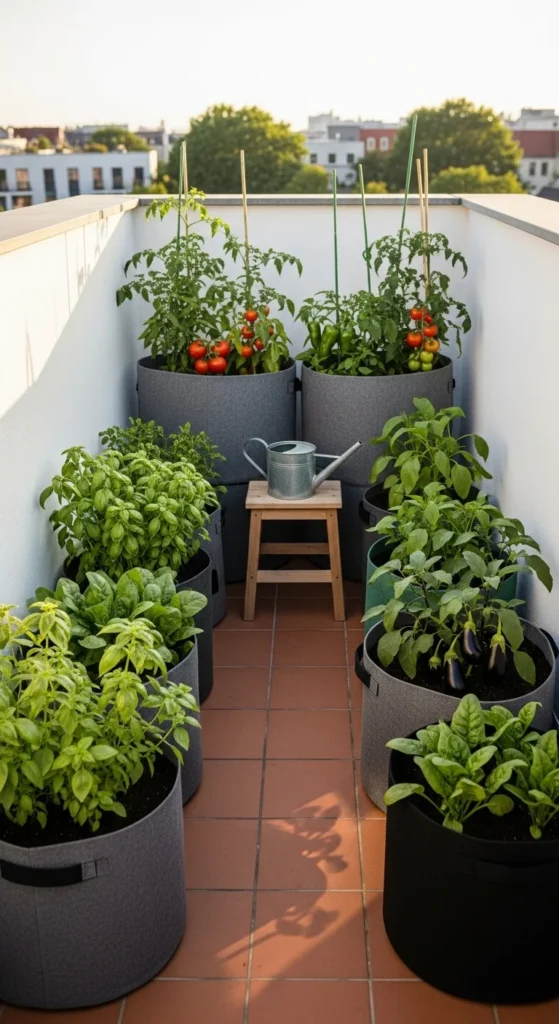
Grow bags work well for terraces because they’re light and foldable. Use bigger bags for eggplants, tomatoes, or cucumbers. Smaller bags fit herbs and leafy greens.
A budget approach is to buy non-woven bags in packs. Place a heat-proof tile under each bag to protect the terrace floor. Arrange bags in triangles so each plant gets airflow. If wind is strong, tie the bags to railing legs. Refill soil with compost every new season.
6. Long Trough Planters for Compact Terrace Edges
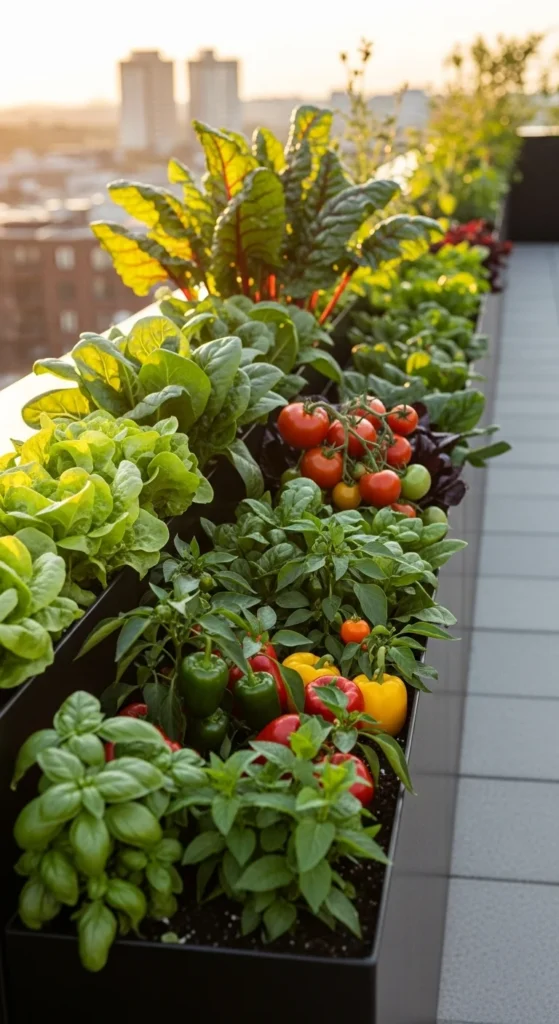
Trough planters give you a neat line of vegetables without clutter. They’re great for beans, lettuce, or dwarf tomatoes.
Choose lightweight plastic or fiber troughs to keep handling easy. Add drainage holes and use brick pieces underneath to raise them slightly. Place them along terrace edges to save walking space. A simple DIY method is to join two crates side by side and line them with plastic sheets. Plant evenly so each vegetable gets space to grow.
7. Ladder Shelf Garden for Herbs and Mini Veg
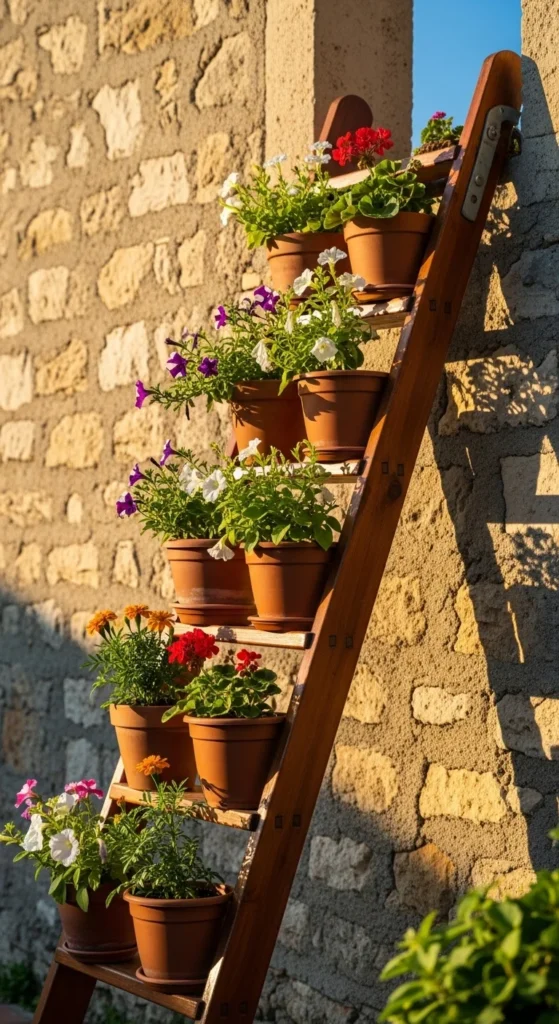
A ladder shelf gives multiple levels for small pots. Use it for herbs, mini peppers, or baby lettuce varieties.
Build your own by sanding an old ladder and securing boards across each rung. Paint it to match your terrace style. Keep small, lightweight pots on upper steps and heavier ones on the bottom. Water slowly so excess doesn’t spill between levels. Add a small tray under each pot for cleaner maintenance.
8. Wall-Mounted Pocket Planters for Leafy Greens
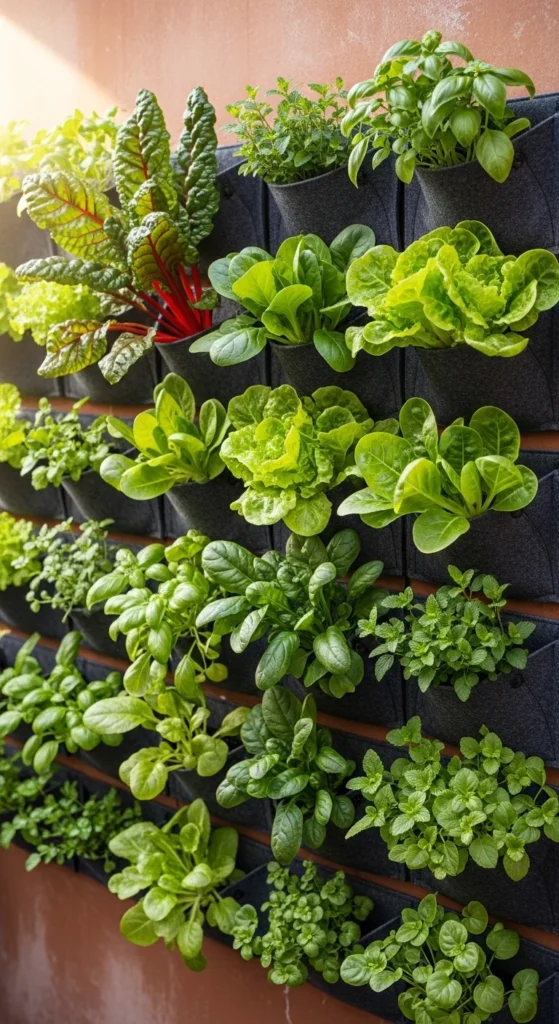
Pocket planters save huge amounts of space. Each pocket can hold lettuce, spinach, mint, or parsley.
Choose thick, breathable material so roots stay cool. For a cheaper setup, cut and sew pockets from old felt or canvas bags. Attach the pocket board to the wall using metal hooks. Water gently from the top row and let it cascade downward. Replace potting mix every two months for stronger growth.
9. Recycled Drum Containers for Large Crops
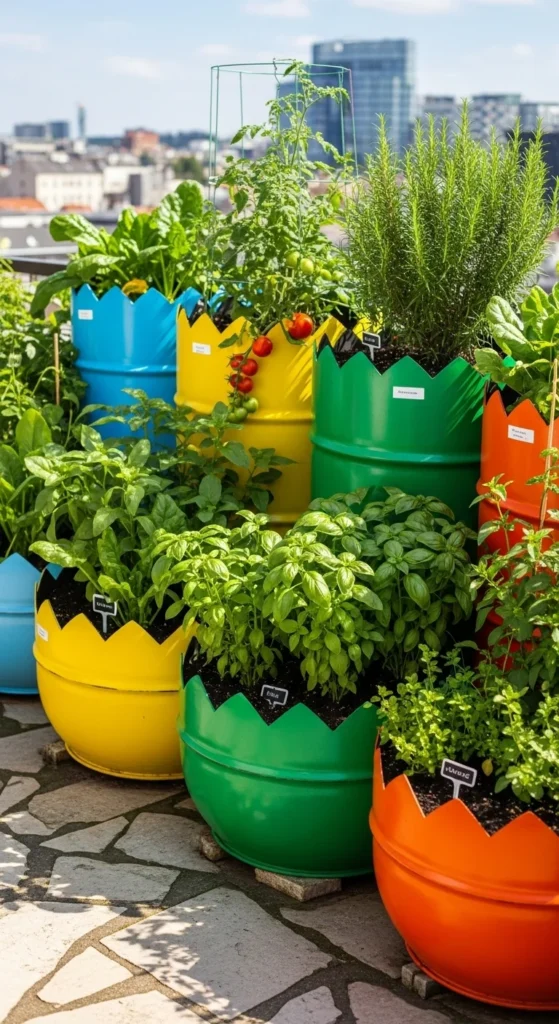
Large crops like bottle gourd, cucumber, or melon need deep soil. Recycled drum halves provide plenty of space.
Cut old water drums, clean them well, and drill drainage holes. Place them along terrace edges so they don’t block movement. Add sturdy trellises for climbing vegetables. Paint the drums in soft colors to match the terrace. Mix compost into the soil to keep plants healthy. Tie vines as they grow to keep the terrace neat.
10. Balcony Railing Planters for Dwarf Tomatoes
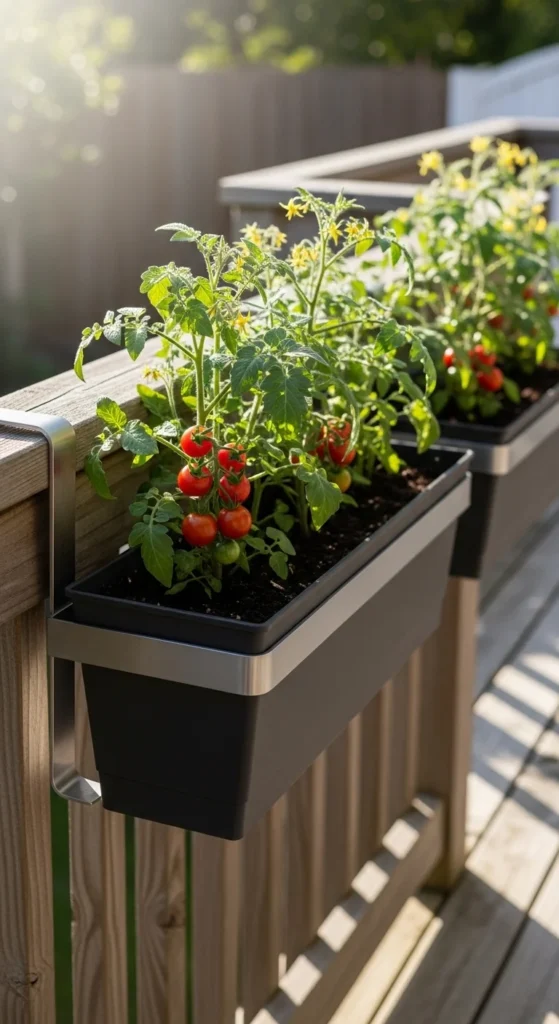
Railing planters fit right onto terrace fences and make good use of sunlight. Dwarf tomatoes grow beautifully in them.
Choose moderate-depth railing pots so roots stay comfortable. Add coco peat to improve moisture retention. Space each planter so tomato stems don’t overlap. A budget idea is to use plastic shoe boxes with brackets attached underneath. Keep the soil moist but not soggy. Add a small stake to each pot to hold tomato branches upright.
11. Round Clay Pots for Capsicum and Chilli Plants
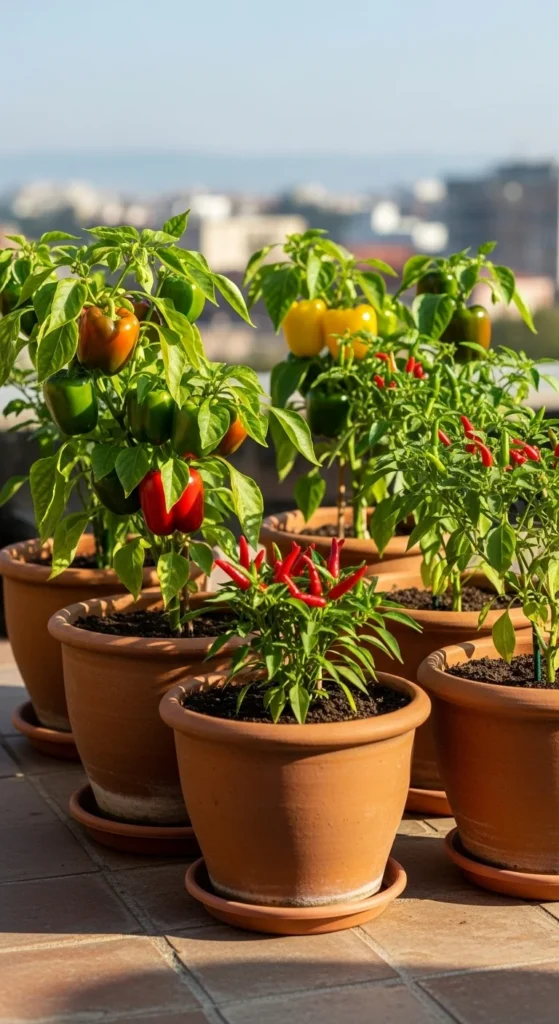
Clay pots keep roots cooler during hot spells. They’re great for chillies and capsicum because the soil dries evenly.
Choose pots at least 12 inches deep. Add small gravel at the bottom. Place them where they get plenty of light. For a lower-cost option, use second-hand clay pots and clean them with a vinegar soak. Keep pruning the plant tips to encourage branching. Rotate the pots weekly so the plants grow evenly.
12. Vertical Crate Stack for Herbs and Small Veg
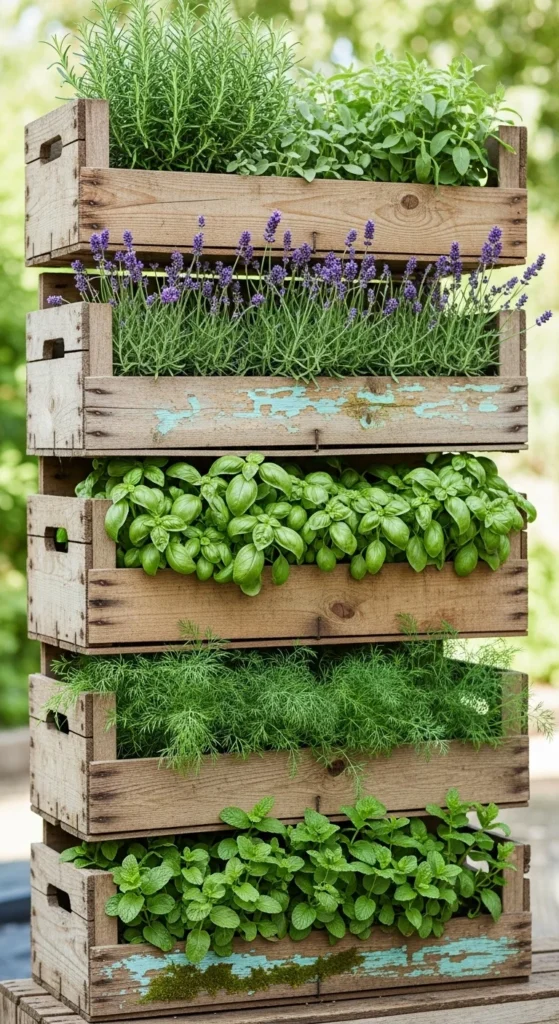
Stacked crates help you organize small crops without taking floor space. You can grow parsley, basil, radishes, or lettuce.
Stack crates securely using screws. Line each crate with burlap and fill with lightweight soil. Keep heavier crates at the bottom. A simple method is to use fruit crates from markets. Place the stack against a wall for stability. Use drip trays at the bottom to catch extra water.
13. PVC Pipe Garden for Compact Terraces
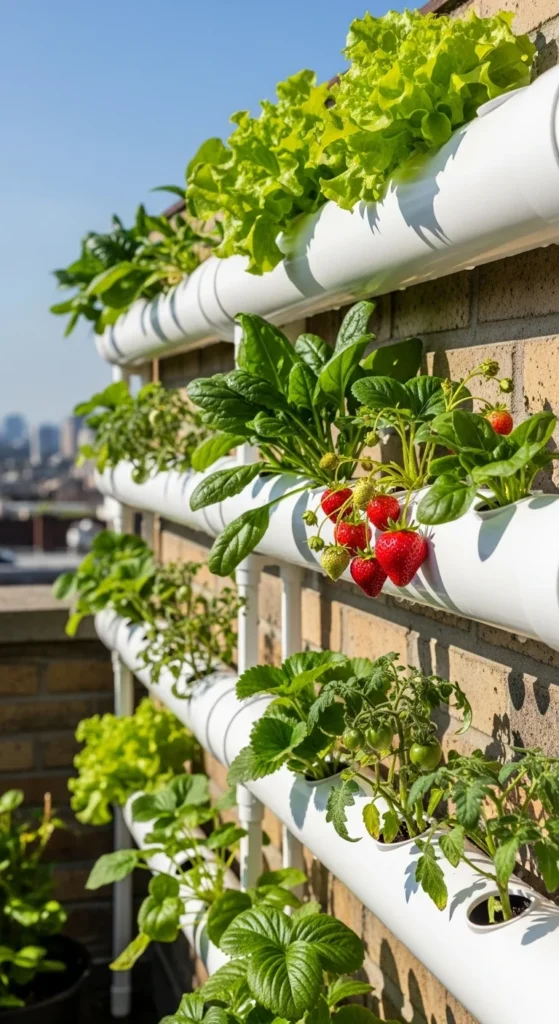
PVC pipe gardens use vertical surfaces while holding many plants at once. They suit lettuce, spinach, and small herbs.
Cut circular openings along the pipe. Add soil and place plants in each hole. Mount the pipe on metal brackets. If building on a budget, reuse old drainage pipes. Water from the top and let moisture seep down. Wrap the pipe with jute to protect roots from heat.
14. Tabletop Vegetable Garden for Small Terraces
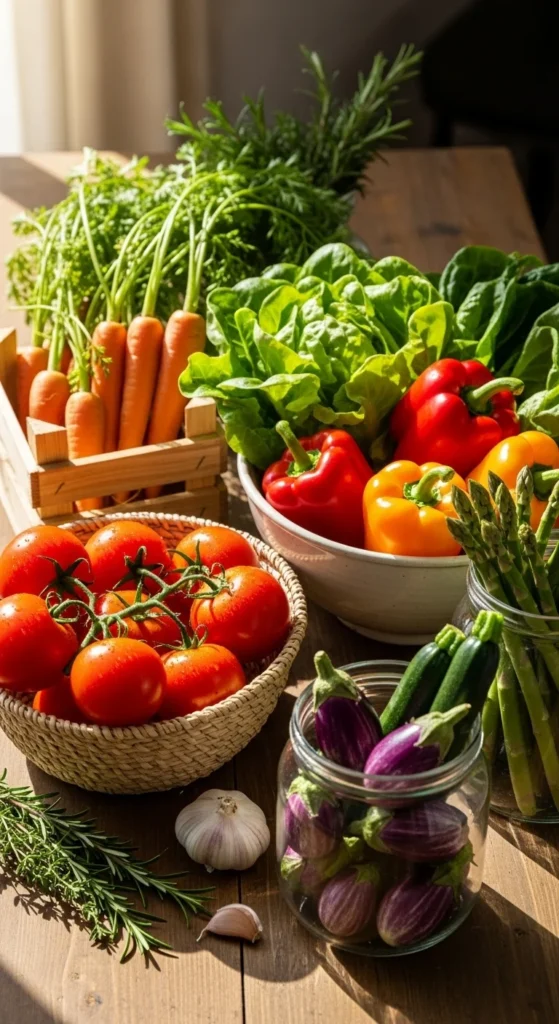
A simple table can hold several containers. This works well if your terrace floor is limited. Grow lettuce, baby carrots, or herbs.
Use a sturdy table that handles weight. Place trays or shallow pots on top. Add gravel trays underneath to catch water. For a DIY version, repurpose an old dining table or wooden pallet. Paint it for added weather resistance. Keep tall veggies at the back and short ones at the front.
15. Upcycled Paint Bucket Garden
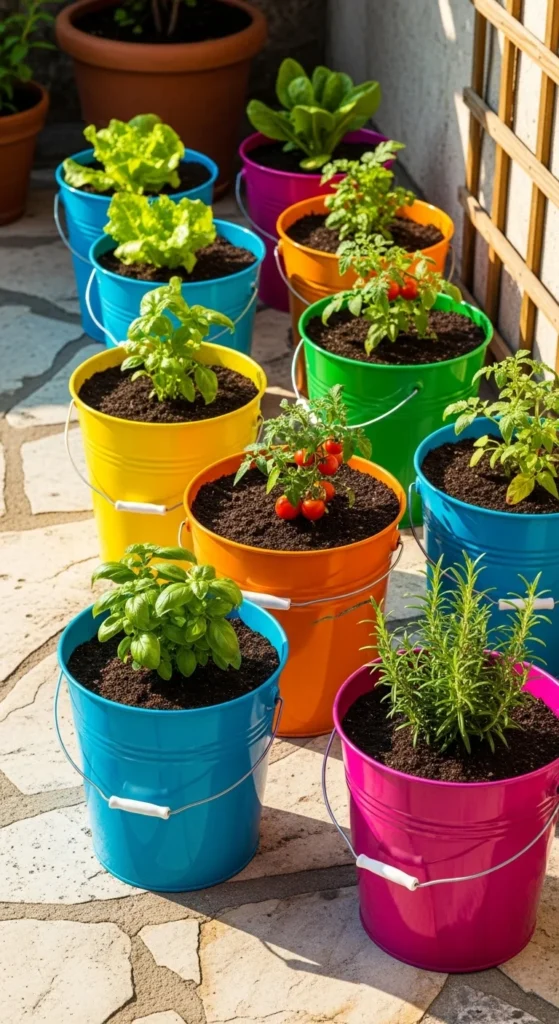
Used paint buckets make great lightweight containers. They suit tomatoes, herbs, and chillies.
Clean buckets thoroughly and drill holes at the bottom. Paint them in bright colors to match the terrace. Fill with soil and compost. Place them along edges or stack two levels high using metal stands. This keeps the terrace tidy and gives compact planting space.
16. Side-Wall Trellis Planter for Climbing Vegetables
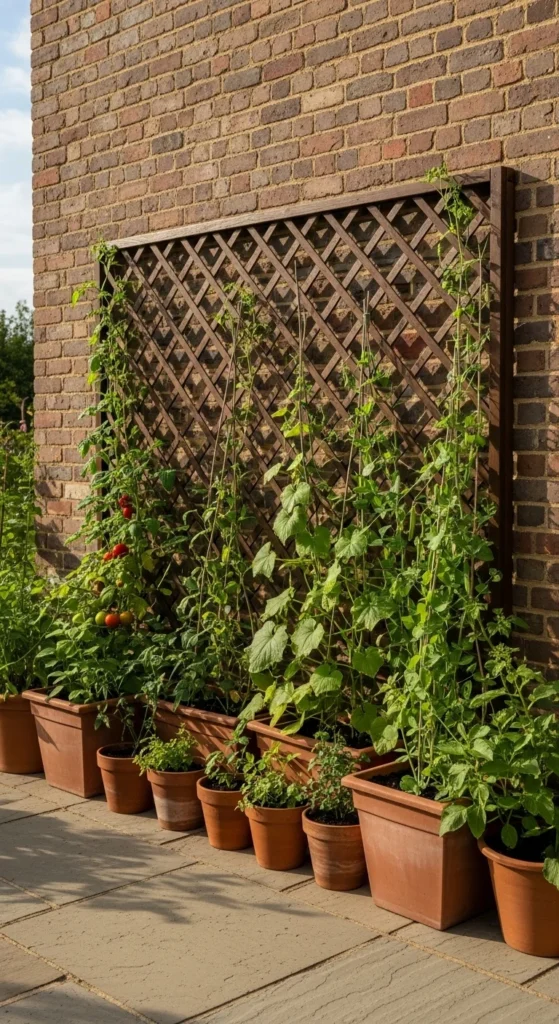
Climbing vegetables take up little space when trained correctly. Beans, gourds, and cucumbers grow well in pots with a trellis.
Place large pots along the wall and attach a trellis above them. A budget version is to weave wire or bamboo sticks. Tie the vines as they climb upward. Keep the pots heavy so they don’t tip over. Add mulch on top of the soil to reduce watering frequency.
17. Mason Jar Herb Rail for Micro Terraces
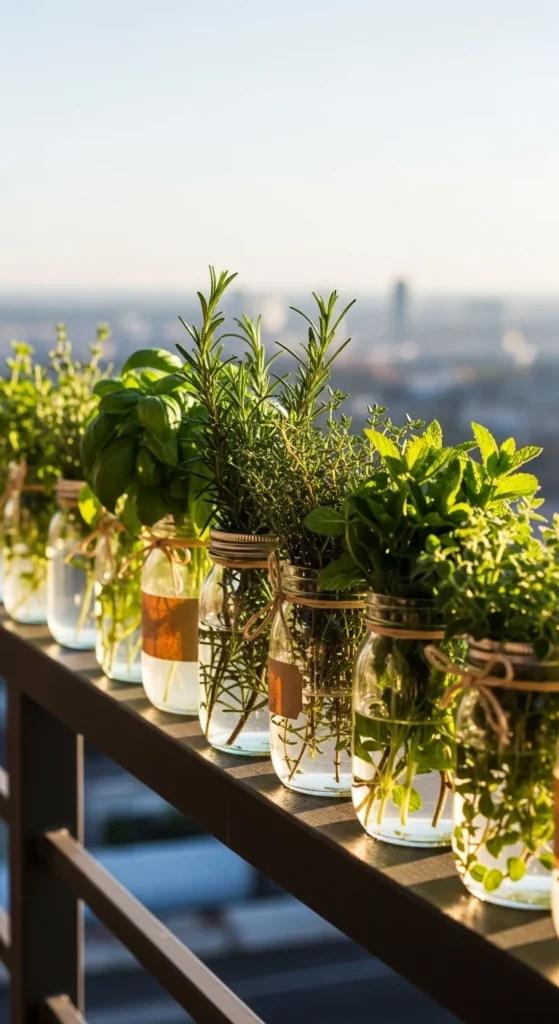
Mason jars add charm and suit very tiny spaces. They fit herbs like mint, coriander, and thyme.
Fill the bottom with small stones for drainage. Use brackets or metal holders to secure each jar. A cheaper option is to glue rope around the jars and hang them from hooks. Water lightly since jars hold moisture longer. Replace the soil monthly to prevent salt buildup.
18. Rolling Vegetable Cart for Flexible Placement
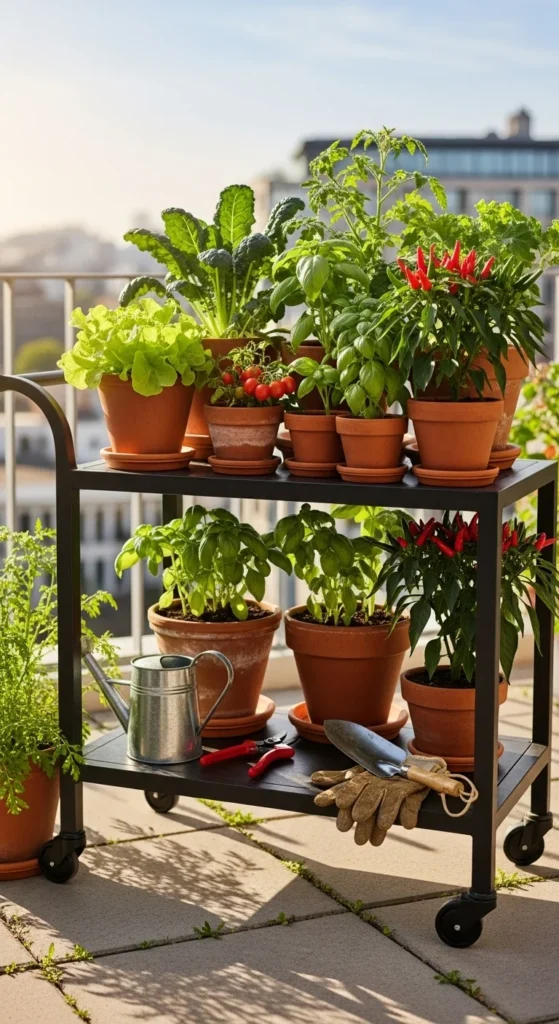
A rolling cart lets you chase sunlight through the day. It’s helpful for taller crops like tomatoes or peppers.
Use a sturdy cart with locking wheels. Arrange heavier pots at the bottom. Place herbs or lettuce on the top. Add a tray underneath to catch drips. A simple DIY option is to attach wheels to a wooden crate rack. Move the cart daily to keep plants evenly lit.
19. Hanging Rope Shelf Garden
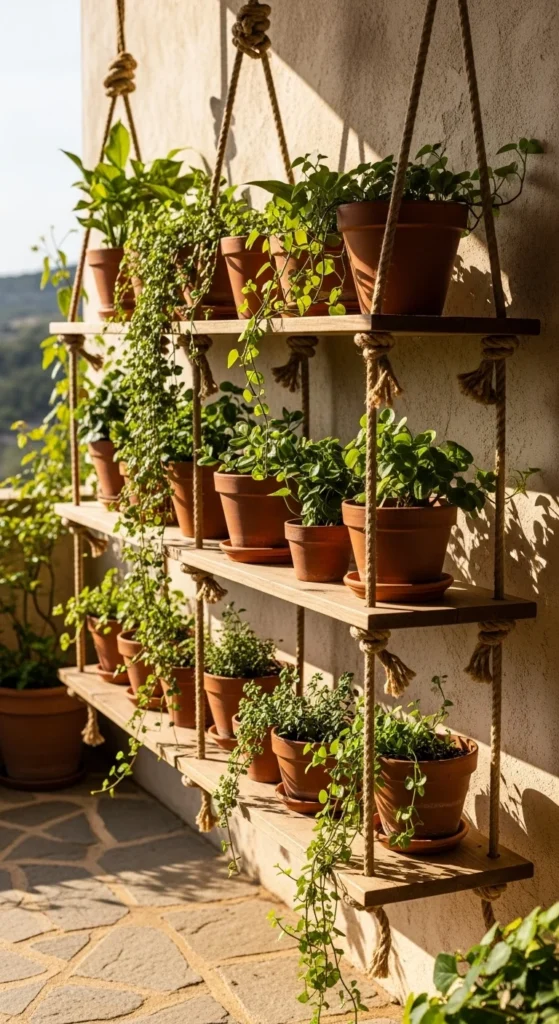
Hanging shelves fit into narrow terrace corners. They’re perfect for herbs, leafy greens, or dwarf veg.
Create your own by drilling holes in wooden boards and threading strong rope. Hang the shelves from ceiling hooks. Keep lighter pots on higher shelves and heavier ones near the bottom. Add small saucers to catch water. This setup looks stylish while saving space.
20. Clay Saucer Micro Bed for Baby Greens
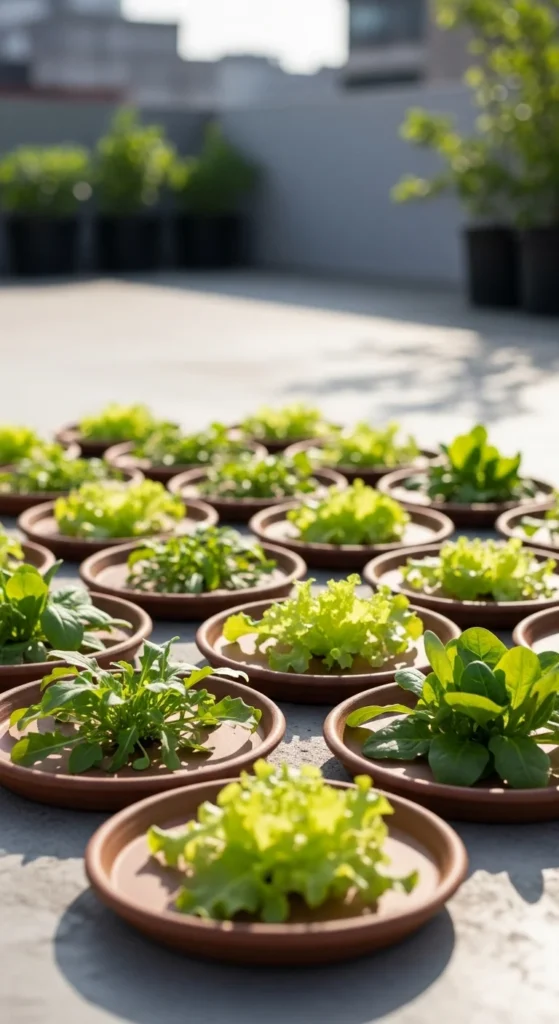
Clay saucers make mini beds for baby greens. They’re shallow but perfect for fast crops like micro lettuce or radish greens.
Fill the saucer with light soil. Sprinkle seeds evenly. Keep the saucer slightly tilted so water doesn’t pool. Replace soil after each harvest. For a budget option, use old terracotta trays. Place multiple saucers in a grid to create a larger planting zone.
21. Raised Box Bed on Stands
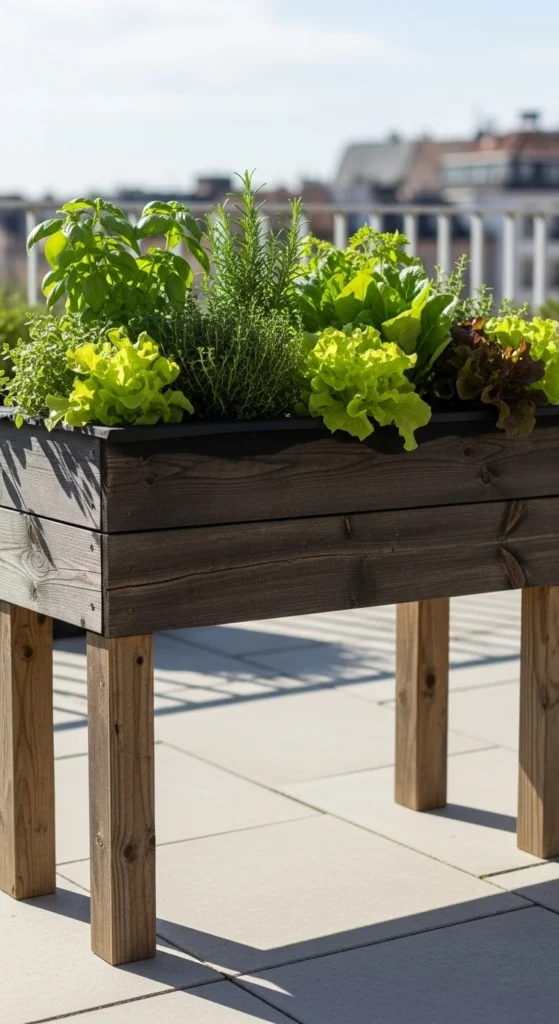
Raised boxes help with draining and reduce bending. They suit tomatoes, eggplants, and leafy greens.
Use wooden boards or old furniture frames to build the box. Add legs or stands for height. Line the box with plastic before adding soil. Place it where sunlight hits the most. Add a light trellis for taller plants.
22. Hanging Grow-Bag Rail for Compact Veg
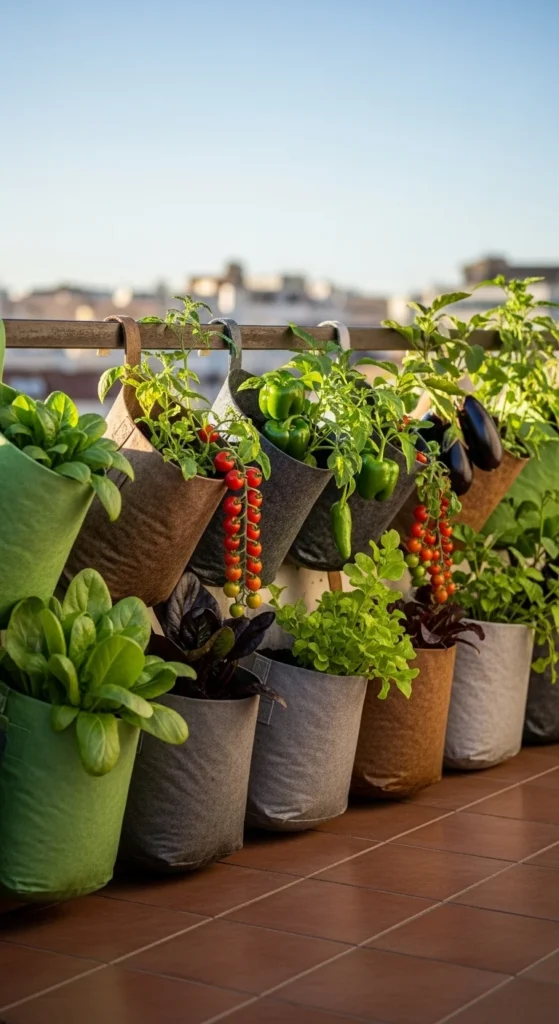
Grow bags hung from rails make smart use of vertical room. They support beans, tomatoes, or chillies.
Attach a strong metal rod between two posts. Hang bags using hooks. Keep spacing wide to avoid crowding. Water slowly so soil settles evenly. A budget trick is to use cloth shopping bags as containers.
23. Stacked Clay Pot Fountain Garden
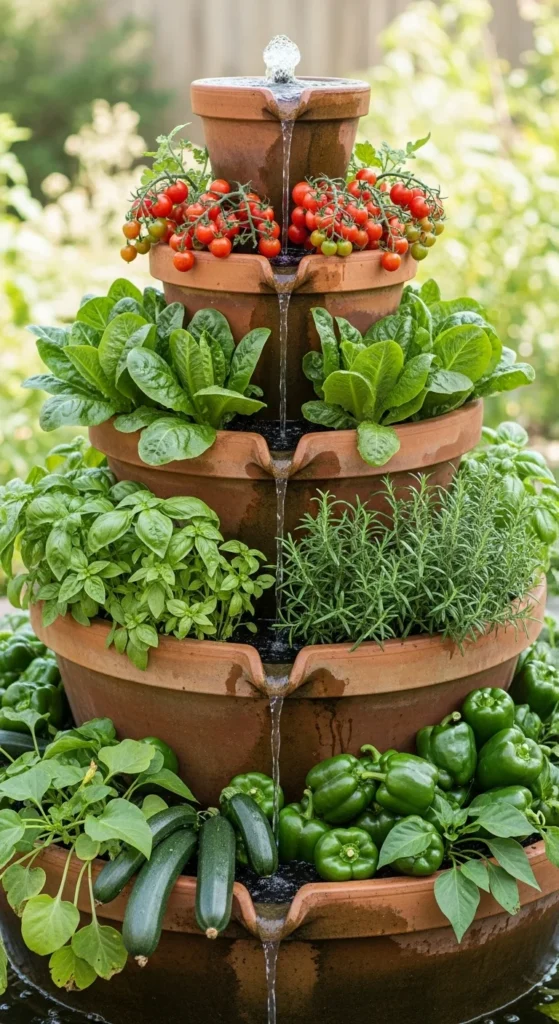
Stacked clay pots create a vertical planting surface. Each opening suits small greens or herbs.
Place the largest pot at the bottom. Add a smaller pot inside it upside-down to raise the next pot. Continue stacking until you get a fountain shape. Fill gaps with small plants. Keep the structure near a wall for support. This setup looks decorative while saving terrace space.
Conclusion
Terrace container gardening becomes easier when you use space-saving layouts that support good growth without overwhelming the area. Whether you stack, hang, or cluster containers, each idea helps maximize your terrace while keeping things simple. Choose a few designs that match your space, add quality potting mix, and start with beginner-friendly vegetables. With small steps and consistent care, your terrace can stay productive through every season.
Leave a Reply