

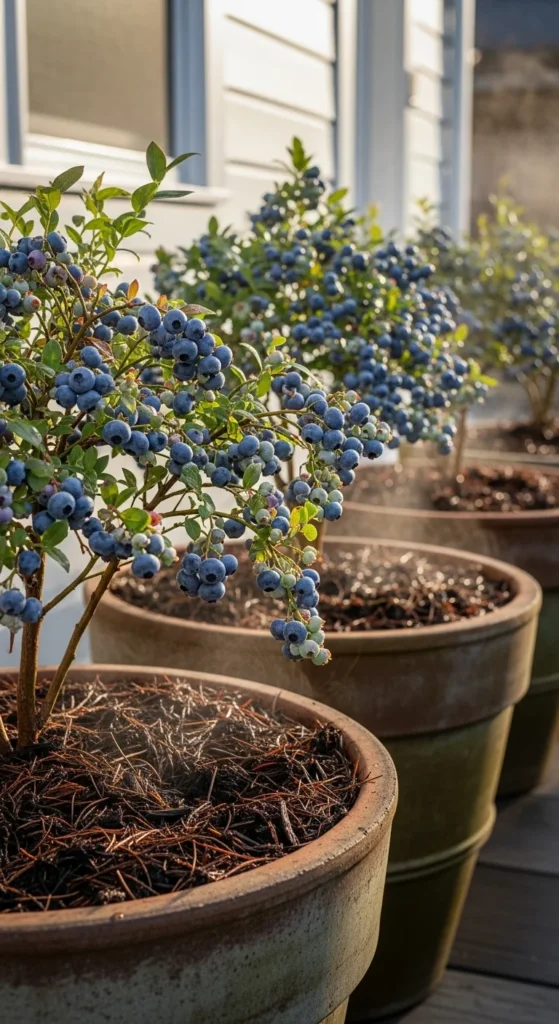
Container blueberries let you grow sweet, homegrown berries even if you garden on a balcony, patio, or rented space. With the right pot, soil mix, and watering habits, these shrubs handle cold months, set buds, and reward patient care in the New Year. Many gardeners worry about soil acidity or pruning, but simple container setups keep everything easy to manage. The ideas below focus on practical layouts, smart pot choices, and small habits that keep bushes fruiting season after season.
1. Classic 5-Gallon Patio Blueberry
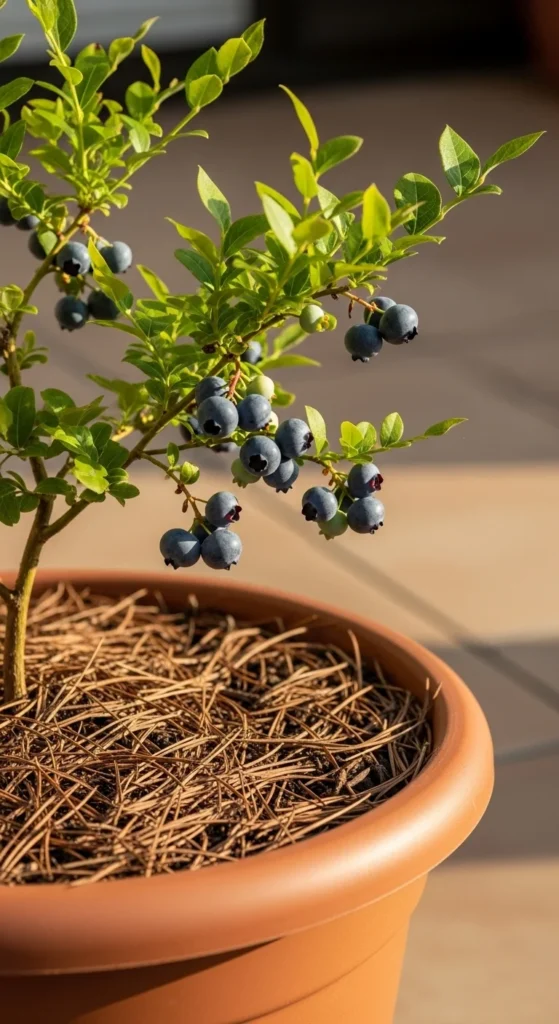
A 5-gallon container is a straightforward way to start with blueberries. Choose a sturdy plastic or glazed pot with several drainage holes. Fill it with ericaceous compost or a mix labeled for acid-loving plants. Set the pot in a spot that gets at least six hours of light. Water when the top layer feels dry, but avoid constantly soggy soil. Add pine needles or shredded bark as mulch to keep moisture steady and acidity stable. In early spring, scatter a small amount of fertilizer made for acid shrubs and water it in gently. Remove weak, crossing stems in late winter so light reaches the center of the bush. This simple patio setup can carry you from pink buds to clusters of blue fruit without a complicated garden layout.
2. Trio of Blueberry Pots by the Door
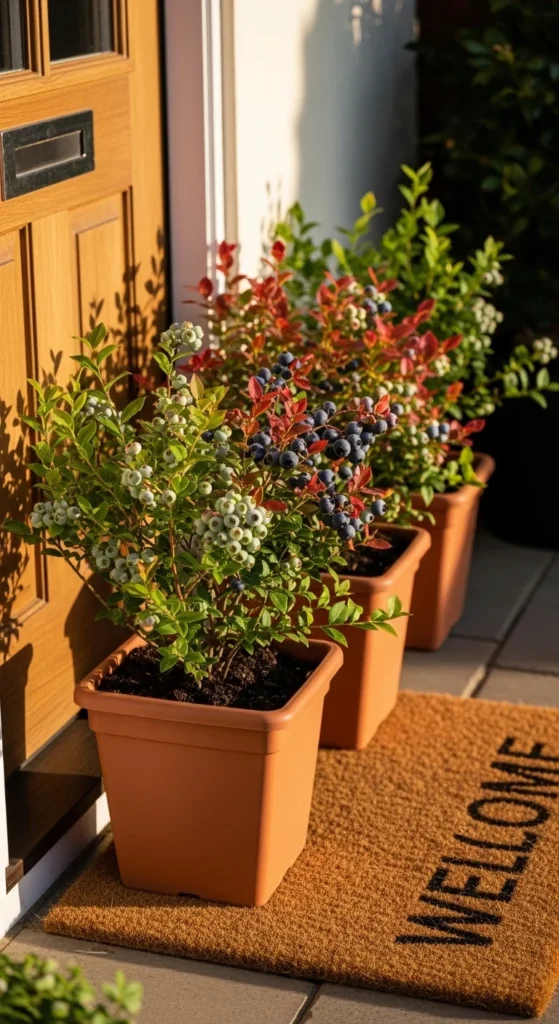
Placing three containers near your entry creates a small “blueberry greeting line.” Use pots of the same style but slightly different heights for a tidy look. Plant a different variety in each pot to spread out ripening times. Grouping them keeps watering simple; one hose session covers them all. Keep the soil acidic by using ericaceous compost and topping with pine mulch. During New Year clean-up, remove old leaves and any weak stems so the group stays healthy. A small saucer under each pot catches extra drips but should never hold standing water for long. Visitors will notice the color change from white blossoms to deep blue clusters as the season moves on.
3. Half-Barrel Mini Blueberry Orchard
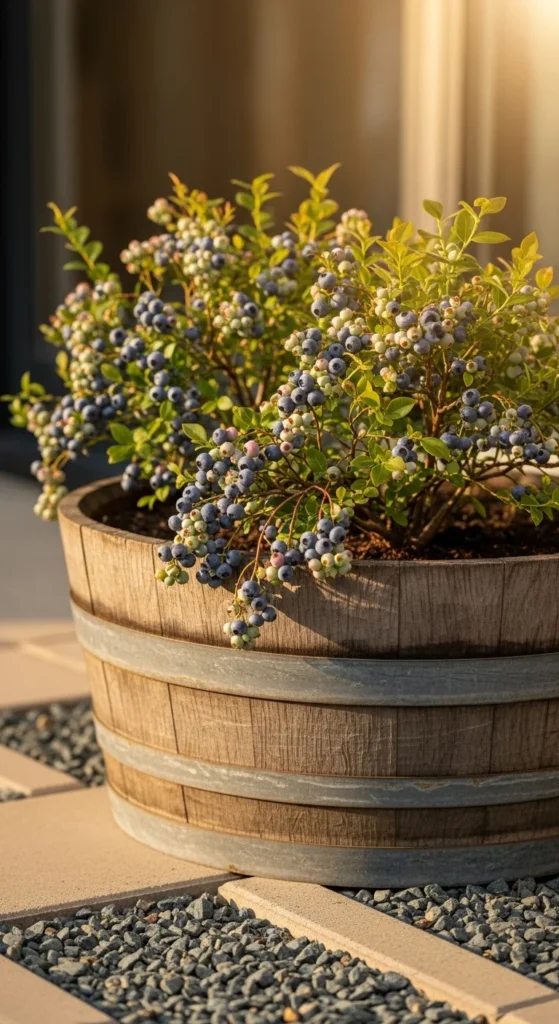
A half-barrel planter lets you grow two or three compact blueberries in one shared space. Drill several drainage holes if the barrel is solid at the bottom. Line it with a bit of coarse gravel, then fill with an acidic soil mix. Position the barrel where it catches morning sun and some afternoon shade if your climate runs hot. Space bushes evenly so air can move between them. Add a thick mulch layer to keep roots cool. A simple drip line or soaker hose ring connected to a timer removes guesswork from watering. Each New Year, trim out dead or weak branches and top up the soil mix around the roots. The barrel slowly becomes a fruiting focal point in your yard or patio.
4. Dwarf Blueberry on a Small Balcony
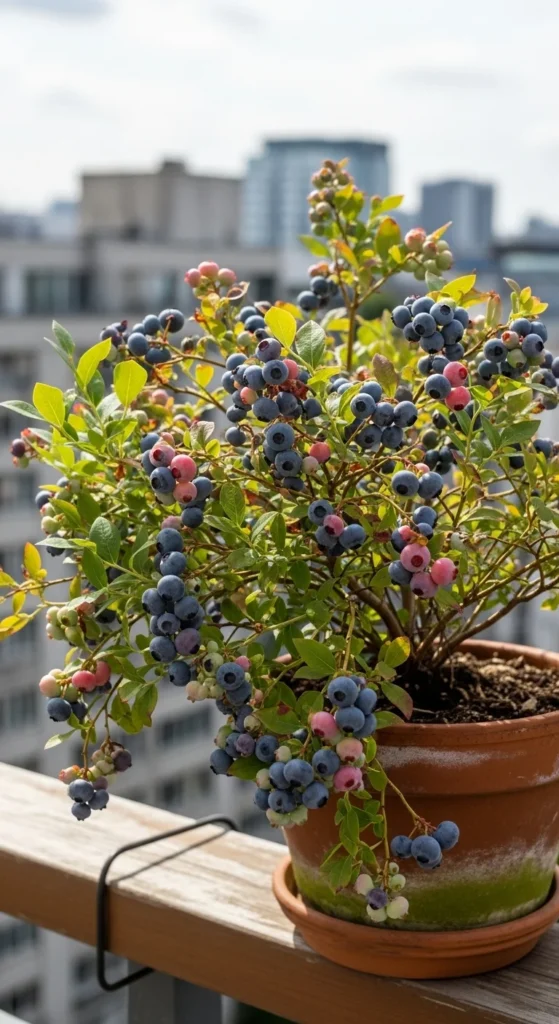
Dwarf blueberry varieties stay compact and are ideal for tight balcony spaces. Choose a pot that is deep rather than wide to give the roots room while saving floor area. Hang the container on a secure railing bracket or tuck it into a corner near the rail. Blueberries like light, so aim for the brightest spot available. Use an acid-friendly soil mix and water carefully, as balconies dry faster than ground-level gardens. Add rainwater if you can collect it; many growers use a simple bucket from downspouts. Prune only lightly during winter to keep the plant small but productive. A single dwarf bush can still give you handfuls of berries for cereal or balcony snacking.
5. Container Blueberry Hedge Along a Fence
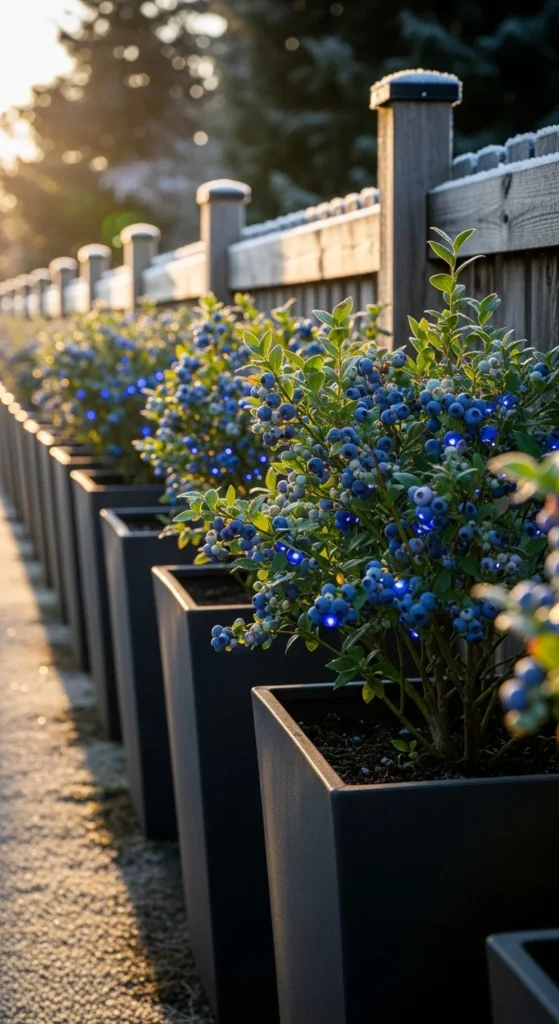
A container hedge made from blueberries adds privacy and fruit at the same time. Line up tall pots along a fence or property edge. Stagger them slightly to close gaps between foliage. Choose varieties with similar growth habits so the line looks even. Use the same soil mix and mulch in each pot for consistent care. String a simple drip line along the row so watering becomes a one-valve job. During late winter, walk the line and trim out damaged wood, then shorten a few taller stems to keep the hedge height under control. This layout works well in rental yards where you cannot plant directly in the ground.
6. Blueberries in Fabric Grow Bags
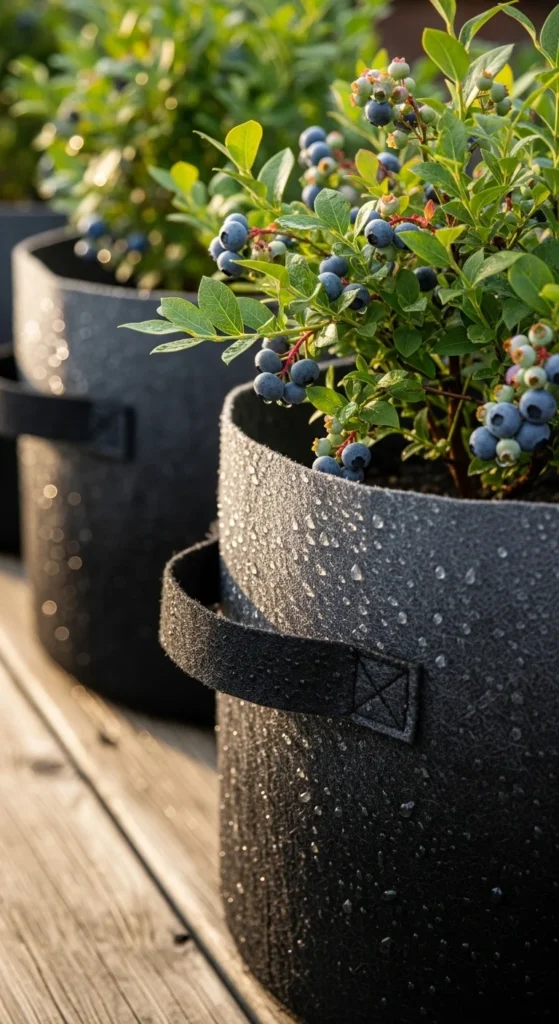
Fabric grow bags make it easy to adjust spacing and move pots if your light changes by season. The breathable sides help prevent soggy roots, which blueberries dislike. Place bags on bricks or a simple pallet to keep the bottom off wet ground. Fill them with acidic compost and a bit of perlite for drainage. Water slowly so it soaks through the root zone instead of running off the top. In colder regions, slide bags close together in winter so they share some warmth. Handles let you shift individual plants if one variety wants more sun. When the mix becomes tired after a few years, lift the shrub carefully and refresh the bag with new soil.
7. Pine-Needle Mulch Topper for Blueberry Pots
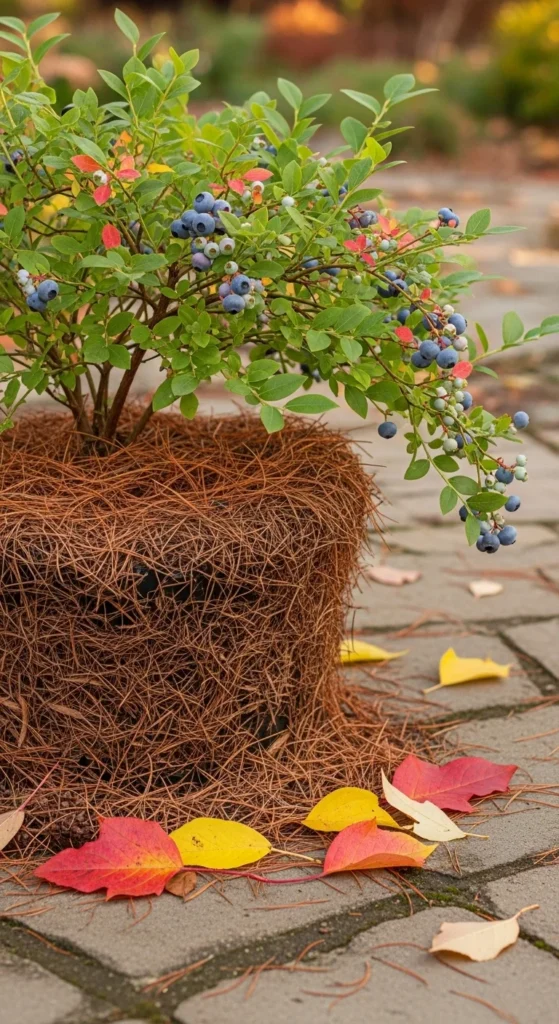
Mulch does a lot for container blueberries. Pine needles and shredded bark help keep moisture steady and support an acidic surface. After potting up your bush, add a 3–5 cm layer of mulch, leaving a small gap around the stem. This gap keeps the base dry and discourages rot. As you water, the mulch slowly settles and weathers. Top up once or twice a year, especially around New Year when you freshen pots. The mulch also reduces splashing soil, which keeps lower leaves cleaner and plant health easier to monitor. A simple bag of pine mulch stretches across several containers.
8. Self-Watering Blueberry Container Setup
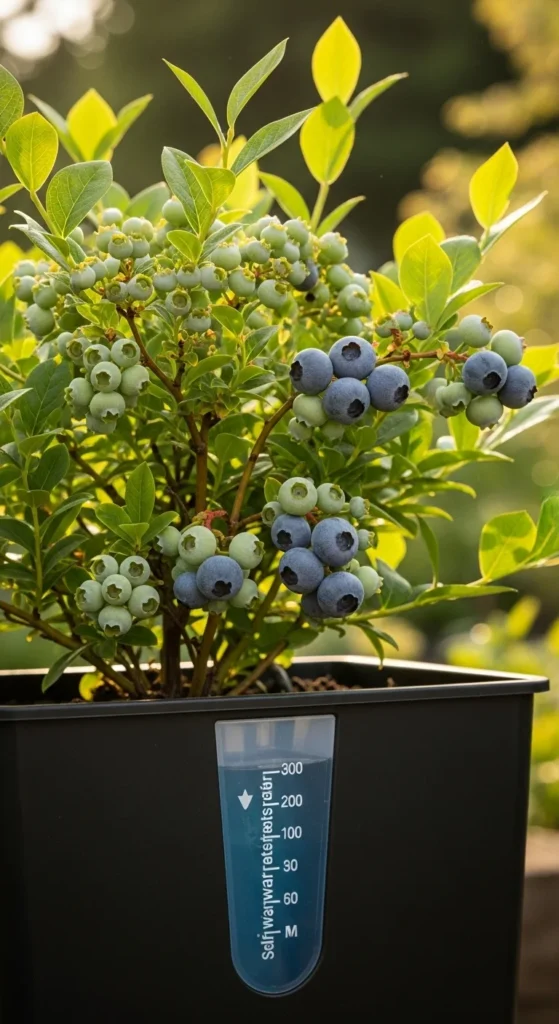
Self-watering containers help busy gardeners keep blueberries hydrated without constant checks. These pots have a water reservoir at the bottom and a wicking system that draws moisture up into the soil. Fill the main section with acidic compost, then plant your bush slightly above the final soil level. Add mulch after planting. Use the side-fill tube to keep the reservoir topped up, especially during warm, windy spells. Check occasionally that the overflow hole stays clear. Self-watering systems are handy for balconies or weekend homes where daily watering is difficult. Just remember that fertilizer should be applied at the soil surface so it doesn’t sit in the reservoir.
9. Blueberry on a Rolling Plant Caddy
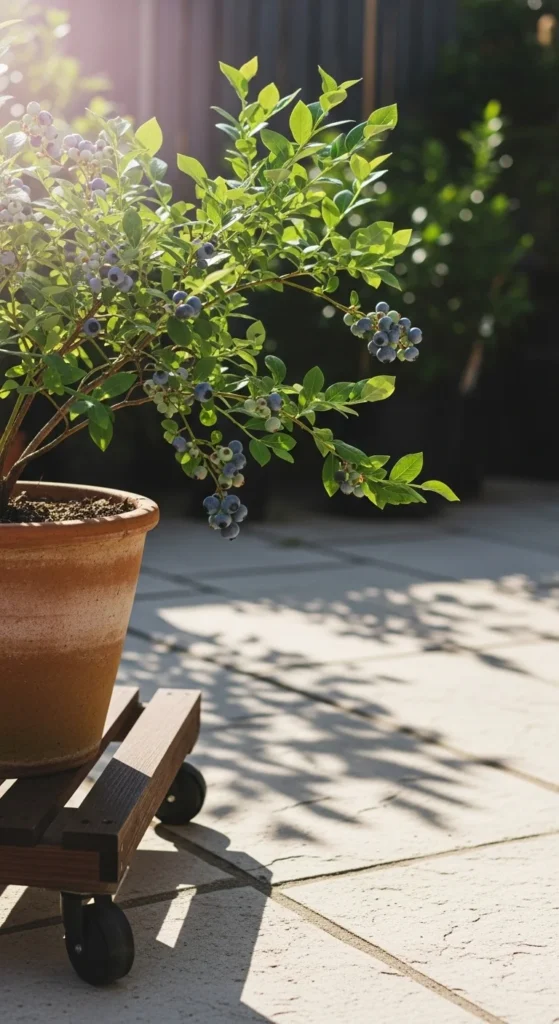
A rolling plant caddy lets you chase the best sun during short New Year days. Place your blueberry pot on a sturdy wheeled stand and move it a little each week to adjust to changing light angles. This is useful in courtyards or balconies where one side gets shaded by buildings. The caddy also makes cleaning under the pot simple. Choose a caddy with locking wheels so strong wind does not push the shrub around. Use a saucer if you are on a wooden deck, but empty it after rain so water does not sit under the pot. This small upgrade gives you flexibility as seasons shift.
10. Blueberry Trough Planter on the Balcony Rail
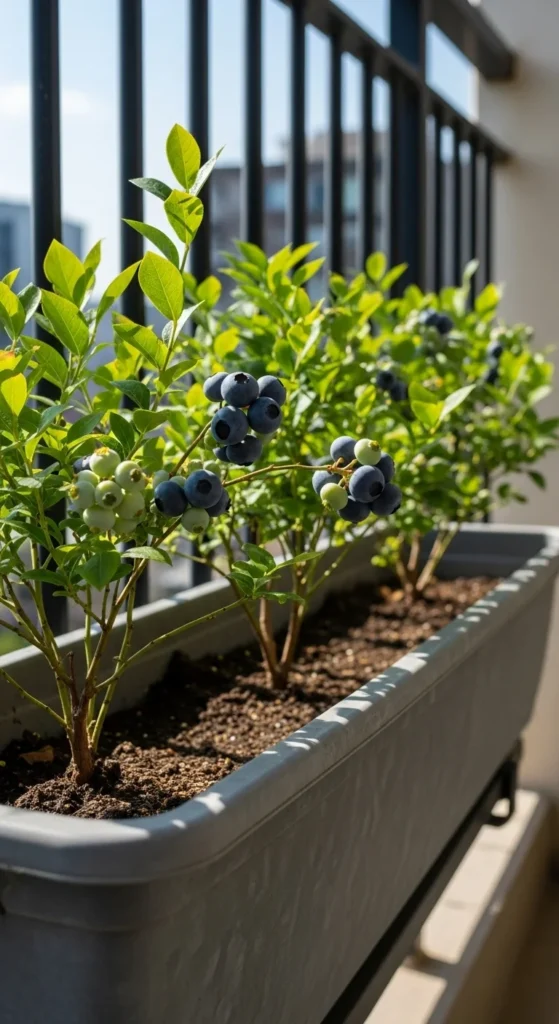
A rectangular trough planter fits along balcony rails and narrow patios. Plant two or three compact blueberries in one long container. Space them evenly and use an acid-friendly mix. Install a simple support strap or bracket so the trough stays stable in wind. Water from one end until it drains from the other, making sure all roots are soaked. Add a light bark mulch to hold moisture. If wind exposure is strong, place a low screen on the windy side to reduce stress on stems. This layout uses long narrow space while still giving decent soil depth.
11. Multi-Variety Cluster for Better Pollination
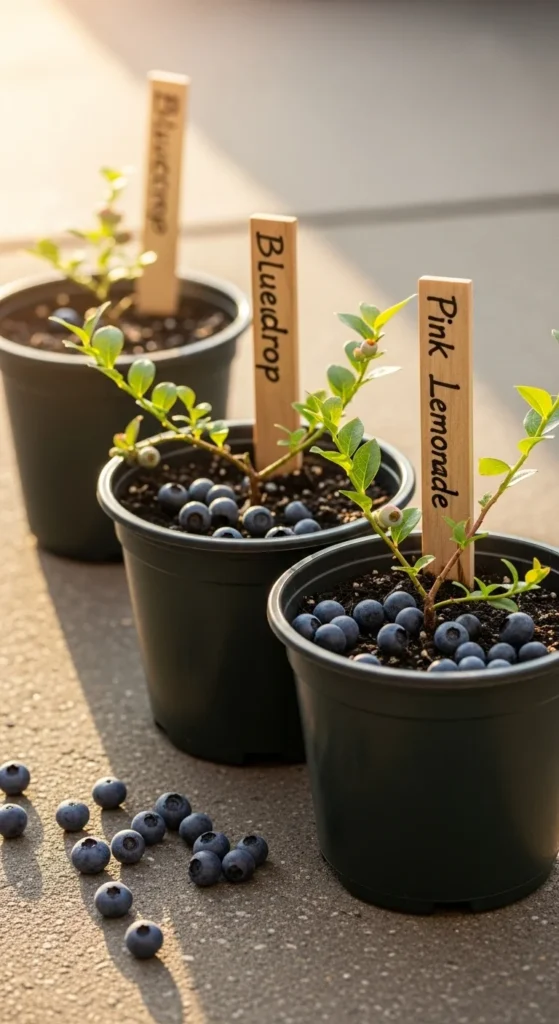
Planting several varieties close together supports cross-pollination and extends your harvest. Use three individual pots and arrange them in a triangle. Choose varieties with overlapping bloom times but different ripening windows. Label each pot clearly so you remember which one fruits early, mid-season, or later. Keep watering and feeding routines consistent across the group. During flowering, gentle airflow helps pollen move, so avoid tight, cluttered corners. This trio approach often leads to better berry set and a longer picking window without extra space.
12. Child-Friendly Blueberry Tub
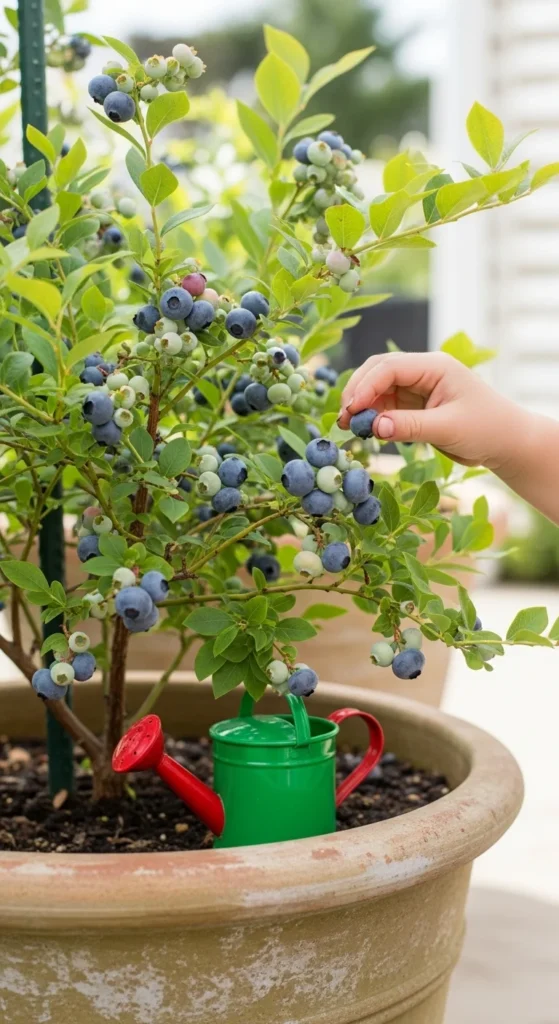
A kid-height container turns blueberry care into a family project. Choose a wide tub that stands about mid-thigh on a child. Place it somewhere safe and easy to reach. Invite kids to help fill the pot with soil, sprinkle in mulch, and water gently. Show them how to check the top layer for dryness before watering again. During New Year pruning, involve them in spotting dead or broken twigs. When berries turn deep blue, kids can help harvest into small bowls. This setup teaches basic plant care while keeping fruit within easy reach.
13. Blueberry Pot with Groundcover Companions
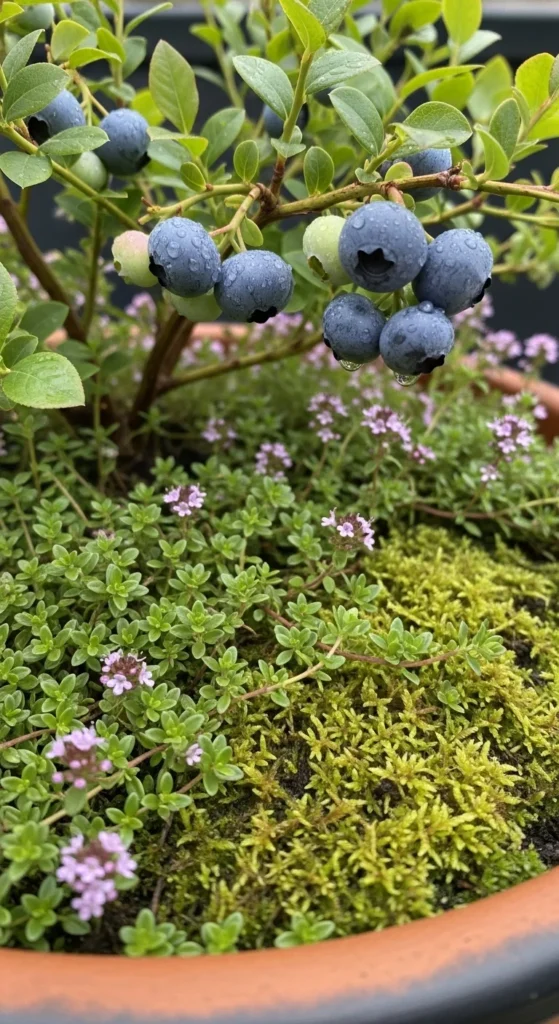
Adding low companion plants at the base of your blueberry container creates a lush look and helps shade the soil. Use small, acid-friendly plants such as creeping thyme, moss, or low ornamental grasses. Plant them around the outer edge of the pot, leaving space near the main stem. This living carpet softens the container’s surface and reduces evaporation. Keep their growth trimmed so they don’t compete heavily with the blueberry. During watering, aim at the main stem area so the shrub still receives most of the moisture. This idea works well when your container is part of a decorative patio grouping.
14. Decorative Glazed Pot as a Blueberry Focal Point
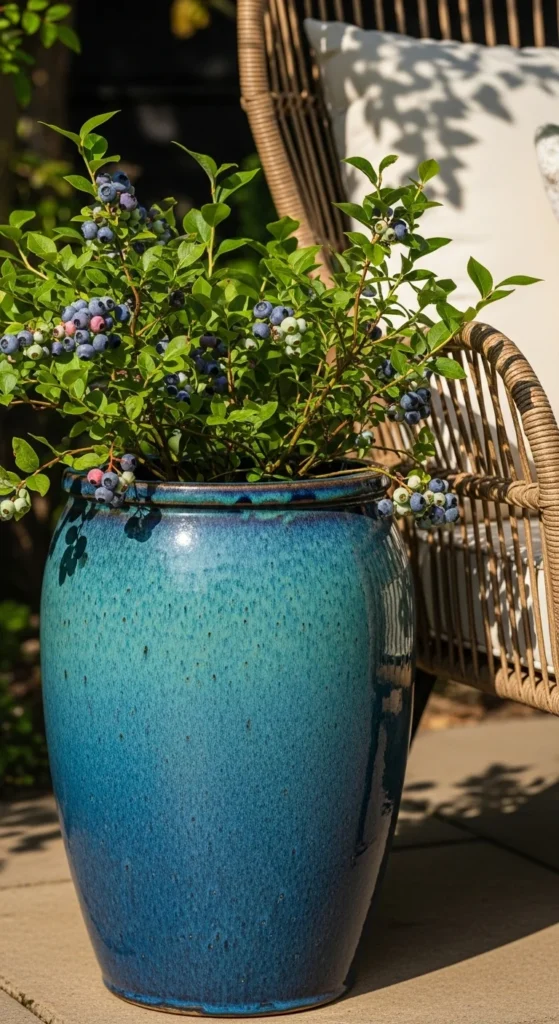
A decorative glazed pot lets your blueberry serve as both fruit source and design anchor. Choose a color that contrasts with the blue berries—deep teal, white, or earthy red works nicely. Make sure the pot has drainage holes, even if you must drill them. Fill the lower portion with coarse material, then add acidic compost on top. Position the pot where it can be seen from a window or seating area. Keep pruning gentle to maintain a tidy shape. This setup turns one blueberry bush into a New Year patio centerpiece.
15. Winter-Protected Corner for Container Blueberries
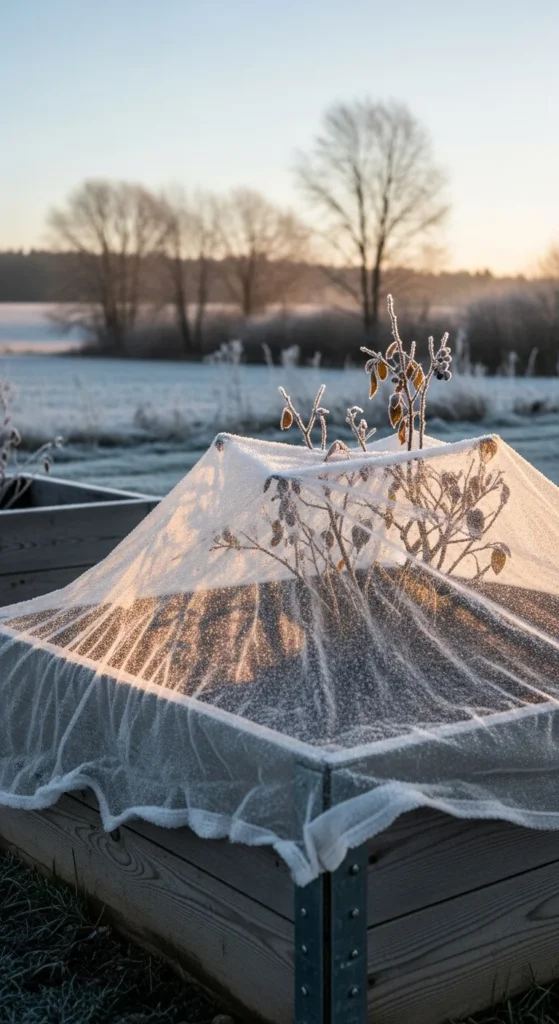
Container roots are more exposed to cold than in-ground plants. Creating a winter-protected corner keeps blueberries happier through freezing spells. Group pots close together against a wall that absorbs daytime warmth. Wrap the cluster with burlap or frost cloth on the coldest nights, leaving the tops open when possible. Add extra mulch around each root ball before New Year. Use bricks or pallets to lift containers off icy ground. Once spring arrives, remove the wraps and spread the pots out again. This simple routine helps shrubs carry buds safely into the fruiting season.
16. Rolling Raised Planter Box with Blueberries
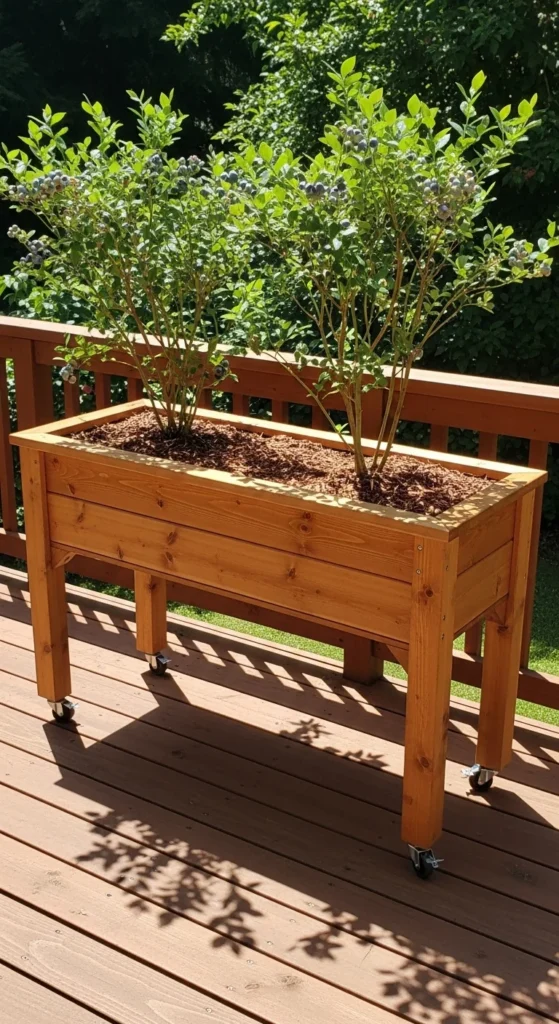
A raised planter box on wheels gives you the soil depth of a bed with the flexibility of a pot. Build or buy a box at least 30–40 cm deep. Line the bottom with landscape fabric, then fill with acidic mix. Plant two blueberries with space between them and add mulch. Lock the casters to keep the box steady. Move the planter slightly through the year to follow the best light or protect from harsh wind. A simple drip line can run along the back edge. This layout suits decks and roof gardens where permanent beds are not an option.
17. Staked and Supported Blueberry in a Pot
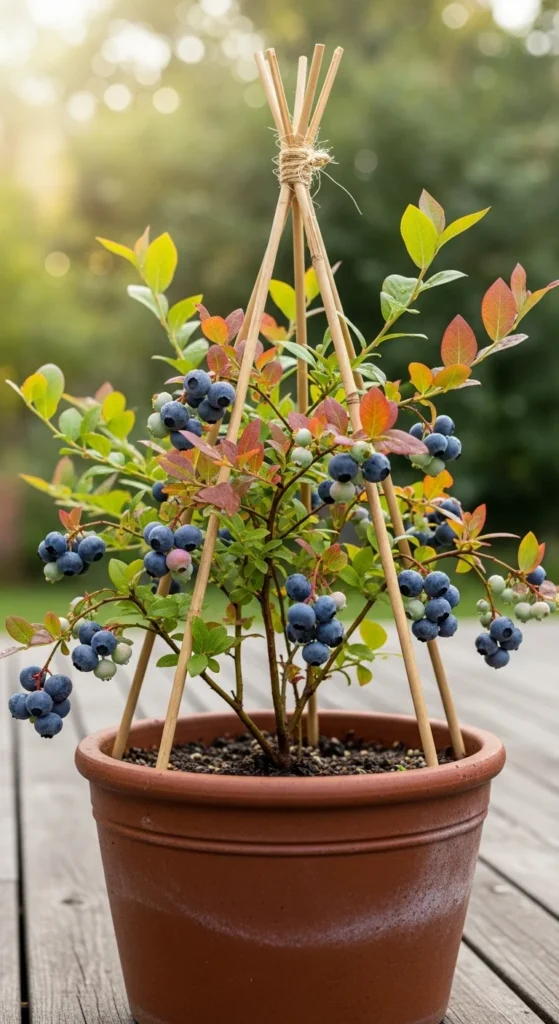
As blueberries mature, branches can bend under the weight of fruit. Adding a simple support frame keeps stems upright and reduces breakage. Push three or four bamboo stakes into the pot near the edge and tie them loosely near the top to form a teepee. Use soft ties to secure heavy branches to the frame. This helps light reach all parts of the plant and makes picking easier. During winter pruning, remove older stems at the base and leave younger, strong growth tied in place. The frame stays in the container year-round and can be reused season after season.
18. Rain-Barrel Watering Station for Blueberries
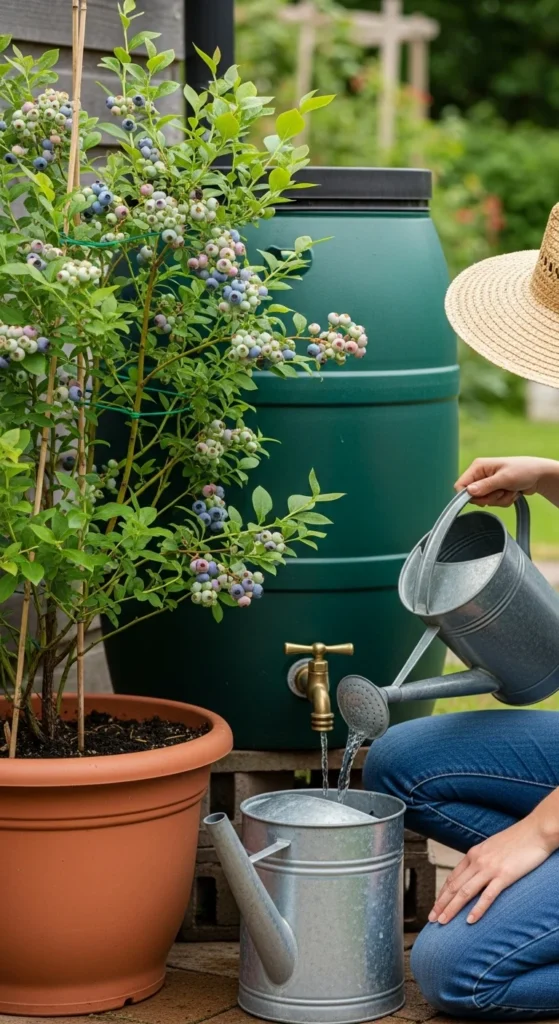
Blueberries respond well to rainwater, which usually has lower mineral content than tap water. Setting up a simple rain barrel near your containers makes watering easier. Place the barrel under a downspout and attach a basic spigot. Fill a small watering can and pour slowly at the base of the blueberry, allowing water to soak in. This routine helps keep soil chemistry stable. Attach a short hose for days when you water several pots in one go. A simple wooden platform under the barrel gives you gravity flow without extra equipment.
19. Paired Blueberry Containers Around a Seating Area
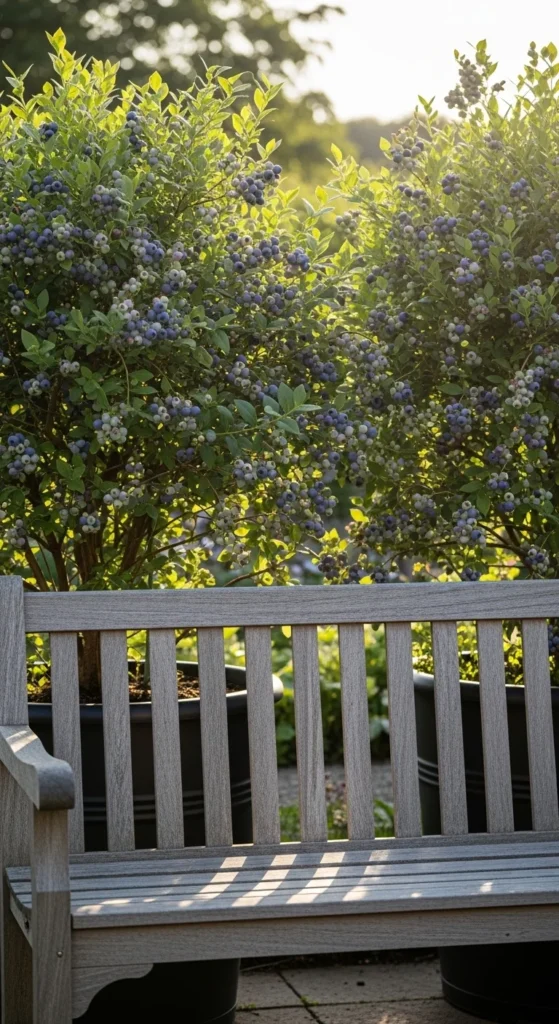
Placing two containers on either side of a bench or chair turns blueberries into living armrests. Choose medium-height varieties and position the pots so branches do not snag clothing but are close enough for easy picking. Use matching containers for a calm look. Keep mulch topped up and pruned growth balanced so both shrubs appear similar in size. This arrangement brings fruit within arm’s reach while you relax. It also draws birds and pollinators closer, giving you more to watch during quiet garden moments.
20. Early-and-Late Variety Pair for Longer Harvest
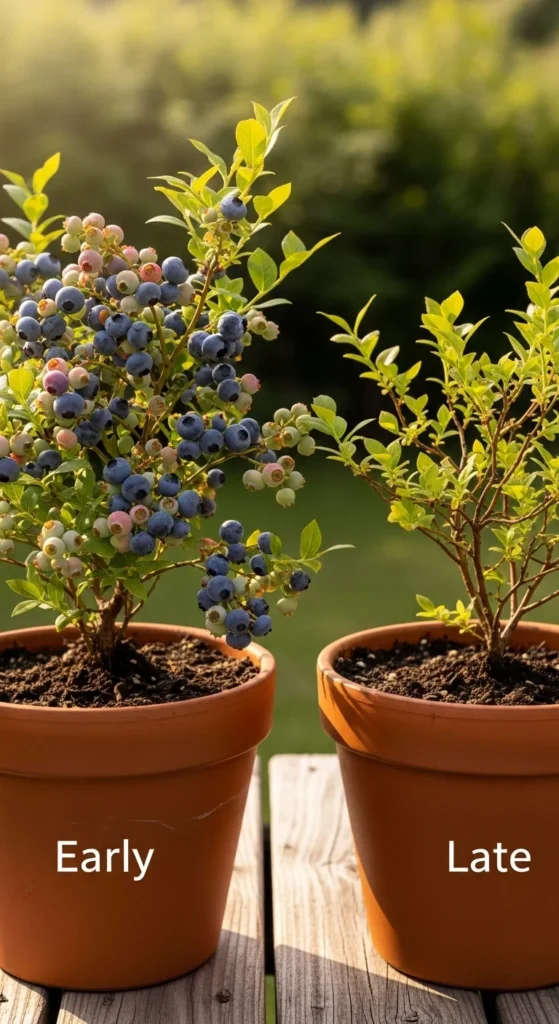
Pairing an early-season blueberry with a late-season variety in separate containers stretches your picking window. Label each pot clearly with its harvest time. Place both in similar light so growth stays balanced. Follow the same watering schedule, but note which one starts flowering first. As the early plant finishes, the late one steps in. This approach works nicely on small patios where you want regular bowlfuls rather than a single large flush of berries.
21. New Year Gift Pot Blueberry
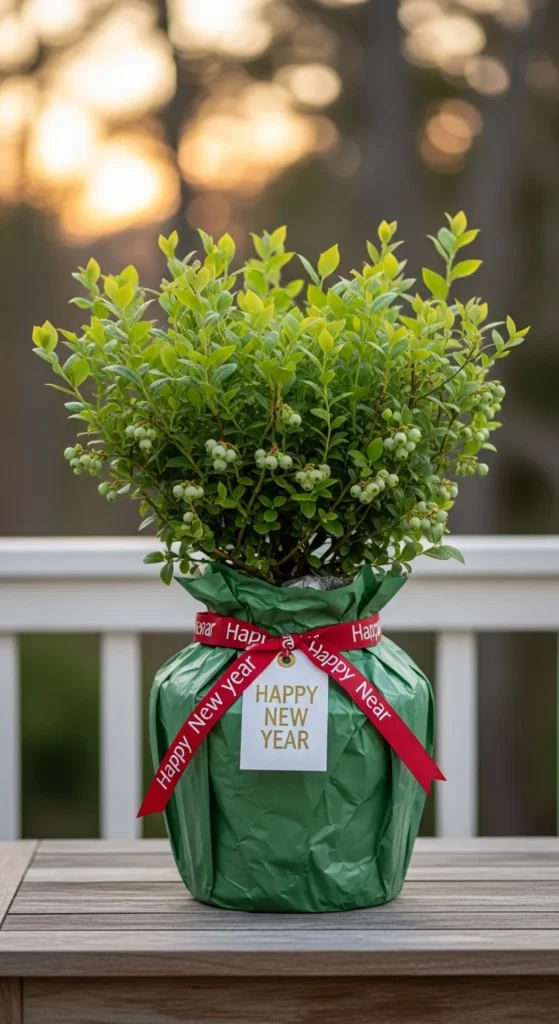
A gift blueberry in a container makes a thoughtful New Year present for gardeners and food lovers. Choose a compact variety and plant it in an attractive pot with drainage holes. Add a top layer of bark mulch for a finished look. Include a simple care card with notes on light, watering, and soil acidity. Tie a ribbon loosely around the pot or handle. This project introduces friends or family to container fruit growing without overwhelming them. You might even swap cuttings or share harvest updates as the year moves forward.
Conclusion
Container blueberries fit patios, balconies, and small yards while still giving generous bowls of homegrown fruit. With a focus on acidic soil, steady moisture, and light pruning, each of these ideas turns a simple pot into a reliable berry source. Choose one or two layouts that match your space—a single patio tub, a trio by the door, or a rolling planter—and start planting this New Year. Careful, steady habits bring you closer to those deep blue clusters that taste best right off the bush.
Leave a Reply