

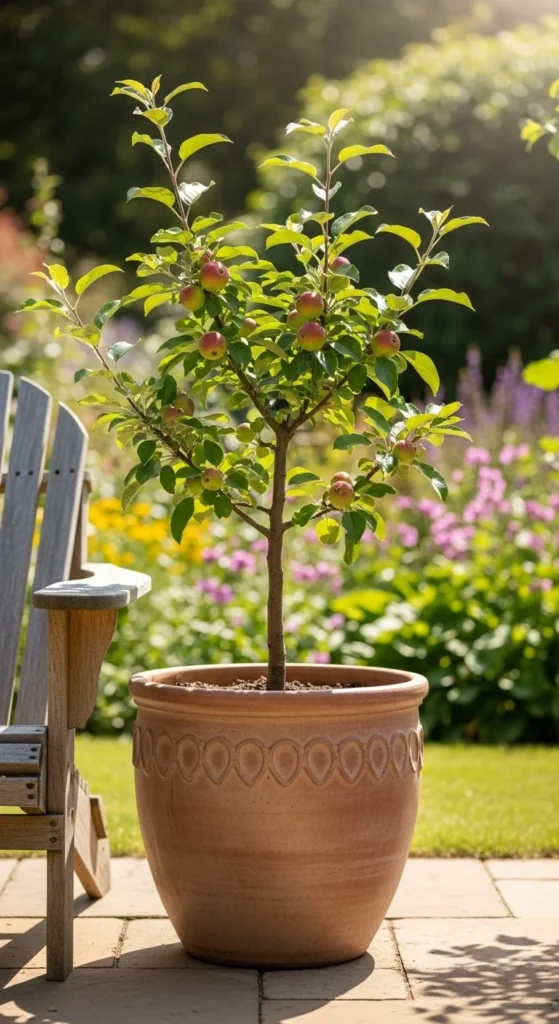
Growing apple trees in containers opens new possibilities for patios, balconies, and compact yards. With dwarf varieties, structured pruning, and the right pot size, you can enjoy blossoms and fruit even in small spaces. These ideas help you shape, support, and style container-grown apple trees in simple ways that fit busy routines. Whether you want decorative appeal or regular harvests, each tip offers easy, practical steps that work well for beginners and compact gardens.
1. Classic Dwarf Apple in a Large Terracotta Pot
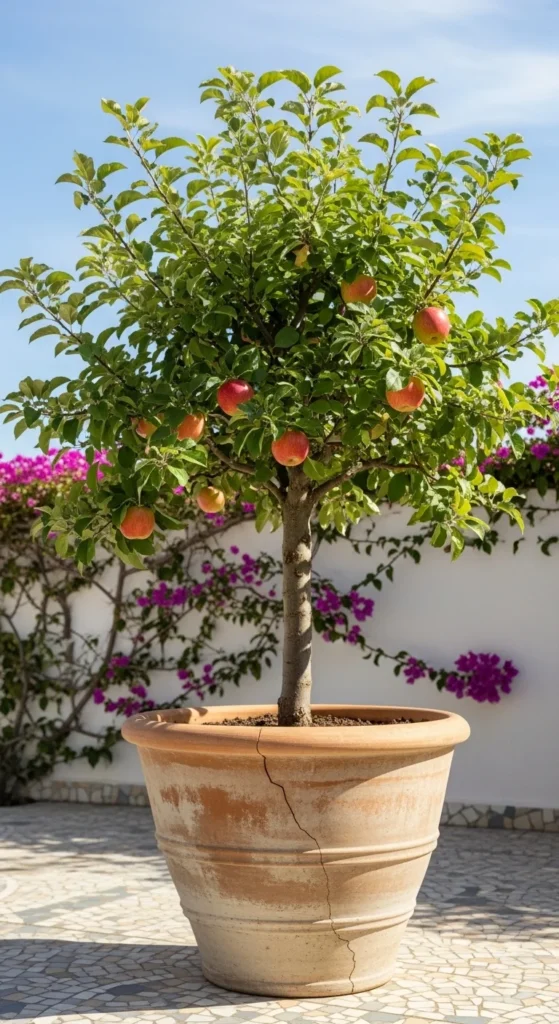
A large terracotta pot helps regulate soil moisture and keeps roots from getting waterlogged. Dwarf varieties thrive here because the pot gives structure without overwhelming small areas. Keep the tree in full sunlight so it sets fruit more reliably. Water lightly but consistently, letting the top layer dry between sessions. Add compost every few months to keep growth steady.
Budget tip: Choose unglazed terracotta—it’s cheaper and breathes better.
DIY idea: Wrap the rim with jute rope for a warm, natural touch.
2. Balcony Column Apple Tree
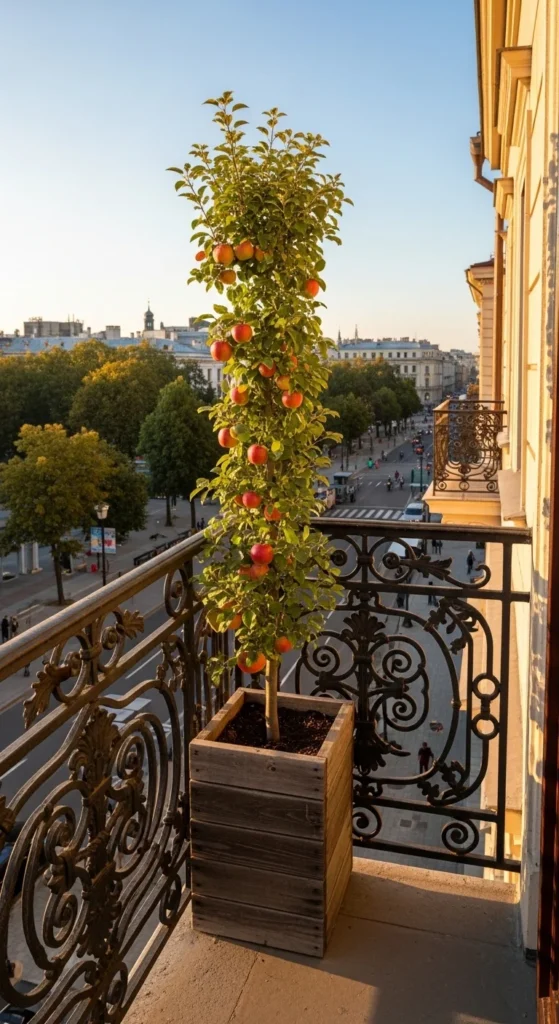
Column apple trees stay slim and upright, making them perfect for railings or balcony corners. Their narrow shape doesn’t take much room, yet they still give clusters of small fruits. Keep pruning simple: snip stray side shoots so the tree maintains its tall form. Place the container where it gets steady light throughout the day.
Budget tip: Use lightweight resin pots to avoid adding too much weight to balcony structures.
DIY idea: Tie a thin bamboo stake alongside the trunk for extra support during windy weather.
3. Apple Tree in a Rolling Container
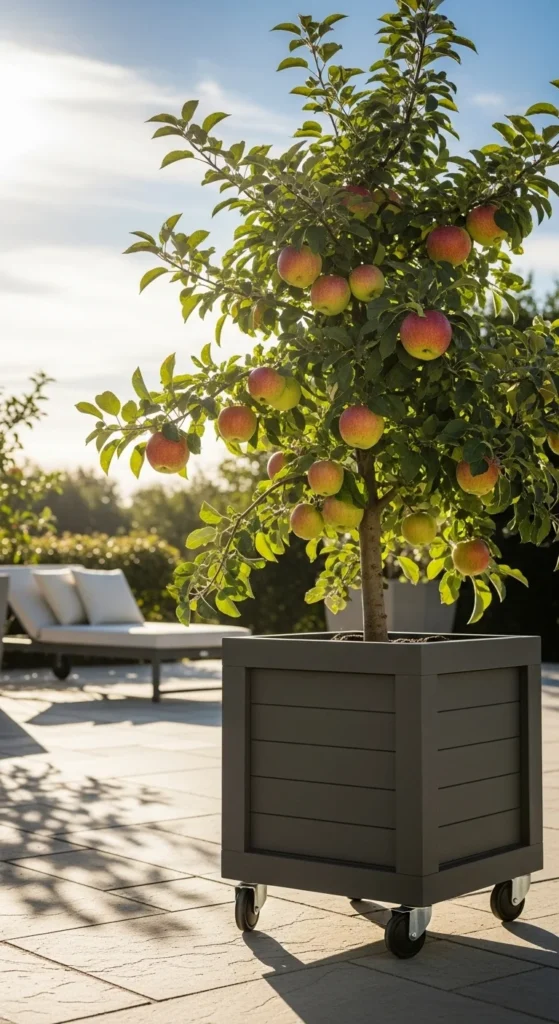
A rolling planter makes sunlight management easy. During different seasons, simply move the tree to brighter spots without lifting heavy pots. This mobility helps fruiting, especially when winter shadows cover parts of the yard. Keep the soil loose and well-drained so the tree roots spread comfortably.
Budget tip: Buy a basic trolley stand rather than a built-in rolling pot.
DIY idea: Add soft felt pads under the wheels to prevent patio scratches.
4. Apple Tree Espalier Against a Wall
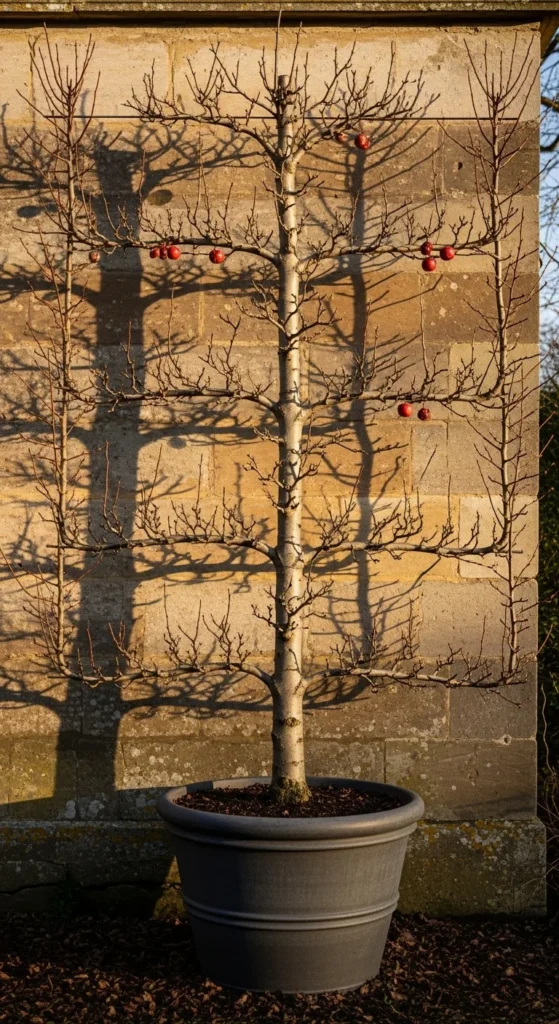
Espalier training saves space and creates a striking pattern. Use a container placed a few inches away from a sunny wall. Guide branches horizontally with soft ties. This structure improves airflow and helps fruit ripen evenly. It’s simple to maintain because branches grow predictably.
Budget tip: Use basic wire hooks instead of expensive trellis kits.
DIY idea: Mark branch levels using chalk on the wall for even spacing.
5. Apple Tree Paired With Trailing Herbs
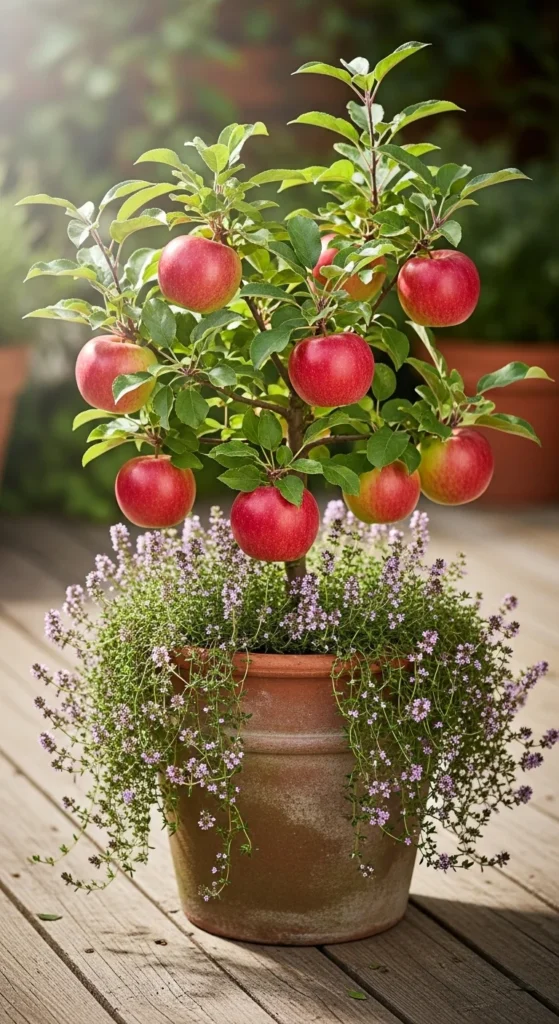
Mixing thyme or creeping herbs around the base adds fragrance and color. These plants stay low and don’t compete heavily with the apple tree. Choose herbs that stay compact during warm months. Water slowly so the soil soaks up moisture without flooding.
Budget tip: Use herb cuttings instead of buying new pots.
DIY idea: Add small river stones between herbs for texture.
6. Compact Patio Orchard Trio
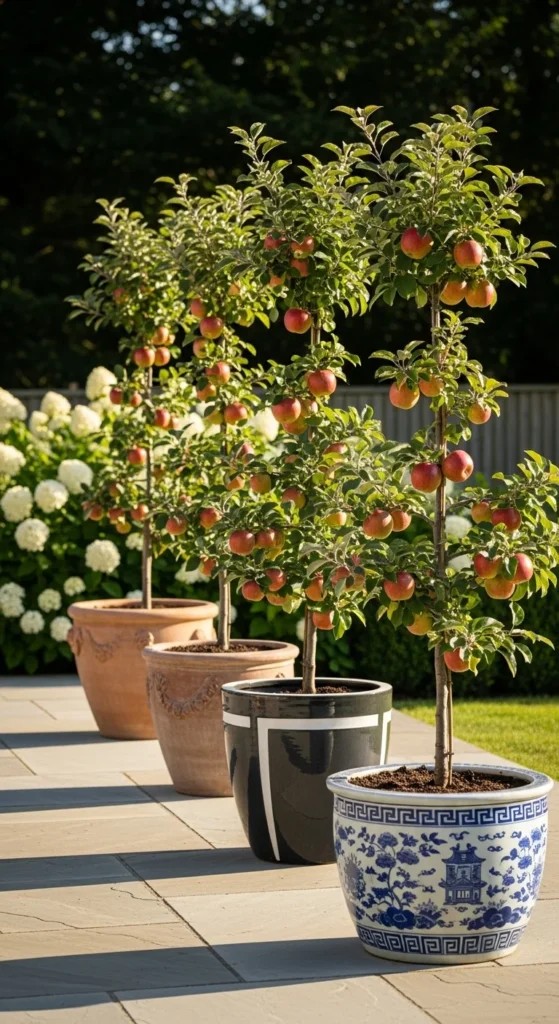
Create a small orchard effect by grouping three trees together. Choose dwarf varieties that fruit at different times. This gives color and interest through the year. Keep pots spaced so airflow stays healthy. Grouping also helps with cross-pollination when varieties match.
Budget tip: Mix and match containers from clearance sections.
DIY idea: Place each pot on a differently colored saucer for simple styling.
7. Apple Tree With Seasonal Underplanting
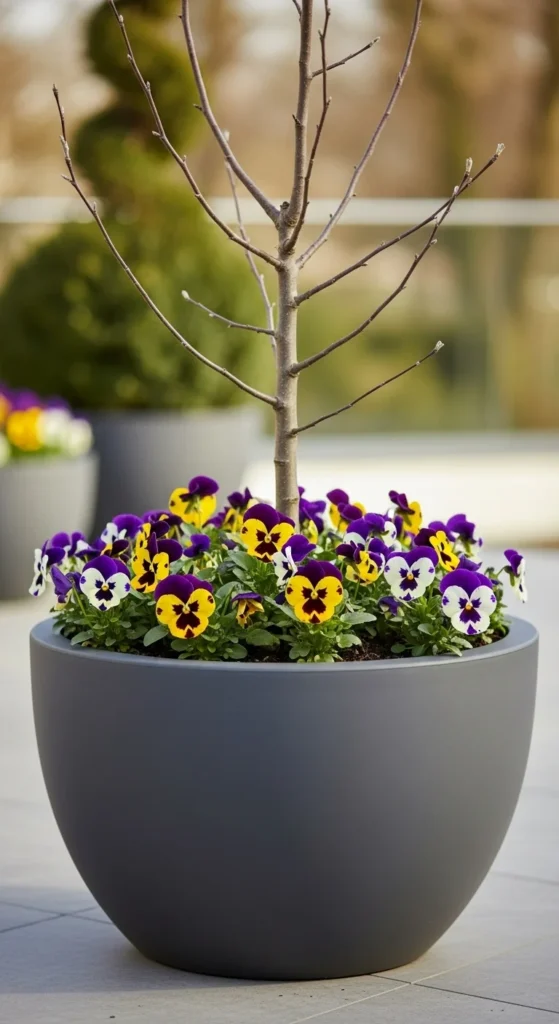
Underplanting adds color without harming the tree. Winter pansies, violas, or small greens fit well around the trunk. Keep an inch of space around the trunk to avoid rot. These plants also help keep soil cooler during warm days.
Budget tip: Buy multipacks of seasonal flowers.
DIY idea: Rotate the underplanting every season for variety.
8. Apple Tree in a Tall Fiberclay Planter
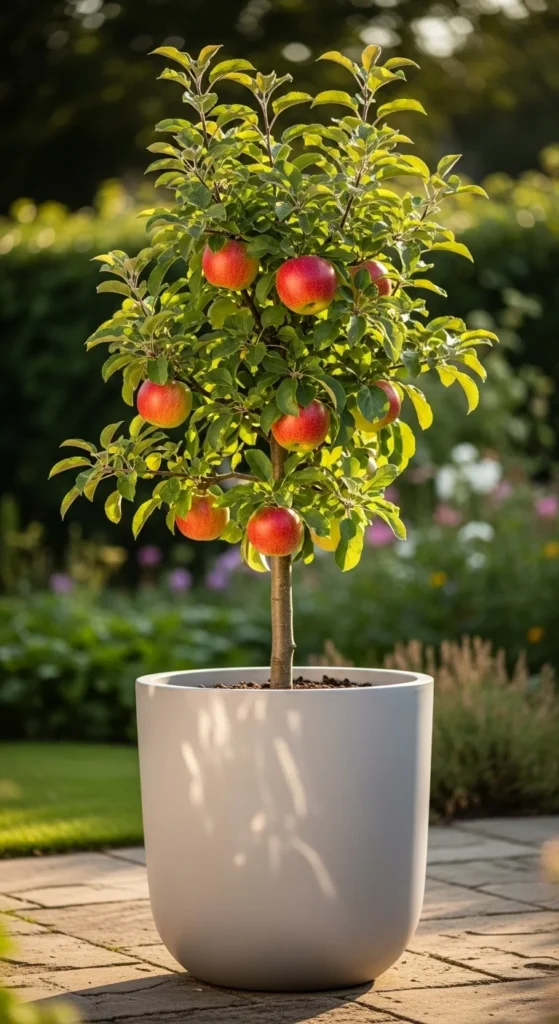
Tall planters protect roots from strong temperature swings and add height to small patios. Fiberclay is lightweight and durable. Plant the apple tree slightly lower than the rim so water doesn’t spill over. Check soil often because tall containers dry a bit faster.
Budget tip: Choose unpainted fiberclay—they’re cheaper.
DIY idea: Add a thin layer of pine bark chips on top for a neat finish.
9. Apple Tree Supported With a Simple Stake
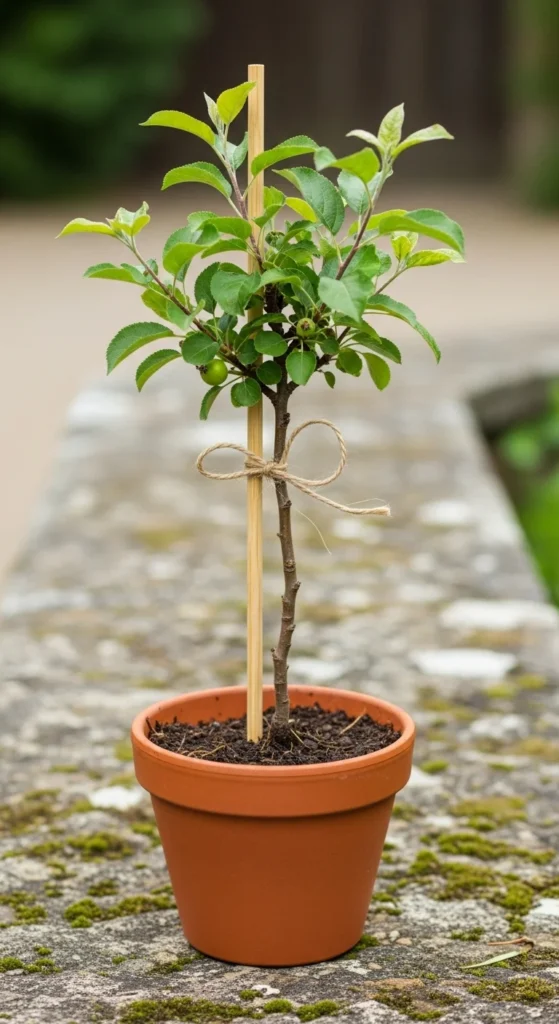
Young apple trees benefit from a simple stake to help them grow straight. Use a smooth wooden stick and soft ties. Avoid tight knots. Place the stake close to the trunk so it doesn’t disturb roots. This setup helps branches form evenly as the tree develops.
Budget tip: Use bamboo stakes—they’re inexpensive.
DIY idea: Paint the stake to match your container.
10. Mini Apple Tree for Tiny Balconies
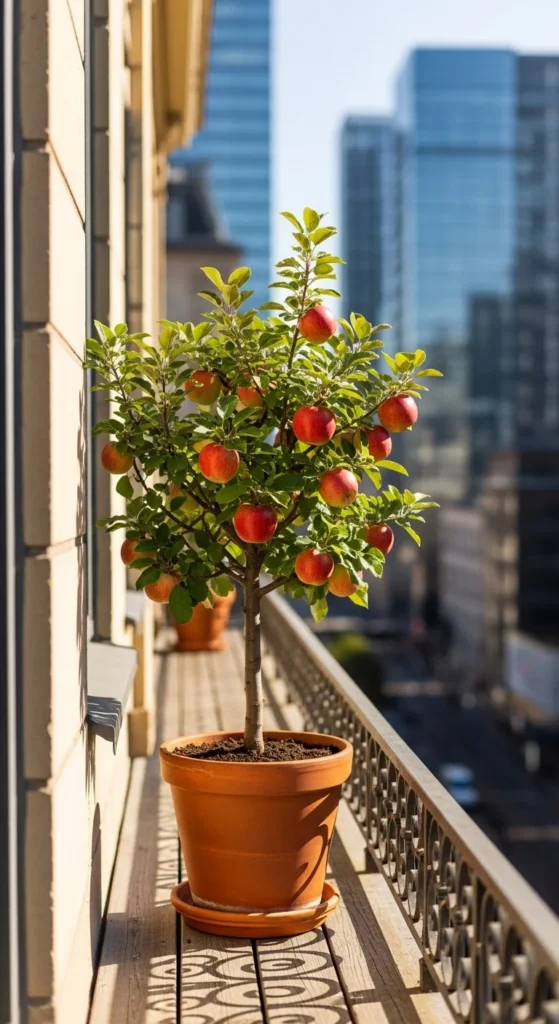
Ultra-compact apple varieties work well in very small spaces. Keep pruning simple to maintain shape. Use a lightweight container to avoid strain on balcony structures. These trees produce small but tasty fruits perfect for snacking.
Budget tip: Look for small starter trees instead of mature ones.
DIY idea: Add a wall-mounted hook beside the pot for holding pruning scissors.
11. Apple Tree With Adjustable Drip Line
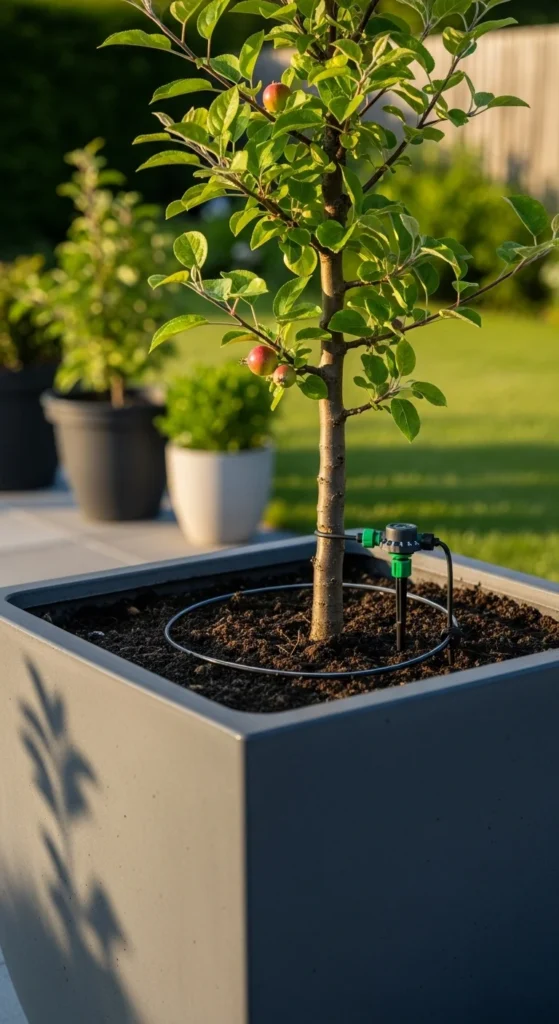
A slow drip line keeps watering simple and consistent. Set the flow low so the soil stays slightly moist without soaking roots. This method saves time during busy weeks. Check the line once a week for clogs.
Budget tip: Choose basic adjustable drippers.
DIY idea: Cover the tubing with mulch chips for a cleaner look.
12. Apple Tree in a Rustic Barrel Planter
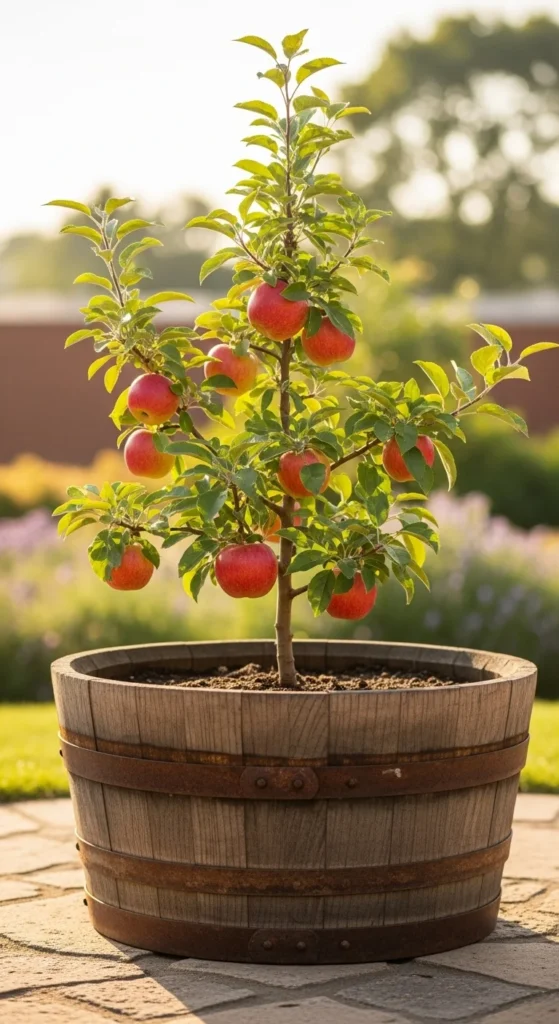
Barrel planters give a farmhouse feeling that suits apple trees perfectly. Drill plenty of drainage holes before planting. Keep the soil airy with compost and perlite. This container holds enough soil volume for steady fruiting.
Budget tip: Find reclaimed barrels at garden markets.
DIY idea: Add metal handles for decorative detail.
13. Apple Tree Trained Into a Fan Shape
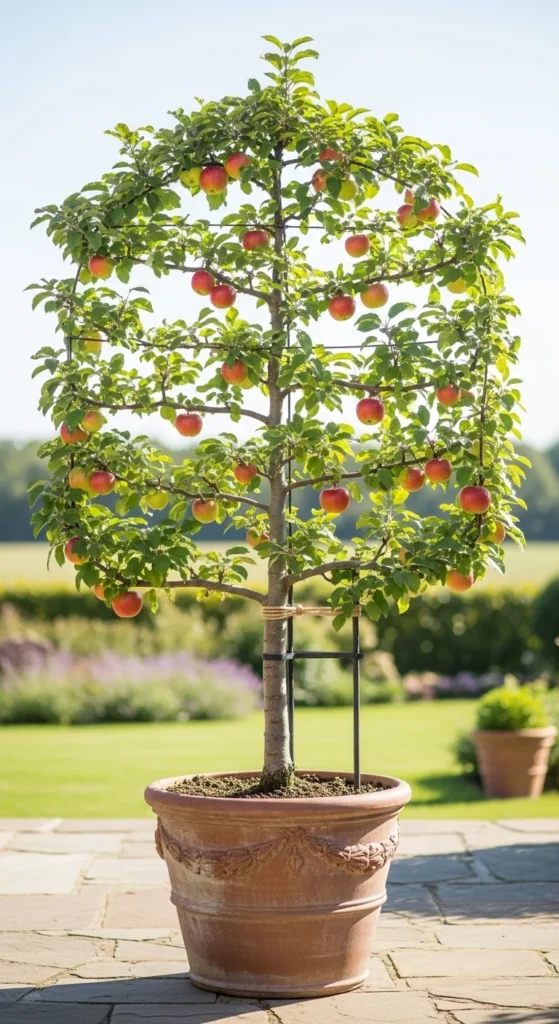
A fan shape spreads branches evenly while using vertical space wisely. Use a small frame attached to the back of the pot. Guide branches outward with soft ties. This shape helps light reach all parts of the tree.
Budget tip: Make the frame from wooden strips.
DIY idea: Add horizontal wires to help guide each branch.
14. Apple Tree on a Multi-Level Plant Stand
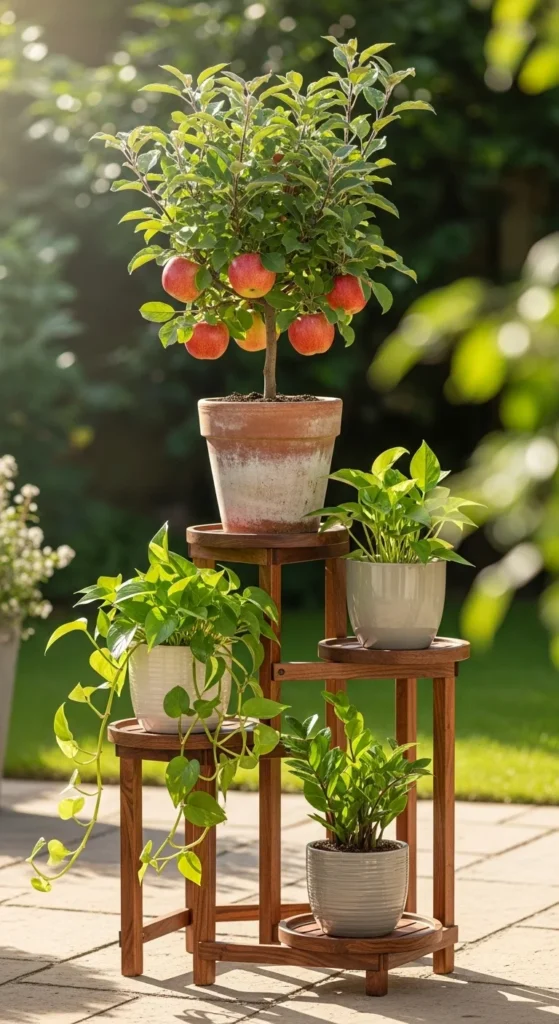
Placing the apple tree on the top tier of a multi-level stand brings it closer to sunlight. Lower levels can hold herbs or flowers. This setup works well on small patios with uneven lighting.
Budget tip: Repurpose an old metal shelf.
DIY idea: Add small LED lights under each tier for evening charm.
15. Apple Tree Surrounded by Straw Mulch
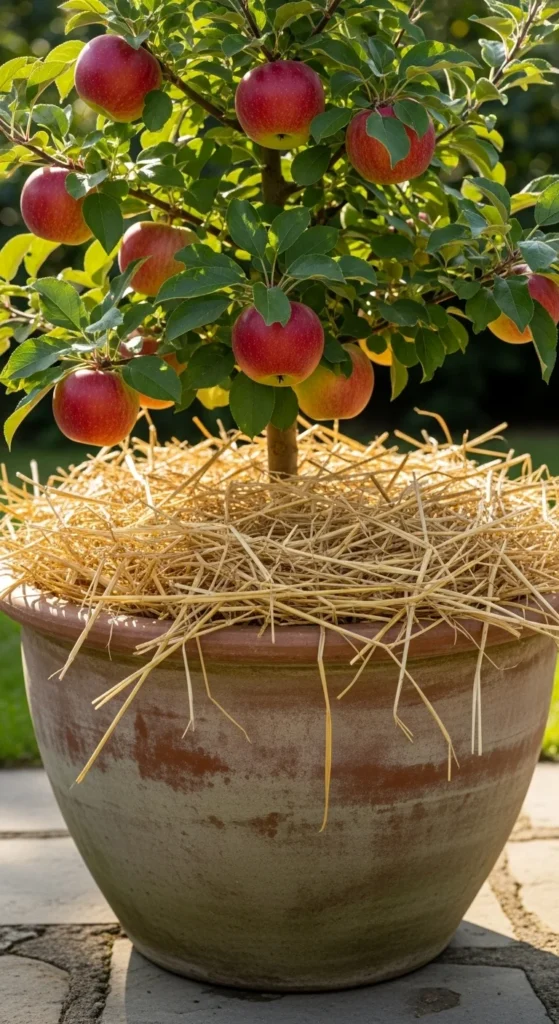
Straw mulch keeps moisture consistent and protects roots from temperature swings. Spread a thin layer so the trunk stays uncovered. Mulch also keeps weeds away and reduces watering frequency.
Budget tip: Use bagged straw from feed stores.
DIY idea: Mix in a few pine needles for fragrance.
16. Apple Tree With Fruit-Support Clips
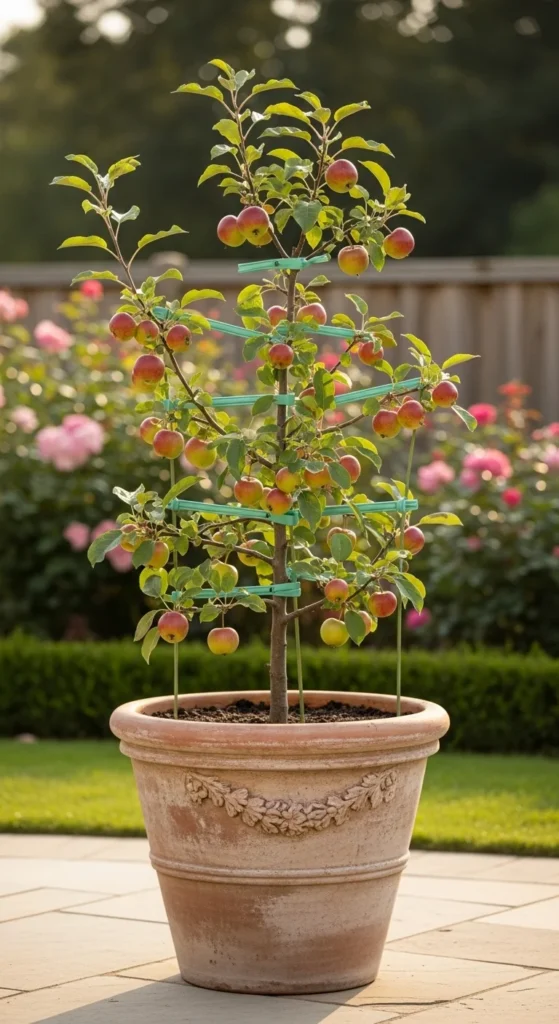
When apples form, branches may need a bit of support. Fruit clips help keep young apples from breaking thin stems. Attach them lightly and adjust as apples grow. This keeps the tree neat and reduces drop-off.
Budget tip: Buy reusable clips.
DIY idea: Use soft fabric ties for gentle support.
17. Apple Tree in a Black Matte Container
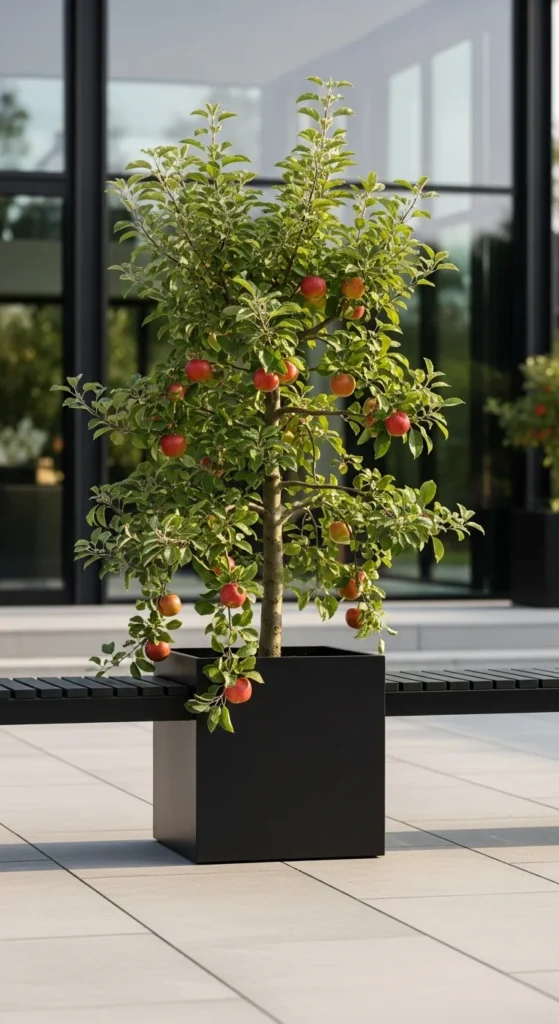
A black matte pot gives a modern, clean look. It contrasts nicely with green leaves and red fruit. Make sure the container has good drainage since black absorbs heat.
Budget tip: Choose lightweight plastic matte pots.
DIY idea: Add matching black saucers for a unified style.
18. Apple Tree With Pollinator Companion Flowers
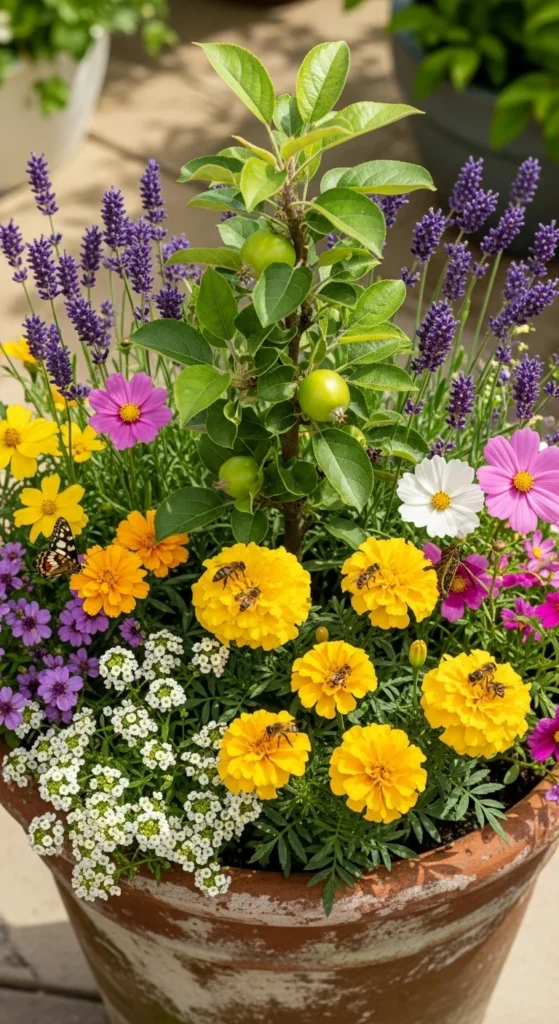
Plant small pollinator-friendly flowers around the pot to attract bees. This helps apple blossoms get proper pollination for better fruiting. Choose low-growing flowers like alyssum or dwarf marigolds.
Budget tip: Start from seed packs.
DIY idea: Add bright decorative stones to guide bees toward the flowers.
19. Apple Tree on a Wooden Crate Stand
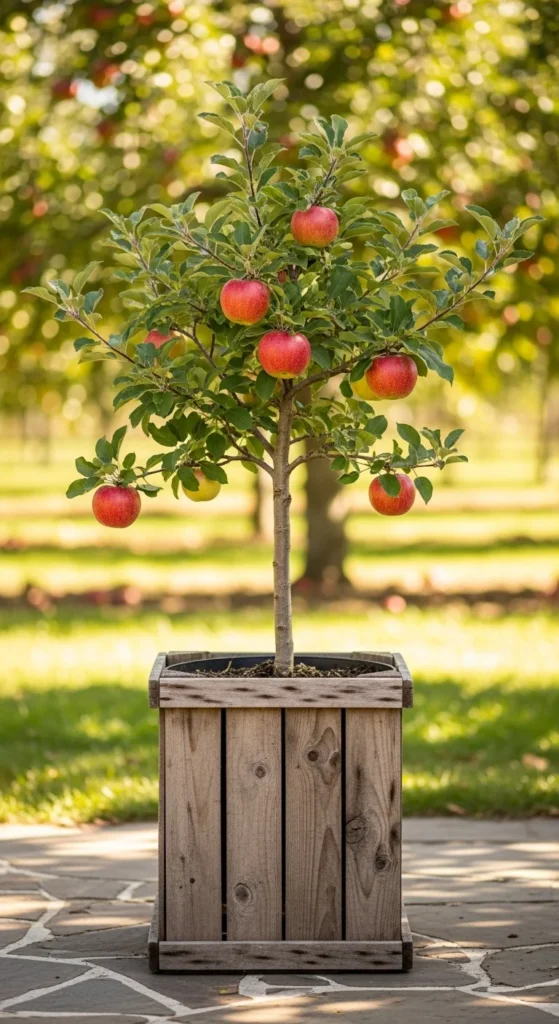
A wooden crate lifts the tree for better drainage and sunlight. It also adds rustic charm. Keep the crate stable by placing a brick inside for weight. This method works well on patios with uneven ground.
Budget tip: Use reclaimed crates.
DIY idea: Paint the crate to match your outdoor furniture.
20. Apple Tree With Root-Pruning Basket Insert
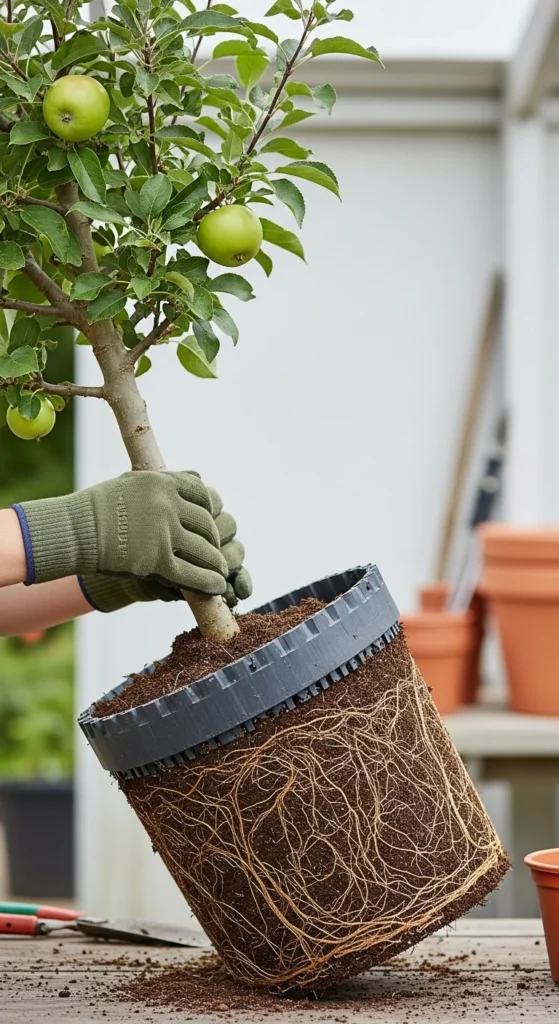
Root-pruning baskets keep roots from circling inside the pot. They create healthy growth patterns that support fruiting. Place the basket inside your container before adding soil. Over time, the apple tree maintains a compact but strong root system.
Budget tip: Choose inexpensive mesh baskets.
DIY idea: Cut large baskets into shape if the fit isn’t exact.
21. Apple Tree in a Self-Watering Container
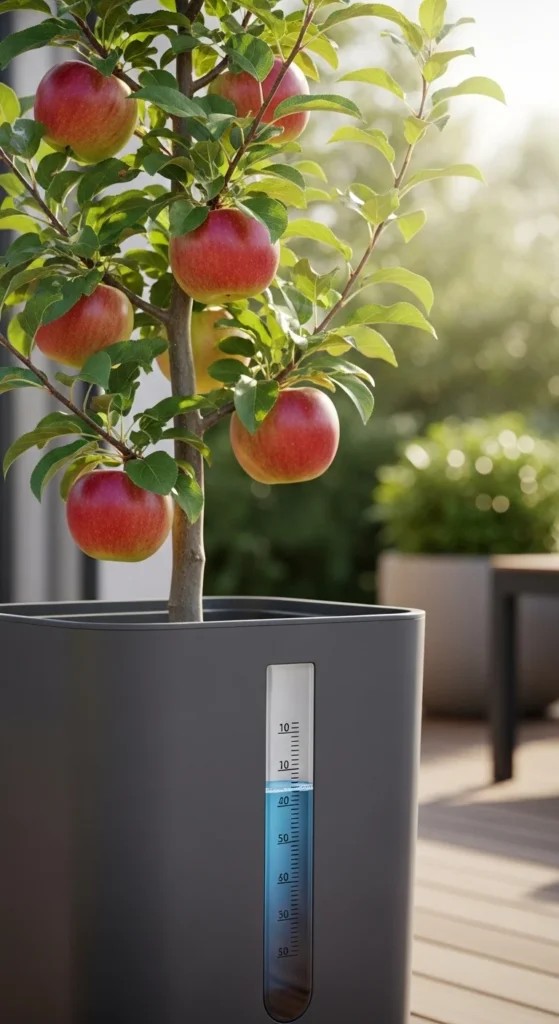
A self-watering pot reduces daily maintenance. The reservoir keeps soil moisture consistent, helping young trees during warm spells. Check the reservoir weekly. Use light soil so water moves upward efficiently.
Budget tip: Choose basic models without digital features.
DIY idea: Add a small stone cover on top to keep soil tidy.
22. Apple Tree With Decorative Pebble Layer
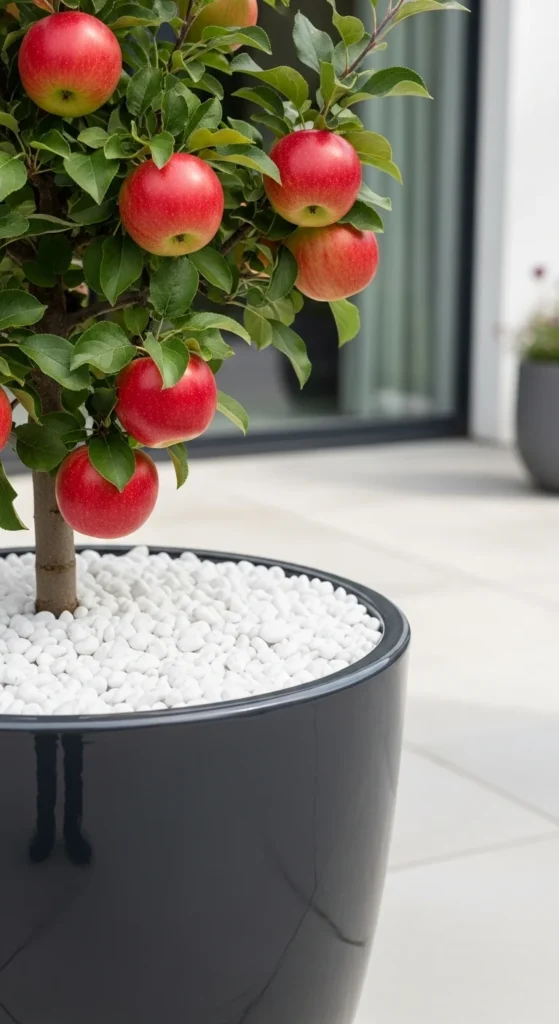
A pebble layer keeps the surface neat and helps reduce fungus gnats. White or natural stones reflect light and warm the trunk gently. Make sure the stones aren’t too thick so water still reaches the soil easily.
Budget tip: Use aquarium stones.
DIY idea: Add a pattern with two pebble colors.
23. Apple Tree as a New Year Balcony Feature
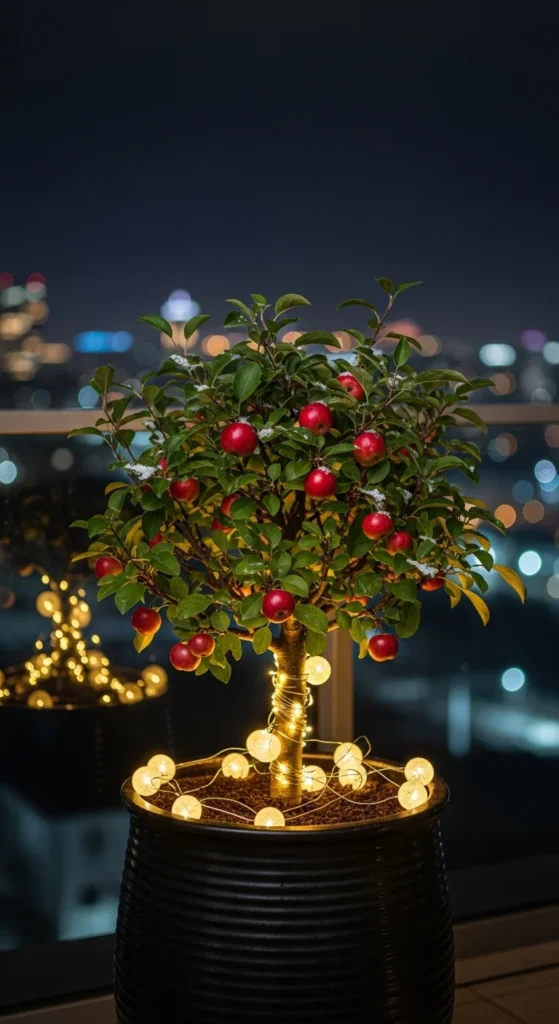
Decorate your apple tree subtly for New Year by adding soft string lights around the pot—never around branches. Keep it simple so the tree remains the highlight. After celebrations, remove the lights and continue regular care. This idea adds charm without harming growth.
Budget tip: Use small battery lights.
DIY idea: Add a miniature wooden sign with the year for a seasonal touch.
Conclusion
Container apple trees make fruit-growing possible in small patios, balconies, and compact yards. With thoughtful pruning, simple accessories, and supportive containers, you can shape these trees into beautiful and productive features. Whether you choose a classic terracotta pot, a balcony column tree, or a decorative seasonal setup, each idea helps you enjoy fruit and greenery without needing large spaces. Choose the styles that match your home and start growing your own apples with confidence and creativity.
Leave a Reply