

Good potting soil is the foundation of every healthy plant—whether you’re growing houseplants, vegetables, herbs, or flowers. But store-bought mixes can get expensive fast, especially if you garden often. The good news? You can make potting soil at home that’s lighter, richer, and often better than commercial bags.
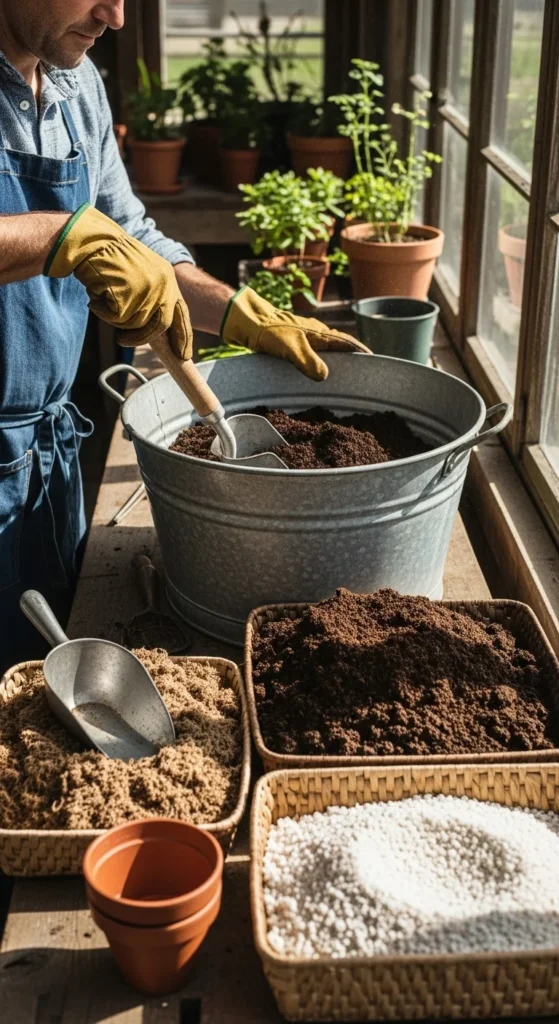
Let’s walk through a simple, budget-friendly recipe to create potting soil that helps plants grow strong and stay healthy.
Why DIY Potting Soil Is Worth It
Making your own potting soil gives you complete control over quality.
You know exactly what’s going into your mix—no fillers, no moldy clumps, no mystery ingredients.
✅ Benefits:
- Saves money
- Customizable for different plants
- Fresher and lighter than store mixes
- Improves drainage and moisture control
- Reduces plant stress and root rot
It’s one of the easiest upgrades for better gardening results.
Understand the Key Components
All good potting soils have a balance of three important ingredients:
✅ 1. Base Material (Holds Moisture)
- Peat moss
- Coconut coir
- Compost (aged and sifted)
✅ 2. Drainage + Aeration Material
- Perlite
- Vermiculite
- Pumice
- Rice hulls
These ingredients keep your soil fluffy and prevent roots from suffocating.
✅ 3. Nutrition
- Compost
- Worm castings
- Organic fertilizer
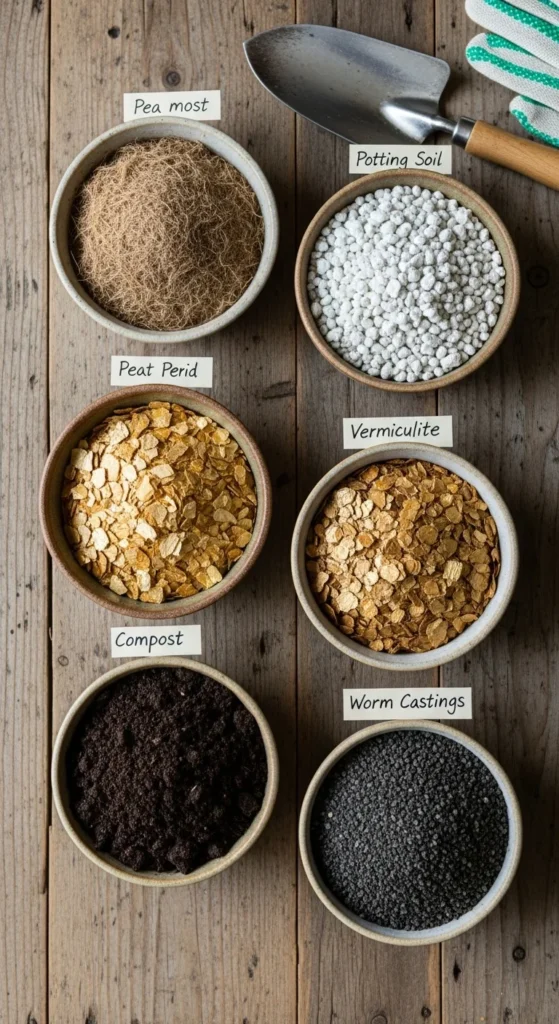
With the right balance, your potting mix becomes the perfect environment for strong root growth.
A Simple, All-Purpose DIY Potting Soil Recipe
This recipe works for most indoor plants, vegetables, herbs, and seedlings.
✅ All-Purpose Potting Mix
- 2 parts coco coir or peat moss
- 1 part perlite
- 1 part compost
- ½ part worm castings (optional but amazing)
Why this works:
- Coir holds moisture
- Perlite adds airflow
- Compost provides nutrients
- Worm castings boost plant health
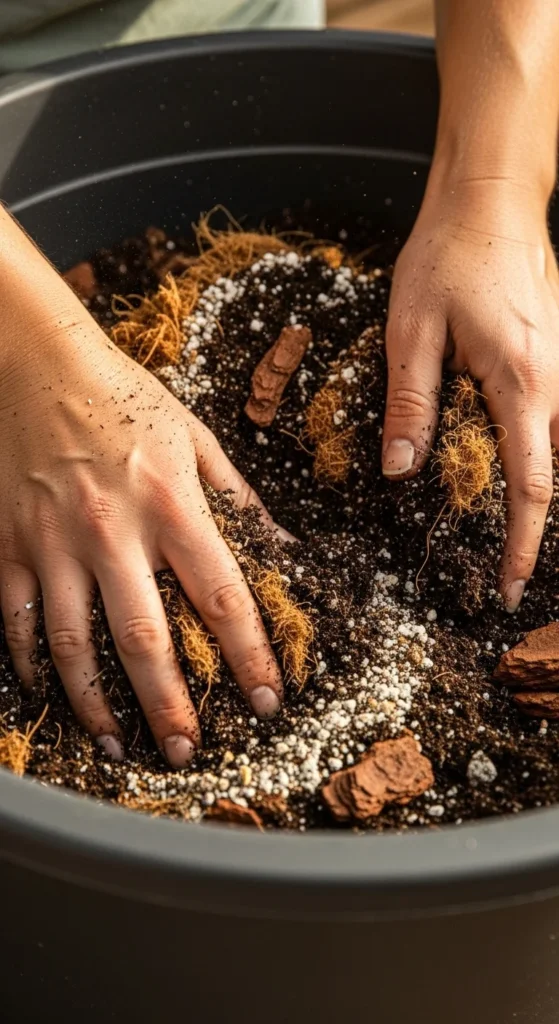
Mix everything thoroughly in a large tub or bucket.
Custom Recipes for Special Plants
Some plants have unique needs, so adjusting the mix gives even better results.
✅ For Indoor Houseplants
- 2 parts coir
- 1 part perlite
- 1 part houseplant compost
- A handful of orchid bark
✅ For Succulents & Cacti
- 2 parts sand or gritty mix
- 1 part perlite or pumice
- 1 part compost
- Optional: a small amount of charcoal
✅ For Seed Starting
- 2 parts coir
- 1 part vermiculite
- ½ part compost
Seed-starting mixes should be very light and sterile.
How to Sterilize Your DIY Potting Soil
If you’re using garden soil or homemade compost, sterilizing can prevent pests, weed seeds, or fungal issues.
✅ Easy Oven Sterilizing:
- Preheat oven to 82°C (180°F)
- Spread soil in a baking tray
- Heat for 30 minutes
- Let cool completely
✅ Solar Sterilizing (No Energy Needed)
- Place soil in a clear bag
- Leave in direct sun for 2–3 days
- Heat kills pests naturally
This step is great for seedlings and houseplants.
Moisture Matters: Pre-Wet Your Mix
Dry ingredients like peat and coir repel water at first.
Always moisten before using.
✅ How to Pre-Wet:
- Add water slowly
- Mix with your hands
- Stop when soil feels like a damp sponge
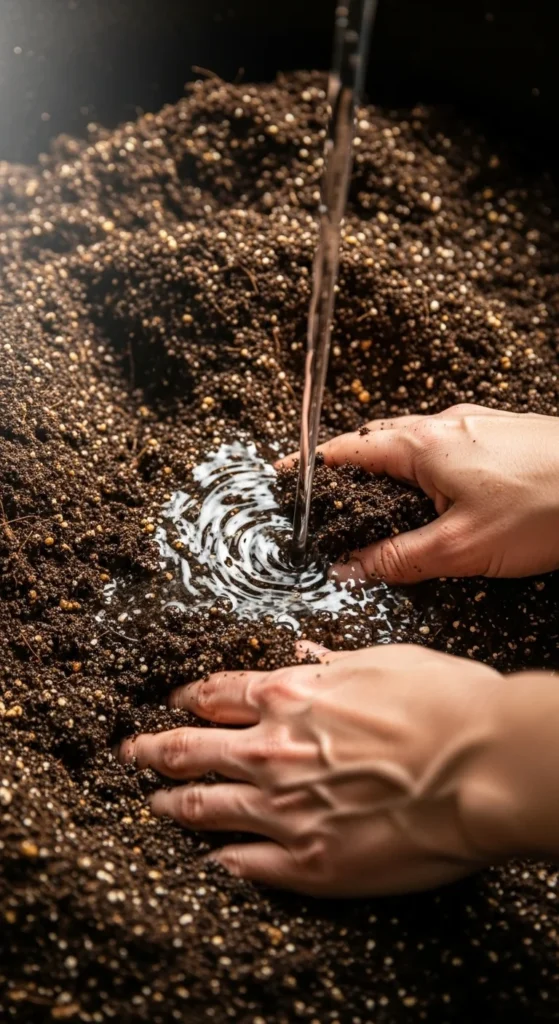
This prevents water from running straight through your pots later.
Improve Your Soil With Extra Boosters
Once you have the base mix, you can upgrade it with simple natural amendments.
✅ Add for Better Drainage:
- Rice hulls
- Pumice
- Orchid bark
✅ Add for More Nutrition:
- Worm castings
- Kelp meal
- Crushed eggshell powder
- Compost tea
✅ Add for Healthier Roots:
- A pinch of powdered charcoal
- Mycorrhizal fungi (optional but powerful)
These additions help your plants grow like crazy.
How to Store Homemade Potting Soil
To keep your soil fresh and usable for months:
✅ Storage Tips:
- Keep it in a sealed bin or bag
- Store in a cool, dry place
- Add a few ventilation holes to prevent mold
- Mix again before using if ingredients settle
Proper storage keeps pests and moisture out.
✅ Final Takeaway
Making your own potting soil isn’t just cheaper—it’s better for your plants. With the right ingredients and a simple mixing routine, you can create a soil blend that drains well, holds moisture, and feeds your plants naturally.
Leave a Reply