

There’s nothing quite like stepping outside and being greeted by colorful flowers—week after week, month after month. But many beginner gardeners face the same problem: everything blooms at once… and then the garden goes quiet. The secret to a flower garden that blooms all season isn’t luck—it’s smart planning 🌸
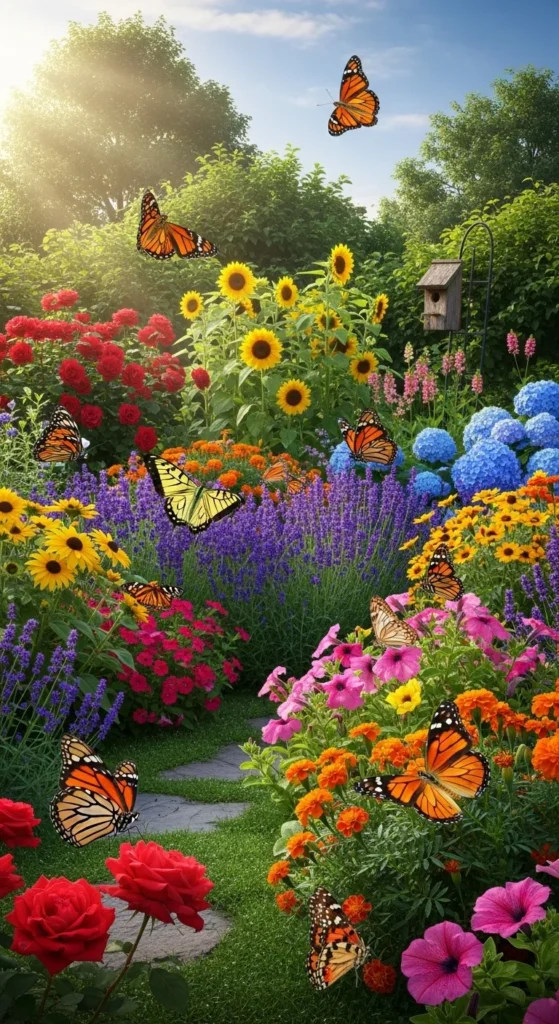
This guide walks you through simple, beginner-friendly steps to create a flower garden that keeps blooming from early spring through fall.
Step 1: Understand Your Garden’s Sun and Space
Before planting a single flower, take time to understand your garden conditions. This step alone can double your success.
Observe:
- How many hours of sunlight your garden gets
- Which areas get morning vs. afternoon sun
- Where shade falls during the day
- Windy or protected spots
Most flowering plants need 6–8 hours of sunlight, but some thrive in partial shade. Knowing this helps you choose the right flowers from the start.
Step 2: Choose Flowers With Different Bloom Times
The key to all-season color is layering bloom times.
Instead of planting only one type of flower, mix:
- Early bloomers (spring)
- Mid-season flowers (summer)
- Late bloomers (fall)
Beginner-friendly examples:
- Spring: pansies, alyssum, calendula
- Summer: zinnias, cosmos, petunias
- Fall: marigolds, salvias, asters
This way, when one group fades, another starts shining.
Step 3: Mix Annuals and Perennials for Balance
A smart flower garden uses both annuals and perennials.
Perennials:
- Come back every year
- Bloom for shorter periods
- Provide structure and consistency
Annuals:
- Bloom nonstop
- Add bold color
- Fill gaps easily
Plant perennials as your foundation, then tuck annuals in between for long-lasting color.
Step 4: Prepare Healthy Soil for Strong Blooms
Flowers can’t bloom their best in poor soil. Good soil supports roots, moisture, and nutrients.
Simple soil prep:
- Remove weeds and debris
- Loosen soil 8–10 inches deep
- Mix in compost or organic matter
- Ensure good drainage
Healthy soil leads to healthier plants—and more blooms throughout the season.
Step 5: Plant With Spacing and Height in Mind
Crowded plants compete for sunlight and nutrients, which reduces blooming.
Plant smart:
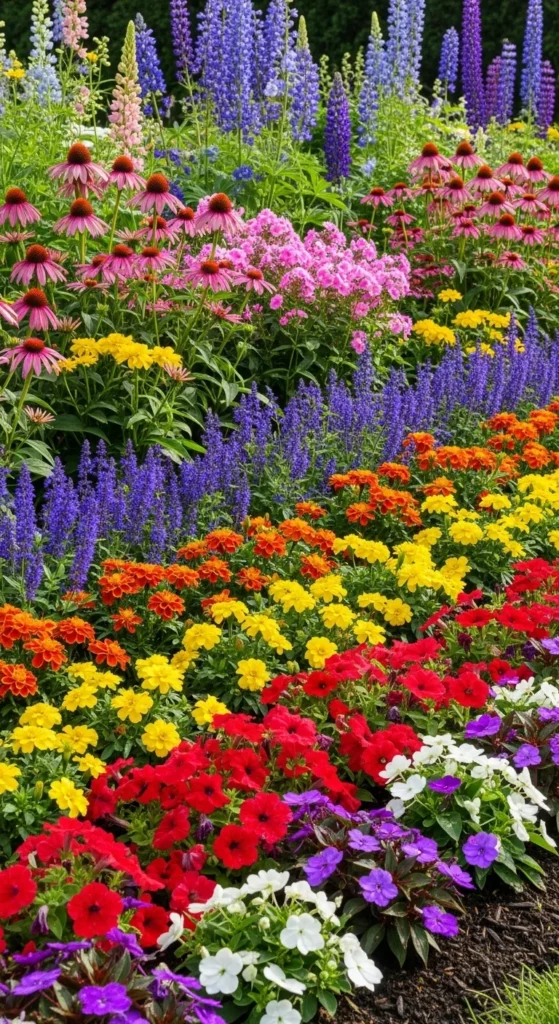
- Tall flowers at the back
- Medium-height plants in the middle
- Short flowers at the front
- Leave space for air circulation
This layout improves growth, prevents disease, and makes your garden look full—not messy.
Step 6: Water and Feed for Continuous Flowers
Flowers need consistent care to keep blooming.
Watering tips:
- Water deeply, not lightly
- Early morning is best
- Avoid soaking leaves
Feeding tips:
- Use a balanced flower fertilizer
- Feed every 2–4 weeks
- Compost works as a gentle natural booster
Well-fed plants stay productive longer and recover faster after blooming.
Step 7: Deadhead and Prune Regularly
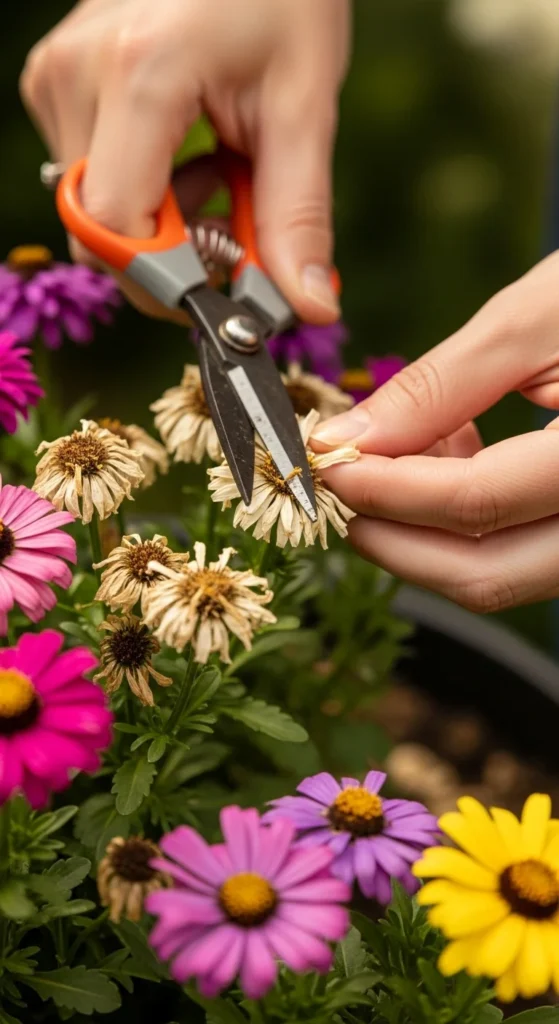
Deadheading means removing spent flowers—and it’s one of the easiest ways to keep blooms coming.
Why it works:
- Signals the plant to produce more flowers
- Keeps plants tidy
- Prevents energy loss to seed production
Most flowers respond quickly. A few minutes of maintenance each week can add months of blooms.
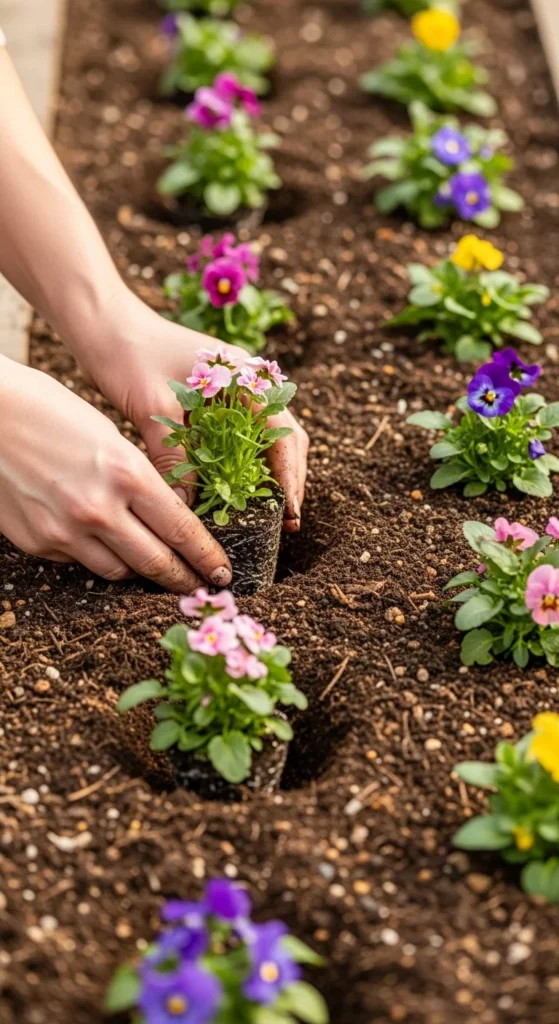
Step 8: Fill Gaps as the Season Changes
Even well-planned gardens change over time.
If something fades early:
- Add fast-growing annuals
- Use container plants to fill empty spots
- Rearrange pots for instant color
This flexibility keeps your garden looking fresh all season long.
Common Mistakes to Avoid
Avoid these beginner slip-ups:
- Planting all flowers at once
- Ignoring sunlight needs
- Overwatering
- Skipping deadheading
- Forgetting soil preparation
A little attention goes a long way.
Final Takeaway
Starting a flower garden that blooms all season is about planning, variety, and simple care. Mix bloom times, use healthy soil, and stay consistent with watering and deadheading. The reward? A garden that never stops showing off.
🌼 Save this guide and start your all-season flower garden today!
Leave a Reply