

There’s something deeply satisfying about digging into the soil and pulling out fresh, homegrown potatoes. Whether you’re working with a backyard garden or just a sunny balcony, growing your own spuds is easier than you might think — and the results taste far better than anything store-bought.
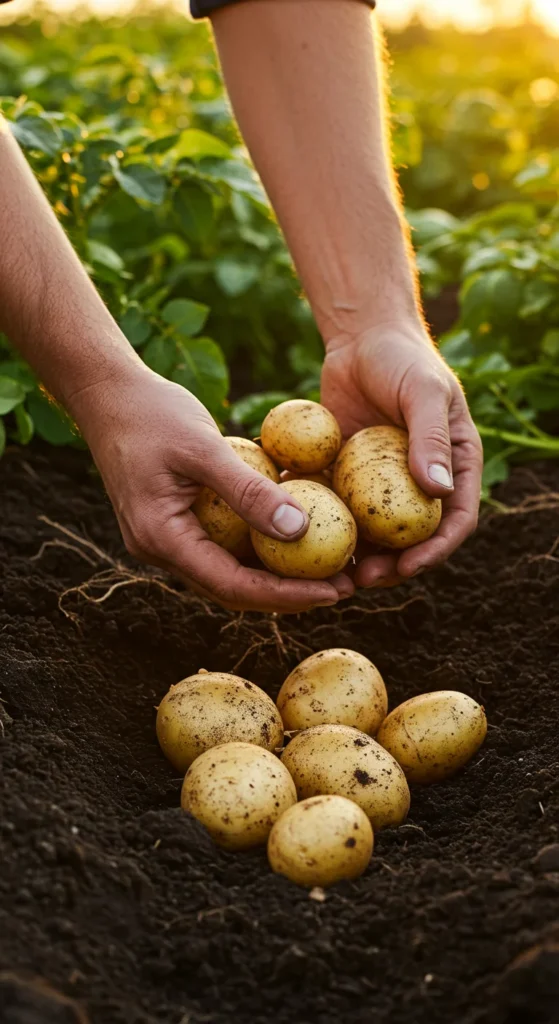
Let’s break down how to grow potatoes successfully in both containers and garden beds — so you can enjoy buttery, flavorful harvests all season long.
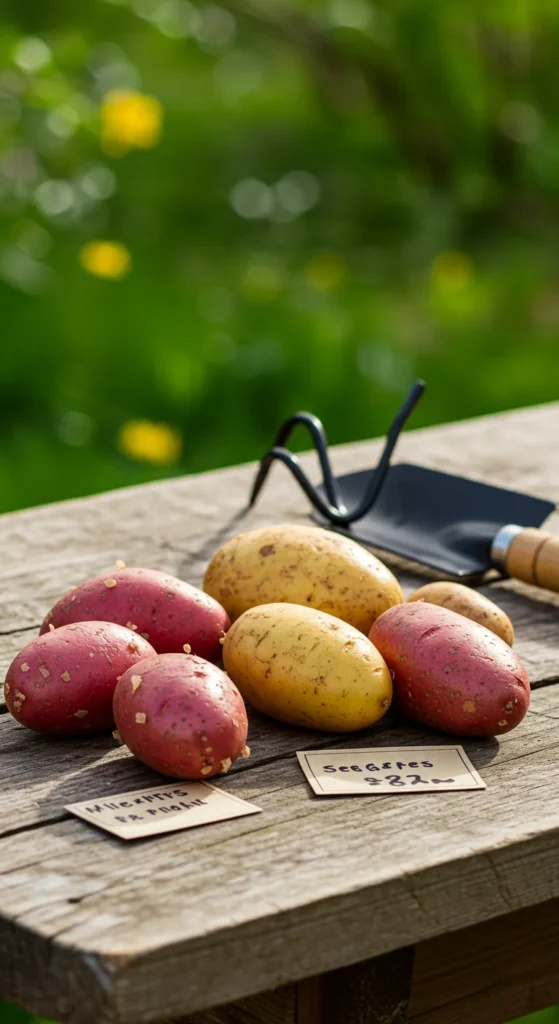
Choose the Right Potato Variety
Start with seed potatoes, not grocery-store ones. Seed potatoes are disease-free and bred for strong growth.
Popular options include:
- Yukon Gold – buttery and perfect for mashing.
- Red Pontiac – smooth-skinned and great for boiling.
- Russet Burbank – ideal for baking or fries.
- Fingerlings – fun, small, and flavorful for roasting.
Tip: If you’re growing in containers, choose early or mid-season varieties since they mature faster and fit better in smaller spaces.
Pre-Sprout Your Potatoes (Chitting)
Before planting, help your potatoes get a head start by chitting them. It’s easy:
- Place seed potatoes in an egg carton or shallow box.
- Keep them in a bright, cool spot (around 60°F).
- Wait 2–3 weeks until small green sprouts form.
This step jump-starts growth and leads to an earlier harvest — especially important for container growing.
Preparing Soil and Containers
Potatoes love loose, well-draining soil. Heavy or compacted soil can lead to misshapen tubers.
If you’re planting in:
🌿 Containers:
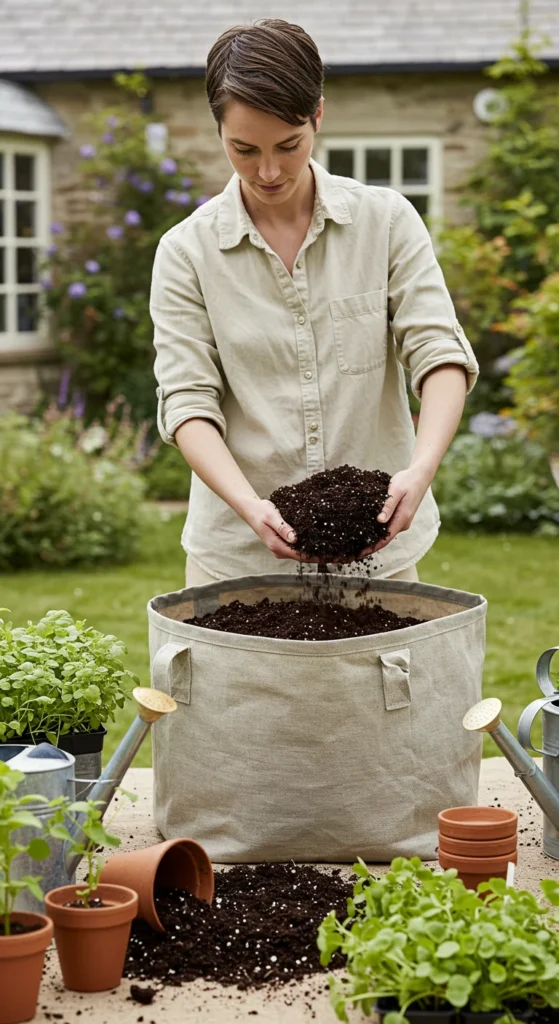
- Choose pots or grow bags that are at least 16 inches deep.
- Use a mix of compost, garden soil, and a little sand for drainage.
- Avoid waterlogged containers. Add holes if needed.
🌱 Garden Beds:
- Loosen the soil 8–10 inches deep.
- Mix in compost or aged manure for nutrients.
- Avoid recently fertilized spots — too much nitrogen makes more leaves than potatoes!
Planting Your Potatoes
Once your soil or containers are ready, it’s planting time!
- Cut large seed potatoes into pieces with at least one or two “eyes” each.
- Let them dry overnight before planting to prevent rot.
- Plant 3–4 inches deep with the sprouts facing up.
Spacing Tips:
- In containers: 2–3 seed pieces per bag or pot.
- In beds: Space them 12 inches apart in rows 2–3 feet apart.
After planting, cover lightly with soil and water well.
Hilling: The Secret to Big Harvests
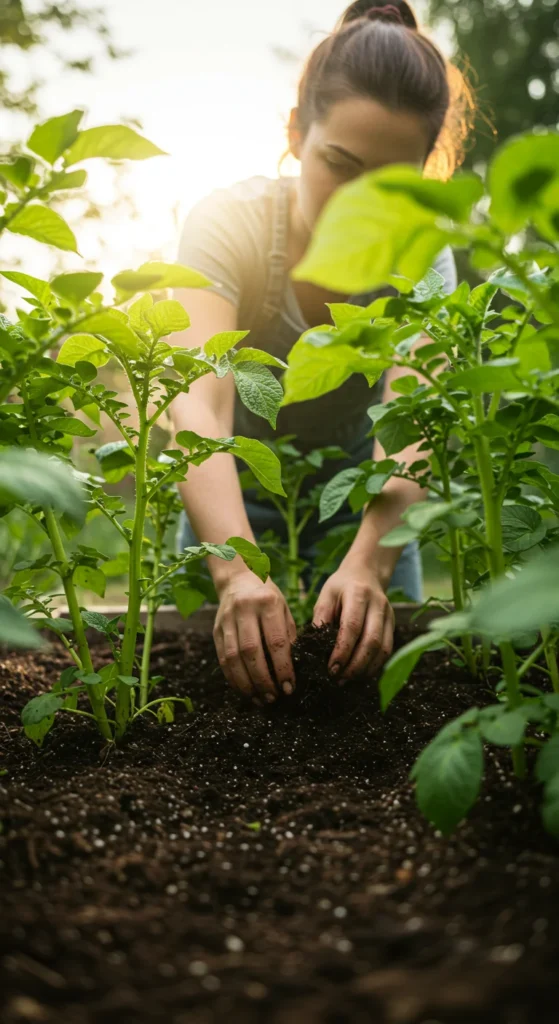
As potato plants grow, cover their lower stems with soil or compost — this process is called hilling. It encourages more tubers to form along the buried stems.
Here’s how:
- When plants reach 6–8 inches tall, add 3–4 inches of soil around the base.
- Repeat every 2–3 weeks until the container or bed is almost full.
In containers, just add more potting mix as the plants grow.
Watering and Feeding
Consistent watering is key. Potatoes need even moisture to develop properly — dry spells can cause small or cracked tubers.
- Water deeply once or twice a week depending on weather.
- Avoid soaking — soggy soil can lead to rot.
- Add a balanced organic fertilizer or compost tea once plants are well established.
Tip: Mulch around plants to retain moisture and prevent weeds.
Harvesting Your Potatoes
Patience pays off!
- New potatoes (small and tender) can be harvested about 10 weeks after planting — just dig gently around the base.
- Full-size potatoes are ready when the foliage begins to yellow and die back.
To harvest:
- Loosen the soil gently with a garden fork or hands.
- Pull out the plant and shake off the soil.
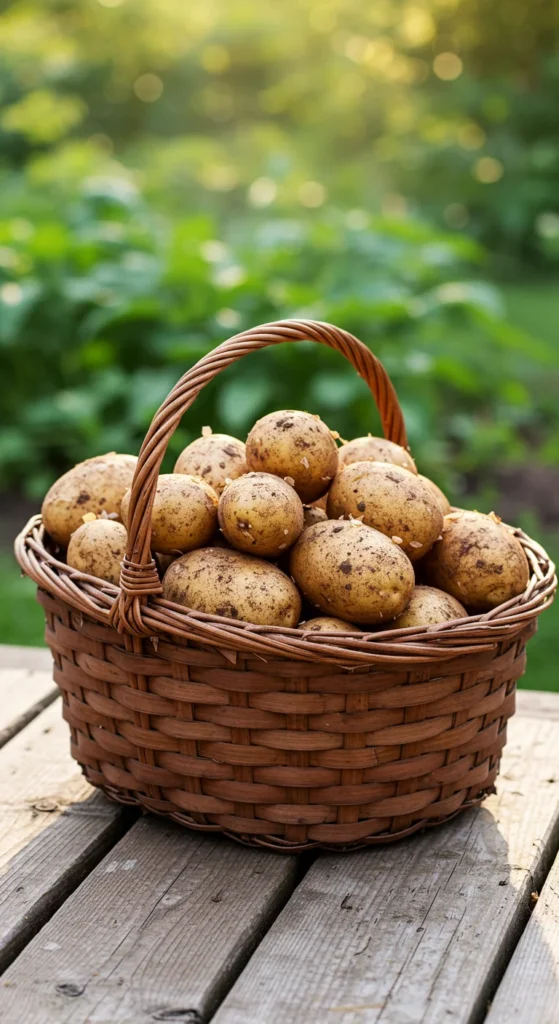
- Let the potatoes dry in a shaded spot for a few hours before storing.
Storing Your Harvest
After drying, store your potatoes in a cool, dark, and well-ventilated area. Avoid the fridge — it turns starches into sugar.
Ideal storage:
- Temperature: 45–55°F
- Humidity: around 80–90%
- Use paper bags, burlap sacks, or baskets — never plastic!
Properly stored, homegrown potatoes can last for months, ready for roasting, mashing, or frying anytime you want.
Final Harvest Thought
Growing potatoes in containers or beds is one of the most rewarding gardening projects — simple, space-friendly, and full of delicious results. With a few seed potatoes, some good soil, and steady care, you’ll soon enjoy a hearty harvest of fresh, flavorful spuds right from your own backyard.
Leave a Reply