

If you’ve ever admired the elegant blooms of an orchid and wondered why yours never seem to last, you’re not alone. These tropical beauties might look delicate, but with the right setup, anyone can grow orchids indoors—and keep them thriving all year long.
Understand Your Orchid
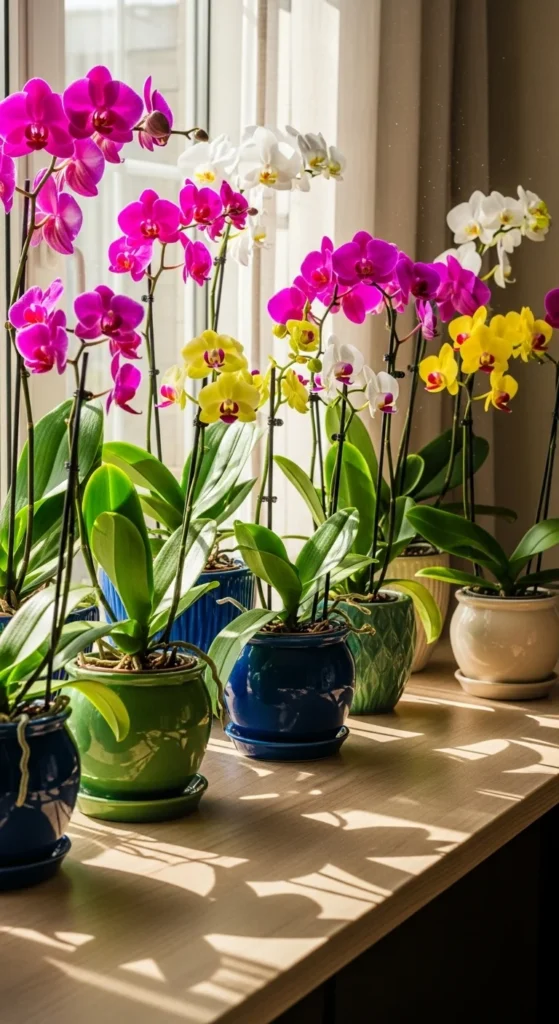
Before you dive into watering and fertilizing, it’s essential to understand what kind of orchid you have. The most common type for beginners is the Phalaenopsis, or “moth orchid.” It’s known for its long-lasting blooms and tolerance for indoor conditions.
Other popular types include:
- Dendrobium: Likes bright light and slightly cooler nights.
- Cattleya: Produces fragrant, large flowers and thrives in warm, bright areas.
- Oncidium: Known as the “dancing lady” orchid, perfect for sunny windows.
Each type has slightly different preferences, so check your plant tag or do a quick ID before setting up care routines.
Choose the Perfect Spot
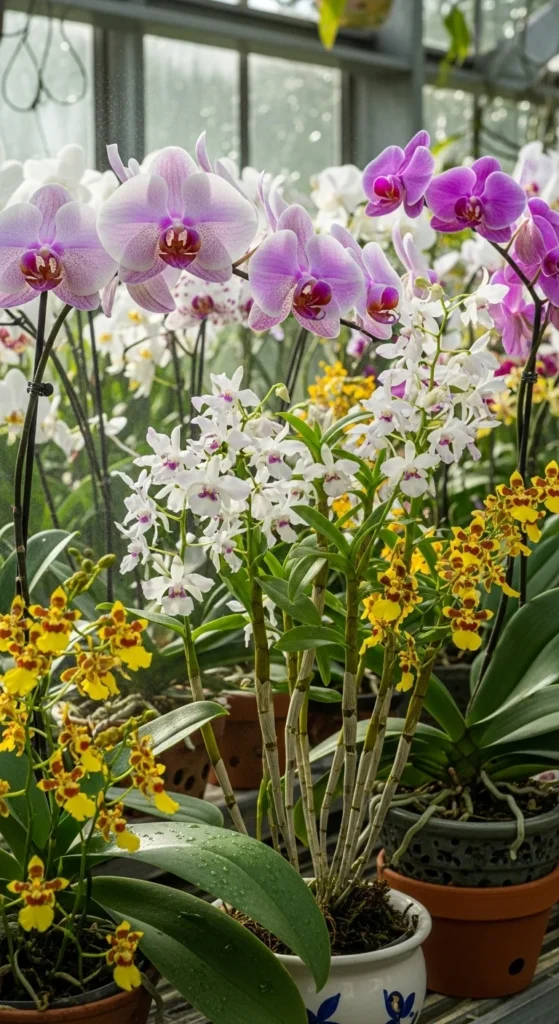
Light is the secret ingredient to growing orchids successfully indoors. These plants crave bright, indirect sunlight—too little and they won’t bloom; too much and their leaves will scorch.
Best locations:
- East-facing windows for gentle morning light.
- South or west windows with sheer curtains to diffuse harsh rays.
- Avoid direct midday sun, which can cause leaf burn.
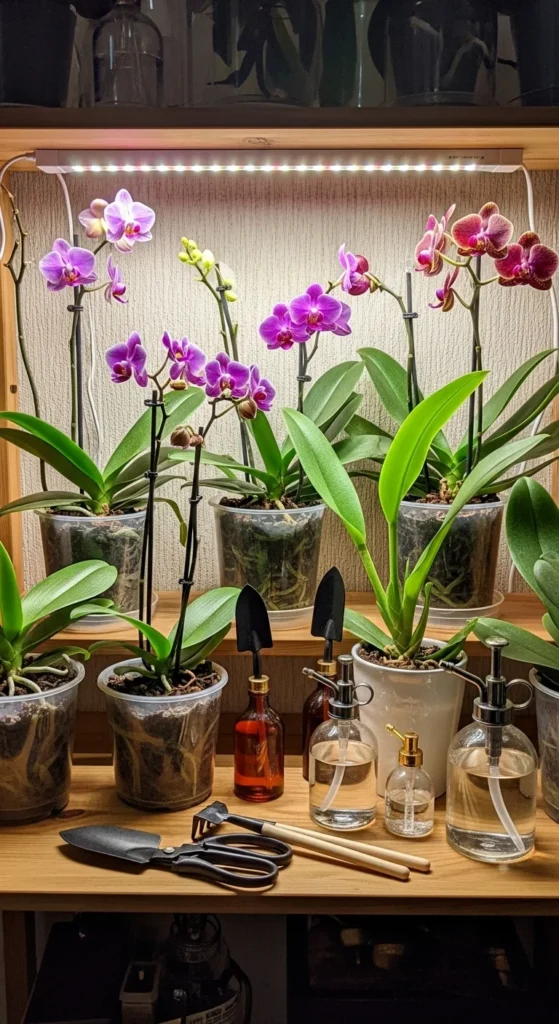
If your home doesn’t get enough natural light, a grow light can make all the difference. Position it about 12 inches above the orchids and run it for 12–14 hours a day.
Potting and Medium Matter
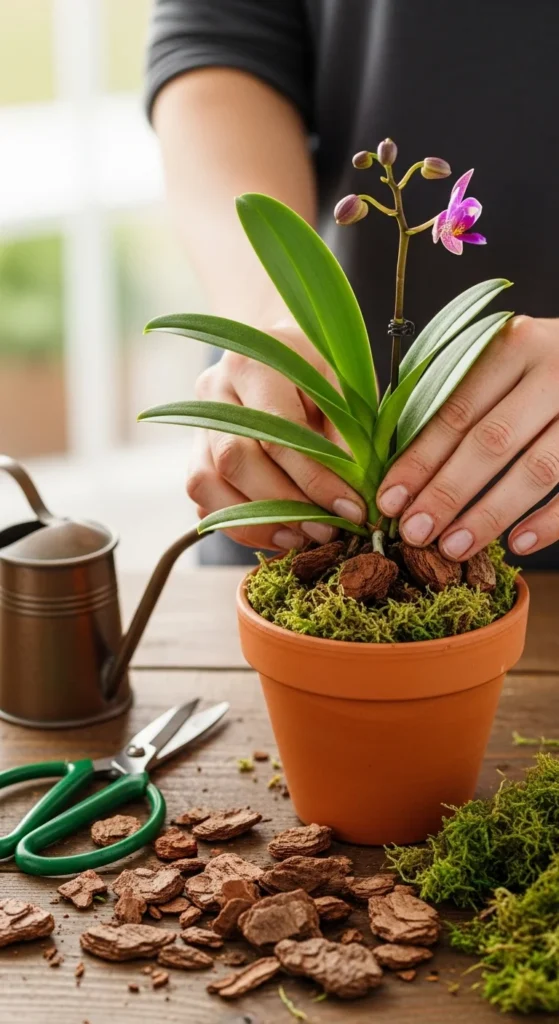
Unlike most houseplants, orchids don’t grow in regular soil. They’re epiphytes, which means they naturally cling to trees in tropical environments. To mimic this, use a loose, airy growing medium that allows roots to breathe.
Best potting mixes:
- Bark chips (for airflow)
- Sphagnum moss (for moisture retention)
- Perlite or charcoal (for drainage)
When repotting:
- Remove the orchid gently from its pot.
- Trim any dead or mushy roots.
- Place it in a slightly larger pot with fresh medium.
Repot every 1–2 years—usually after flowering—so your orchid stays healthy and fungus-free.
Watering the Right Way
Overwatering is the number one reason orchids fail indoors. These plants like to dry out slightly between waterings.
The rule of thumb:
- Water once a week in warm months.
- Every 10–14 days during cooler seasons.
Use room-temperature water and let it drain completely—never let orchids sit in standing water. The roots should look silvery white when dry and turn green when hydrated.
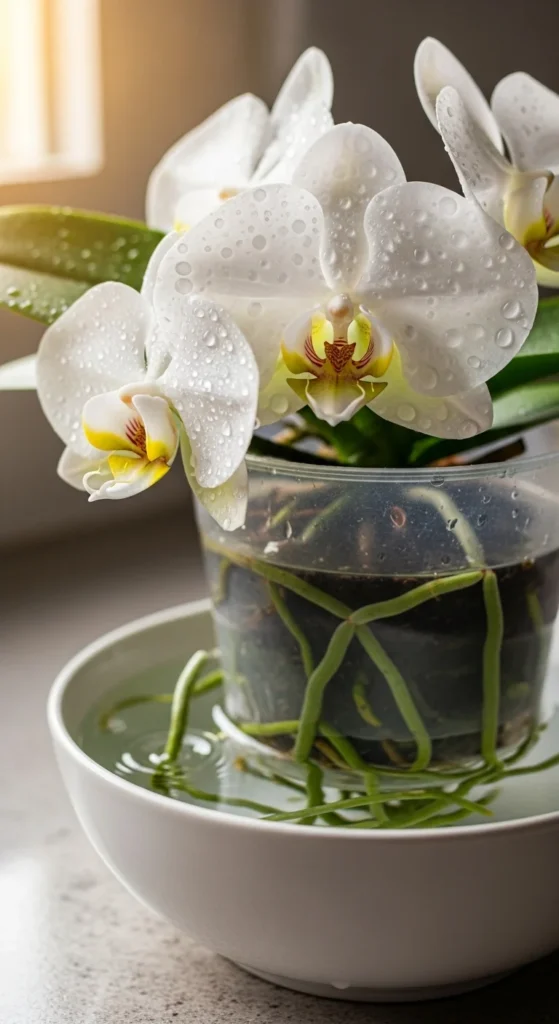
Pro Tip: Use the “soak method.” Place the orchid pot in a bowl of water for 10–15 minutes, then let it drain thoroughly. This ensures even hydration without drowning the roots.
Humidity, Temperature, and Feeding
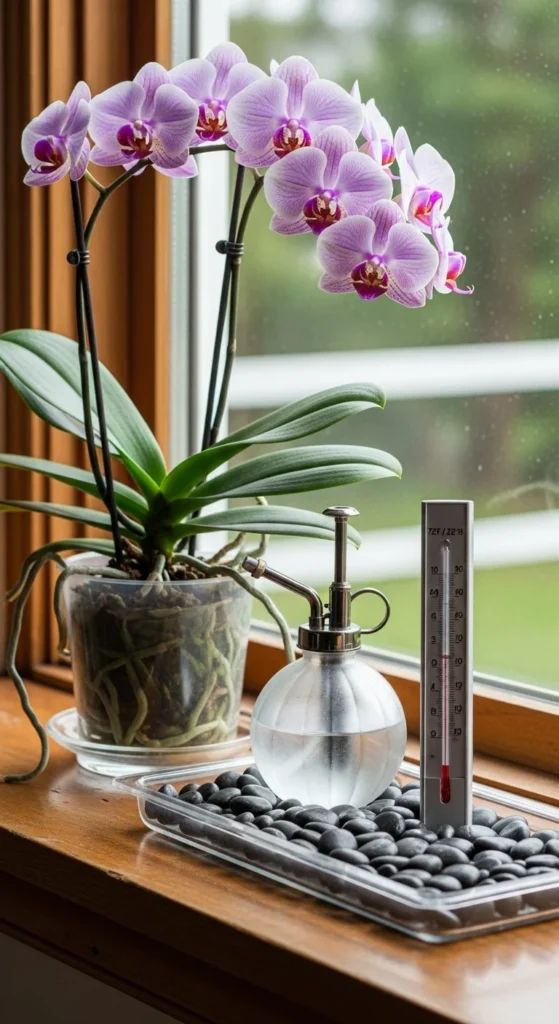
Orchids love humidity between 40–70%. If your indoor air feels dry, try these simple tricks:
- Place a humidity tray (a shallow dish filled with pebbles and water) under the pot.
- Mist the leaves lightly every few days.
- Group plants together to create a microclimate.
They also enjoy a bit of warmth—65–80°F during the day and slightly cooler nights to trigger blooms.
For nutrition, use a balanced orchid fertilizer (20-20-20) every two weeks during the growing season. Dilute it to half strength to avoid root burn.
Encourage Reblooms
Once the flowers fade, don’t toss your orchid! Trim the flower spike just above a node (a small bump on the stem). In a few weeks, you might see new buds forming.
If the spike turns brown, cut it off entirely—your orchid will redirect energy to new growth. Keep it in bright light, continue gentle watering, and be patient. Some orchids bloom twice a year with the right care.
Troubleshooting Common Issues
Even with the best care, orchids can act fussy sometimes. Here’s how to fix common problems:
- Yellow leaves: Too much water or direct sunlight.
- Wrinkled leaves: Dehydration—soak and adjust watering frequency.
- No blooms: Insufficient light or lack of nighttime cooling.
- Black roots: Overwatering—repot immediately.
Stay observant; orchids “communicate” through their leaves and roots, so small changes often reveal what they need.
Final Thoughts
Growing orchids indoors isn’t just about nurturing a plant—it’s about bringing a touch of serenity and luxury into your home. Once you get the hang of light, moisture, and timing, these elegant blooms will reward you with months of vibrant color.

Leave a Reply