

There’s something deeply satisfying about picking a sun-warmed fig right from your own tree — that burst of sweetness, soft texture, and honey-like flavor is pure summer in a bite. The best part? You don’t need a massive garden to enjoy them. Figs thrive just as happily in pots as they do in backyards, making them perfect for urban gardeners and suburban homesteaders alike.
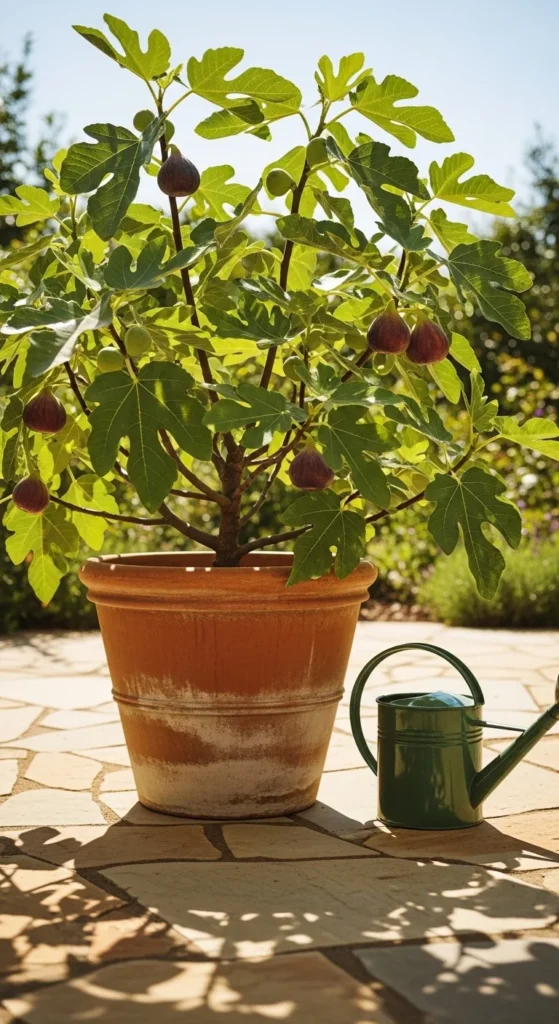
If you’ve ever dreamed of growing this Mediterranean favorite at home, here’s your step-by-step guide to growing figs in pots or in your backyard — no orchard required.
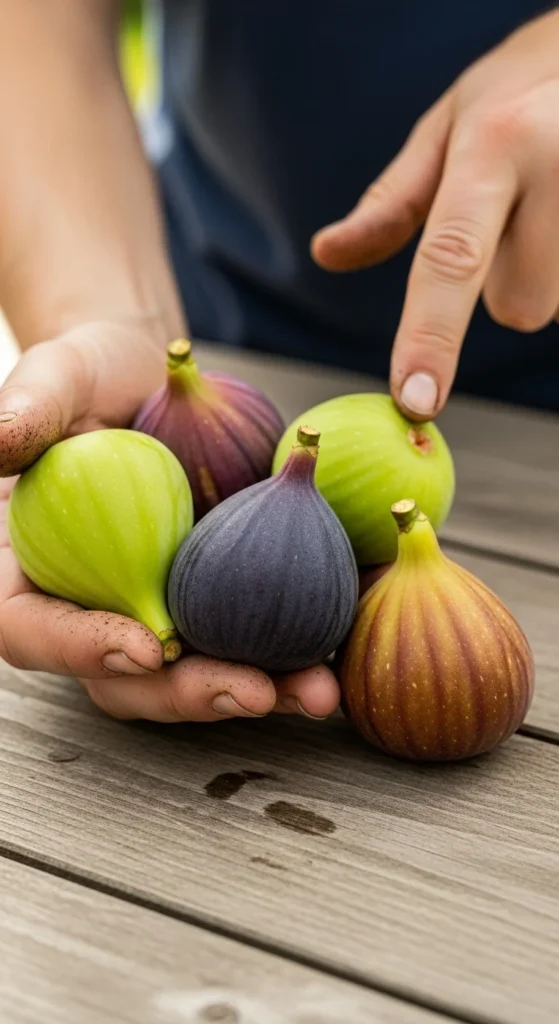
Choose the Right Variety
Not all fig trees are the same, and some varieties perform better in containers or small gardens than others.
Best types for pots or small spaces:
- ‘Brown Turkey’ – Reliable and cold-tolerant, great for beginners.
- ‘Celeste’ – Small fruit but rich, honey-like flavor.
- ‘Black Mission’ – Classic dark figs with a jammy sweetness.
- ‘Kadota’ – Green-skinned figs that love the heat.
If you live in a colder region, pick a variety labeled “cold-hardy” and consider moving potted figs indoors during winter.
Pick the Perfect Pot or Spot
Figs are sun lovers — they need at least 6–8 hours of direct sunlight each day to produce sweet fruit.
For container gardening:
- Choose a pot at least 18–24 inches wide and deep.
- Ensure it has good drainage holes.
- Use terracotta or fabric pots to help roots breathe.
For backyard planting:
- Find a sunny, sheltered location protected from harsh winds.
- Figs prefer well-draining soil with a mix of loam and compost.
- Avoid low areas where water can collect — figs hate soggy roots.
Planting Your Fig
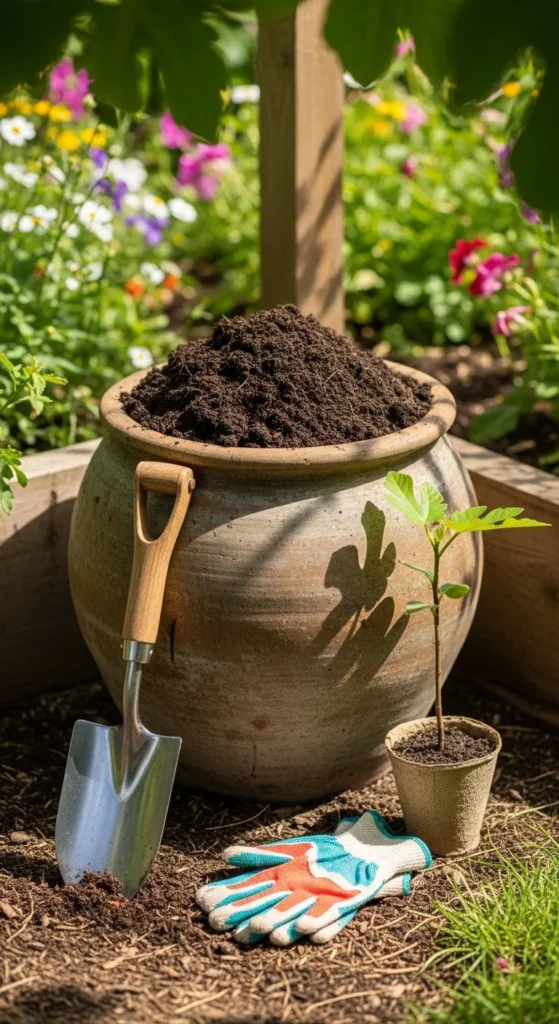
Once you have your spot or pot ready, it’s time to get your fig into the ground (or container).
Steps for planting:
- Fill the pot halfway with loose, rich soil mixed with compost.
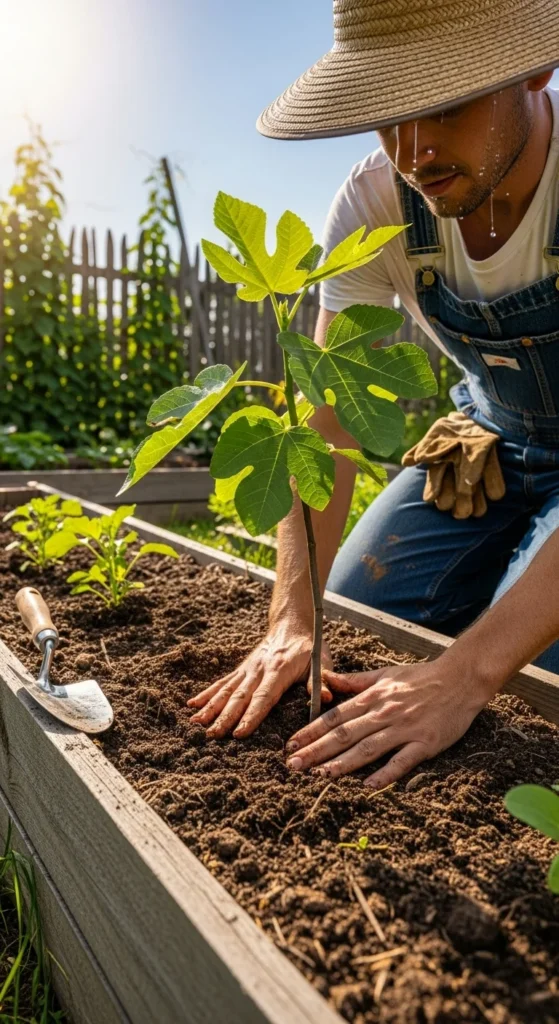
- Place the fig plant so that its root ball sits just below the rim.
- Backfill with more soil, gently pressing to remove air pockets.
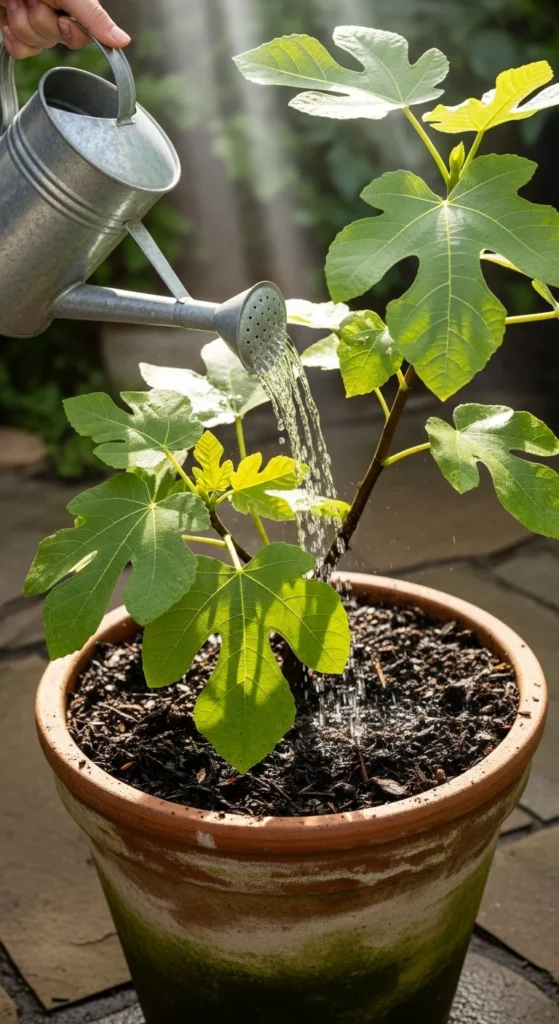
- Water thoroughly until you see drainage from the bottom.
If you’re planting in the ground, give each fig tree about 8–10 feet of space to spread out comfortably.
Watering and Feeding
Figs don’t like to be waterlogged, but they also don’t want dry roots. Consistency is key.
Watering tips:
- Keep the soil moist but not soggy.
- In hot summer months, water 2–3 times a week for potted figs.
- For ground-planted trees, deep watering once a week works best.
Feeding tips:
- Apply a balanced fertilizer (10-10-10) once a month during the growing season.
- Stop fertilizing 6 weeks before fall to help the plant go dormant.
- Add compost or organic mulch to retain moisture and feed the roots naturally.
Pruning and Maintenance
Figs grow quickly, and pruning helps keep their shape manageable — especially in pots.
How to prune:
- In late winter or early spring, cut back dead or crowded branches.
- Maintain an open center to let air and light reach all parts of the tree.
- For container figs, trim roots lightly every 2–3 years when repotting.
Pruning encourages better fruiting and prevents your tree from turning into a jungle of leaves.
Protecting from Pests and Cold
Even the toughest fig trees need a little TLC when it comes to protection.
Common issues:
- Birds: Drape netting over trees once figs start ripening.
- Aphids or scale: Spray with neem oil or a mild soap solution.
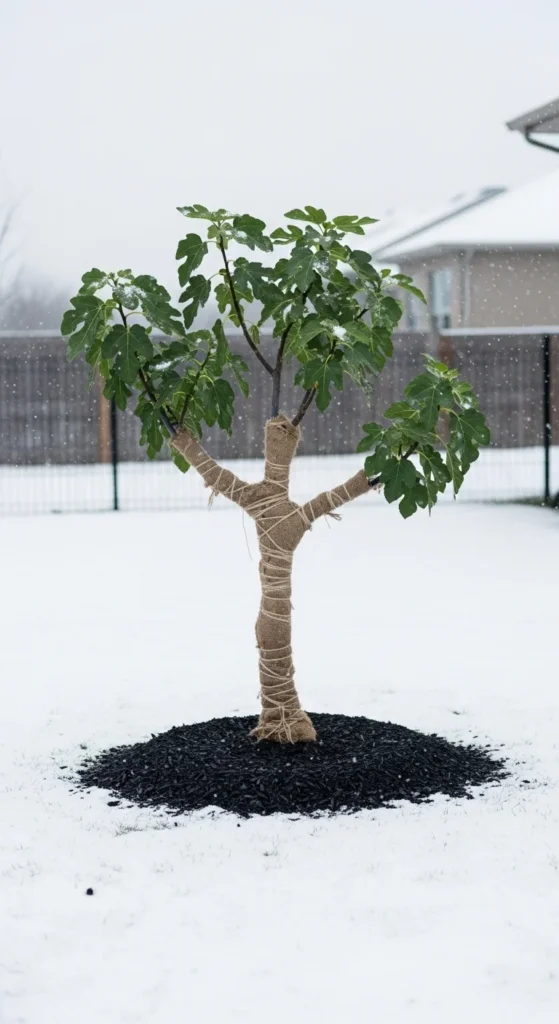
- Cold weather: For potted figs, move them indoors or into a garage once frost hits.
Outdoor fig trees can be wrapped in burlap or straw to protect them during freezing temperatures.
Harvesting Your Sweet Reward
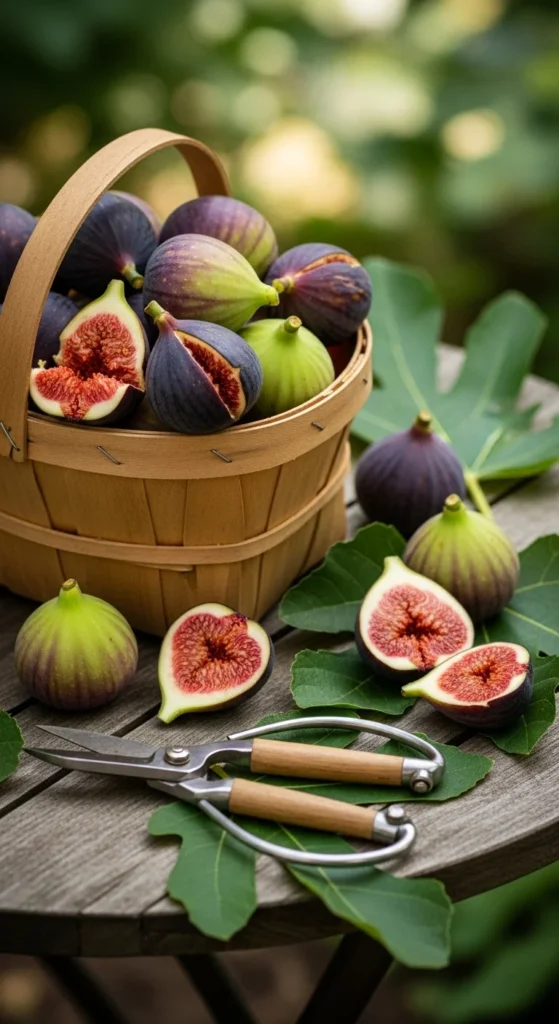
Figs don’t ripen once picked, so timing is everything. Wait until the fruit softens slightly and droops downward on the stem — that’s your signal it’s ready.
Tips for harvesting:
- Gently twist the fig; it should detach easily.
- Store fresh figs in the refrigerator for up to a week.
- Enjoy them fresh, grilled, or turned into jam — their sweetness shines in any form.
The Takeaway
Growing figs at home is easier than you think — and incredibly rewarding. Whether you’re nurturing a single tree in a pot or a small orchard in your backyard, you’ll soon enjoy fruit that tastes far better than anything from the store.

Leave a Reply