

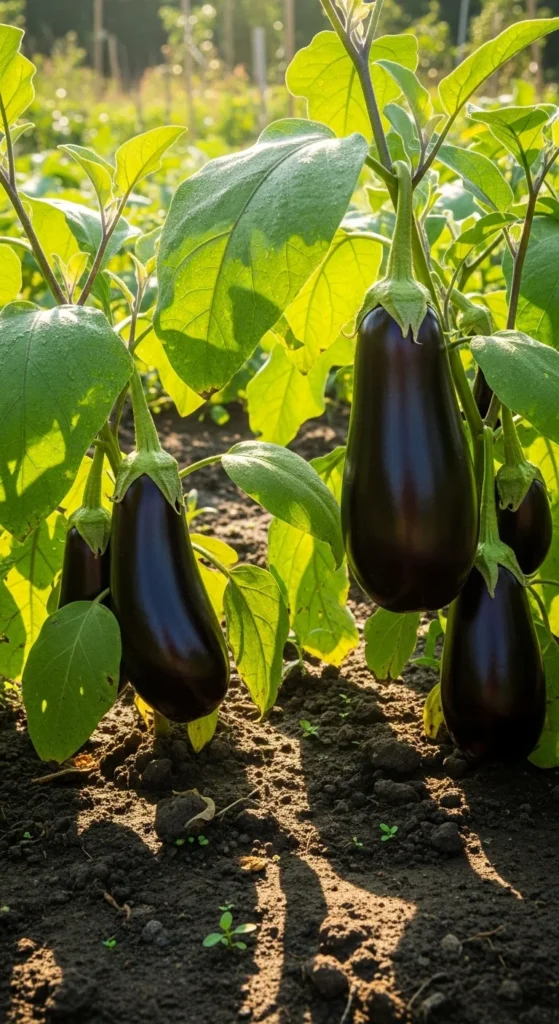
If you’ve ever grown eggplants before, you know they love the heat—but sometimes, too much summer sun can cause drooping leaves, tiny fruits, or sun-scorched skins. The trick isn’t just planting them in warmth—it’s helping them thrive in it.
Eggplants are tropical by nature, and when given the right conditions—consistent moisture, fertile soil, and steady warmth—they’ll reward you with plump, shiny fruit all season long. Let’s dive into exactly how to grow eggplants that don’t just survive the heat—they flourish in it.
Choose Heat-Tolerant Varieties
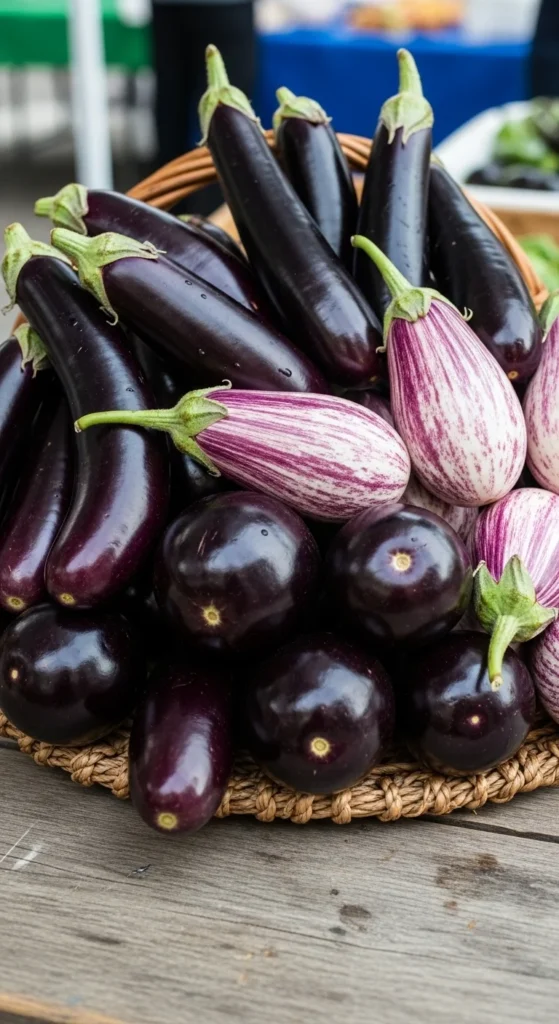
Not all eggplants handle extreme heat equally. To ensure success, start by choosing varieties that are bred for hot climates or known for their resilience.
Top heat-loving varieties:
- Black Beauty: Classic, reliable, and highly productive.
- Ping Tung Long: Slim, tender Asian variety that thrives in high heat.
- Ichiban: Early producer with glossy purple fruits that love warmth.
- Rosa Bianca: Italian heirloom with creamy skin and mild flavor.
These varieties stay strong even when temperatures soar above 90°F (32°C).
Pro Tip: If your region experiences very intense sunlight, consider growing lighter-skinned eggplants—they’re less prone to sunscald.
Start with Warm Soil and a Strong Foundation
Eggplants are warmth lovers from the very beginning. They won’t tolerate cold soil or chilly winds.
Getting started:
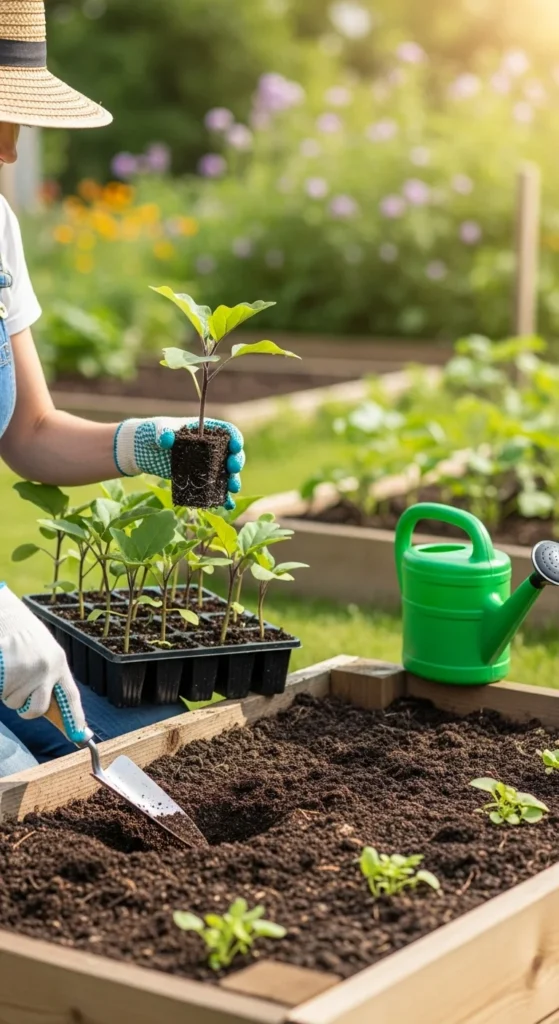
- Wait until soil temperatures reach 70°F (21°C) before transplanting outdoors.
- If starting from seed, sow indoors 8–10 weeks before your last frost date.
- Use seedling heat mats to keep soil evenly warm and boost germination.
When transplanting, mix compost or aged manure into the soil to create a nutrient-rich base that retains moisture while draining well.
Spacing:
- Plant 18–24 inches apart for good airflow.
- If you’re in a scorching area, slightly closer spacing helps shade the soil and keep roots cool.
Keep Them Hydrated—But Not Drenched
Eggplants need consistent moisture to produce tender, flavorful fruit, especially during hot spells. However, soggy soil can lead to root rot or fungal issues.
Smart watering habits:
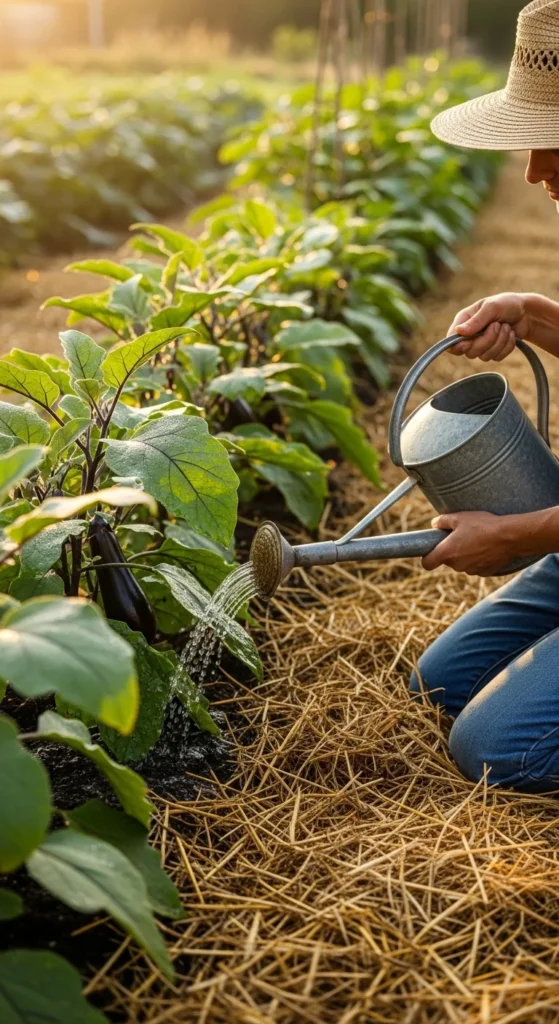
- Water deeply 2–3 times per week, depending on rainfall and soil type.
- Focus water at the base—avoid soaking the leaves.
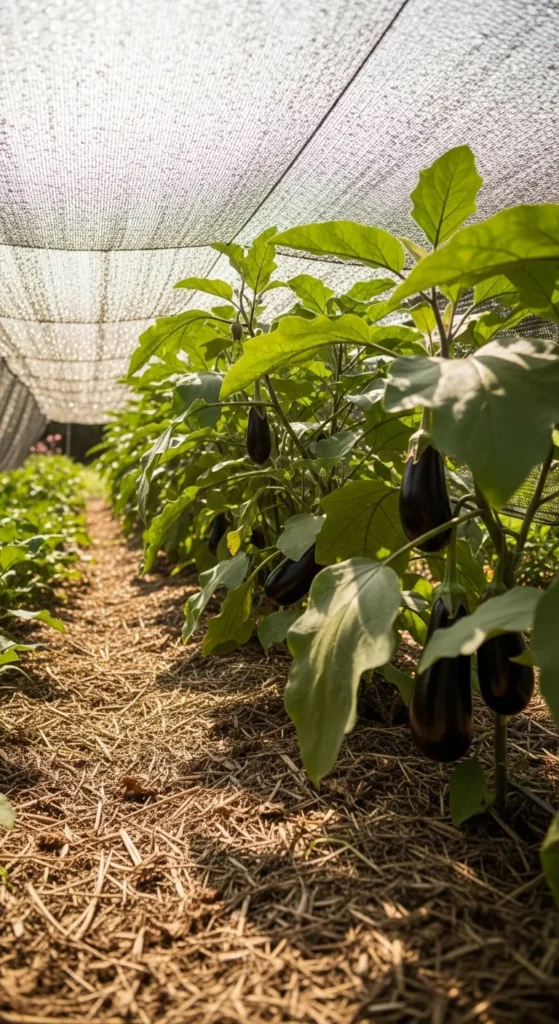
- Add 2–3 inches of mulch (straw, shredded leaves, or compost) to lock in moisture and cool the soil.
Pro Tip: Morning watering is best. It gives plants a moisture boost before temperatures climb and reduces evaporation loss.
Protect from Extreme Heat
While eggplants love warmth, prolonged temperatures above 95°F (35°C) can stress them out, causing flower drop and smaller fruits.
How to help your plants cope:
- Use shade cloth during the hottest part of the day to protect blossoms.
- Water the soil early and deeply before heat waves.
- Keep a thick mulch layer to insulate roots from extreme temperatures.
If possible, plant eggplants where they get morning sun and light afternoon shade. This balance helps them soak up warmth without overheating.
Bonus Tip: During extreme drought, mist the air around plants lightly (not the leaves) to raise humidity—eggplants appreciate it!
Feed Regularly for Big, Flavorful Fruits
Once your eggplants are blooming, they need steady nutrients to keep producing.
Feeding plan:
- Use a balanced organic fertilizer (like 5-5-5) every 3–4 weeks.
- Once fruits start forming, switch to a fertilizer slightly higher in potassium and phosphorus to encourage flowering and fruiting.
- Add compost tea or diluted fish emulsion for an extra boost during peak summer.
Avoid over-fertilizing with nitrogen—it leads to lush leaves but fewer fruits.
Pro Tip: Eggplants love calcium! Add crushed eggshells or a pinch of gypsum to prevent blossom-end rot.
Keep Pests Under Control
Warm weather also brings out pests that love your eggplants as much as you do.
Common culprits:
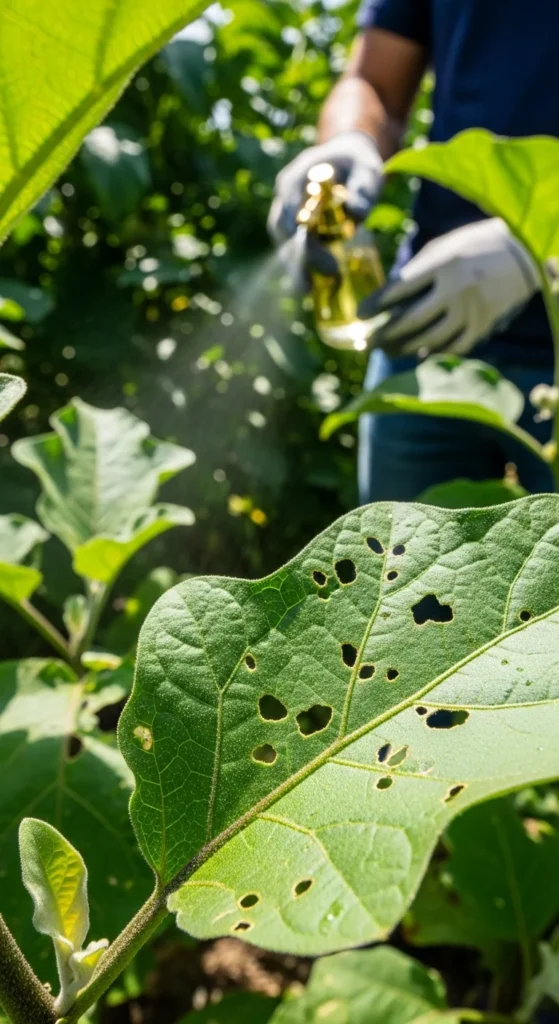
- Flea beetles: Tiny jumping insects that chew holes in leaves.
- Aphids: Small sap-suckers that gather on the undersides of leaves.
- Spider mites: Thrive in hot, dry weather and cause stippled yellowing leaves.
Natural defenses:
- Spray with neem oil or insecticidal soap.
- Introduce beneficial insects like ladybugs.
- Keep plants healthy—strong growth naturally resists pests better.
Harvest at the Right Time
Eggplants taste best when picked at the peak of ripeness, not when they’re overripe and seedy.
How to tell they’re ready:
- Skin is glossy and slightly firm.
- Indentation from your thumb bounces back slowly.
- Seeds inside are light-colored, not brown.
Cut the fruit off the stem with pruning shears—never pull or twist, as that can damage the plant.
Fun Tip: Harvesting regularly encourages more fruit production—eggplants are generous when kept busy!
Final Thoughts
Growing eggplants that thrive in heat is all about balance—steady moisture, healthy soil, and just enough shade when things get too intense. Once you get it right, you’ll enjoy an abundant harvest of tender, flavorful fruits perfect for grilling, roasting, or making your favorite eggplant parmesan.

Leave a Reply