

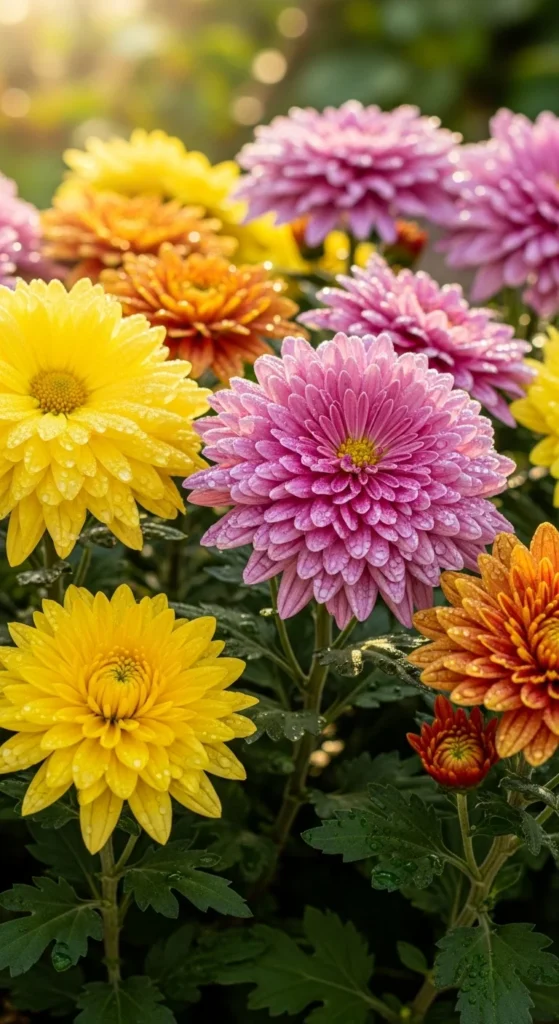
Few flowers bring autumn charm quite like chrysanthemums—those cheerful blooms that light up gardens just when most other flowers begin to fade. Known lovingly as “mums,” these hardy perennials come in hundreds of varieties, from soft pastels to rich jewel tones. But while they’re easy to grow, keeping them vibrant and long-lasting requires a bit of know-how.
Whether you grow them in pots or garden beds, here’s how to help your chrysanthemums stay healthy and full of color—year after year.
Choose the Right Variety
Not all chrysanthemums are created equal. To enjoy long-lasting blooms, start by picking the right type for your climate and purpose.
Two main categories to know:
- Florist mums: Gorgeous but short-lived. Typically used in bouquets or indoor arrangements.
- Garden mums (hardy mums): Designed for outdoor planting and long-term growth. These can survive mild winters and bloom again next year.
Popular long-lasting garden varieties:
- ‘Sheffield Pink’ – soft salmon-pink petals, late fall bloomer.
- ‘Clara Curtis’ – early blooming with daisy-like pink flowers.
- ‘Yellow Quill’ – bright and cheerful, perfect for fall borders.

Plant in the Perfect Spot
Mums love the sun—it’s what fuels their abundant blooms.
Choose a planting site that gets:
- At least 6 hours of full sunlight daily
- Well-drained, fertile soil (they hate soggy roots!)
- Shelter from strong winds if planted outdoors
If you’re planting in containers, make sure pots have drainage holes to prevent waterlogging. Use a high-quality potting mix that drains easily but retains enough moisture to keep roots hydrated.
Pro Tip: Slightly raised garden beds or terracotta pots help prevent soggy roots after rain.
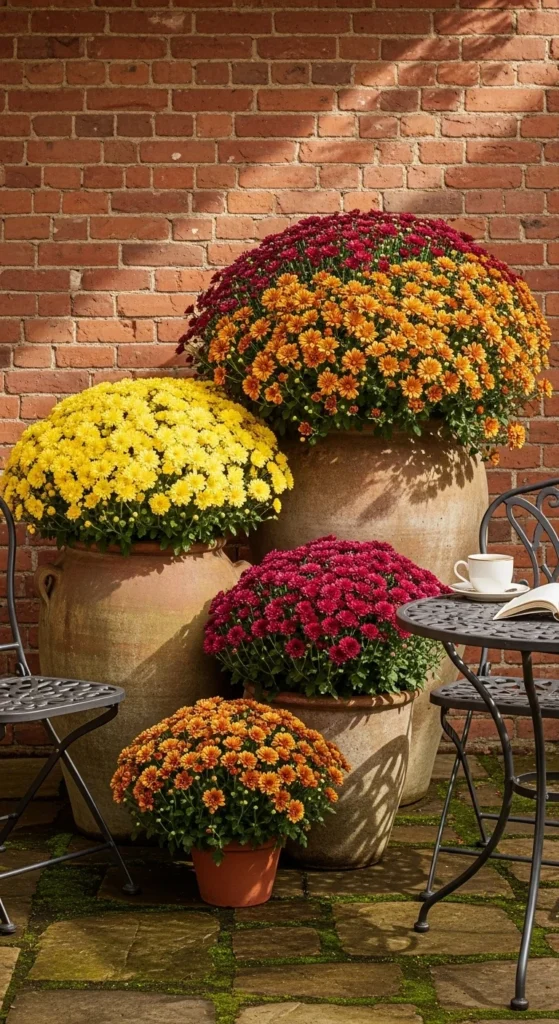
Feed and Water for Lasting Blooms
A healthy mum is a happy mum—and feeding makes all the difference.
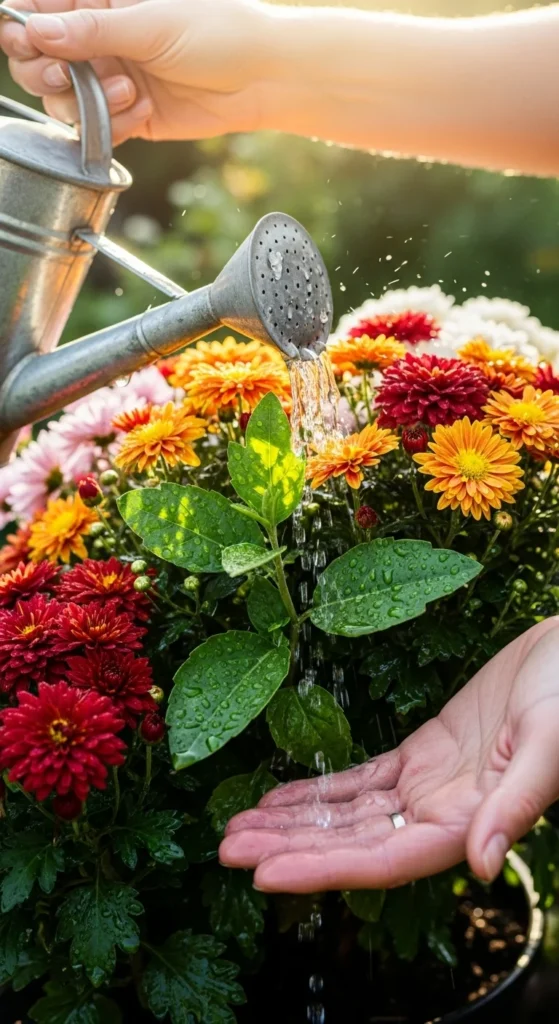
Watering:
- Keep soil consistently moist but never soaked.
- Water at the base to avoid wetting the foliage.
- During hot spells, daily watering might be needed for container mums.
Fertilizing:
- Use a balanced fertilizer (10-10-10) every 3–4 weeks from spring through midsummer.
- Stop fertilizing once buds appear—this encourages blooms instead of more leaves.
If you see yellowing leaves or weak growth, it’s a sign your mums need nutrients or better drainage.
Pinch for Fuller Growth
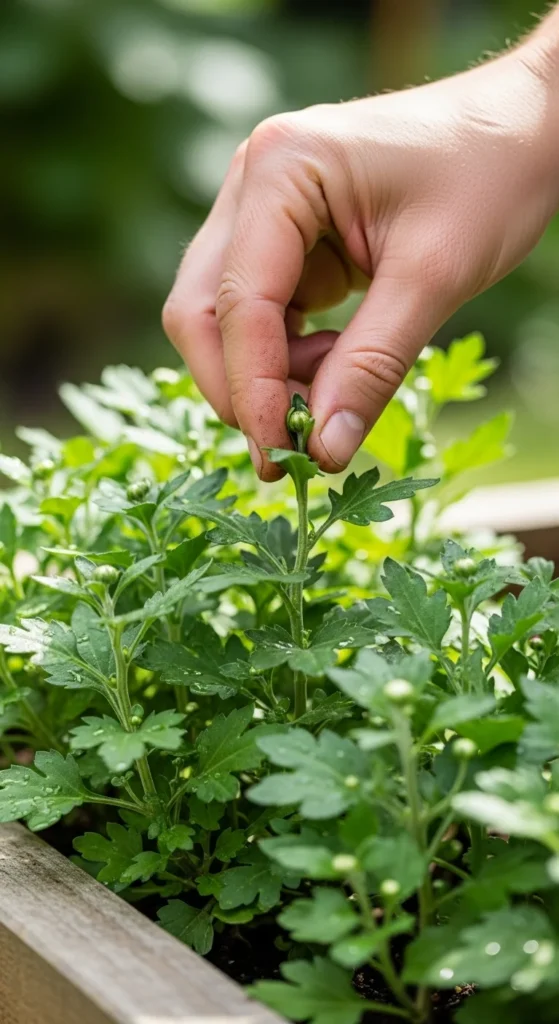
One of the secrets to long-lasting, lush chrysanthemums is pinching. It might feel counterintuitive to pinch off buds, but it helps the plant grow bushier and produce more blooms later.
Here’s how to do it:
- Start pinching in early summer (when plants are about 6 inches tall).
- Use your fingers or scissors to remove the top 1 inch of each stem.
- Repeat every 3–4 weeks until mid-July.
This encourages side shoots and results in dozens of compact blooms instead of a few tall, leggy ones.
Don’t pinch after mid-summer, or you may delay flowering too late into fall.
Protect from Pests and Frost
Even the toughest mums need a little protection from the elements and unwelcome visitors.
Common pests:
- Aphids and spider mites can damage leaves. Spray with neem oil or insecticidal soap if needed.
- Slugs love tender new growth—use crushed eggshells or diatomaceous earth around the base.
Frost protection:
- If frost threatens, cover plants overnight with fabric or burlap.
- Container mums can be moved indoors during cold snaps.
After the first hard frost, cut back the stems to about 4 inches and cover the base with mulch or straw for winter protection.

Divide and Replant for Next Season
To keep chrysanthemums vibrant for years, divide them every 2–3 years in early spring.
- Dig up the clump once new growth appears.
- Separate it into smaller sections with healthy roots.
- Replant each section in fresh soil with compost.
This not only prevents overcrowding but also encourages stronger, longer-lasting blooms in future seasons.
Bonus Tip: Save a few divided sections in pots to give as fall gifts—everyone loves a pot of cheerful mums!
Final Thoughts
Growing chrysanthemums that last longer is all about steady care, proper pruning, and a little seasonal attention. With the right sunlight, watering, and trimming, your garden can burst with color well into late autumn.

Leave a Reply