

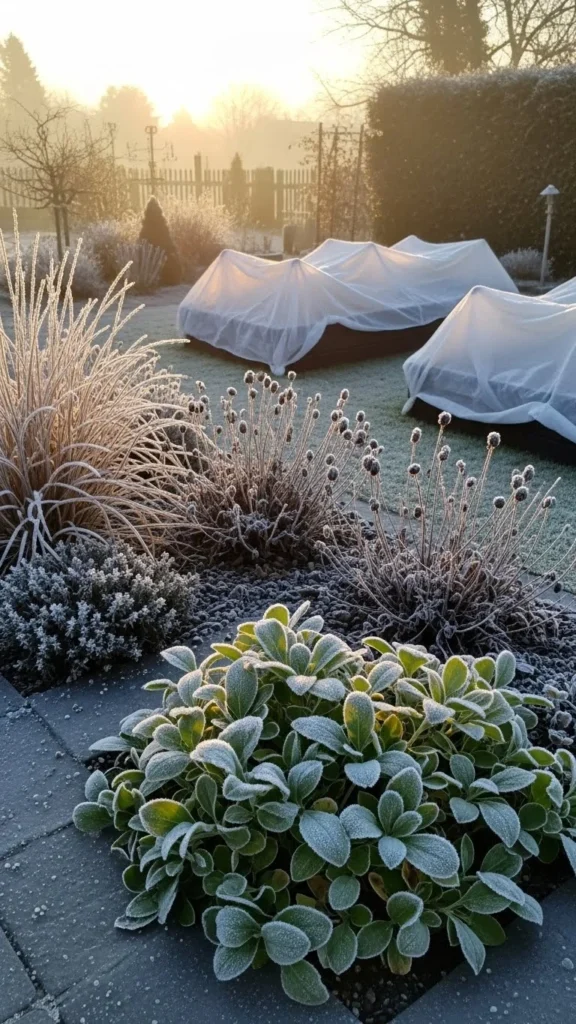
Cold mornings can hit hard, especially when frost settles unexpectedly. Plants lose moisture quickly, roots stiffen, and delicate growth stalls. But with simple winter habits and a few protective tricks, you can keep your garden steady even in freezing conditions. These 23 reliable frost-protection tips help safeguard your plants, reduce damage, and keep your stock growing through the coldest weeks.
1. Cover Plants Before Nightfall
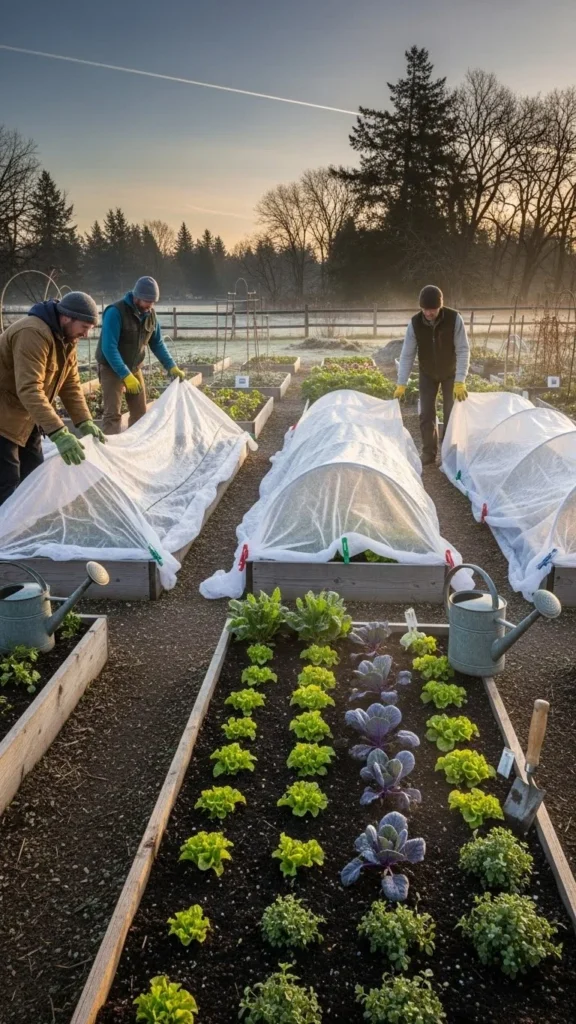
Covering plants early helps trap the warmth from daytime sun. Use lightweight cloth, burlap, or old sheets. The goal is to keep warm air close to the plants before cold settles in. Drape covers loosely so heat can circulate.
Avoid plastic touching leaves, as it can freeze onto them. If plastic is your only option, add a cloth layer underneath. Use rocks or stakes to hold edges down.
You can reuse these covers through winter. Keep them dry and folded near the garden for quick access. This simple habit protects tender plants without costing much.
2. Add Mulch Around the Root Zone
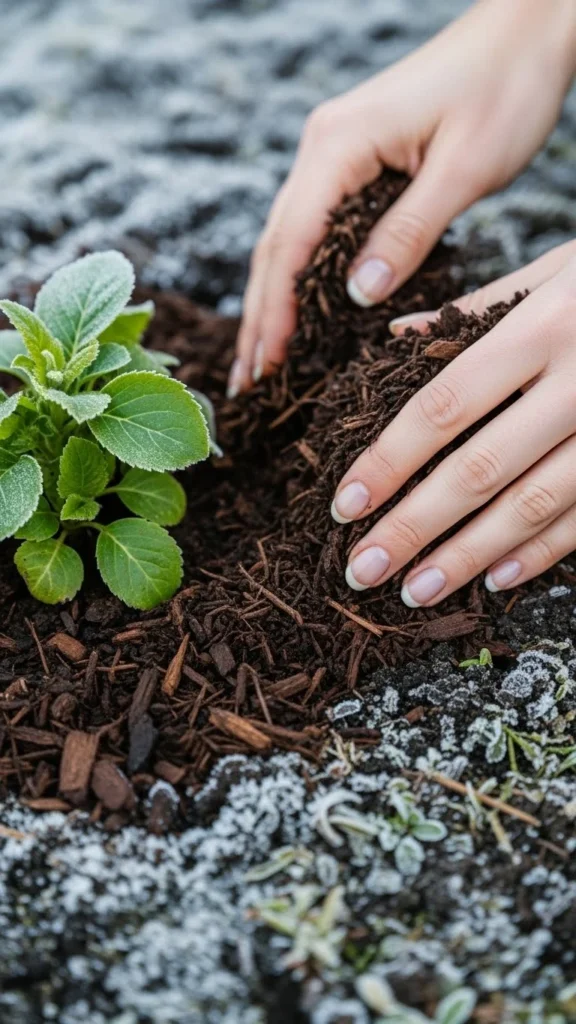
Mulch acts like a blanket over roots. It slows heat loss and keeps soil from freezing too quickly. Use wood chips, straw, shredded bark, or pine needles.
Spread it a few inches thick around each plant. Avoid piling it directly on the stem. Mulch also helps manage moisture, which is helpful when cold air dries soil fast.
Budget-friendly tip: gather fallen leaves, shred them, and use them as natural mulch.
3. Water Plants Before a Frost Event
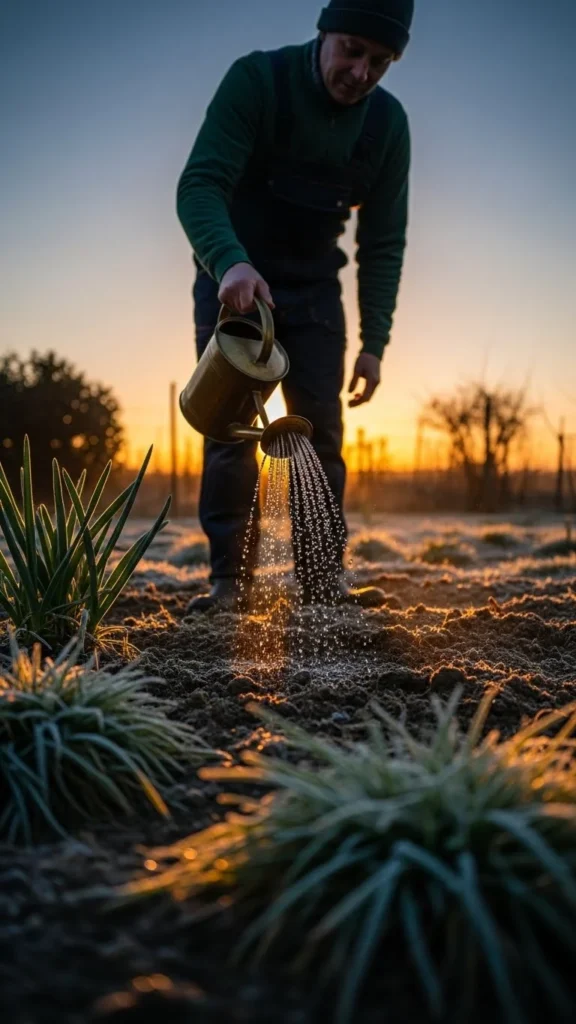
Moist soil holds heat better than dry soil. A light watering before a frost can help keep ground temperatures steady overnight.
Don’t drench the area. Just add enough moisture to help insulate roots. Water early so excess can drain before temperatures drop.
This trick works especially well for raised beds and potted plants. It’s simple, free, and highly effective for mild frost nights.
4. Use Frost Cloth or Horticultural Fabric
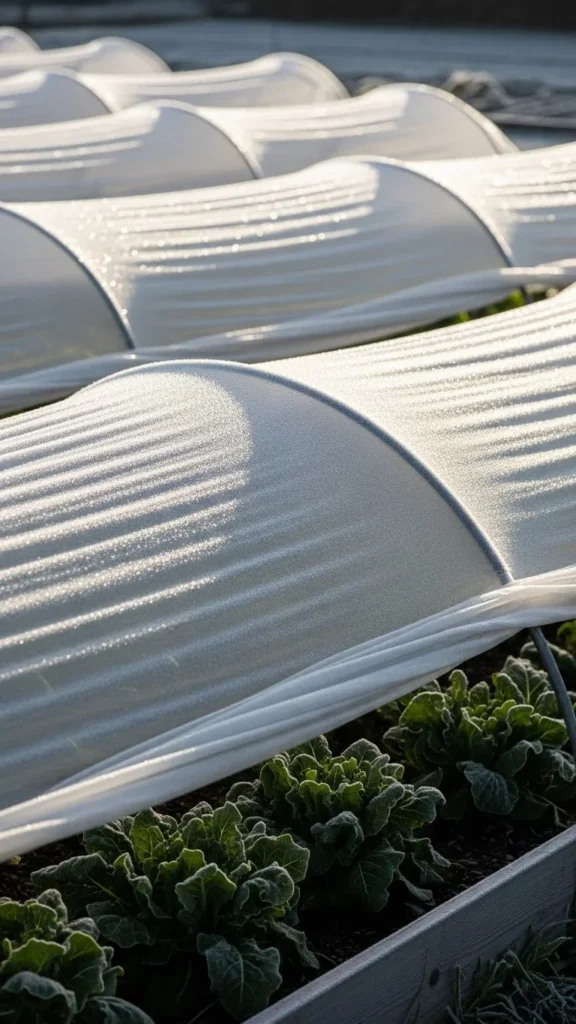
Frost cloth is designed for cold nights. It allows airflow but traps warmth. Layer it for extra protection during deeper freezes.
Cut it to size so it fits your beds. Secure the edges with soil or stones. For tall plants, build a simple frame using branches or wire hoops.
You can store frost cloth year-round and reuse it for many seasons.
5. Wrap Young Trees
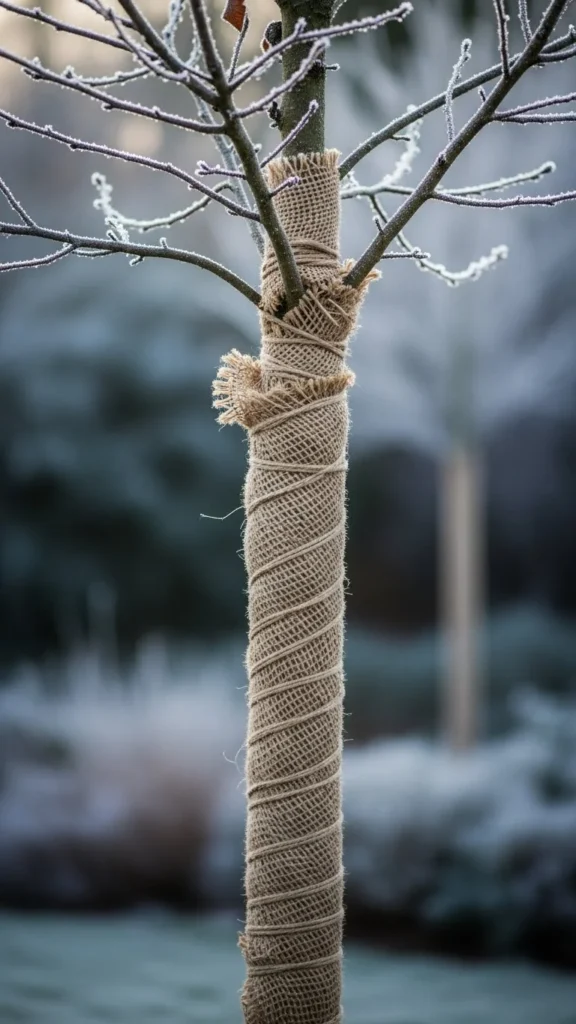
Young trees struggle during sudden cold snaps. Wrapping the trunk helps prevent bark cracking and slows heat loss.
Use burlap, tree wrap, or breathable cloth. Start at the base and spiral upward. Secure the ends with twine.
This trick is especially helpful for citrus, fig, and ornamental trees. It takes only a few minutes and protects them through long cold spells.
6. Bring Containers Indoors or Group Them Together
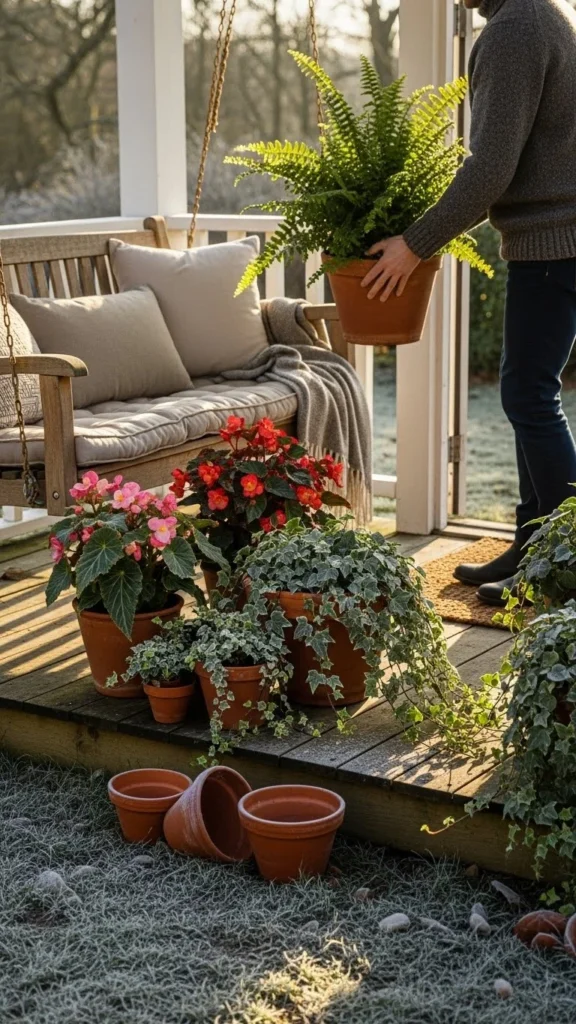
Containers lose heat quicker than ground soil. Moving them indoors, into a garage, or under a porch protects them instantly.
If you can’t move them all, group pots close together. They create shared warmth. Add a cloth around the pots for extra insulation.
This is one of the easiest frost-protection habits for balcony or patio gardeners.
7. Build Mini Hoop Houses
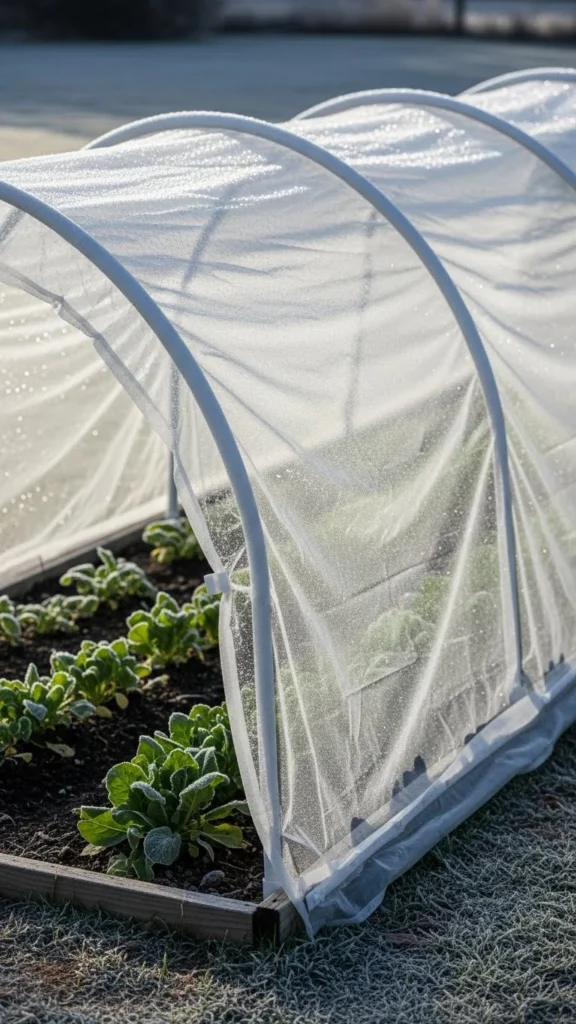
Mini hoop houses trap heat during cold nights. They act like small greenhouses and are simple to build.
Use PVC pipes or flexible rods to create arches. Cover with clear plastic or fabric. Secure the edges so cold air doesn’t sneak in.
They protect leafy greens, herbs, and young seedlings. This setup is affordable and can stay up until spring.
8. Add Thermal Mass With Water Jugs
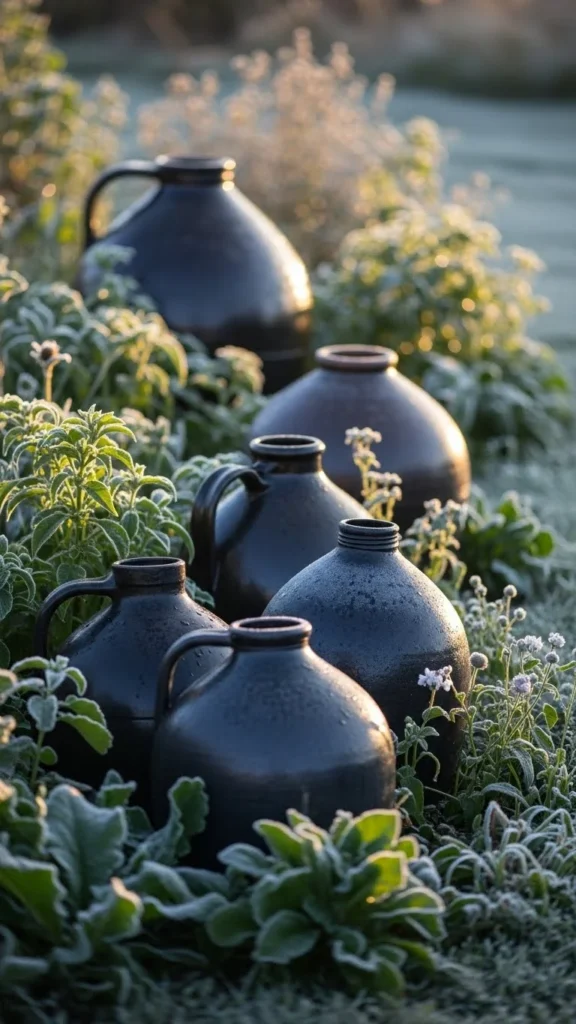
Water absorbs heat during the day and releases it slowly overnight. Placing water jugs near plants offers gentle warmth during frost.
Use dark jugs for better heat absorption. Position them around delicate plants. If using beds, line the jugs along the edges.
This trick costs almost nothing and works well inside hoop houses or cold frames.
9. Use Old Blankets for Emergency Cold Snaps
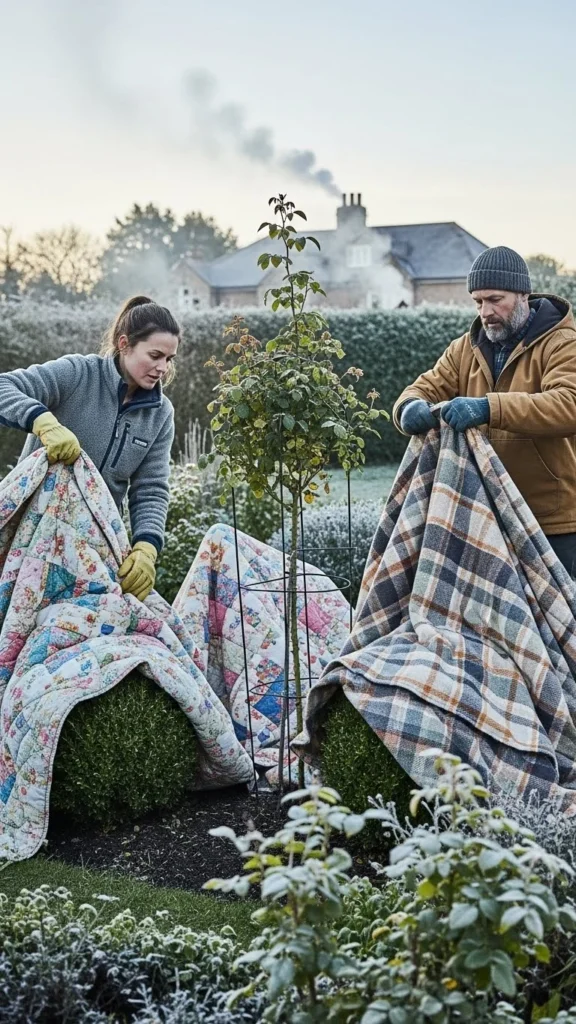
Old blankets make great emergency covers. They’re heavier than frost cloth, so they trap more warmth.
Drape them over plants carefully. Add stakes if needed so branches don’t break. Remove the blankets early in the morning to let sunlight in.
Blankets are handy during unexpected freezes when you need quick protection.
10. Install Row Covers
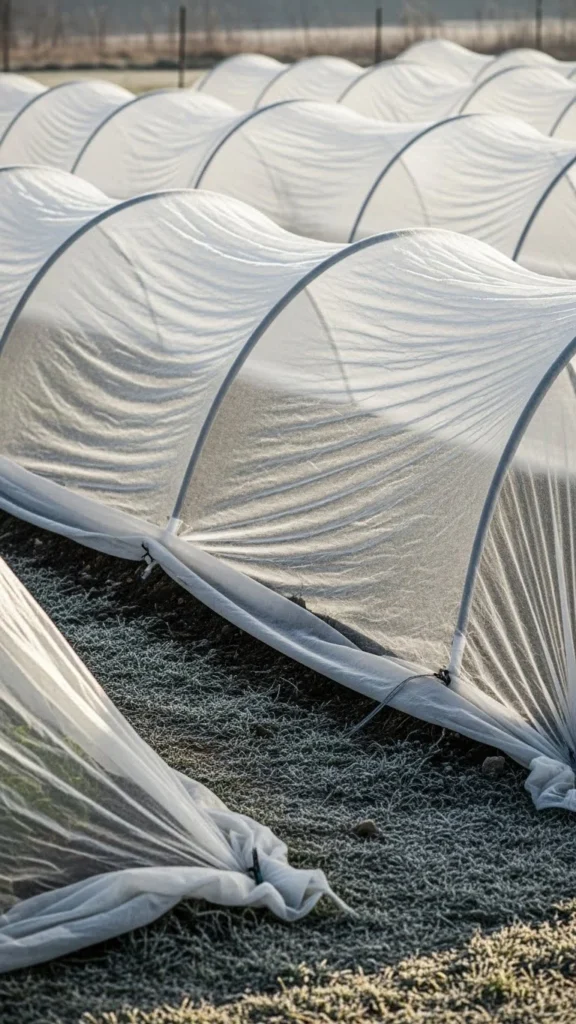
Row covers offer long-term frost protection. They allow sunlight to pass while creating a stable barrier between plants and icy air.
Use hoops or stakes to hold the covers up. Secure the sides well. Row covers also help reduce wind damage.
They work great for lettuce, carrots, kale, and other cold-season crops.
11. Add Warm Compost Near Beds
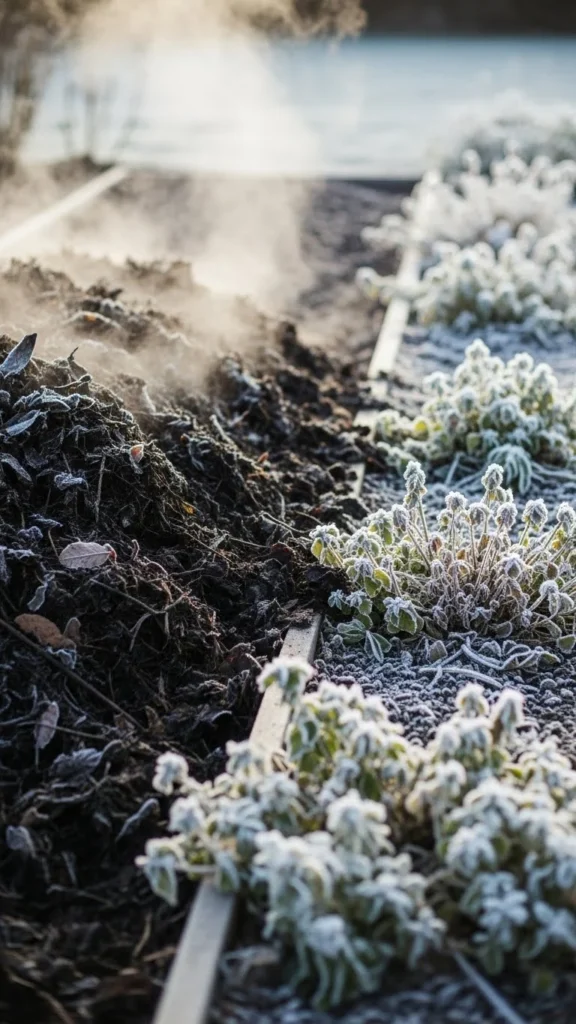
Active compost generates heat as it breaks down. Placing a pile near your garden beds can help warm the area slightly.
Use balanced layers of greens and browns. Turn the pile lightly every few days. The warmth spreads slowly around the area.
This trick pairs well with hoop houses for stronger protection.
12. Use Straw Around the Base of Plants
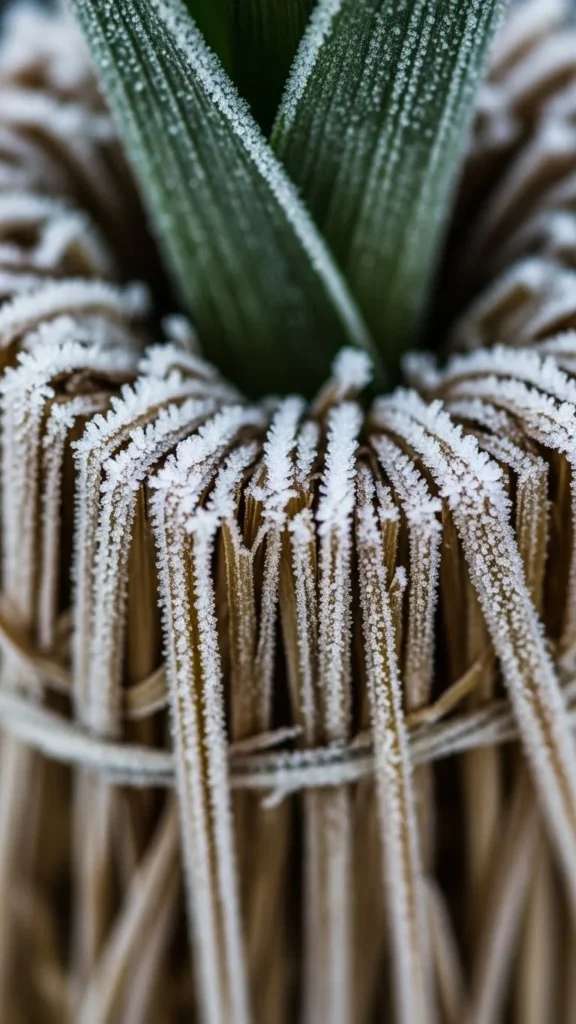
Straw insulates soil well. It keeps moisture stable and slows cold air from reaching roots.
Place a thick layer around each plant. Don’t pack it too tight. It should stay fluffy for best insulation.
Straw is cheap, lightweight, and easy to replace when it gets wet.
13. Keep Plants Dry Before Frost Hits

Wet leaves freeze faster. If plants stay dry before a frost, they handle cold better.
Avoid overhead watering late in the day. Trim crowded sections where moisture collects. Shake off any dew before nightfall if possible.
This small step helps reduce frost burn on leaves.
14. Install Windbreak Barriers
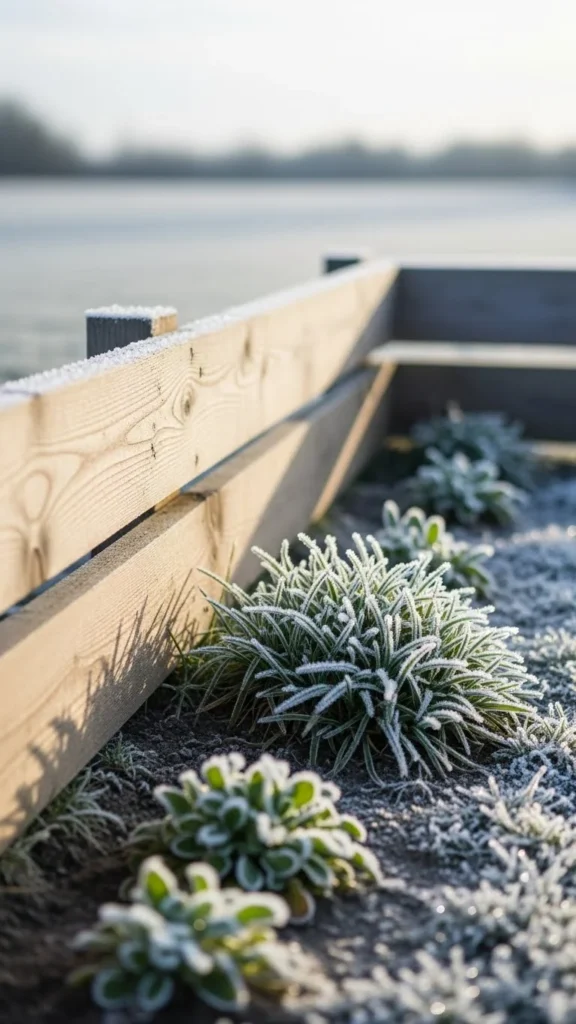
Cold wind speeds up frost damage. A windbreak helps calm the area around your plants.
Use fencing, boards, straw bales, or shrubs. Position the barrier on the wind-facing side. It doesn’t need to be tall — even a short barrier makes a difference.
This keeps cold air from sweeping across delicate beds.
15. Use Mulch Tunnels for Low-Growing Crops
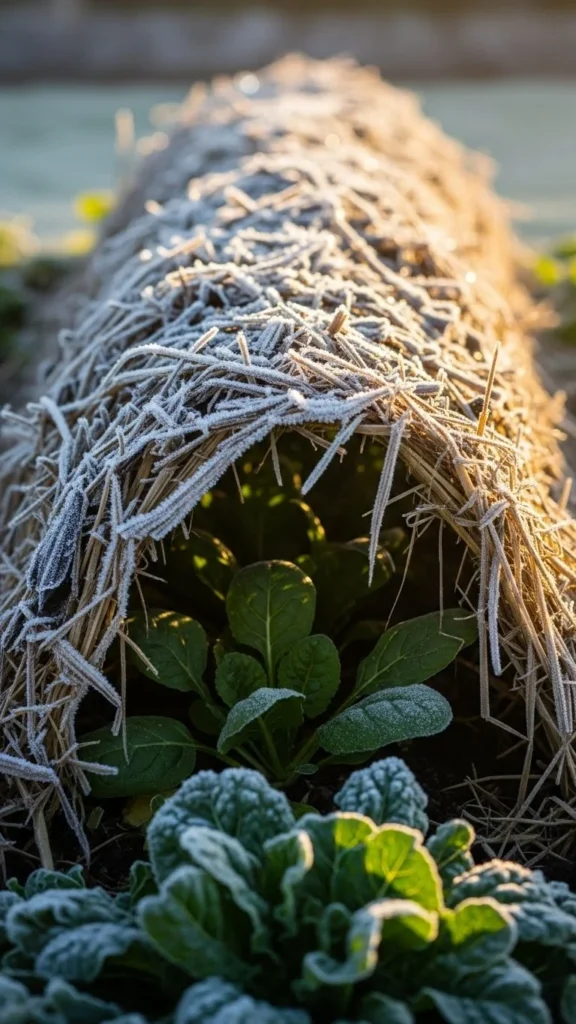
A mulch tunnel traps warmth close to soil. It works well for spinach, carrots, and radishes.
Build a small arch with sticks or wire. Cover it with straw or shredded leaves. The tunnel acts like a breathable blanket.
It’s an affordable method and easy to rebuild through the season.
16. Move Seedlings Indoors at Night
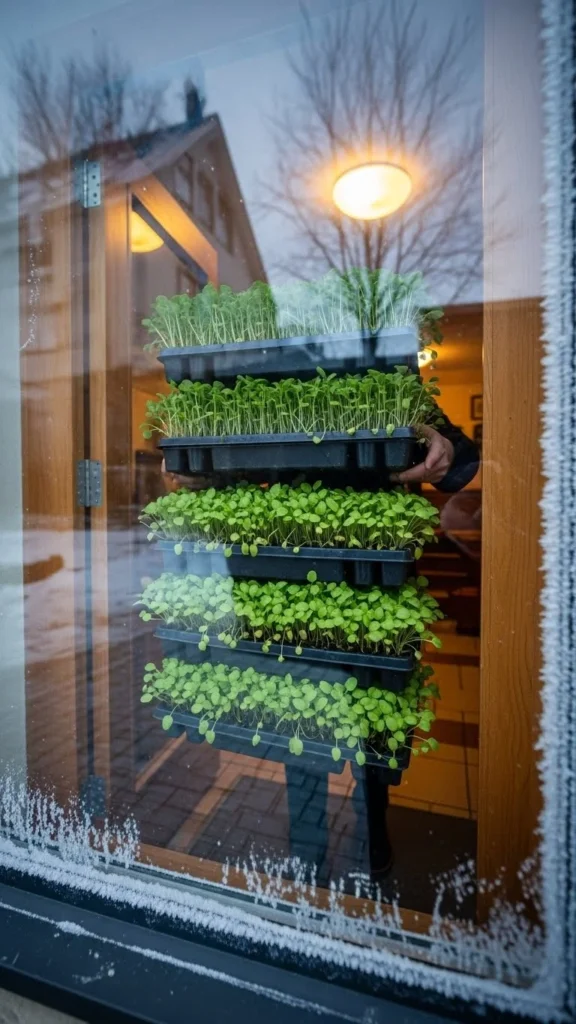
Seedlings are the most vulnerable. Even light frost can stall their growth. Bring them indoors at night until weather stabilizes.
Use a shelf, kitchen counter, or mudroom. Place seedlings back outside during sunlight hours.
This routine keeps them strong until they’re ready for the garden.
17. Create a Cold Frame
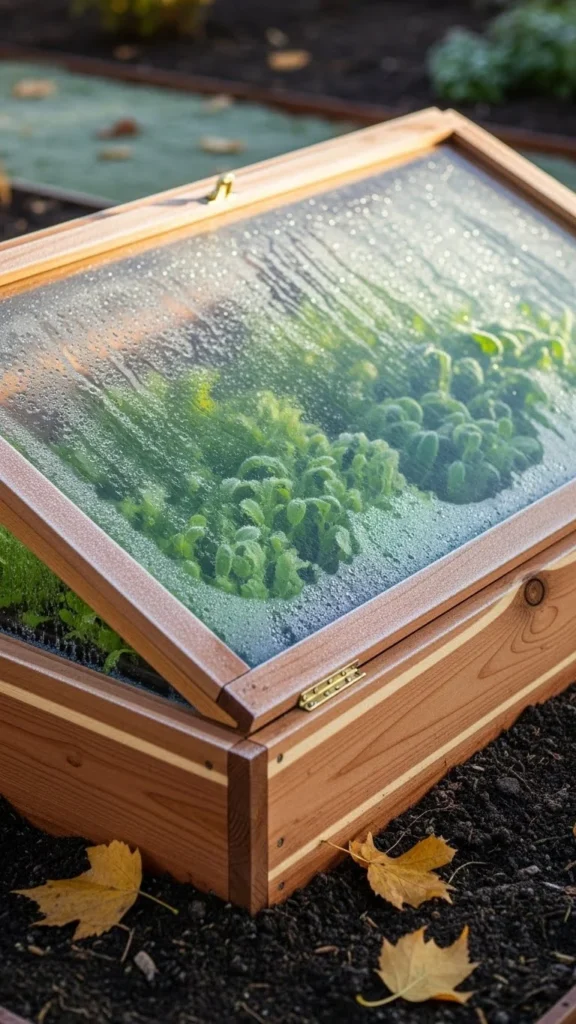
Cold frames offer steady nighttime warmth. They trap daytime sun and hold it overnight.
Build one from wood and an old window. Place it over delicate plants. Open the lid slightly during warm afternoons to release humidity.
Cold frames work well for herbs, greens, and young transplants.
18. Wrap Containers With Bubble Wrap
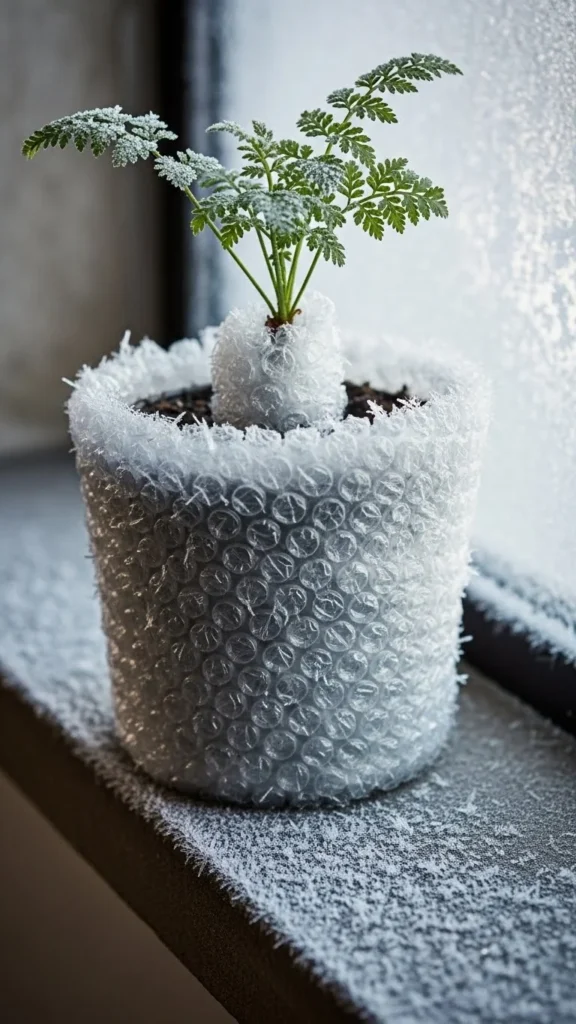
Bubble wrap helps insulate container plants. Wrap pots—not the plant itself—to slow heat loss.
Secure the wrap with twine. Add a cloth layer if temperatures drop sharply. This protects root zones from freezing.
You can reuse bubble wrap every winter.
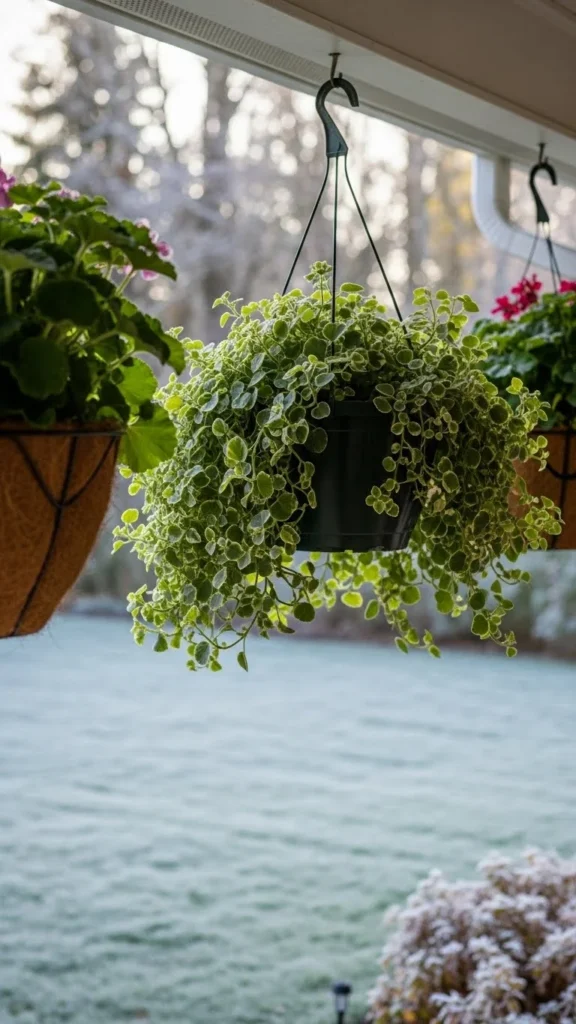
19. Bring Hanging Baskets into Sheltered Areas
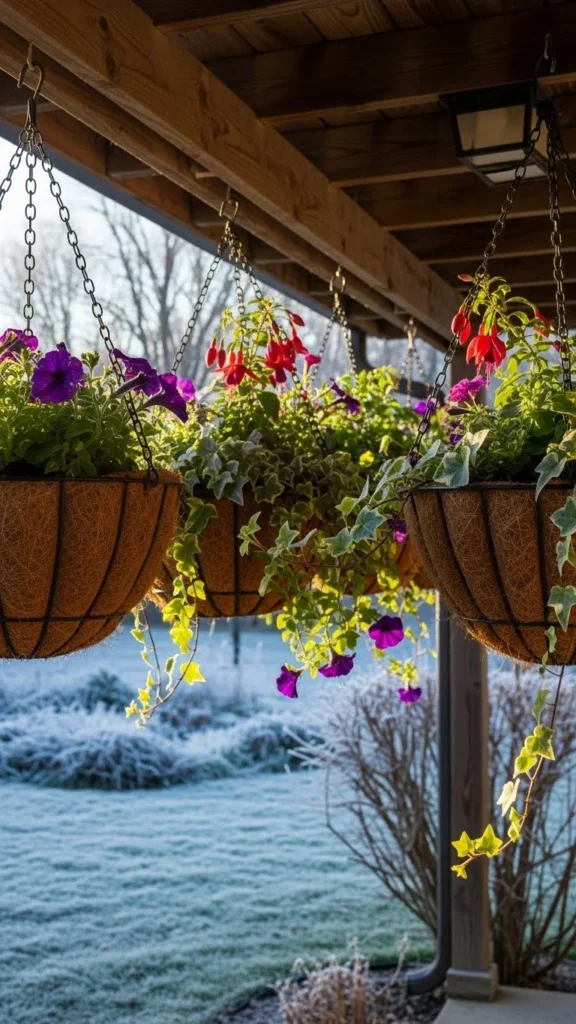
Hanging baskets cool quickly because air circulates on all sides. Move them under a porch or inside a garage for the night.
Place them on a table or floor where they stay warmer. Put them back outside during the day for light.
This simple shift saves delicate trailing plants from damage.
20. Keep Soil Loosened
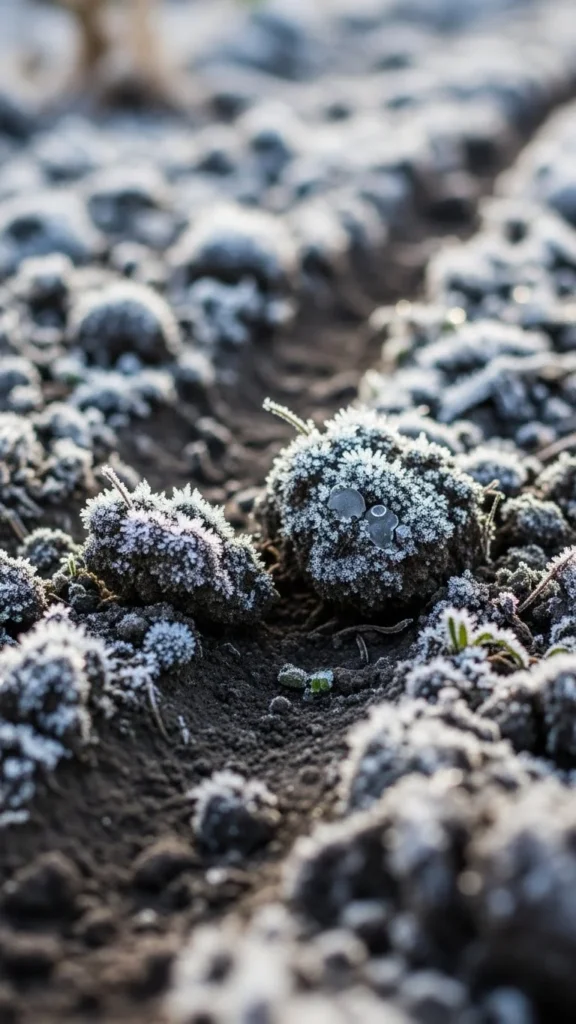
Loose soil traps warmth better than compacted soil. Lightly turn the surface around your plants. This helps roots stay comfortable.
Don’t dig too deep. Just fluff the top layer. It also helps water penetrate more evenly.
This step supports steady soil temperature during cold waves.
21. Add Heat Lamps in Extreme Nights
During severe cold spells, a small heat lamp can protect tender plants. Use it only in safe, enclosed setups like greenhouses or hoop houses.
Keep wiring lifted off the ground. Position the lamp so it doesn’t touch covers or plants. Run it for a few hours during the coldest part of the night.
This method helps prevent freezing during unexpected low temperatures.
22. Use Rocks or Bricks for Heat Retention
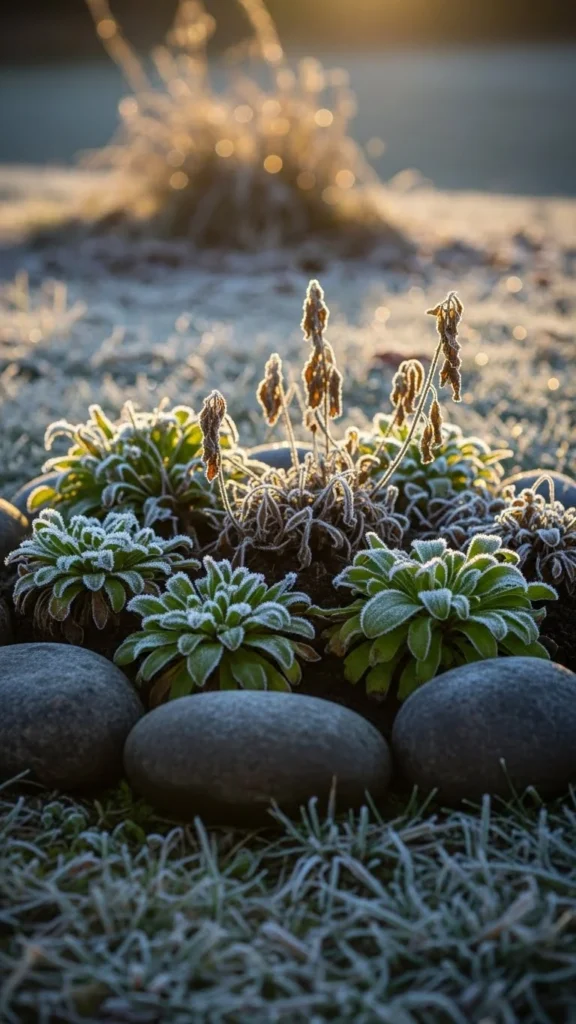
Rocks absorb heat during the day and release it overnight. Place them around the base of plants or along the edges of beds.
Dark stones work best. They improve soil warmth slightly and help shield lower stems.
This is a simple, long-lasting frost-management trick for outdoor beds.
Conclusion
Frost doesn’t have to mean plant loss. With simple habits—like covering beds, watering at the right time, and adding mulch—you can protect your garden through the coldest nights. These 23 practical frost-protection tips help keep soil warm, leaves intact, and root systems safe. Start applying a few of these ideas today and your garden will stay productive even when temperatures drop.

Leave a Reply