

Tomatoes are one of the most rewarding crops a home gardener can grow, but getting those big, juicy, flavorful harvests doesn’t happen by luck—it happens with smart fertilizing. When tomatoes get the right nutrients at the right time, they explode with growth, burst with flavor, and keep producing all season long. The great news? Fertilizing tomatoes is much easier than most people think.
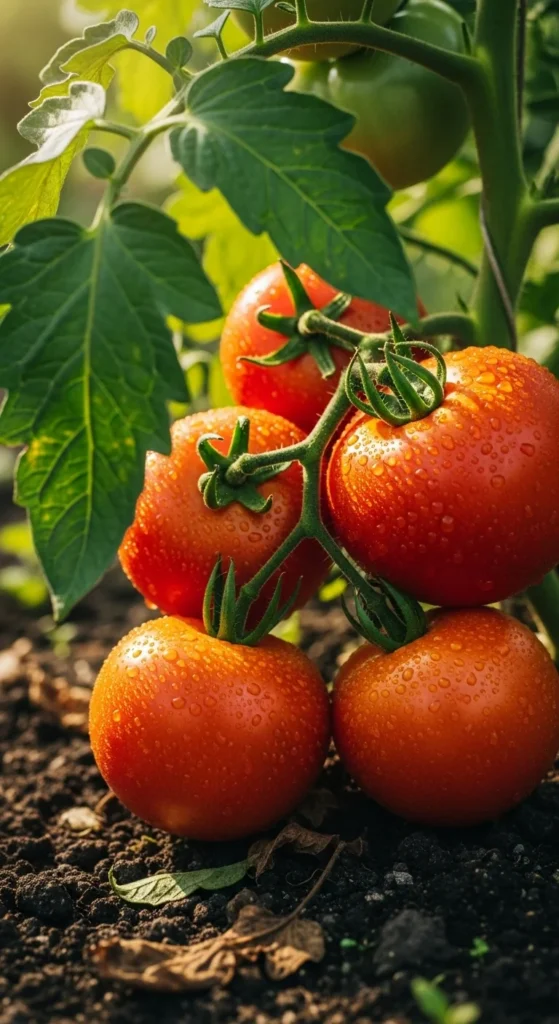
Let’s walk through a simple, beginner-friendly fertilizing plan that guarantees maximum yield—without wasting money or overfeeding your plants.
Understand What Tomatoes Really Need
Tomatoes are heavy feeders, which means they need more nutrients than many other garden vegetables. But they don’t need everything all at once.
✅ Tomatoes Need:
- Nitrogen (N) for leafy growth
- Phosphorus (P) for strong roots and fruiting
- Potassium (K) for overall plant health and disease resistance
- Calcium to prevent blossom end rot
- Magnesium + Trace Minerals for deep green leaves
Too much nitrogen creates a big leafy plant with almost no tomatoes—so timing matters!
Start With Fertile Soil Before Planting
Your fertilizing routine starts before the first tomato goes into the ground.
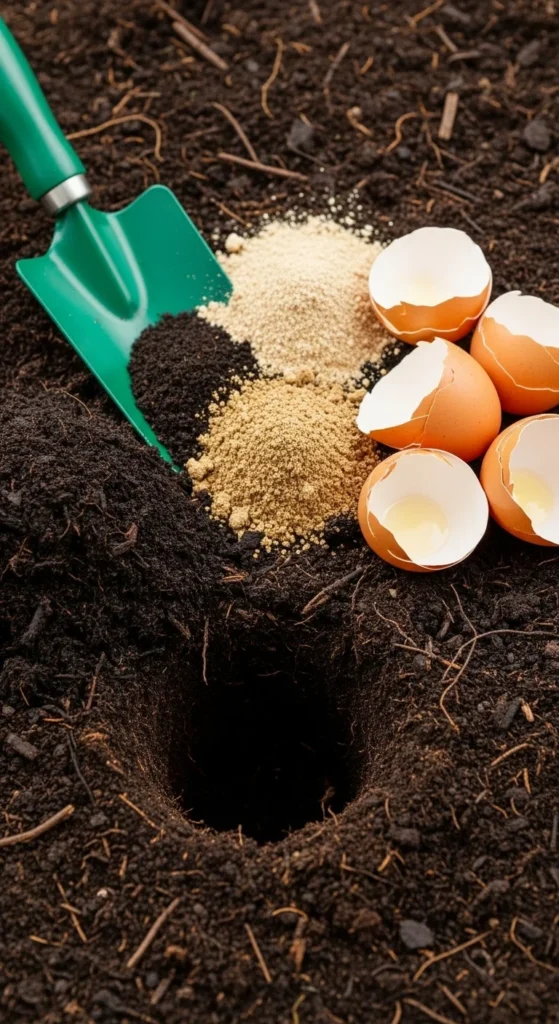
Mix These Into the Soil:
- Compost (improves texture + slow nutrients)
- A handful of bone meal (rich in phosphorus)
- A handful of crushed eggshells (adds calcium)
- Worm castings (gentle, long-lasting nutrition)
This gives your tomatoes a strong start and helps prevent common problems later.
Give Tomatoes a Boost at Planting Time
When planting tomatoes, always fertilize in the hole—but not directly on the roots.
Here’s the trick:
- Dig a deep planting hole.
- Add compost + organic fertilizer to the bottom.
- Cover lightly with soil.
- Plant the tomato on top.
This prevents fertilizer burn and encourages roots to grow deep.
Optional Bonus:
- Mix a tablespoon of Epsom salt into the soil to boost magnesium.
- Bury some of the stem to create extra root growth.
Fertilizing During Early Growth
Once your plants are in the ground, their needs change.
✅ During the First 2–3 Weeks
Use a nitrogen-lean fertilizer to avoid too much leaf growth.
Good options:
- Fish emulsion
- Compost tea
- Diluted organic tomato fertilizer (low N, higher P + K)
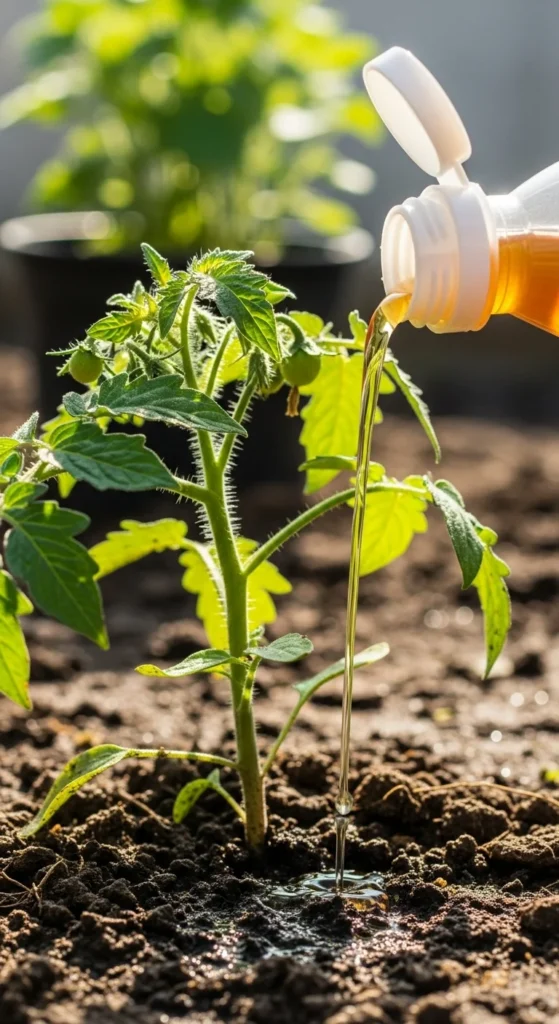
Water the fertilizer around the base—not on leaves—to prevent disease.
Switch to a Bloom + Fruit Formula
When your tomatoes start flowering, it’s time to change the feeding strategy.
✅ At Flowering Stage:
Use a fertilizer with:
- Low Nitrogen (N)
- High Phosphorus (P)
- High Potassium (K)
Look for something like:
- 4-10-10
- 5-10-10
- 3-6-4 (organic formulas)
Why?
Phosphorus helps set more flowers, and potassium helps create larger, sweeter fruit.
Feed every 2–3 weeks for best results.
Add Calcium to Prevent Blossom End Rot
Blossom end rot—those black, sunken spots on tomatoes—happens when plants can’t access calcium.
Easy Calcium Boosters:
- Crushed eggshell tea
- Dolomite lime
- Cal-mag liquid spray (use sparingly)
- Gypsum powder
Important:
Blossom end rot is usually caused by watering inconsistency, not just low calcium. Keep soil evenly moist at all times.
Feed Heavily During Peak Fruit Production
When tomatoes start producing clusters of fruits, they need extra support.
✅ Best Fertilizers at This Stage:
- Organic tomato fertilizer granules
- Liquid seaweed (amazing for fruit growth!)
- Compost tea every 10–14 days
✅ How to Apply:
- Add granular fertilizer around the drip line.
- Water deeply afterward.
- Use liquid feed for a quick nutrient boost.
With consistent feeding, tomatoes will keep producing until late summer.
Mulching Helps Fertilizer Work Better
Mulch doesn’t just keep weeds out—it helps your fertilizer last longer by protecting soil moisture.
Best Mulch Options:
- Straw
- Grass clippings (dried)
- Wood chips
- Compost mulch
Mulch also prevents nutrients from washing away during heavy rain.
Avoid These Common Fertilizing Mistakes
Many beginners accidentally reduce their tomato yield by overfeeding or using the wrong products.
❌ Too Much Nitrogen
Creates huge plants with tiny or no tomatoes.
❌ Fertilizing Dry Soil
Always water before applying fertilizer.
❌ Skipping Feeding During Fruit Production
Tomatoes are hungry and need regular boosts.
❌ Not Adjusting Fertilizer as Plant Grows
Tomatoes need different nutrients at different stages.
How Often Should You Fertilize? (Simple Schedule)
Here is a fail-proof timeline:
- At planting: Compost + bone meal + eggshells
- 2–3 weeks after planting: Mild nitrogen feed
- At first flowers: Switch to high P & K fertilizer
- Every 2–3 weeks: Continue fruiting fertilizer
- Throughout summer: Boost with compost tea or seaweed
Follow this schedule and you’ll have tomatoes that are big, juicy, and consistent.
✅ Final Takeaway
Fertilizing tomatoes doesn’t have to be complicated. With the right nutrients at the right time, you’ll enjoy bigger harvests, healthier plants, and sweeter tomatoes—all season long.

Leave a Reply