

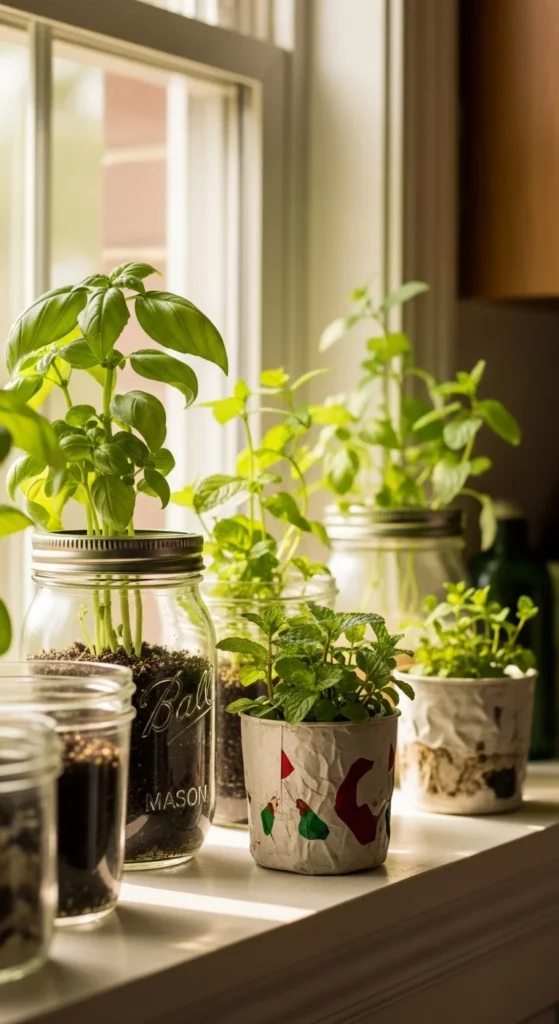
DIY indoor herb gardens are perfect for anyone who wants homegrown flavor without spending much money or using complicated systems. Today’s best setups rely on repurposed containers, simple lighting tricks, and space-saving designs that work in apartments and small kitchens. With a few everyday items, you can grow basil, mint, and other easy herbs year-round. These practical projects focus on low cost, beginner-friendly builds, and realistic care routines that actually work.
1. Mason Jar Herb Planters
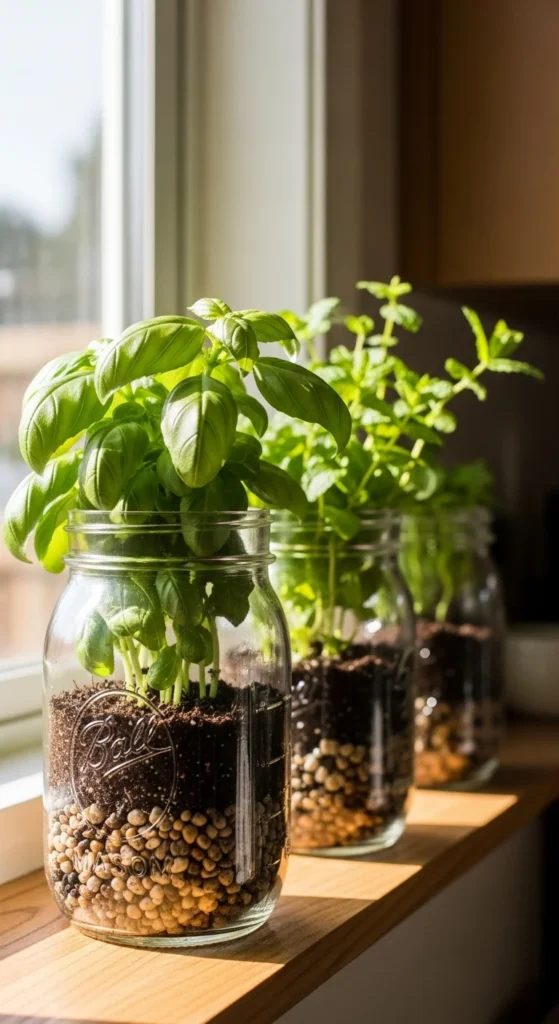
Mason jars make excellent starter herb containers when used correctly. Add a one-inch layer of small pebbles at the bottom to help manage excess moisture. Then fill with a well-draining potting mix.
Because jars have no drainage holes, water lightly and check soil often. Many beginners succeed by using smaller herbs like basil or chives in jars.
Place jars in strong window light and rotate weekly for even growth. If moisture builds up, let soil dry slightly before watering again.
This project costs very little and looks clean on kitchen counters. It’s a great first step into indoor herb growing.
2. Recycled Can Herb Pots
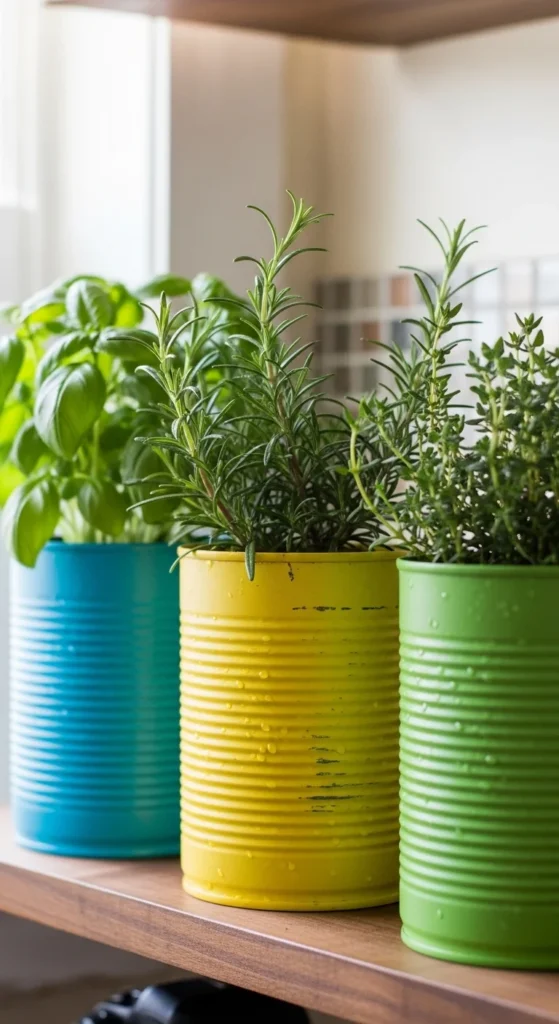
Empty food cans can become sturdy herb pots in minutes. Wash thoroughly and punch two small drainage holes in the bottom.
Add potting mix and plant easy herbs like parsley or oregano. For safety and style, lightly sand any sharp edges.
Place cans on a tray to catch runoff water. Many gardeners paint or wrap cans with twine for a cleaner look.
This project turns kitchen waste into something useful while keeping costs near zero.
3. DIY LED Strip Grow Light
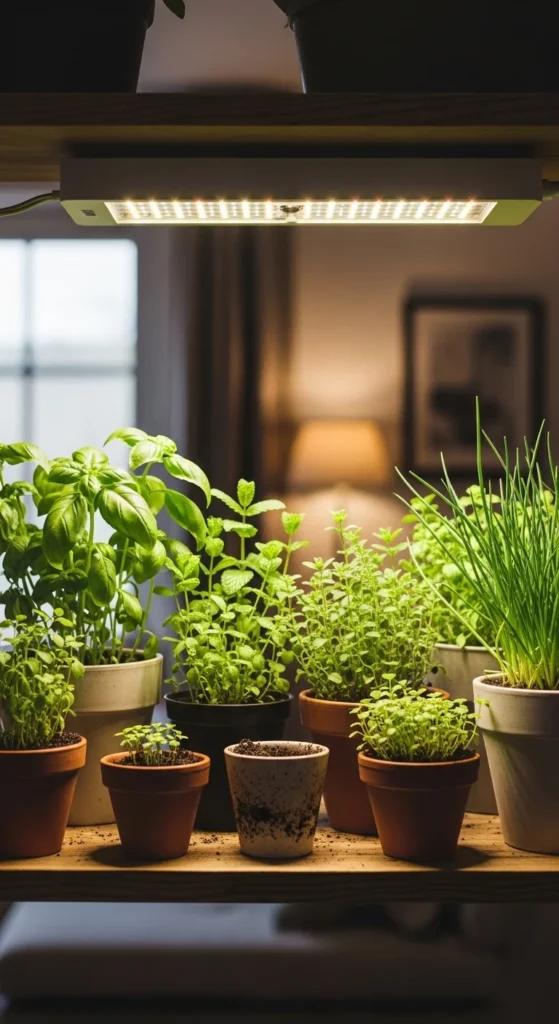
Low light is a common indoor problem. A simple LED strip setup can fix it.
Attach LED grow strips under a shelf or cabinet. Position lights about 6–12 inches above herbs. Connect to an inexpensive timer for 12–16 hours of daily light.
LED strips use little electricity and fit small spaces well. Even budget clip lights can work for beginners.
This project makes year-round herb growing much easier.
4. Egg Carton Seed Starters
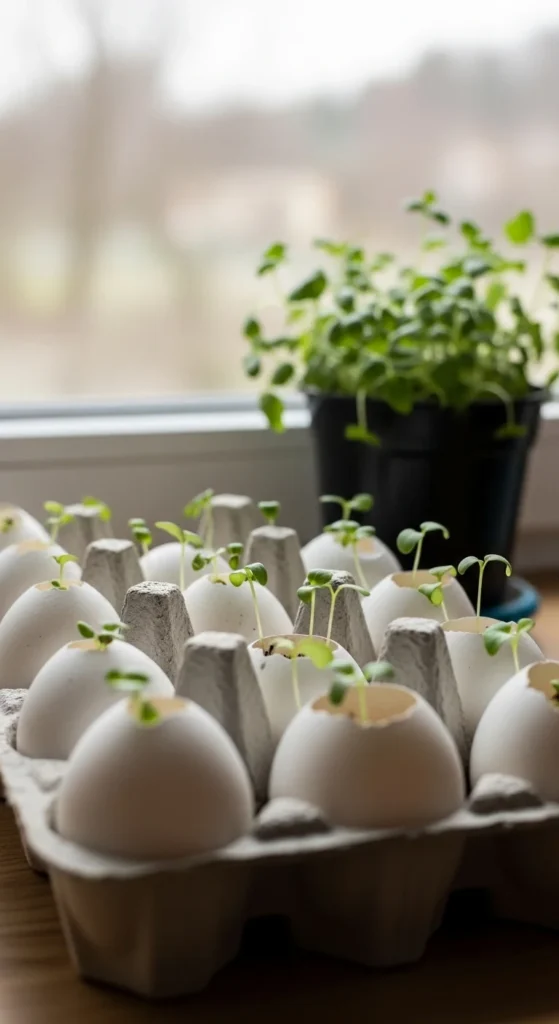
Cardboard egg cartons are perfect for starting herb seeds.
Fill each cell with seed-starting mix and plant one or two seeds. Mist gently to keep soil slightly damp.
Once seedlings grow a few inches tall, transplant them into larger containers.
The carton can be cut apart and planted directly into soil since cardboard breaks down naturally.
This is one of the easiest free seed-starting methods available.
5. Bottom-Watering Saucer System
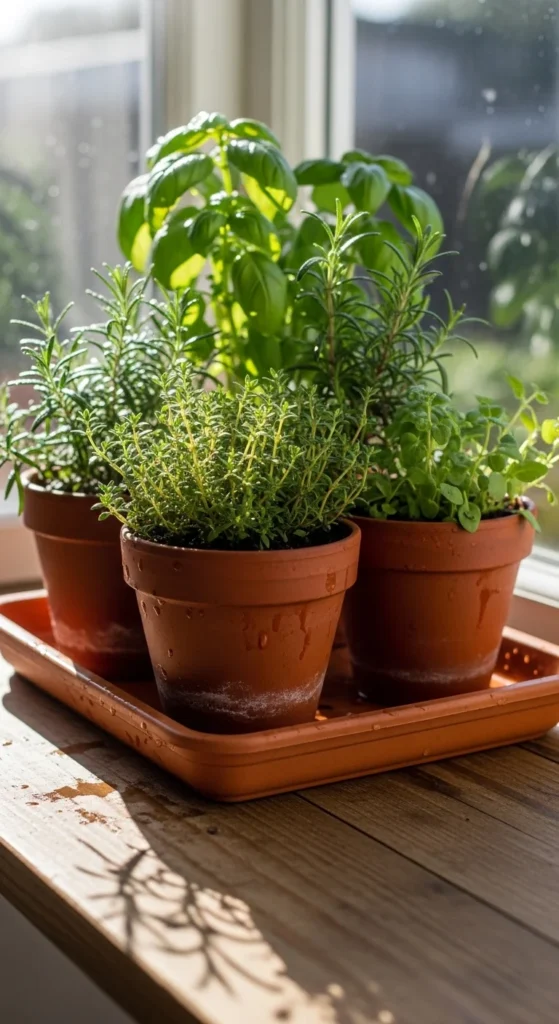
Bottom watering helps prevent fungus gnats and soggy soil.
Fill a shallow tray with water and place herb pots inside for about 15 minutes. Soil absorbs moisture from below.
Remove pots and allow extra water to drain.
This method keeps leaf surfaces dry and encourages stronger root growth.
It works especially well for basil and parsley grown indoors.
6. Pallet Wood Herb Ladder
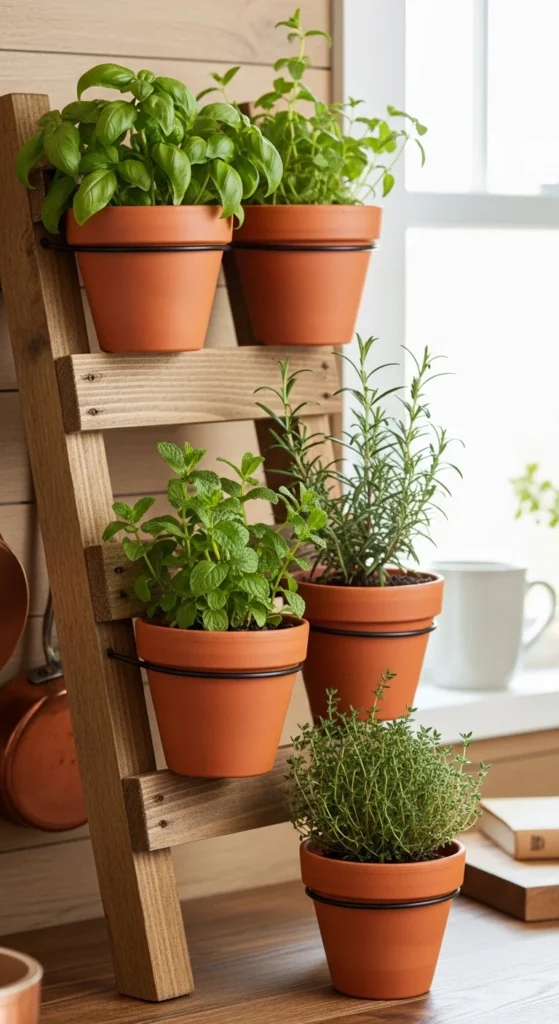
Old pallet wood can become a compact vertical herb stand.
Cut boards to create a simple ladder frame. Add narrow shelves to hold small pots.
Place the ladder near a bright window. Vertical height saves valuable counter space.
Light sanding and a quick coat of food-safe finish improves durability.
This build is budget-friendly and ideal for small kitchens.
7. PVC Pipe Vertical Herb Tower
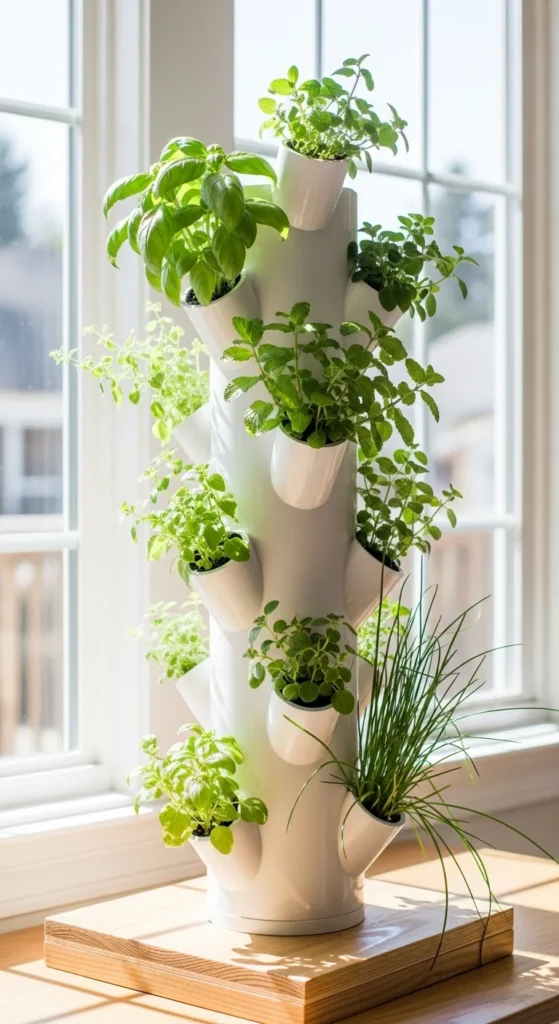
PVC pipe towers allow many herbs in a tight footprint.
Cut planting holes along the pipe and mount it securely upright. Fill with light potting mix.
Small herbs like thyme and oregano perform well in this setup.
Place near strong light or add a grow light overhead.
It’s a smart solution for tight apartments.
8. Upside-Down Bottle Self-Watering System
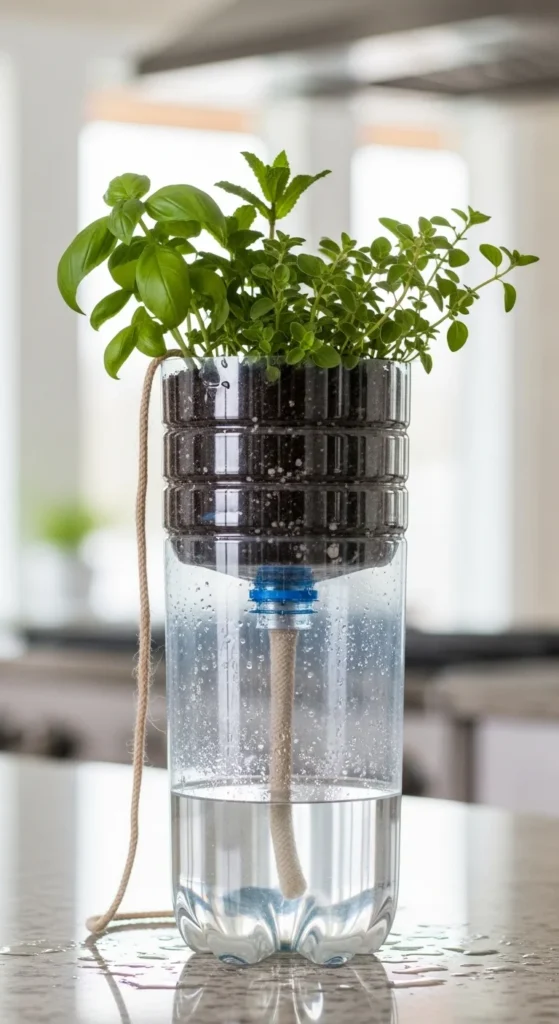
Turn plastic bottles into simple self-watering planters.
Cut the bottle in half. Flip the top portion upside down into the base. Thread cotton string through the cap as a wick system.
Fill the bottom with water and the top with soil.
This setup supplies steady moisture for busy households.
Great for mint and basil.
9. No-Drill Tension Rod Shelf
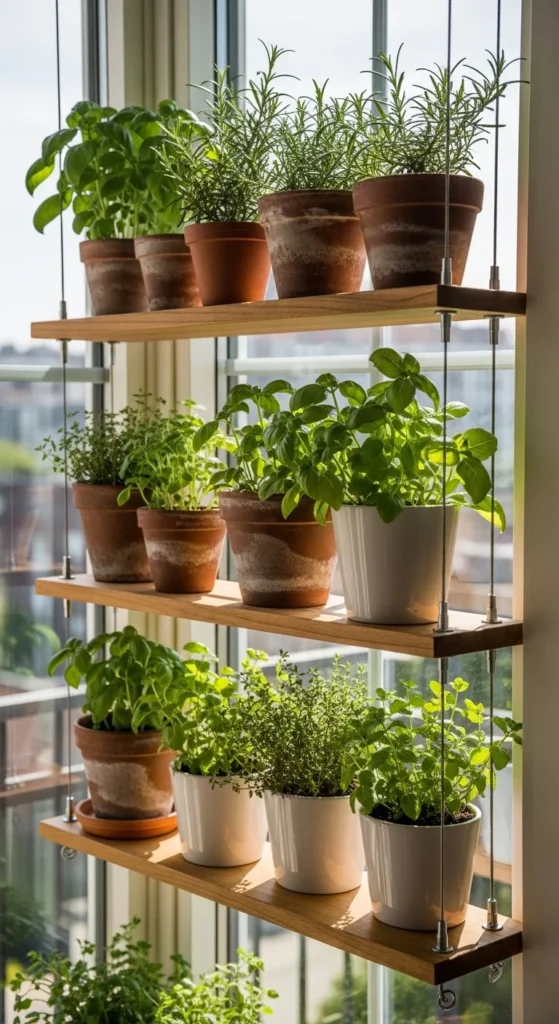
Tension rods create instant shelving without tools.
Place two rods inside a window frame and rest a narrow board across them.
Add small herb pots on top.
This is perfect for renters who cannot drill into walls.
It expands growing space in minutes.
10. Kitchen Scrap Compost Tea
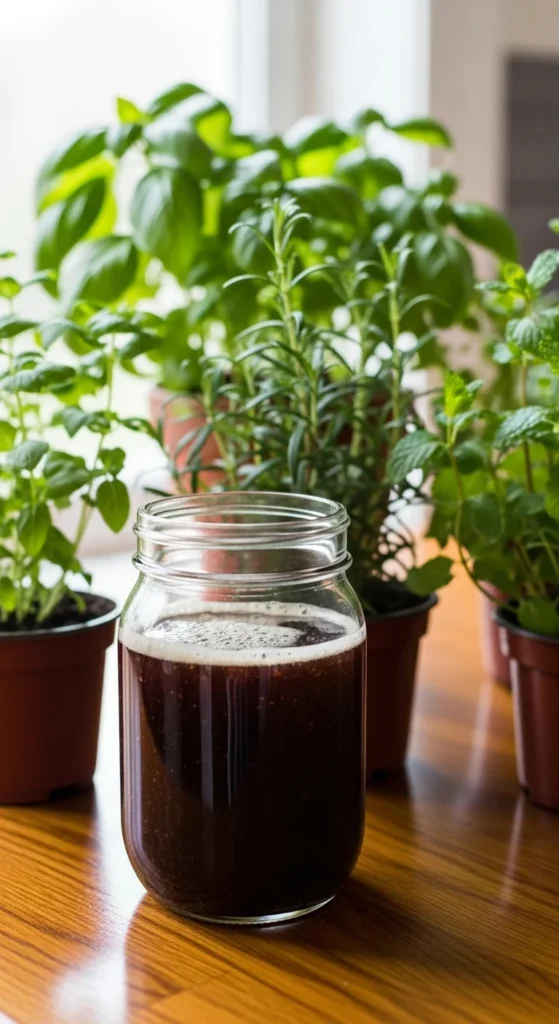
Compost tea is a simple homemade liquid feed.
Soak vegetable scraps or finished compost in water for 24 hours. Strain and dilute before use.
Apply lightly once every few weeks.
This gives container herbs a gentle nutrient supply using kitchen waste.
It’s inexpensive and easy to repeat.
11. Hanging Macrame Herb Holders
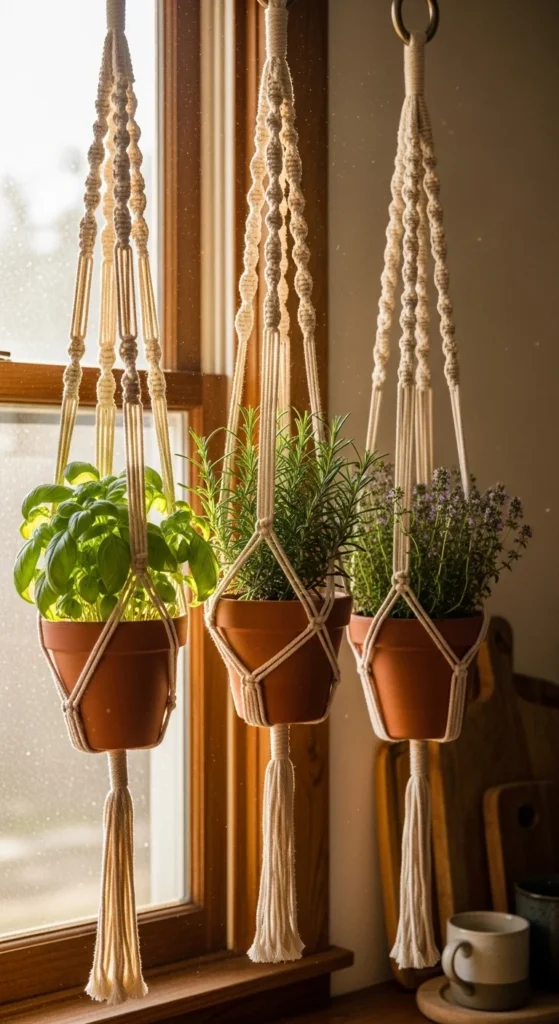
Macrame hangers free up counter space.
Hang lightweight herb pots near bright windows.
Use strong hooks and keep watering gentle to avoid dripping.
Trailing herbs like mint look especially nice in hanging setups.
This adds greenery without crowding work surfaces.
12. Shoe Organizer Herb Wall
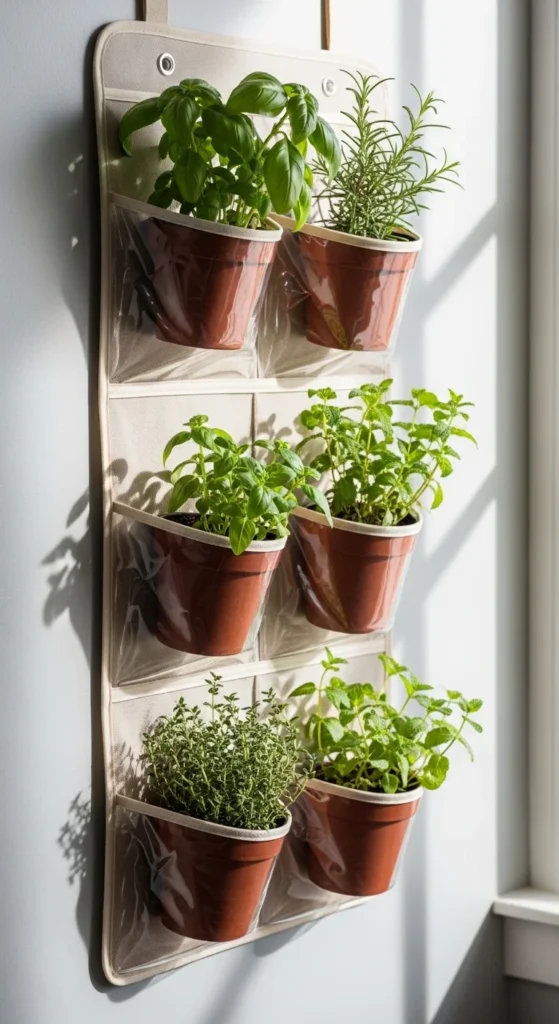
Over-the-door shoe organizers can grow many small herbs.
Fill each pocket with light potting mix.
Choose compact herbs like thyme and chives.
Mount near strong light or supplement with LEDs.
It’s a creative vertical solution for small homes.
13. Cotton Wick Passive Watering Pot
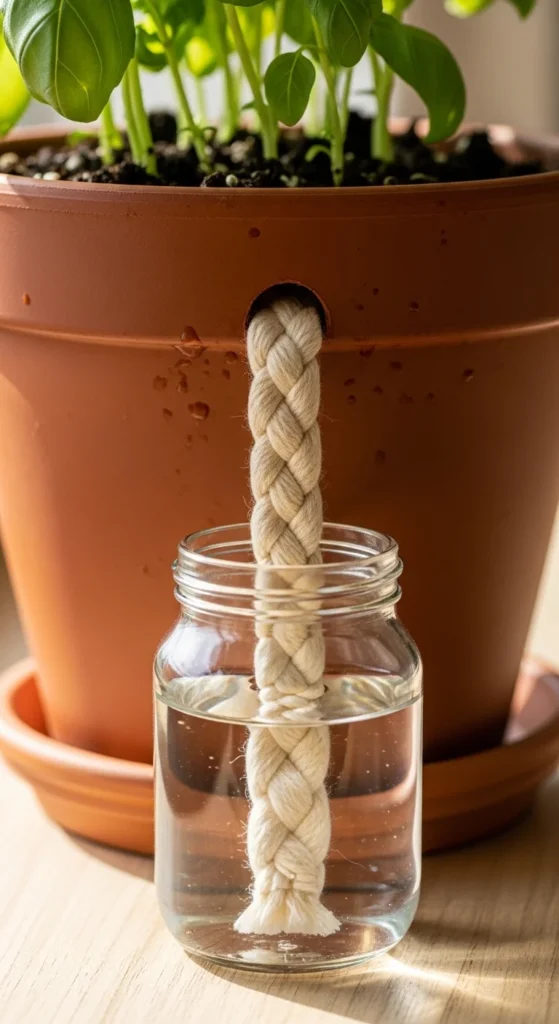
Wick watering reduces daily maintenance.
Thread cotton string through the pot bottom into a water container below.
Soil pulls moisture gradually as it dries.
This works well for busy schedules.
Keep the reservoir clean and refill weekly.
14. Mason Jar Hydro Herb Setup
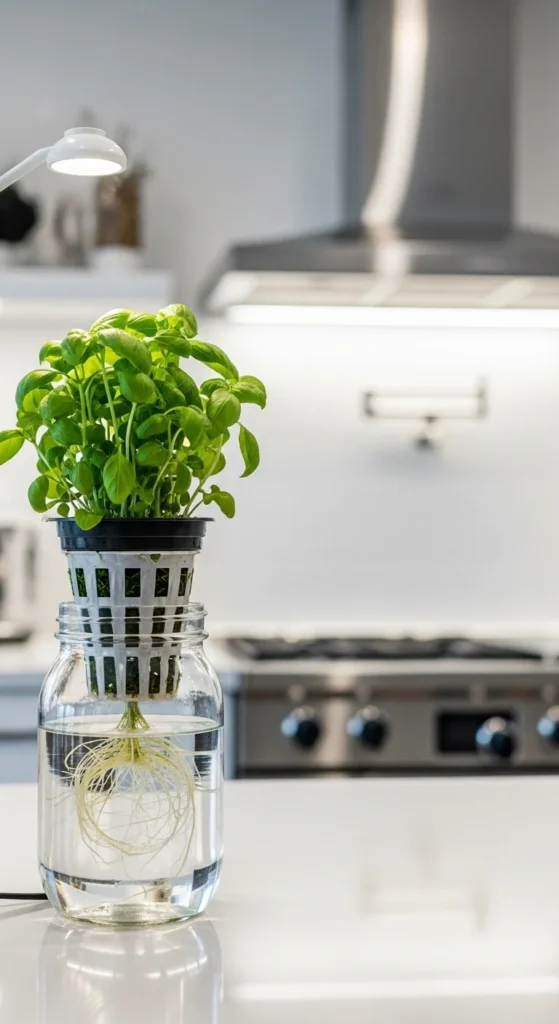
Hydro jar systems grow herbs without soil.
Use a net pot lid and fill jar with water and nutrients. Roots grow directly in the solution.
Add a small grow light for steady results.
Basil performs especially well in hydro jars.
This setup stays clean and compact.
15. Cardboard Pot Liner Hack
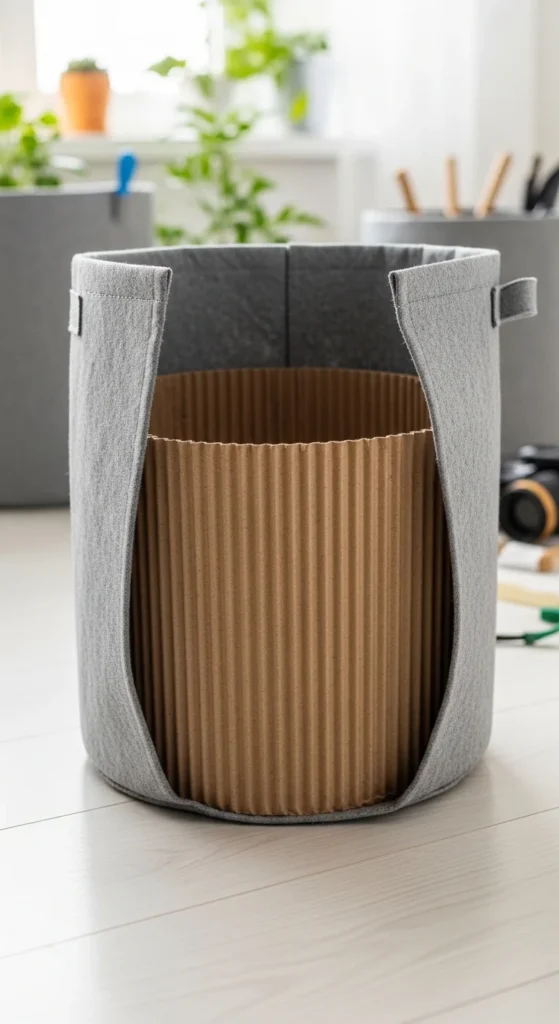
Cardboard liners help manage moisture in fabric pots.
Place a thin cardboard layer inside before adding soil.
It slows water loss and keeps fine soil from escaping.
Replace liners every few months as they soften.
A simple trick with household materials.
16. USB Mini Fan for Airflow
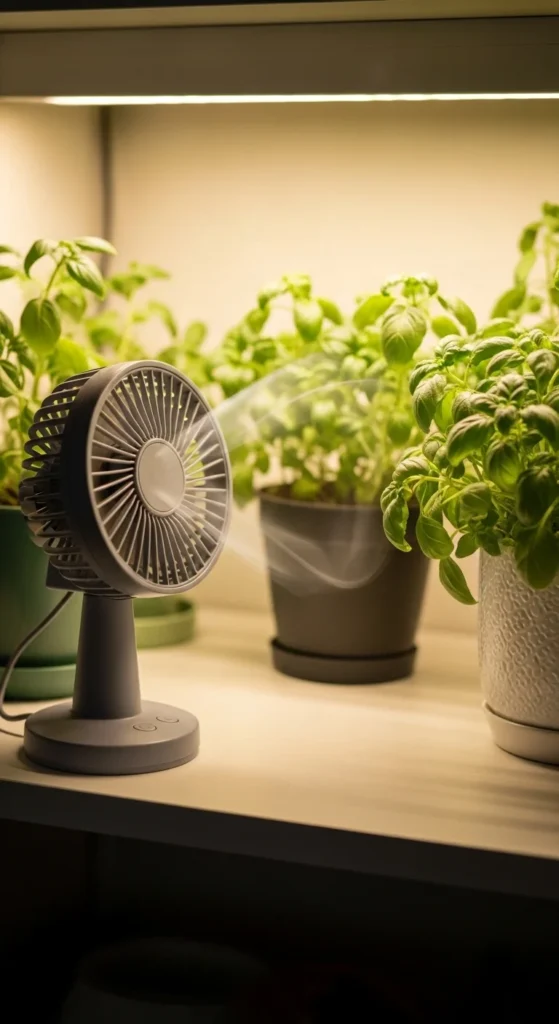
Indoor air can become stagnant.
A small USB fan improves air movement and reduces mold risk.
Run it on low speed for gentle circulation.
Position it a few feet away from plants.
This is helpful in tightly closed rooms.
17. Popsicle Stick Plant Labels
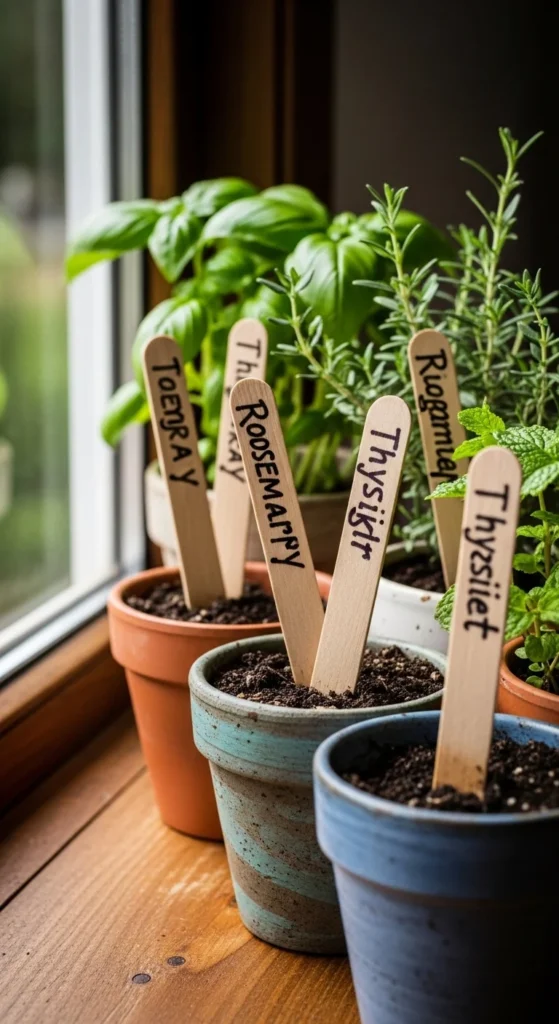
Keep herbs organized with simple labels.
Write plant names on popsicle sticks using waterproof marker.
Push gently into soil.
This prevents mix-ups as your collection grows.
It’s quick, cheap, and practical.
18. Bamboo Skewer Mini Trellis
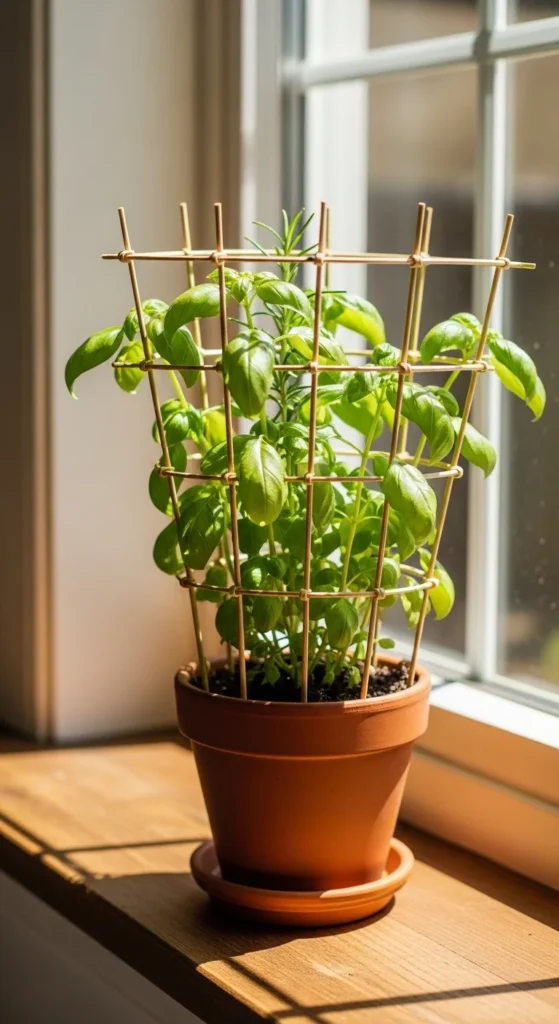
Some herbs benefit from light support.
Use bamboo skewers and string to form a small trellis.
Great for trailing oregano or climbing varieties.
Insert carefully to avoid root damage.
This adds structure without buying specialty gear.
19. Smart Timer Plug for Lights
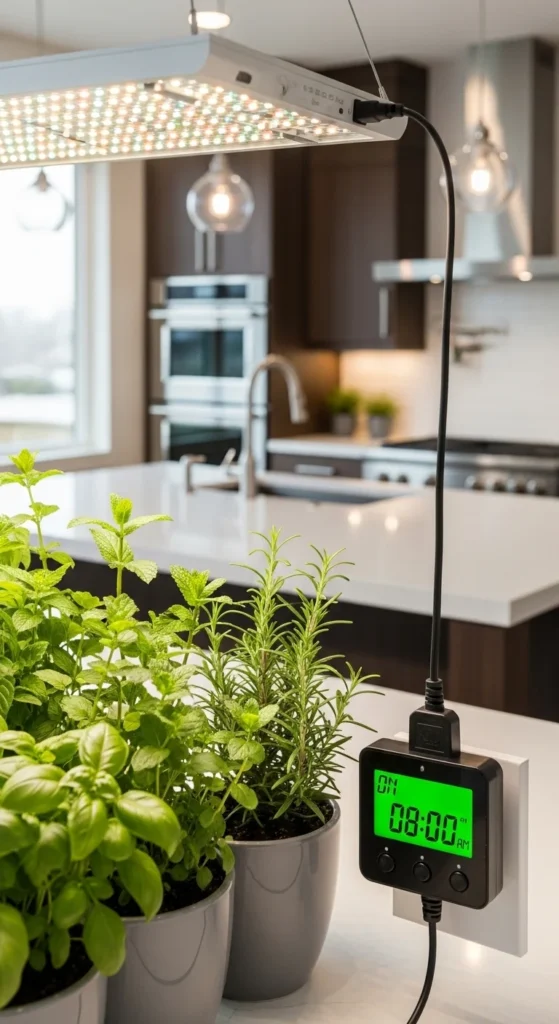
Timer plugs automate lighting schedules.
Set lights for consistent daily cycles.
This keeps plant growth steady even during busy weeks.
Basic timers are inexpensive and easy to program.
Automation removes guesswork.
20. Pebble Humidity Tray
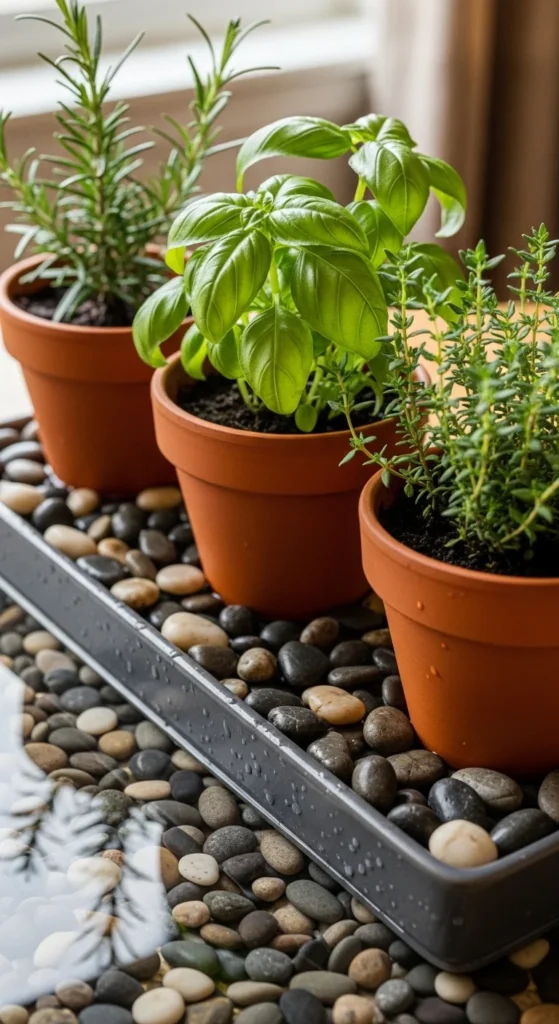
Dry indoor air can stress herbs.
Fill a shallow tray with pebbles and water. Set pots on top without submerging roots.
Evaporation raises local humidity slightly.
Refill water weekly.
This works well during winter heating months.
21. Decorative Pebble Top Dressing
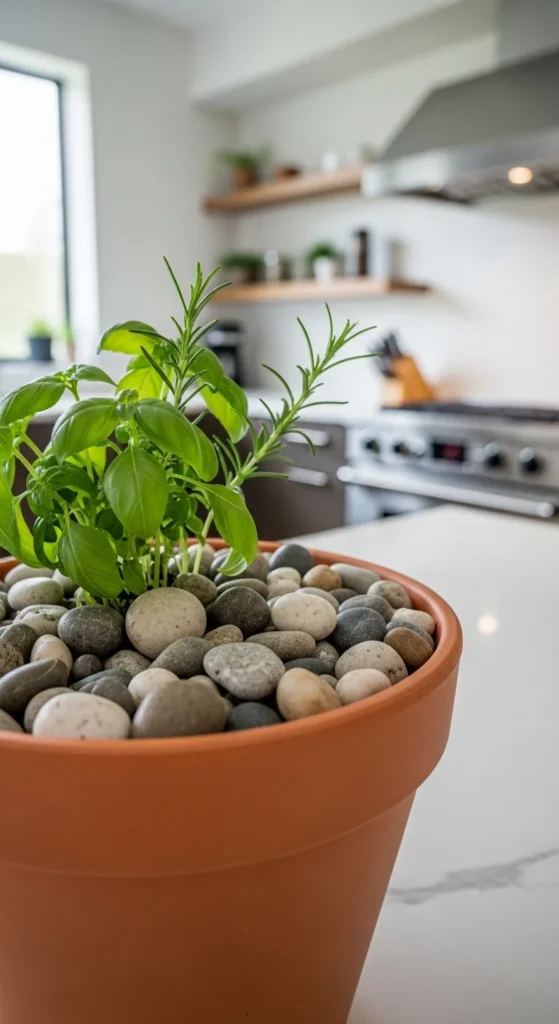
Pebble top dressing keeps soil tidy.
It also reduces splashing during watering.
Spread a thin layer over soil surface.
Choose light decorative stones for a clean look.
This is both practical and visually appealing.
22. Soda Bottle Mini Greenhouse
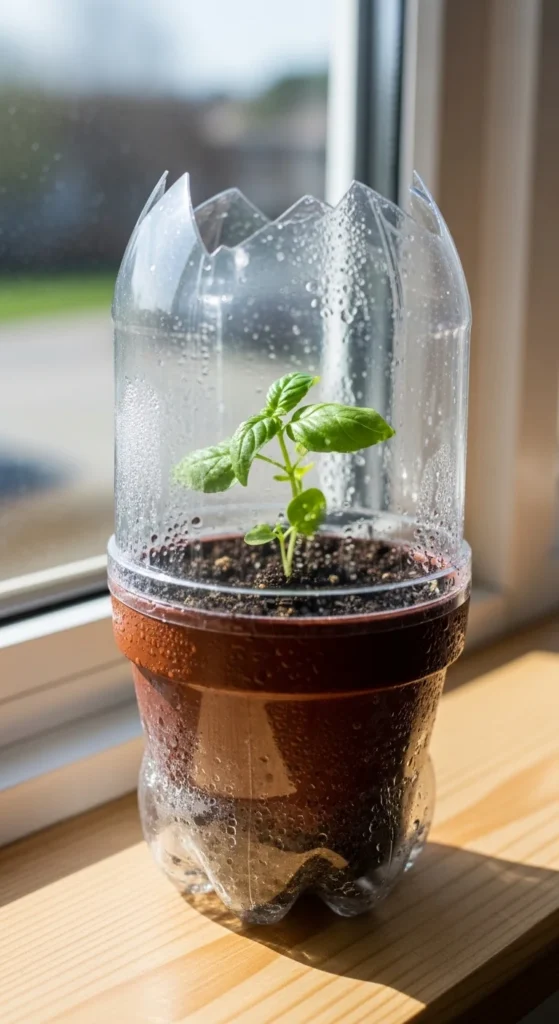
Clear plastic bottles create simple humidity domes.
Cut the bottom off and place over young seedlings.
Remove daily for airflow.
This helps early growth in dry homes.
It’s a quick reuse project.
23. Coffee Filter Soil Sifter
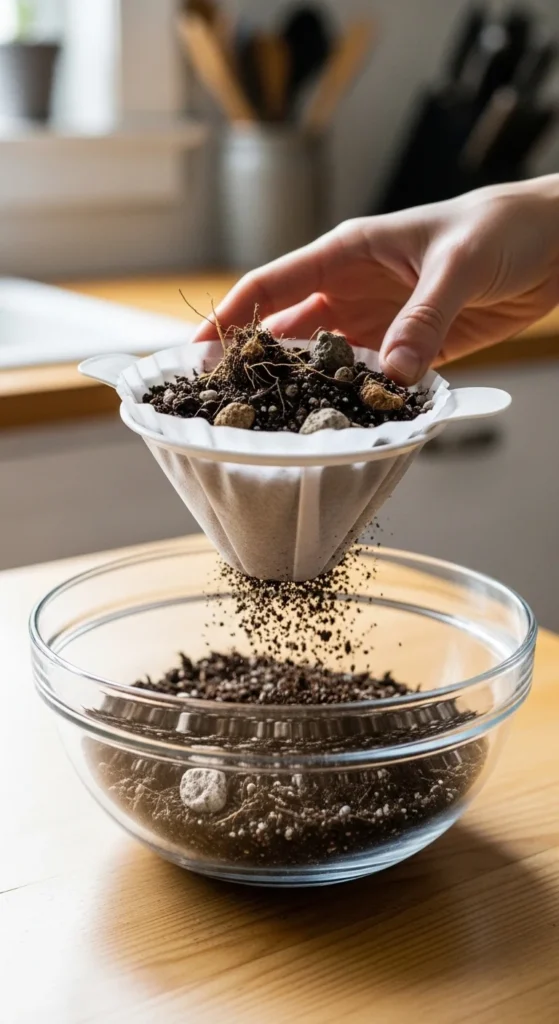
Old potting soil can be reused.
Pour it through a coffee filter or sieve to remove debris.
Mix with new potting mix and perlite.
This stretches soil supplies further.
A simple recycling habit.
24. Start Small and Build Your Indoor Herb Station
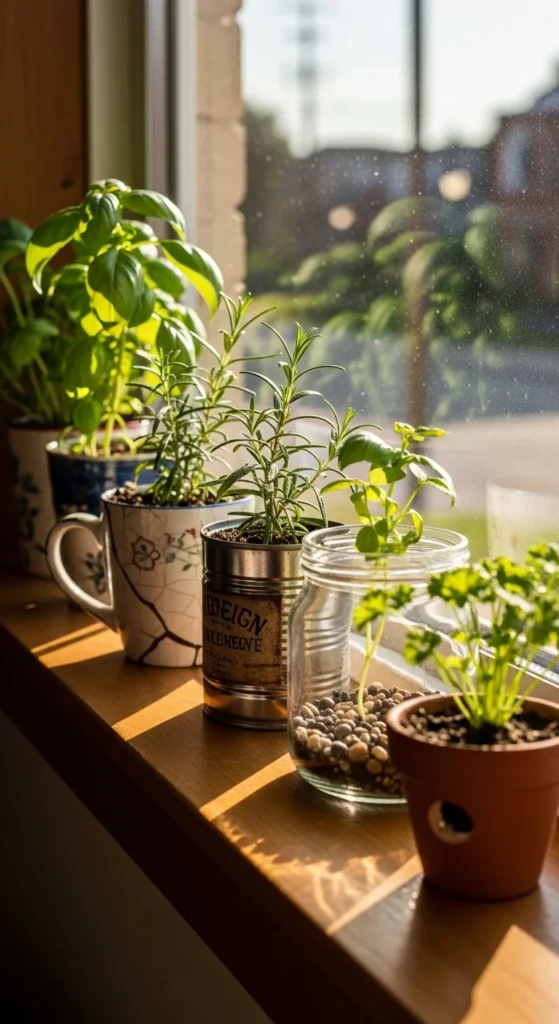
The smartest DIY herb gardens grow step by step.
Begin with one or two easy herbs.
Learn your home’s light and watering rhythm.
Add new containers gradually.
Simple systems are easier to maintain long term.
Steady progress leads to a productive indoor herb setup.
Conclusion
DIY indoor herb gardens do not require expensive kits or large spaces. With repurposed containers, simple lighting, and smart watering habits, anyone can grow herbs indoors year-round. Start with one easy project, observe how your plants respond, and expand gradually. Small consistent care turns even a simple windowsill into a productive herb garden.
Leave a Reply