

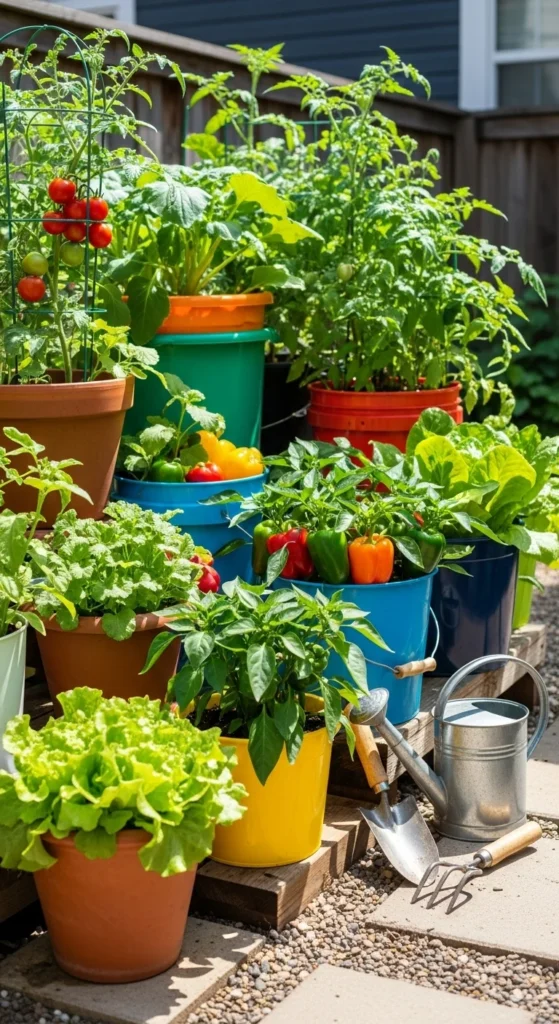
Container gardening makes growing vegetables possible anywhere — on balconies, patios, or even fire escapes. You don’t need a big yard or fancy setup. Just a few clever tricks can help your plants grow faster, stronger, and healthier in pots. These 24 easy container gardening hacks will save space, reduce mess, and help you harvest more veggies without extra effort.
1. Use Deep Containers for Root Veggies
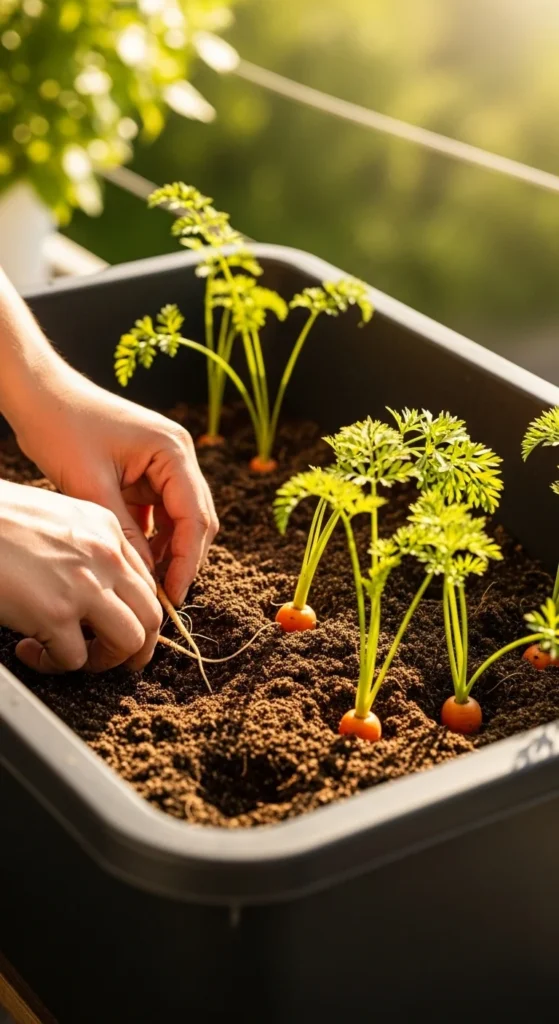
Vegetables like carrots, radishes, and beets need deep soil to grow straight and full. Choose containers that are at least 12–14 inches deep. Buckets, storage bins, or even old coolers work perfectly. Drill drainage holes at the bottom and fill with light, airy potting mix. Avoid compacting the soil — roots need space to breathe. This small adjustment helps you get bigger, smoother harvests.
2. Start with Lightweight Potting Mix
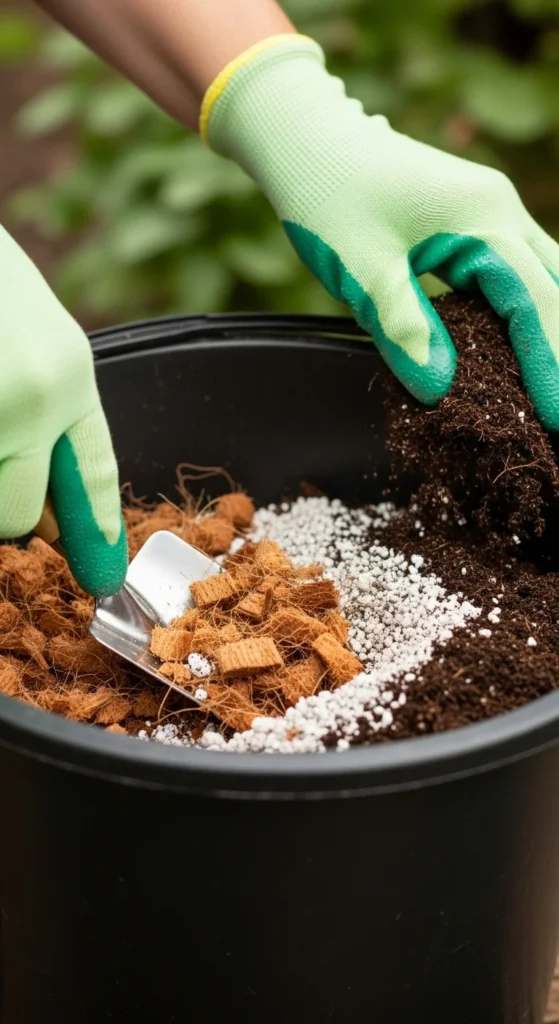
Garden soil is too heavy for pots. It compacts easily and traps water. Instead, mix equal parts compost, coconut coir (or peat moss), and perlite. This blend drains well while keeping moisture. You can make it in bulk to save money. A light mix also keeps pots easier to move when rearranging your garden.
3. Recycle Buckets as Planters
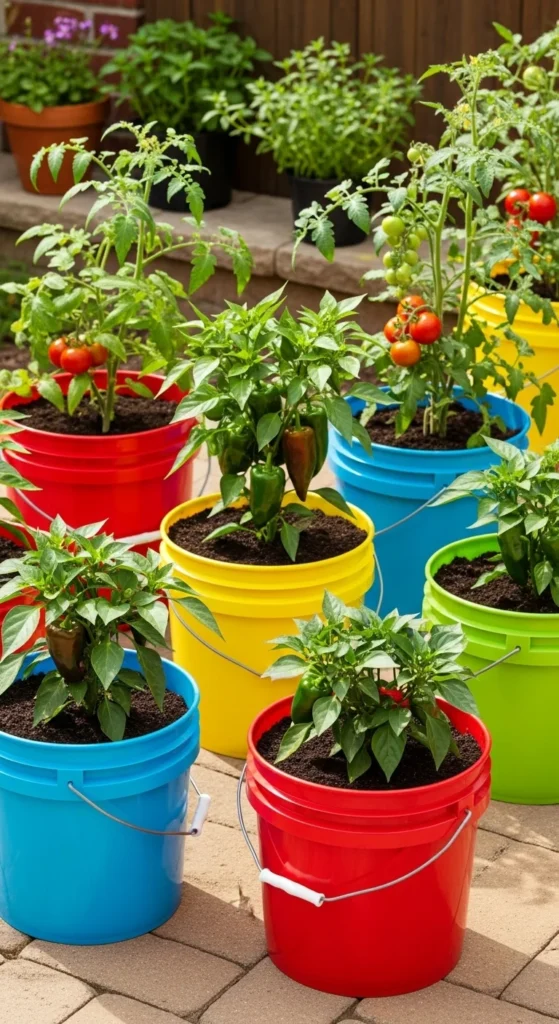
Those extra paint or food-grade buckets? Perfect planters. Just drill a few holes in the bottom for drainage. Paint them in fun colors or wrap them in burlap for style. Buckets are sturdy, deep, and ideal for tomatoes, beans, or herbs. Plus, they’re cheap or even free from restaurants or bakeries.
4. Add Mulch to Retain Moisture
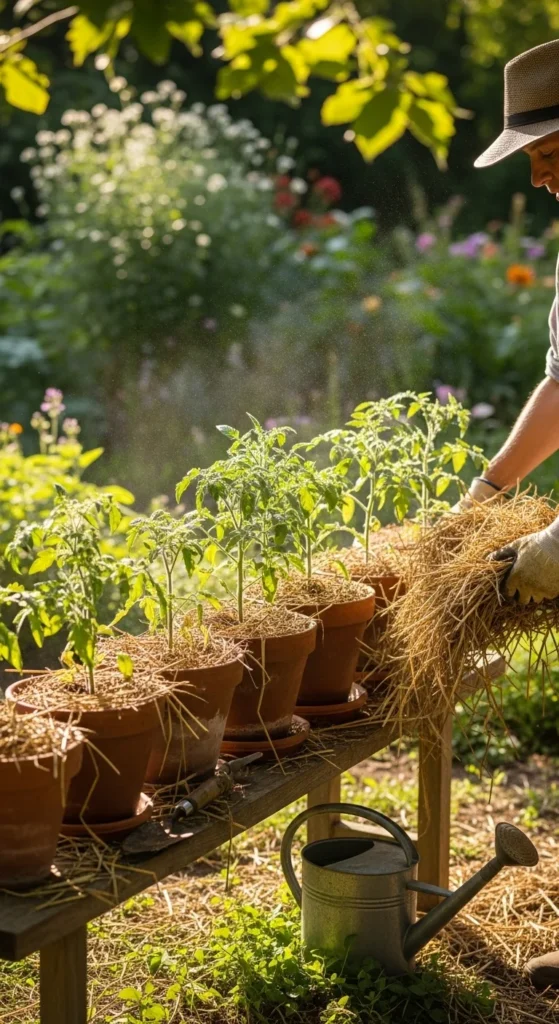
Container soil dries out fast. A simple layer of straw, shredded leaves, or bark chips locks in moisture and keeps roots cool. It also reduces how often you water. Mulching gives pots a tidy look while helping the soil stay evenly moist — especially during summer heat.
5. Grow Vertical with Trellises
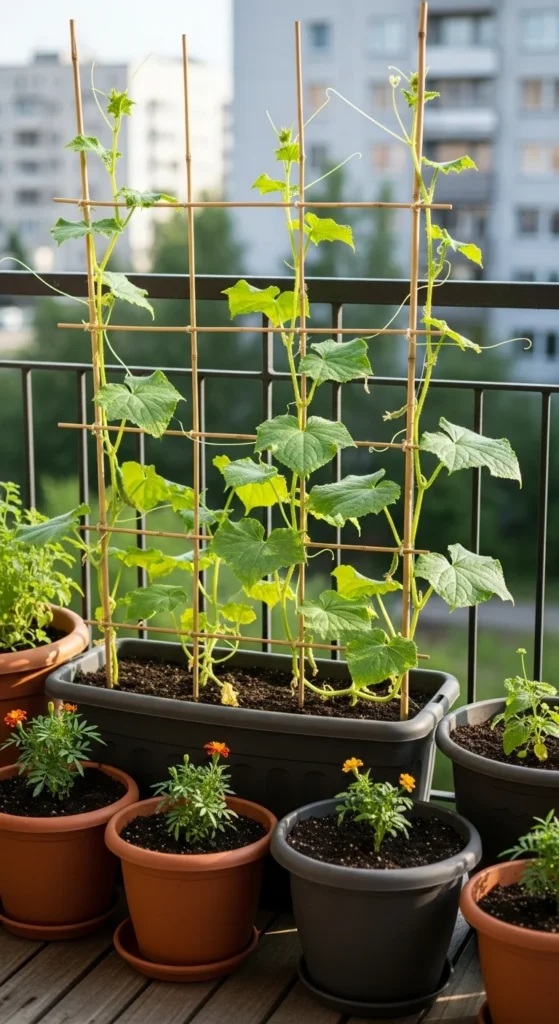
Trellises make the most of small spaces. Train climbing veggies like peas, beans, and cucumbers to grow upward. You can build a simple trellis using bamboo stakes and twine. Place it at the back of your pot so plants get plenty of sunlight. Vertical growth improves airflow and keeps leaves off the damp soil, reducing disease.
6. Use Epsom Salt for Healthier Plants
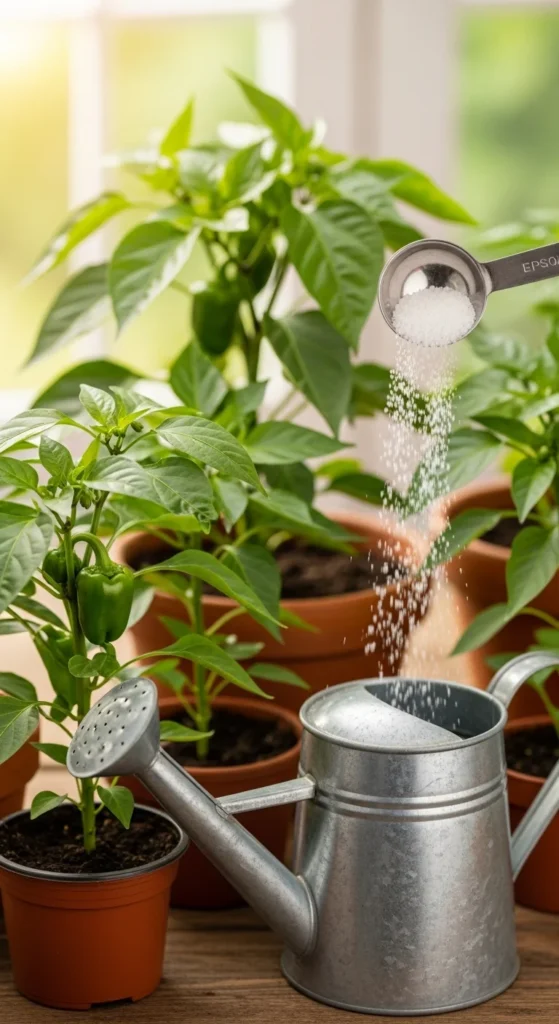
Epsom salt adds magnesium and sulfur, which help plants grow greener leaves and more fruit. Dissolve one tablespoon in a gallon of water and feed your veggies every few weeks. Tomatoes and peppers especially love it. It’s inexpensive and gives visible results fast.
7. Double Up with Companion Planting
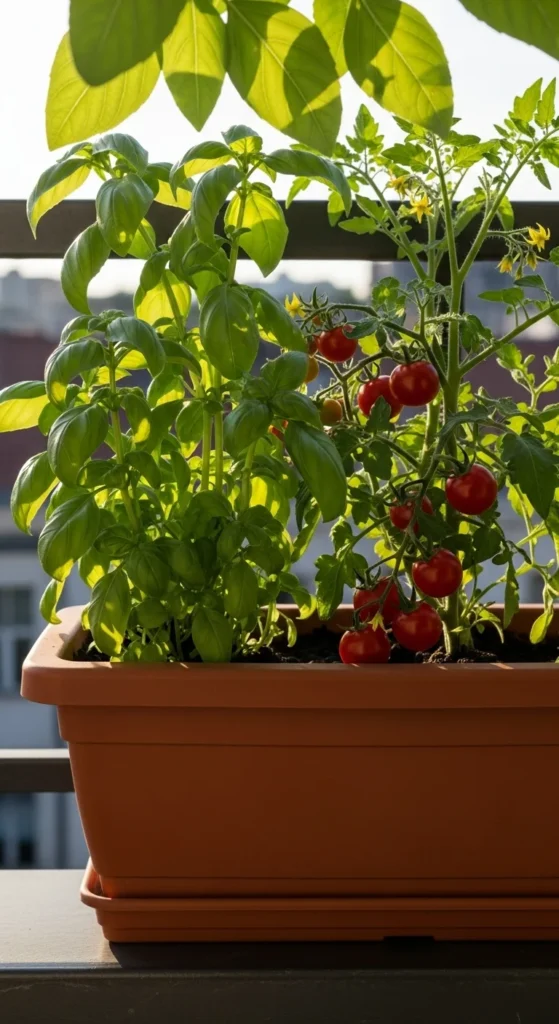
Grow plants that help each other. Tomatoes love basil — it improves flavor and deters pests. Lettuce and carrots grow well under taller plants like peppers. Pairing plants saves space and creates a natural balance that keeps bugs away.
8. Add Coffee Grounds for Nutrients
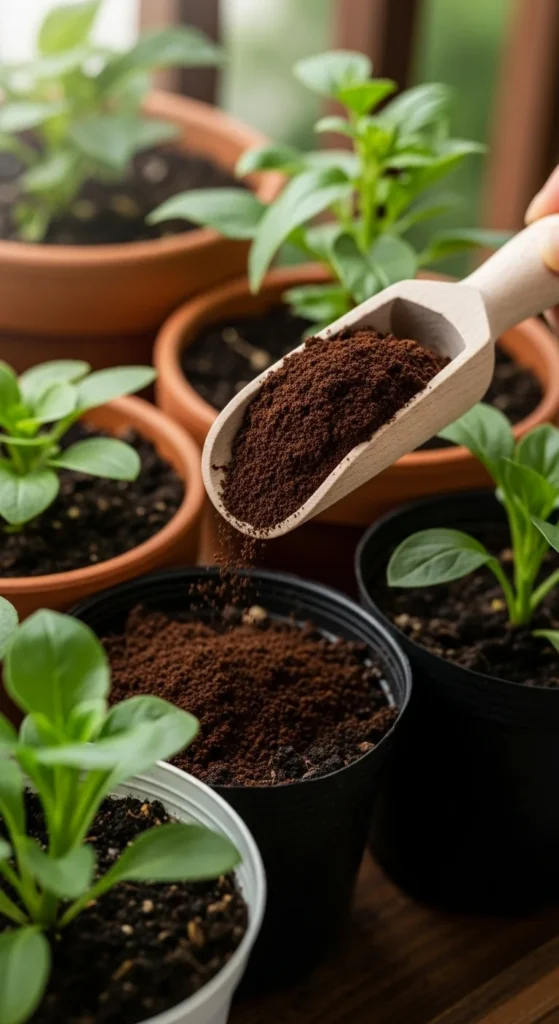
Used coffee grounds make a gentle fertilizer. Mix them into your soil or sprinkle a thin layer on top. They add nitrogen and improve soil texture. Just don’t overdo it — a handful per pot every few weeks is plenty.
9. Make Self-Watering Containers
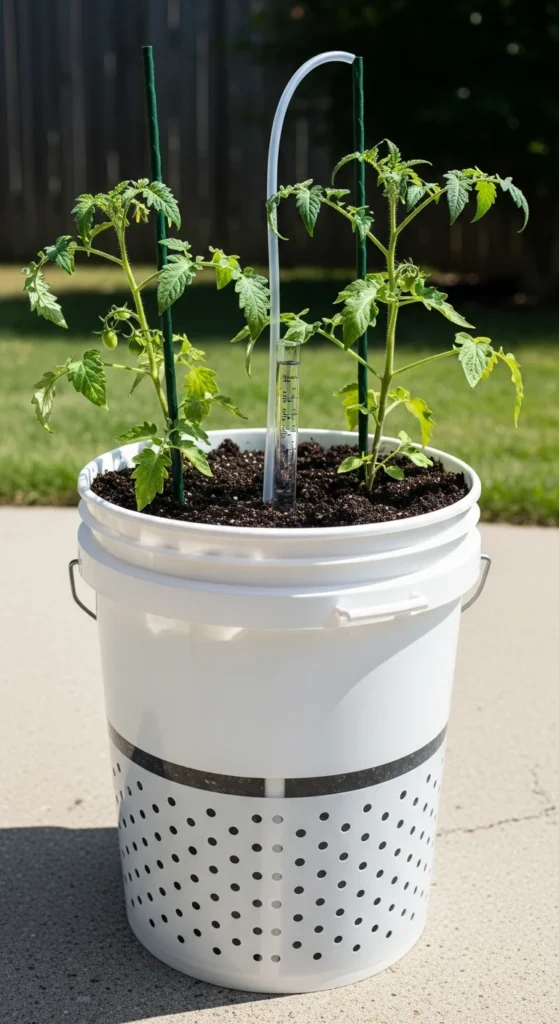
Keep your plants hydrated without daily watering. Add a small reservoir under your container — an inverted water bottle or PVC pipe works. It lets roots absorb moisture as needed. This trick keeps soil consistently moist, especially when you’re away for a few days.
10. Use Eggshells as Mini Planters
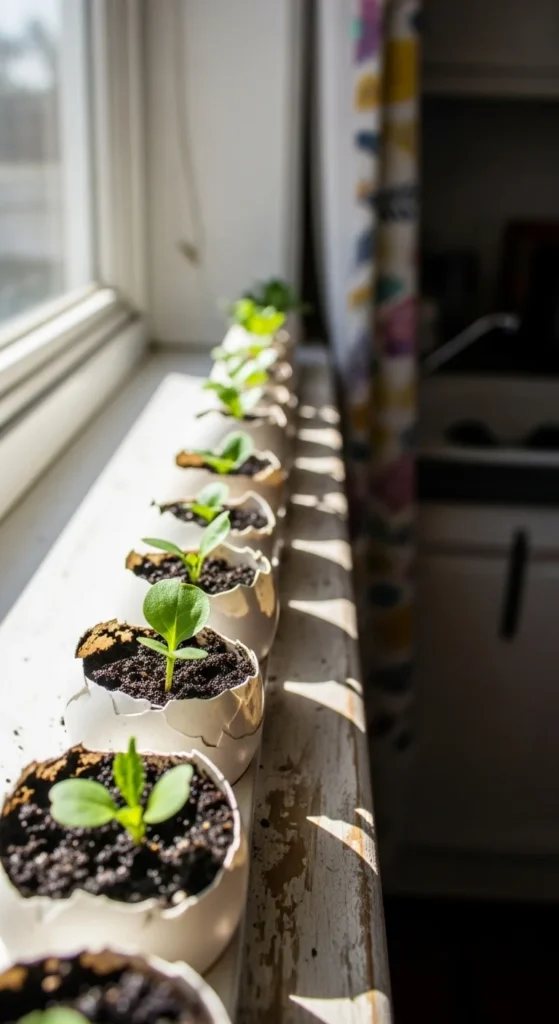
Don’t toss eggshells — use them to start seedlings. Fill clean shells with potting mix and plant seeds inside. Once the seedlings are ready, crack the shell slightly and plant it directly in the container. The shell adds calcium to the soil as it breaks down.
11. Rotate Containers Weekly
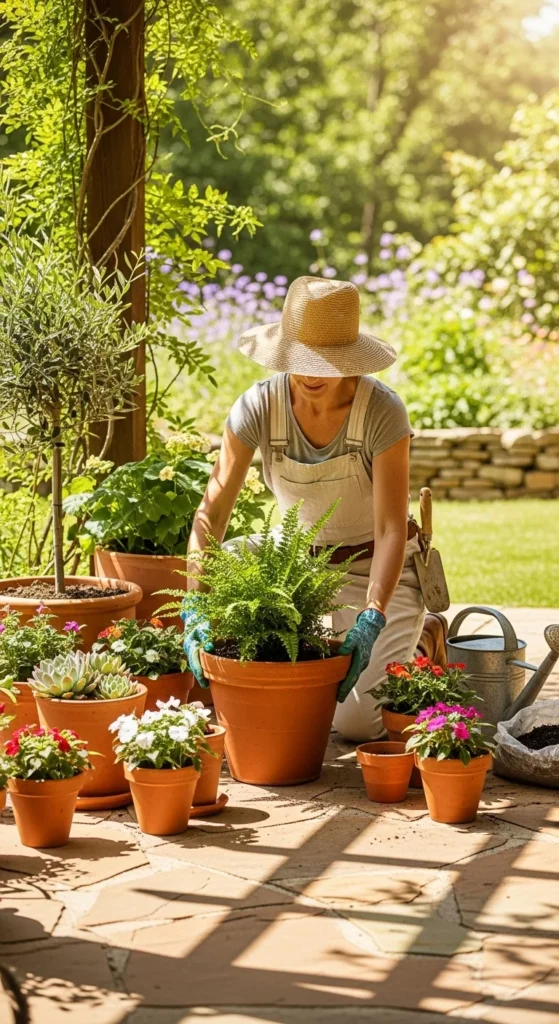
Plants grow unevenly if only one side gets sun. Turn your pots a little each week for balanced light exposure. It helps stems grow straighter and ensures every leaf gets enough light for strong growth.
12. Add Pebbles for Drainage
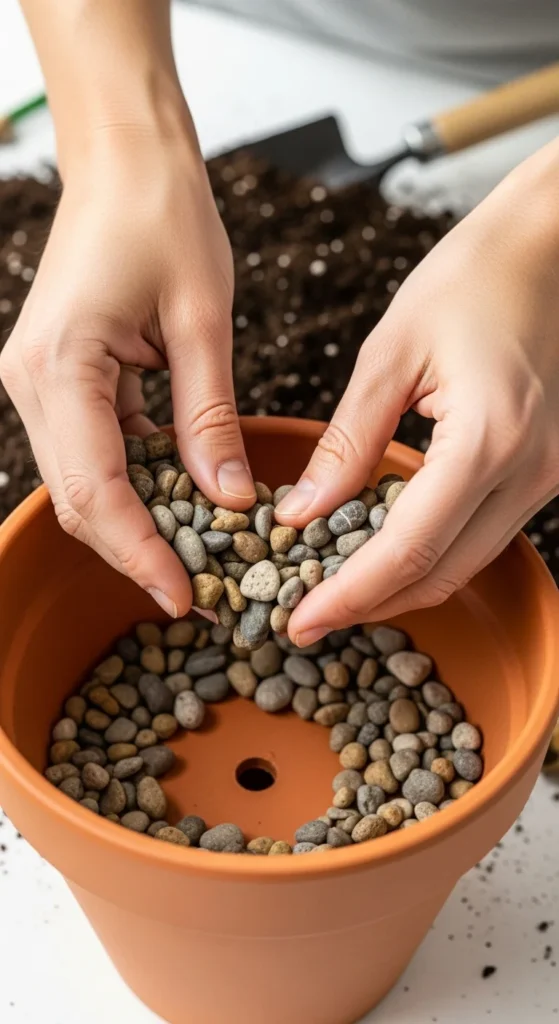
A layer of pebbles or gravel under the soil helps prevent soggy roots. It creates space for extra water to collect without drowning your plants. Perfect for heavy clay pots or plants that dislike wet feet, like tomatoes or peppers.
13. Repurpose Old Tires
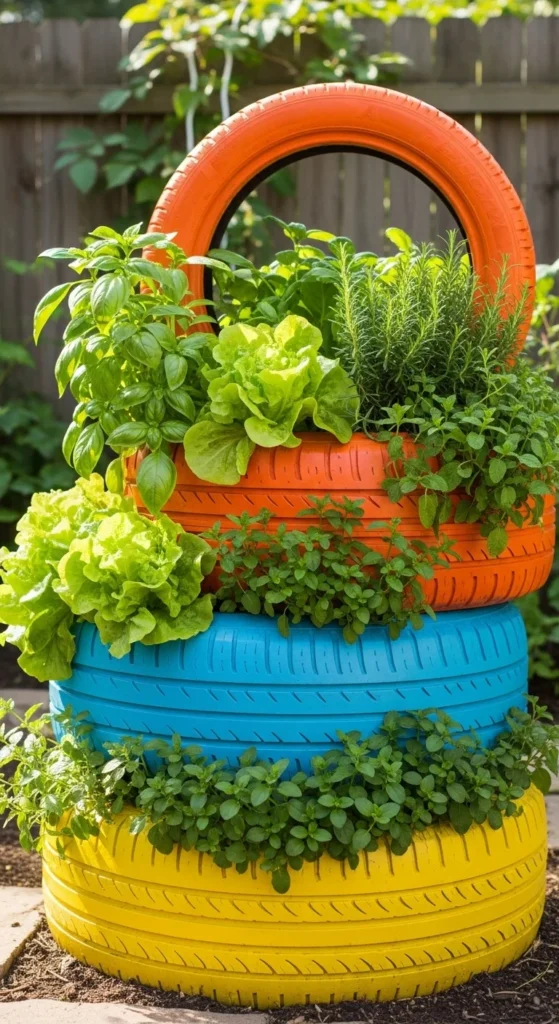
Stack old tires, fill with soil, and plant leafy greens. They retain warmth and give your garden a rustic edge. Paint them bright colors for fun, or keep them black for a farmhouse look. It’s a great recycling project and perfect for root veggies or herbs.
14. Grow in Fabric Bags
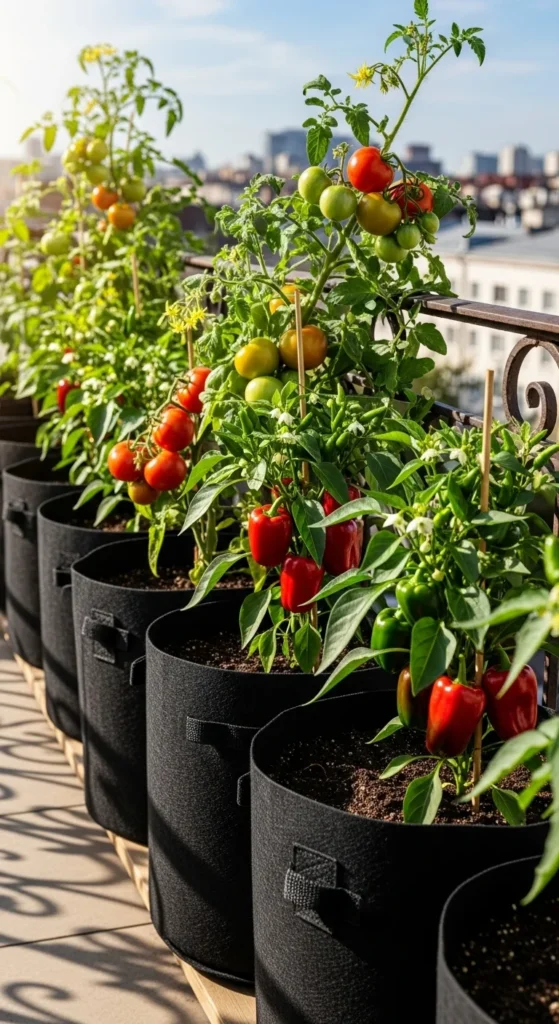
Fabric grow bags offer amazing drainage and root air circulation. They’re lightweight, reusable, and fold up when not in use. Fill with soil, plant, and watch roots thrive. These bags prevent root rot and are easy to move around when chasing sunlight.
15. Use Vinegar to Clean Pots
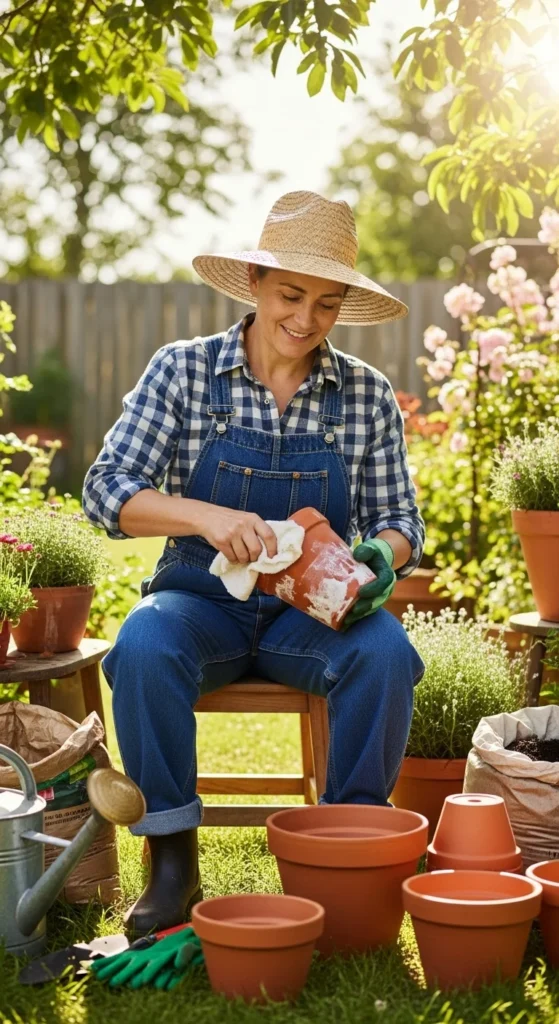
Mineral buildup can clog drainage and harm plants. Clean pots between seasons using a mix of one part vinegar to three parts water. It removes residue and keeps containers fresh for the next round of planting.
16. Try Stacking Planters
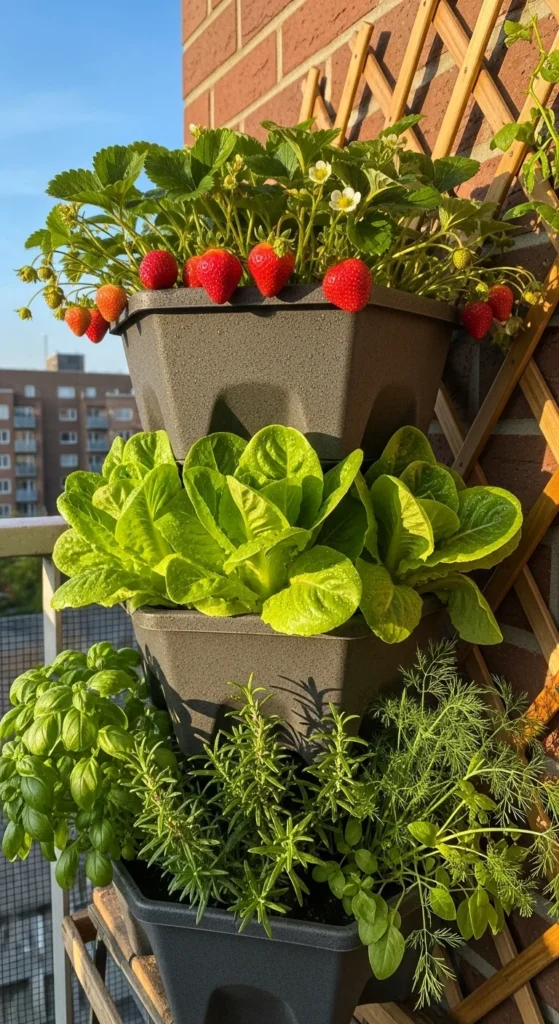
Stackable planters save space and create a mini garden tower. You can buy them or make your own using plastic containers with drainage holes. Perfect for strawberries, herbs, and small greens — each layer gets sunlight and good air circulation.
17. Keep Pests Away with Garlic Spray
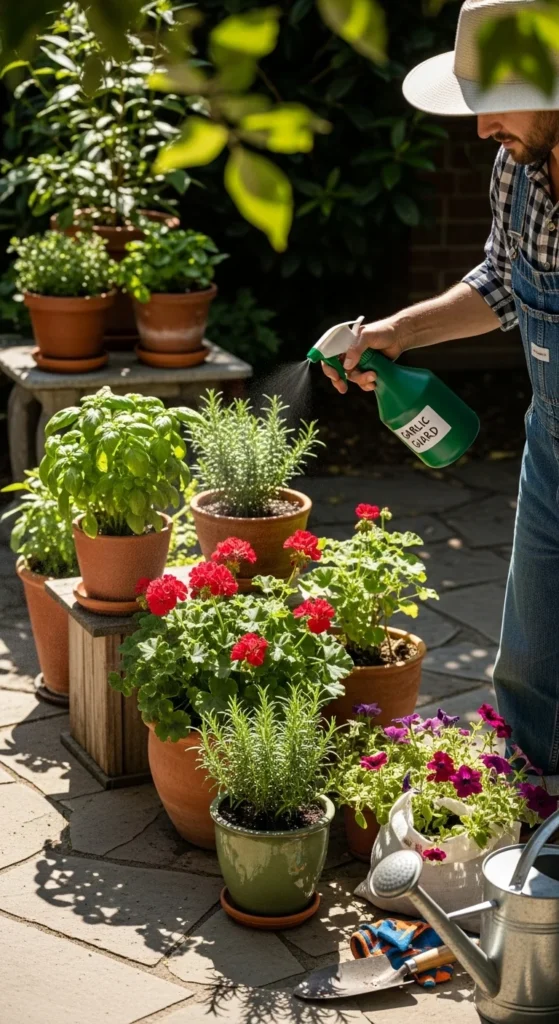
Blend a few garlic cloves with water and strain into a spray bottle. Spray it lightly on leaves to deter aphids and whiteflies. This simple, non-toxic mix keeps your veggies safe without harsh chemicals.
18. Mix Flowers with Veggies
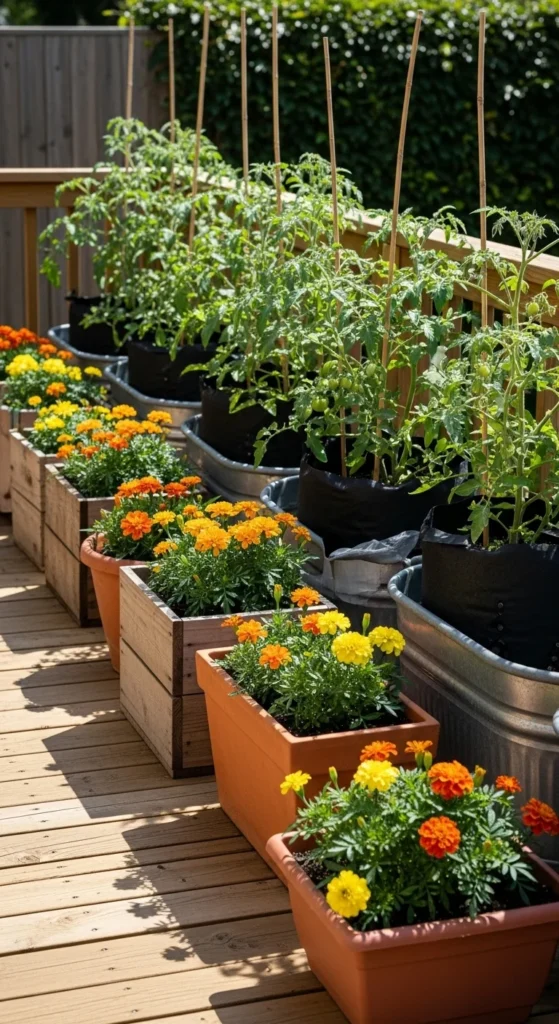
Add flowers like marigolds or nasturtiums to your vegetable pots. They attract pollinators and repel harmful insects naturally. The colors also make your garden look cheerful and lively.
19. Water with a Plastic Bottle Drip
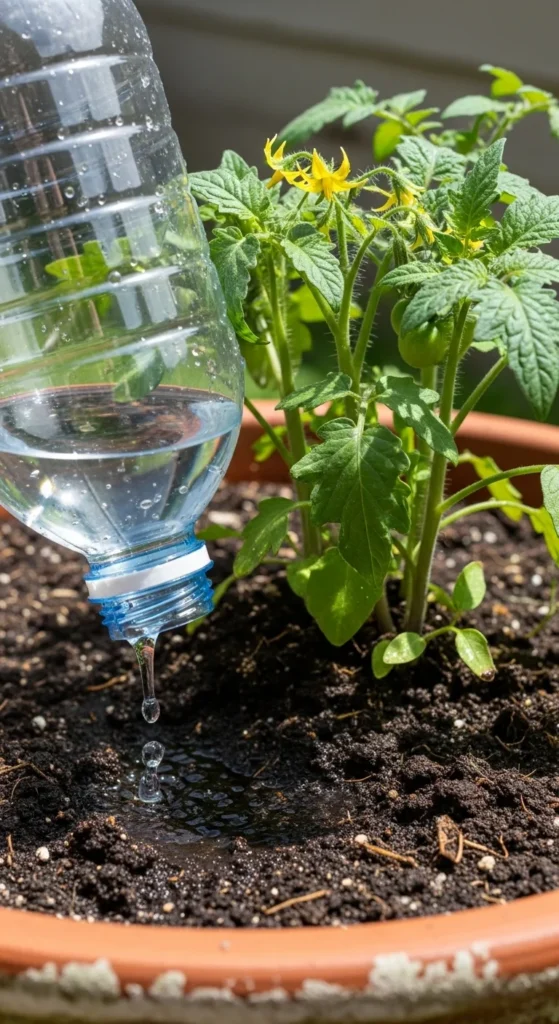
Poke small holes in a water bottle, fill it, and place it upside down near plant roots. It releases water slowly throughout the day. A great hack for consistent moisture — no fancy irrigation needed.
20. Add Worms to Large Pots
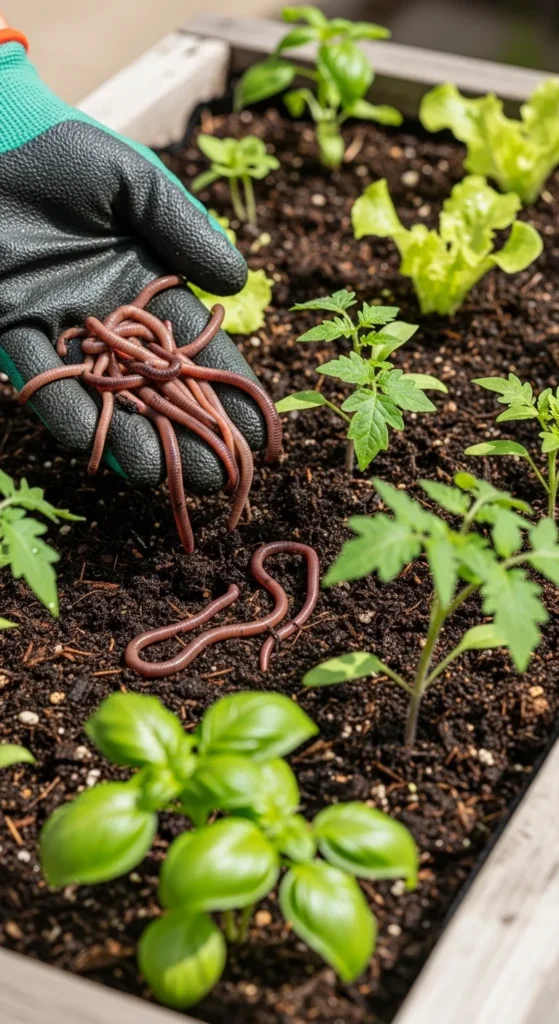
A few red wigglers can improve your container soil. They break down organic matter and keep the soil airy. Add kitchen scraps occasionally, and they’ll handle the rest. It’s nature’s composting system right inside your pot.
21. Reuse Cooking Water
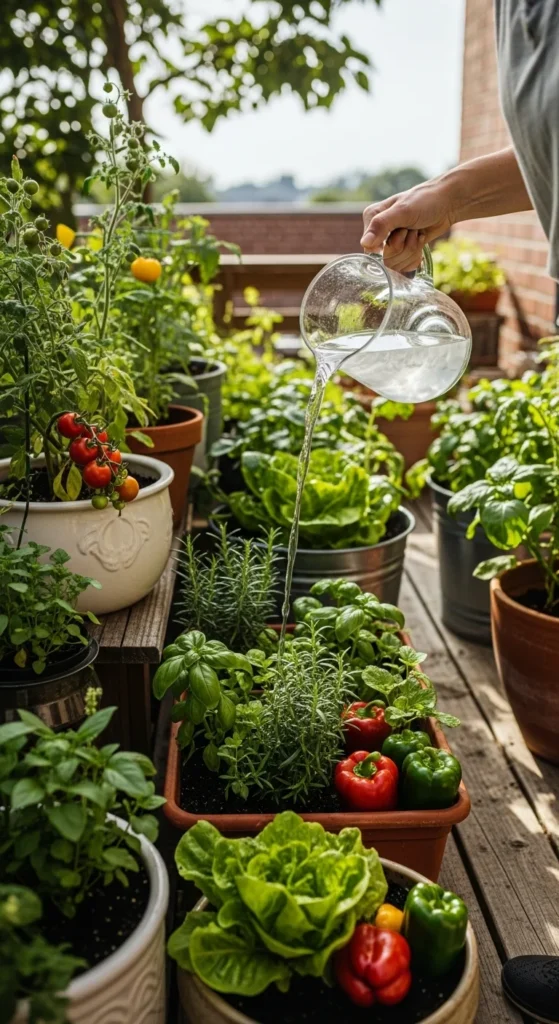
After boiling vegetables or pasta, let the water cool and use it to water your plants. It’s full of nutrients and completely free. Just avoid using salted water. This simple reuse gives your plants a gentle nutrient lift every week.
22. Add Reflective Surfaces
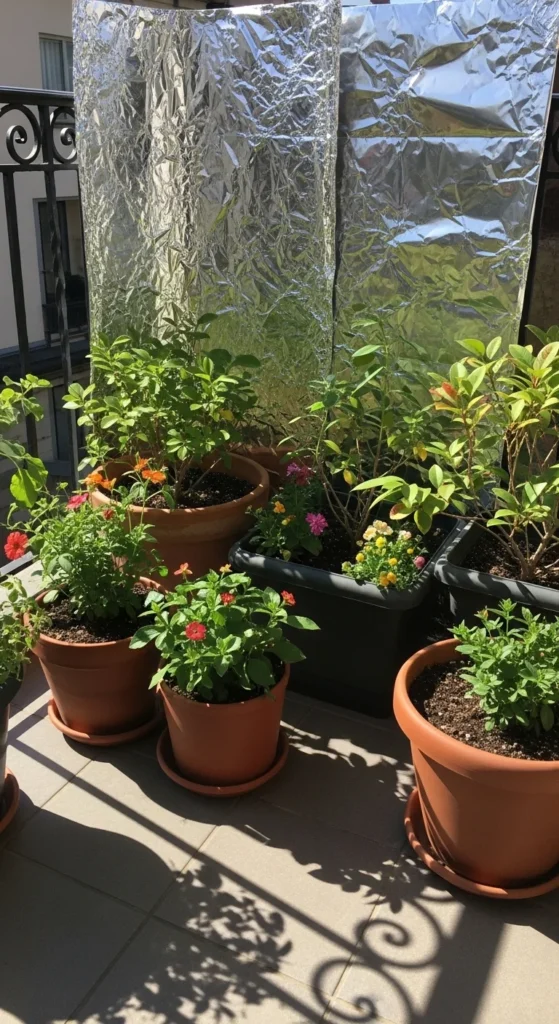
Place reflective materials like aluminum foil behind your pots to bounce extra light onto plants. It’s handy for shaded balconies or cloudy areas. More light means healthier, fuller growth without moving pots constantly.
23. Label with Paint Sticks
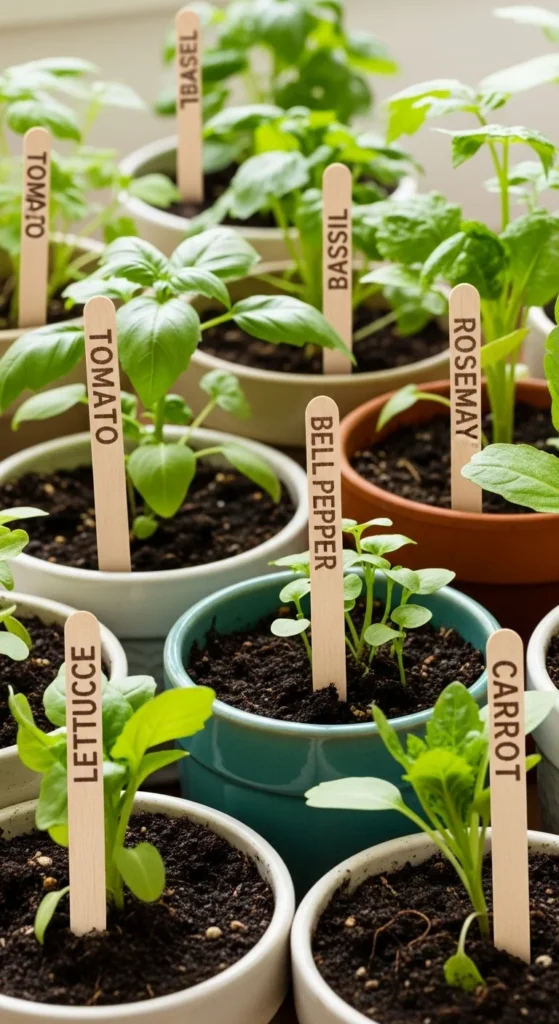
Old paint stir sticks make great plant markers. Write the plant name with a waterproof marker or paint. It’s an easy way to stay organized — no more forgetting which pot holds which seedling.
24. Feed Plants with Kitchen Scraps
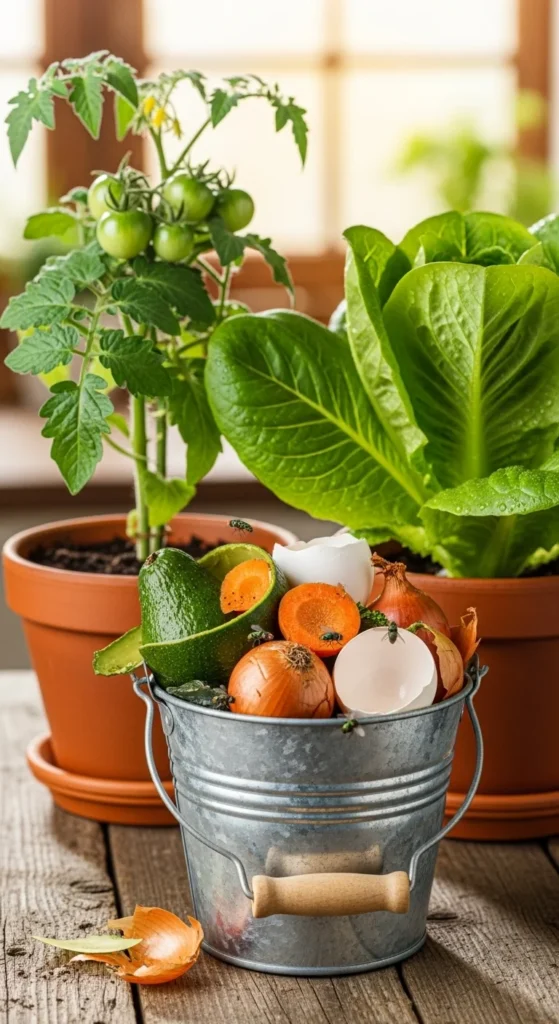
Make simple compost tea from kitchen scraps. Soak vegetable peels, banana skins, and eggshells in water for a few days. Strain and use the liquid to water your plants. It’s free fertilizer that gives pots the nutrients they crave.
Conclusion
Container vegetable gardening doesn’t have to be complicated or costly. With a few creative tricks, you can grow fresh produce even in tight spaces. These hacks help your plants thrive, save water, and keep your setup simple. Start small, experiment with what you have, and enjoy watching your mini garden turn into a productive, beautiful space. Grab a few pots and try one of these hacks today — your next salad might come straight from your patio!
Leave a Reply