

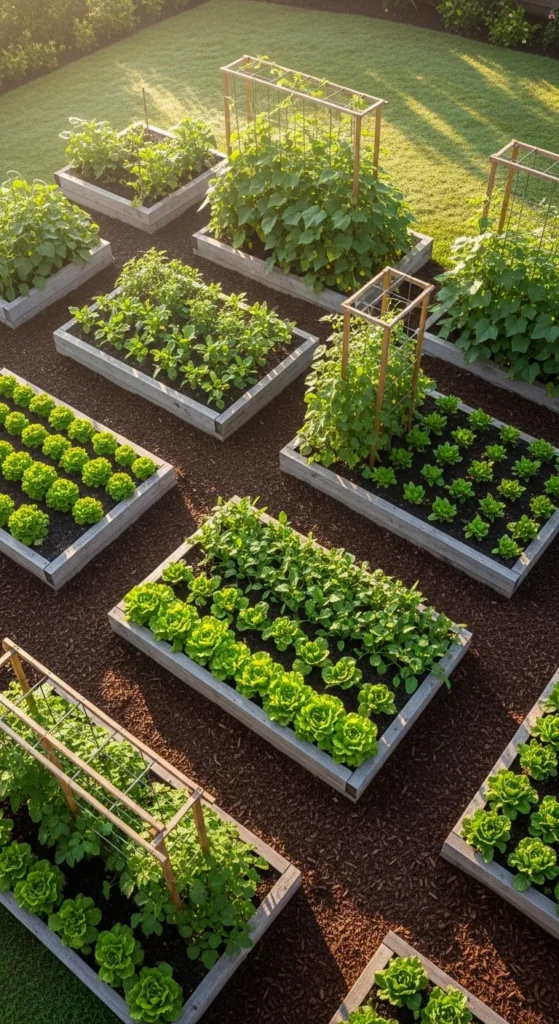
A well-planned backyard vegetable garden layout can turn even a small yard into a highly productive food space. Smart designs focus on raised beds, proper spacing, vertical growing, and sun-aware placement to get more harvest from every square foot. Whether you have a compact backyard or a larger plot, the right layout makes planting, watering, and harvesting much easier. Use these practical layout ideas to build an efficient garden that looks tidy and produces generously.
1. Classic 4×4 Square Foot Garden
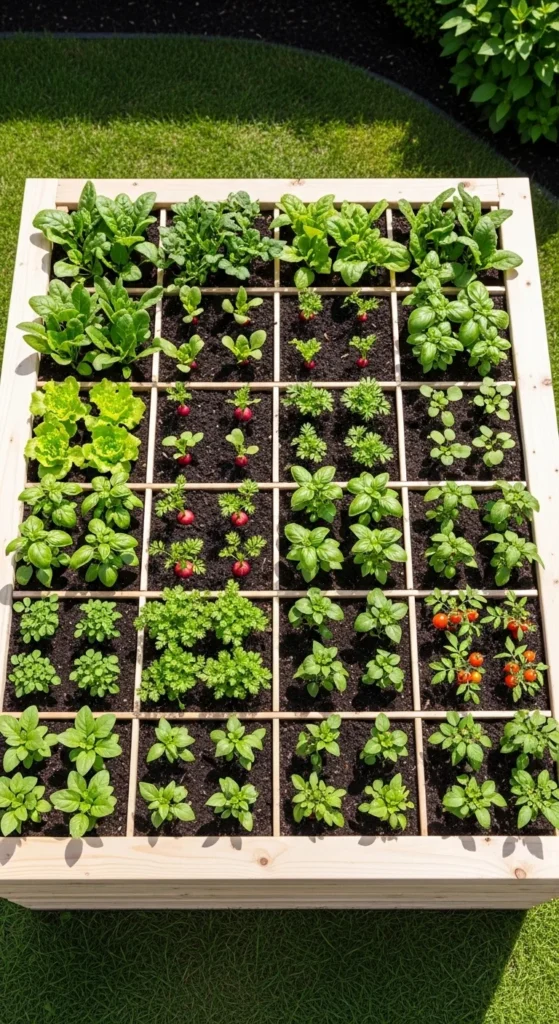
The square foot garden remains one of the easiest layouts for beginners. A simple 4×4 raised bed divided into 1-foot squares keeps spacing clear and organized.
Each square holds a different crop based on size. Leafy greens fill one square. Larger plants like tomatoes take more space.
This layout reduces wasted soil and keeps beds within arm’s reach. That means no stepping on the soil.
Use thin wood strips or string to mark the grid. It helps maintain order throughout the season.
This design works especially well in small backyards.
2. Long North–South Row Layout
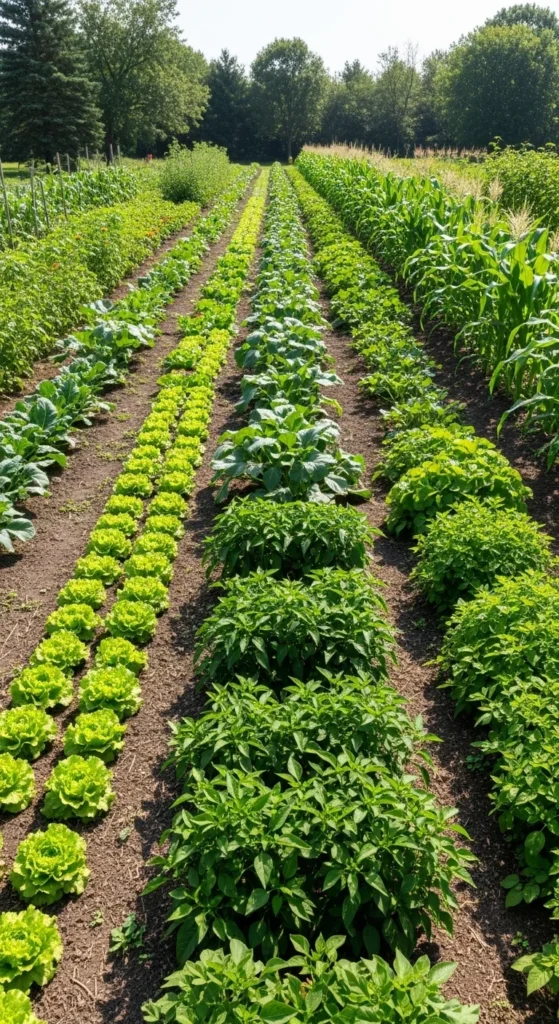
Planting rows in a north–south direction improves sun exposure.
As the sun moves east to west, both sides of the plants receive light during the day.
Keep rows about 30–36 inches apart so you can walk and harvest comfortably.
This layout suits larger backyard gardens where long rows fit naturally.
Add mulch between rows to reduce weeds and mud.
It’s simple and highly effective.
3. Raised Bed Grid With Central Path
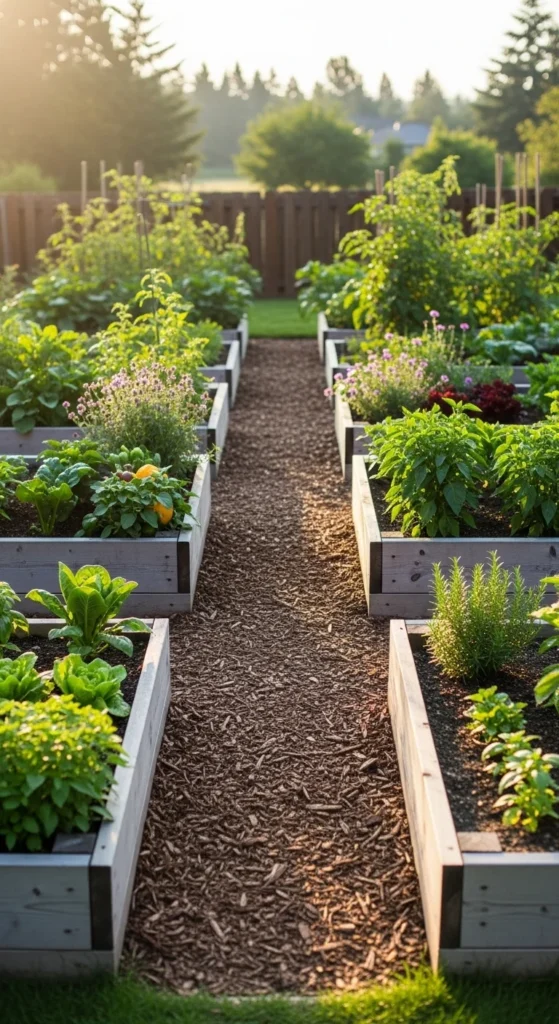
A central path makes garden access much easier.
Arrange raised beds on both sides of a 18–24 inch walkway. This allows easy movement with tools or a wheelbarrow.
Use wood chips, gravel, or straw to cover the path.
Keep beds no wider than four feet so every plant stays within reach.
This layout balances productivity and comfort nicely.
4. Companion Planting Bed Design
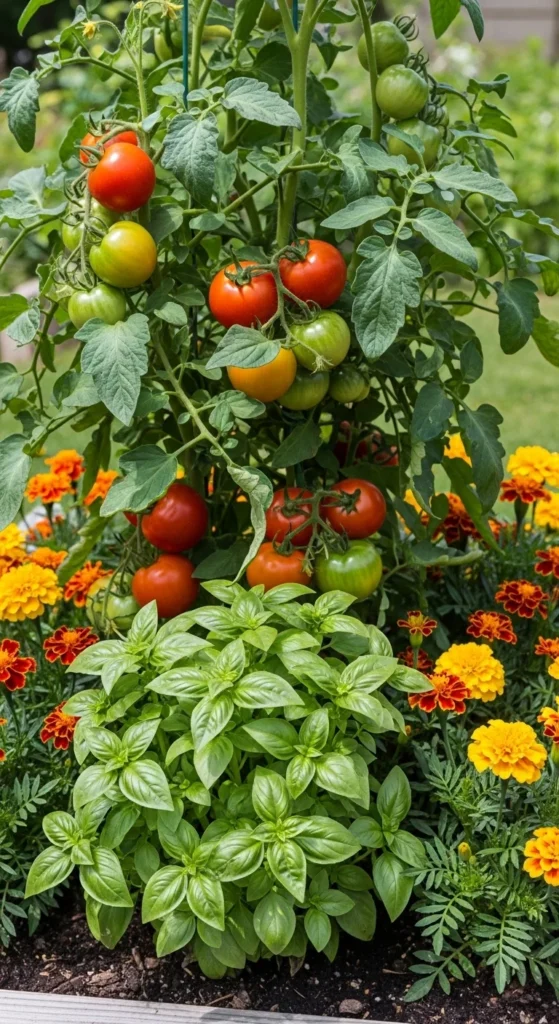
Companion planting helps use space wisely.
Pair tomatoes with basil or carrots with onions. Plants support each other while sharing bed space.
Sketch your pairings before planting to avoid crowding.
Mix flowers like marigolds along bed edges for pest control and visual appeal.
This layout improves efficiency without expanding the garden footprint.
5. Vertical Trellis Wall Garden
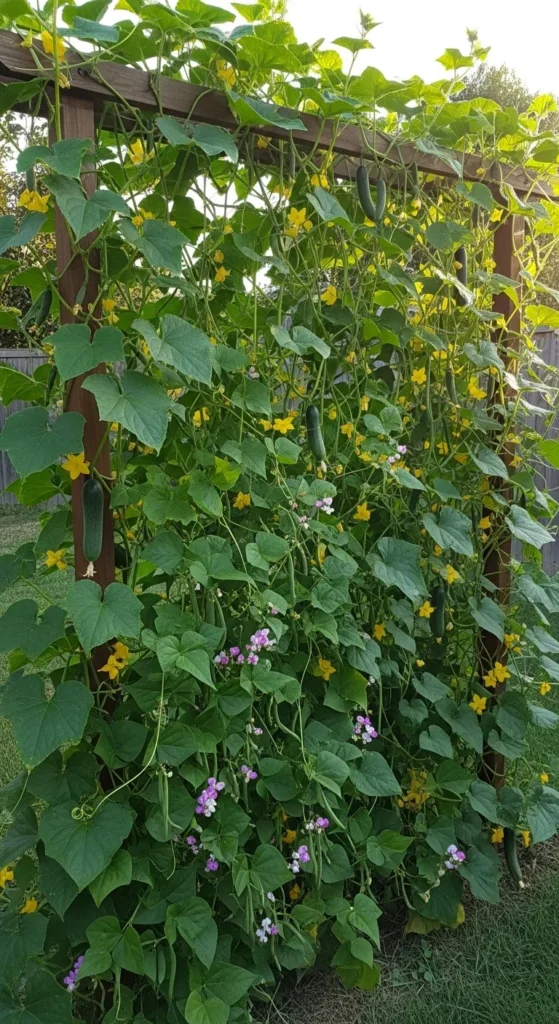
Vertical growing frees valuable ground space.
Install sturdy trellises along the back of beds or against a fence.
Grow cucumbers, pole beans, and peas upward instead of letting them sprawl.
Keep tall structures on the north side so they don’t shade shorter crops.
Even a small vertical wall can increase total harvest noticeably.
6. Keyhole Garden Layout
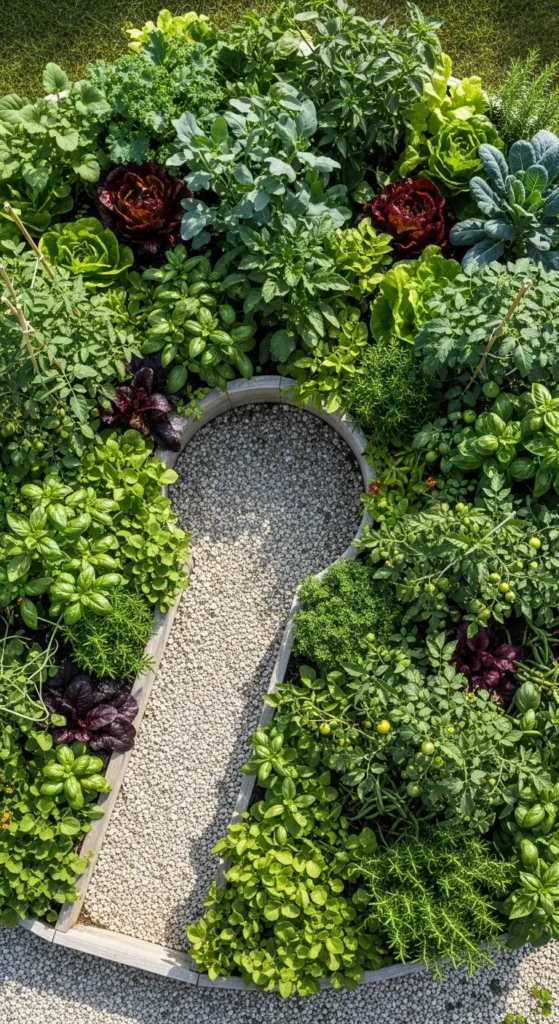
The keyhole garden is a circular bed with a small entry path.
This design allows full reach into the bed without stepping on soil.
It works well in compact yards where space is tight.
Build the circle with bricks, wood, or stones.
Add rich compost in the center area for easy feeding.
It combines efficiency with a unique visual style.
7. Symmetrical Four-Bed Layout
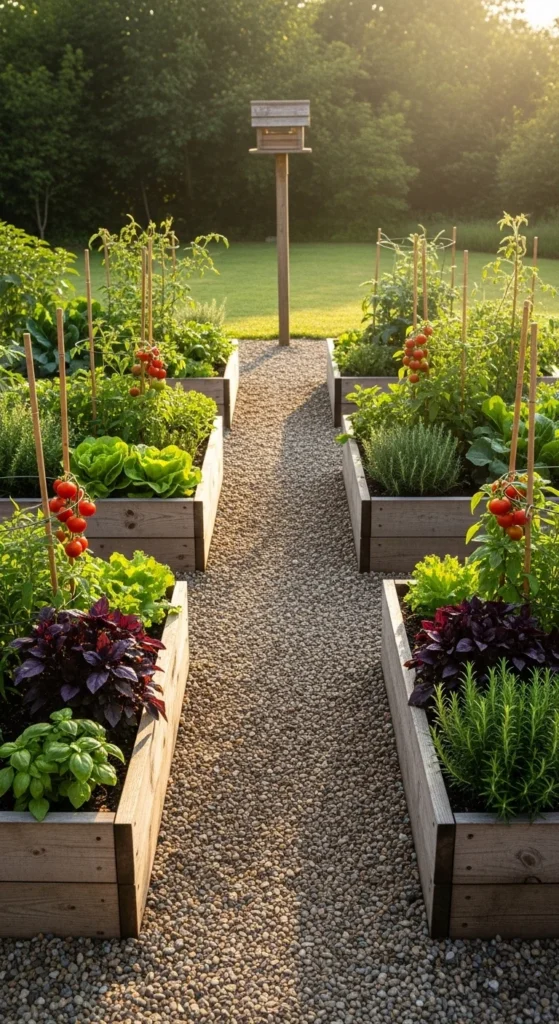
Symmetrical layouts create a clean, organized look.
Place four equal raised beds around a center walkway or feature.
This keeps crop groups clearly separated.
It also makes crop rotation planning easier each season.
Use consistent bed sizes for a tidy appearance.
This layout balances beauty and productivity.
8. Fence-Line Climber Garden
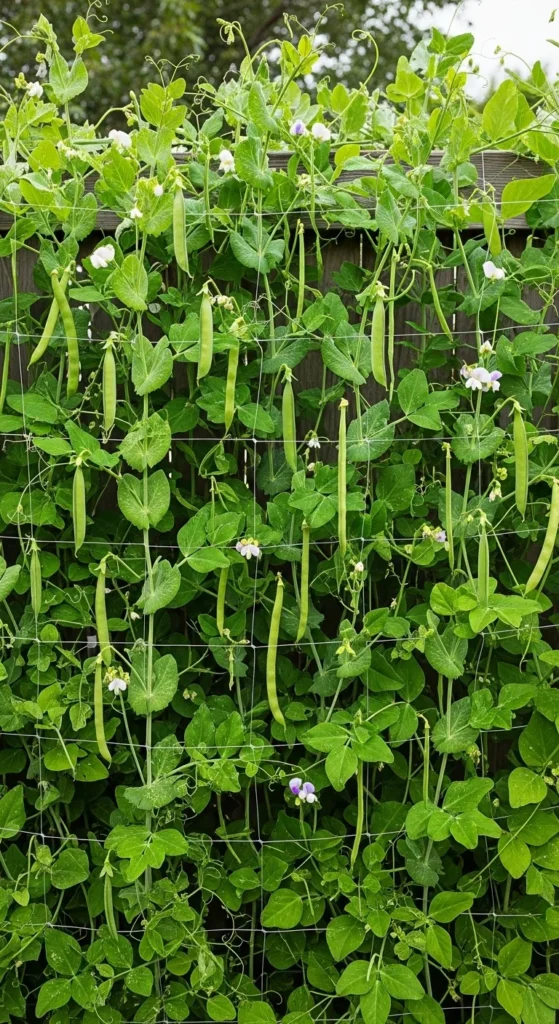
Fences are valuable growing space.
Attach garden netting or wire mesh and plant climbers at the base.
Peas, beans, and small gourds perform well here.
This method keeps beds free for other vegetables.
It’s perfect for narrow backyards.
9. Wide Block Planting Beds
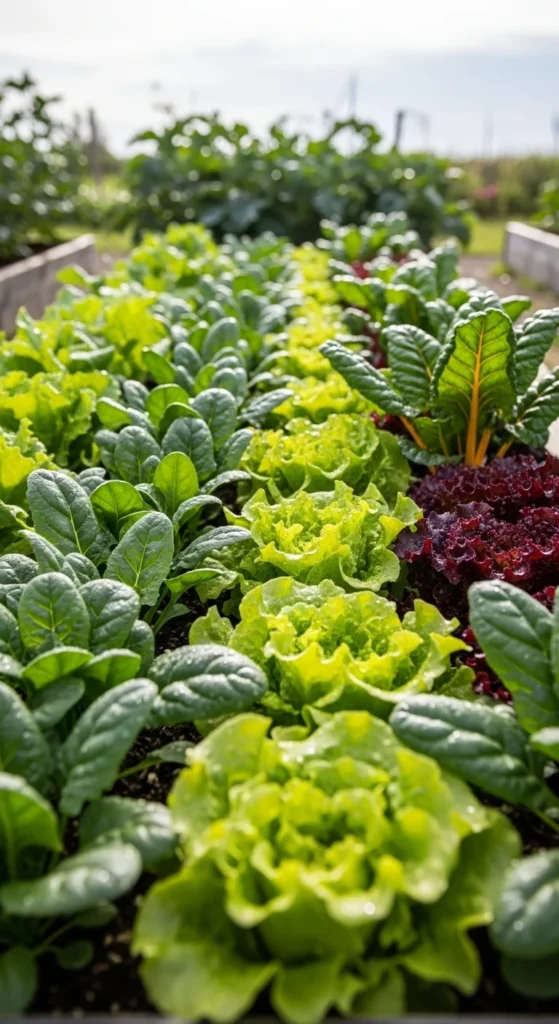
Block planting groups crops tightly instead of in rows.
Leafy greens and herbs work especially well in this layout.
Dense spacing shades soil and reduces weeds.
Harvesting becomes faster because crops grow in clusters.
Keep airflow in mind and avoid overcrowding large plants.
This method increases production per square foot.
10. Mandala Circular Garden Design
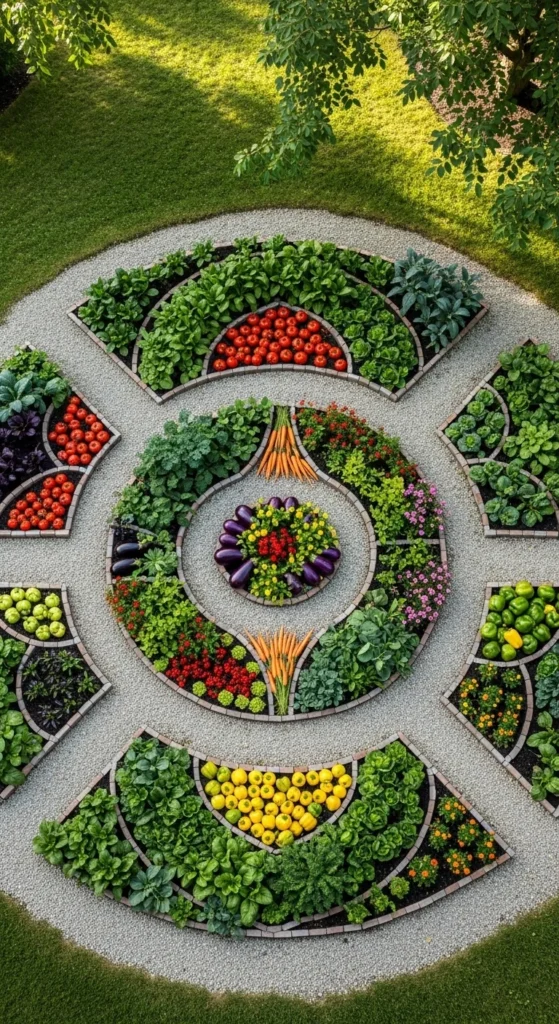
Mandala gardens use curved beds arranged in patterns.
They look decorative while still remaining productive.
Paths radiate outward like spokes, allowing easy access.
Use this layout if you want both function and visual impact.
It works best in medium to large yards.
11. Sloped Yard Ladder Beds
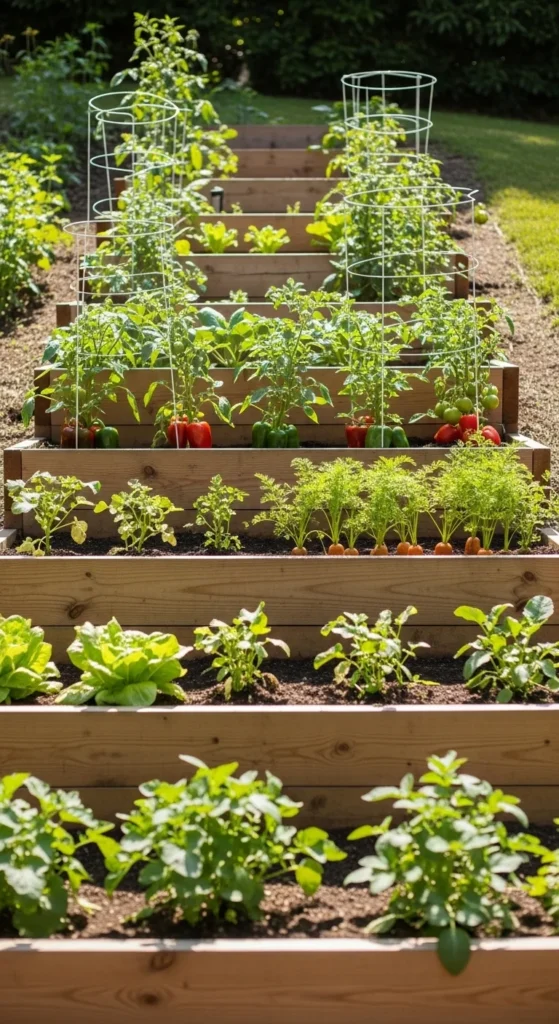
Sloped yards benefit from tiered beds.
Build stepped raised beds following the slope.
This prevents soil erosion and improves watering control.
Use sturdy wood or stone for support.
Each level becomes a separate planting zone.
Great solution for uneven ground.
12. Hugelkultur Mound Layout
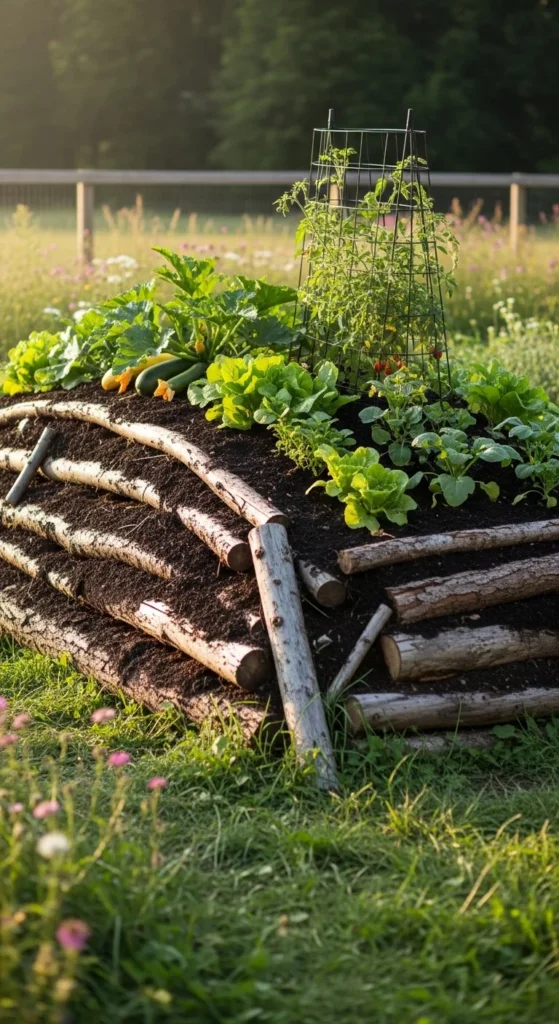
Hugelkultur beds use buried wood under soil.
The wood slowly breaks down and helps retain moisture.
Form long mounds instead of flat beds.
Plant directly into the top layer.
This works well in dry climates and reduces watering frequency.
13. Edge Planting With Pots
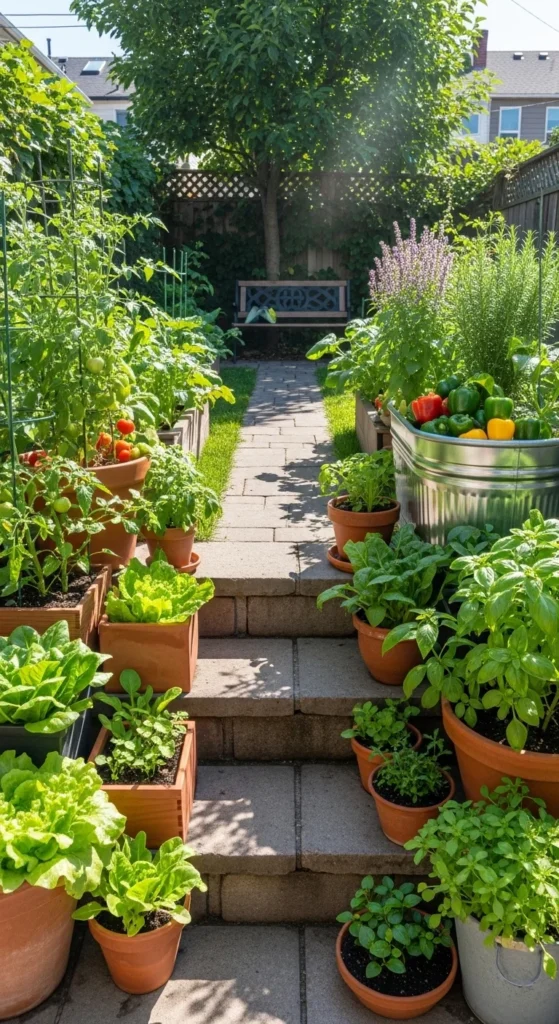
Use containers to fill unused edges.
Place pots along pathways, stairs, or corners.
Grow herbs or compact vegetables in these spaces.
This stretches your growing area without building new beds.
It’s flexible and easy to adjust.
14. Permanent Perennial Bed Zone
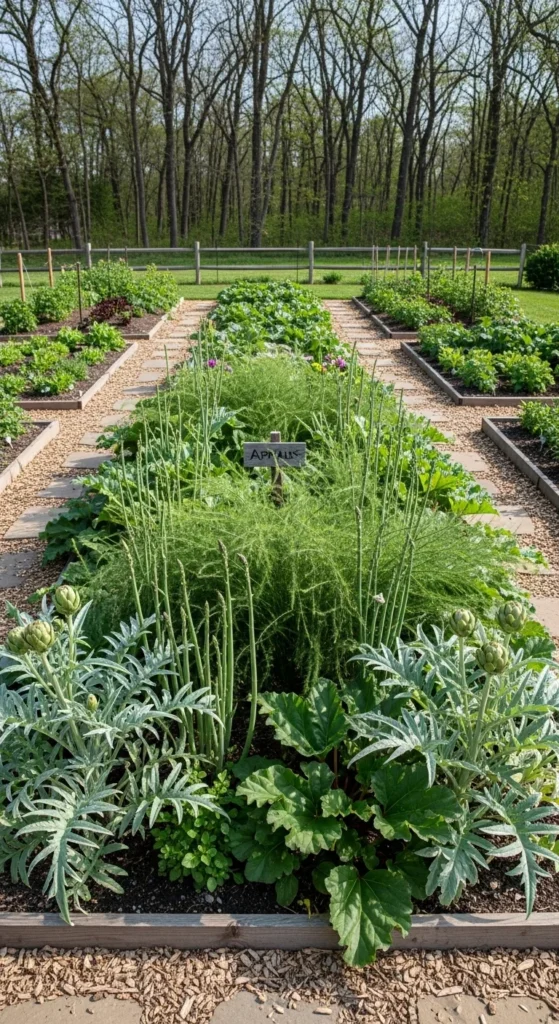
Perennial crops like asparagus should stay in one place.
Create a permanent bed at the garden edge.
This prevents disturbance during annual crop rotation.
Mulch heavily to keep weeds down.
Over time, this area becomes very productive.
15. Intensive Succession Layout
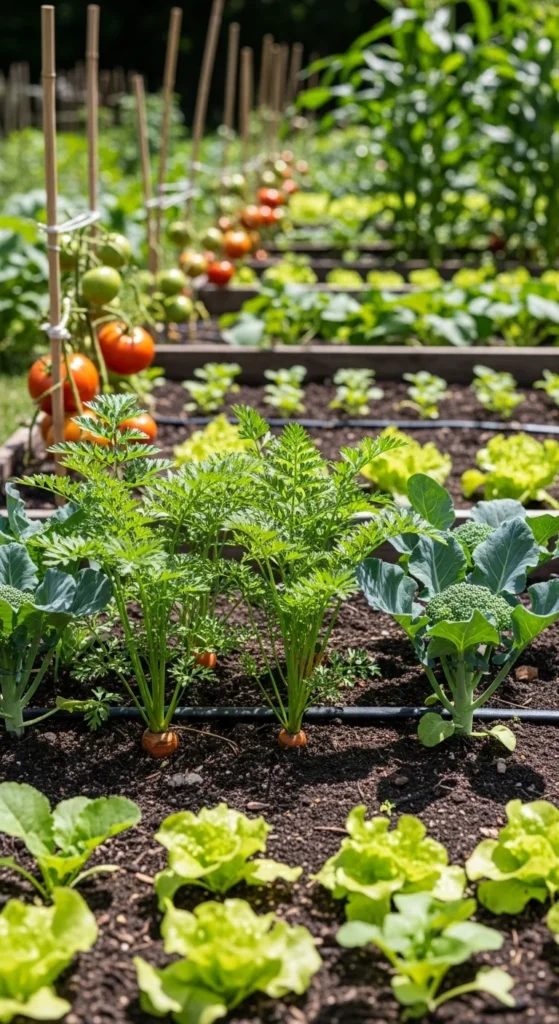
Succession planting keeps beds productive.
After one crop finishes, replant quickly with another.
Plan your calendar in advance.
Fast crops like lettuce work well between larger plants.
This keeps soil working throughout the season.
16. Narrow Side-Yard Strip Garden
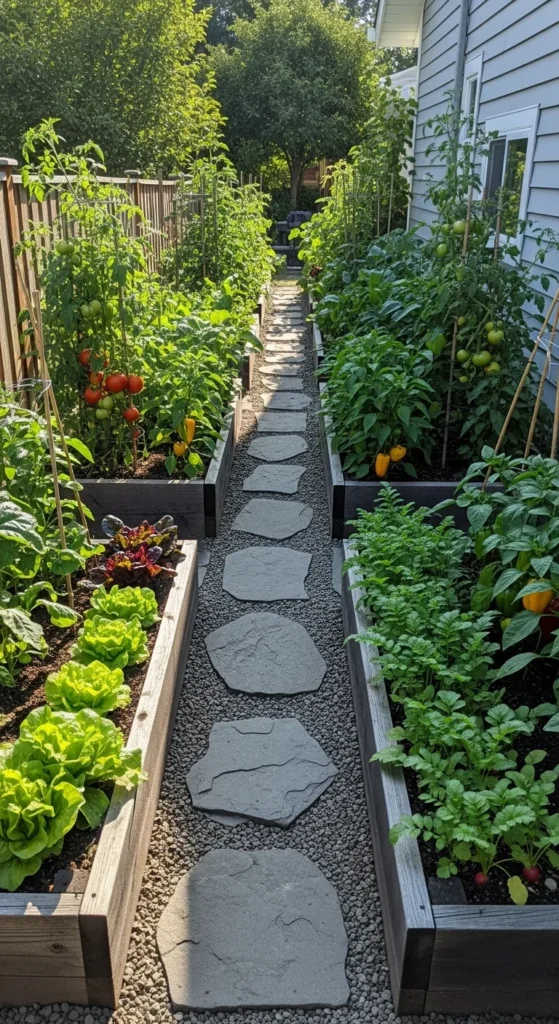
Side yards often go unused.
Install narrow raised beds along fences or walls.
Keep pathways slim but walkable.
Use vertical supports to maximize the strip.
Great for small homes.
17. Mixed Flower and Vegetable Border
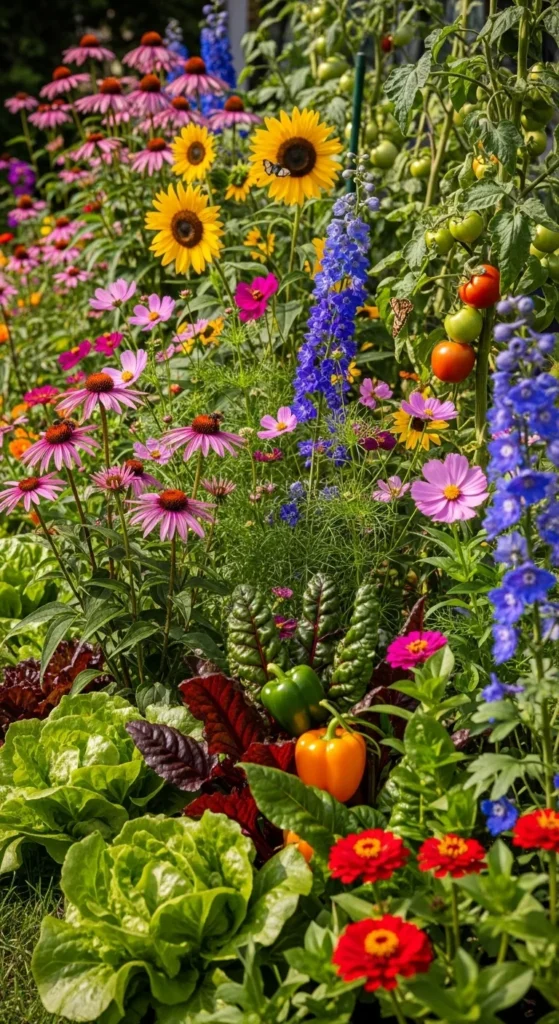
Combine flowers and vegetables in the same beds.
Flowers attract pollinators and beneficial insects.
This also softens the look of the garden.
Choose compact flowers that won’t shade crops.
It’s both practical and attractive.
18. Diagonal Corner Garden Layout
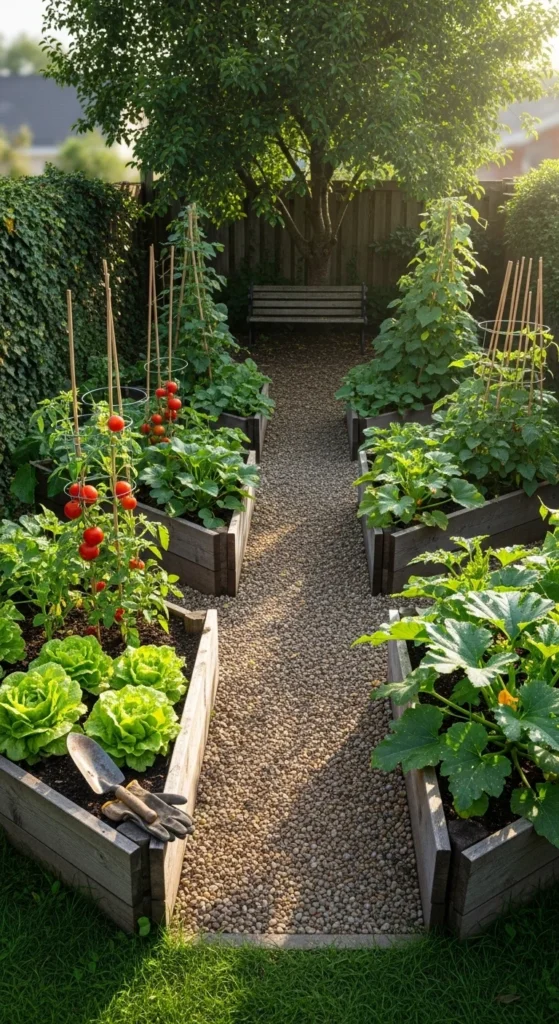
Corners often waste space.
Angle raised beds diagonally to fit awkward areas.
This improves traffic flow and sunlight exposure.
Use string lines to map the angle before building.
Smart geometry makes small yards more usable.
19. Mulched Pathway Grid Garden
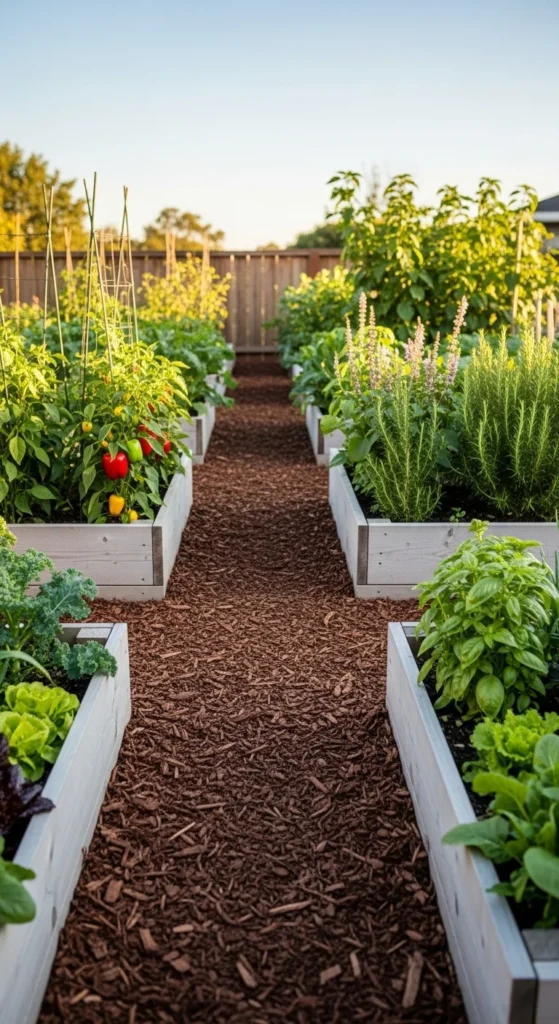
Mulched paths keep gardens tidy.
Wood chips or straw suppress weeds between beds.
They also reduce mud after watering.
Refresh mulch once or twice per season.
Comfortable paths make garden work easier.
20. Greenhouse Add-On Layout
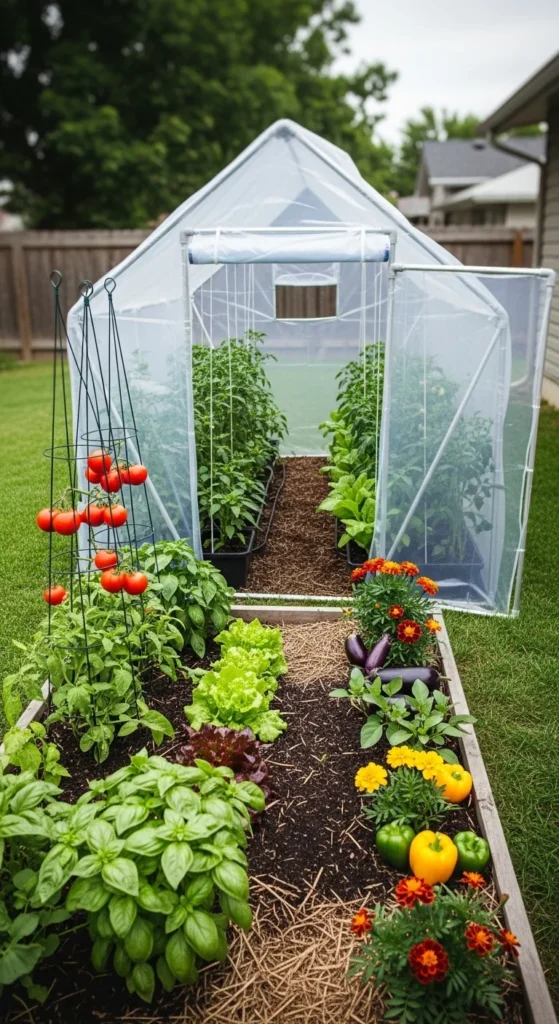
A small greenhouse extends the growing season.
Place it on the sunniest side of your layout.
Use it for seedlings or early crops.
Even a simple hoop house works.
It adds flexibility to backyard production.
21. Radial Spoke Wheel Garden

This layout uses wedge-shaped beds.
Paths radiate from the center like spokes.
Every section stays within easy reach.
It works well in open lawn spaces.
It also creates a striking visual pattern.
22. Micro-Space Stair-Step Garden
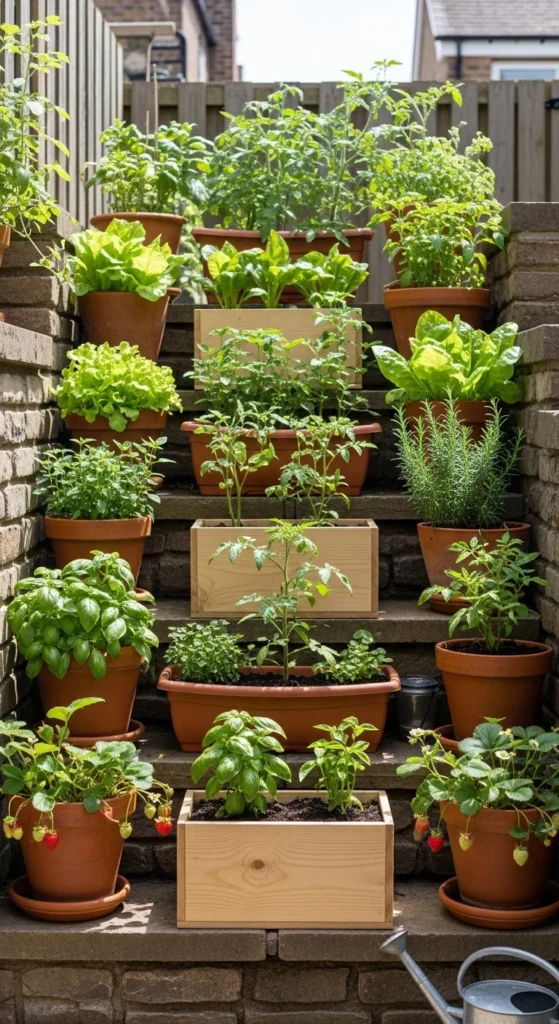
Steps and terraces can hold many containers.
Place herbs and compact vegetables on each level.
Use uniform pots for a clean look.
Water carefully since containers dry faster.
This is perfect for very small yards.
23. Planner-Based Precision Layout

Digital garden planners help map spacing accurately.
Sketch your beds before planting.
Track crop rotation and companion pairings.
This reduces guesswork and improves organization.
Even simple planning leads to better use of space.
Conclusion
Smart backyard vegetable garden layouts focus on access, sunlight, and efficient spacing. Whether you choose square foot beds, vertical trellises, or circular designs, thoughtful planning turns any yard into a productive growing space. Start with one layout that fits your yard size, observe how it performs, and refine your design each season for even better harvests.

Leave a Reply