

Winter might look magical with its frosty mornings and cozy nights, but for your garden, it can be downright tough. When the cold sets in, your plants face freezing temperatures, harsh winds, and even snow damage — especially if you don’t have a greenhouse. The good news? You can still keep your plants alive and thriving all winter long with some clever, budget-friendly tricks.
Let’s explore how to protect your plants through the chilly months — no greenhouse required!
Choose the Right Plants and Timing
Before winter even begins, success starts with smart choices. Some plants handle cold better than others, so plan ahead.
Cold-tolerant favorites:
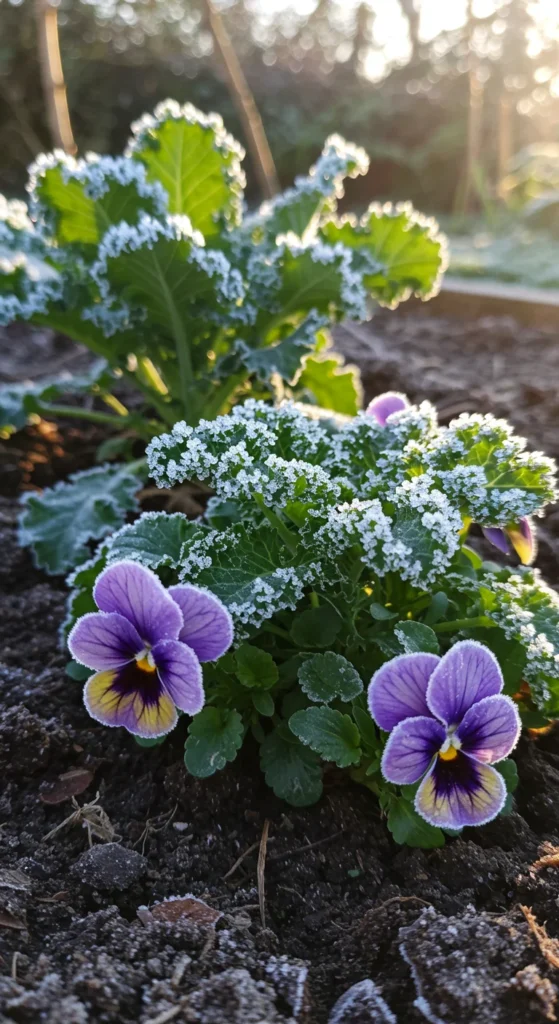
- Kale, spinach, and Swiss chard
- Carrots, garlic, and onions
- Pansies, violas, and ornamental cabbage
If you live in a region with harsh winters, plant hardy varieties and avoid tender tropicals unless you can bring them indoors.
Timing also matters:
- Stop fertilizing about six weeks before the first frost.
- Water deeply before a freeze to help roots stay hydrated.
- Mulch early to insulate the soil while it’s still warm.
Mulch — Your Garden’s Winter Blanket
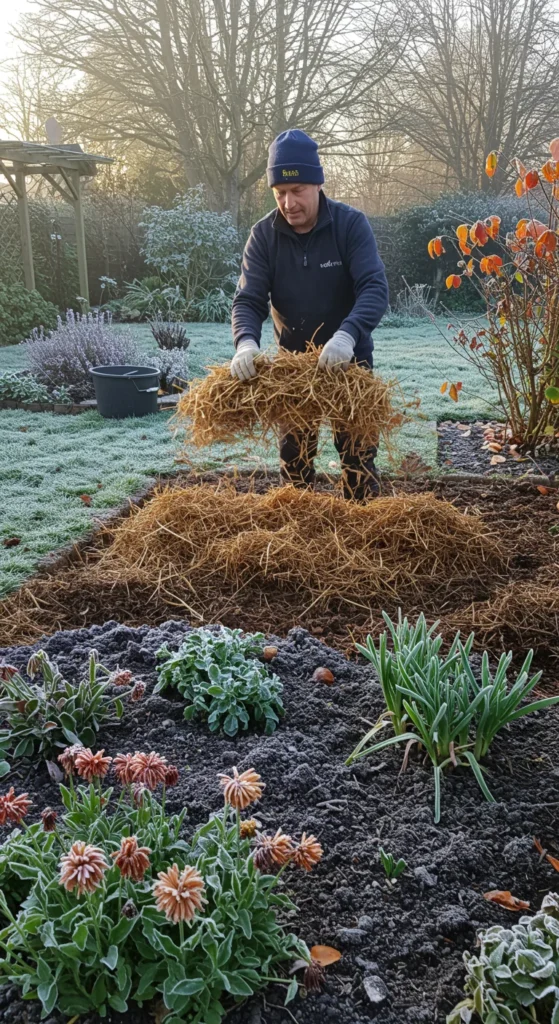
If there’s one must-do winter step, it’s mulching! A thick layer of mulch helps regulate soil temperature, retain moisture, and protect roots from freezing.
Here’s how to do it right:
- Apply 2–4 inches of mulch around the base of plants once the ground begins to cool.
- Use materials like straw, shredded leaves, pine needles, or bark chips.
- Keep mulch a few inches away from plant stems to prevent rot.
Mulch acts like a cozy blanket for your soil, keeping it from freezing and thawing too quickly — a process that can damage delicate roots.
Cover Up with Simple Plant Protection
Even without a greenhouse, you can build mini shelters to keep plants warm and safe. Think of them as temporary jackets for your garden.
Easy and affordable ideas:
- Frost cloths or old sheets: Drape them over plants at night to trap heat.
- Plastic bottles or jugs: Cut off the bottoms and use them as mini cloches over small plants.
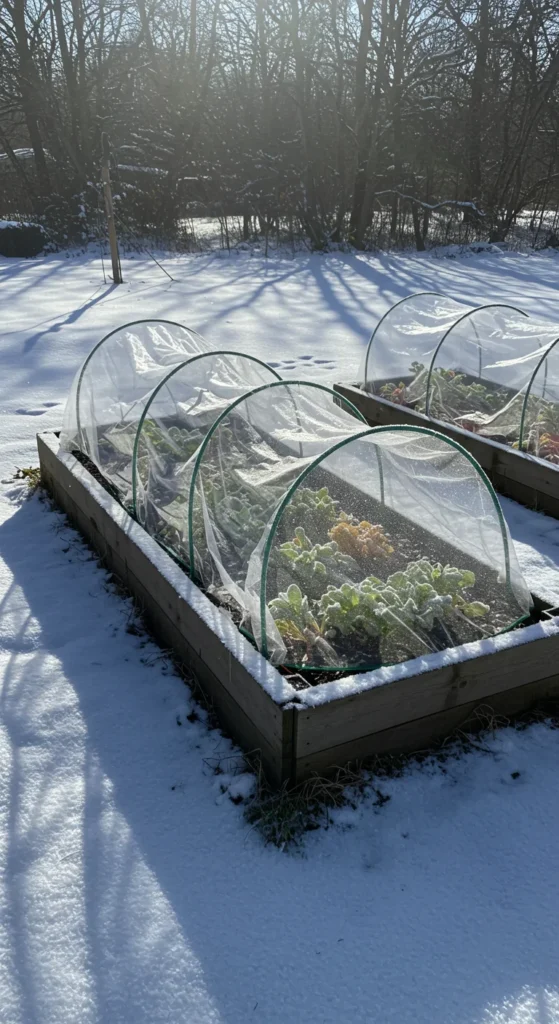
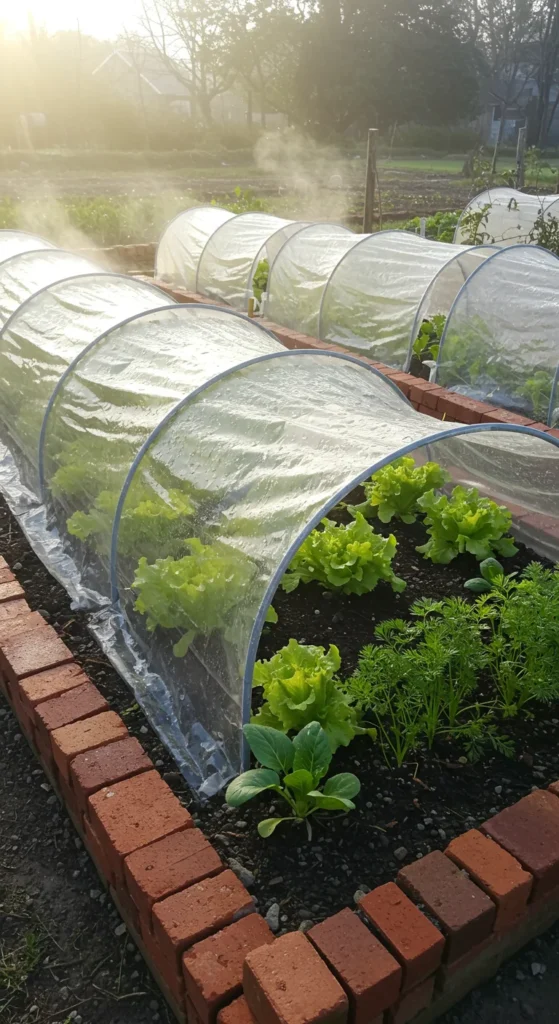
- DIY cold frames: Use old windows, wood planks, or clear plastic to create a small protective tunnel.
- Row covers: Stretch lightweight fabric over hoops to protect larger areas.
Tip: Remove coverings during the day when the sun is out to prevent overheating.
Move Potted Plants to Safety
Container plants are more vulnerable to cold since their roots are above ground. Luckily, moving them is easy!
Here’s how to help them survive:
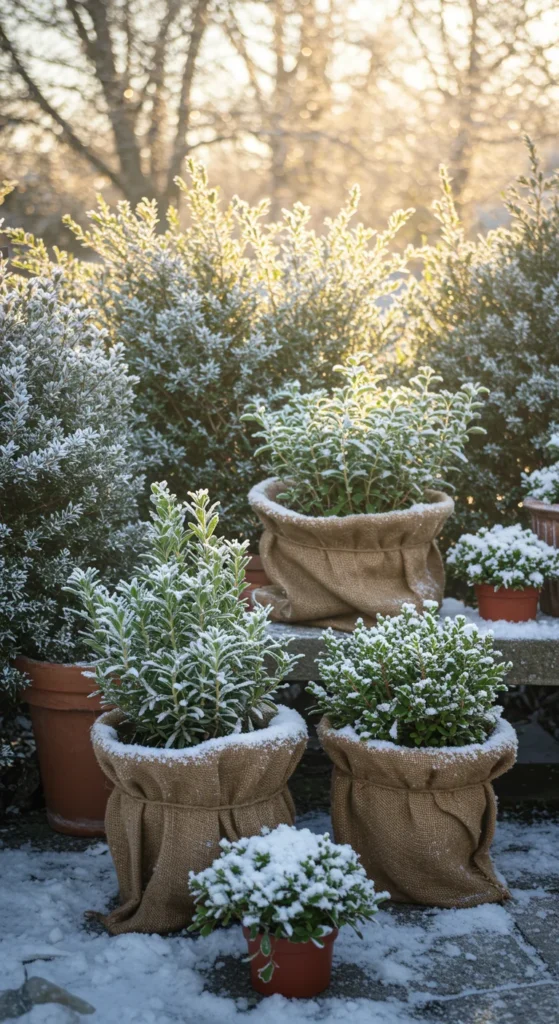
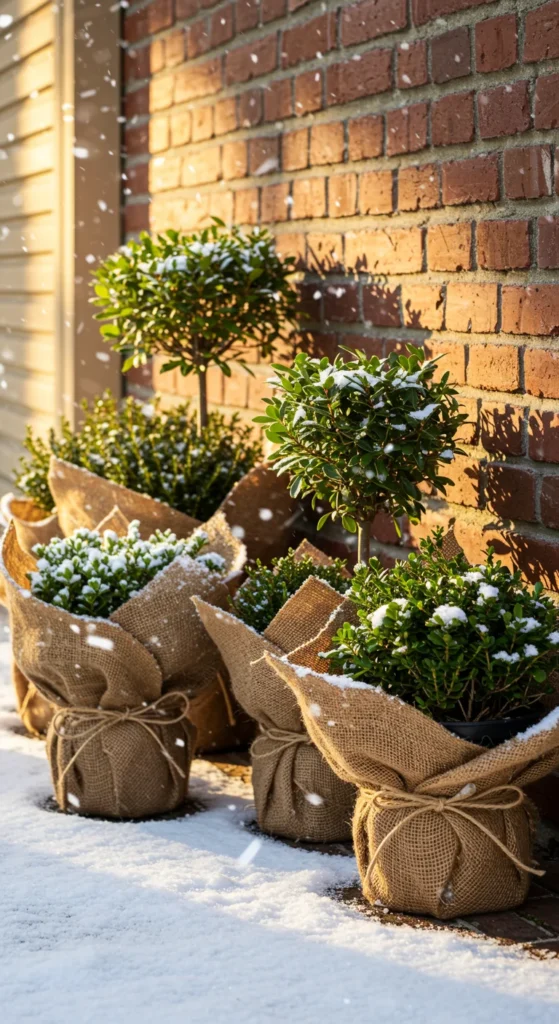
- Move pots against a wall or fence for extra warmth.
- Cluster them together — plants generate and share heat.
- Wrap containers in burlap, blankets, or bubble wrap to insulate them.
- For delicate plants, bring them indoors to a bright window or garage.
If you can’t move them, bury pots in soil up to the rim and cover with mulch to mimic in-ground conditions.
Use Windbreaks and Barriers
Cold winds can dry out and damage plants, even more than frost. Creating simple barriers helps reduce stress and moisture loss.
You can make a windbreak from:
- Wooden pallets
- Burlap screens
- Fences or hedges
- Straw bales stacked around garden beds
For shrubs and young trees, tie branches loosely with twine to prevent snow breakage and wrap the base with burlap or tree wrap.
These little shields can make a big difference — especially on open or exposed properties.
Water Wisely During Winter
It’s easy to forget watering in winter, but dry soil can be just as harmful as the cold. The key is moderation.
- Water before the ground freezes — moist soil holds heat better than dry soil.
- Avoid watering when temps are below freezing.
- For evergreens, give them an extra drink during warm spells.
Just remember: soggy roots and frozen soil don’t mix. Good drainage is essential.
Bonus Tip: Create Heat Traps
You can boost warmth in your garden naturally with creative heat traps:
- Place dark stones or bricks around plants to absorb and release heat.
- Use compost piles nearby — they give off gentle warmth as they break down.
- Add plastic tunnels or row covers to trap solar heat during the day.
These small hacks help create microclimates — little warm pockets where your plants can thrive even in cold weather.
Final Takeaway
You don’t need a fancy greenhouse to keep your garden alive through winter — just a few smart tricks, some creativity, and a bit of mulch magic. By insulating soil, covering plants, and using nature’s warmth to your advantage, your garden can survive (and even thrive) until spring returns.

Leave a Reply