

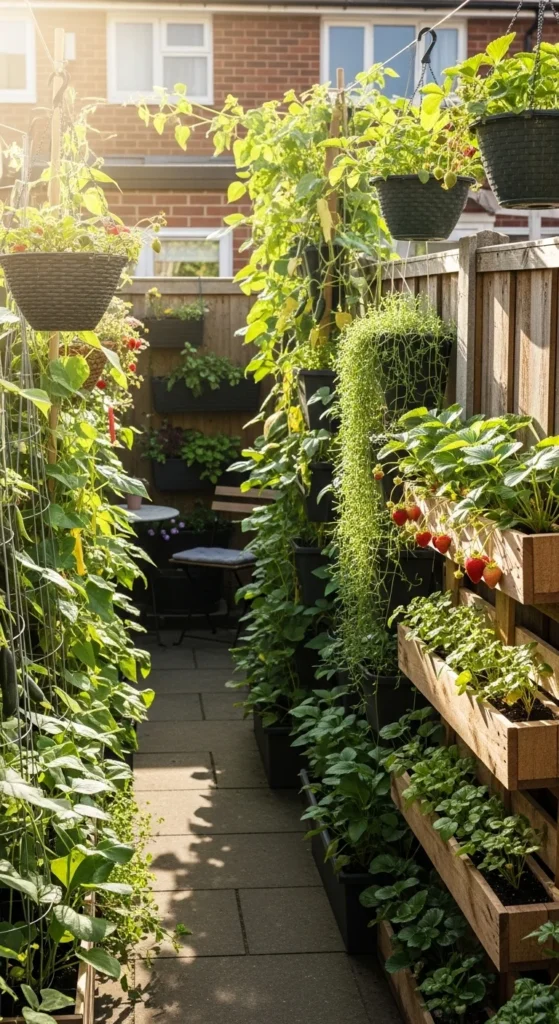
Vertical gardening turns small yards into productive green spaces. By stacking plants upward, you grow more food in less space. Trellises, towers, and wall systems make it easy to cultivate vining vegetables like beans, cucumbers, and tomatoes. Even balconies and narrow patios can host fruiting plants and salad greens when designed smartly. With simple DIY tools, a little creativity, and proper light access, your small garden can yield abundantly while staying tidy.
1. Trellis Towers for Pole Beans
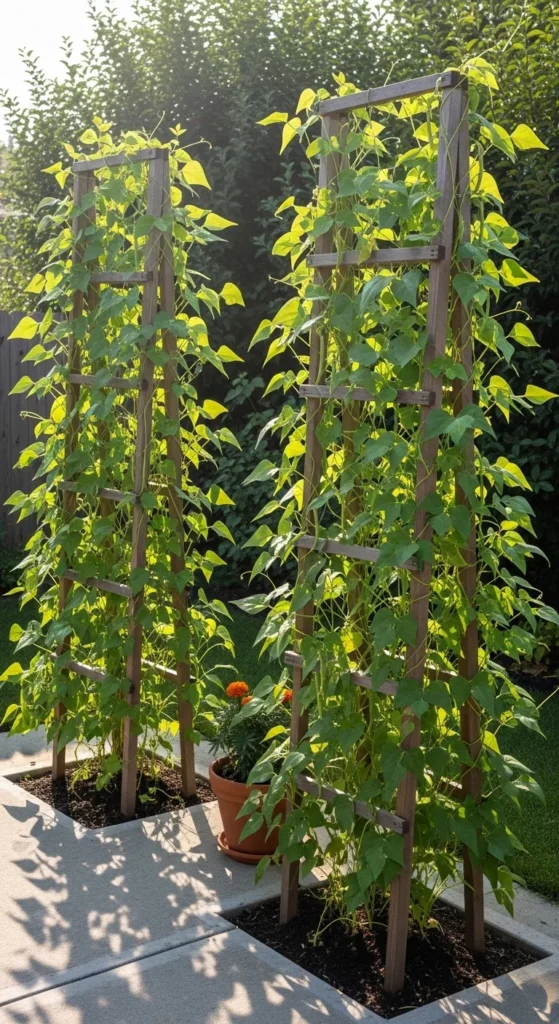
Trellis towers give pole beans room to climb and produce heavily without taking ground space. Place one or two plants per tower for optimal airflow. Use string or clips to guide vines upward. Wooden stakes or bamboo poles are cheap and sturdy. Water the base deeply, and prune lower leaves to prevent disease. With regular harvesting, these towers can yield 10+ pounds of beans per trellis in a season.
2. Pallet Planters for Strawberries
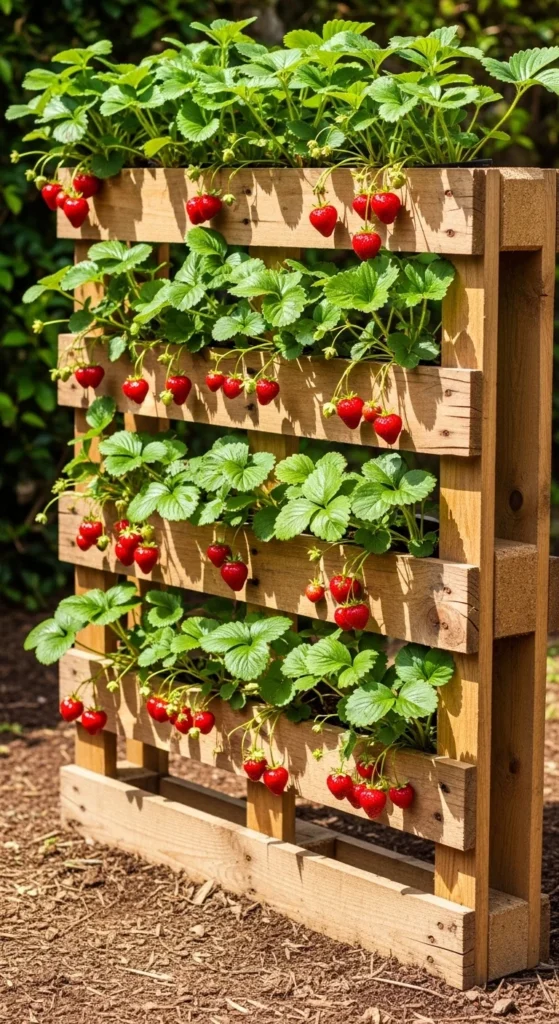
Pallet planters turn vertical walls into fruitful spaces. Food-safe treated pallets hold soil for strawberries, herbs, and shallow-root veggies. Mount them securely to a wall or fence. Water evenly and mulch lightly to retain moisture. You can upcycle old pallets from stores or community giveaways, making this a zero-cost wall garden. Regular pruning keeps plants productive throughout the season.
3. Hanging Basket Salad Cascades
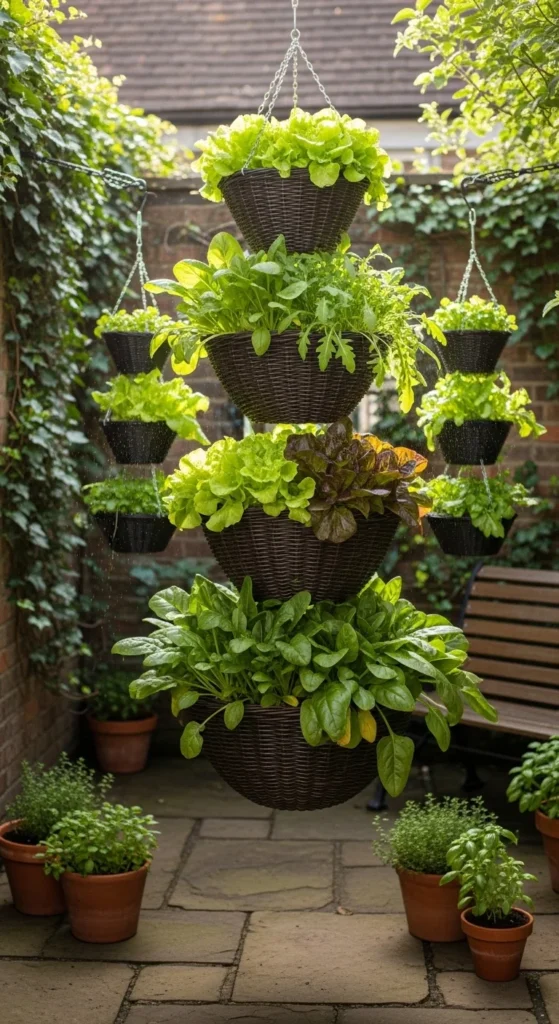
Tiered hanging baskets allow leafy greens to grow in compact areas. Stack baskets at varying heights for light access. They’re perfect for lettuce, arugula, or spinach. Use coconut coir or fabric liners for good drainage. Water consistently and rotate baskets if sunlight is uneven. This setup produces continuous harvests with minimal space, ideal for salad lovers in urban yards.
4. Straw Bale Vertical Towers
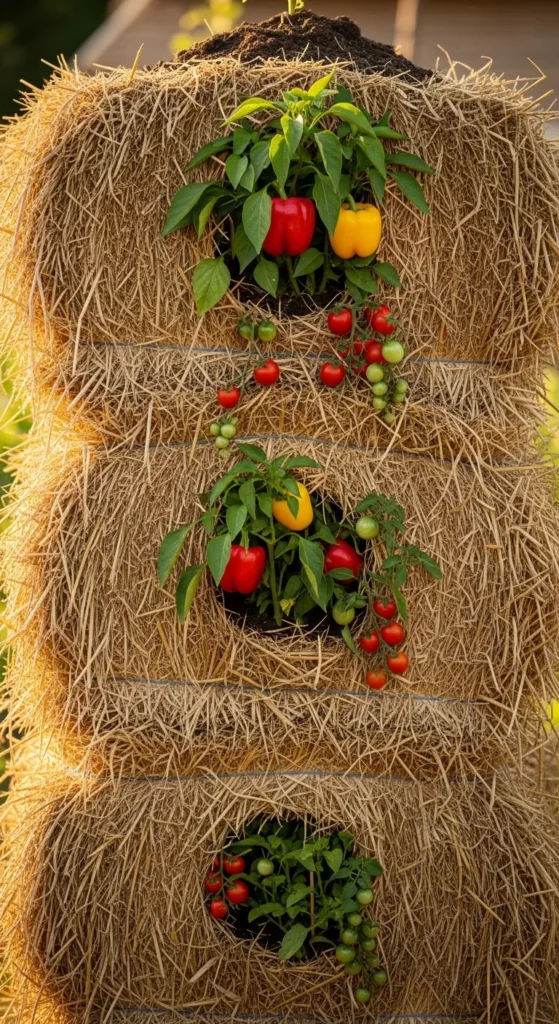
Straw bale towers are inexpensive and quick to assemble. Stack 3-4 bales high, cut planting pockets, and fill with soil. They drain well for peppers, cherry tomatoes, or herbs. Secure with chicken wire or twine if windy. Towers are temporary but highly productive. After the season, you can dismantle and compost the straw, leaving minimal cleanup. Perfect for small gardens needing flexible vertical solutions.
5. A-Frame Double-Sided Yield
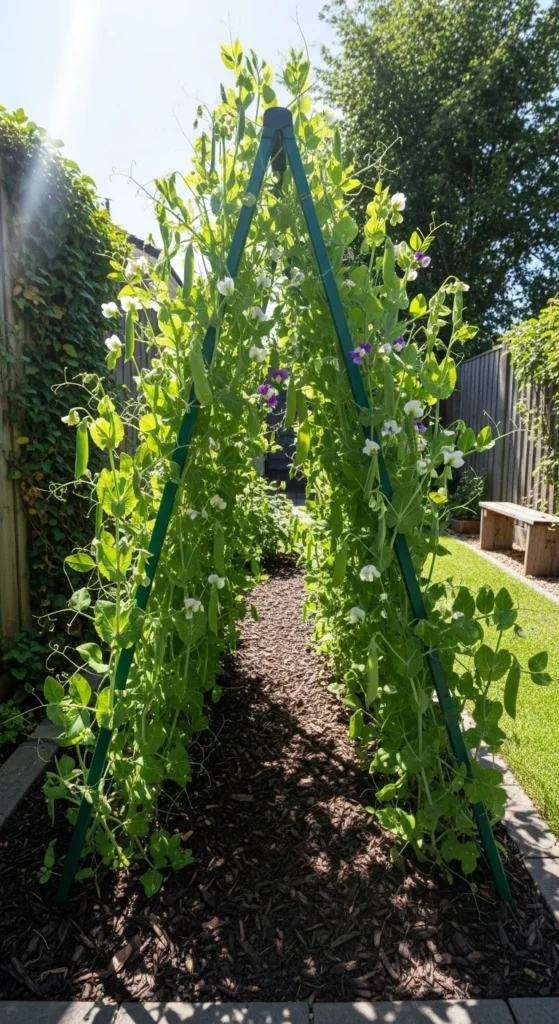
A-frames let you plant on both sides, doubling yields. Ideal for peas, squash, or cucumbers. Build from wood or PVC; angles around 45° work best. Secure firmly to prevent tipping. Space crops 6–12 inches apart depending on variety. This layout improves sunlight exposure and airflow. Lightweight trellises are easy to move and perfect for compact yards where floor space is tight.
6. Pocket Organizer Walls
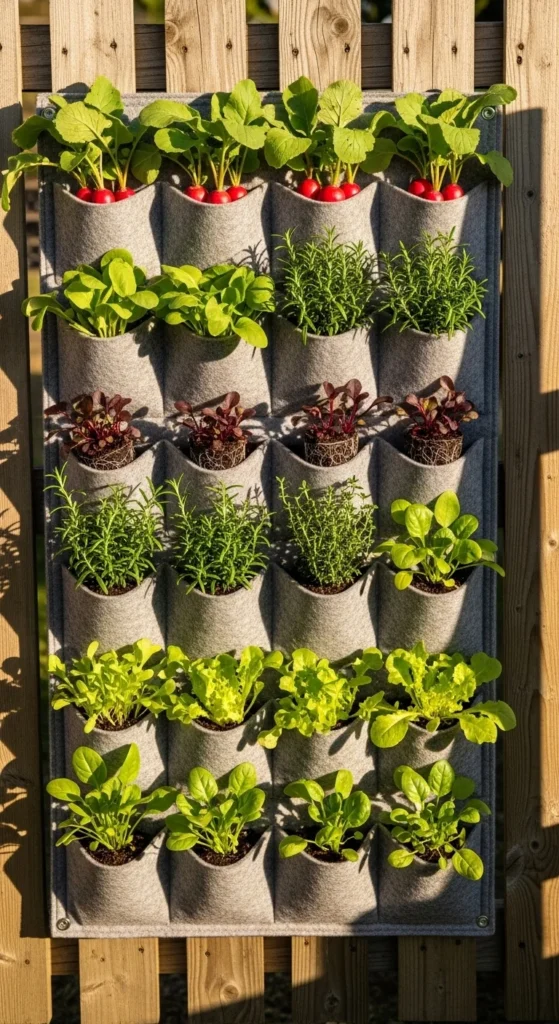
Pocket organizers maximize vertical surface area. Felt or PVC pockets hold shallow-root veggies like radishes or lettuce. Hang on walls, fences, or railings. Use lightweight potting mix to prevent sagging. Water from the top so all pockets stay moist. Pocket walls are modular; add or remove pockets seasonally. They’re a space-efficient solution for apartment or balcony gardens.
7. Hexagonal Modular Towers
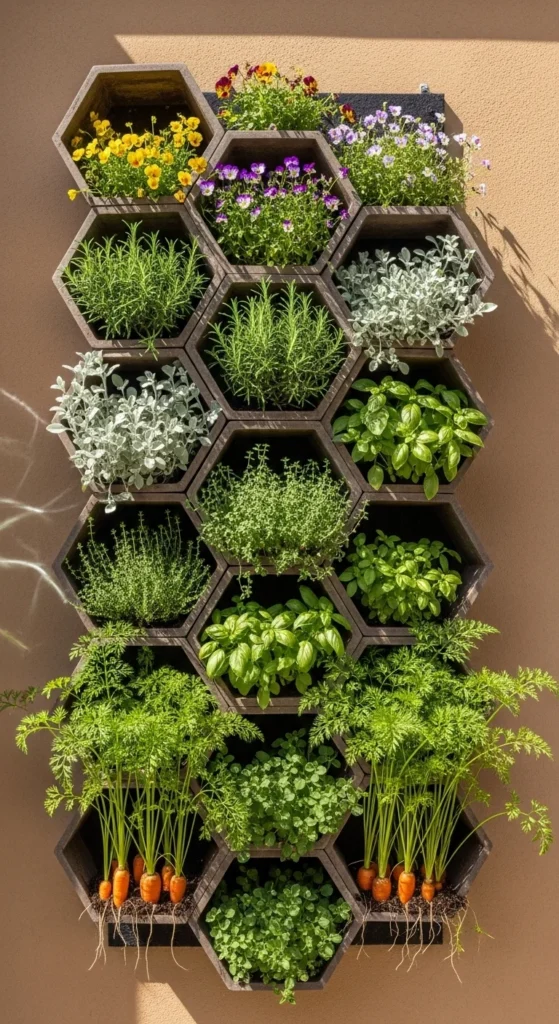
Hexagonal modules offer a modern, geometric look while optimizing airflow. Each cell grows a different crop, from herbs to baby carrots. Stack or stagger modules for better sunlight. Use lightweight soil to reduce weight and anchor modules on a flat surface. They’re durable and visually striking. Great for gardeners wanting a modular, organized vertical garden.
8. Arbor Entryway Tunnels
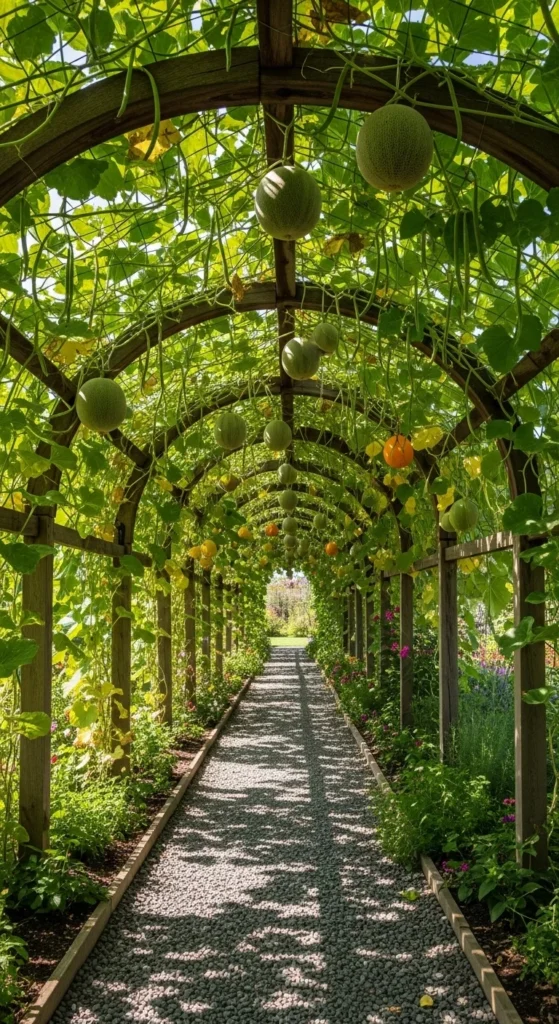
Arbors combine function and style. Grow melons, peas, or beans overhead to save ground space. Build sturdy arches with wood or metal. Train vines along the arch with soft ties. Ensure enough sunlight reaches lower plants. Harvest carefully to avoid damaging vines. Arbors turn pathways into productive green tunnels and add a striking visual feature.
9. Salad Spinner Towers
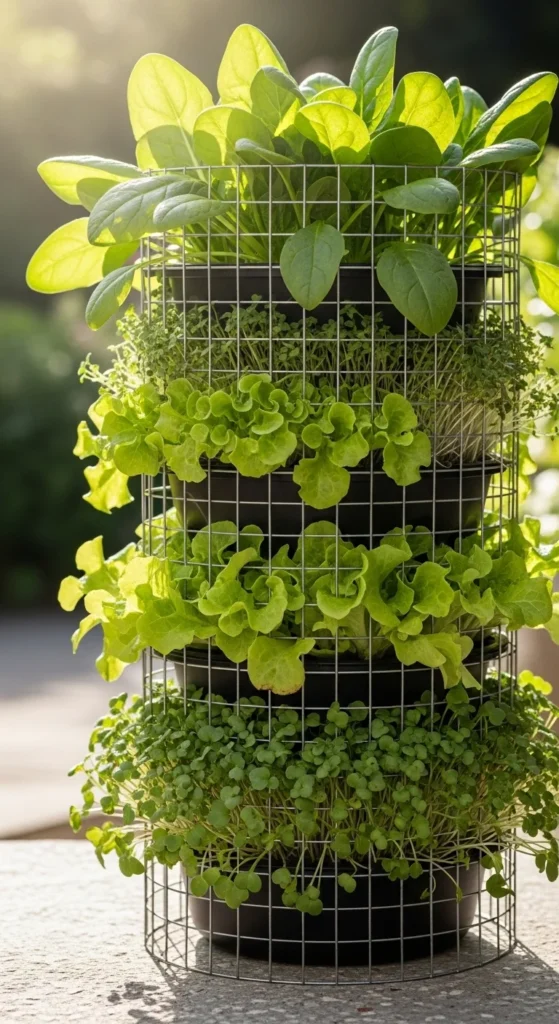
Salad towers use wire mesh cylinders for layered greens. Plant in staggered tiers for continuous harvest. Water from the top for even moisture. Great for small patios or backyard corners. Harvest leaves individually to keep plants growing. DIY versions can use recycled mesh or PVC. This method creates endless greens in minimal space.
10. Tomato Cages for Indeterminate Varieties
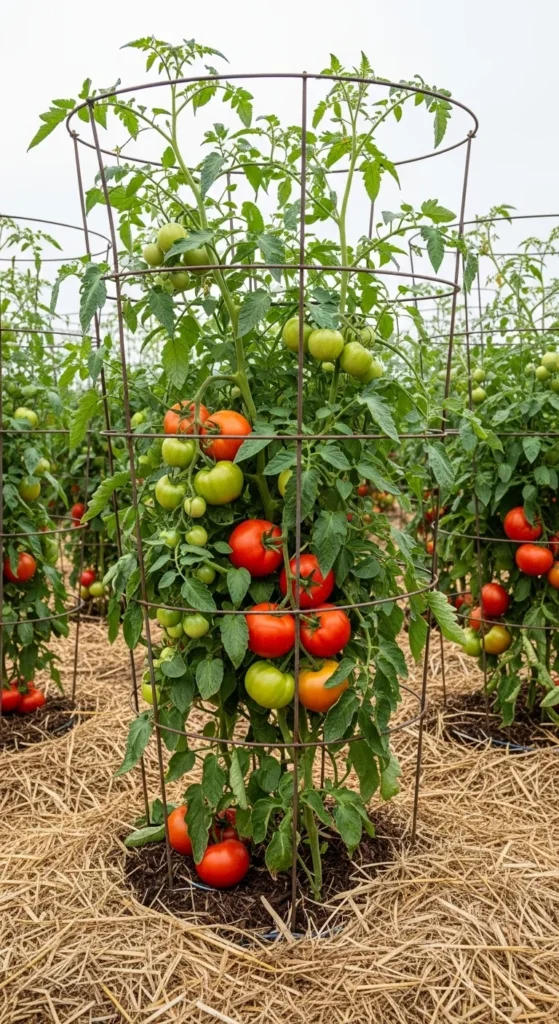
Cages support indeterminate tomatoes that grow tall and heavy. Use strong wire or steel cages. Space plants to avoid overcrowding. Water consistently and mulch to retain moisture. Prune lower leaves for airflow. Cages prevent sprawling, keeping tomatoes off the ground and easier to harvest. Perfect for small spaces seeking maximum tomato yields.
11. Companion Plant Trellis Borders
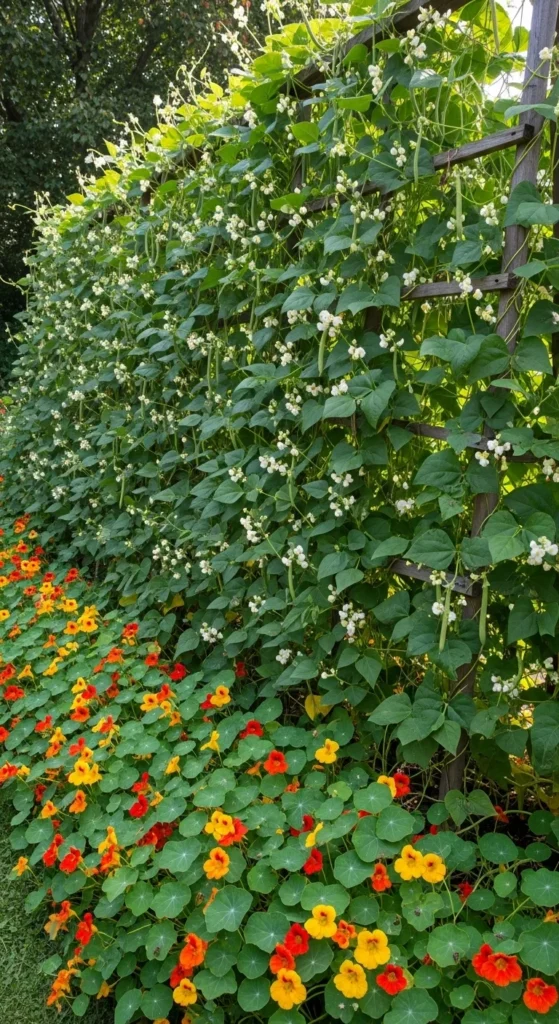
Companion planting on trellises reduces pests. Nasturtiums attract aphids away from beans or cucumbers. Plant flowering borders at the base or intersperse vines. This low-cost technique adds visual appeal while improving crop health. Light pruning ensures airflow. It’s an eco-friendly pest management strategy for vertical gardens.
12. South-Facing Wall Gardens
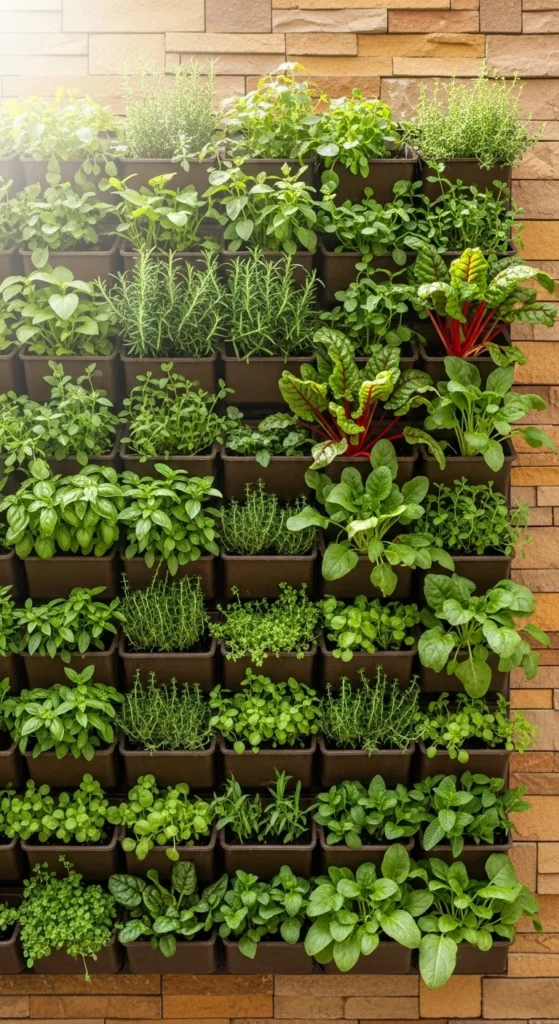
South-facing walls maximize sunlight for vertical crops. Mount planters, shelves, or hanging baskets. Taller plants go on top to avoid shading smaller ones. Use reflective materials if wall space is limited. Wall gardens work year-round in mild climates. Even compact yards can enjoy high yields with optimal sun exposure.
13. Drip Irrigation Headers
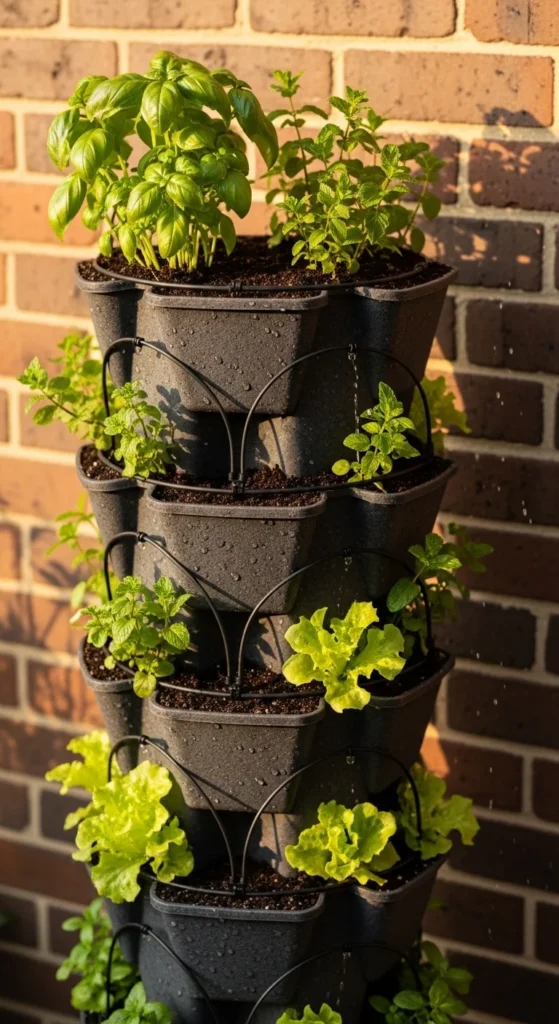
Drip irrigation keeps vertical gardens hydrated without overwatering. Headers run along tiers to deliver precise amounts. Use inexpensive tubing and emitters. Automated systems save time, ensuring top-to-bottom moisture balance. Ideal for hanging baskets, pocket walls, and towers. This setup reduces plant stress and prevents soil washout, making maintenance simple for space-saving gardens.
14. Pole Bean Protein Towers
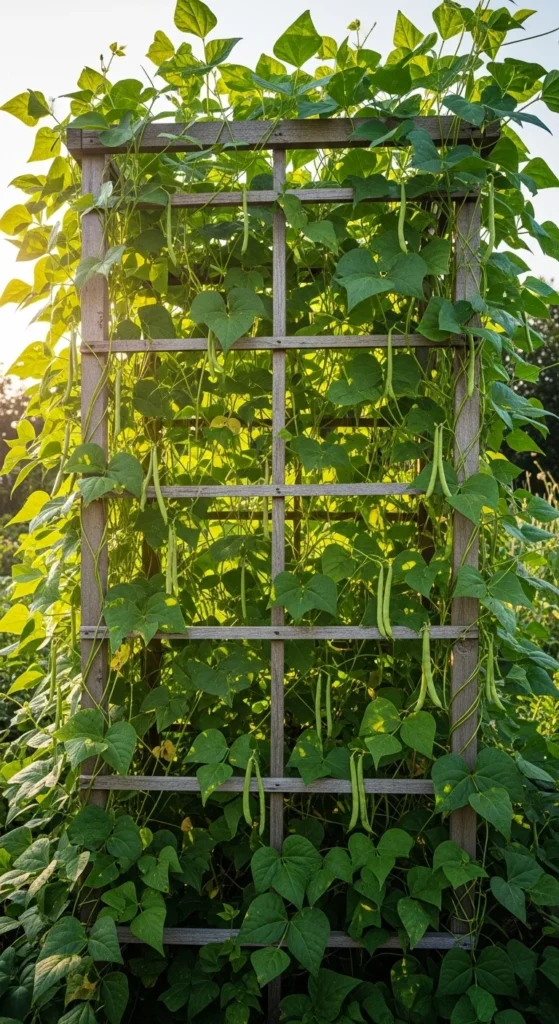
Pole bean towers provide protein-rich harvests in minimal footprint. Train beans to climb upward rather than spreading. Space plants adequately to prevent overcrowding. Regular harvest encourages continual pod production. This vertical solution is especially useful for urban gardeners seeking high yields in small yards.
15. Deep Pockets for Root Vegetables
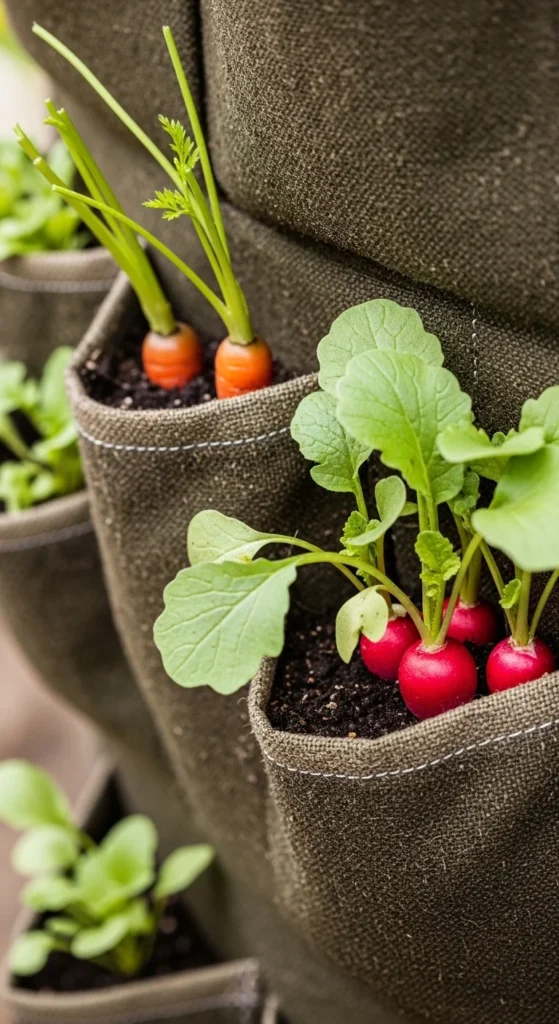
Deep fabric pockets allow root crops to grow downward in vertical setups. Ideal for carrots, radishes, or beets. Ensure pockets are deep enough (12–14 inches). Use loose soil for easy root expansion. Water consistently from top. Rotate pockets seasonally to keep soil fertile. Efficiently grows roots without horizontal space.
16. Obelisk Focal Climbers
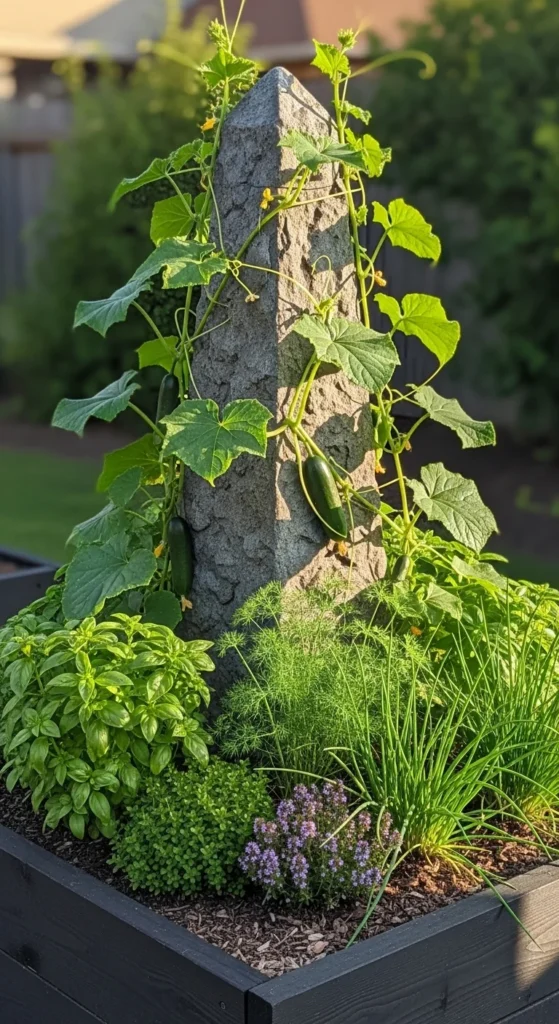
Obelisks act as both art and plant support. Train cucumbers, melons, or beans around the structure. Central placement makes them garden focal points. Space crops 4–6 inches apart. Light pruning prevents crowding. These vertical anchors combine function and aesthetics in small yards.
17. Fabric Pot Swing Sets
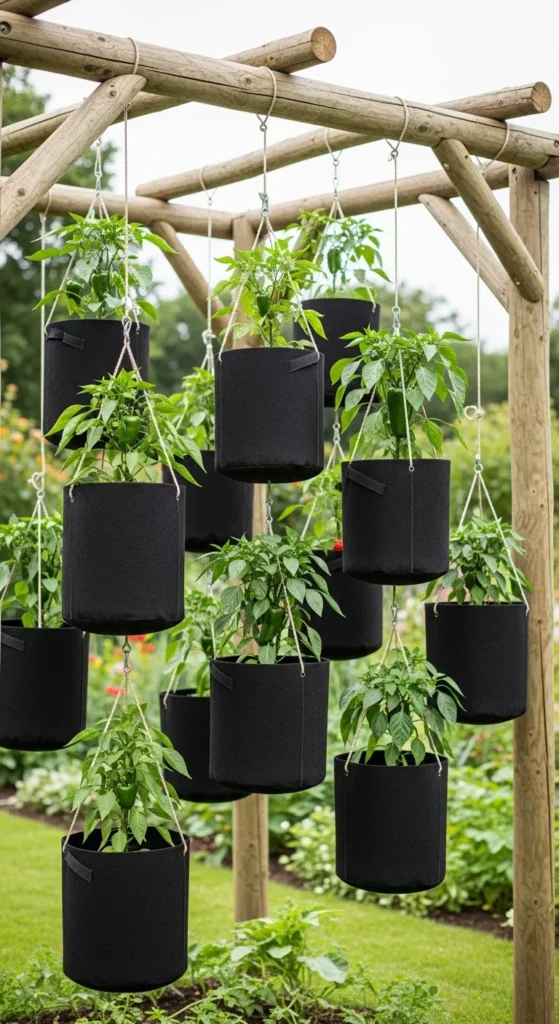
Hanging fabric pots maximize air and drainage. Suitable for peppers and shallow-root crops. Frames can be freestanding or ceiling-mounted. Light soils prevent sagging. Move pots as needed for sunlight or seasonal protection. Portable vertical gardens offer flexibility and mobility in limited spaces.
18. Quick Chicken Wire Trellises
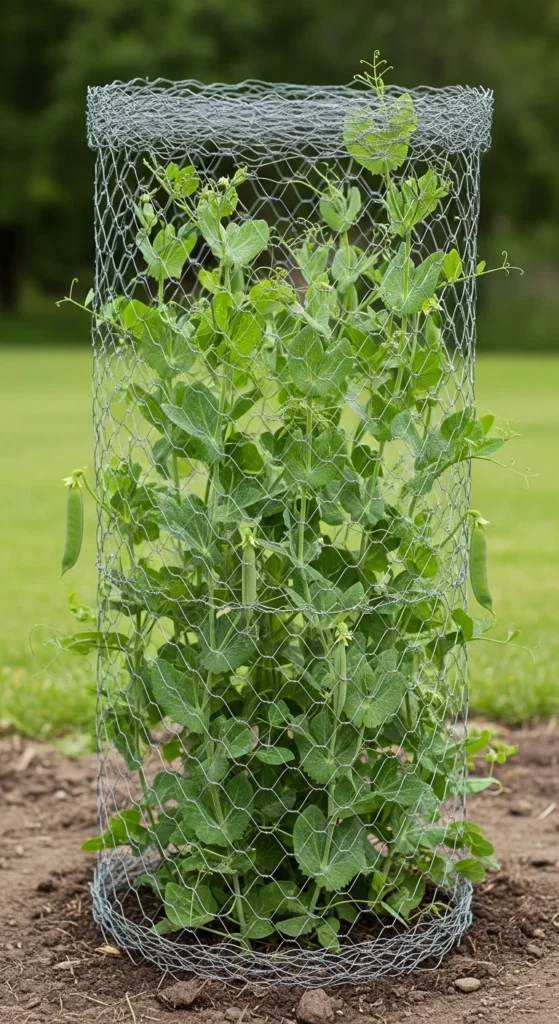
Chicken wire cylinders make fast, budget-friendly trellises. Roll wire into cylinders, secure with stakes, and train peas or beans. Lightweight and easy to relocate. Provides support without complex carpentry. Great for temporary or experimental vertical gardens. Ensures productive climbing crops in minimal space.
19. Indoor Multi-Tier Shelves
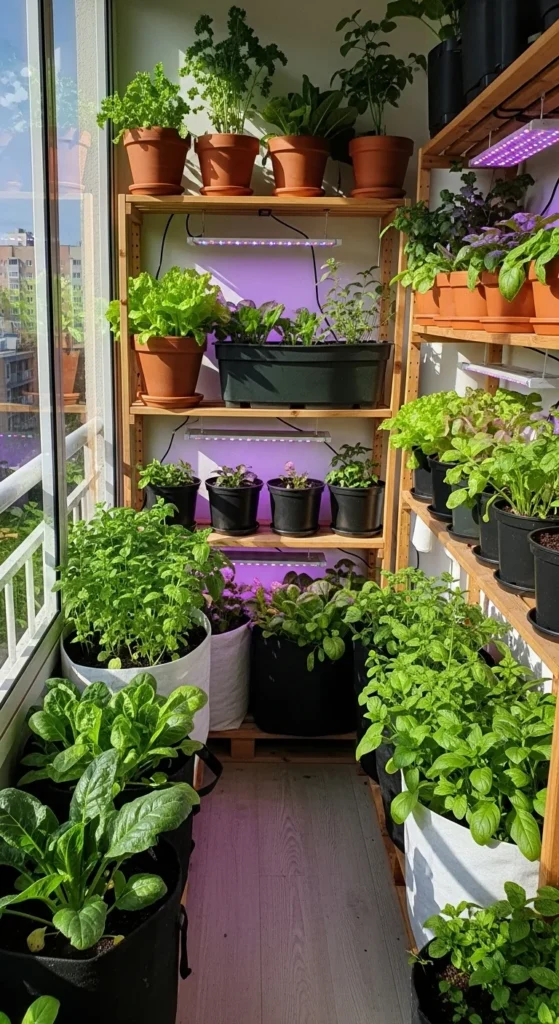
Multi-tier shelves extend vertical gardening indoors. Use small grow lights for low-light areas. Stack pots for herbs, lettuce, or microgreens. Water carefully to avoid dripping between levels. These setups turn apartments or balconies into year-round productive spaces.
20. Prune for Airflow
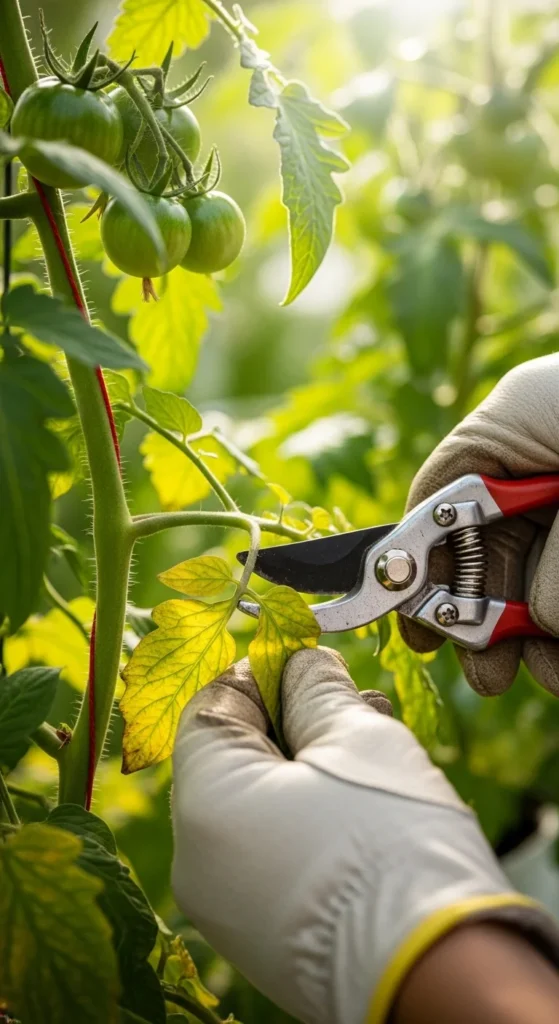
Pruning improves airflow and prevents disease. Remove crowded or yellowing leaves. Space vines along trellises or towers. Helps sunlight reach all plant parts. Simple hand tools work, and minimal maintenance keeps yields high. Healthy plants thrive in tight vertical layouts without excess moisture buildup.
21. Metal Grid Wall Training
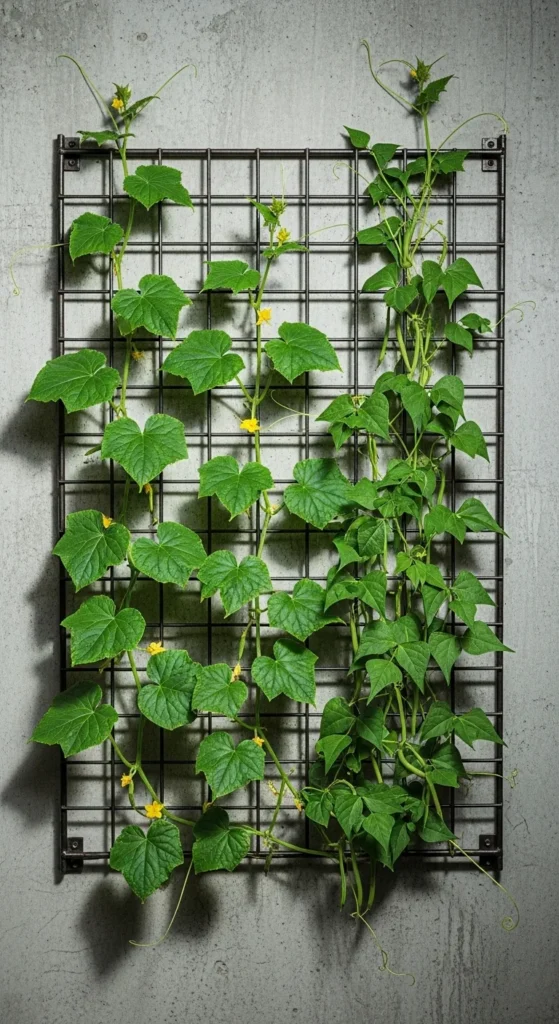
Metal grid walls provide modern, sturdy support. Train vining crops with ties or clips. Works indoors or outdoors. Durable and long-lasting, grids can hold multiple plant types. Combine with pocket planters for maximum efficiency. Perfect for industrial-themed vertical gardens in urban yards.
22. Fabric Tier Portability
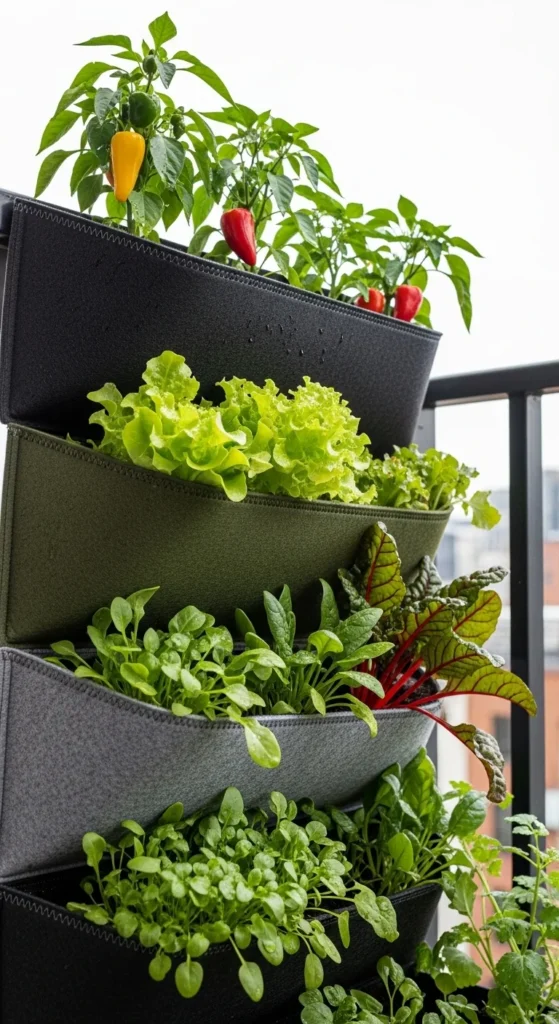
Stacked fabric tiers are lightweight and movable. Perfect for balconies or seasonal shifts. Each tier drains well and keeps plants healthy. Ideal for peppers, small herbs, and leafy greens. Modular design allows expansion. Portable vertical solutions give control over sunlight and space in small yards.
23. Arbor Tunnel Aesthetics
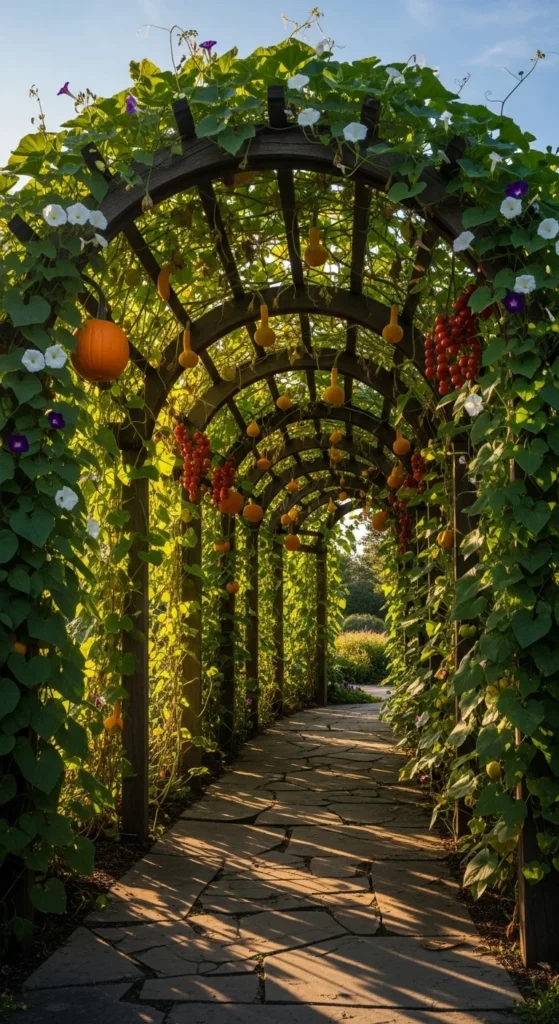
Arbors double as décor and crop support. Grow melons, beans, or peas overhead. Frames can be freestanding or gate-mounted. Prune carefully for airflow and easy harvesting. Entry tunnels create visual appeal while maximizing vertical planting space.
24. Tiered Balcony Lettuce Garden
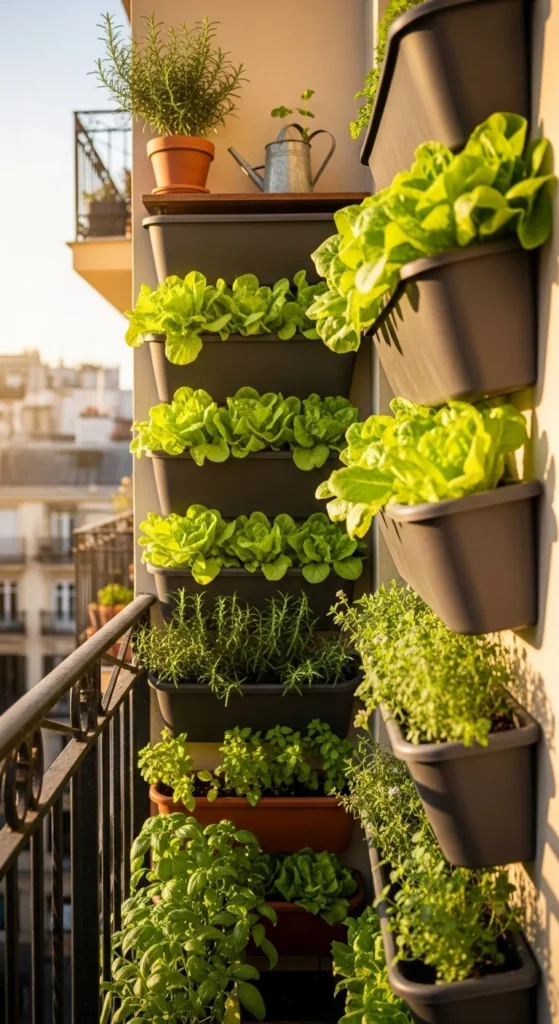
Balcony tiers let you grow multiple crops in small outdoor spaces. Stagger pots for sunlight access. Easy watering with drip lines or watering cans. Choose compact greens like lettuce, spinach, or arugula. Maintains productivity in tight urban spaces with limited floor area.
25. DIY Trellis Kits
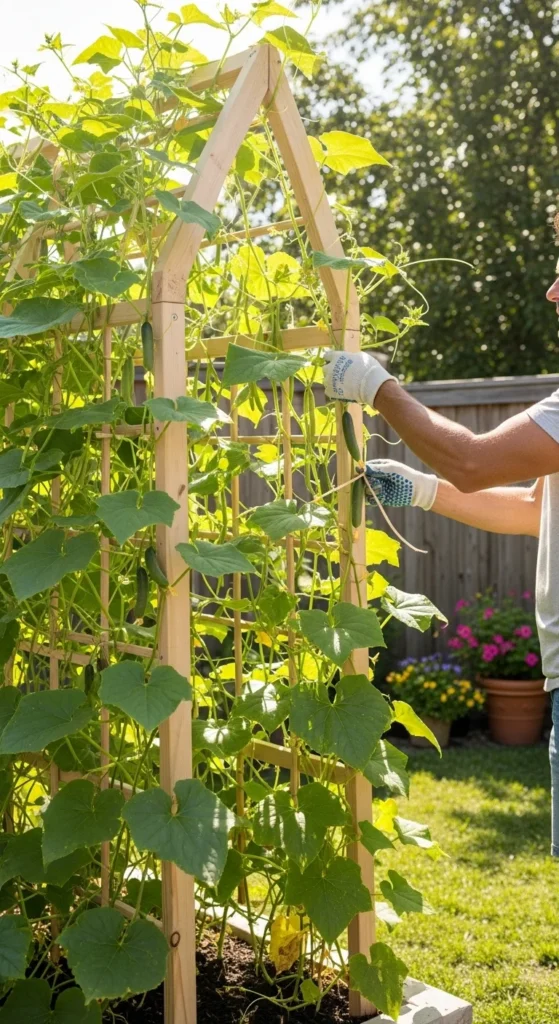
DIY trellis kits provide affordable, customizable support. Assemble lightweight frames from wood, bamboo, or PVC. Train climbing crops upward to save ground space. Modular kits allow seasonal rearrangement. A simple investment delivers efficient vertical yields for small yards.
Conclusion
Vertical gardening transforms small spaces into productive, lush gardens. Using trellises, towers, arbors, and pocket systems, you can grow more crops per square foot while maintaining healthy airflow and sunlight access. Affordable DIY setups—from pallet planters to fabric tiers—make it easy to implement. With careful planning and routine maintenance, even the tiniest yard can produce abundant vegetables and fresh greens year-round. Start stacking your garden today and maximize your harvest in minimal space.
Leave a Reply