

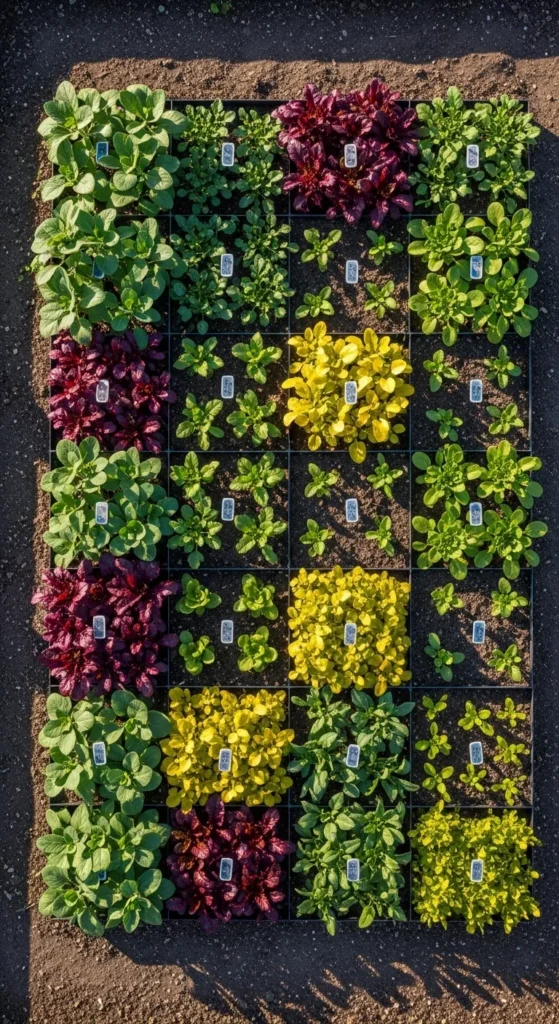
A small garden can produce surprisingly large harvests when planted smartly. Square foot gardening makes the most of every inch of your 4×4 raised bed. By dividing it into 16 one-foot squares, you can mix crops, follow simple spacing rules, and rotate plant families to reduce pests. Whether you want endless salad greens, towered beans, or compact herbs, these layouts maximize yield while keeping maintenance simple. Here are 28 practical layouts to grow more in less space.
1. Carrot Intensive Grid
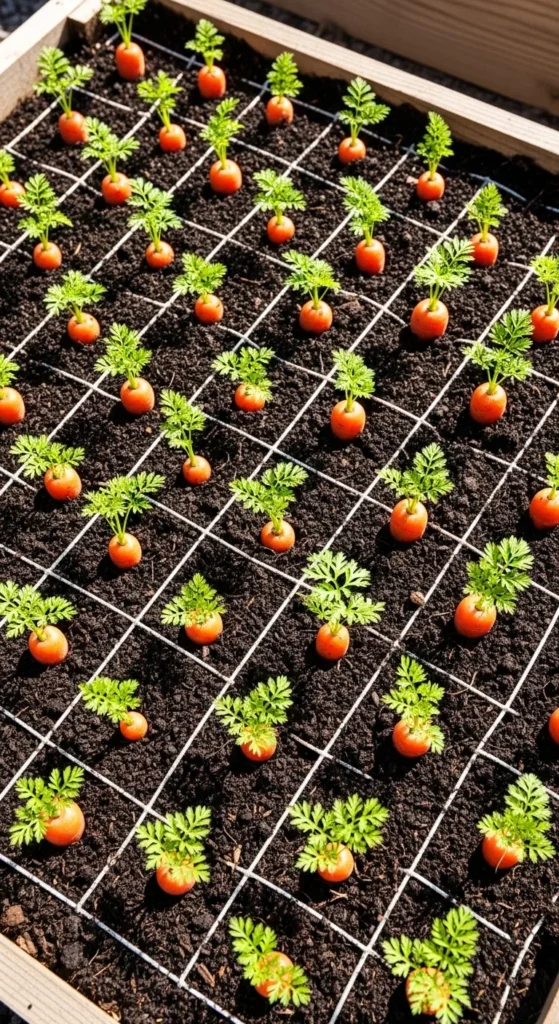
Plant 16 carrots per square for a high-density harvest. Carrots thrive in loose, well-draining soil, like Mel’s Mix. Use a template or string grid to evenly space seeds. Water gently and thin as needed. Multiple squares can produce enough carrots for a family for months. Try alternating carrot varieties for colors and textures in one bed.
2. Beet Block
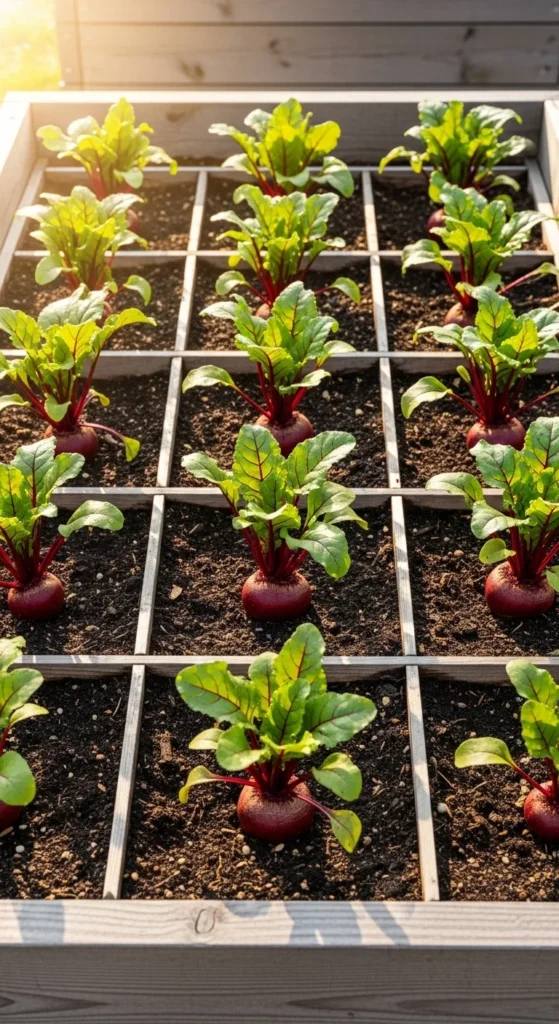
Plant 9 beets per square for a tidy, harvest-ready grid. Beets love slightly cool soil and even moisture. Succession planting every few weeks ensures continual harvest. Mix leaf and root varieties for dual-purpose greens and roots. Thin seedlings to prevent overcrowding. Beets pair well with onions or lettuce in adjacent squares.
3. Lettuce 4×4 Squares
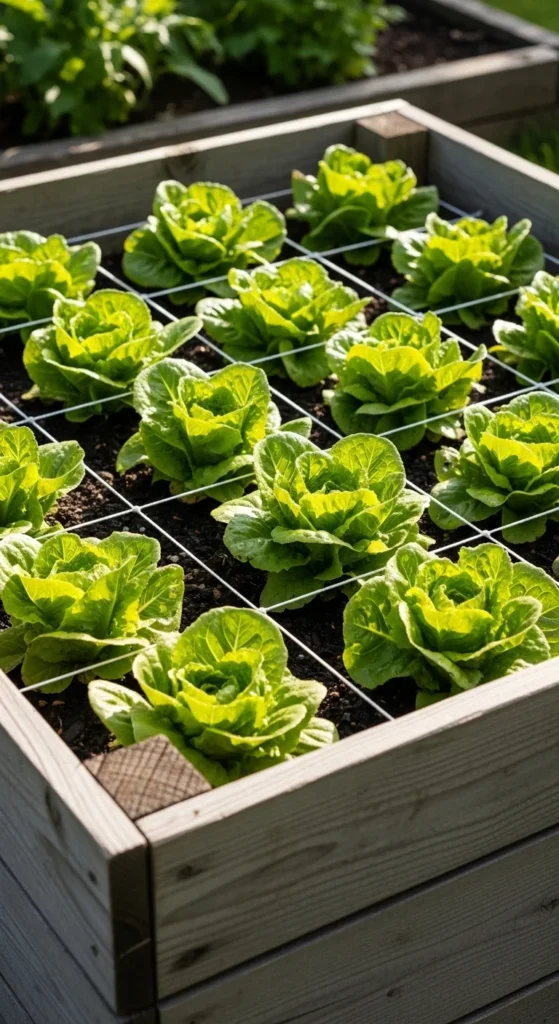
Plant 4 lettuce heads per square in a 2×2 pattern. This spacing prevents overcrowding while still maximizing the bed. Rotate leaf varieties to extend harvest. Use a light mulch to retain soil moisture. Succession sowing every two weeks keeps your salads continuous. Great companion with carrots or radishes in nearby squares.
4. Single Tomato Squares
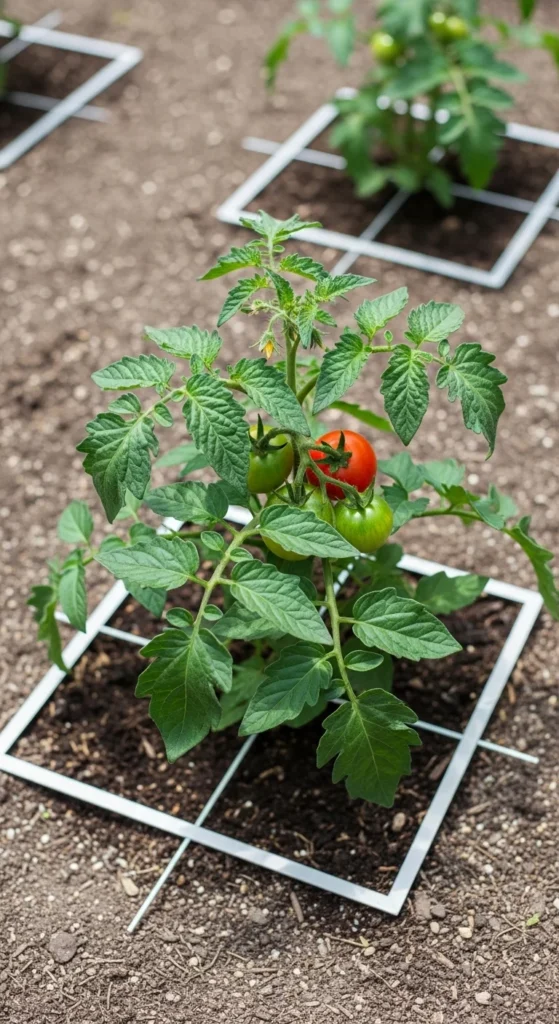
Tomatoes need more room: one plant per square. Place taller varieties at the north edge to avoid shading. Stake or cage each plant to keep upright. Fertilize lightly and water at the base to avoid leaf rot. Surround with basil or marigolds for companion benefits.
5. Bush Bean Cluster

Plant 9 bush beans per square for quick, high-yield crops. Beans fix nitrogen, helping neighboring plants. Support minimal trellises if needed. Regular harvesting encourages continuous pod production. Interplant with lettuce or carrots to use vertical and horizontal space efficiently.
6. Pole Bean Towers
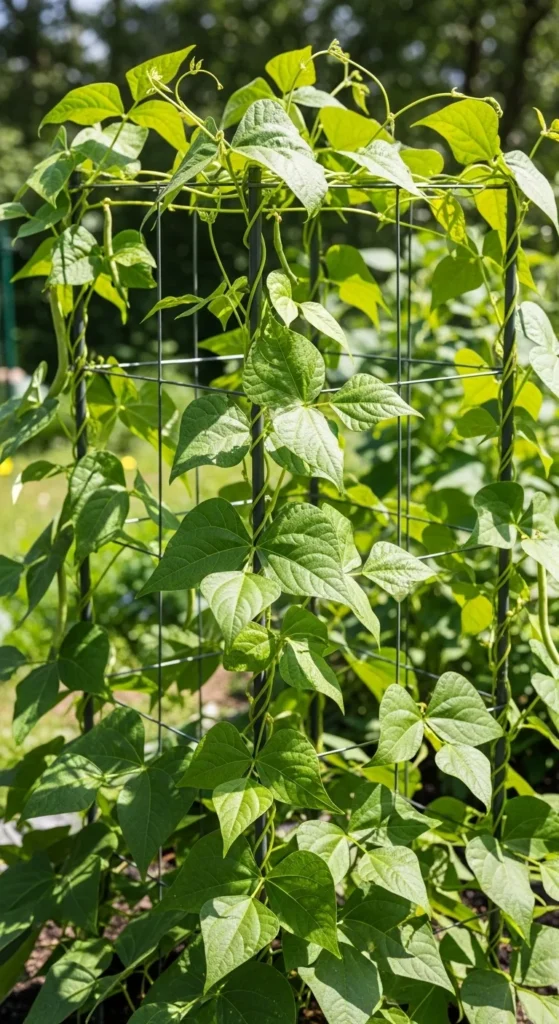
Use one square per trellis and plant 8 pole beans. Let them climb vertical supports. This frees ground space for other crops. Rotate beans each year to avoid soil depletion. Combine with radishes or low-growing herbs at the base for companion planting.
7. Brassica Blocks

Plant broccoli or cauliflower one per square with proper spacing. Taller broccoli should be placed north to avoid shading. Use Mel’s Mix for rich, loose soil to encourage strong roots. Mulch lightly and water consistently. Interplant with herbs like basil for natural pest deterrence.
8. Pea Trellis Combo
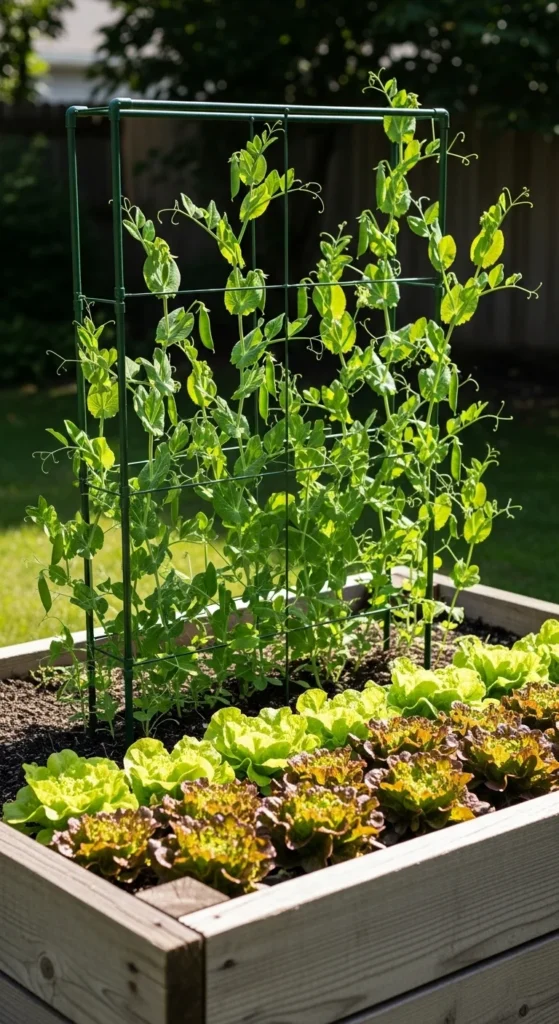
Bush peas: 8 per square. Pole peas: one row per square with vertical support. Plant low companions at the front. Succession sowing every 3–4 weeks keeps pods coming. Pair with marigolds to prevent nematodes. Efficient vertical growing doubles space.
9. Herb Harmony

Plant 4 basil per square near tomatoes for flavor synergy. Add parsley, chives, or thyme in adjacent squares. Keep herbs trimmed to encourage bushiness. Rotate herb squares annually to prevent disease. Great for quick kitchen access and minimal maintenance.
10. Mixed Salad Squares
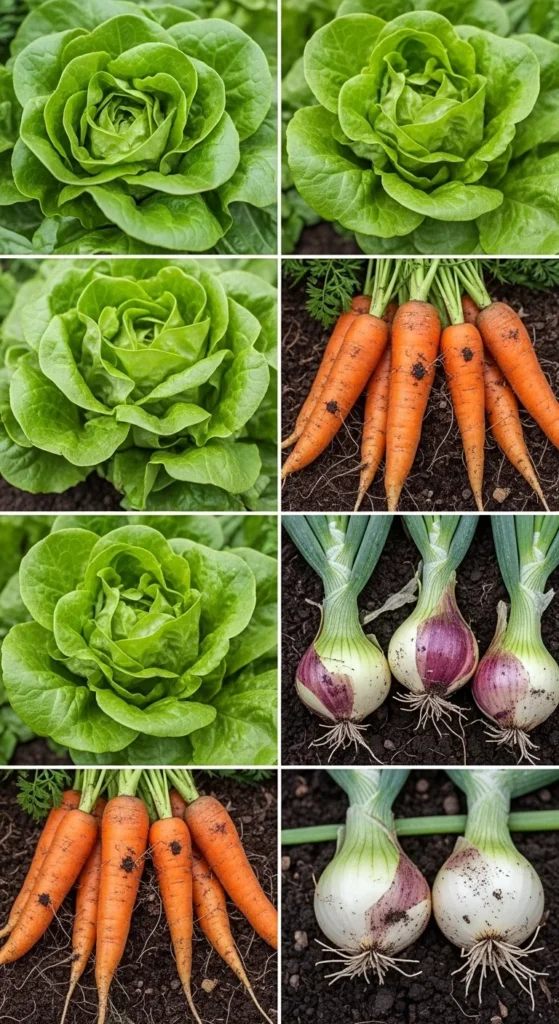
Combine leafy greens, root vegetables, and onions in one bed. Plant lettuce in 2×2 patterns, carrots 16 per square, and 2–4 onions. Succession plant lettuce every 2 weeks. This method keeps continuous harvests without overcomplicating care.
11. Zucchini Minimal Space
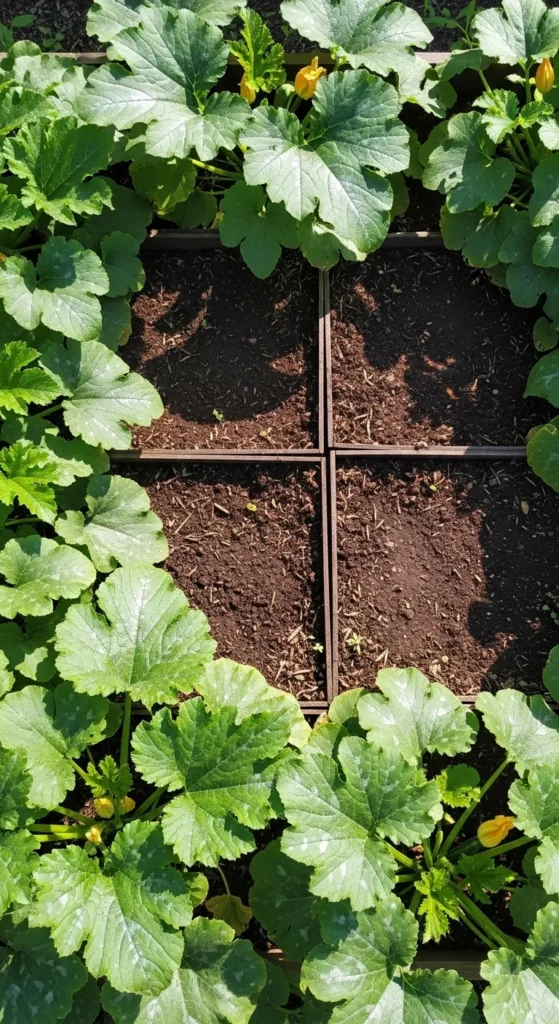
Use one square per zucchini plant; they spread quickly. Add mulch to retain moisture. Place squash near the north edge to avoid shading smaller crops. Consider companion plants like bush beans to make full use of space. Warn: space hogs!
12. Root Medley

Mix carrots, radishes, and beets for compact, high-yield roots. Use the 1, 4, 9, 16 rule to determine numbers. Quick-growing radishes can harvest early, freeing squares for succession crops like lettuce or spinach.
13. Spinach Squares
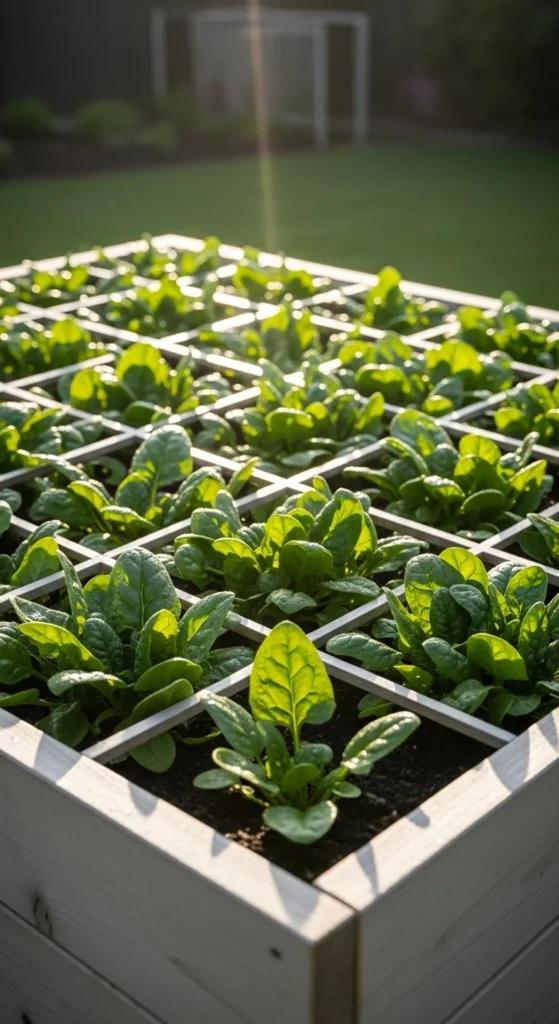
Plant 9 spinach per square for dense leaves. Cool-season crops do best in partial sun. Rotate squares seasonally to avoid bolting. Interplant with lettuce or onions for efficient grid use. Regular picking encourages new growth.
14. Cilantro Cool Spot
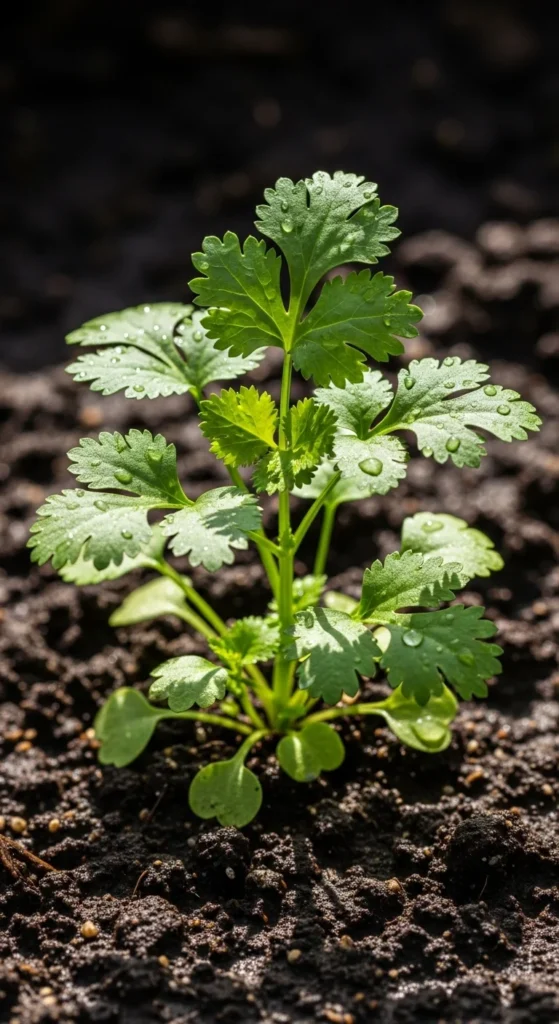
Plant one or two cilantro per square. Cilantro bolts quickly in heat, so succession sow every 2–3 weeks. Pair with leaf lettuces or spinach in neighboring squares. Shade during hottest afternoons to extend harvest.
15. Pest Shield Borders
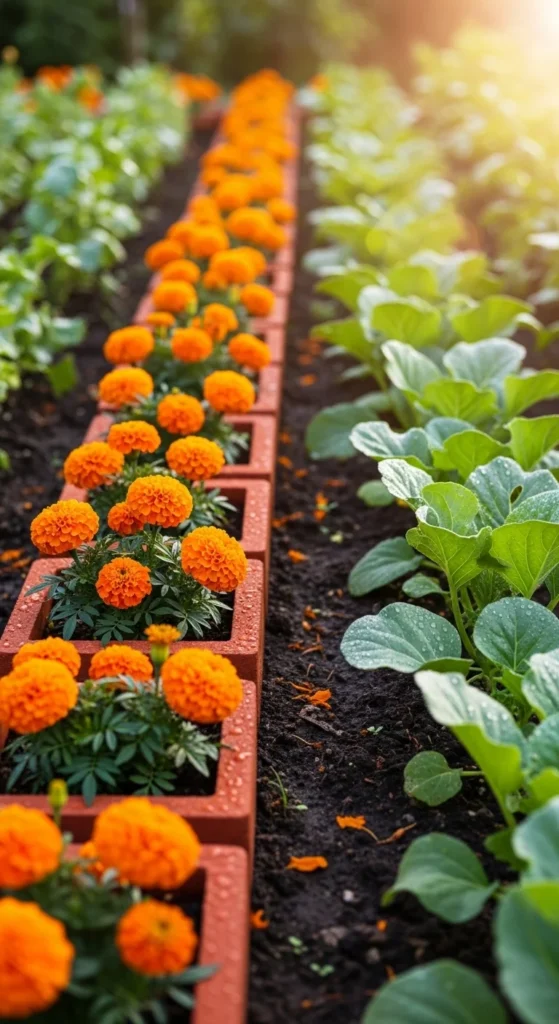
Use 4 marigolds per square along edges to deter pests. Companion planting prevents nematodes and beetles. Mix with herbs or small vegetables in interior squares. Simple and low-cost natural pest control.
16. Sun Access Layout
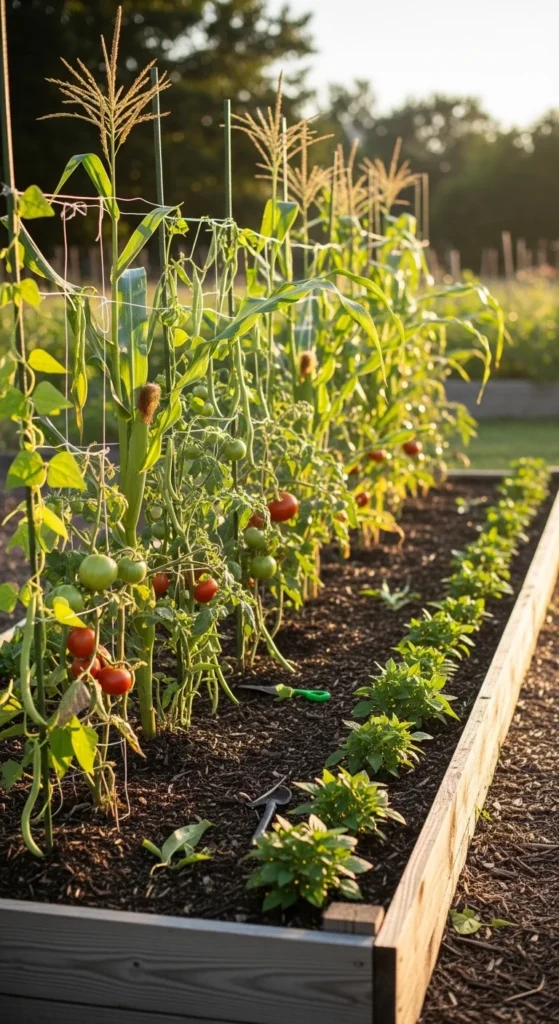
Place tall crops at the north, medium in the center, and low crops at the south. This avoids shading and maximizes sunlight exposure. Rotate crops each year to prevent disease. Easy visual planning keeps yields consistent.
17. Mel’s Mix Magic
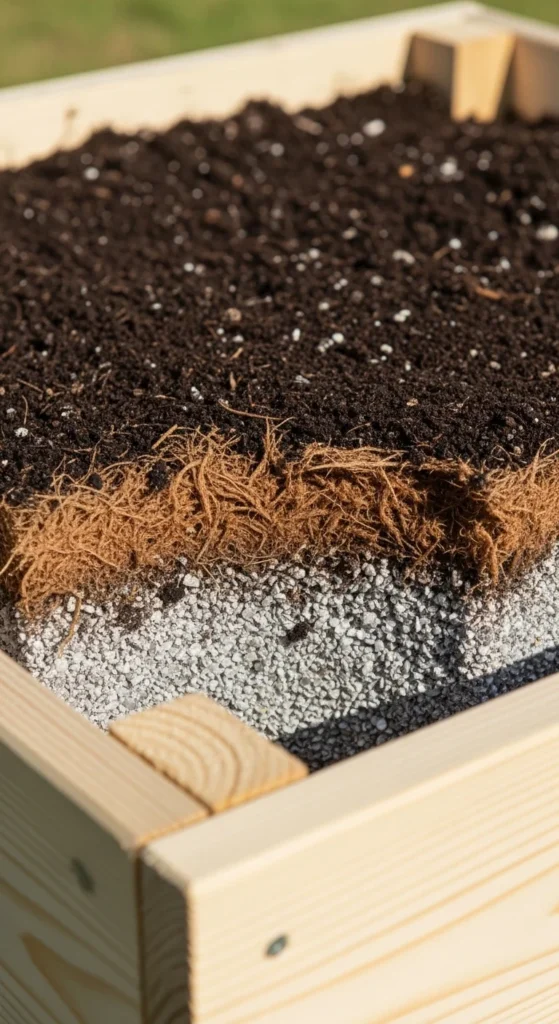
Fill beds with 1/3 compost, 1/3 peat, 1/3 vermiculite. This loose, well-draining soil promotes strong roots and reduces weeds. No tilling required. Use for every square for consistent plant growth.
18. Moisture Grids

Mulch each square individually to retain moisture and control weeds. Straw or shredded leaves work well. Water consistently at the base, not leaves. Easy to maintain and keeps soil healthy.
19. DIY Planting Templates
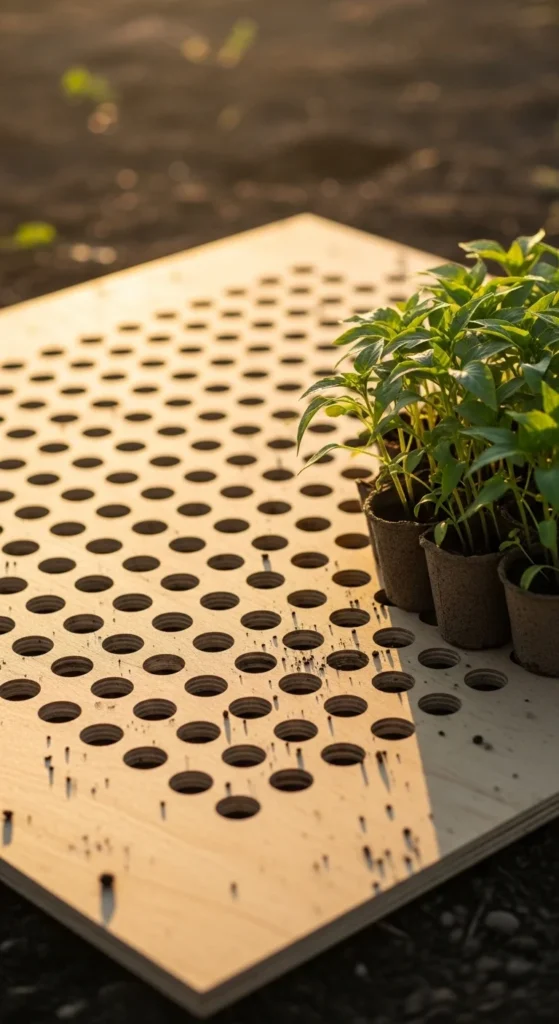
Use plywood or 3D printed templates for exact spacing. Perfect for carrots, beets, or lettuce. Reduces measuring errors and saves time. Small alignment pegs help keep grids in place. Budget-friendly and reusable.
20. Efficient Watering
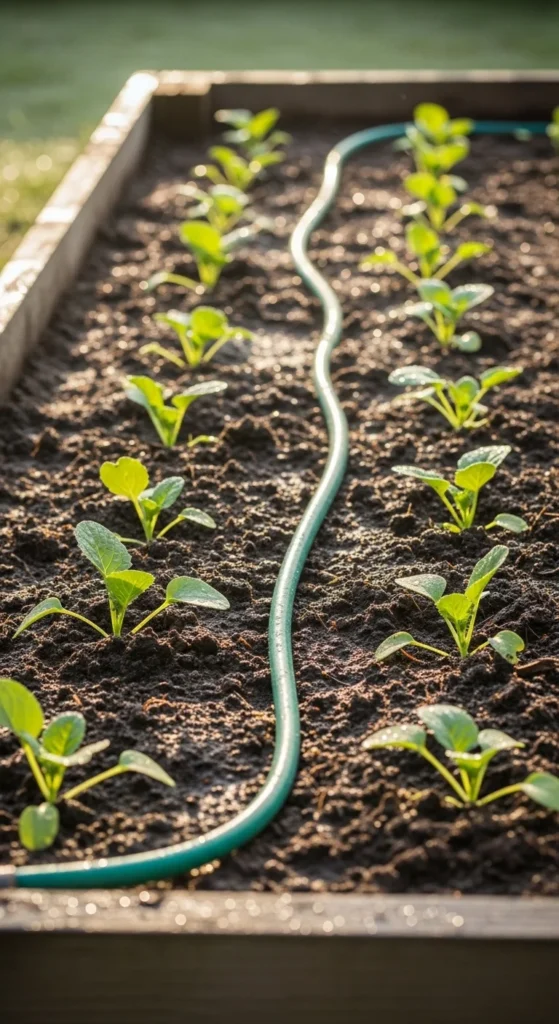
Use a soaker hose or drip irrigation for 1 inch per week. Deep watering encourages strong roots. Combine with mulch to minimize evaporation. Saves time and keeps beds healthy.
21. Continuous Salad Squares
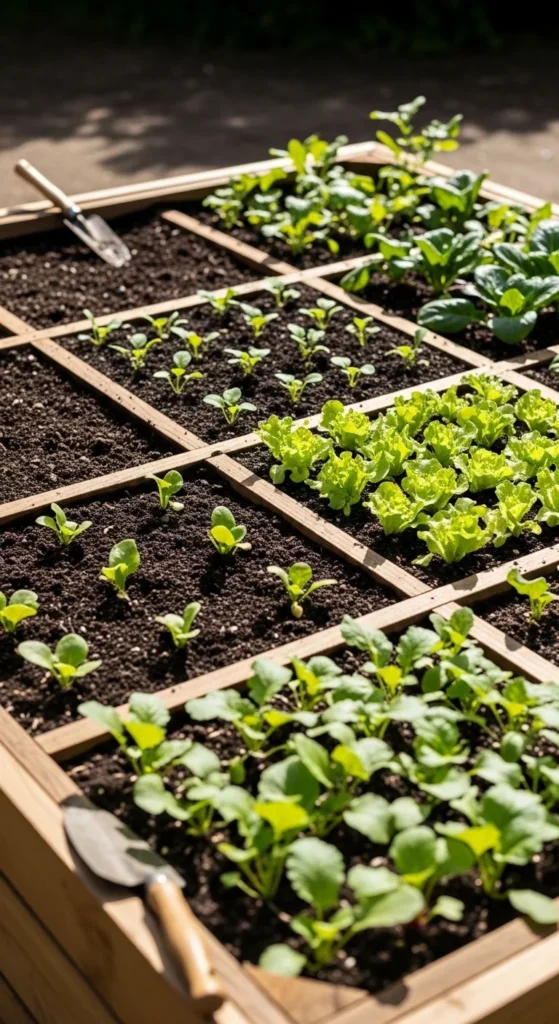
Succession plant lettuce or spinach every 2–3 weeks. Keeps harvests continuous. Rotate squares to avoid soil depletion. Easy way to have fresh greens year-round in a compact bed.
22. North-South Planning
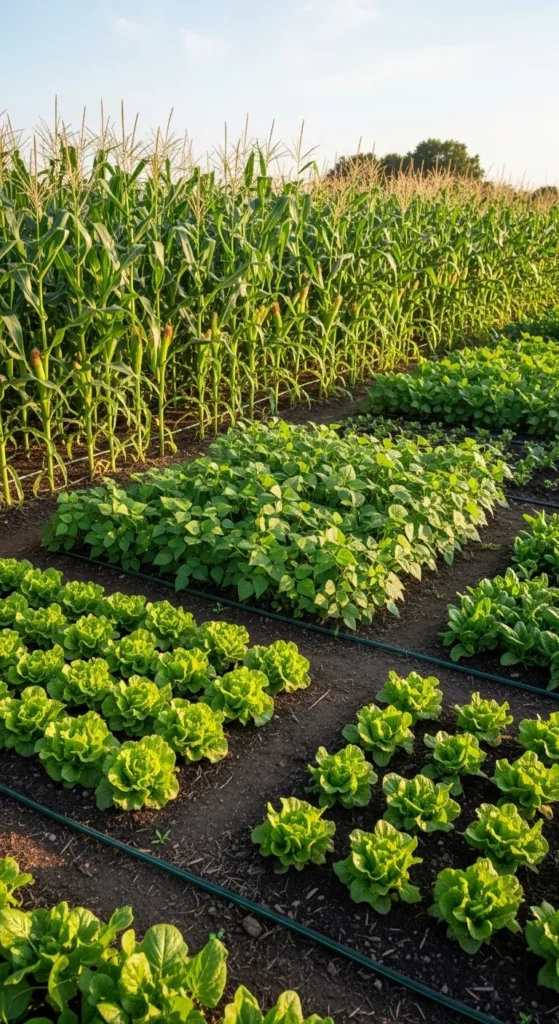
Arrange beds with tall crops at the north side. Medium plants in the center, short crops at the south. Prevents shading and maximizes light. Works well with corn, tomatoes, beans, and lettuce combinations.
23. Gap Crops
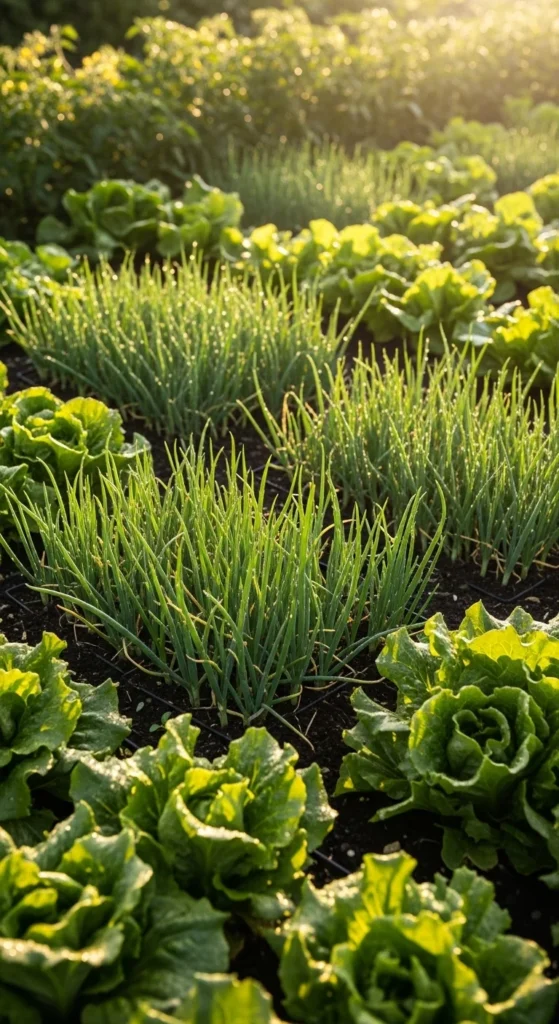
Plant onions or radishes in squares left by slow-growing crops. Fills empty space and prevents weeds. Easy and cost-effective companion planting. Works well in succession planting grids.
24. Cool-Season Mix
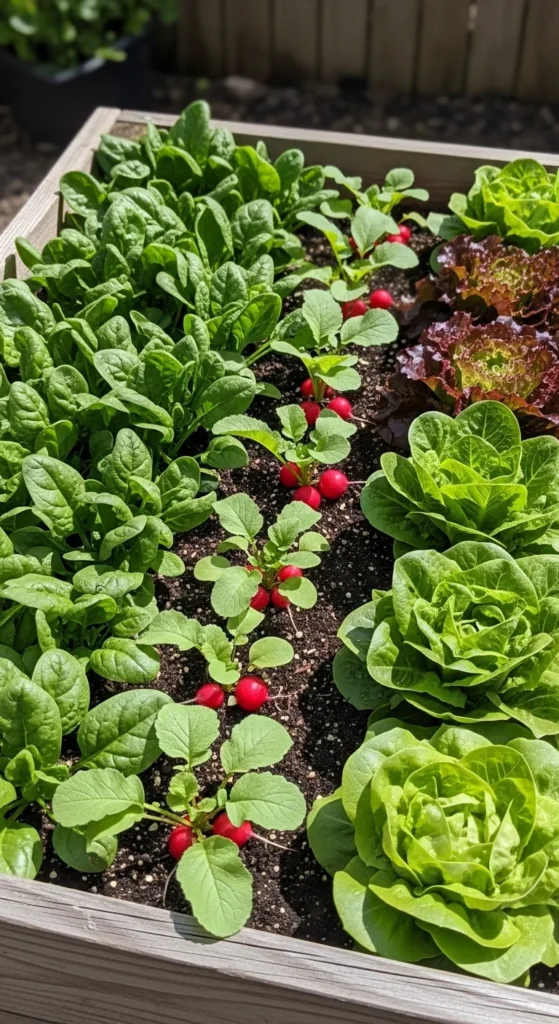
Combine spinach, lettuce, and radishes for spring or fall. Use 11×11″ squares for practical spacing. Harvest radishes first, leaving room for lettuce to grow. Keeps soil productive all season.
25. Space Hog Combos
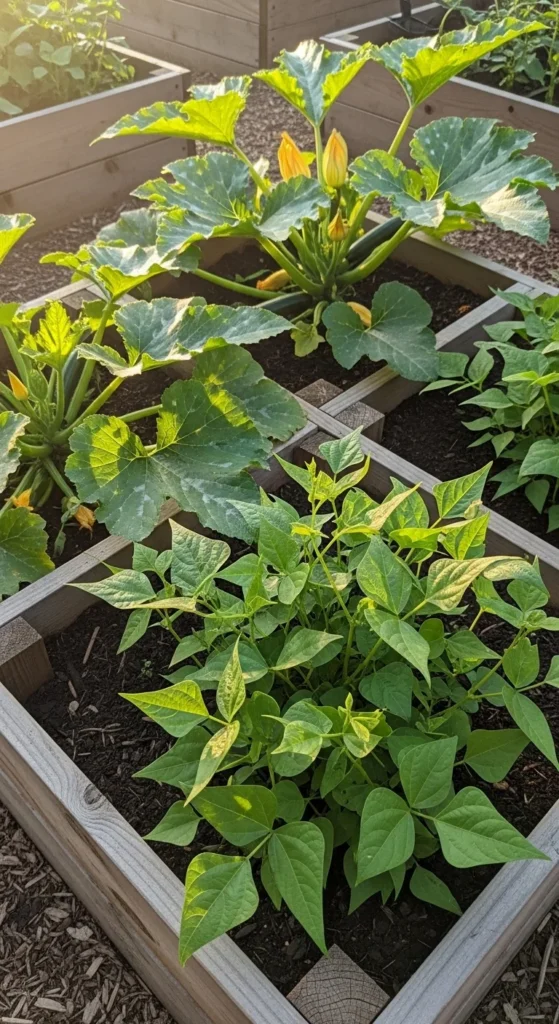
Plant one zucchini with neighboring bush beans. Zucchini uses one square; beans fill adjacent. Maximizes bed without overcrowding. Monitor shading and prune leaves if needed. Efficient, high-yield pairing.
26. Diagonal Planting Patterns

Use 2×2 or diagonal planting for lettuces or herbs. Improves spacing visually and physically. Easier to thin without disturbing neighbors. Works well in dense-square planting strategies.
27. Seasonal Grids
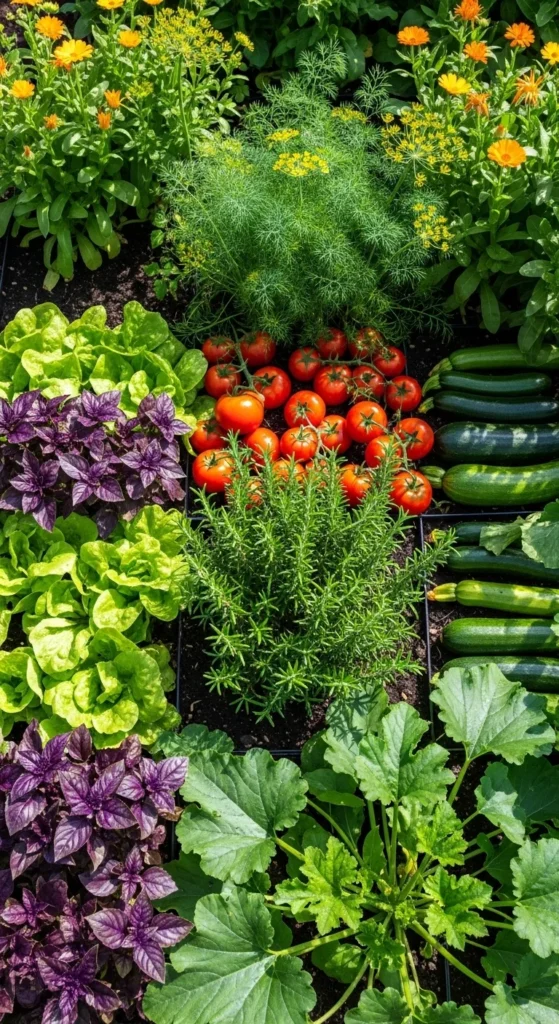
Switch crops each season. Cool-season crops like spinach or lettuce in spring/fall. Warm-season crops like tomatoes or peppers in summer. Keeps soil productive and maximizes yield year-round.
28. Ultimate Mixed Grid
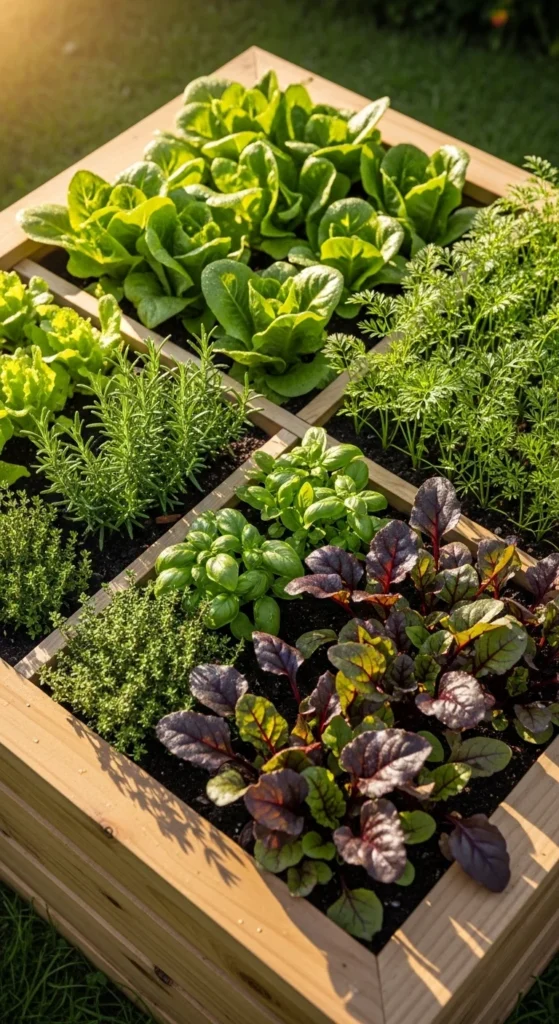
Combine root vegetables, leafy greens, and herbs for continuous harvest. Rotate crops yearly by family to reduce pests. Use Mel’s Mix for soil and mulch squares individually. Succession plant for never-ending fresh produce.
Conclusion
Square foot gardening makes high yields simple and manageable. By planning, rotating, and using grids wisely, a small 4×4 raised bed can produce as much as a traditional large garden. Try these 28 layouts to mix crops, maximize space, and harvest more from less effort. With simple tools, templates, and succession planting, your garden can stay productive year-round, saving time, money, and space.
If you want, I can also create a printable 4×4 square foot gardening template with suggested layouts for all 28 setups, so you can follow it directly in your garden. Do you want me to do that?

Leave a Reply