

Few things are as satisfying as biting into a homegrown tomato—sweet, juicy, and full of flavor. Store-bought tomatoes can’t compete, and the good news is: growing your own isn’t as hard as you might think. With the right setup and a few simple tips, you can enjoy plump, healthy tomatoes all summer long.
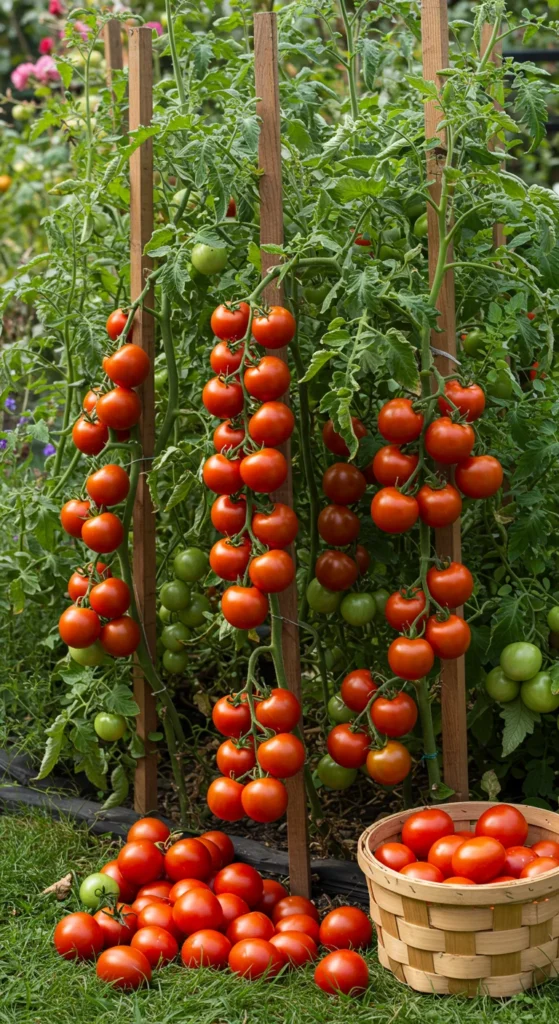
Step 1: Pick the Right Variety
Not all tomatoes are created equal. Some thrive in pots, while others love spreading out in garden beds. Choosing the right type makes a huge difference.
- Cherry tomatoes – super easy and perfect for beginners.
- Roma/plum tomatoes – great for sauces and cooking.
- Beefsteak tomatoes – large and juicy for slicing.
If you’re just starting, go for cherry or Roma varieties. They’re forgiving and produce loads of fruit.
Step 2: Choose the Perfect Spot
Tomatoes are sun worshippers. They need at least 6–8 hours of direct sunlight daily.
- Find a sunny corner in your yard.
- If growing in containers, place them where they’ll catch the most light.
- Avoid shaded areas under trees or fences.
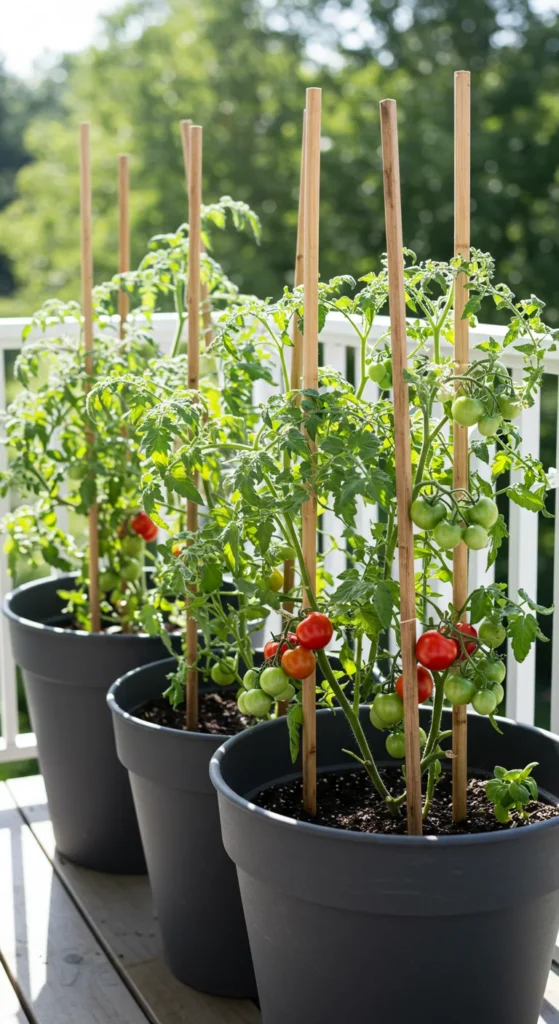
Step 3: Prepare the Soil
Healthy soil = healthy tomatoes. These plants love nutrient-rich, well-draining soil.
- Mix compost or aged manure into your garden bed.
- If using pots, buy a high-quality potting mix.
- Add a slow-release fertilizer at planting time for a boost.
Pro tip: Tomatoes prefer slightly acidic soil (pH 6–6.8). If unsure, grab a cheap soil test kit from a garden store.
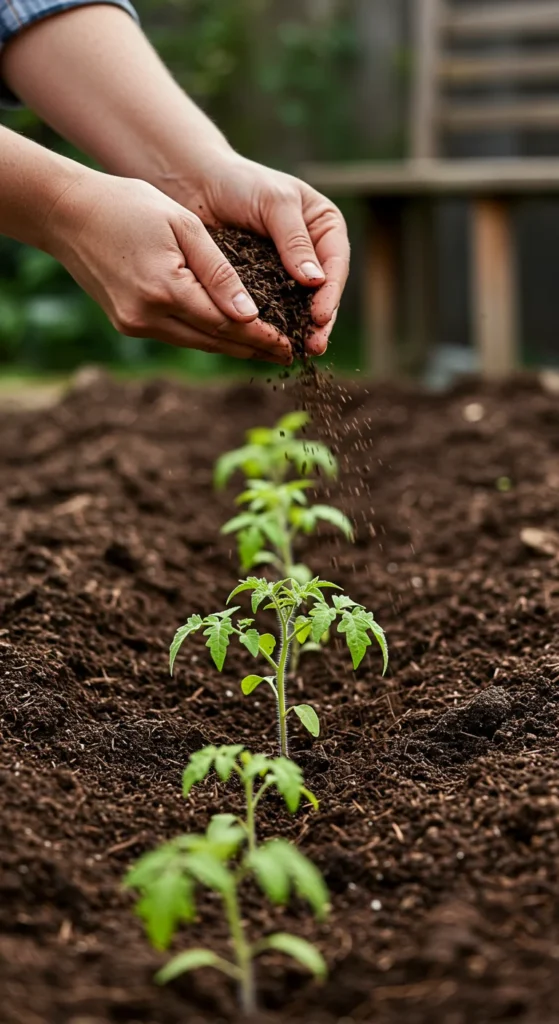
Step 4: Plant Them Deep
Here’s a secret many beginners miss: tomatoes love being planted deep.
- Remove the lower leaves from your seedling.
- Bury two-thirds of the stem under the soil.
- Roots will form along the buried stem, creating a stronger plant.
This simple trick gives your tomatoes the support they need to thrive.
Step 5: Water Consistently
Tomatoes hate extremes—too much water can rot roots, too little leads to cracked fruit. The goal is steady moisture.
- Water deeply 2–3 times a week, depending on weather.
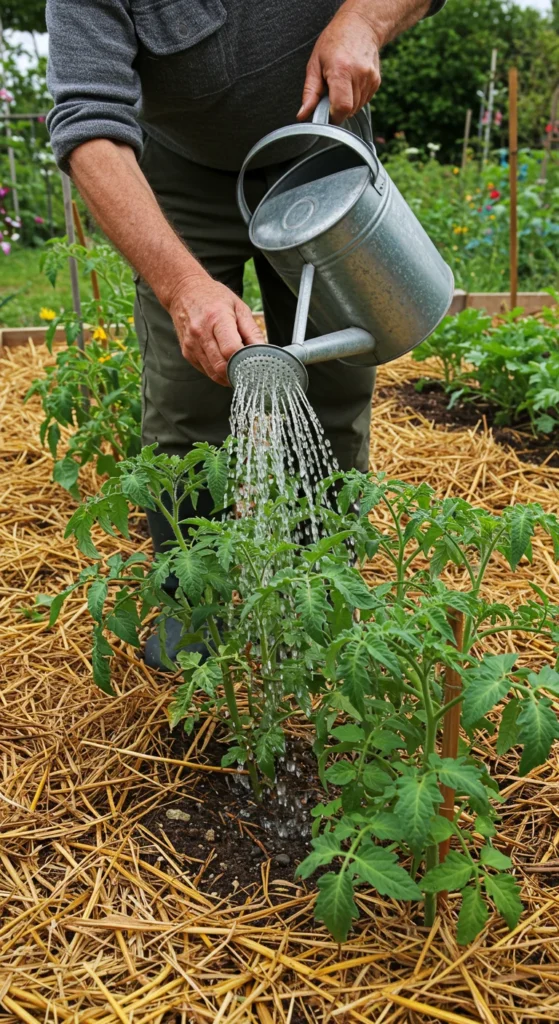
- Use a drip hose or watering can at the base (not the leaves).
- Mulch around plants to lock in moisture and prevent weeds.
Step 6: Support Your Plants
Tomatoes get heavy as they grow. Without support, they’ll sprawl on the ground and fruit may rot.
Options for support:
- Wooden stakes
- Tomato cages
- Trellises
Tie plants loosely with garden twine as they grow taller. This keeps fruit off the soil and makes harvesting easier.
Step 7: Feed for Bigger Harvests
Tomatoes are hungry plants. A little extra feeding goes a long way.
- Use a balanced tomato fertilizer every 2–3 weeks.
- Add crushed eggshells for calcium (helps prevent blossom end rot).
- Avoid too much nitrogen—it makes leafy plants but fewer fruits.
Step 8: Harvest at the Right Time
The reward for your patience is fresh, juicy tomatoes! Harvest when they’re fully colored, slightly soft, and easy to twist off the vine.
- Cherry tomatoes: bright red and firm.
- Romas: deep red, no green patches.
- Beefsteak: fully colored and slightly soft to the touch.
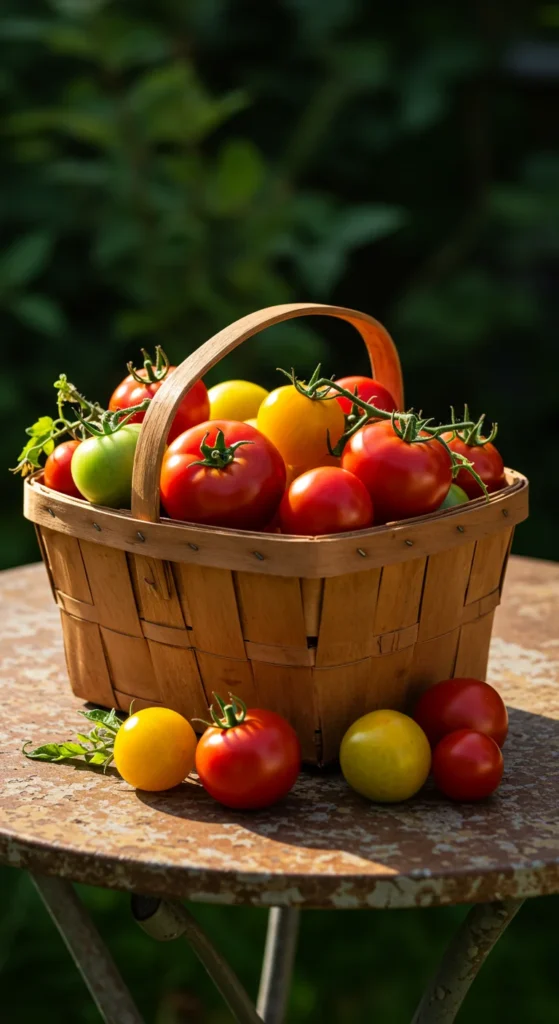
Final Takeaway
Growing juicy, foolproof tomatoes doesn’t require a green thumb—just sunlight, rich soil, regular watering, and a little patience. Once you taste your first homegrown tomato, you’ll wonder why you didn’t start sooner.

Leave a Reply