

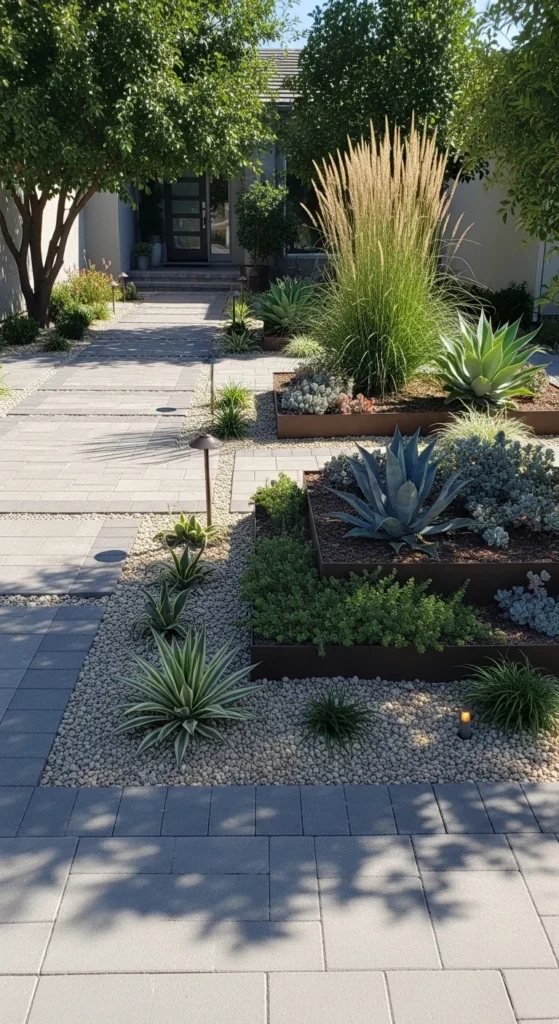
Front yard gardens set the tone before anyone steps inside. A good layout can look polished without constant watering, trimming, or fussy flowers. Today’s best front yard ideas lean into clean lines, waterwise plants, and simple hardscaping that stays neat through heat, wind, and busy weeks. The goal is a welcoming look that feels intentional from the street. Start with one “anchor” feature, repeat a few plants, and keep edges sharp. Small updates often make the biggest visual change.
1. Minimalist Paver Walk With Gravel Bands
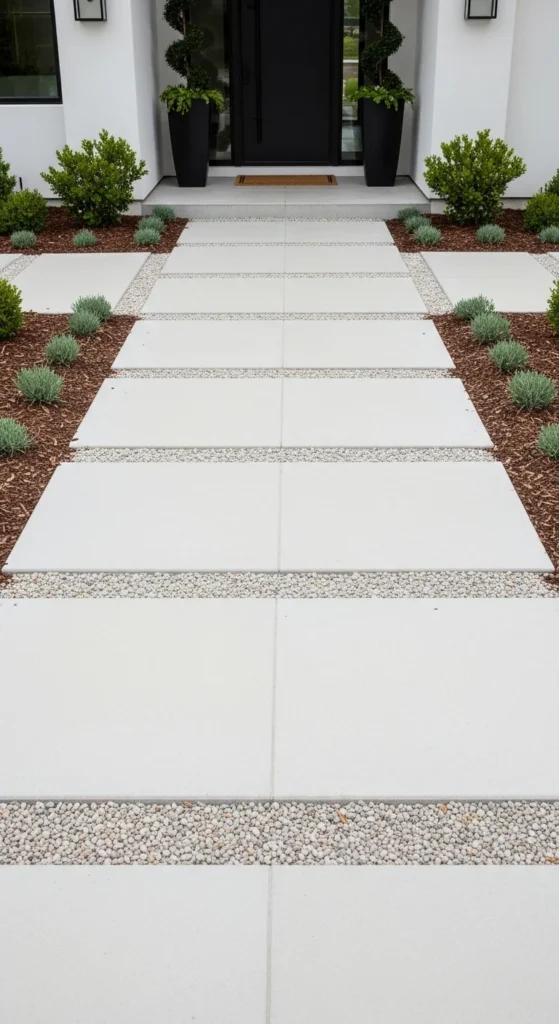
Clean pavers instantly modernize a front yard. The trick is spacing and repetition. Use large pavers in a straight line toward the door, then add gravel bands on both sides for a crisp frame. Gravel reads neat from the street and handles heat well.
For a budget version, use fewer pavers and create “stepping pad” sections with gravel between them. Outline with metal or brick edging so it stays sharp. Add two matching planters near the entry to reinforce symmetry.
Keep plant choices simple. Use one low ground cover along the edge and repeat it. A small yard looks calmer when you see the same shapes again and again. Sweep gravel back into place once a month, and the yard keeps its clean look without a lot of work.
2. Layered Planting for Narrow Yards
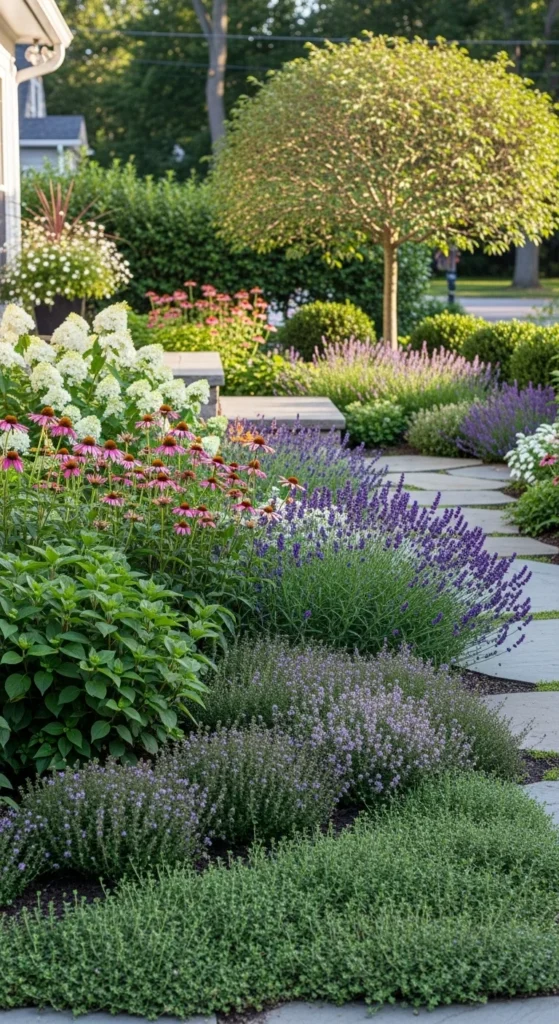
Layering makes a tight front yard look deeper. Start with a low ground cover in front, a mid-height row of shrubs behind it, and one taller accent in the back. This creates depth without crowding the walkway.
For savings, choose fewer plant types and repeat them. Three of the same shrub looks more polished than six different plants. Space plants according to their mature size so you do not have to cut them back every month.
Add mulch to keep soil cool and reduce weeds. If you want a modern look, use one mulch color throughout. A narrow yard often looks “busy” when materials change too often. Layering keeps the view structured and helps the home look framed instead of flat.
3. Drought-Tolerant Native Plant Pockets
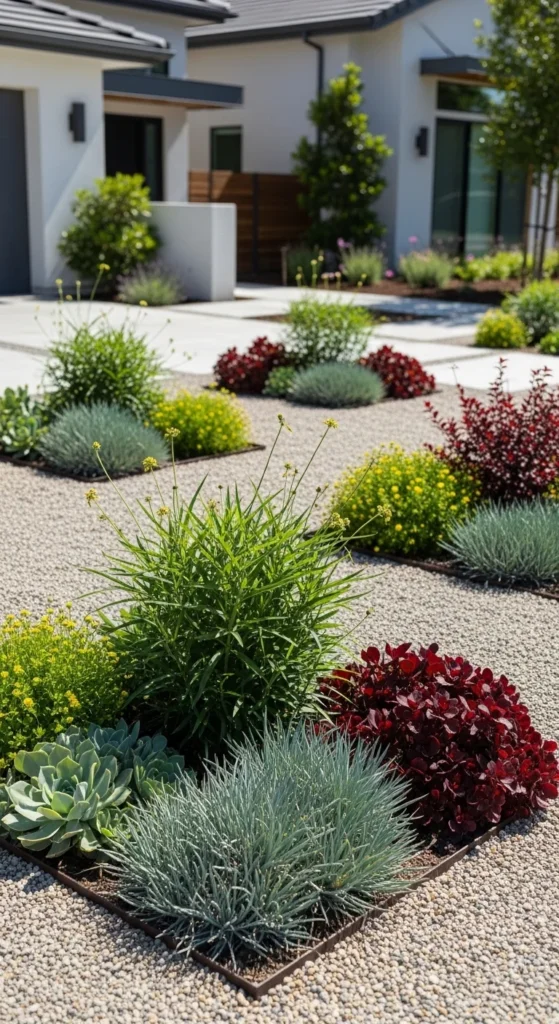
Native plants often handle local heat and dry spells better than thirsty ornamentals. Use them in small “pockets” rather than a huge mixed bed. Think clusters of three to five plants in one spot, then repeat the same pocket pattern down the yard.
Budget tip: buy smaller sizes and let them grow. It costs less and roots settle faster. Add drip tubing under mulch so water goes straight to the base.
Keep the look tidy with clear edges. A simple border—brick, stone, or metal—makes native planting feel intentional from the curb. Add one focal plant with a strong shape, like a spiky accent or a mound-form grass, then keep supporting plants softer and lower.
4. Trellis Accent on a Blank Wall
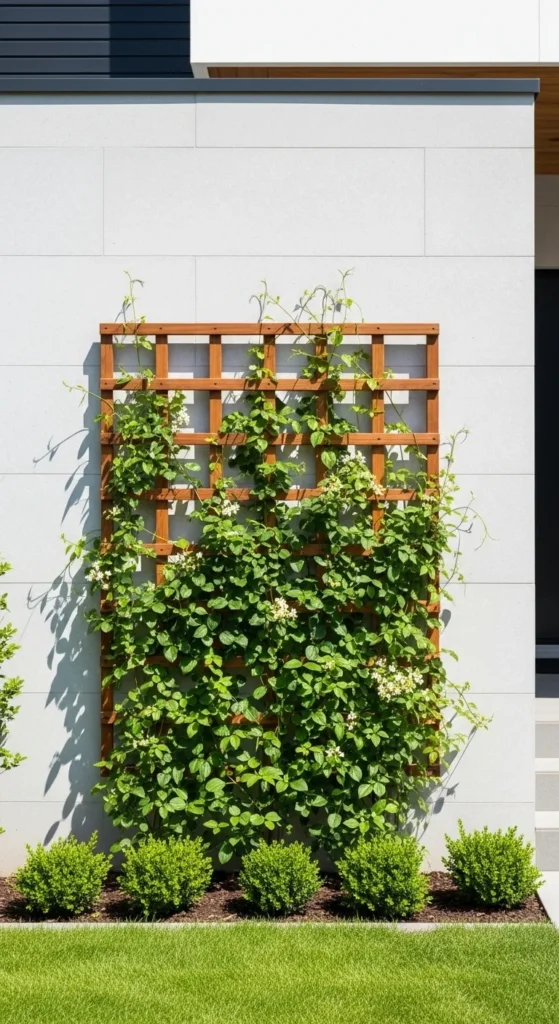
A trellis turns a plain wall into a vertical feature. It also draws the eye up, which makes small front yards feel taller. Choose a simple grid or slat design that matches the home style.
DIY option: mount a cattle panel or wood lattice on spacers so air can move behind it. Plant a climber at the base and guide it early with soft ties. Add a gravel strip under the trellis to keep splashes off the wall and reduce weeds.
Keep it clean by trimming side shoots that wander. A single trellis with one climber looks calmer than several competing vines. This is a great fix when the yard has little planting space but the facade feels empty.
5. Sidewalk Strip “Hellstrip” Perennial Row
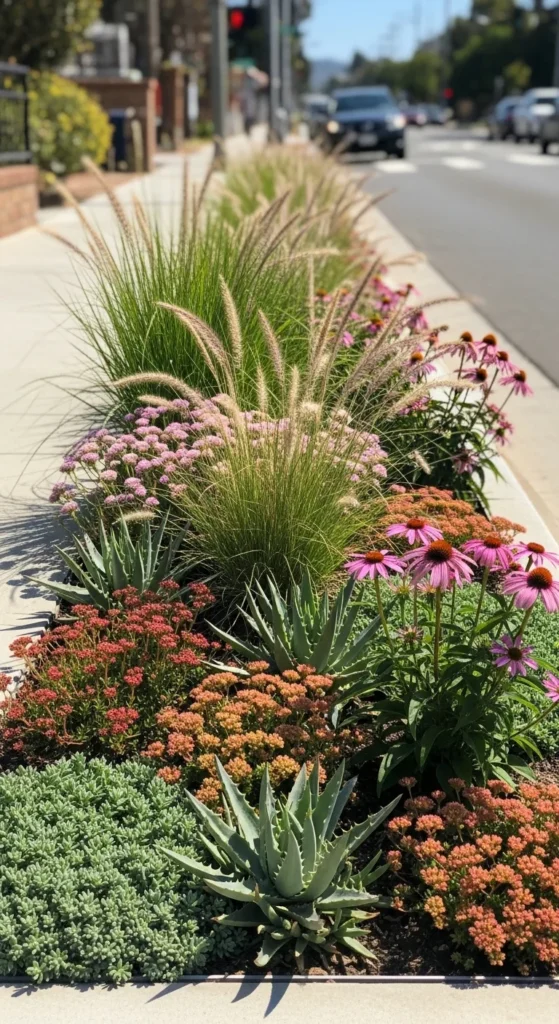
That narrow strip between sidewalk and curb can look rough fast. Plant it like a repeating ribbon. Choose tough perennials and low grasses that handle heat and foot traffic. Use a simple repeating pattern: plant, gap, plant, gap.
To keep costs down, plant small plugs and mulch well. Water deeply during the first weeks, then reduce watering once roots settle. Add a clean border along the sidewalk edge to stop soil spill.
Avoid tall, floppy plants that lean into the walkway. Keep everything low and tidy. A well-planted strip makes the whole front yard look cared for, even if the rest is simple.
6. Sculptural Grass Feature by the Walk
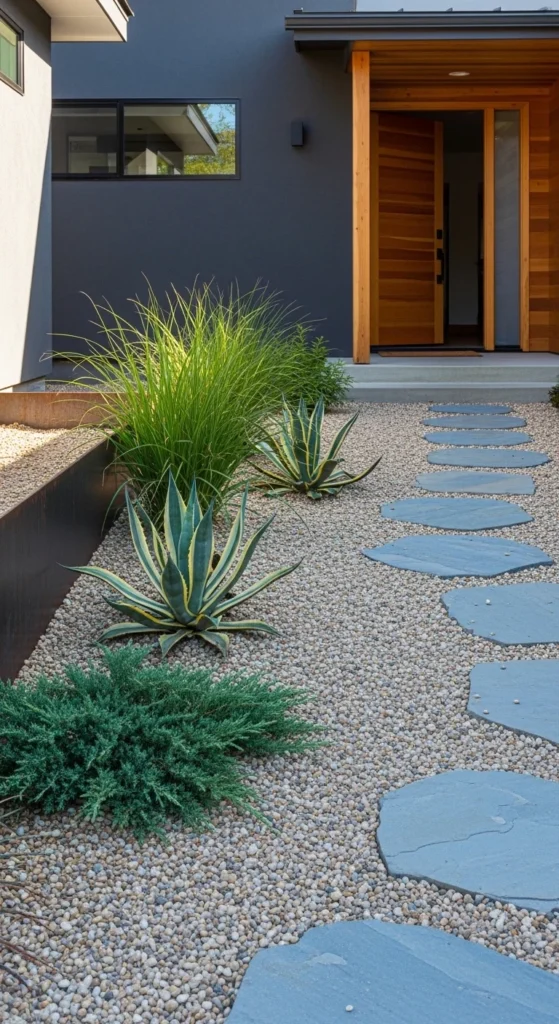
Ornamental grasses add movement without extra color clutter. One strong clump near the walkway can act like a living sculpture. Pair it with gravel or stone mulch for a modern feel.
For savings, buy one statement grass instead of many flowering plants. Surround it with a low ground cover that stays tight. Keep the area around the grass clean so the shape stands out.
Grasses often look good year-round. Trim once a year, usually at the end of winter, and you’re done. If your front yard feels flat, this is one of the quickest ways to add height and texture without adding work.
7. Permeable Gravel Entry Court
A gravel entry court looks modern and handles drainage well. It also reduces the amount of lawn you have to mow. Use compacted gravel for the main surface, then add stepping stones toward the door.
DIY approach: dig a shallow base, add a compacted layer, then top with gravel. Edge the court with metal or brick to keep it tidy. Add two matching planters near the door to make it feel finished.
Planting can stay minimal. Use a few drought-tolerant shrubs at the corners and one low ground cover along the edge. Sweep gravel back into place occasionally. This setup looks clean, works in hot climates, and stays low effort.
8. Monochromatic Green Plant Palette
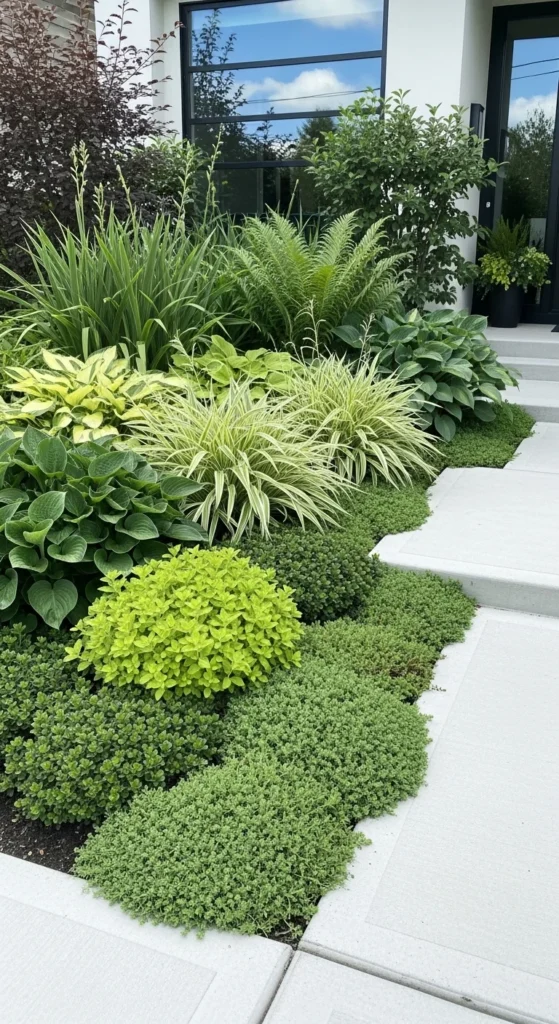
A green-only palette looks calm and modern. It also hides seasonal changes better than bright flowers. Mix textures instead of colors: fine grasses, glossy shrubs, and soft ground cover.
To keep it affordable, pick three plant types and repeat them. Place the same shrub shape on both sides of the walkway for balance. Use mulch in one color to keep the look unified.
Green palettes also look good with modern materials like concrete and gravel. If you want a little contrast, add one dark-leaf plant or one silver-leaf plant, but keep it limited. The street view will look organized, not busy.
9. Low LED Path Lights Along Edges
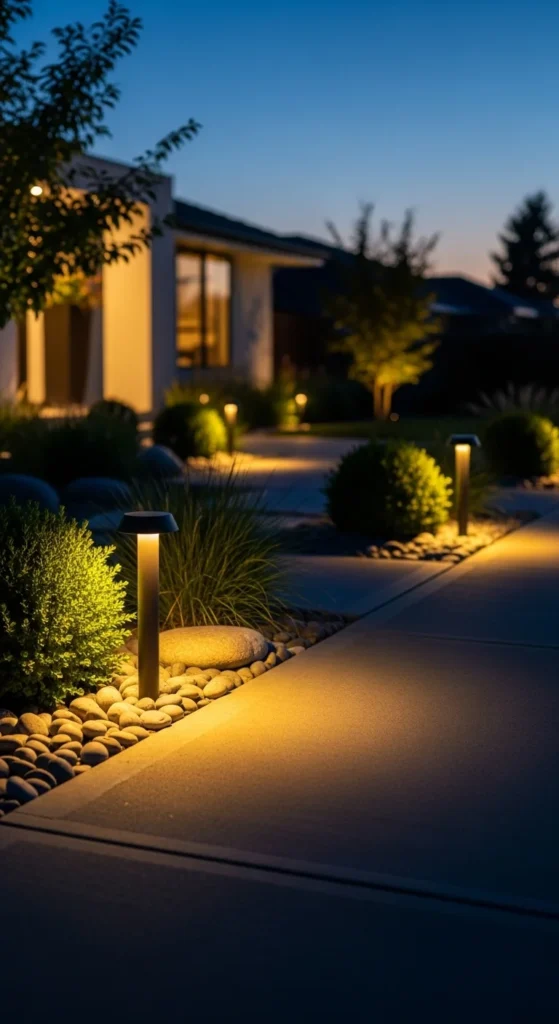
Lighting makes a front yard feel welcoming after dark. Small path lights along the walkway edges are enough. Choose warm-toned lights for a soft look.
Budget tip: solar lights work well if the area gets good sun. Space them evenly and keep the same style throughout. Mixed light styles look messy fast.
Use lighting to highlight structure. Place lights near steps, along curves, or near a focal plant. Trim plants so lights don’t get hidden. A simple lighting line can make even a basic front yard look intentional and cared for.
10. Matching Door Planters With Evergreen Structure
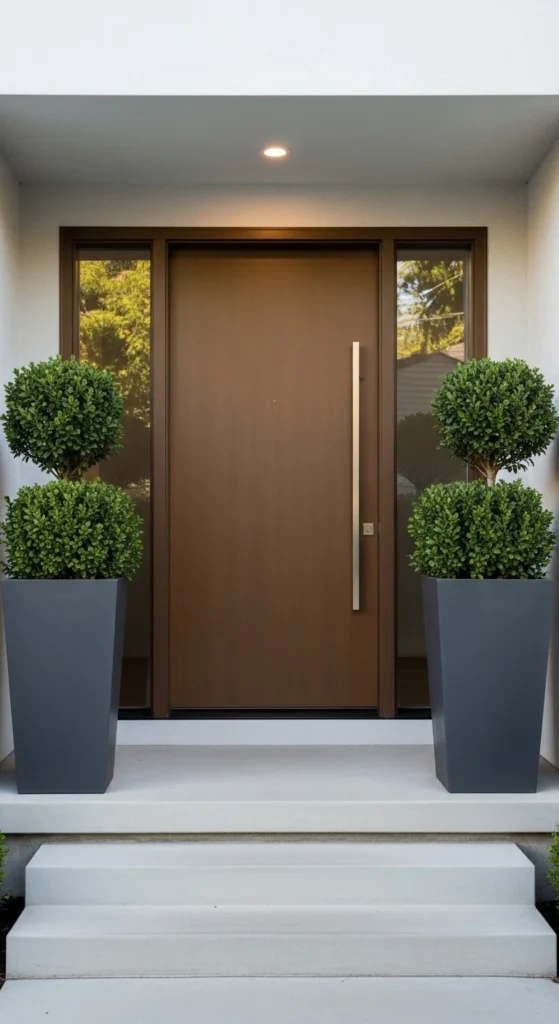
Two matching planters at the entry create instant symmetry. Evergreens keep the look stable all year. Choose pots that fit the home style—simple shapes work best for modern designs.
To save money, use sturdy plastic pots inside decorative covers. Plant one evergreen in each pot and underplant with a trailing plant for softness. Add mulch on top to reduce watering and keep soil neat.
This is one of the fastest changes you can make. It frames the doorway and makes the entrance feel finished. If your front yard is small, strong entry planters can carry the whole look with minimal planting elsewhere.
11. Fragrant Foundation Border With Lavender and Rosemary
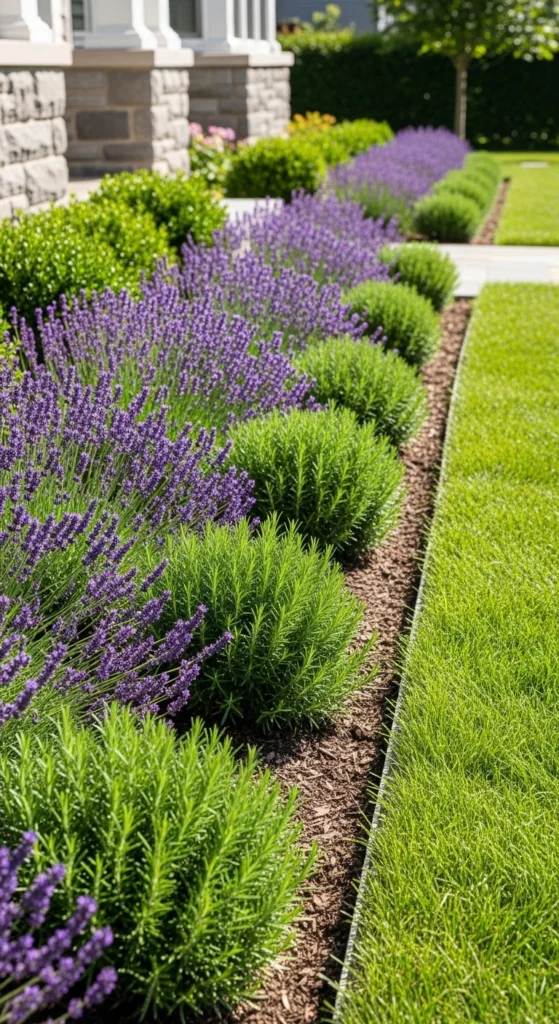
Fragrant borders make front yards feel inviting. Lavender and rosemary work well in sunny, dry spots. Plant them along the foundation or beside the walkway where people pass by.
Keep the line tidy with a simple edging strip. Space plants properly so airflow stays good and trimming stays easy. For a budget start, buy smaller plants and place them a little closer to fill gaps sooner, then thin later if needed.
Water deeply at first, then reduce watering once established. Add gravel or stone mulch for a clean look and to reduce weeds. This border smells great, looks neat, and holds up well in heat.
12. Compact Tree to Frame the House
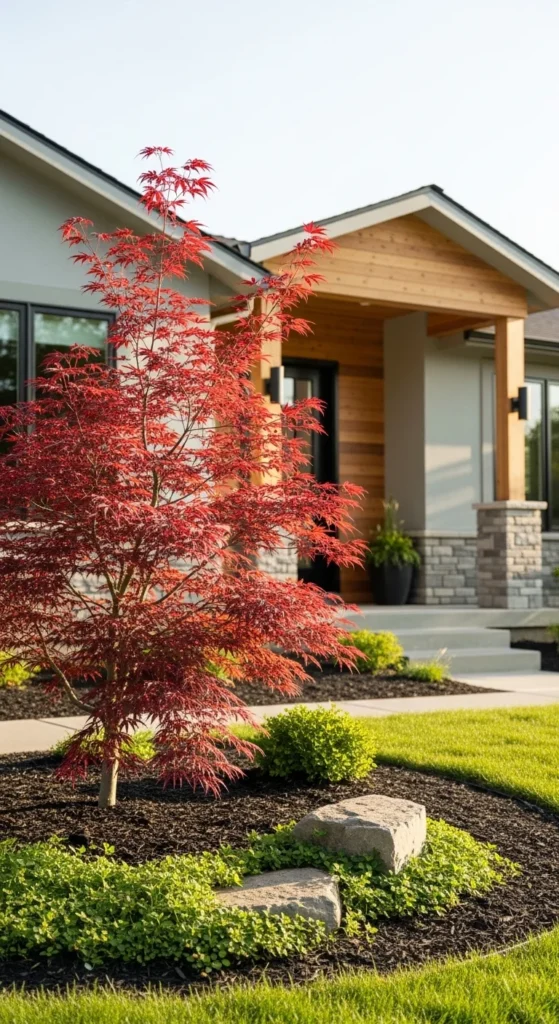
A small tree adds height and frames the facade. It can also soften a tall wall without taking much ground space. Choose a compact tree that fits your yard width.
Budget plan: buy a smaller tree and stake it properly for the first season. Add a mulch ring around the base and keep grass away from the trunk. Underplant with a low ground cover so the area looks finished.
Place the tree where it balances the house. One side of the yard often feels heavier than the other. A tree can fix that quickly. Keep pruning light and consistent so the canopy stays clean.
13. Stone Sphere or Simple Garden Sculpture
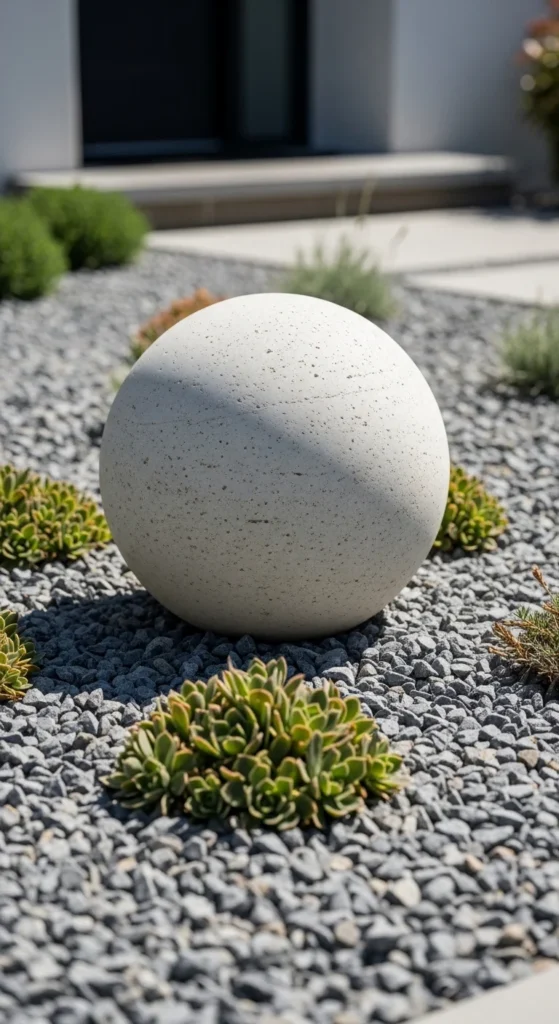
One simple sculpture adds a focal point without extra planting. Stone spheres, simple bowls, or a clean modern piece work well with minimal front yards.
For a budget version, use a large smooth rock from a landscape yard or a concrete sphere. Place it in gravel or mulch so it looks grounded. Add two or three low plants nearby to soften the base.
Keep it uncluttered. One focal piece looks stronger than many small ornaments. Place it where it can be seen from the street and from the walkway. This adds personality while keeping upkeep low.
14. Symmetry With Mirrored Planting Beds
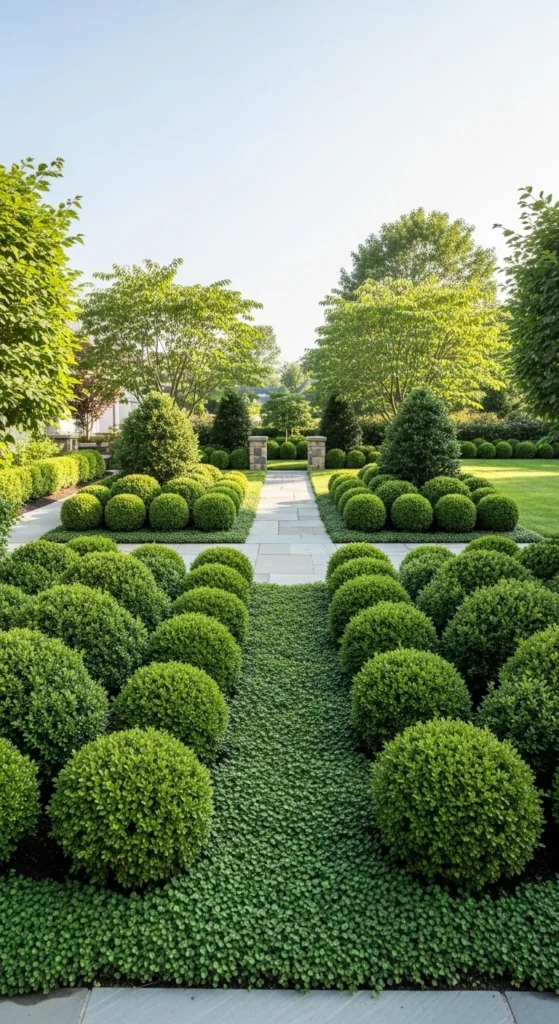
Symmetry makes front yards feel tidy. Mirror the bed shape on both sides of the walkway, then repeat the same plant types. This gives instant order, even if plants are simple.
Budget tip: buy fewer plant types in higher quantity. Repetition looks polished and often costs less than mixing many varieties. Use the same mulch and the same edging everywhere.
Keep the tallest plants closest to the house or at bed corners. Keep the lowest plants at the front edge. This makes the bed readable from the street. Symmetry is especially helpful for small front yards that can look cluttered fast.
15. Creeping Thyme Between Stepping Stones
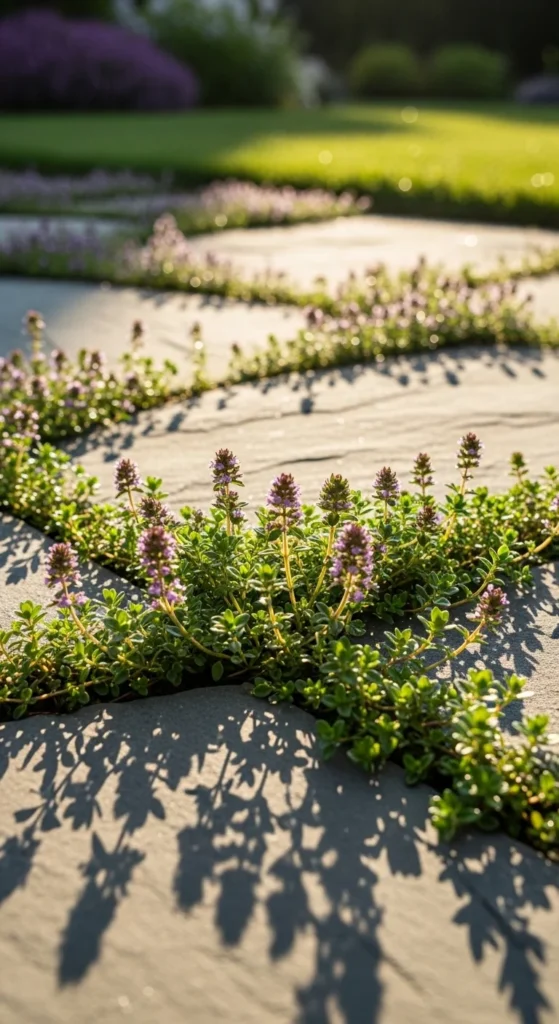
Creeping thyme fills gaps and softens hardscape lines. It stays low, looks tidy, and can handle light foot traffic. Use it between stepping stones or along a path edge.
For savings, plant small plugs in every other gap, then let it spread. Keep the soil a bit gritty so it drains well. Water lightly during the first weeks, then reduce watering once it settles.
Thyme also adds a pleasant scent when stepped on. It gives a premium look without adding high upkeep. This is a simple way to make a plain path look designed.
16. Low Hedge Line for a Clean Border
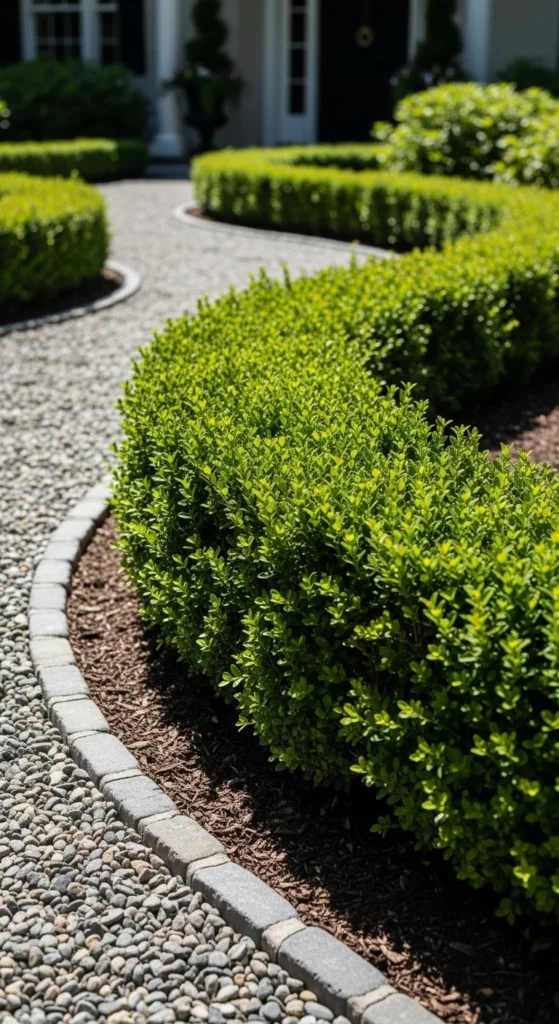
A low hedge acts like a living border. It keeps beds looking sharp and helps the yard feel structured. Choose a hedge plant that stays compact with light trimming.
Budget plan: start with a short run near the entry, not the whole yard. Even 8–10 feet can change the look. Mulch around it to reduce weeds and watering.
Pair the hedge with looser plants behind it. That contrast looks intentional and keeps the yard from feeling stiff. Trim lightly a few times a year, not constantly. The goal is a clean line, not a tight haircut every week.
17. Rain-Ready Dry Creek Bed
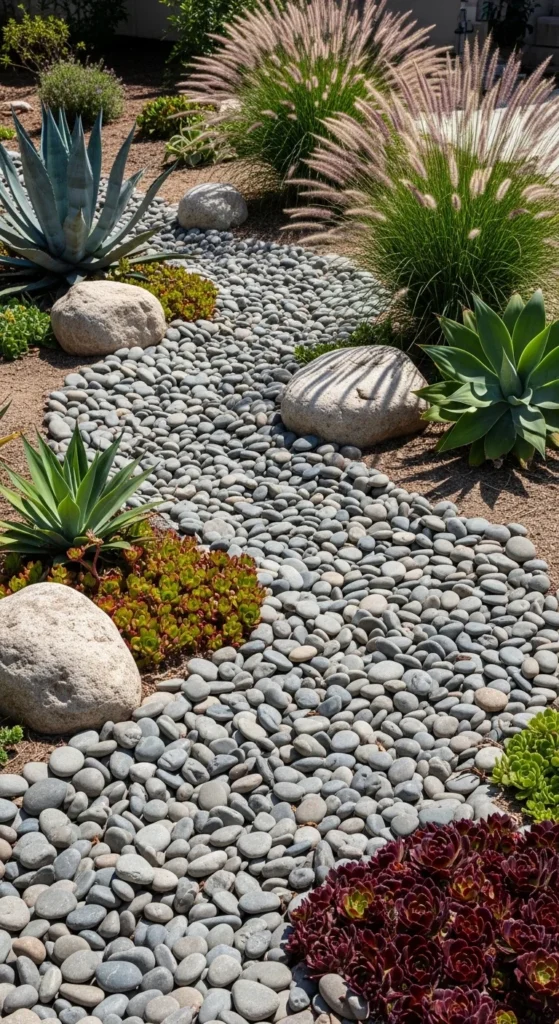
A dry creek bed manages runoff and adds style. It looks like a natural stone feature and helps move water away from the house. Place it where water already flows during rain.
DIY approach: dig a shallow channel, line it with fabric, and fill with mixed-size stones. Curve it slightly for a natural look. Add a few drought-tolerant plants along the edges.
This feature works well with gravel yards and modern designs. It also reduces muddy spots. It’s a practical upgrade that looks decorative year-round.
18. Mulched Plant Islands in a Lawn Patch
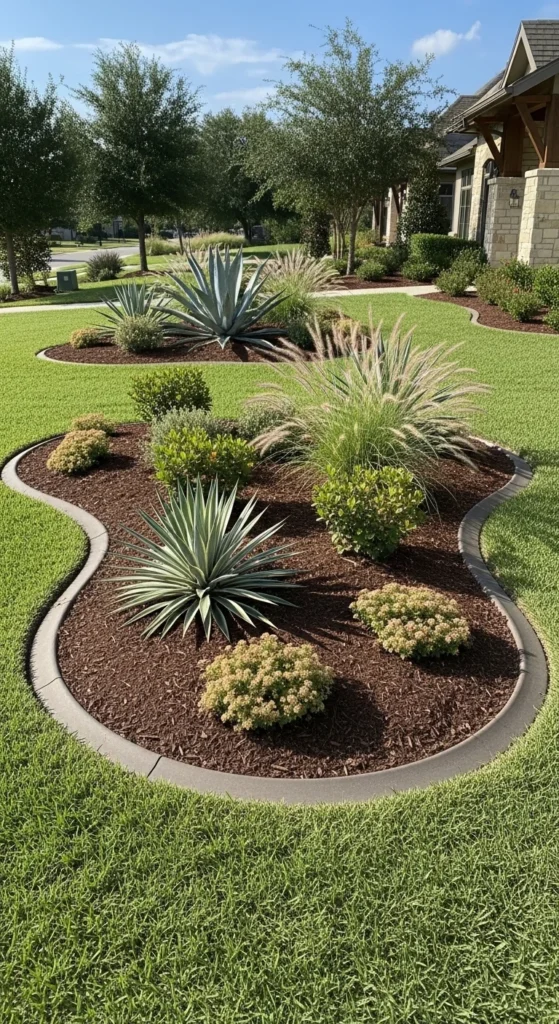
If you want to keep some lawn, break it up with plant islands. Two or three mulched islands reduce mowing and add interest. Use clean, curved edges so the islands look intentional.
Budget tip: start with one island near the walkway. Plant one focal grass, two shrubs, and a ground cover. Repeat those same plants in the next island later.
Mulch keeps soil cool and cuts weeds. Refresh the top layer once a year. Islands also let you improve the yard in stages. You get a better street view without removing the entire lawn at once.
19. Gravel + Large Boulders for Instant Structure
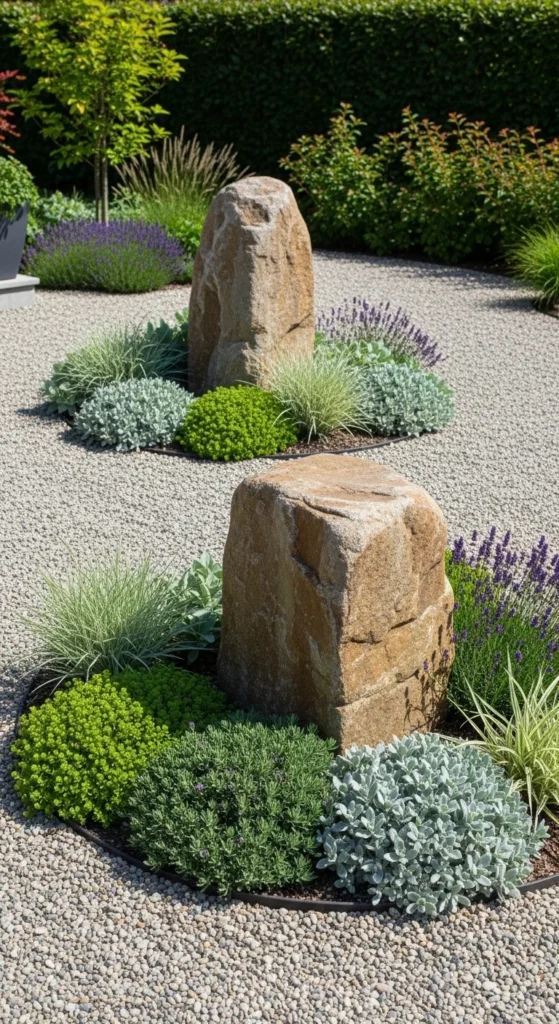
A few boulders can do the work of many plants. They add structure, look natural, and stay put in heat and wind. Place one larger boulder and one smaller one for balance.
For savings, choose local stone. It often costs less and looks more natural in the area. Set boulders partially into the soil so they look grounded, not placed on top.
Add a few low plants around the base. Keep plant choices simple. Gravel around the stones keeps the look clean and reduces weeds. This is a strong option for modern, waterwise front yards.
20. Entry Steps With Planting “Rails”
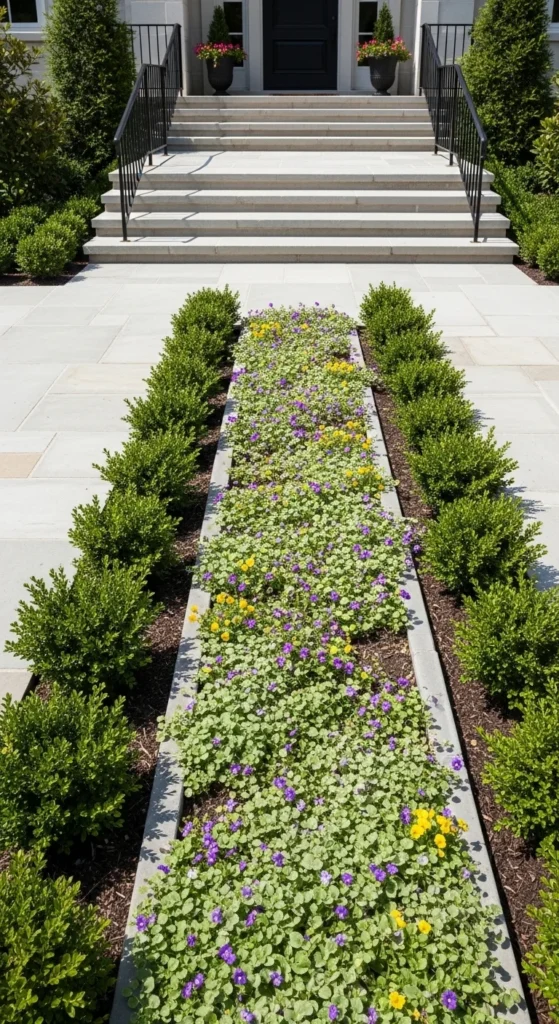
If your front yard has steps, treat the sides like rails. Plant narrow strips on both sides of the steps using the same plant repeated. It frames the entrance and looks tidy from the street.
Budget plan: pick one low shrub and one ground cover. Repeat them down the strip. Add mulch and a clean edge.
Keep plants low so they do not spill onto steps. This improves safety and looks neat. A framed stair entry makes the whole facade feel more welcoming, even if the rest of the yard stays simple.
21. Wall-Mounted Planters by the Porch
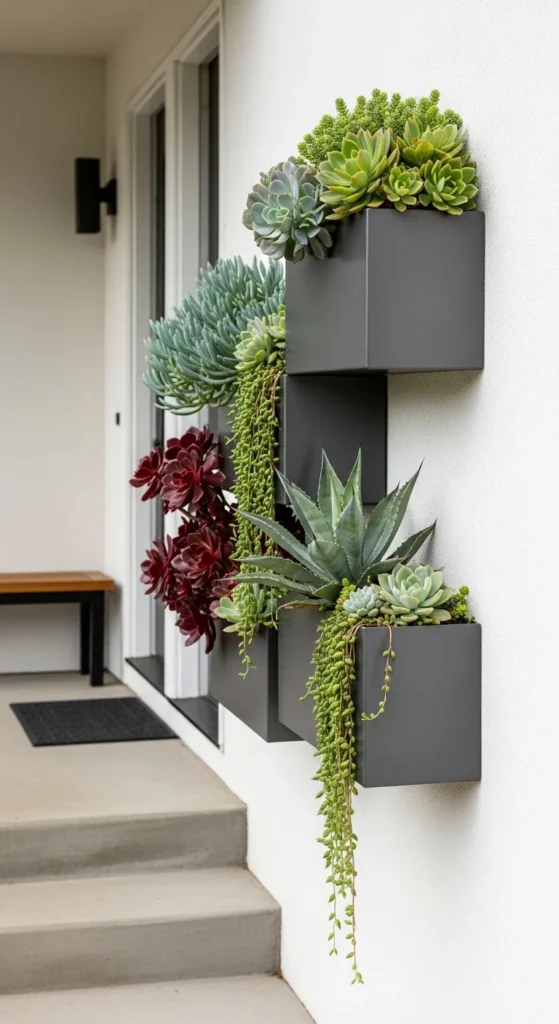
Wall planters add greenery without taking ground space. They work well near small porches and tight entry zones. Use two or three planters in a vertical line for a clean look.
For savings, use lightweight containers and a simple mounting rail. Plant with drought-tolerant choices that handle drying. Water with a small can so you don’t splash the wall.
Keep the arrangement symmetrical if your home style is modern. Repeat the same plant type in each planter for a tidy look. This is a strong fix when your entry feels bare but planting space is limited.
22. Hidden Drip Line Under Mulch
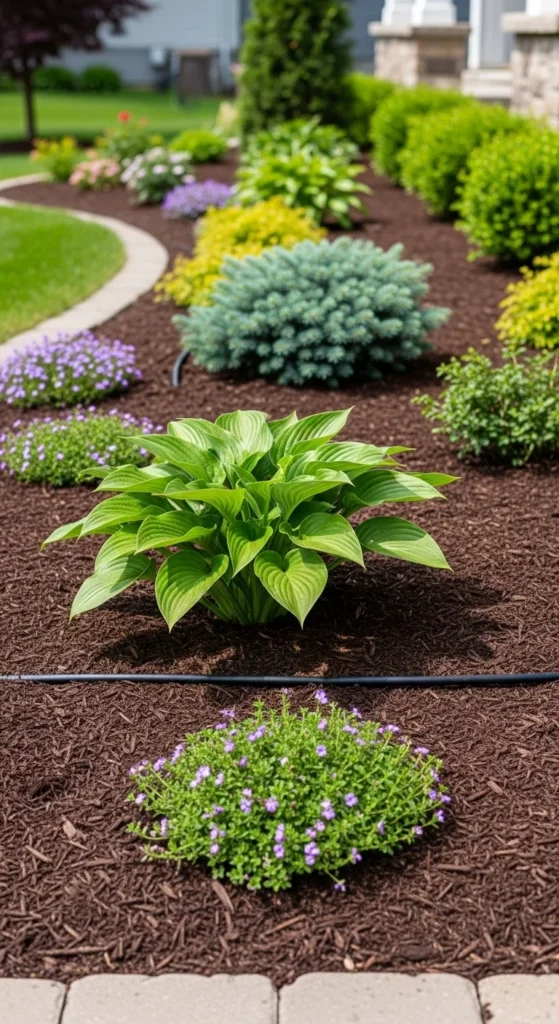
If you want a low-work yard, add drip irrigation under mulch. It waters the root zone directly and reduces wasted water. Start with one bed, not the whole yard.
DIY setup: connect a timer to a hose bib, run drip tubing through the bed, and cover with mulch. Use simple emitters near each plant base. Check flow once a week at first, then adjust.
This is a practical upgrade that makes drought-tolerant planting even easier. It also keeps the yard looking consistent during hot weeks, when hand-watering often gets skipped.
23. Simple Bench Nook Near the Entry
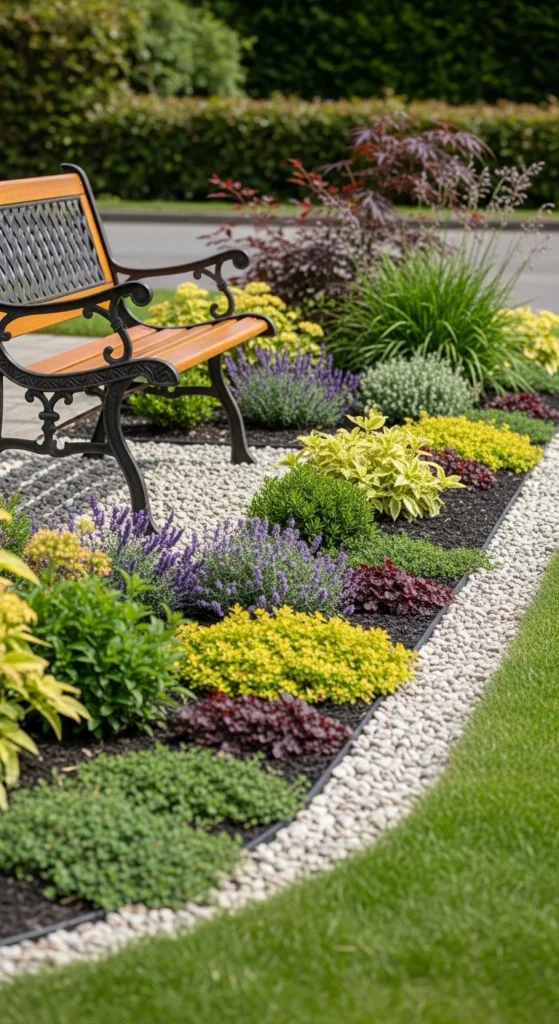
A small bench adds warmth and makes the front yard feel lived-in. Place it near the porch or along a path where it won’t block movement. Surround it with low plants so it feels tucked in, not stranded.
Budget tip: a basic wood bench works fine. Paint it a neutral color that matches the home trim. Add gravel underneath so shoes don’t drag mud onto the porch.
Keep planting simple around the bench. One grass clump plus a ground cover is enough. This adds a welcoming touch and still stays low effort.
24. “Three-Material Rule” for a Clean Modern Look
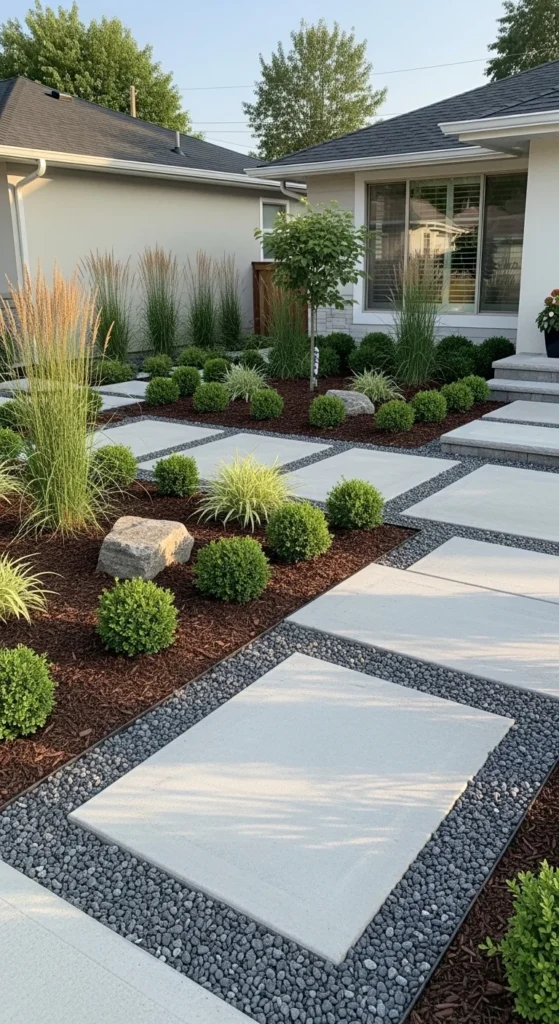
One reason front yards look messy is too many materials. Try the three-material rule: choose pavers, one gravel type, and one mulch type. Use them everywhere. Repeat the same edging and keep lines crisp.
Budget plan: if you already have concrete, keep it and add gravel and mulch only. Focus on edges first. Sharp edges make the yard look finished even before plants fill in.
Planting should match the simplicity. Pick a small set of plants and repeat them. This approach works in both urban and suburban settings and stays easy to maintain over time.
Conclusion
A great front yard is built on clear lines, repeated plant shapes, and materials that stay neat through heat and dry weather. Start with one visible change—entry planters, a clean path, a tidy sidewalk strip, or a simple gravel bed. Add drought-tolerant plants in repeated groups, keep edges sharp, and keep the palette calm. Small steps can quickly reshape the street view and make the entrance feel welcoming every day.
Leave a Reply