

Your front yard is the first thing people notice. Before they knock, before they step inside—your garden has already made an impression. A well-designed front yard doesn’t just look pretty; it tells a story about your home and instantly boosts curb appeal.
The best part? You don’t need a landscape architect or a massive budget to make it work.
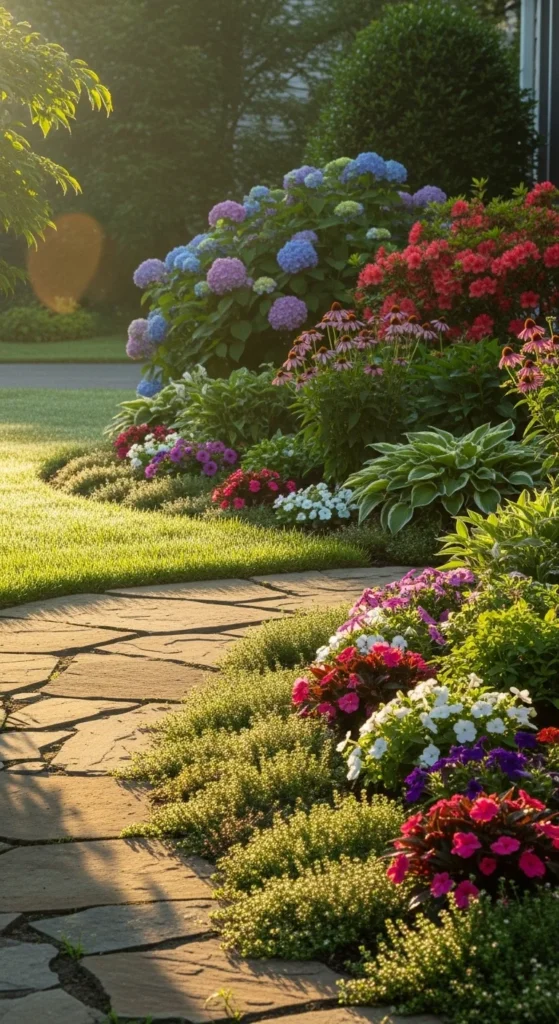
Whether you’re starting from scratch or refreshing what you already have, this guide will help you design a front yard garden that feels intentional, inviting, and unforgettable.
Start With a Clear Plan (Before Buying Plants)
One of the biggest mistakes people make is planting first and planning later. A strong design always starts with a clear vision.
Before you dig:
- Look at your yard from the street
- Note sunny vs. shady areas
- Identify slopes, walkways, and entry points
- Decide how much maintenance you want
Ask yourself:
Do you want something neat and structured, or soft and natural? Your answer will guide every choice that follows.
Frame the House, Don’t Hide It
Your garden should complement your home—not compete with it.
Design tips that work:
- Keep taller plants closer to walls
- Use lower plants along paths and borders
- Leave windows and doors visually open
- Match plant scale to house size
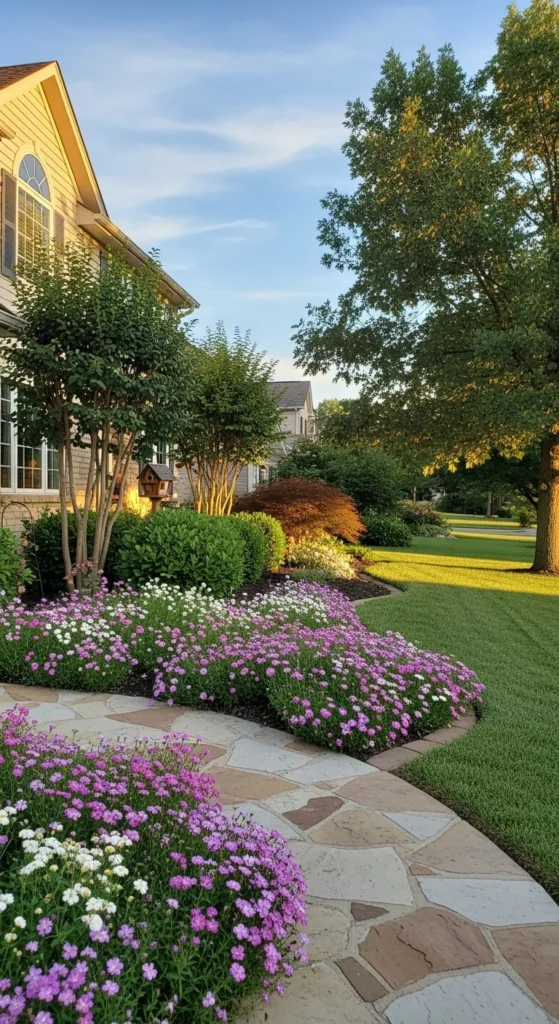
Think of plants like a picture frame. They should highlight the house, not block it.
Create Layers for Depth and Visual Interest
Layering is what makes a front yard look “designed” instead of random.
A simple layering formula:
- Back layer: small trees or tall shrubs
- Middle layer: medium shrubs or grasses
- Front layer: ground cover, flowers, or edging plants
This creates depth, texture, and year-round appeal—even when flowers aren’t blooming.
Choose a Simple, Cohesive Color Palette
Too many colors can feel chaotic. A limited palette looks polished and timeless.
Easy color strategies:
- Green + white for a clean, elegant look
- Green + one accent color (purple, yellow, or pink)
- Soft neutrals with seasonal pops
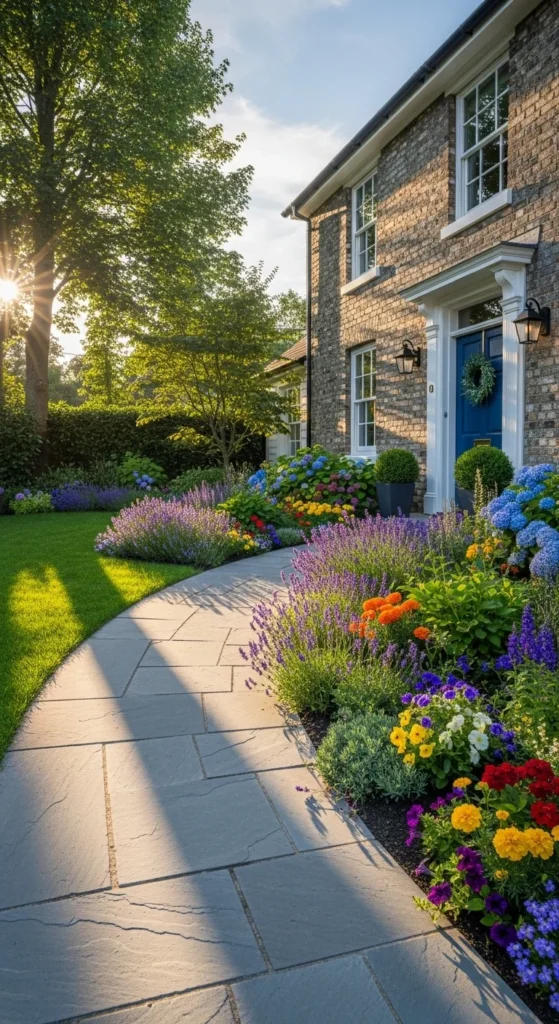
You can always add seasonal color later with annuals or planters.
Use Pathways to Guide the Eye (and Feet)
A clear path instantly makes a yard feel welcoming.
Popular pathway options:
- Stone or brick pavers
- Gravel with edging
- Concrete stepping stones
Design tips:
- Slight curves feel more natural than straight lines
- Line paths with low plants or lights
- Keep it wide enough for two people
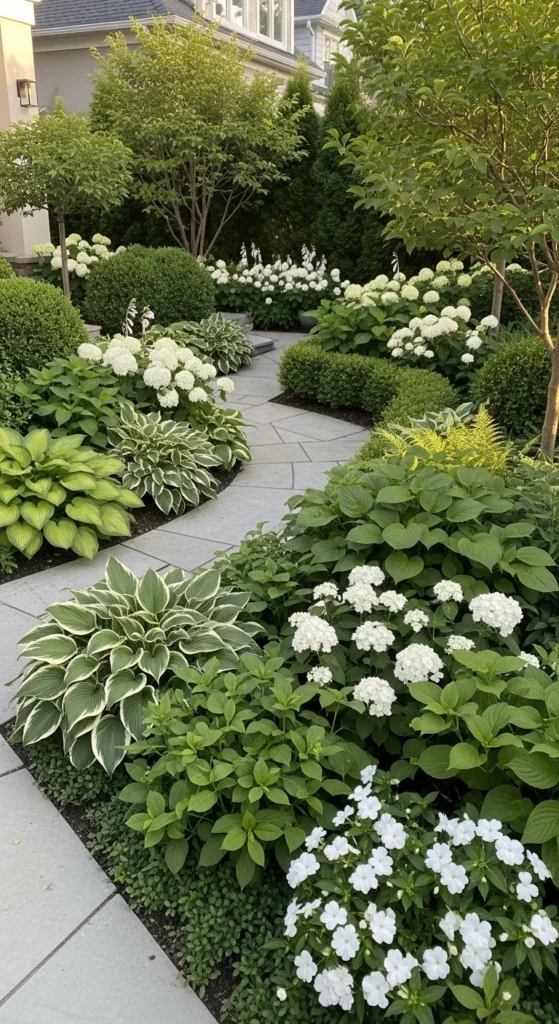
A good path draws people in—literally and visually.
Mix Plant Textures, Not Just Plant Types
Texture matters as much as color.
Try combining:
- Fine leaves with broad leaves
- Soft grasses with structured shrubs
- Glossy foliage with matte greens
This contrast keeps the garden interesting even when nothing is in bloom.
Add One Strong Focal Point
Every impressive front yard has something that anchors the design.
Great focal point ideas:
- A small ornamental tree
- A statement planter
- A birdbath or garden sculpture
- A bold cluster of shrubs
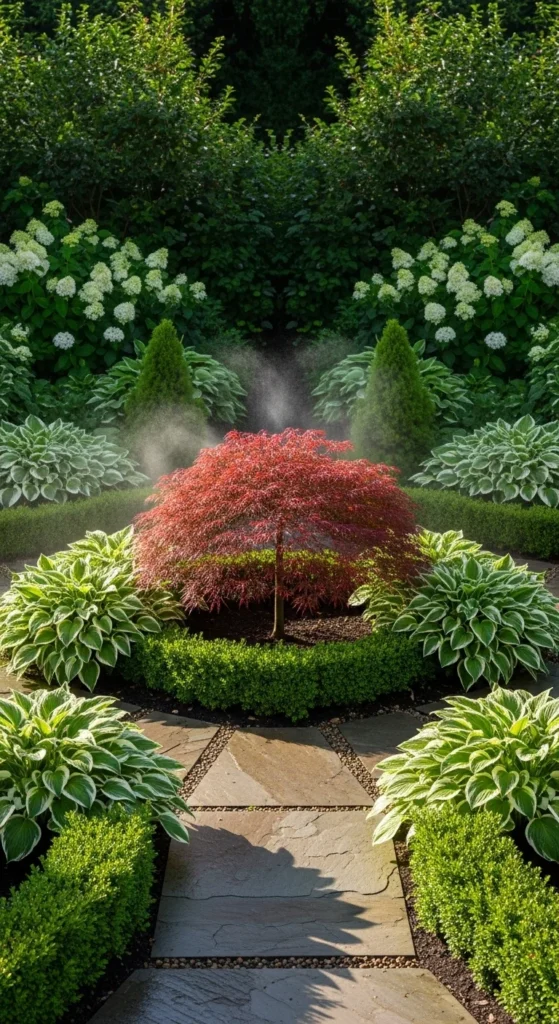
Keep it simple. One focal point is powerful—too many dilute the effect.
Don’t Forget About Year-Round Appeal
A front yard shouldn’t only look good for one season.
Design for all year:
- Evergreens for winter structure
- Shrubs with interesting bark
- Plants with fall color
- Perennials that return every year
This ensures your garden always looks cared for—even in the off-season.
Light It Softly for Evening Curb Appeal
Lighting turns a good garden into a great one.
Simple lighting ideas:
- Solar path lights
- Low uplighting on trees
- Warm porch lighting
Soft lighting adds safety, warmth, and serious nighttime charm.
Common Front Yard Design Mistakes to Avoid
Skip these pitfalls:
- Planting too close together
- Ignoring mature plant size
- Overusing mulch with no plants
- Mixing too many styles
Less really is more when it comes to front yard design.
Final Takeaway: Design With Intention, Not Perfection 🌿
An impressive front yard isn’t about fancy plants or perfect symmetry. It’s about thoughtful choices, balance, and a design that feels welcoming from the street.
Start small. Build in layers. Let it grow with time.
✨ Save this guide for later and start designing a front yard that truly makes an impression.

Leave a Reply