

Living in a small apartment doesn’t mean you have to give up on gardening. In fact, a balcony—no matter how tiny—can become a peaceful green escape with the right approach. A few thoughtfully placed pots can turn concrete and railings into a space full of life, color, and even fresh food.
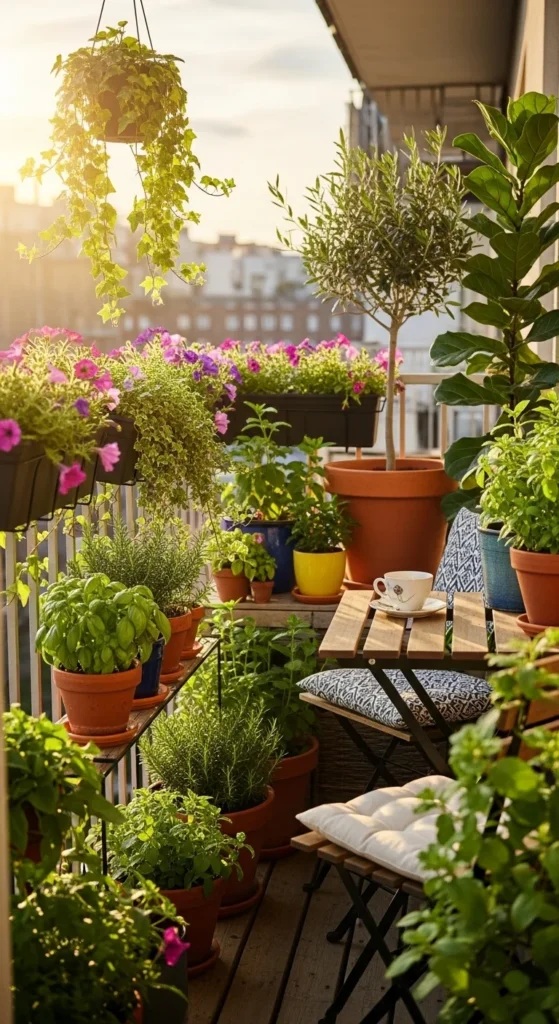
Whether you want herbs for cooking, flowers for beauty, or greenery for calm, balcony gardening is more doable than you think. Let’s break it down into simple, practical steps that work for small spaces.
Understand Your Balcony’s Light and Space
Before buying plants or pots, spend a few days observing your balcony. Light exposure is the most important factor in deciding what you can grow.
Ask yourself:
- How many hours of sunlight does the balcony get?
- Is it morning sun, afternoon sun, or mostly shade?
- Is the balcony windy or protected?
General guidance:
- Full sun (5–6 hours): Tomatoes, chilies, basil, flowering plants
- Partial sun (3–4 hours): Lettuce, spinach, mint
- Low light: Ferns, pothos, snake plants
Knowing this upfront saves money and frustration later.
Choose Containers That Fit Small Spaces
In a small balcony, bulky pots can quickly overwhelm the area. The goal is to grow more using less floor space.
Smart container choices include:
- Vertical planters
- Hanging baskets
- Railing-mounted pots
- Slim rectangular planters
Always make sure containers have drainage holes to prevent water buildup.
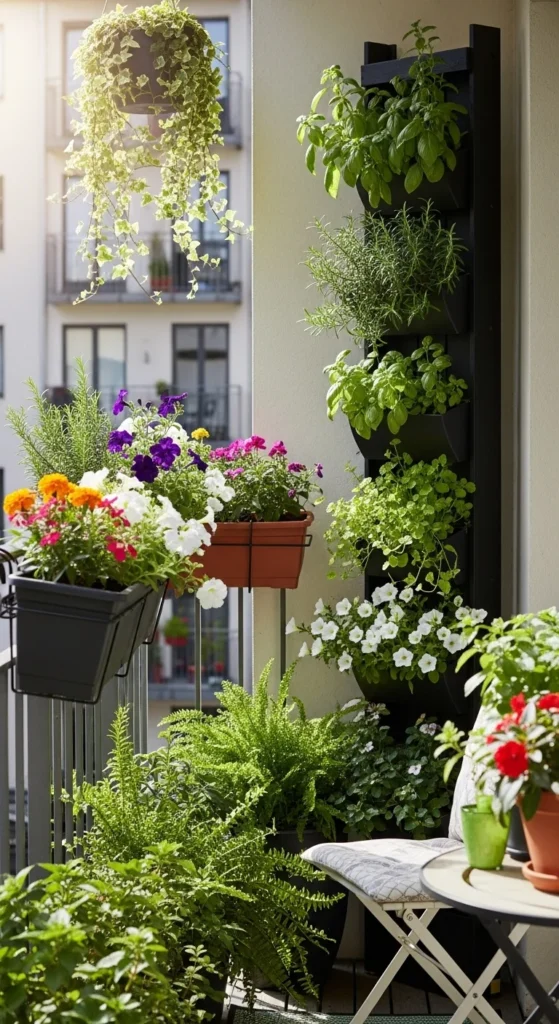
Use lightweight materials like plastic or fabric grow bags to reduce weight, especially in high-rise apartments.
Use Lightweight, Well-Draining Soil
Balcony plants rely completely on you for water and nutrients, so soil quality matters.
Use:
- Potting mix designed for containers
- Soil that drains well but retains some moisture
You can improve store-bought soil by mixing in:
- Compost for nutrients
- Coco coir for moisture retention
- Perlite or sand for better drainage
Avoid heavy garden soil—it compacts easily and suffocates roots in containers.
Pick Plants That Thrive in Containers
Not all plants are suited for balcony life. Choose varieties that stay compact and grow well in pots.
Great balcony-friendly plants:
- Herbs: Basil, mint, parsley, coriander
- Vegetables: Cherry tomatoes, chilies, green onions
- Flowers: Petunias, marigolds, geraniums
- Foliage: Snake plant, spider plant, pothos
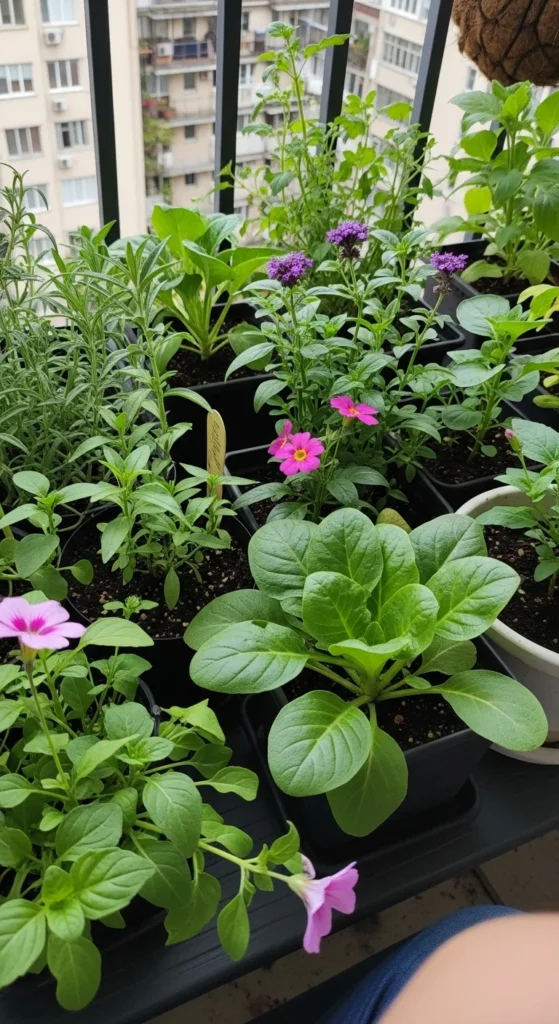
Focus on plants you’ll actually use or enjoy—it keeps motivation high.
Water Carefully and Consistently
Balcony plants dry out faster than ground gardens, especially in warm weather.
Watering tips:
- Check soil moisture daily
- Water early morning or evening
- Let excess water drain fully
Signs of overwatering:
- Yellow leaves
- Mushy stems
Signs of underwatering:
- Wilting
- Dry, pulling-away soil
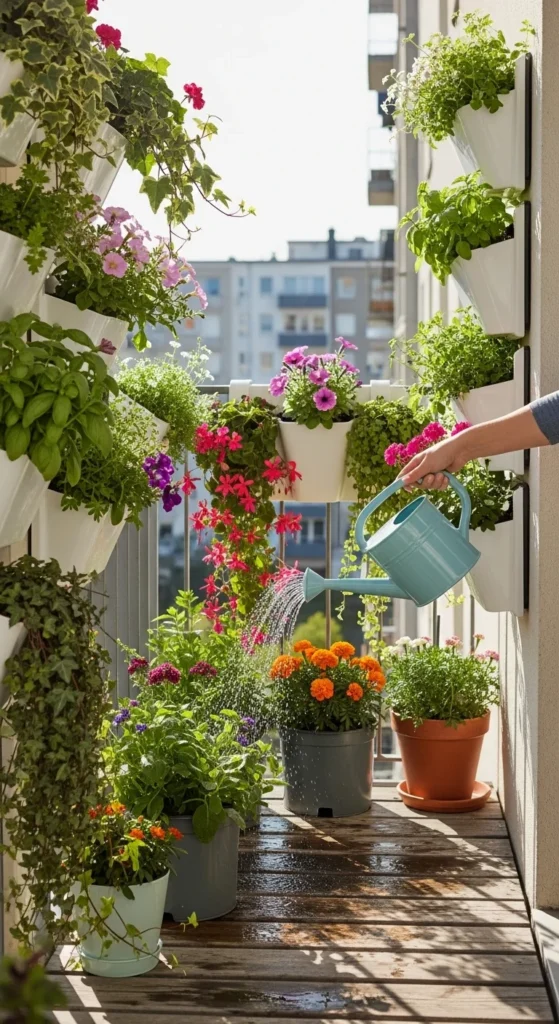
Consistency matters more than quantity.
Feed Plants Regularly
Since nutrients wash out of containers quickly, feeding is essential.
Easy feeding options:
- Liquid fertilizer every 2–3 weeks
- Vermicompost or compost top-ups
- Slow-release fertilizer mixed into soil
Avoid overfeeding—slow, steady growth is healthier for balcony plants.
Arrange Plants for Beauty and Balance
A balcony garden should feel relaxing, not crowded.
Design tips:
- Place taller plants at the back or corners
- Use trailing plants to soften edges
- Group plants in odd numbers for a natural look
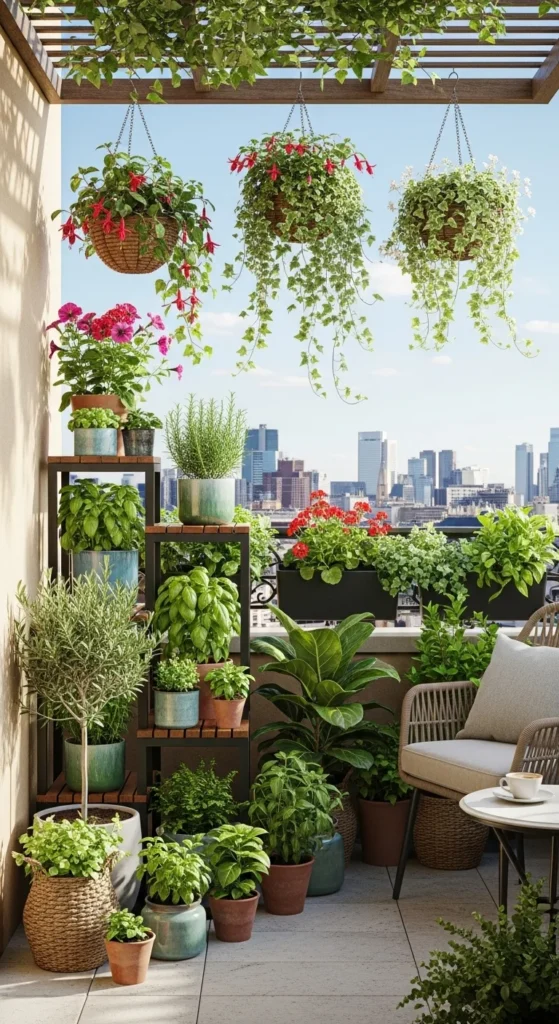
Leave some open space so the balcony feels airy and usable.
Protect Plants From Heat and Wind
Balconies can get hotter and windier than ground-level gardens.
Simple protections:
- Use shade cloth during extreme heat
- Move pots away from harsh afternoon sun
- Secure lightweight containers against strong wind
Moving pots around is one of the biggest advantages of balcony gardening—use it to your benefit.
Final Takeaway 🌿
Growing a balcony garden in a small apartment is about smart choices, not square footage. With the right containers, suitable plants, good soil, and regular care, even the smallest balcony can become a green retreat you’ll love spending time in.
Start with a few pots, learn what works in your space, and build from there.
Save this guide for later and come back whenever you’re ready to refresh your balcony garden! 🌱
Leave a Reply