

There’s nothing quite like watching tiny seeds turn into colorful blooms you grew yourself. Growing flowers from seeds isn’t just budget-friendly—it’s deeply satisfying. From the first sprouts to the final burst of color, you’re part of every stage of the journey. And the best part? You don’t need fancy tools or years of experience to succeed.
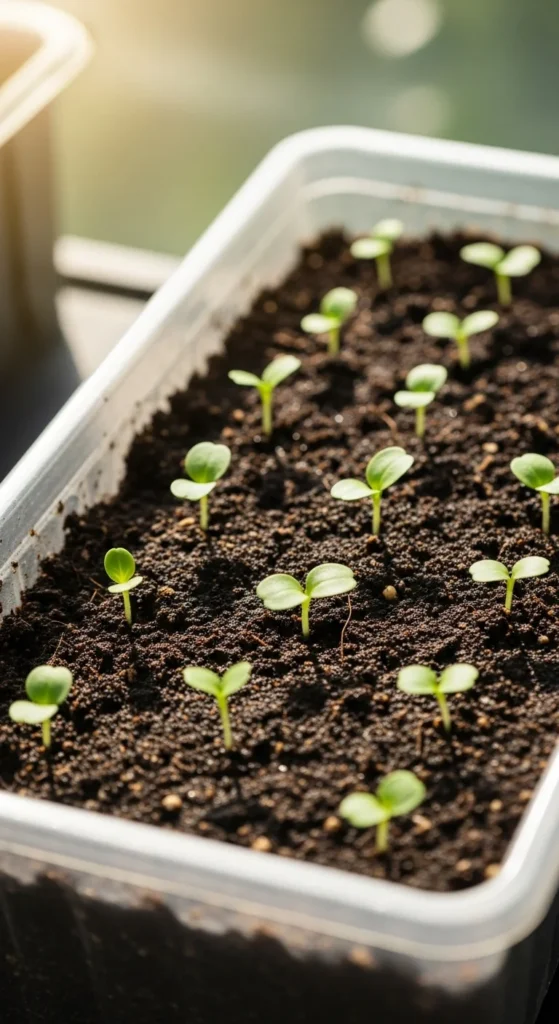
If you’ve tried growing flowers from seeds before and felt discouraged, don’t worry. With the right steps and a little patience, anyone can do it. Let’s walk through how to grow flowers from seeds successfully—from start to bloom.
Choose the Right Flower Seeds
Success starts with picking the right seeds. Some flowers are naturally easier to grow, especially for beginners.
Great beginner-friendly flowers include:
- Sunflowers
- Zinnias
- Cosmos
- Marigolds
- Nasturtiums
Before buying seeds, check:
- Whether the flower is annual or perennial
- Sunlight requirements
- Recommended planting season for your climate
Starting with reliable, fast-growing flowers builds confidence and keeps motivation high.
Know When to Start Seeds
Timing matters more than many gardeners realize. Starting seeds too early or too late can slow growth or reduce blooms.
General guidelines:
- Start seeds indoors 4–8 weeks before the last frost
- Direct sow seeds outdoors once temperatures are stable
- Warm-season flowers prefer soil that’s already warm
Seed packets usually include timing instructions—follow them closely for best results.
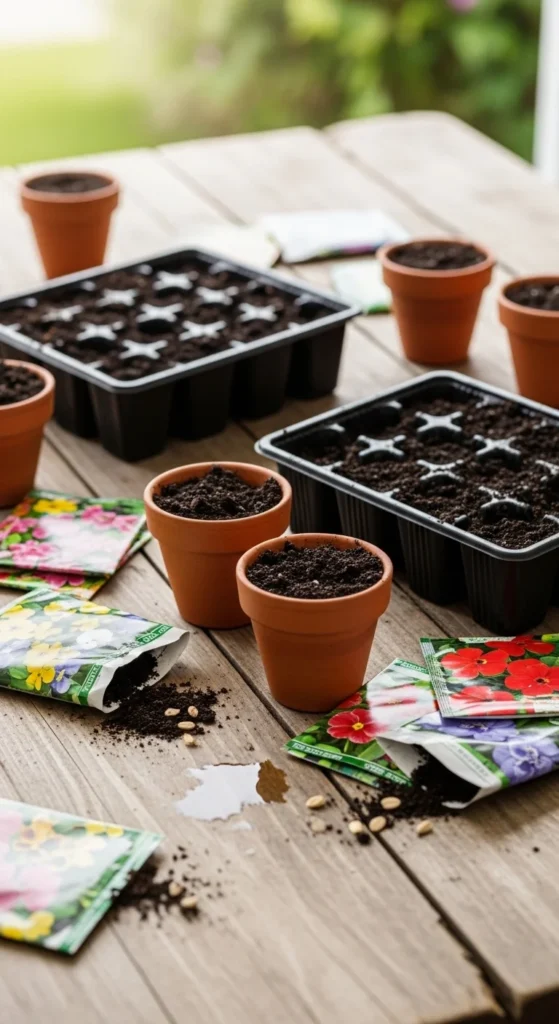
Use the Right Containers and Soil
Seeds need light, airy soil to germinate properly. Heavy garden soil can block growth and retain too much moisture.
What works best:
- Seed trays, small pots, or recycled containers with drainage holes
- Lightweight seed-starting mix or fine potting soil
- Clean containers to prevent disease
Fill containers loosely and level the surface without pressing too firmly.
Plant Seeds at the Correct Depth
One of the most common mistakes is planting seeds too deep. Most flower seeds need light or shallow coverage to sprout.
Planting tips:
- Tiny seeds: Press gently onto soil surface
- Medium seeds: Cover lightly with soil
- Large seeds: Plant deeper according to packet instructions
After planting, mist gently to avoid washing seeds away.
Water Carefully and Consistently
Seeds need moisture to germinate—but too much water can cause rot.
Best watering habits:
- Keep soil evenly moist, not soggy
- Use a spray bottle or gentle watering can
- Water from the bottom if possible
Signs of trouble:
- Mold on soil = too much moisture
- Dry crust on soil = not enough water
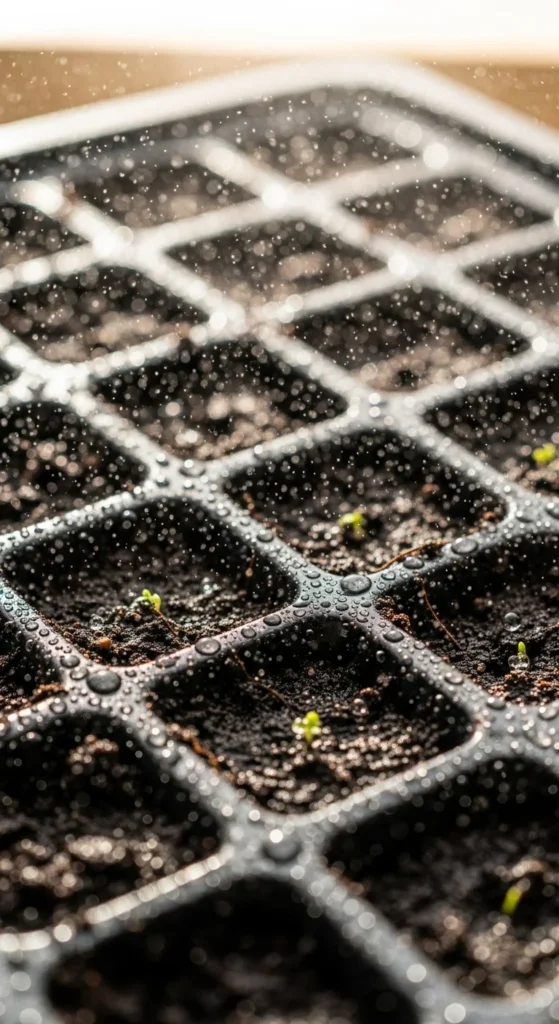
Consistency is key during the early stages.
Give Seedlings Enough Light
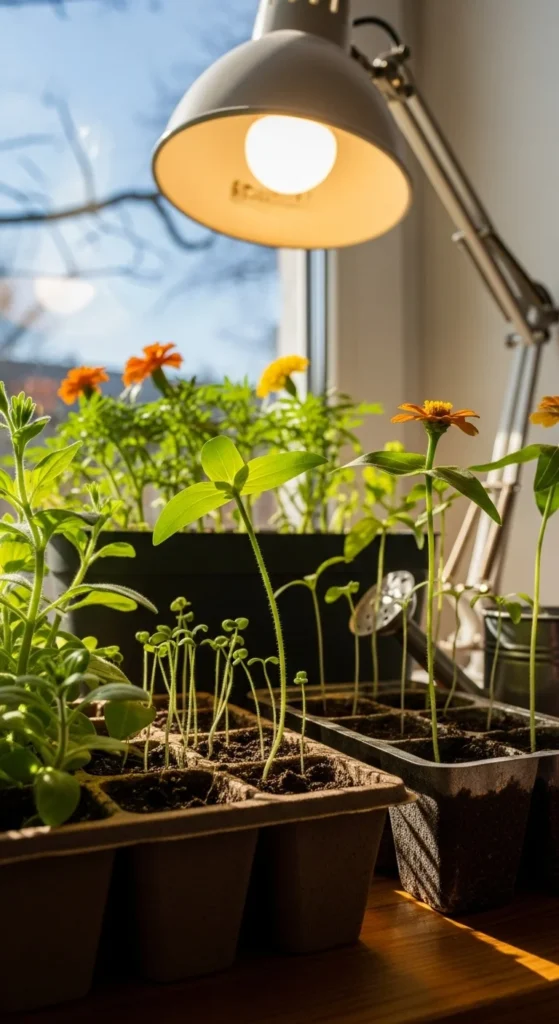
Once seedlings emerge, light becomes critical. Without enough light, seedlings stretch and become weak.
Light tips:
- Place seedlings near a bright window
- Rotate trays daily for even growth
- Use grow lights if natural light is limited
Seedlings should receive 12–16 hours of light per day for strong stems and healthy leaves.
Thin and Transplant Seedlings Properly
When seedlings grow close together, thinning is essential—even though it feels tough.
Why thinning helps:
- Prevents overcrowding
- Improves airflow
- Encourages stronger growth
Once seedlings develop a few true leaves:
- Remove weaker sprouts
- Transplant strong ones into larger pots
- Handle by leaves, not stems
This step sets the foundation for full, healthy plants later.
Harden Off Before Moving Outdoors
Seedlings raised indoors need time to adjust to outdoor conditions.
Hardening-off steps:
- Start with 1–2 hours outside daily
- Gradually increase exposure over a week
- Avoid strong wind or harsh sun at first
This process reduces shock and improves survival rates.
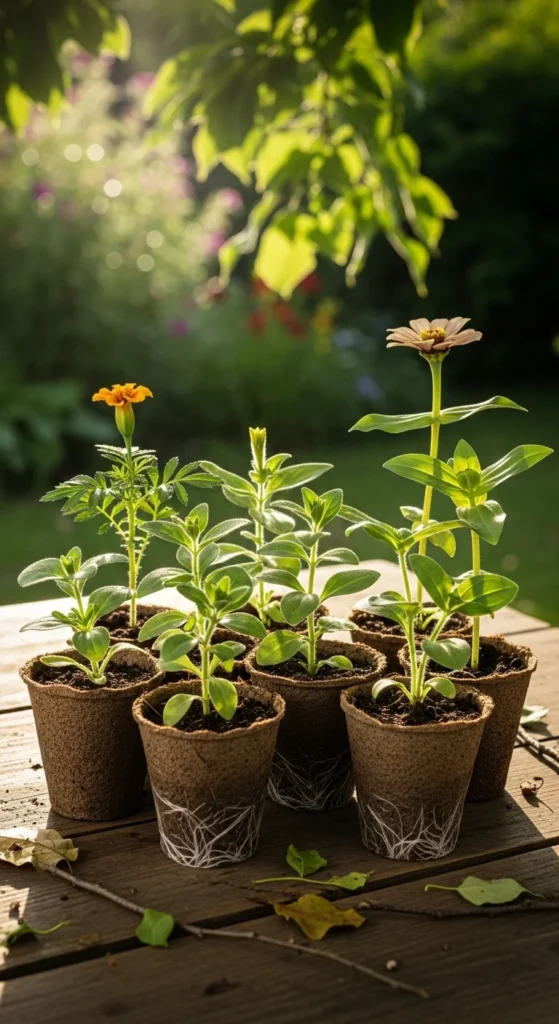
Feed Lightly and Let Them Grow
Flower seedlings don’t need heavy feeding right away. Too much fertilizer can do more harm than good.
Simple feeding tips:
- Use diluted liquid fertilizer after a few weeks
- Feed lightly every 2–3 weeks
- Focus on steady growth, not fast growth
Healthy soil and proper light matter more than frequent feeding.
Final Takeaway 🌸
Growing flowers from seeds is one of the most rewarding ways to garden. With the right timing, gentle care, and patience, those tiny seeds can turn into vibrant blooms that brighten your space—and your mood.
Start small, learn as you go, and enjoy the process as much as the results.
Save this guide for later and come back when you’re ready to plant your next batch of blooms! 🌱🌼
Leave a Reply