

A small garden doesn’t have to feel cramped or limiting. In fact, with the right design choices, even the tiniest outdoor space can feel open, layered, and surprisingly spacious. Whether you’re working with a narrow backyard, a compact patio, or a modest side garden, smart design can completely change how the space feels—not just how it looks.
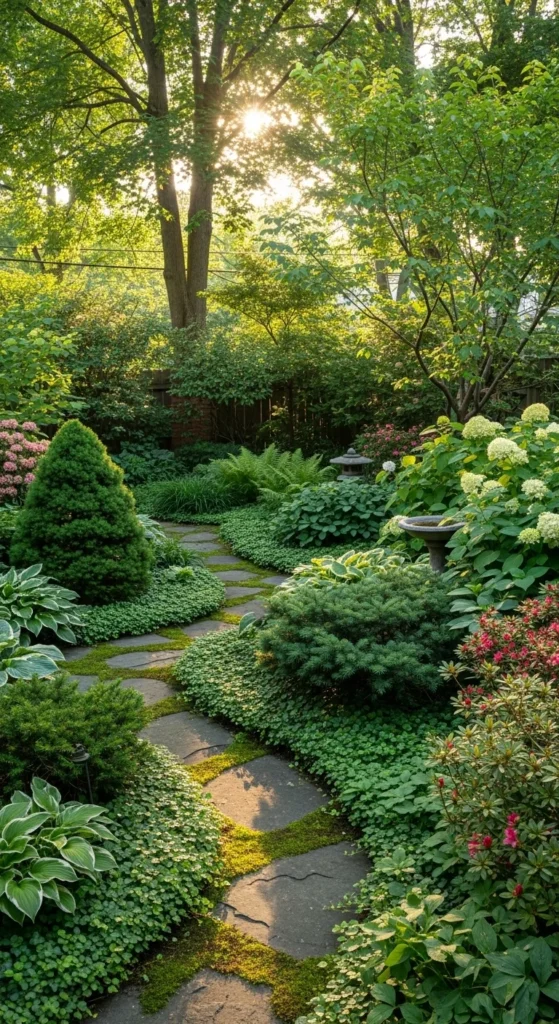
The secret isn’t adding more plants or features—it’s using visual tricks that guide the eye, create flow, and invite exploration. Let’s break it down step by step.
Start With a Clear Layout (Less Clutter, More Flow)
When space is limited, every decision matters. A cluttered layout instantly makes a garden feel smaller, while a clear structure helps it breathe.
Design tips to open things up:
- Define one main focal point, like a statement plant or small seating area
- Avoid straight lines everywhere—gentle curves feel more spacious
- Leave some open ground or negative space
Instead of cramming plants edge to edge, think about how someone’s eye will travel through the garden. A simple, intentional layout creates calm and makes the area feel larger than it is.
Use Vertical Space to Your Advantage
When you can’t expand outward, go upward. Vertical gardening is one of the most powerful tricks for small spaces.
Ways to add height without bulk:
- Trellises with climbing plants
- Wall-mounted planters
- Tall, narrow shrubs instead of wide ones
Vertical elements draw the eye upward, creating the illusion of height and depth without taking up valuable floor space.
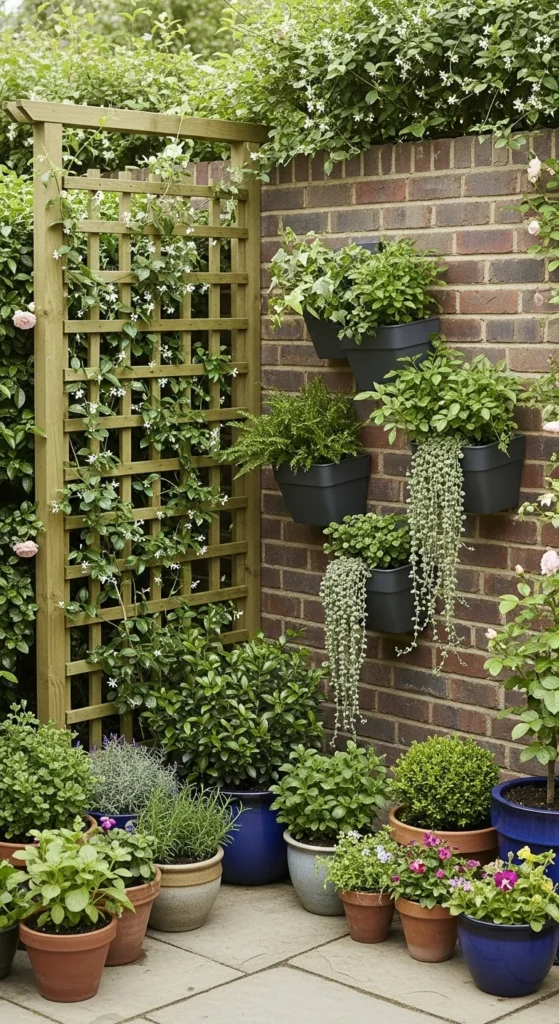
Bonus tip: Mixing vertical plants with low ground cover keeps the garden balanced and airy.
Choose a Limited Color Palette
Too many colors can overwhelm a small garden. A cohesive color scheme creates harmony and visual continuity, which makes the space feel more open.
Try this approach:
- Stick to 2–3 main plant colors
- Use variations of green as your base
- Add one accent color for personality
Soft, cool tones like greens, blues, and whites tend to recede visually, making the garden feel larger. Bright colors work best as small pops rather than the main theme.
Layer Plants for Depth, Not Crowding
One of the biggest mistakes in small gardens is planting everything at the same height. Flat planting makes a space feel boxed in.
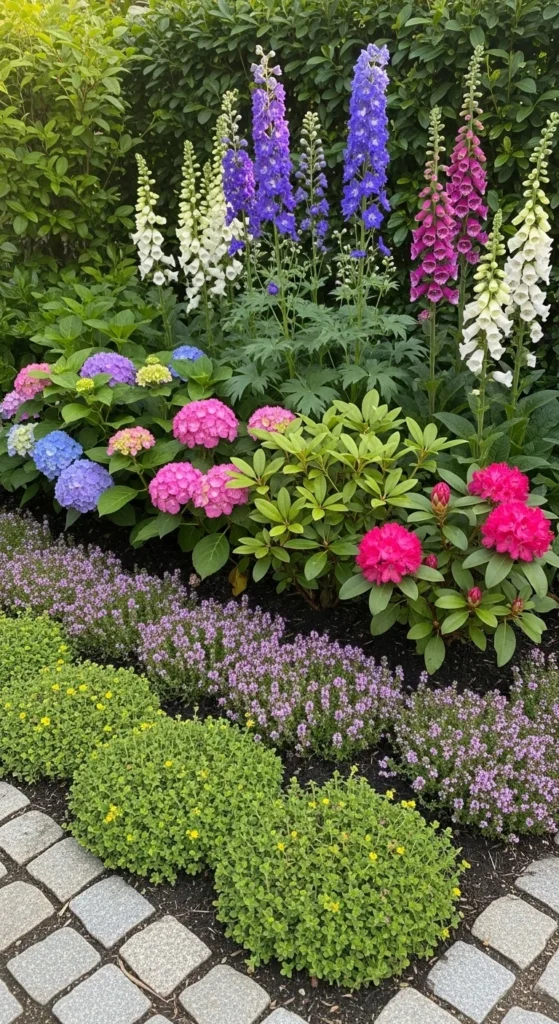
Instead, think in layers:
- Front: Low-growing plants or ground covers
- Middle: Medium-height shrubs or ornamental grasses
- Back: Taller plants, small trees, or vertical features
This layered look mimics nature and adds depth without overcrowding the space.
Use Paths and Angles to Create Illusions
Straight paths that run directly from one end to the other show the full length of a garden at once—making it feel shorter.
Better options include:
- Curved or stepping-stone paths
- Diagonal layouts instead of straight lines
- Partially hidden areas that invite curiosity
When the eye can’t see everything at once, the brain assumes the space is larger.
Add Mirrors and Reflective Surfaces (Carefully)
Mirrors aren’t just for indoors—they can work wonders outdoors when used thoughtfully.
Best ways to use them:
- Place mirrors at the end of a garden to suggest continuation
- Use weatherproof mirrors framed like windows or doors
- Reflect greenery, not clutter
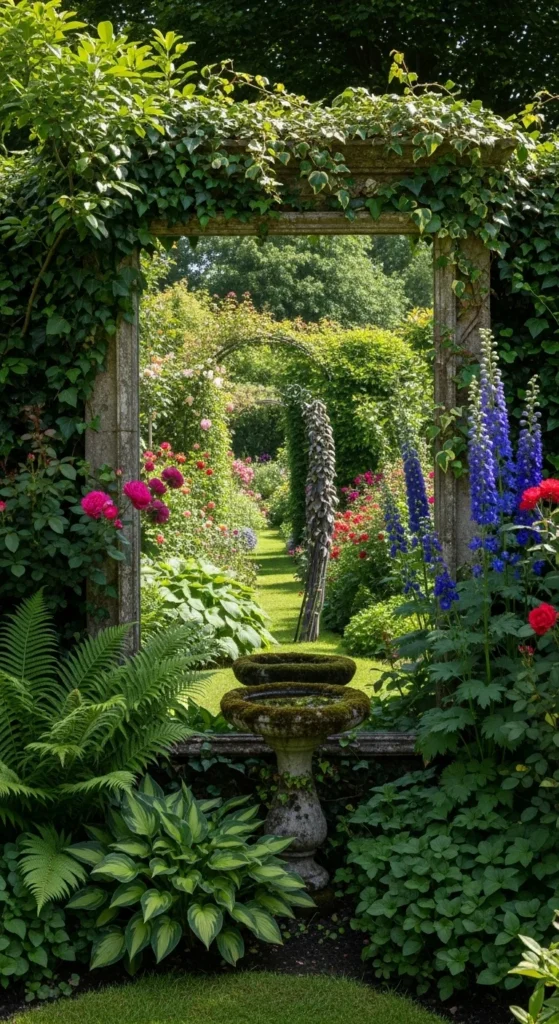
Avoid placing mirrors where they reflect fences or tight corners, as this breaks the illusion.
Keep Furniture Light and Minimal
Oversized furniture can dominate a small garden instantly. The goal is functionality without visual heaviness.
Furniture tips:
- Choose slim, open-frame designs
- Use foldable or multi-purpose pieces
- Limit furniture to what you actually use
A single bench or café-style table often works better than a full seating set.
Repeat Shapes and Materials
Repetition brings unity, and unity makes a space feel larger.
You can repeat:
- The same pot style in different sizes
- Similar plant shapes throughout the garden
- One main material, like wood or stone
This consistency helps the eye move smoothly rather than stopping at every element.
Final Takeaway 🌿
Designing a small garden that feels bigger is all about intention, not size. By simplifying your layout, using vertical space, layering plants, and guiding the eye with smart design choices, you can transform even the smallest garden into a space that feels open and inviting.
Start with one change at a time—and watch your garden grow in all the right ways.
Save this guide for later and revisit it when planning your next garden upgrade! 🌱
Leave a Reply