

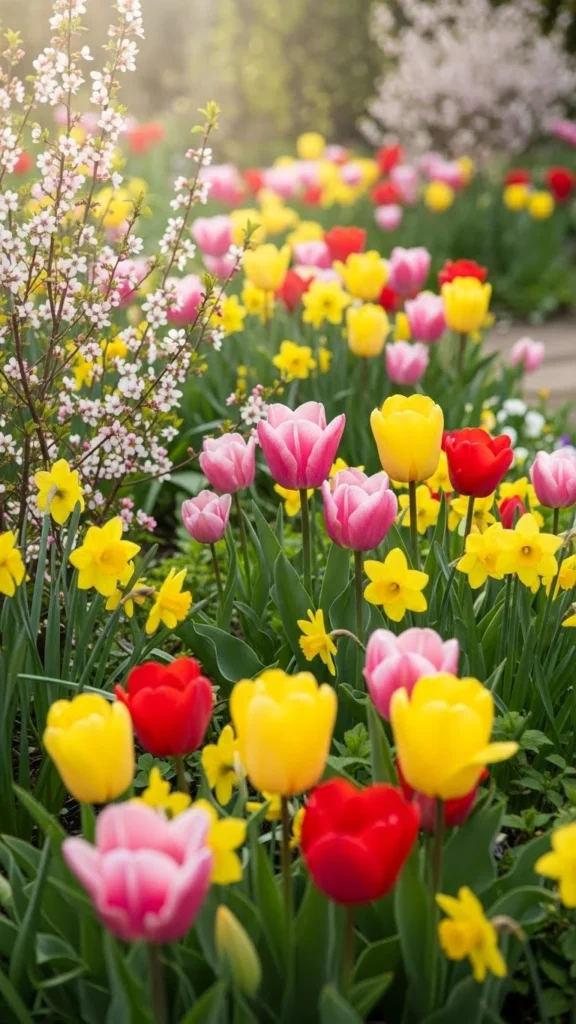
Spring flower gardens shine when planning focuses on timing, placement, and simple care habits. Nonstop blooms do not come from rare plants or expensive supplies. They come from smart combinations, steady maintenance, and allowing flowers to shine in stages. The ideas below focus on practical layouts and planting habits that keep color moving through the season without overwhelming effort or budget.
1. Layer Early, Mid, and Late Spring Flowers
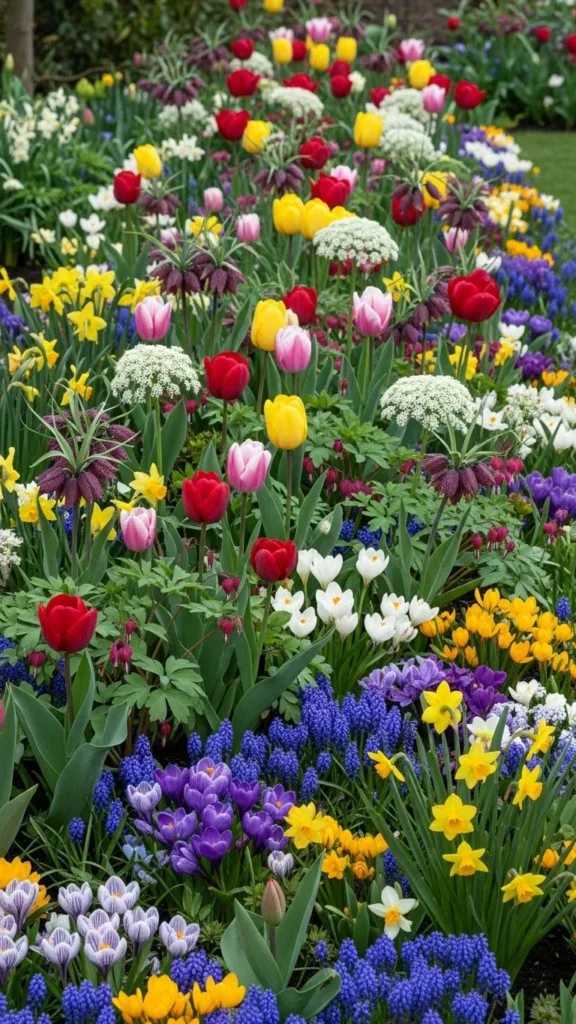
Nonstop color starts with timing. Combine flowers that bloom at different points in spring. Early bulbs bloom first. Mid-season perennials follow. Later bloomers fill gaps.
Plant bulbs deep in fall. Add perennials around them. Finish with annuals in open spots.
This layered approach keeps beds active for weeks. As one group fades, another takes over.
Use seed packets and plant tags to check bloom windows. Choose overlapping schedules.
Layering costs no extra money. It simply uses space wisely.
2. Use Bulbs as the Foundation
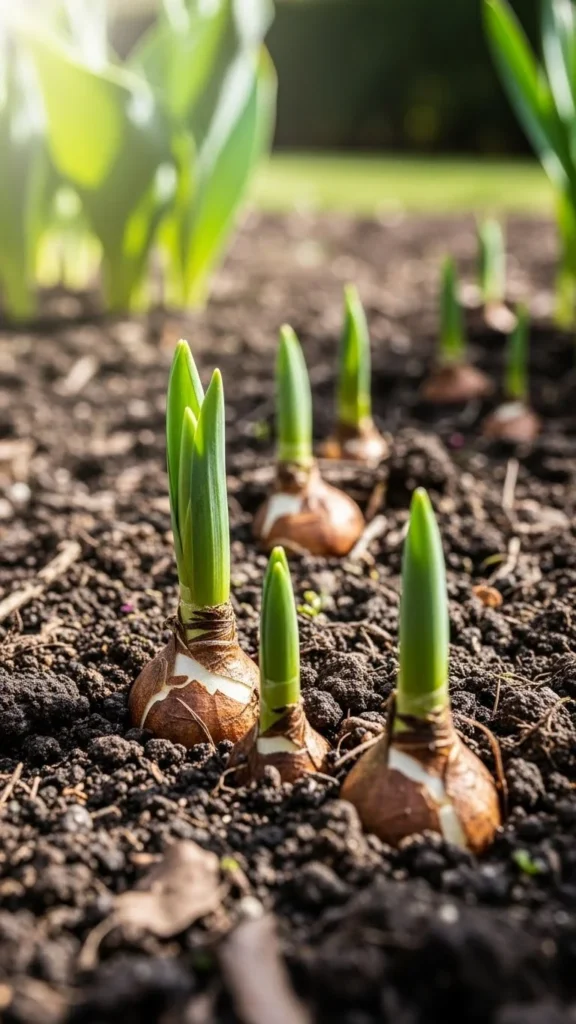
Bulbs carry spring gardens early. Daffodils, tulips, and crocus appear before most plants wake up.
Plant bulbs in clusters for impact. Single bulbs disappear visually.
After blooming, let foliage fade naturally. It feeds next year’s display.
Bulbs return yearly, making them cost-effective.
Once planted, they require little attention.
3. Mix Perennials With Annual Fillers
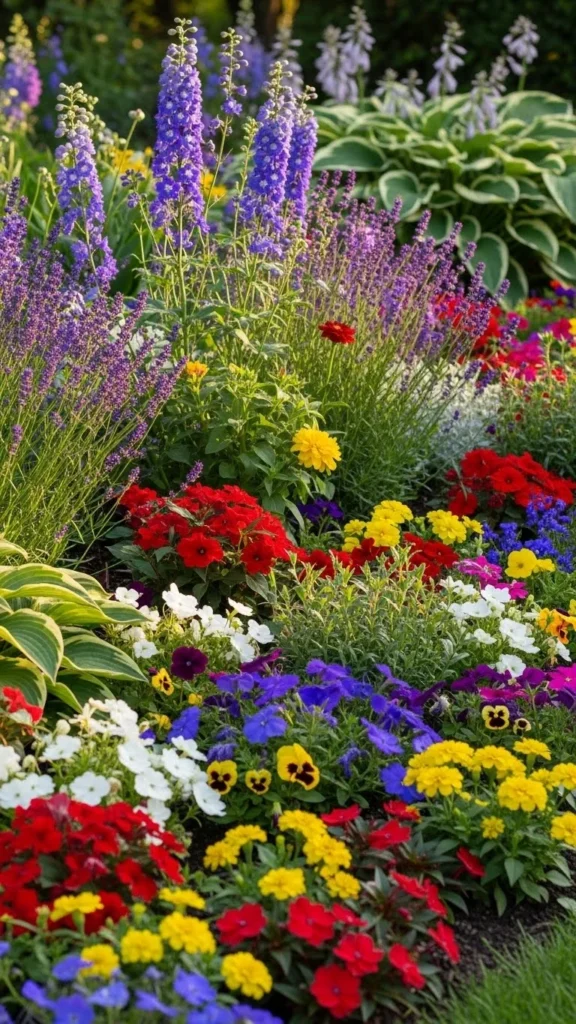
Perennials offer structure. Annuals fill gaps fast.
Plant perennials first. Add annuals where space remains.
Annuals bloom longer and cover fading foliage.
This mix keeps beds looking full and active.
Seed-grown annuals lower costs further.
4. Plant in Drifts Instead of Singles
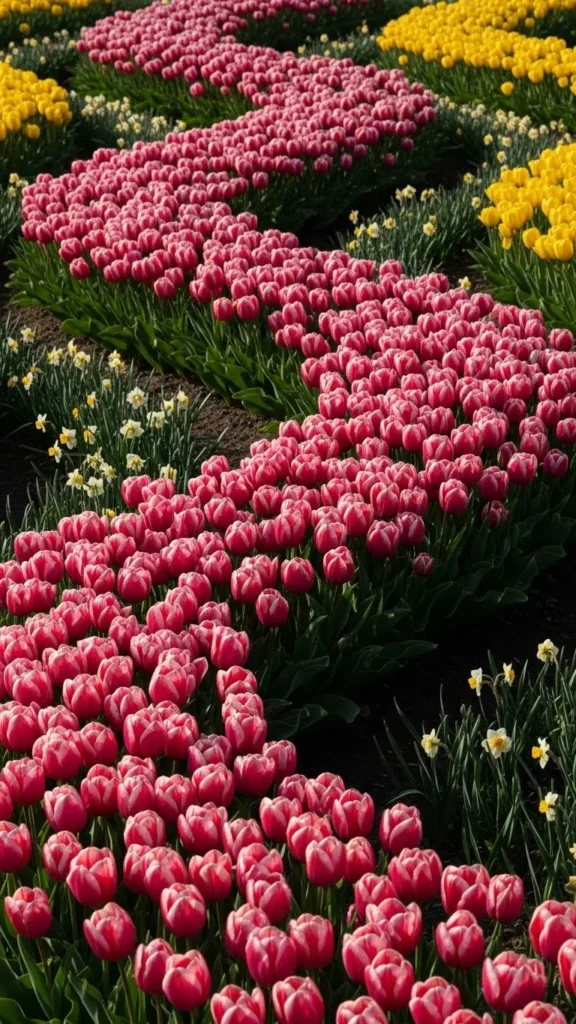
Repeating the same flower in groups creates rhythm.
Drifts guide the eye across the bed.
Three to five plants per group works well.
This approach feels intentional and balanced.
It also simplifies care routines.
5. Choose Flowers With Long Bloom Windows
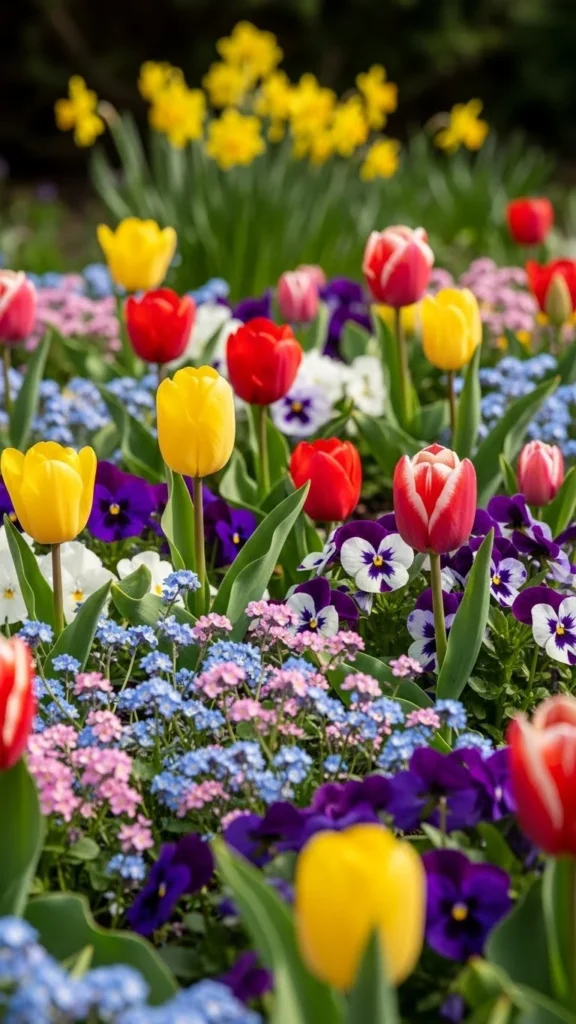
Some flowers bloom longer than others. Pansies, violas, and alyssum last weeks.
Use them near paths and entry points.
Long bloomers reduce replanting.
They carry color while others rest.
6. Deadhead Regularly for Continued Color
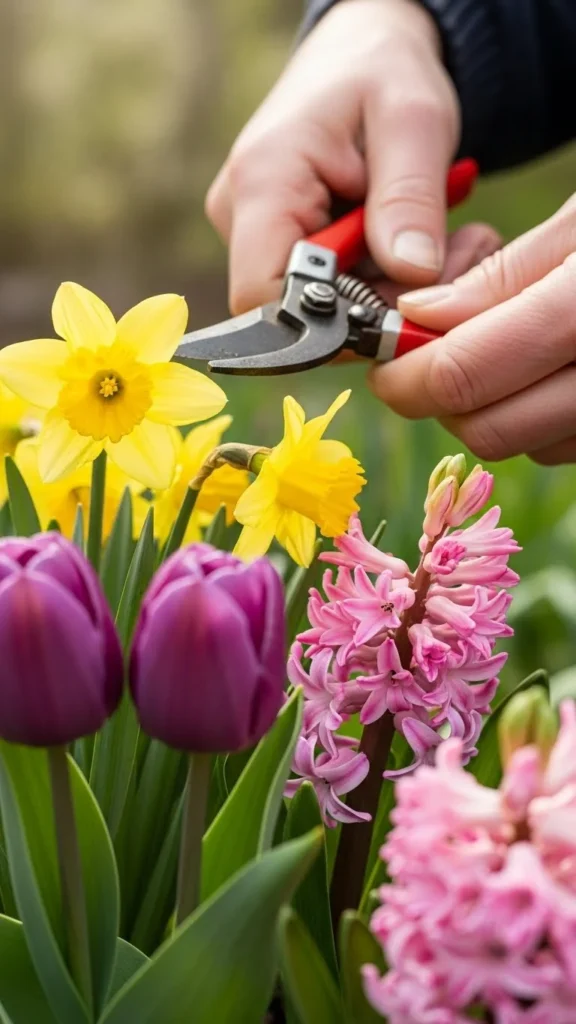
Removing spent blooms encourages new ones.
Use scissors or fingers.
Focus on visible areas first.
This habit takes minutes but extends flowering.
Routine care keeps beds tidy.
7. Plant Flowering Shrubs for Structure
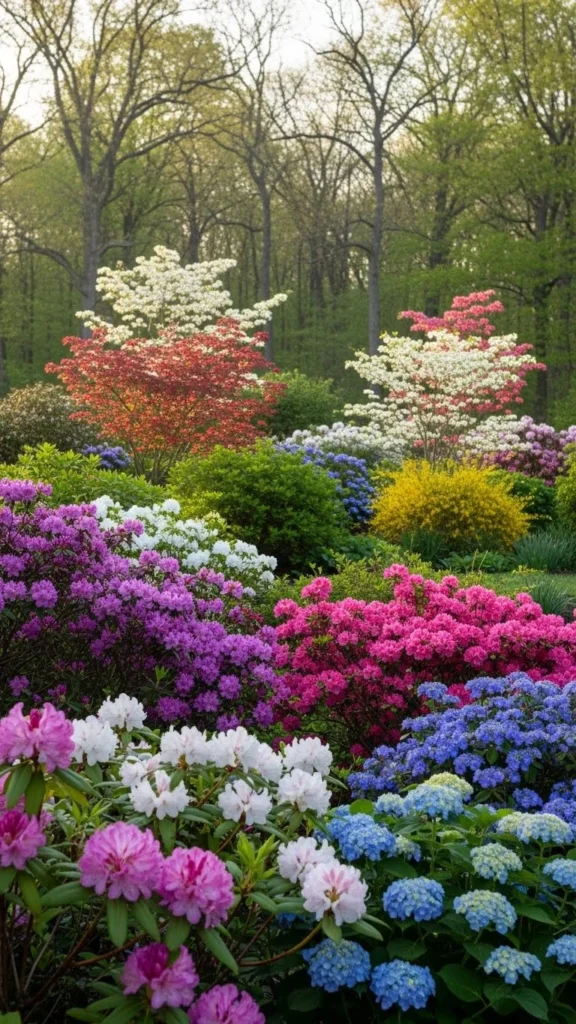
Shrubs anchor flower gardens.
They bloom heavily for short periods.
Place them at bed backs or corners.
They support seasonal flowers visually.
Shrubs return yearly with minimal upkeep.
8. Use Containers for Extra Color
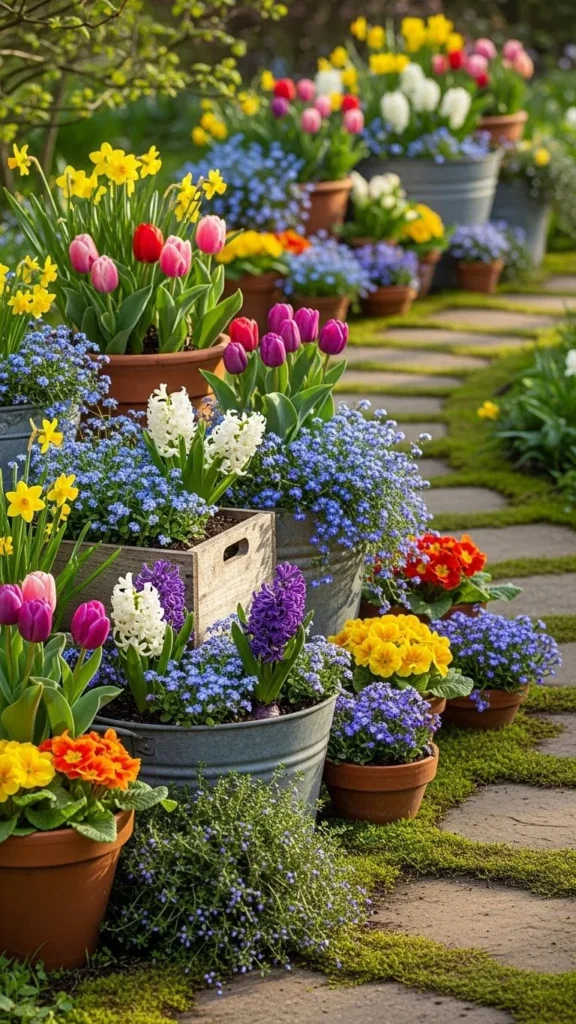
Containers add flexible color.
Move them where blooms fade.
Use simple pots and recycled containers.
Group pots for stronger impact.
Containers fill gaps fast.
9. Stagger Planting Dates
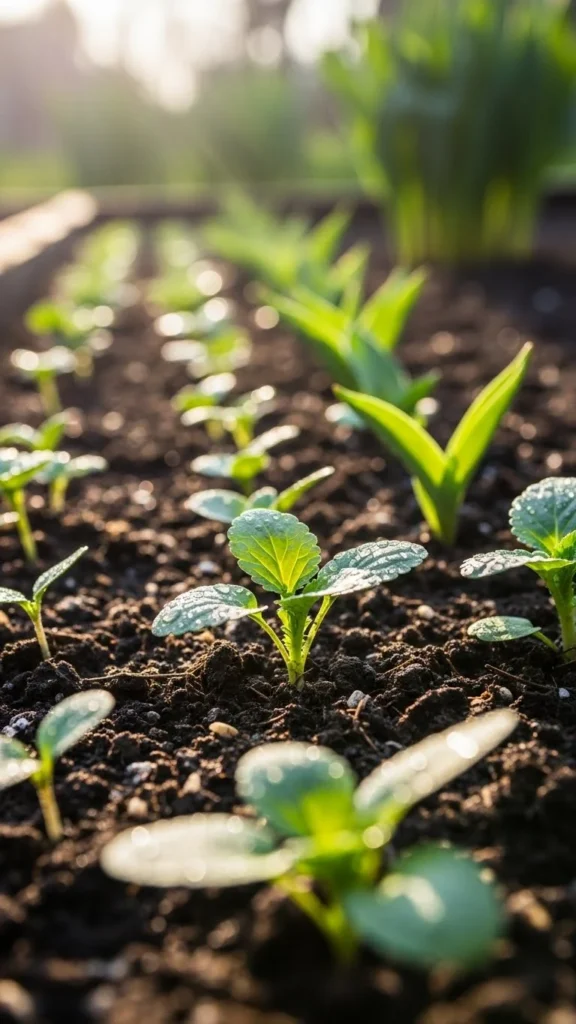
Planting everything at once creates one big show.
Stagger plantings by one to two weeks.
Later plantings bloom after earlier ones finish.
This extends display time naturally.
Small delays create lasting color.
10. Edge Beds With Low Bloomers
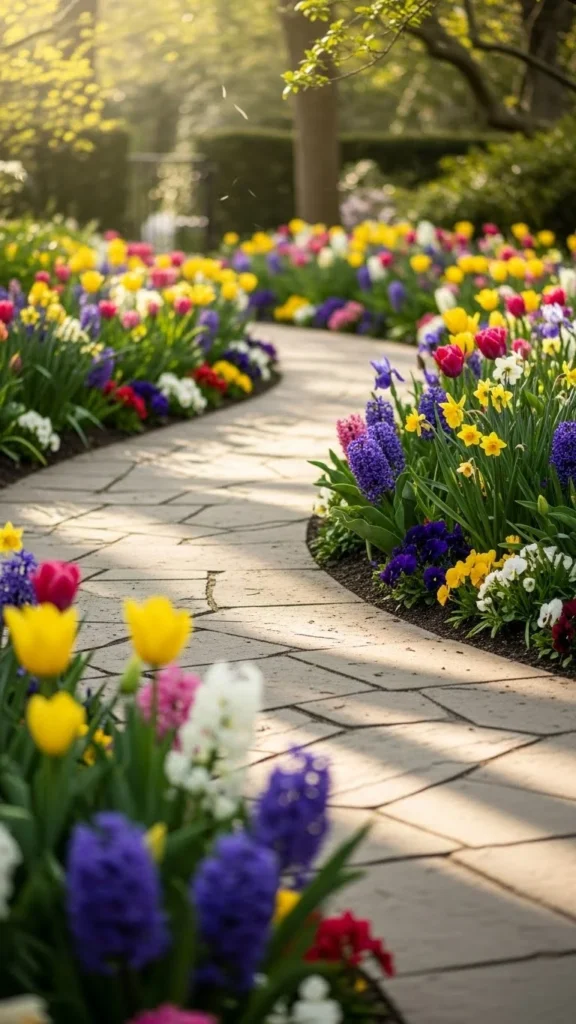
Low flowers frame beds neatly.
Alyssum and phlox work well.
Edges stay colorful even when taller plants rest.
Clear borders improve visual flow.
11. Focus Color Near Walkways
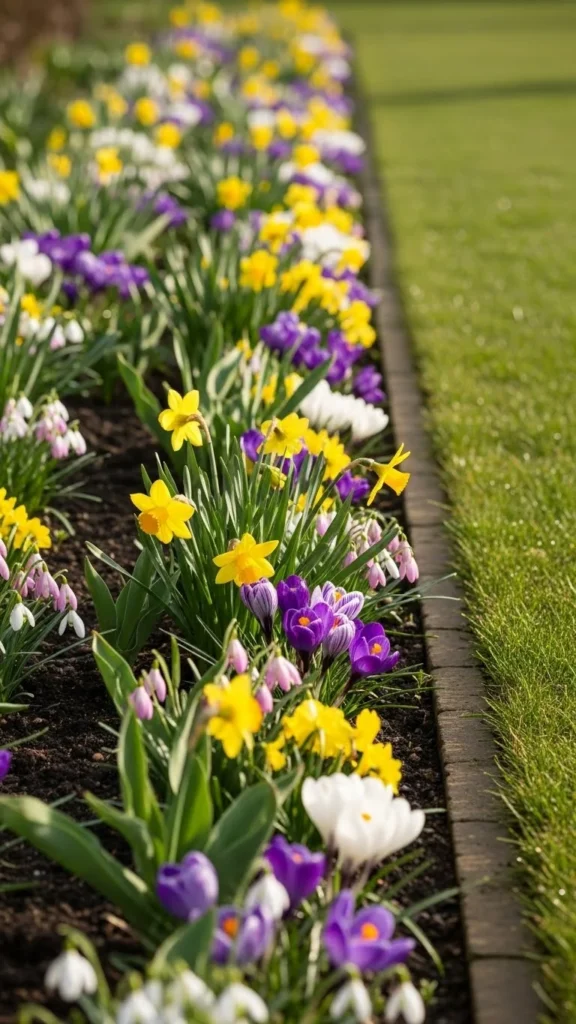
Place strongest color where people walk.
Paths and entries benefit most.
This maximizes enjoyment without expanding beds.
Small areas carry high impact.
12. Use Mulch to Highlight Blooms
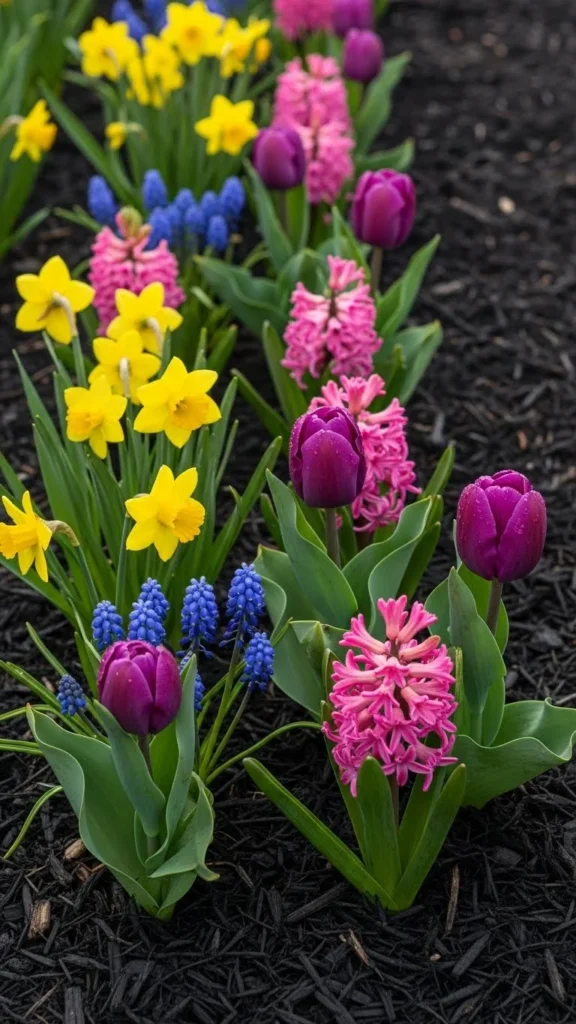
Mulch frames flowers visually.
Dark mulch makes colors stand out.
Use shredded leaves or bark.
Thin layers work best.
13. Add Vertical Flowering Elements
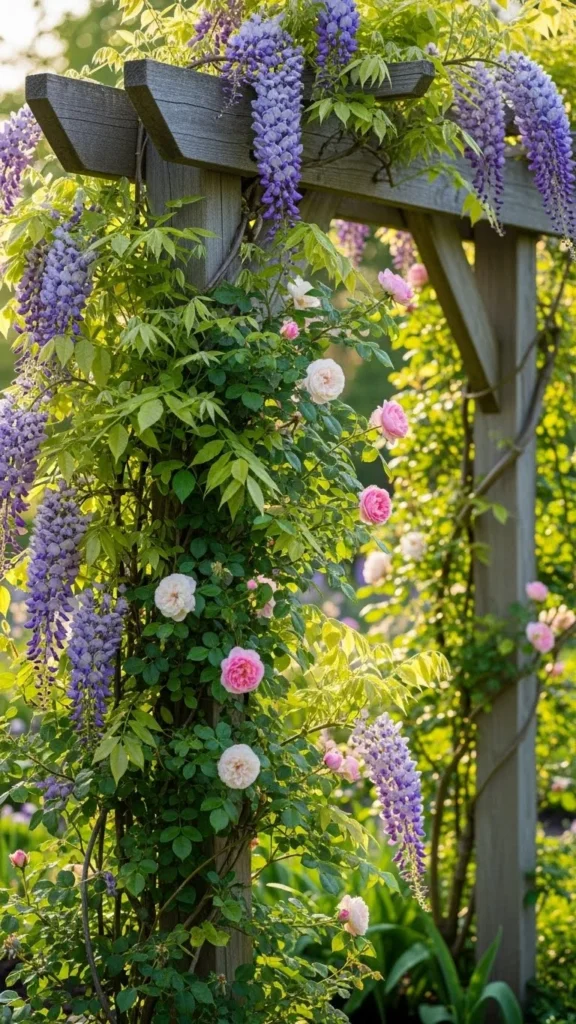
Vertical flowers add height.
Use trellises, fences, or arches.
Climbers extend bloom space upward.
This balances flat beds.
14. Grow Flowers From Seed
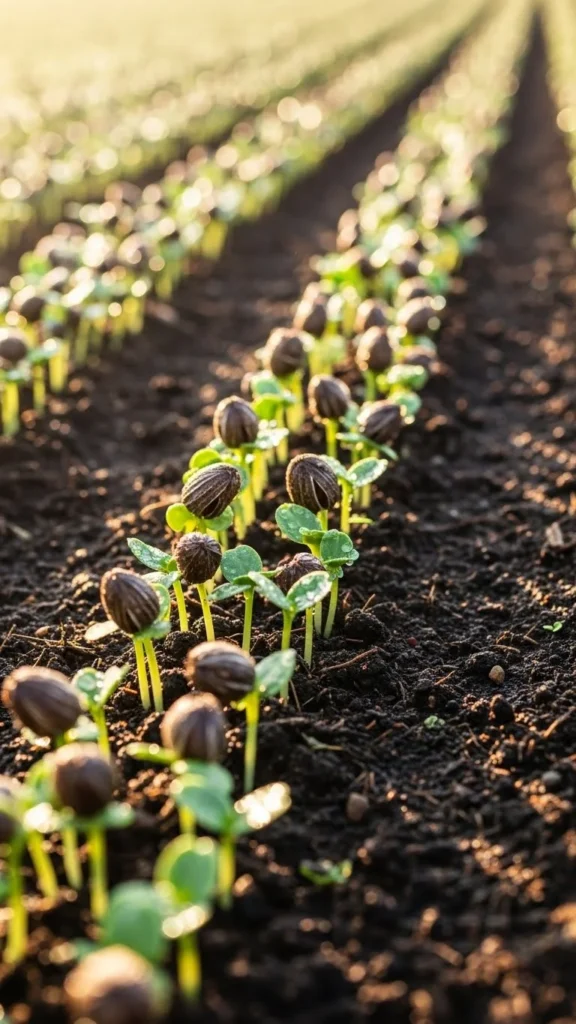
Seeds cost less than transplants.
Start indoors or direct sow.
Mix seeds with purchased plants.
This stretches budgets further.
15. Rotate Flower Locations Each Year
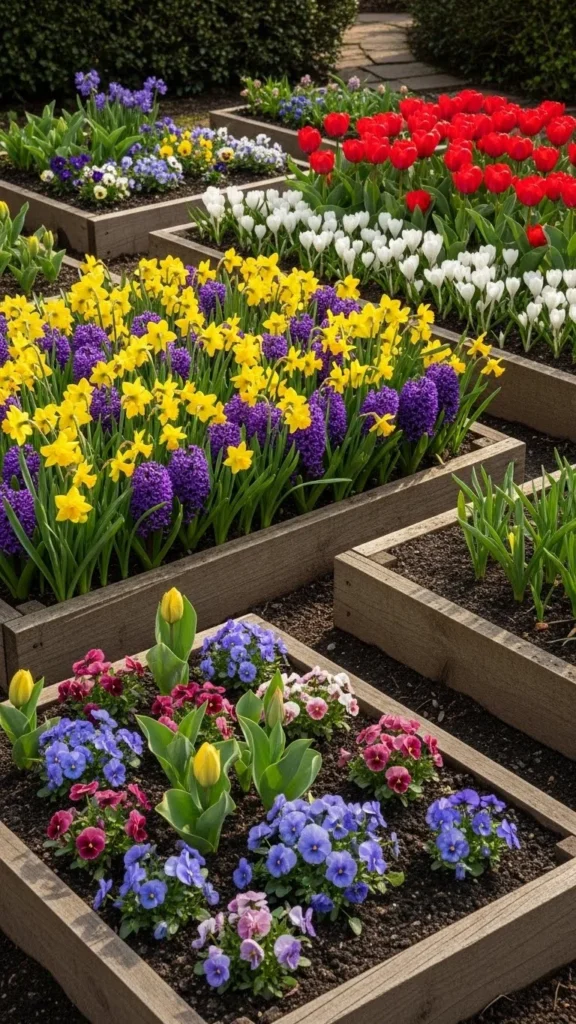
Rotating flowers improves soil balance.
It also refreshes garden appearance.
Keep simple notes for planning.
Rotation reduces issues over time.
16. Group Flowers by Sun Exposure
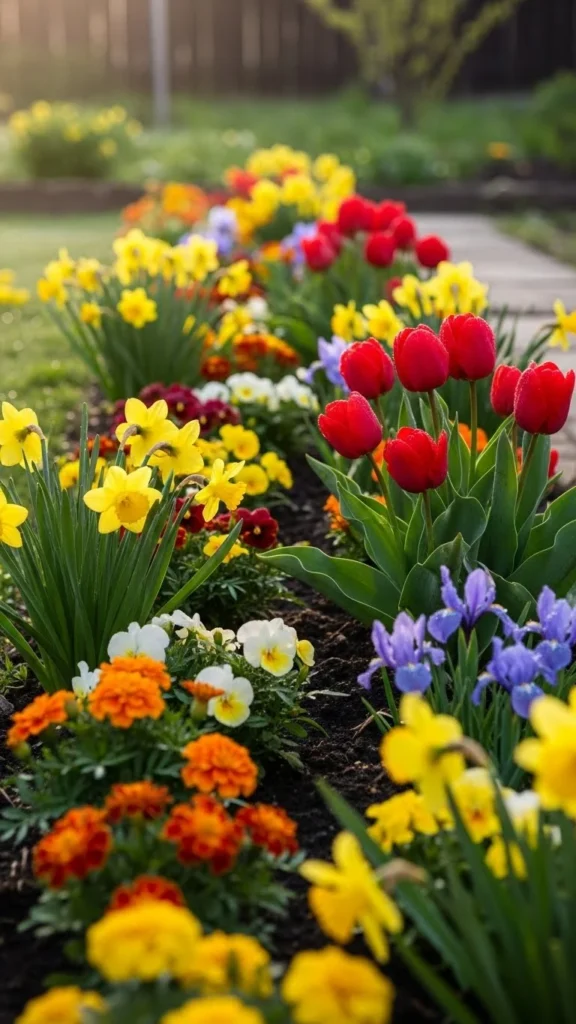
Sun patterns guide placement.
Group shade and sun flowers separately.
Plants perform better when matched correctly.
This reduces maintenance.
17. Use Flowering Ground Covers
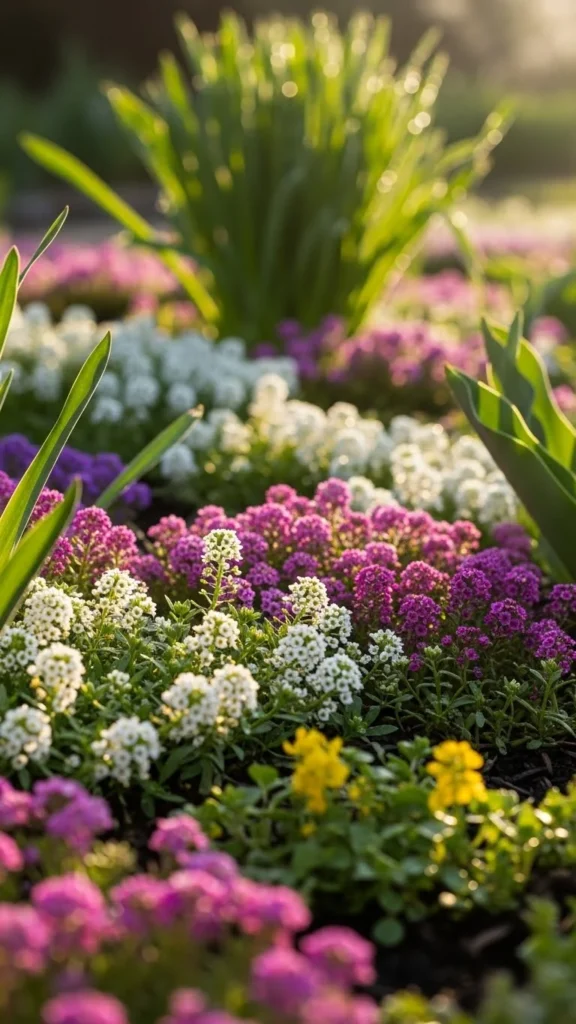
Ground covers fill empty soil.
They reduce weeds and add color.
Low maintenance and reliable.
They support nonstop interest.
18. Prune After Blooming
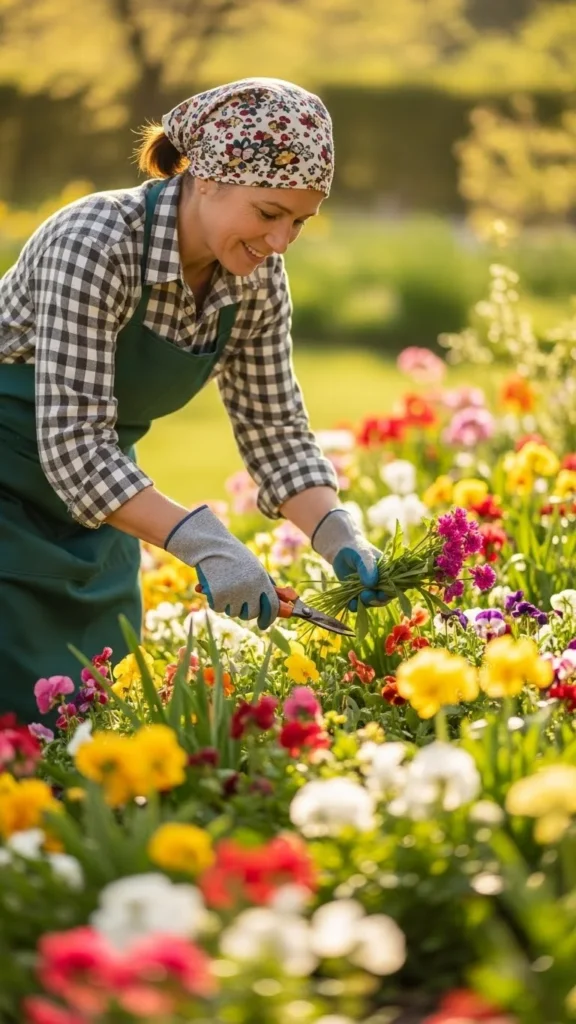
Some flowers respond well to light trimming.
Pruning after bloom encourages regrowth.
Avoid heavy cuts.
Simple shaping keeps plants tidy.
19. Add One Color Theme Per Bed
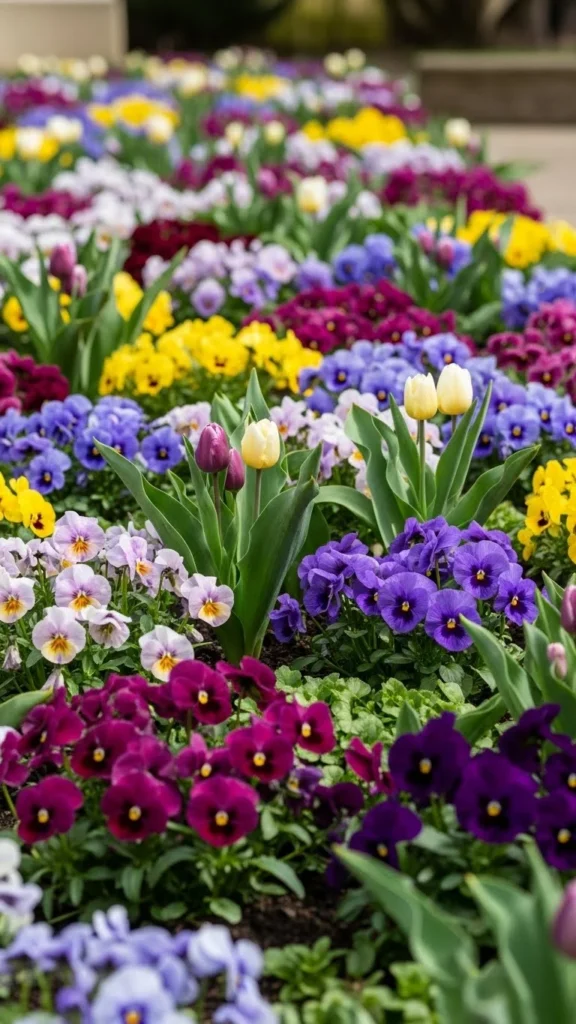
Limiting color reduces visual clutter.
Choose one main shade with accents.
Beds feel calm and cohesive.
Color themes simplify choices.
20. Water Deeply but Less Often
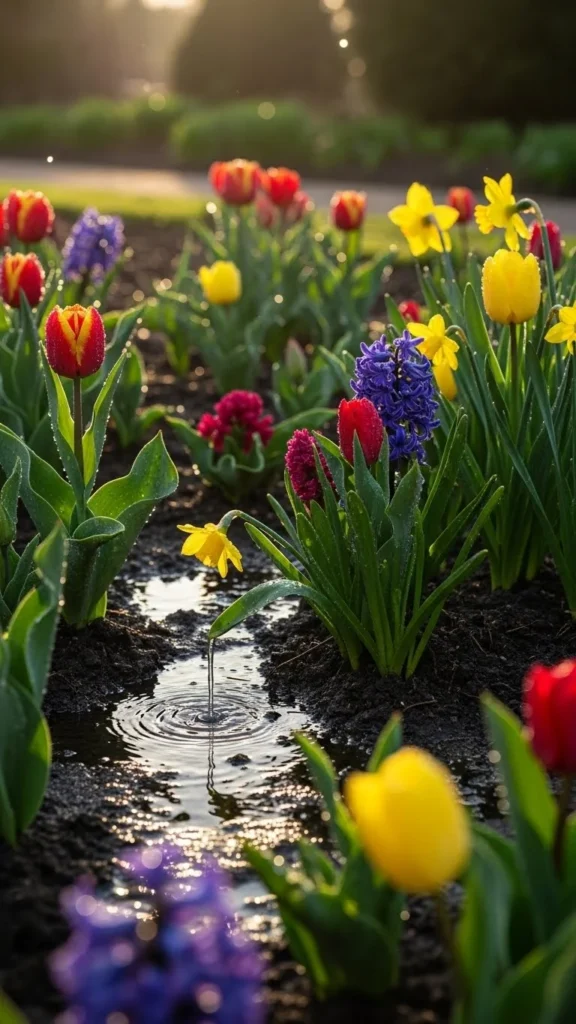
Deep watering supports root growth.
Avoid frequent shallow watering.
Check soil moisture before watering.
Healthy roots support longer blooms.
21. Use Cut Flowers to Trigger New Growth
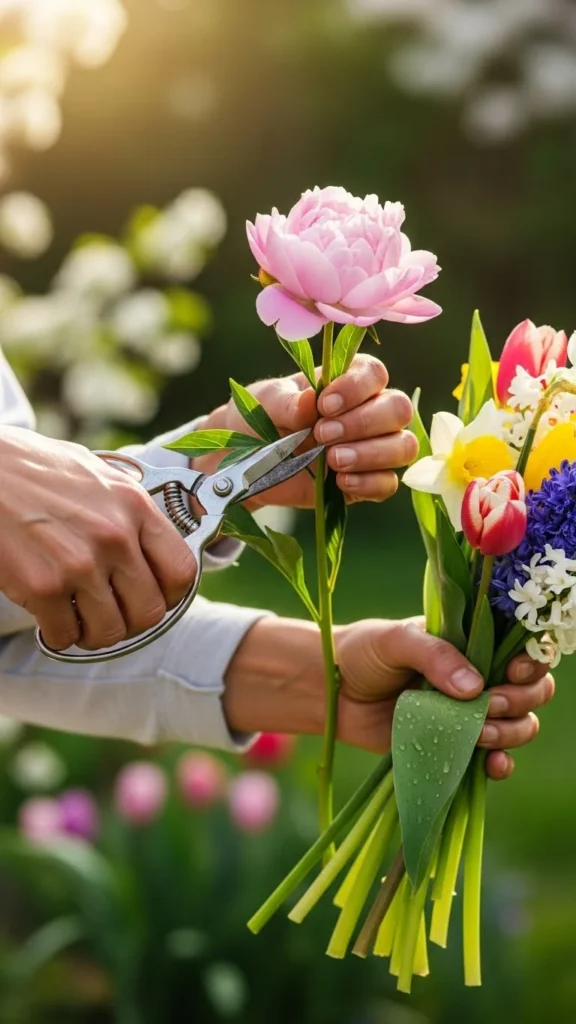
Cutting flowers often leads to new blooms.
Harvest regularly.
Use simple vases indoors.
Gardens benefit while homes enjoy flowers.
22. Let Fading Flowers Rest Naturally
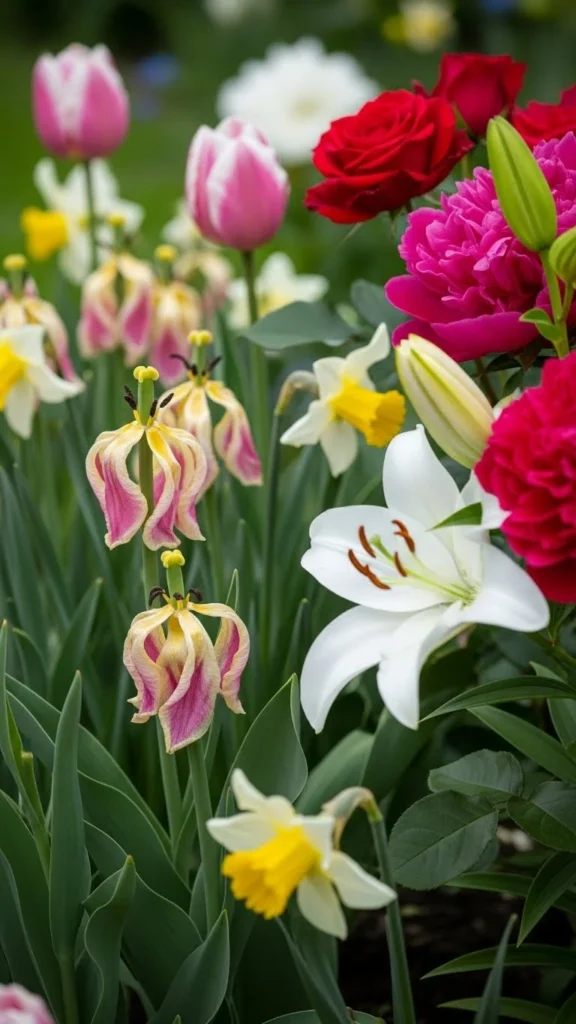
Not every plant blooms nonstop.
Allow resting periods.
Later flowers take over.
Balance comes from patience.
Conclusion
Beautiful spring flower gardens rely on rhythm, timing, and thoughtful placement rather than constant replanting. By layering blooms, mixing plant types, and focusing color where it matters most, gardens stay active throughout the season. Start with one or two ideas, build gradually, and let spring unfold with steady color and calm confidence.
Leave a Reply