

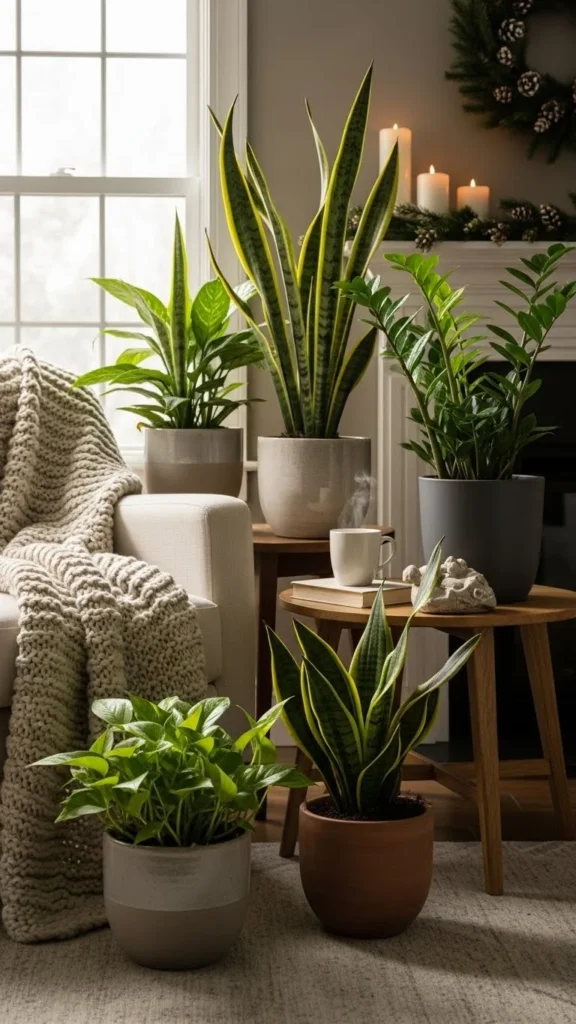
Indoor spaces often feel dimmer during winter, but the right plants can brighten rooms without relying on strong sunlight.
Low-light indoor plants thrive in corners, hallways, offices, bedrooms, and living rooms where daylight is limited.
This guide shares easy-care, visually uplifting plants plus practical ways to style and maintain them through the cold months—perfect for anyone wanting greenery with minimal effort.
1. Snake Plant
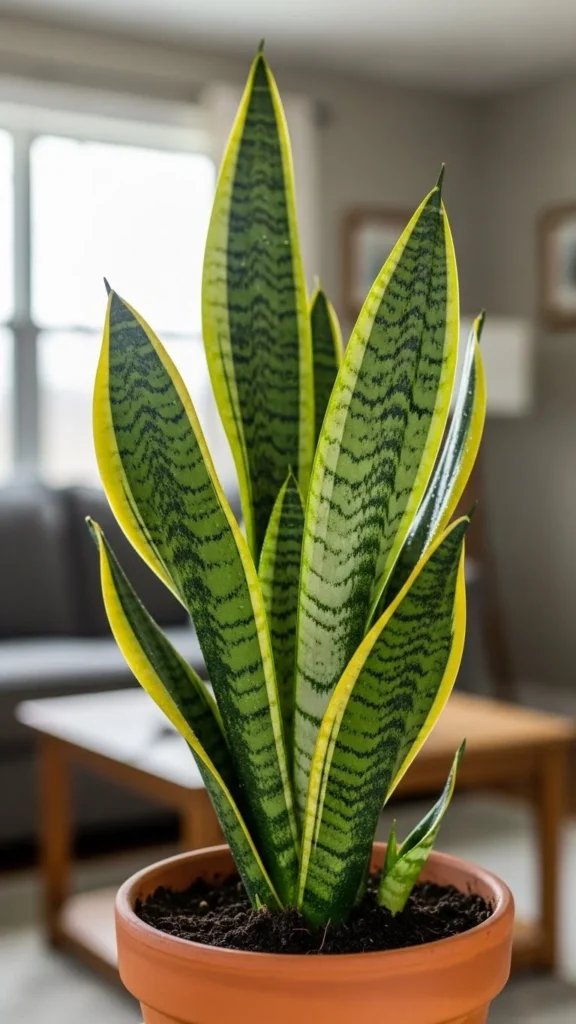
Snake plants thrive in low light and stay upright and tidy, even in winter.
Place them near doorways, hall corners, or next to sofas.
Their bold vertical leaves bring structure to dim spaces.
Water sparingly, just once the soil feels completely dry.
Use a narrow pot if you’re tight on space.
Dust the leaves occasionally so their natural shine stays visible.
They’re one of the simplest plants for brightening rooms without daily care.
2. ZZ Plant
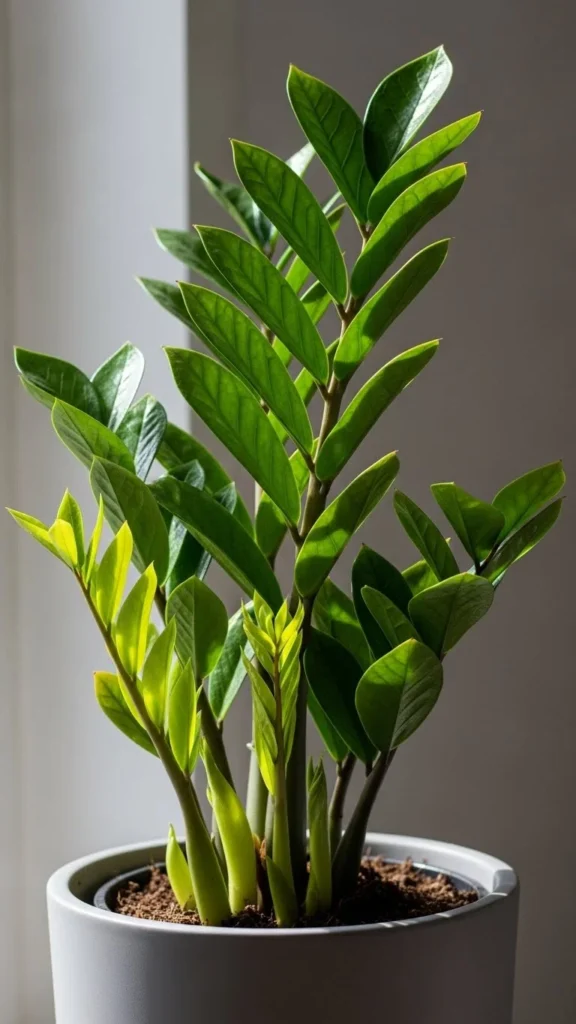
ZZ plants tolerate dark rooms better than most.
Their glossy, deep-green leaves reflect light beautifully in winter.
Place a ZZ plant in your office or bedroom corner where sunlight barely reaches.
Let the soil dry fully between waterings to prevent root issues.
You can divide larger plants into smaller pots to brighten multiple rooms affordably.
A single ZZ plant offers a polished look with little time investment.
3. Pothos
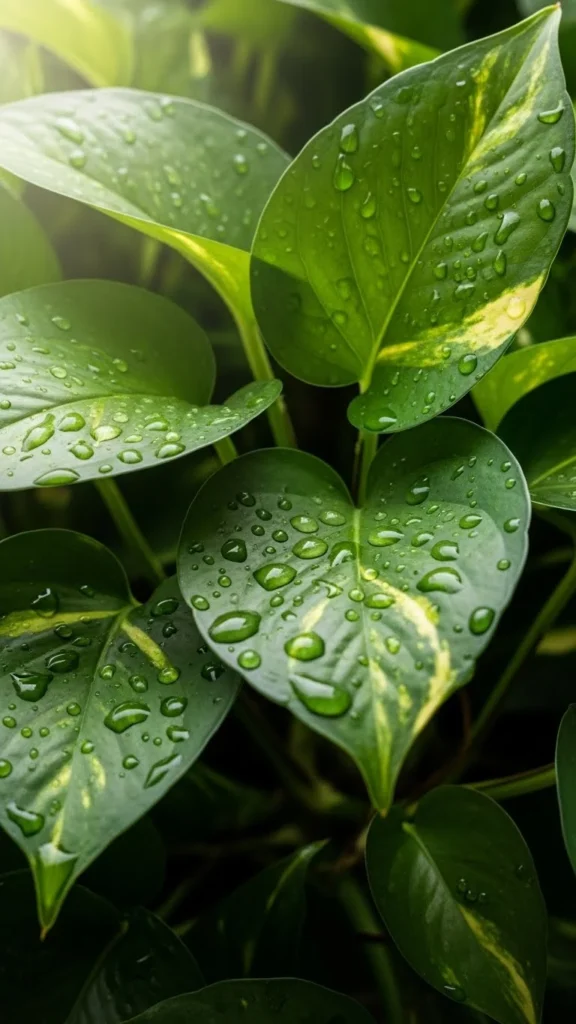
Pothos vines grow gracefully even in low-light areas.
Their trailing habit adds softness to shelves and side tables.
Choose golden pothos for warm tones or jade pothos for deep green leaves.
Water lightly in winter to avoid soggy soil.
Hang them in macramé holders or place them on bookcases for a dramatic cascading effect.
Pothos makes dim corners feel alive and inviting.
4. Peace Lily
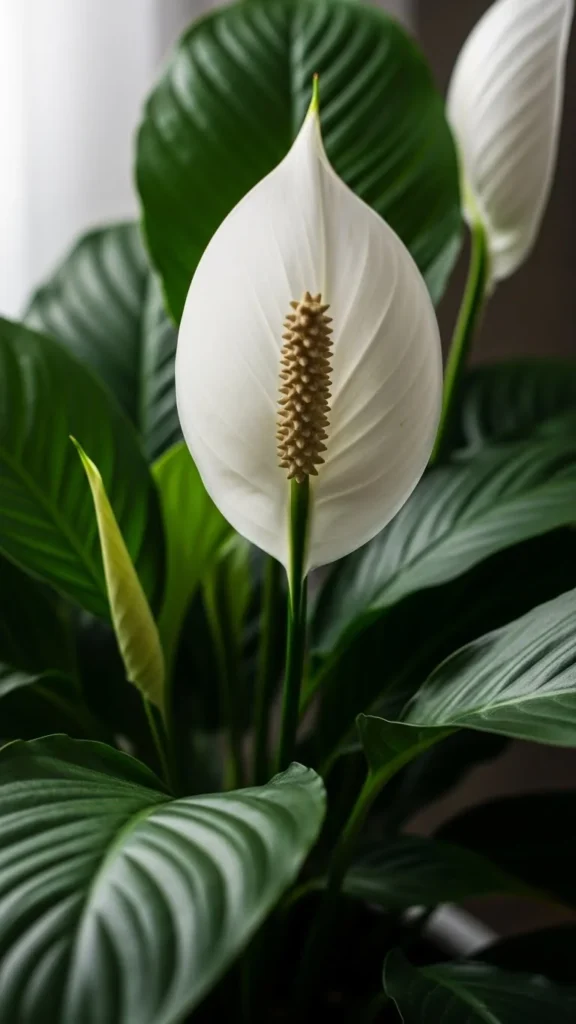
Peace lilies tolerate shade and offer gentle winter blooms.
Their white bracts brighten dark rooms instantly.
Place them where indirect light is available, such as beside a north-facing window.
Keep soil slightly moist, but avoid overwatering.
Wipe leaves often to keep their soft sheen.
Use decorative pots to pair their elegant look with winter décor.
5. Cast-Iron Plant
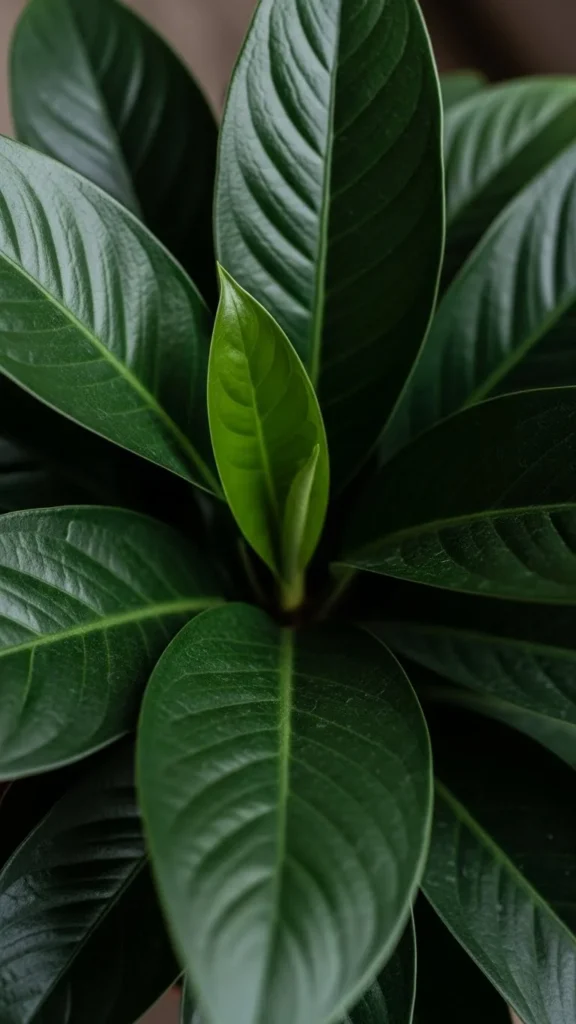
This plant lives up to its name—durable, steady, and easy in low light.
Its long, dark leaves suit minimalist or modern interiors.
Keep it in a hallway, entryway, or a room with soft lighting.
Water sparingly, especially during winter.
Repot only when roots fill the container.
The cast-iron plant blends well with winter neutrals and doesn’t demand constant attention.
6. Dracaena
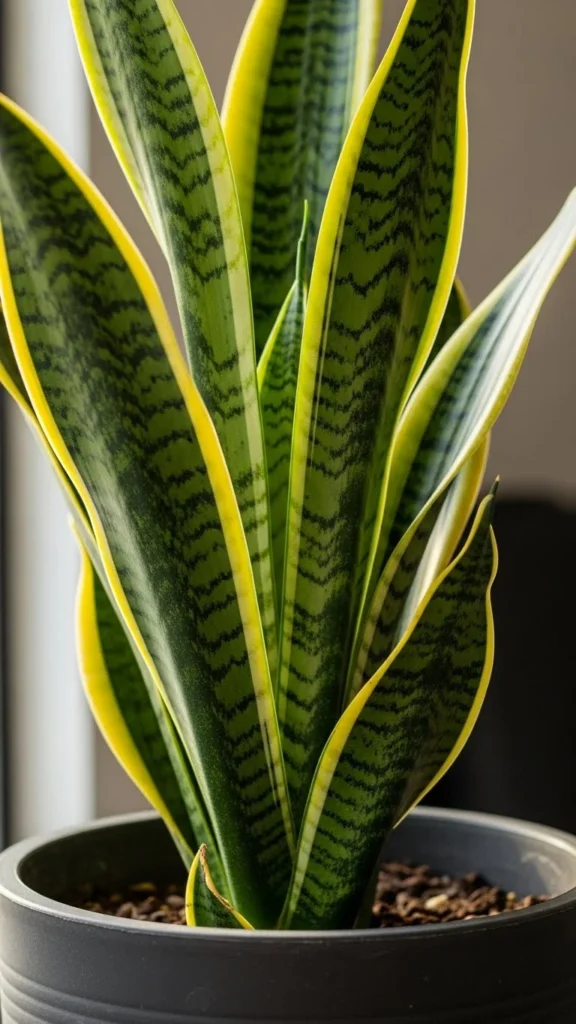
Dracaena varieties thrive in winter interiors with muted light.
Their striped leaves bring subtle color when sunlight is limited.
Keep them in tall pots to highlight their height.
Water lightly and avoid placing them near heat vents.
Prune brown tips occasionally for a clean appearance.
They pair nicely with winter décor due to their sculptural shape.
7. Chinese Evergreen
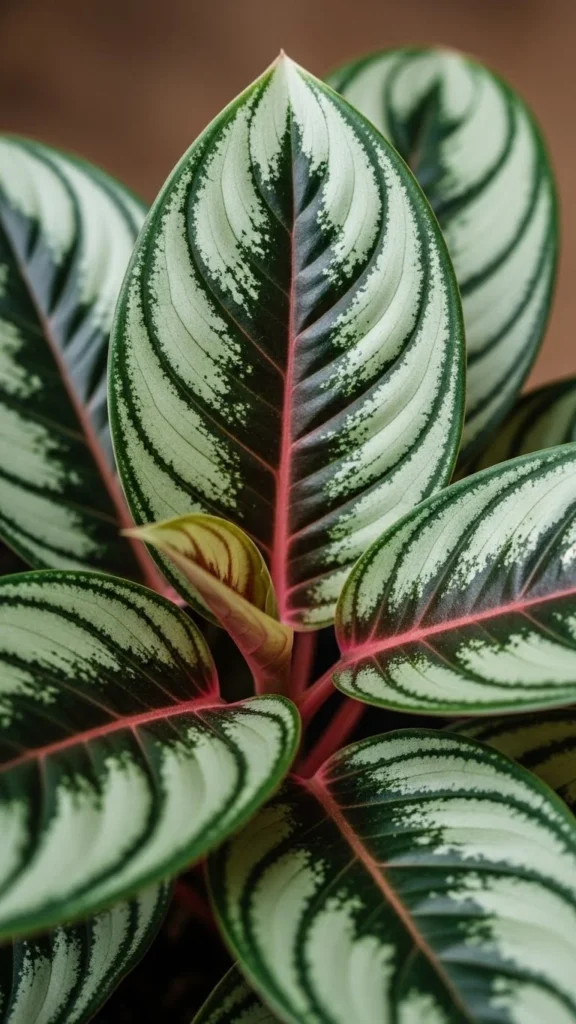
Chinese evergreens thrive in dim rooms and display colorful patterns.
Choose silver, red, or pink-tinted varieties for added brightness.
Keep soil lightly moist and rotate the pot monthly for even growth.
Use medium-height planters to show off their foliage.
They do well in bedrooms, dining rooms, or home offices with soft light.
Their patterned leaves create visual interest in winter interiors.
8. Spider Plant
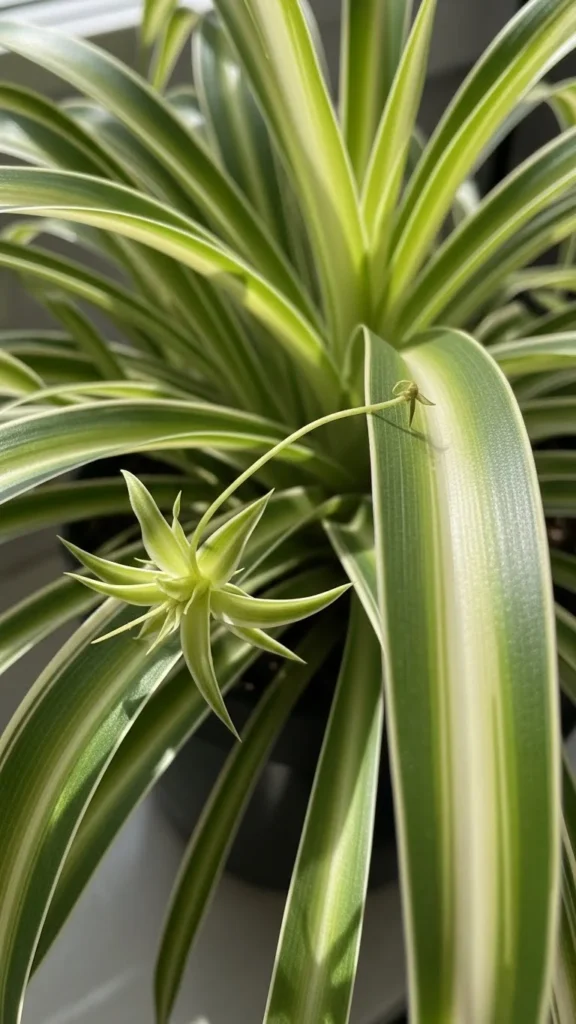
Spider plants handle dim rooms and winter dryness with ease.
Their striped arching leaves brighten shelves and counters instantly.
Use hanging pots or high shelves to show off their cascading offsets.
Water moderately during winter and trim brown tips as needed.
They’re excellent for kitchens or hallways where light varies throughout the day.
9. Philodendron Heartleaf
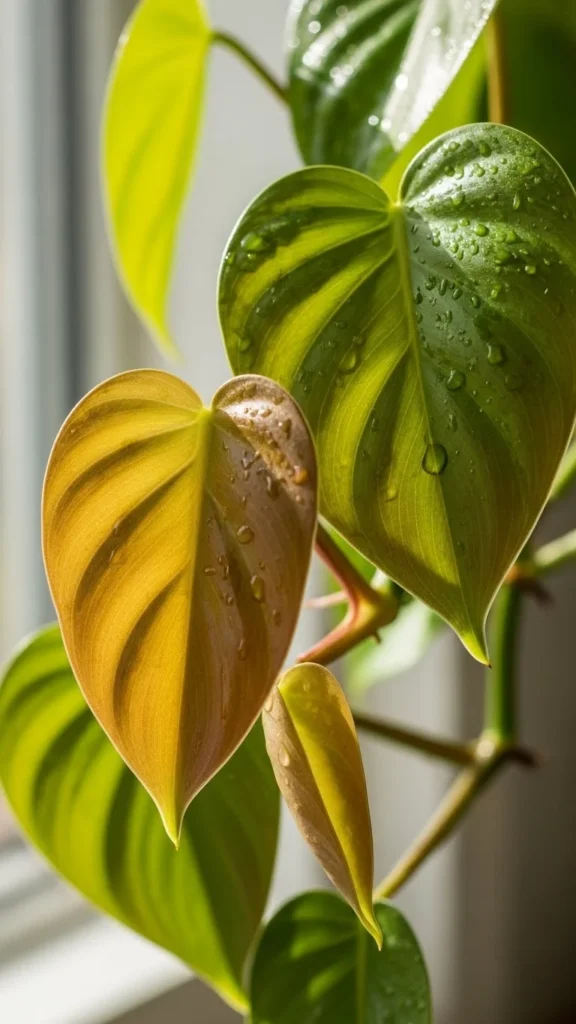
Heartleaf philodendrons grow well in low light and add romantic, trailing greenery.
Place them on floating shelves, side tables, or plant stands.
Their vines spread quickly, even in winter.
Water only when soil feels dry.
Pinch back tips to keep them full and bushy.
These plants soften sharp corners and blend beautifully with winter décor.
10. Parlor Palm
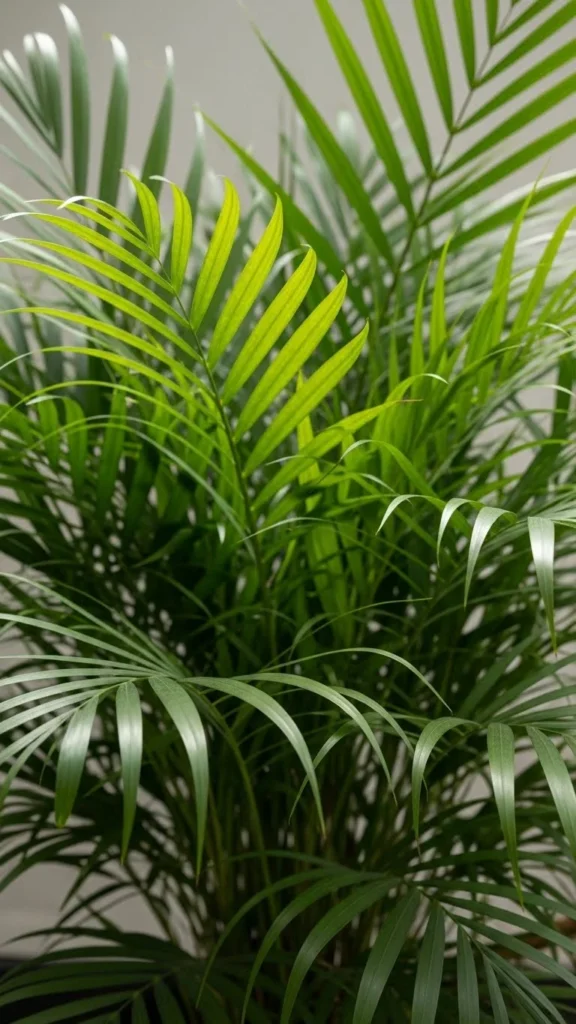
Parlor palms grow slowly but steadily in low light.
Their feathery fronds add tropical charm during cold months.
Keep them away from drafty windows.
Water lightly and allow soil to dry halfway.
Add a small pebble tray for humidity if air feels too dry.
They brighten living rooms, bedrooms, and reading nooks.
11. Dieffenbachia
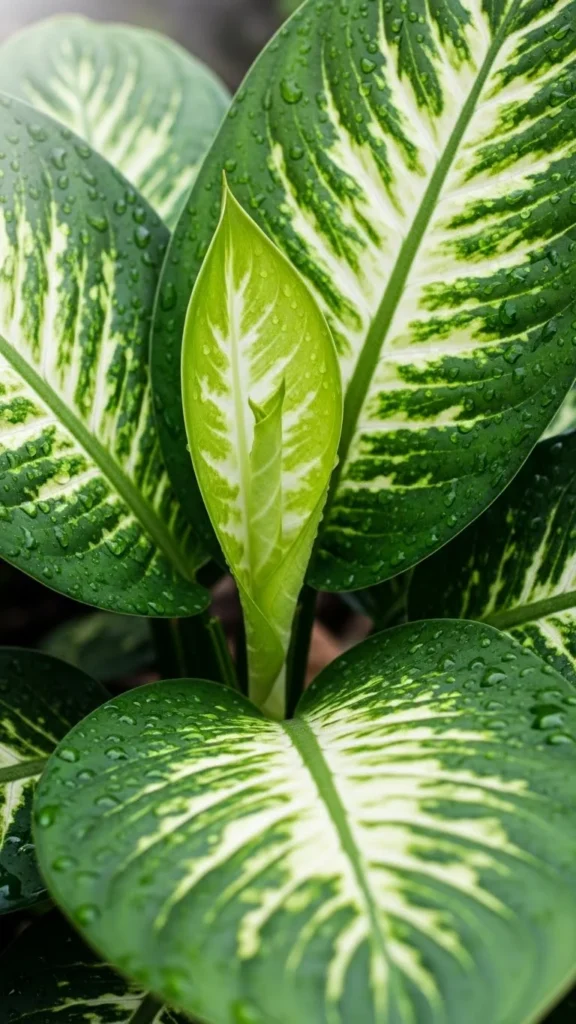
Dieffenbachia shows striking cream-and-green leaves even in dim light.
Its gentle variegation lifts darker winter interiors.
Use medium-sized pots and rotate the plant monthly.
Keep it away from pets and small children.
Water lightly and avoid soggy soil.
This plant shines as a centerpiece on side tables or plant pedestals.
12. Jade Plant
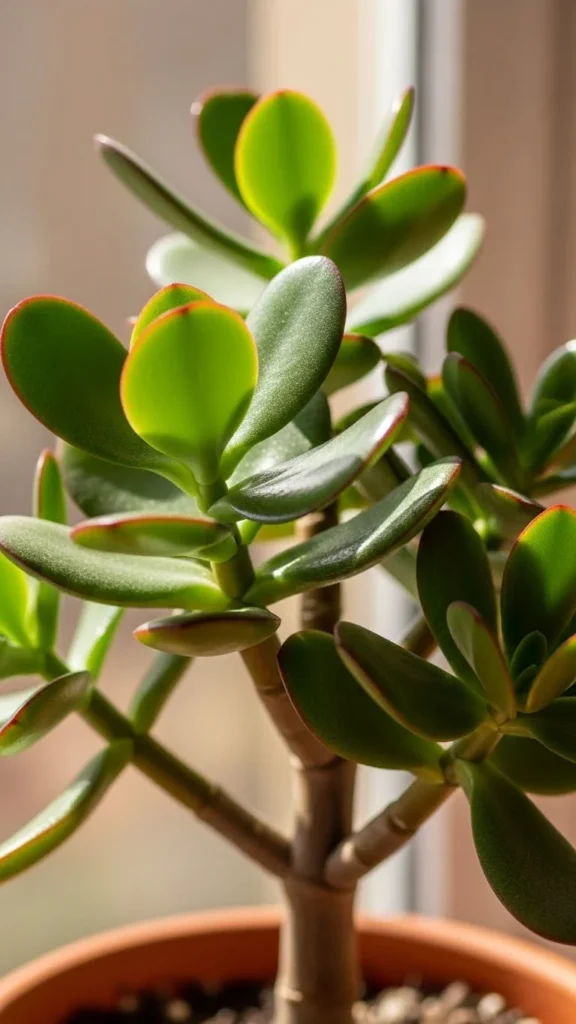
Jade plants tolerate moderate to low light and develop rich winter colors.
Their plump leaves store moisture, making winter care simple.
Place them near soft morning light if possible.
Use shallow ceramic pots to match their sculptural shape.
Water lightly every few weeks.
Their minimalistic look complements winter décor beautifully.
13. Rubber Plant
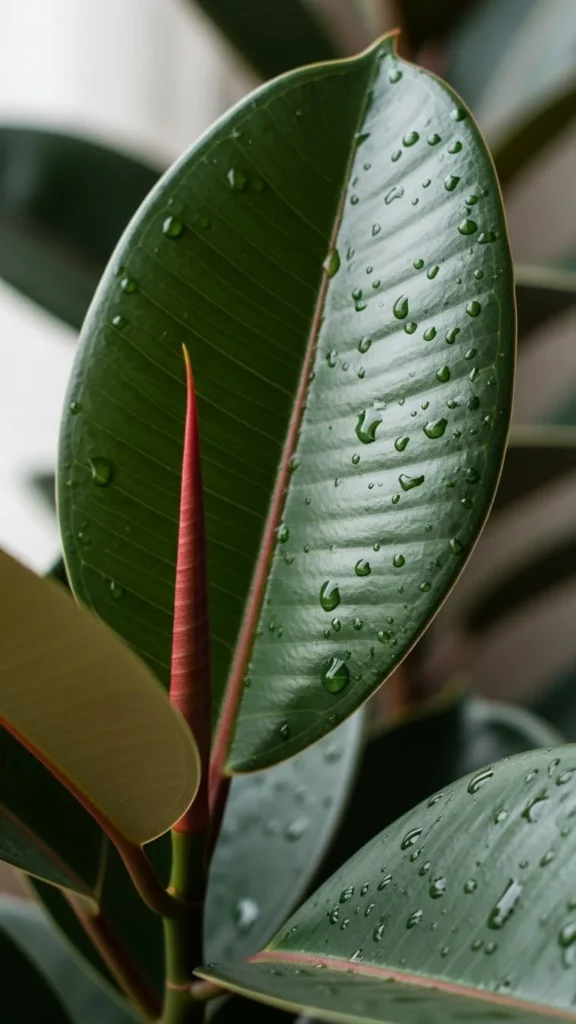
Rubber plants grow well in lower light and offer glossy, dramatic leaves.
Choose burgundy or dark green varieties for winter contrast.
Use tall planters to emphasize height.
Wipe leaves often to maintain shine.
Water lightly and keep them away from heaters.
This plant creates a bold statement in living rooms and home offices.
14. Ferns (Boston or Maidenhair)
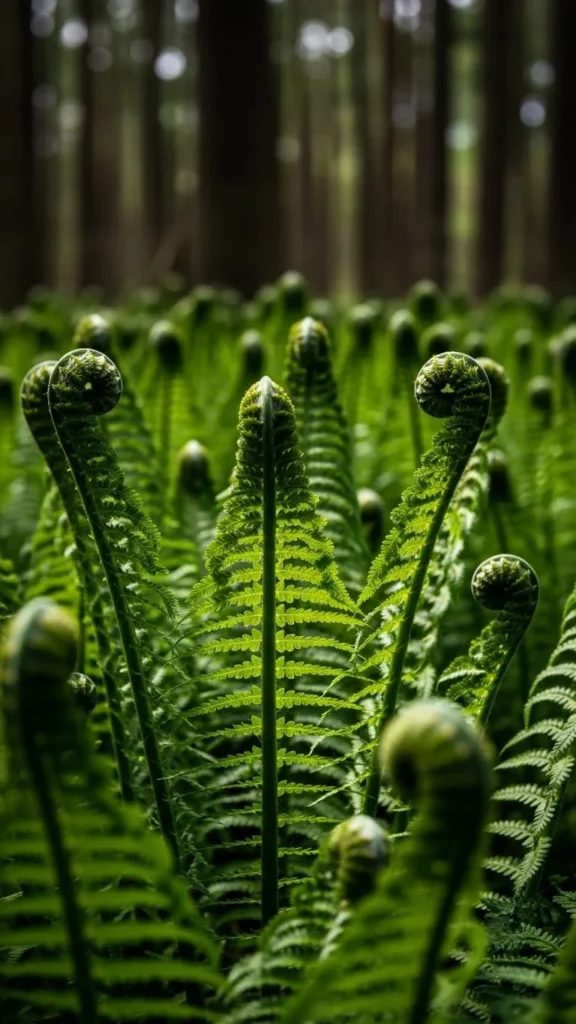
Ferns enjoy low light but appreciate humidity in winter.
Their soft fronds bring gentle texture to indoor rooms.
Place them in bathrooms, near humidifiers, or on pebble trays.
Keep soil slightly moist but never soaked.
Trim older fronds to encourage new growth.
Ferns brighten winter interiors with their feathery appearance and calming look.
15. Lucky Bamboo
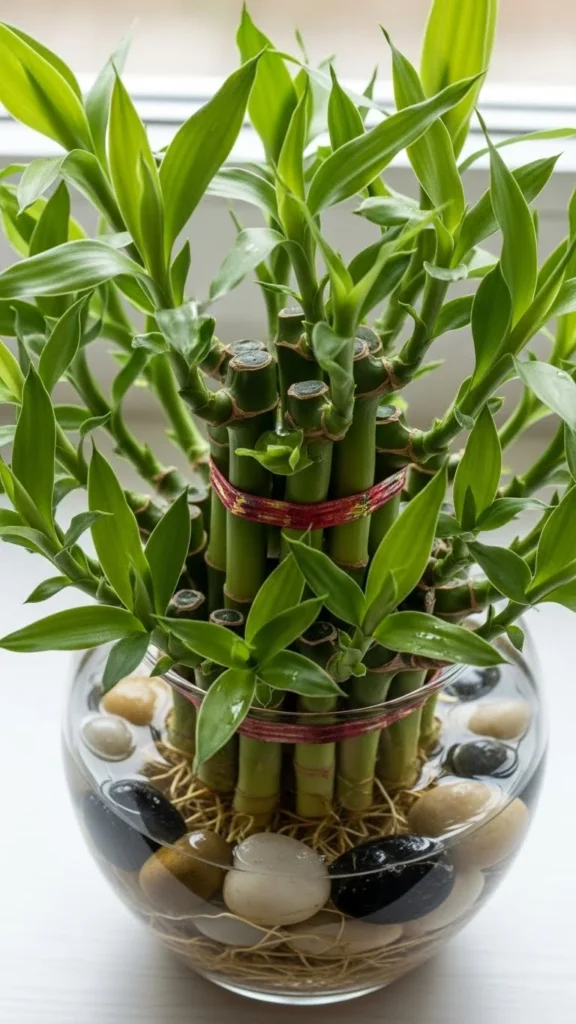
Lucky bamboo grows in water or soil and enjoys dim rooms.
Its upright stalks add structure to shelves and desks.
Change water every two weeks if grown hydroponically.
Use clear glass containers for a clean winter look.
Group multiple stalks for a fuller effect.
A simple, elegant plant that thrives even in shadowy spots.
16. Aglaonema Red
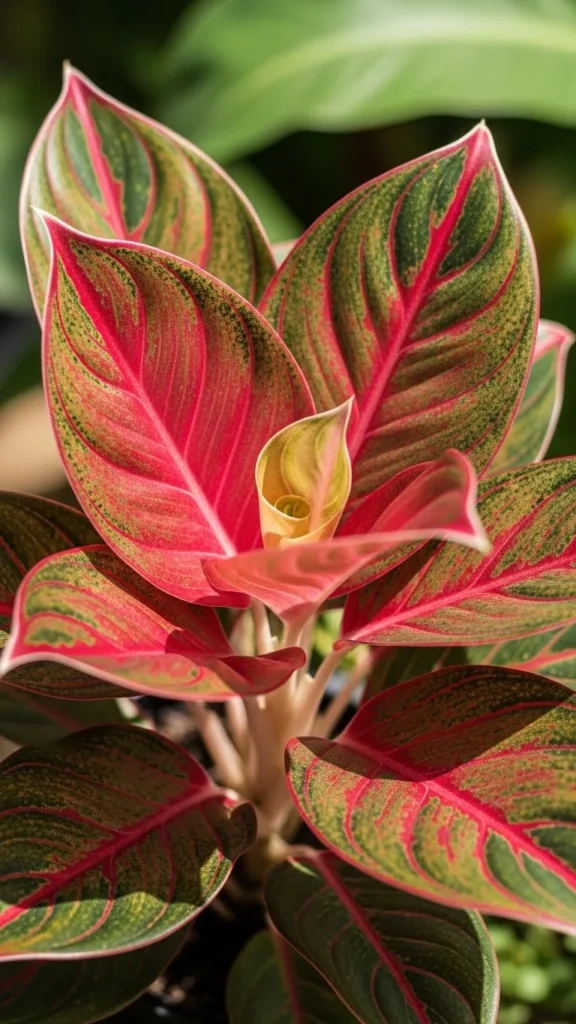
This colorful variety of Chinese evergreen brightens winter spaces with pink and red tones.
Its vibrant leaves stand out even in low-light corners.
Water lightly and keep it away from cold drafts.
Use contrasting pots—white or black—to highlight the leaf colors.
A perfect choice if you want winter color without flowers.
17. Monstera Adansonii
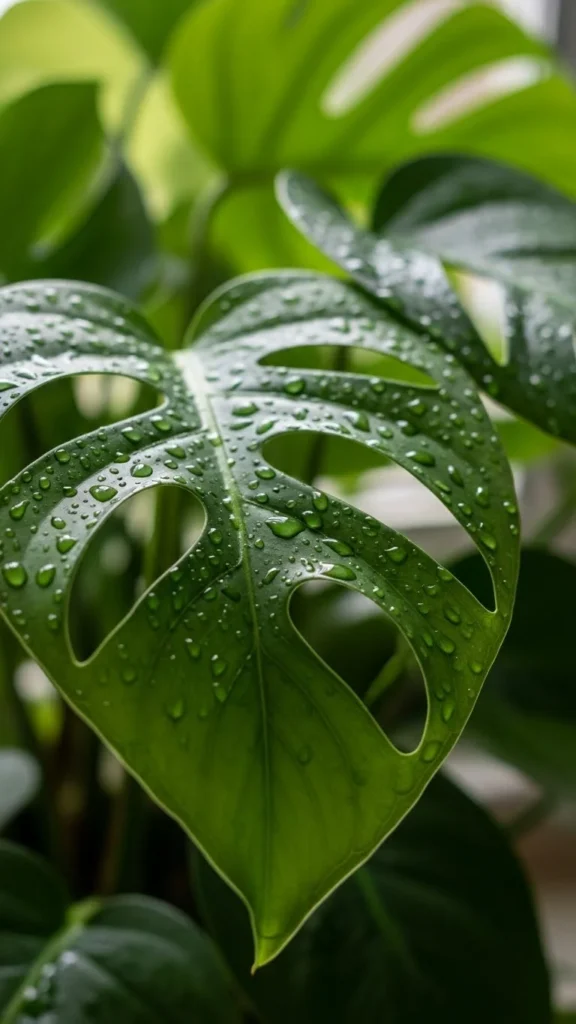
Known for its hole-patterned leaves, this plant thrives in gentle light.
Its foliage adds artistic flair to winter interiors.
Let the soil dry partly between waterings.
Use a moss pole or allow vines to trail naturally.
Trim occasionally for shape.
This plant turns any dim area into a focal point.
18. Schefflera Arboricola
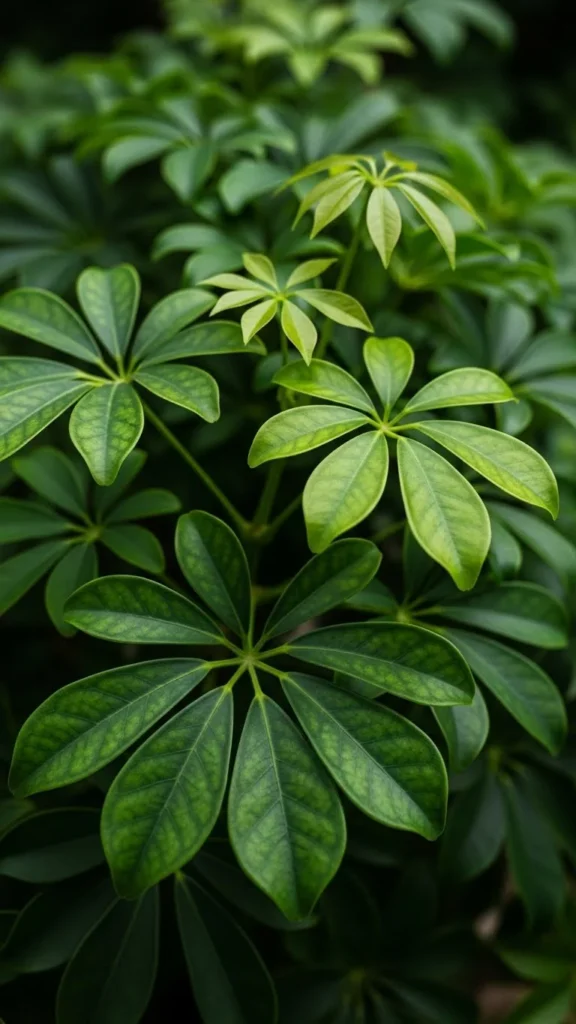
This compact umbrella plant grows reliably in winter with minimal light.
Its glossy leaflet clusters create a lush indoor look.
Water lightly and rotate weekly.
Use it as a table or floor plant depending on size.
It pairs well with woven baskets and winter textiles.
A great plant for beginners looking to brighten gloomy corners.
19. Calathea (Prayer Plant Family)
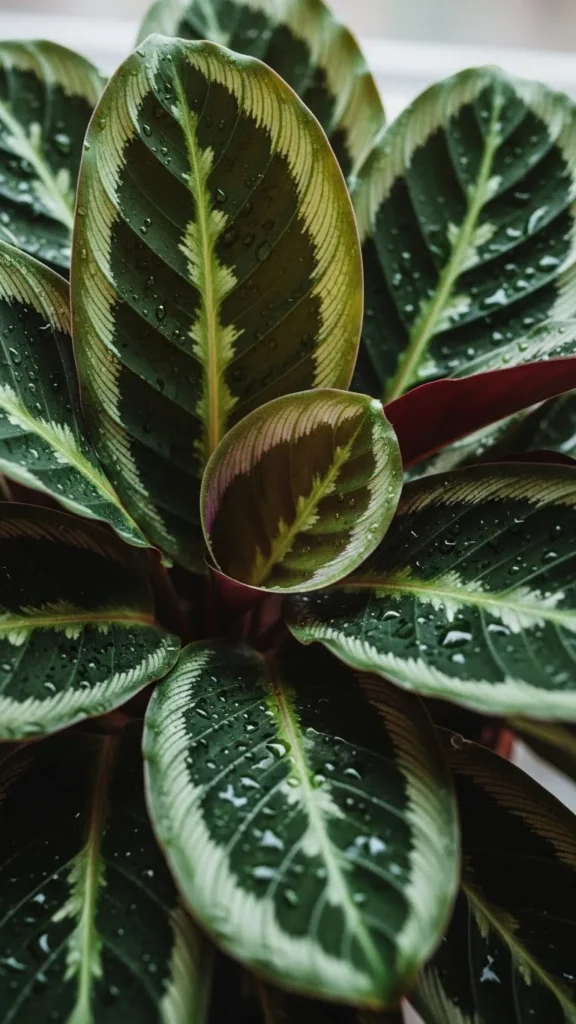
Calatheas offer patterned leaves that move gently throughout the day.
They handle low light but appreciate humidity.
Keep them away from heaters and drafts.
Use filtered water if possible.
Their foliage creates bold design statements, especially in winter lighting.
They shine in bedrooms, reading nooks, or office corners.
20. Fittonia (Nerve Plant)
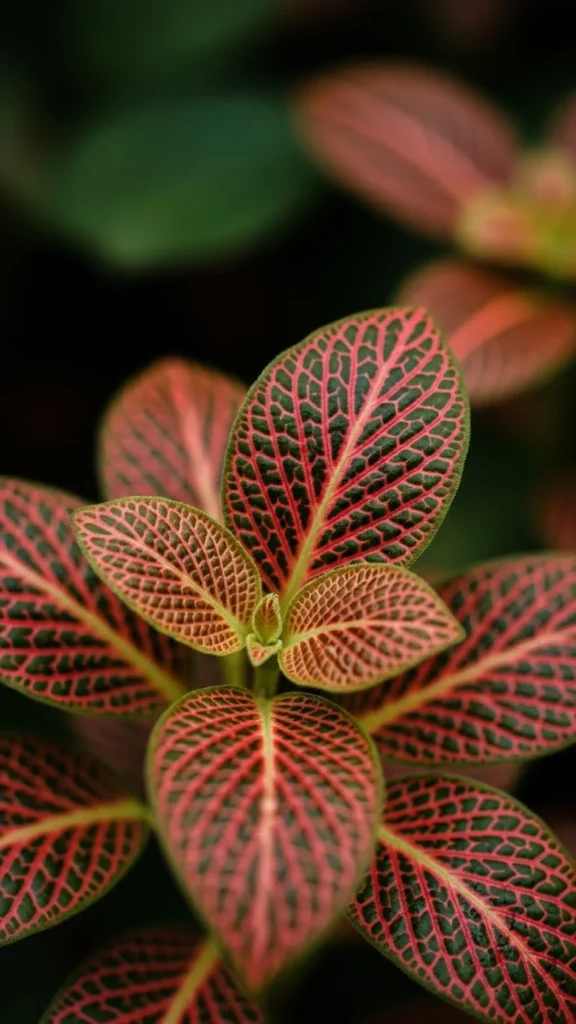
Fittonia thrives in low light and displays vivid pink, red, or white veins.
It prefers slightly moist soil and higher humidity.
Place it inside terrariums or on pebble trays.
Its compact size fits shelves, desks, and small tables easily.
The bright leaf veins add cheer to winter spaces.
21. English Ivy (Indoor Variety)
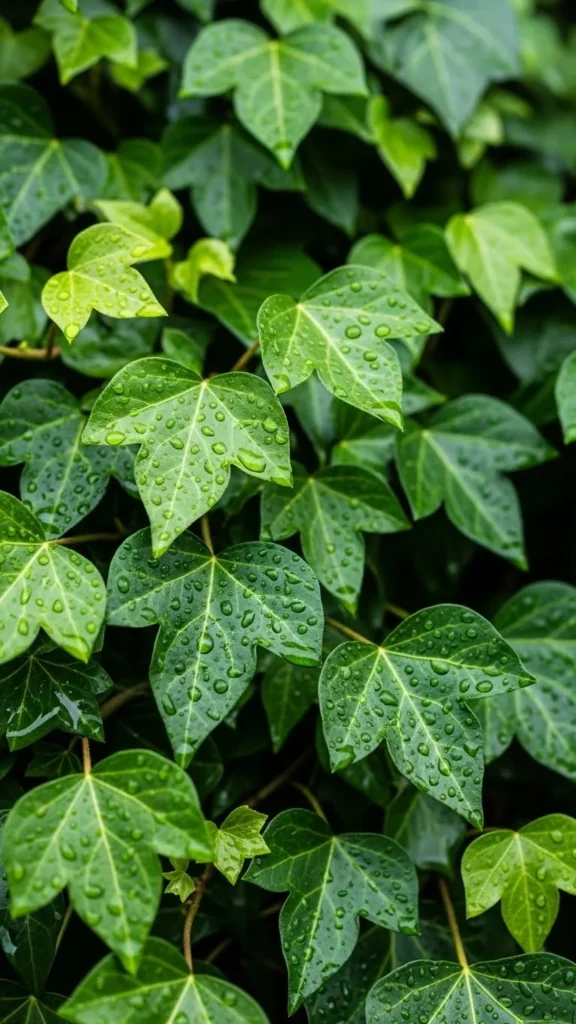
Indoor ivy varieties handle shaded rooms well.
Their trailing vines soften edges and create a cozy look.
Give them medium moisture and let them climb or cascade.
Trim regularly to keep vines controlled.
Use hanging pots or high shelves for best effect.
They’re especially charming in winter décor themes.
22. Money Tree
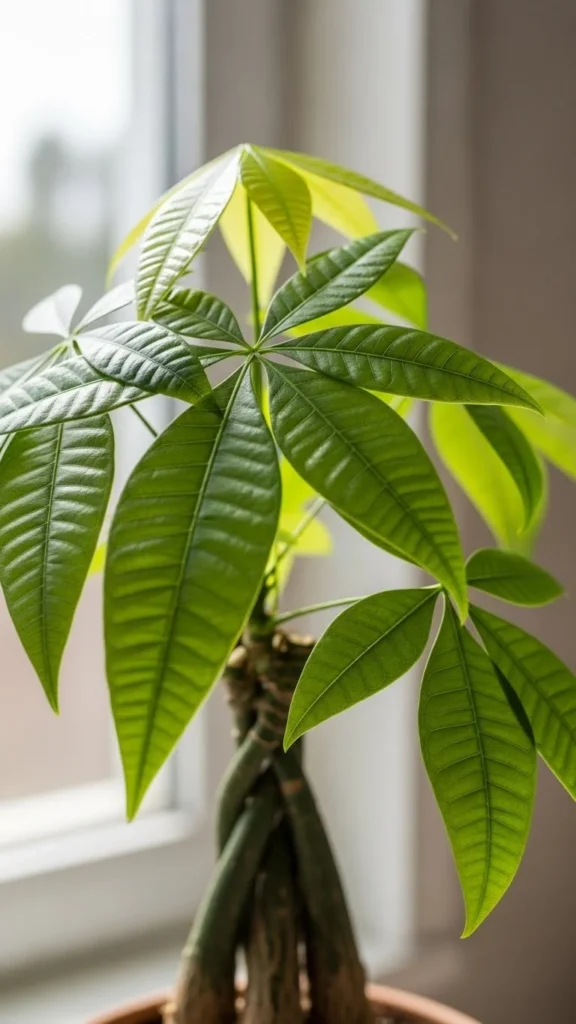
Money trees adapt well to low light and dry winter air.
Their braided trunks and bright leaves make them visually appealing.
Place them a few feet from windows.
Water sparingly during cold months.
Rotate the pot for even growth.
A great floor plant for living rooms or entryways.
23. Haworthia
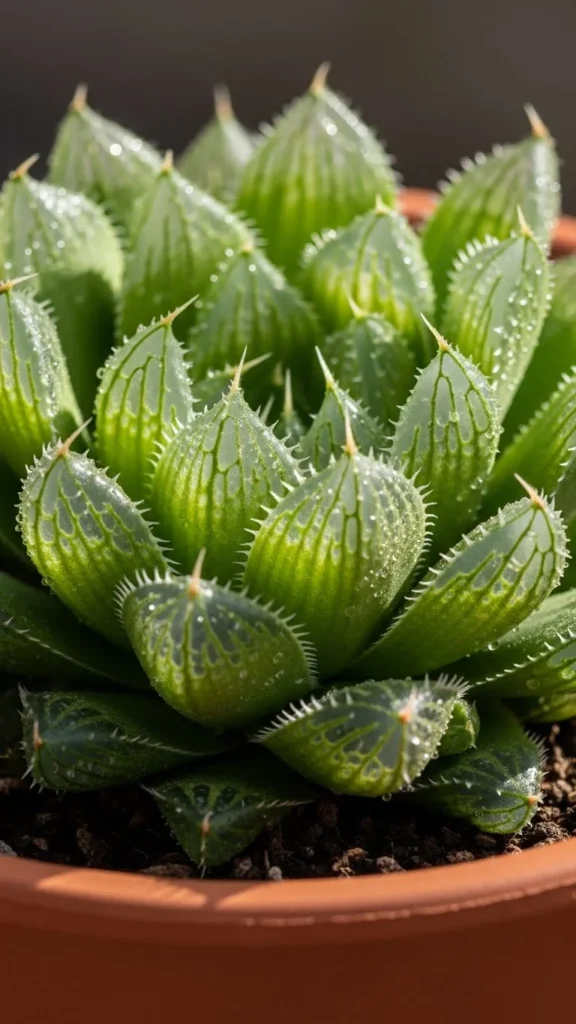
Haworthia succulents thrive in low light and offer striking geometric shapes.
Their compact size fits windowsills, desks, and bedside tables.
Water lightly once a month in winter.
Use sandy soil for better drainage.
Group a few varieties for a small, sculptural display.
They brighten interiors with minimal care.
Conclusion
Low-light indoor plants make winter interiors warmer, greener, and more inviting without demanding extra effort.
By choosing plants that thrive in dim rooms—like snake plants, ZZ plants, pothos, and calatheas—you create a calming environment that stays vibrant through the coldest months.
Start with one or two varieties and place them in corners that feel empty or dull.
Over time, your indoor space will grow into a cozy, leaf-filled retreat that brings brightness even on the darkest winter days.
Leave a Reply