

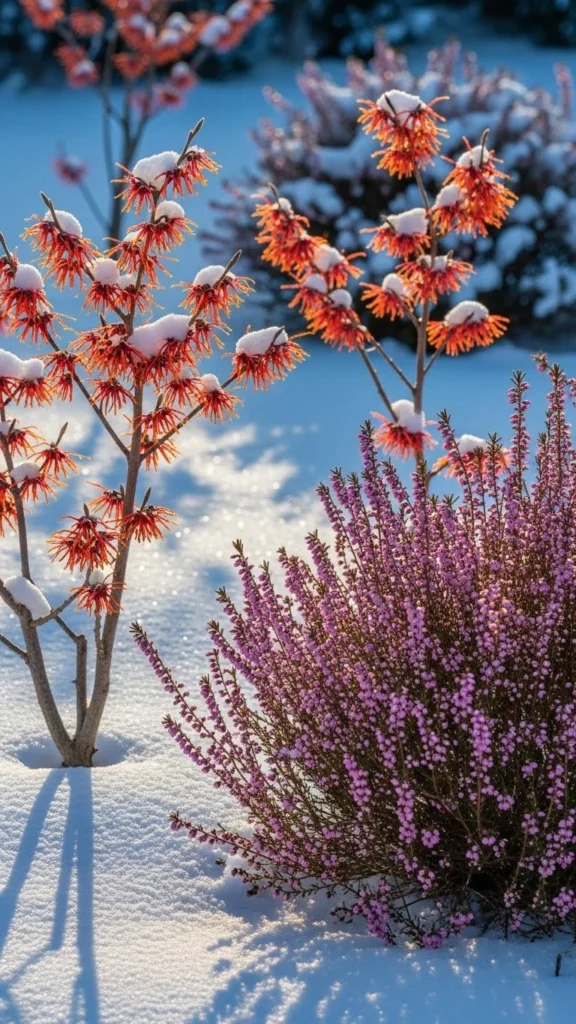
Winter can feel quiet, yet many shrubs continue to shine even when most plants pause. These shrubs bring color, texture, and gentle brightness to cold landscapes. Their blooms stand out against bare ground, frosted paths, and muted skies. Whether your garden is small or wide, these choices help create little pockets of color through the cold months. Each idea below offers easy, practical ways to care for shrubs without adding extra work or cost.
1. Winter Jasmine
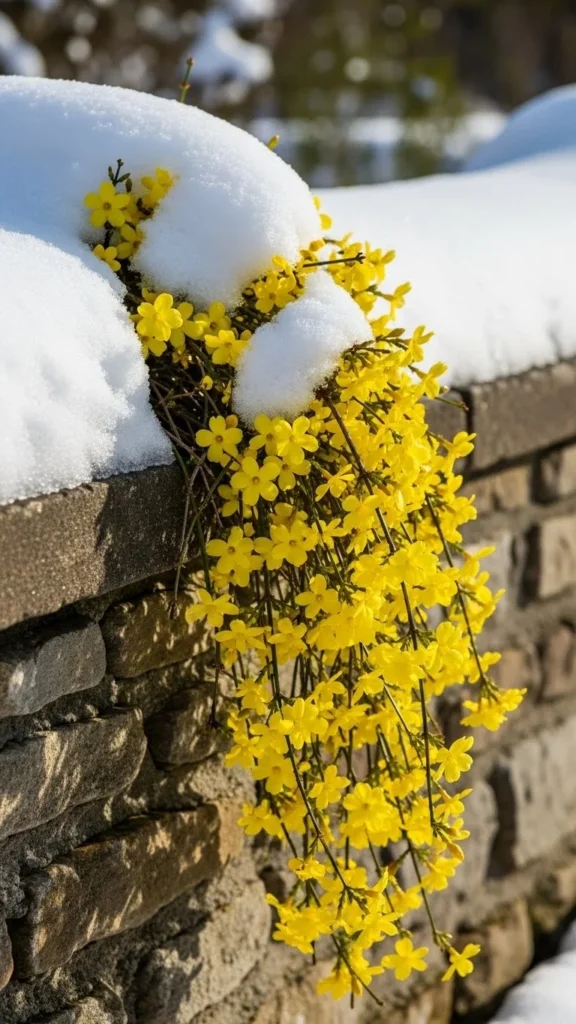
Winter jasmine creates simple yellow flowers that brighten cold corners.
It handles chill well and spreads gently along walls or fences.
Add a small trellis if you want it to climb.
Its branches stay flexible, so shaping it stays easy.
Water lightly when soil looks dry.
Prune in early spring to keep growth tidy.
If you want more coverage, layer a branch into the soil and let it root naturally.
This shrub stands out even on gray days and adds gentle color when little else blooms.
2. Camellia Japonica
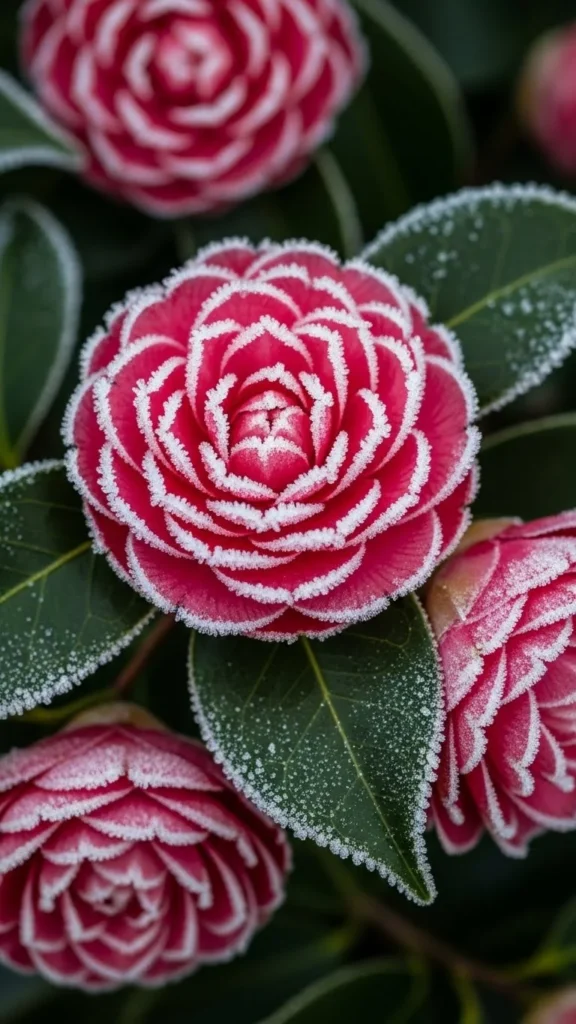
Camellia japonica brings bold color through late winter.
Its petals stay sturdy even during light frost.
Plant it near a wall for slight protection from wind.
Water consistently but avoid soggy soil.
Mulch under the shrub with bark chips to keep roots calm.
Choose varieties in red, pink, or white to match your winter style.
If space feels tight, trim lightly after its bloom cycle.
Camellias add a soft, full look to winter gardens with minimal effort.
3. Witch Hazel
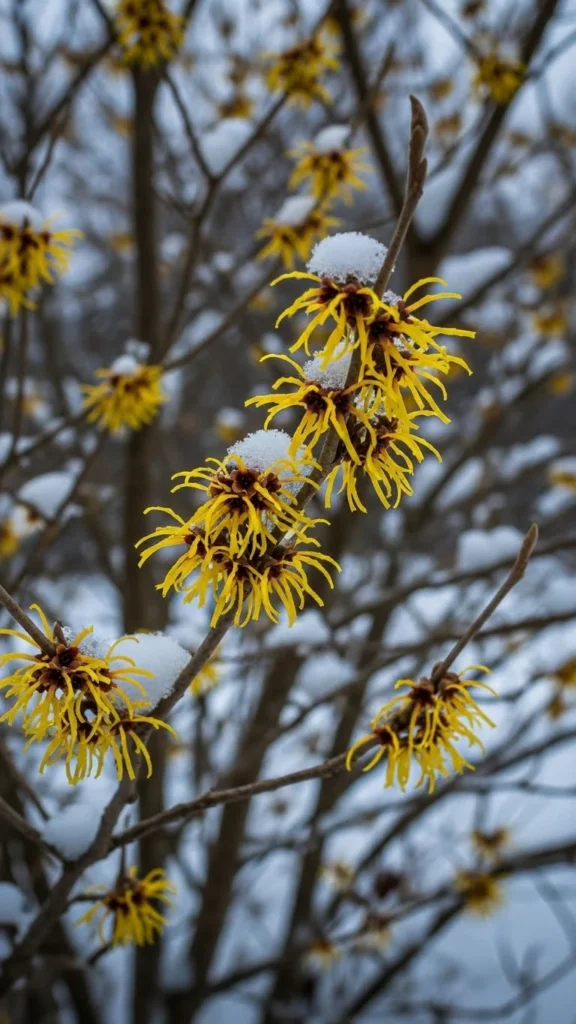
Witch hazel brings unusual ribbon-like blooms.
The color stands out nicely in cold months.
Plant it where you can see it from a window so the winter display feels closer.
It prefers loose soil, so mix compost into the planting hole.
Water during dry spells.
Trim old branches once a year to keep the shape balanced.
If you want a stronger show, add a bark mulch ring around the base.
This shrub adds character when most plants sleep.
4. Daphne Odora
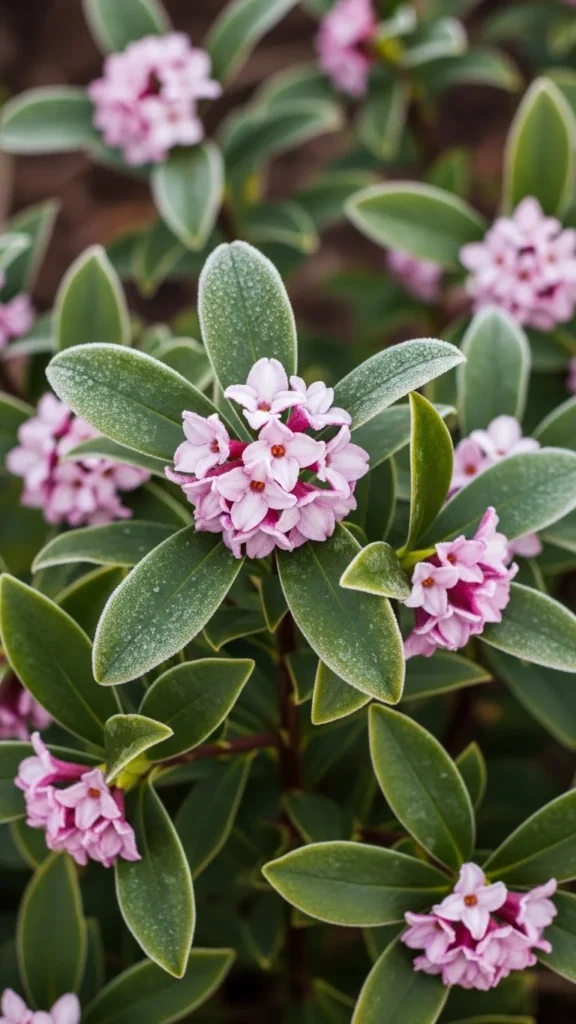
Daphne odora offers clusters of soft pink blooms during late winter.
Its scent feels gentle and pleasant outdoors.
Plant it in a spot with afternoon shade.
Keep soil airy by mixing in leaf mold.
Water lightly but consistently.
Daphnes prefer calm roots, so avoid moving them once planted.
You can add a simple stone ring around the base to protect it from winter winds.
This shrub brings surprising color when other areas feel quiet.
5. Hellebore Shrub Form
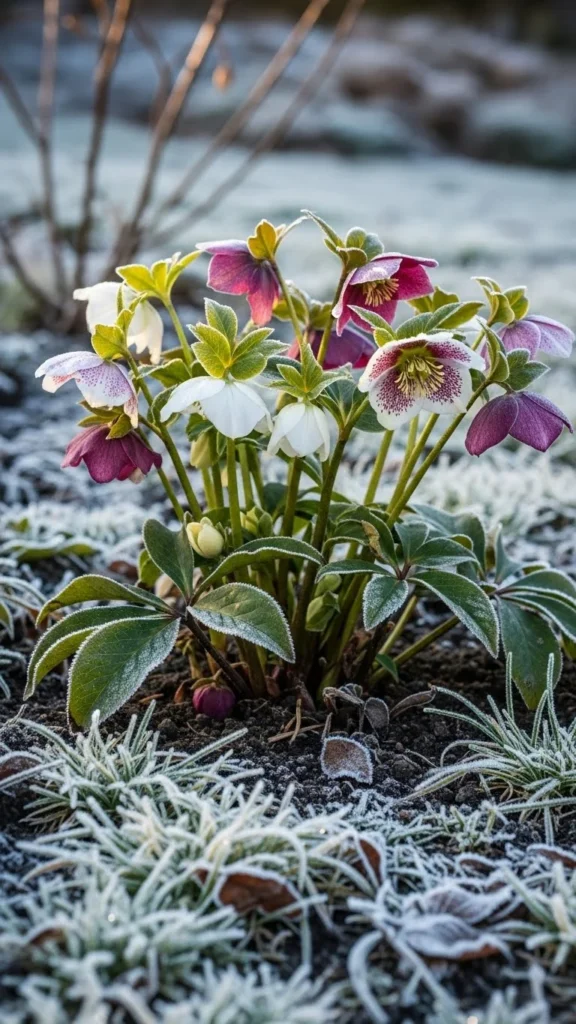
Hellebores often behave like small shrubs in winter beds.
Their blooms rise above glossy leaves and last for weeks.
Plant them under taller shrubs or near paths.
They handle cold well and don’t need heavy care.
Add compost once a year to keep soil soft.
Cut old leaves when new growth appears.
If you want more plants, divide clumps in early spring.
These long-lasting blooms brighten shady spots through winter.
6. Mahonia
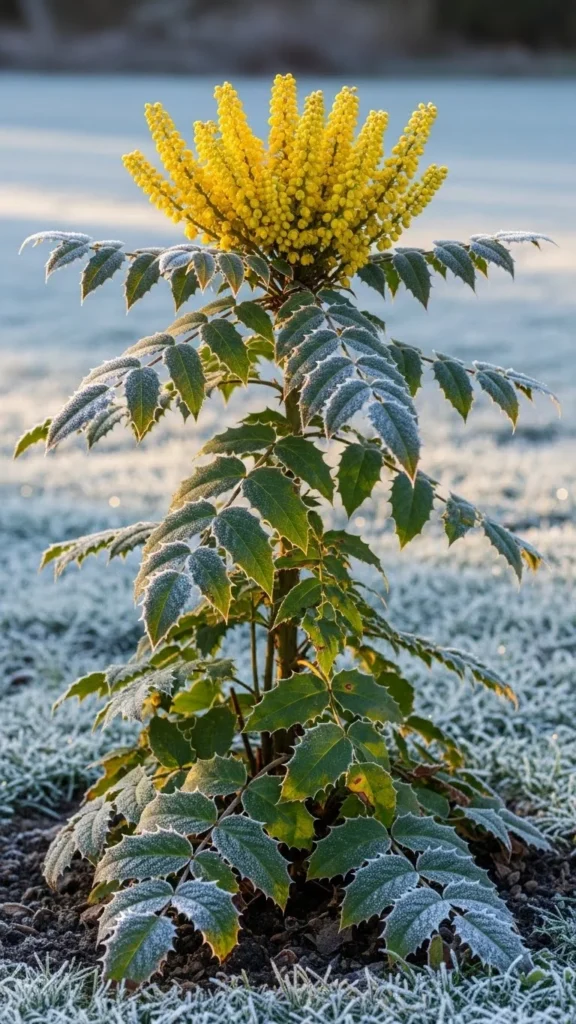
Mahonia stays strong through winter and sends up bright yellow spikes.
Its shape adds height and structure to cold landscapes.
Plant it in partial shade for best results.
Add wood chips around the roots to keep moisture steady.
Trim only if the size becomes too large.
Mahonia pairs well with stone borders.
If the soil feels compact, mix in compost to help aeration.
This shrub makes winter gardens feel more textured and alive.
7. Viburnum Bodnantense
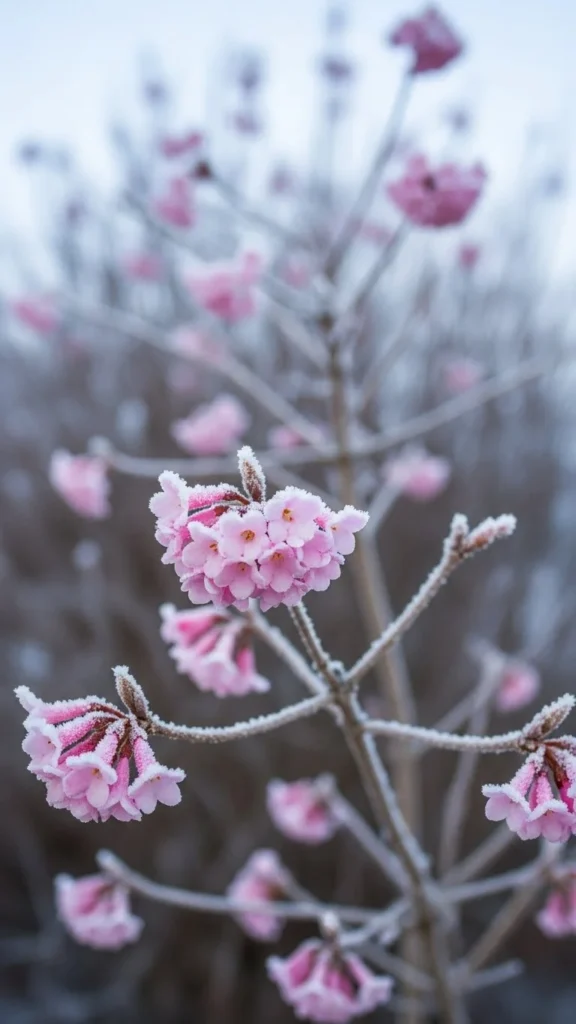
Viburnum bodnantense brings clusters of soft pink blooms through winter.
Its flowers appear even when branches look bare.
Plant it near a walkway so people notice the blossoms.
It handles pruning well, so shaping stays simple.
Water during long dry stretches.
Add a mulch layer during fall to prepare for winter.
This shrub works well for medium-size gardens looking for steady color.
8. Winter Heath
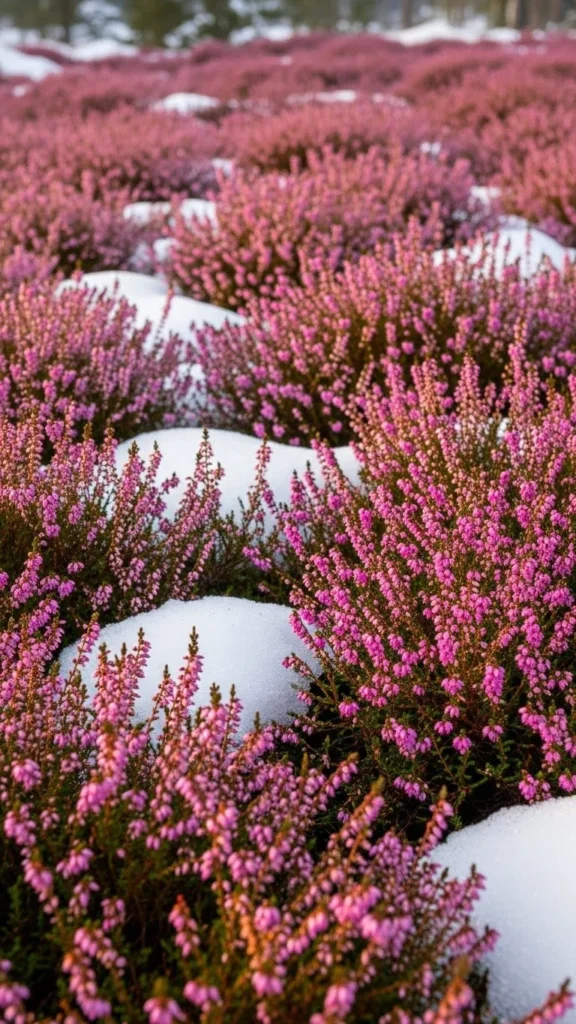
Winter heath forms dense low shrubs with tiny winter blooms.
It spreads slowly and keeps color through the cold season.
Plant it near rocks or borders.
Water lightly when frost melts.
Trim lightly to keep a neat mound.
Heath works well in large clusters for stronger color.
Add coarse sand to improve drainage if your soil feels heavy.
These tiny flowers brighten chilly garden edges.
9. Edgeworthia
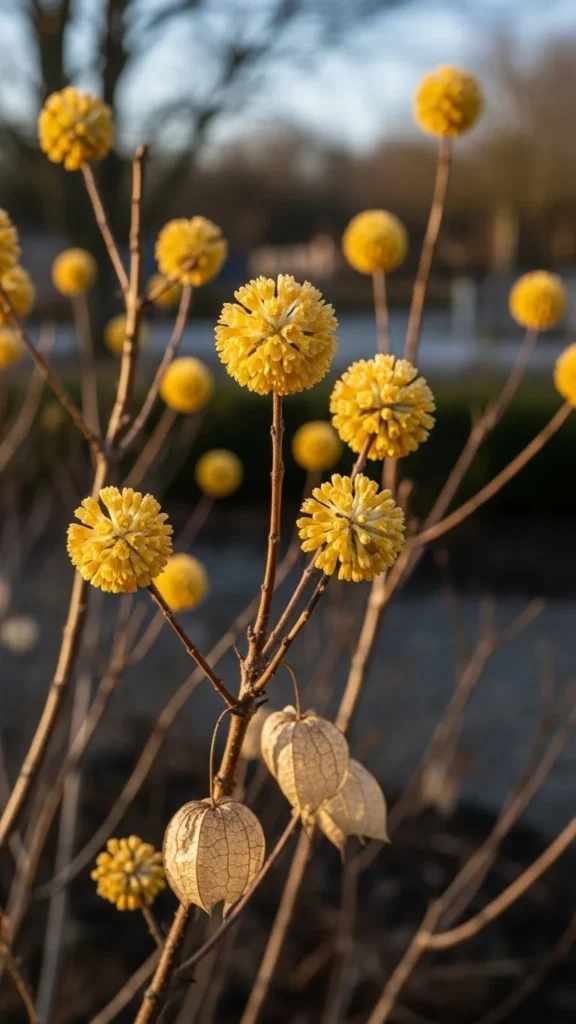
Edgeworthia creates spherical blooms that catch winter sunlight beautifully.
Its branches stay bare, making the flowers more noticeable.
Plant it in a protected corner.
Add leaf mulch around the base each fall.
Water during mild winter days if soil feels dry.
Trim only lightly to keep its natural shape.
This shrub works well as a focal point near patios or entry paths.
10. Winter Camellia (Sasanqua)
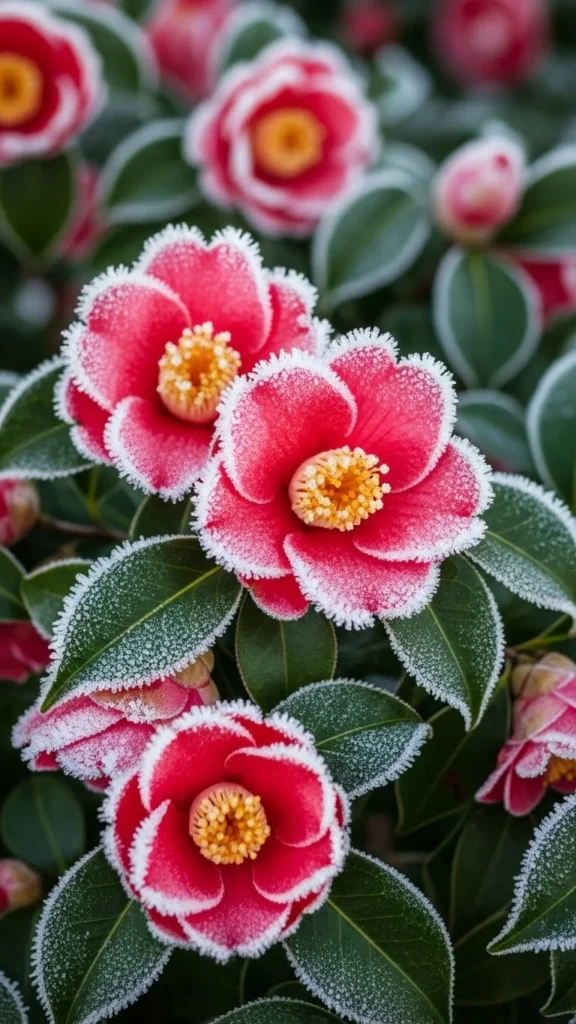
Winter camellias bring long bloom periods.
They handle cooler temperatures and still produce colorful flowers.
Plant them along fences for a soft hedge.
Water evenly but avoid soggy soil.
Add bark mulch to keep roots calm.
Prune gently once blooms finish.
Choose compact varieties for small spaces.
These shrubs help fill winter gardens with color when many plants pause.
11. Japanese Apricot Shrub Form
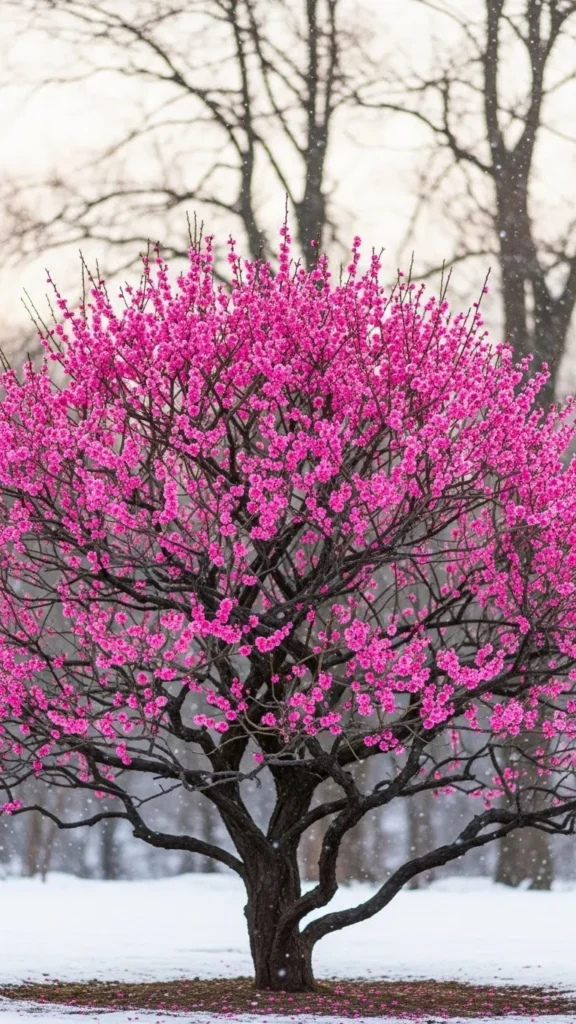
Japanese apricot creates brilliant pink blossoms in late winter.
Even small shrubs produce eye-catching blooms.
Plant it in a sunny spot for stronger color.
Water during dry weeks.
Add compost each year to support new growth.
Light pruning helps maintain a tidy shape.
If you want more flowers near entryways, plant two shrubs in a pair.
The blooms feel cheerful even on frosty mornings.
12. Forsythia ‘Show Off’
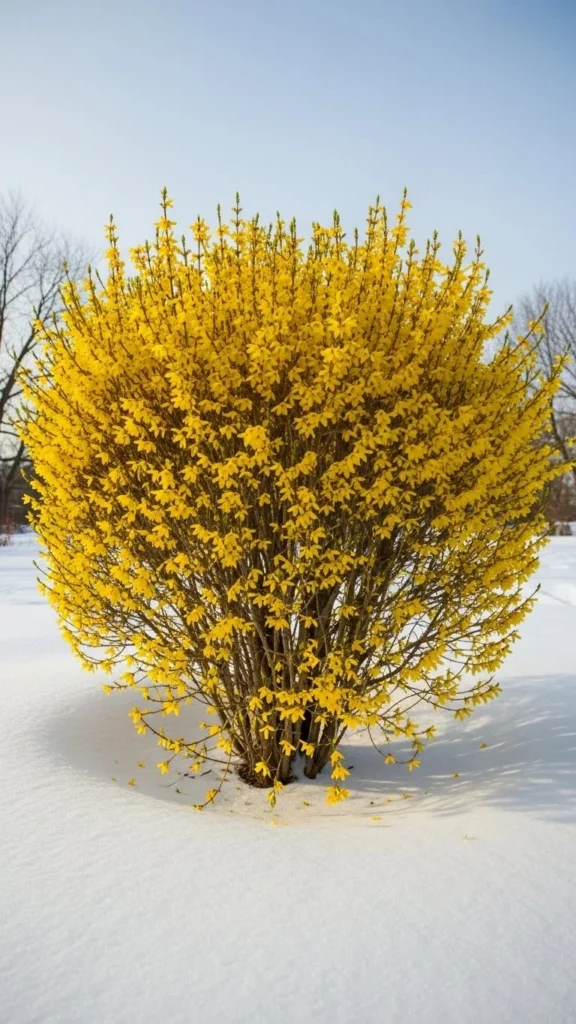
Forsythia wakes early and lights up winter beds.
Its yellow flowers appear before leaves do.
Choose a compact version for smaller gardens.
Trim right after flowering.
Add wood chips to help soil stay steady.
If branches spread too far, use small stakes for support.
This shrub brightens fences, slopes, and corners with simple care.
13. Kerria Japonica
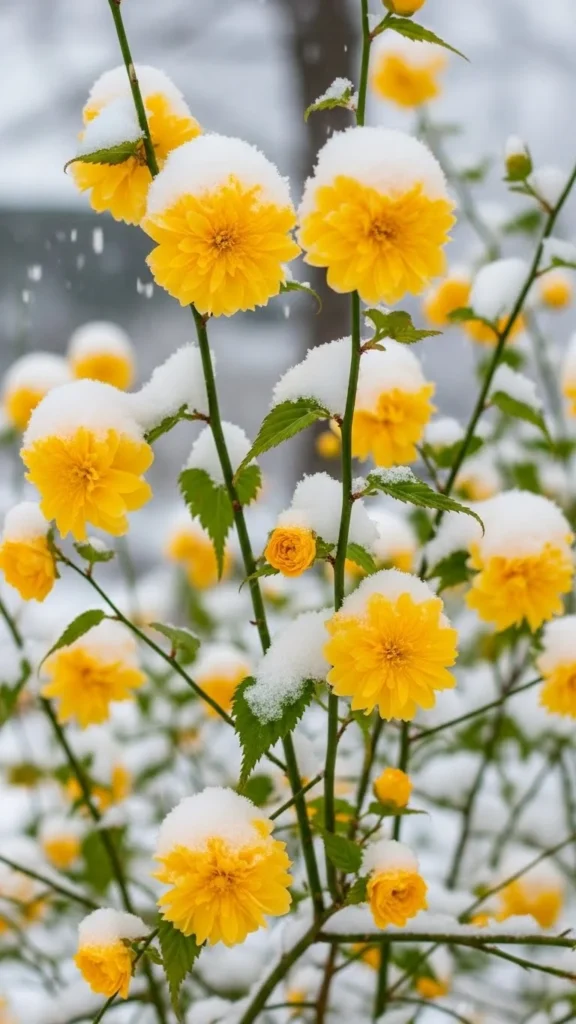
Kerria japonica offers round yellow blooms that stand out against winter branches.
It prefers partial shade and loose soil.
Water gently throughout colder weeks.
Add a thin mulch layer to protect roots.
Cut older stems to keep growth young.
This shrub creates a soft, cheerful look in winter beds.
It also works well near stone paths for bright contrast.
14. Pieris Japonica
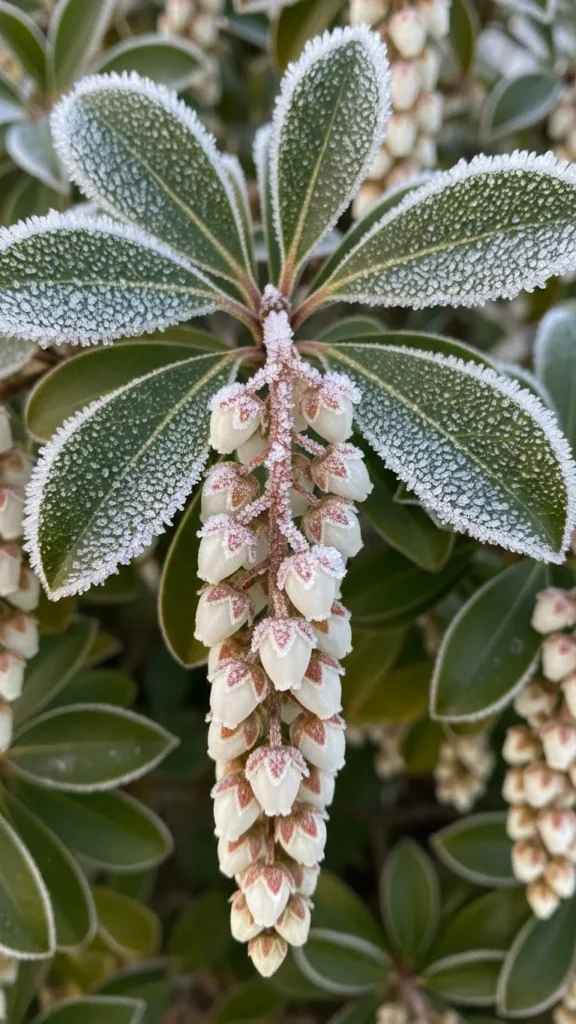
Pieris japonica produces cascading buds that open near late winter.
Its glossy leaves add year-round structure.
Plant it in partial shade.
Mulch with pine needles for a natural look.
Water lightly during long dry periods.
If leaves look tired, trim tips gently.
This shrub pairs well with camellias and hellebores.
15. Sarcococca
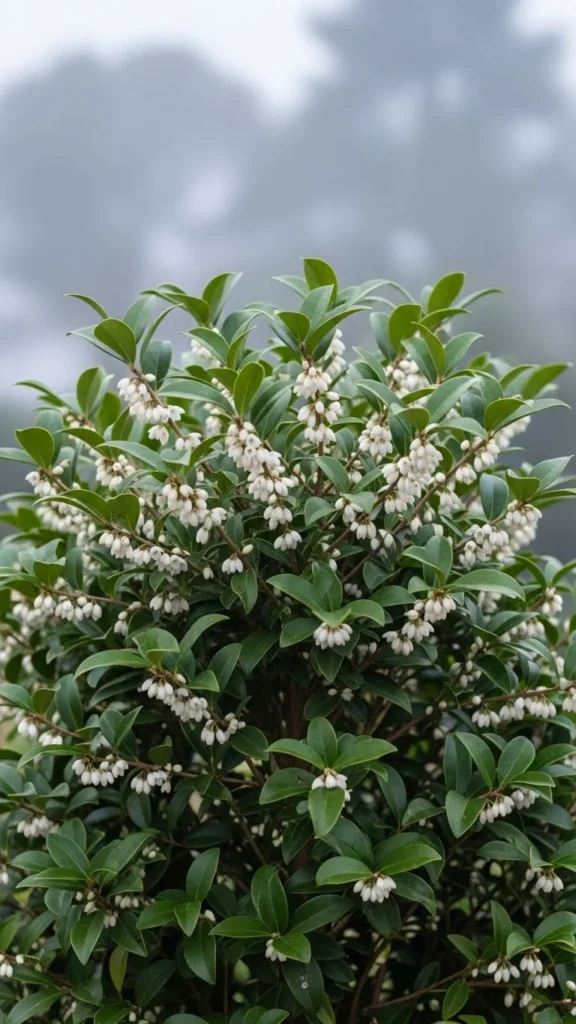
Sarcococca is compact and tidy.
Its tiny white blooms show up even in deep winter.
Plant it along walkways so people notice its subtle scent.
Water lightly but consistently.
Add compost in fall to support growth.
Trim tips if the shape needs tightening.
This shrub handles shade well and brings quiet charm to winter corners.
16. Winter Honeysuckle
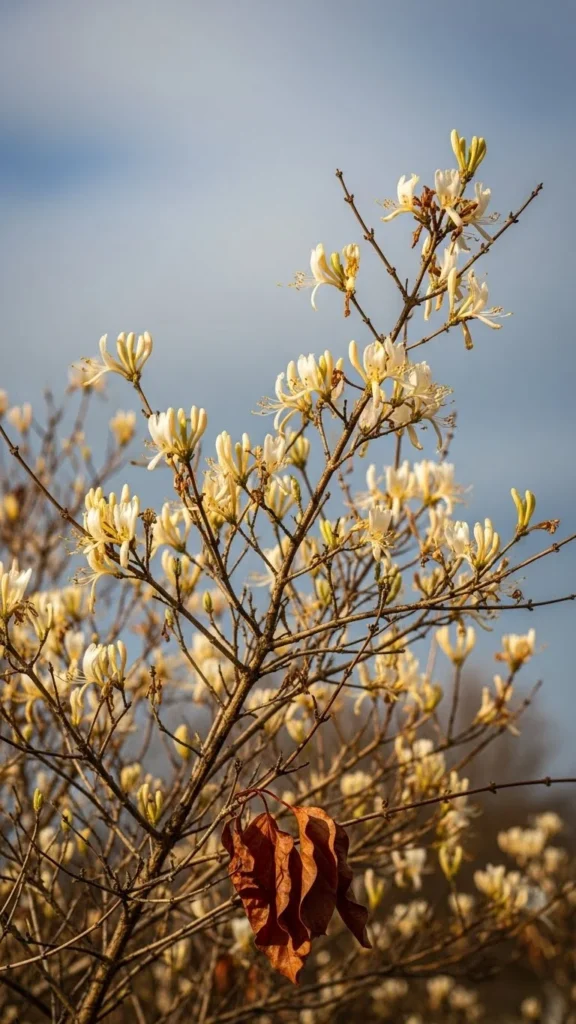
Winter honeysuckle creates cream-colored blooms that appear early.
Its flowers stand out against bare stems.
Plant it where you can enjoy the view from indoors.
Water during mild spells.
Prune once flowers fade.
Add a mulch ring around its base for steady soil.
This shrub adds gentle motion and brightness to winter gardens.
17. Rosemary ‘Arp’
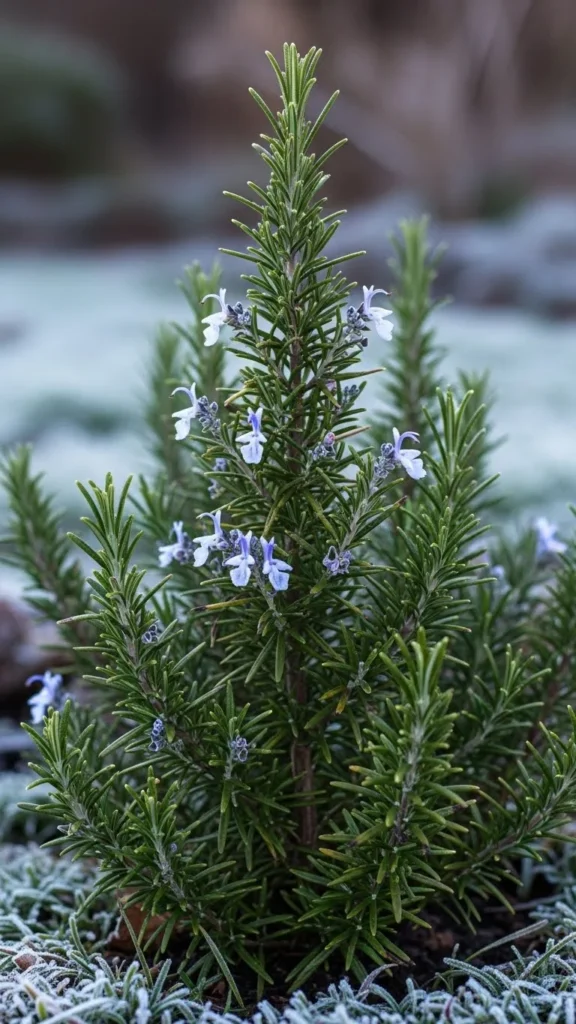
Rosemary ‘Arp’ acts like a hardy winter shrub.
Its pale blooms appear even in cold conditions.
Plant it in full sun near a walkway.
Water sparingly to avoid root issues.
Trim lightly for kitchen use.
Add gravel around the base for drainage.
This shrub keeps a garden smelling pleasant while adding winter texture.
18. Yuletide Camellia
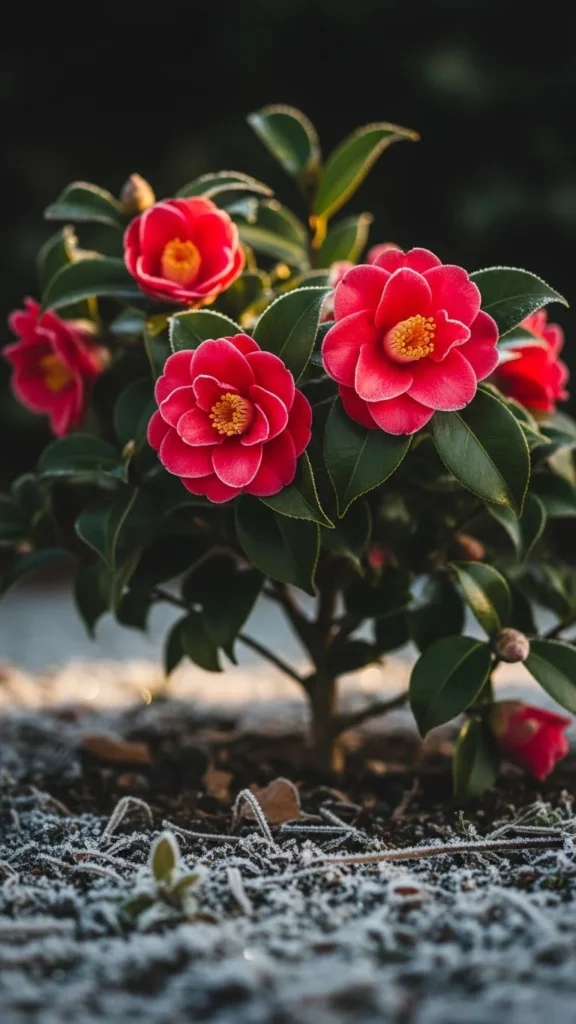
Yuletide camellia brings striking red flowers during winter holidays.
Its blooms stand out against its deep leaves.
Plant it in a partly shaded area.
Keep soil airy with leaf mulch.
Water when the surface feels dry.
Trim branches after flowering.
This shrub brings strong color to winter borders with simple upkeep.
19. Chaenomeles (Flowering Quince)
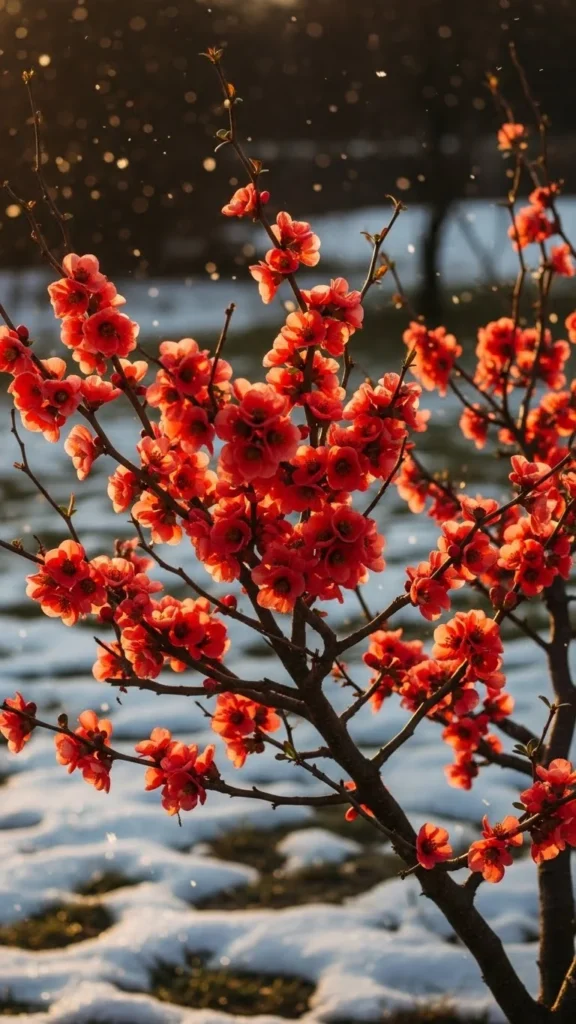
Flowering quince opens coral or pink blooms early in the season.
Its flowers appear even before leaves arrive.
Plant it along fences or near garden gates.
Water lightly during frost-free days.
Trim after blooming to shape the plant.
If you want extra blooms, add a mulch ring in early fall.
This shrub adds charm to cold-weather garden layouts.
20. Winterberry Holly
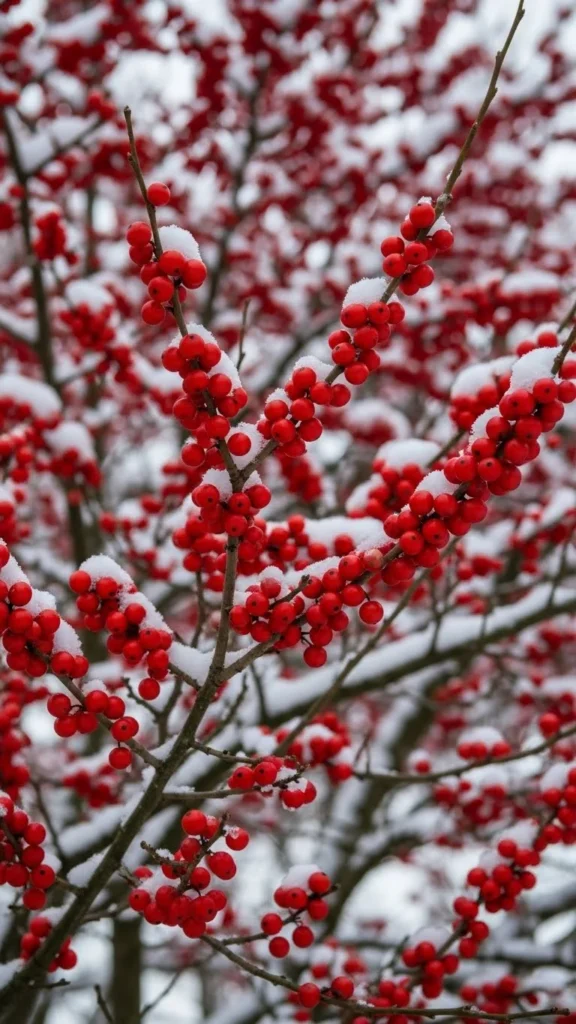
Winterberry holly shines with bright red berries rather than petals.
Its clusters stay vibrant through cold months.
Plant male and female shrubs for berry production.
Water evenly during the first year.
Add bark mulch to keep roots steady.
Trim lightly in late winter.
These berries draw wildlife and add bold color to the landscape.
21. Oregon Grape
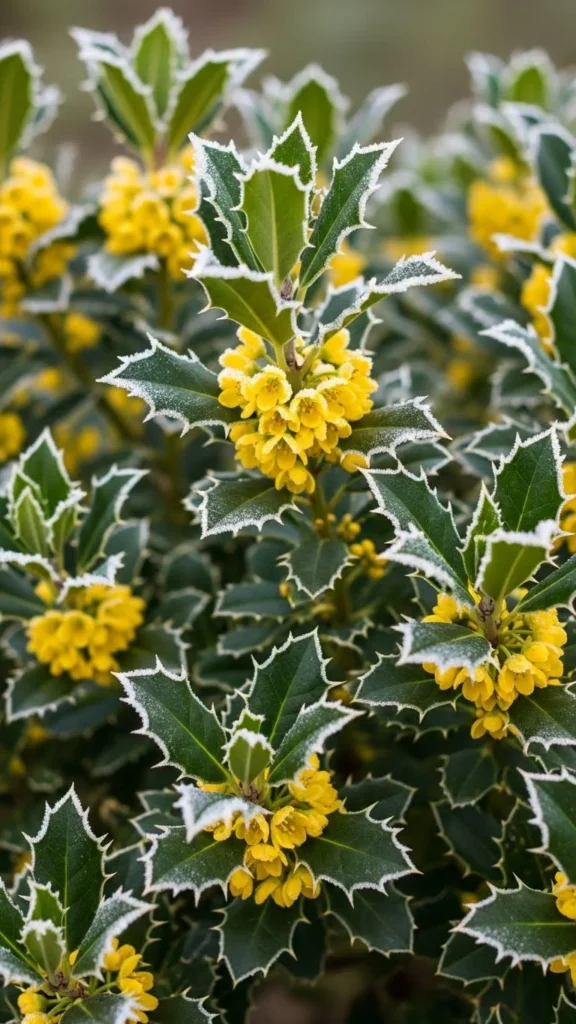
Oregon grape creates yellow blooms even in chilly weather.
Its foliage turns burgundy in colder months.
Plant it near stone walls or shaded corners.
Water occasionally during winter.
Mulch with wood chips.
If leaves look damaged, trim only the affected tips.
This shrub adds strong texture and steady winter interest.
22. Wintersweet
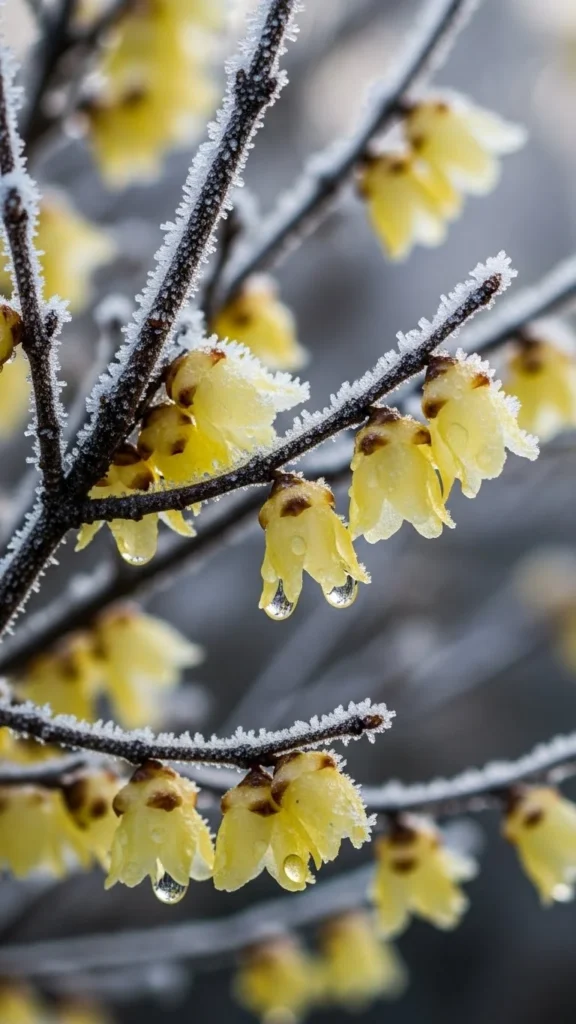
Wintersweet produces delicate yellow blooms that stand out on bare stems.
It prefers a sunny area.
Water during mild winter days if the soil dries out.
Add compost each fall for balanced growth.
Trim branches after blooming to maintain shape.
Wintersweet works well near windows or patios where its blooms stay easy to see.
Conclusion
Winter flowering shrubs help gardens feel alive even during the coldest months. Their blooms, colors, and shapes add character when most plants pause. Pick a few shrubs that match your space, pair them thoughtfully, and use simple care habits. These shrubs bring steady beauty to winter landscapes and create small, bright moments during quiet seasons.

Leave a Reply