

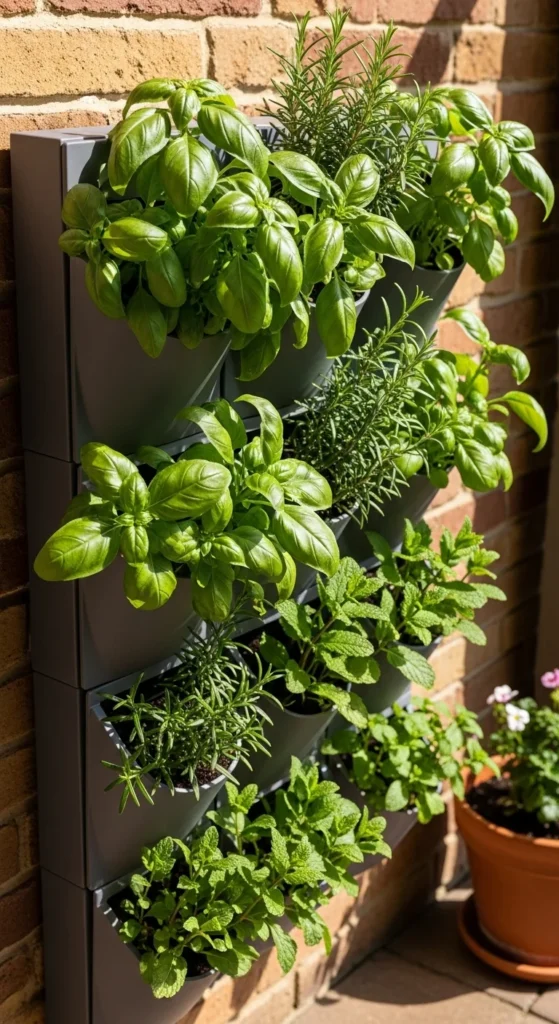
Vertical herb walls are a smart way to grow flavor-packed plants without giving up any floor area. These setups fit tiny balconies, narrow patios, or unused walls near the kitchen. Herbs grow well in shallow soil, so they adapt nicely to wall pockets, stacked shelves, and hanging frames. These ideas focus on simple construction, budget-friendly materials, and layouts that keep plants easy to water, trim, and maintain throughout the New Year.
1. Fabric Pocket Herb Wall
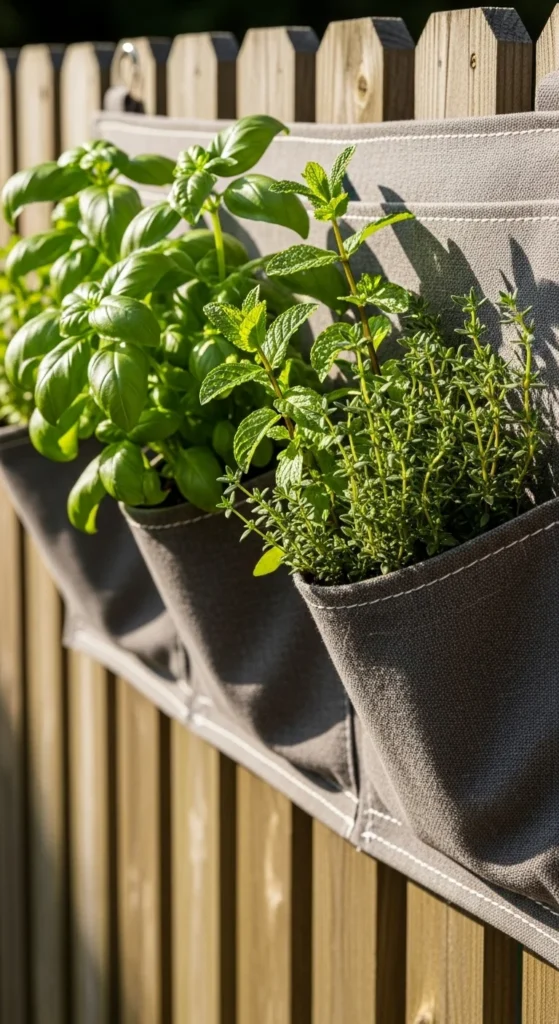
A fabric pocket system works well for small-space gardeners because the pockets hold moisture evenly. Hang the panel on a sunny wall and fill each pocket with a loose mix. Plant herbs that stay compact, such as mint, oregano, and thyme. Water from the top row so excess drips down. This setup fits narrow balconies or patios, and you can add pockets over time. If your wall gets full sun, shift shade-loving herbs to the lower pockets. Fabric systems dry faster than plastic, so check moisture often. A light morning spray keeps leaves hydrated. If winter air gets colder, attach a thin plastic sheet overnight.
2. Wooden Crate Stacked Herb Tower
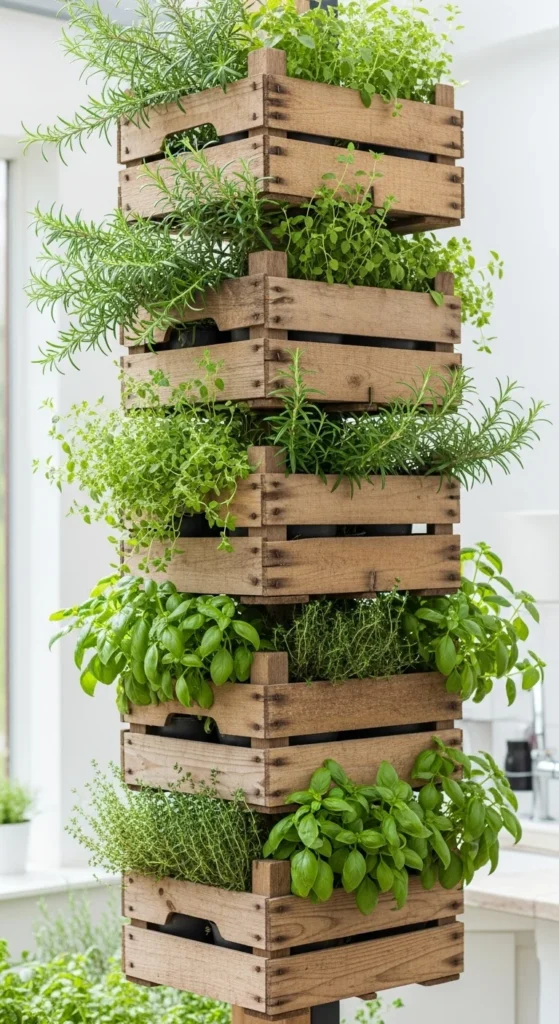
Wooden crates stack into a charming herb tower with only a few screws. Mount the crates to a sturdy wall and tilt them slightly upward so soil stays secure. Fill each crate with hardy herbs like rosemary, parsley, or chives. Place sun-loving varieties near the top. Water slowly so each crate absorbs moisture without overflow. Paint or seal the crates to help them last longer outdoors. This tower creates a rustic look while saving plenty of ground space.
3. Wire Grid With Hanging Pot Hooks
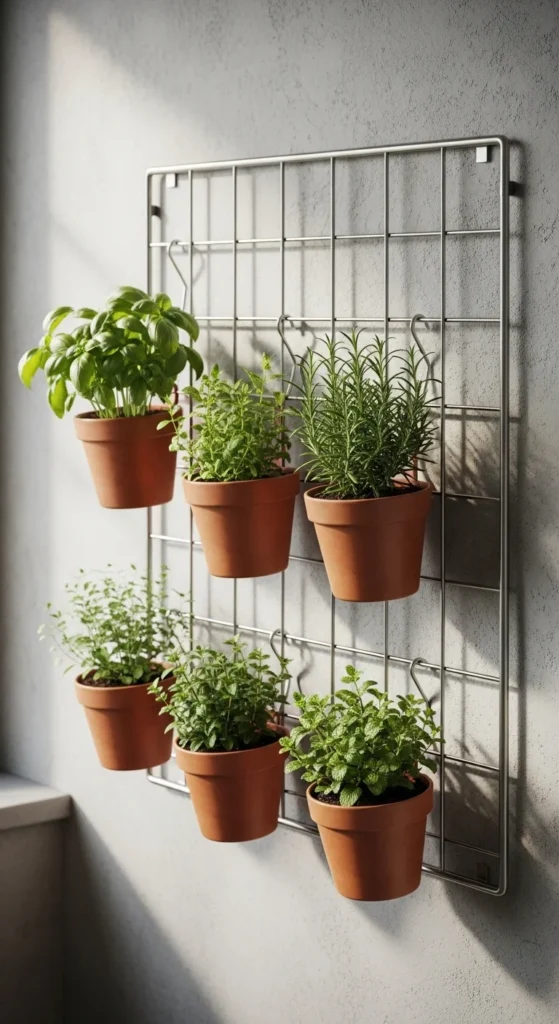
A wire grid gives you full control over pot placement. Attach the grid to a wall and use hooks to hang lightweight herb pots. You can move pots anytime to adjust their sunlight. Use matching pots for a cleaner look. Water lightly because small pots dry quickly. If wind is common in your area, secure each pot with a zip tie. This grid fits easily indoors or outdoors and lets you swap herbs faster than most systems.
4. Tiered Cedar Shelf Wall Unit
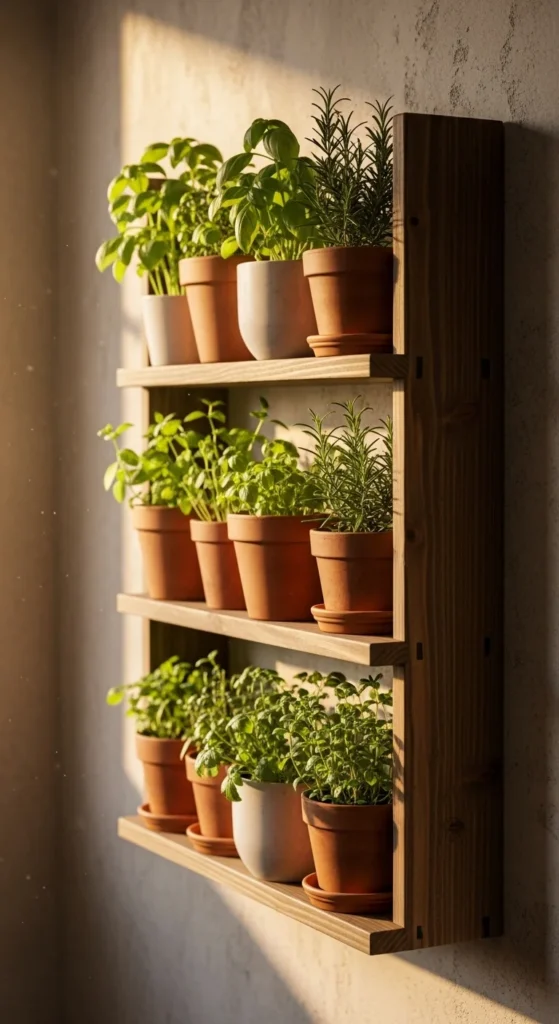
A cedar shelf unit brings warmth and structure to a vertical garden. Build three or four narrow shelves and space them evenly. Use small pots so roots stay compact. Place larger herbs, like basil, on the lower shelves and smaller ones higher up. Cedar resists moisture well, making it perfect for outdoor walls. Water from the top shelf if drainage holes line up. This setup suits renters because the unit can be removed easily.
5. Rain Gutter Herb Rack
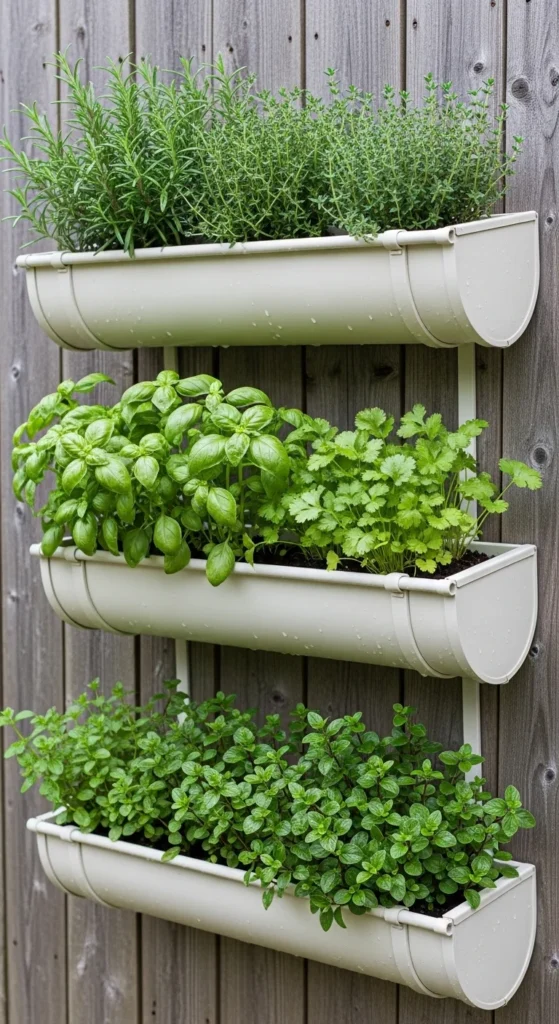
Rain gutters make an affordable herb rack. Cut them to equal lengths and attach end caps. Mount them on a wall, spacing them like shelves. Drill drainage holes along the bottom. Fill each gutter with a lightweight mix and plant herbs that stay low. You can create long ribbons of greenery with minimal cost. This design works well for balconies with limited room.
6. Pallet-Wood Vertical Herb Garden
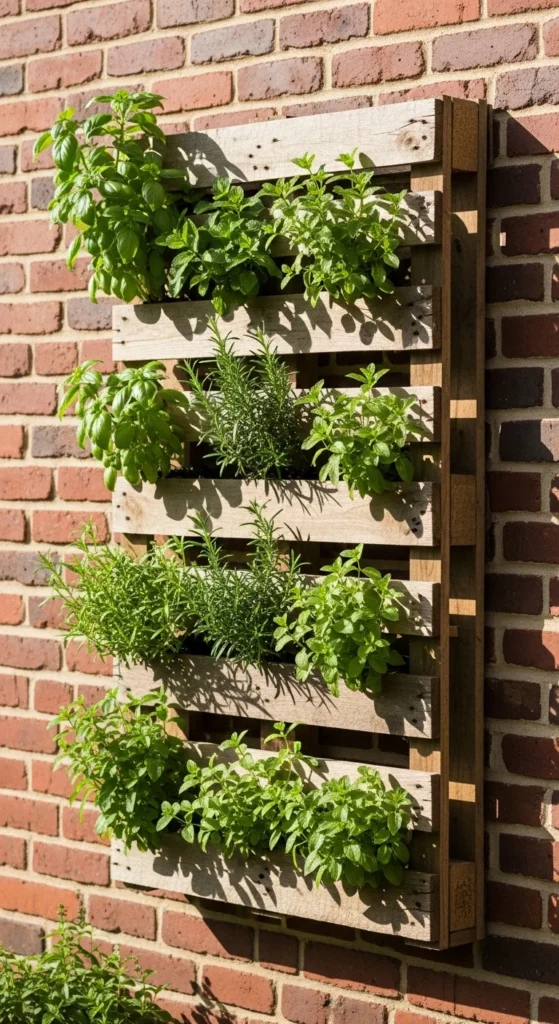
A pallet becomes a functioning herb wall with a bit of lining. Attach landscape fabric inside the back and sides, then fill the pallet with soil. Plant herbs between the slats. Keep the pallet upright against a sturdy wall. Water from the top and allow moisture to move downward. You can refresh plants easily by sliding new ones into place. It adds a rustic touch and fits tight areas.
7. Slim Ladder-Style Herb Rack
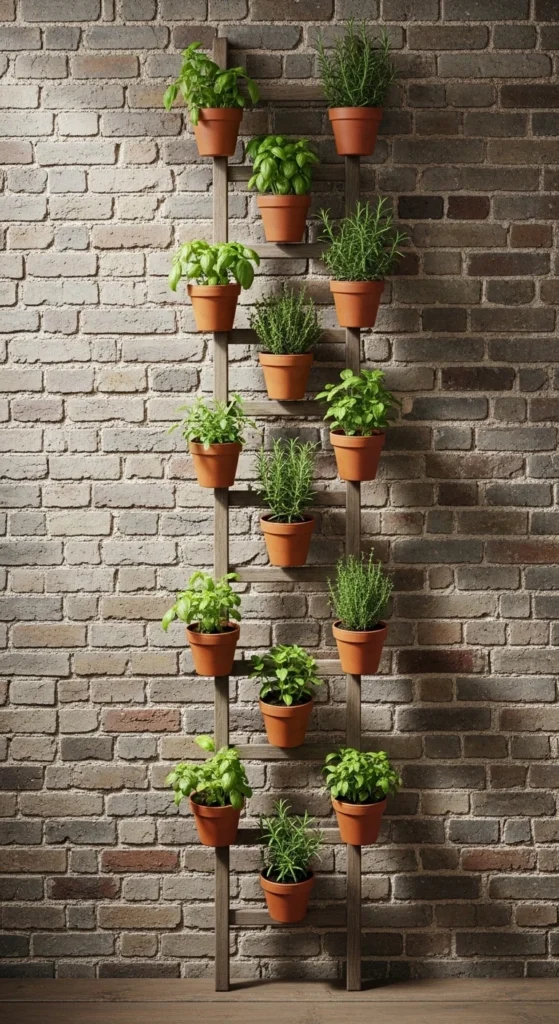
A ladder-style rack uses vertical space efficiently. Fix a slim ladder against a wall and hang small pots from the rungs. Start with lightweight containers to reduce strain. You can hook pots, tie them with rope, or use metal rings. This is a great choice for renters who want something simple but visually clean. Move herbs around based on sunlight changes through the season.
8. Floating Shelf Herb Columns
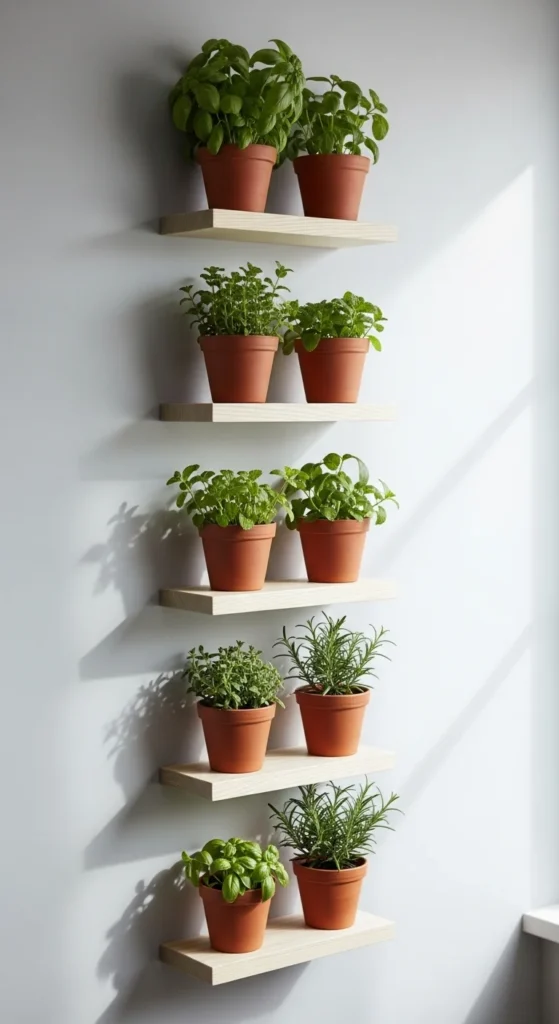
Floating shelves give an organized, modern look. Install three or four slim shelves in a vertical line. Keep pots small so the shelves stay stable. Plant herbs that need frequent trimming, such as basil or mint. Water slowly to avoid spills. This setup shines indoors near a window or outdoors on a patio wall. Adjust shelf height as plants grow.
9. Pocket Shoe Organizer Herb Wall
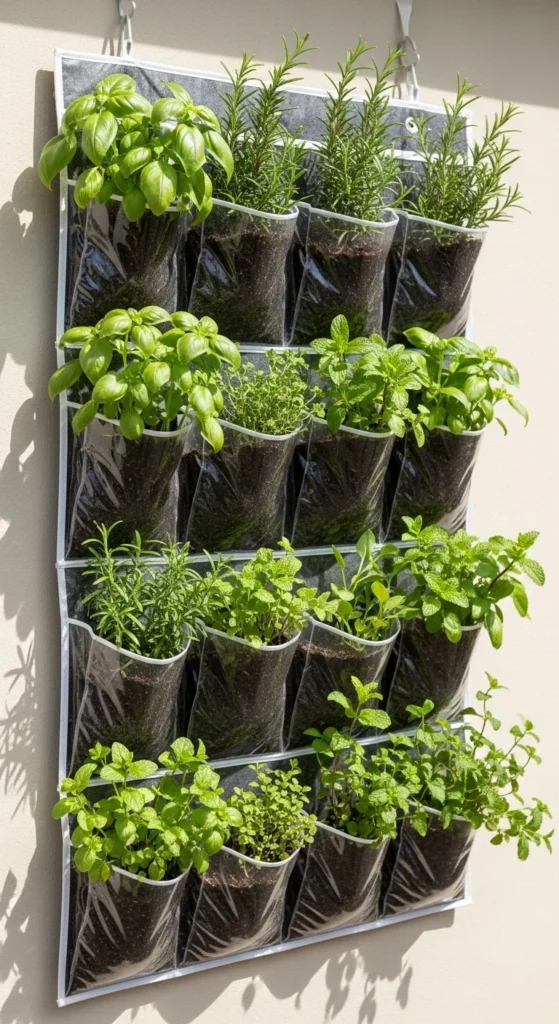
A clear-pocket shoe organizer can become an herb wall in minutes. Hang it on a fence or wall, fill each pocket with soil, and plant small herbs. The pockets keep roots compact. Water gently to avoid runoff. This method works especially well for renters or beginners. Because pockets dry fast, check moisture often. It’s a quick way to add plenty of greenery without building anything.
10. Vertical Window Frame Planter
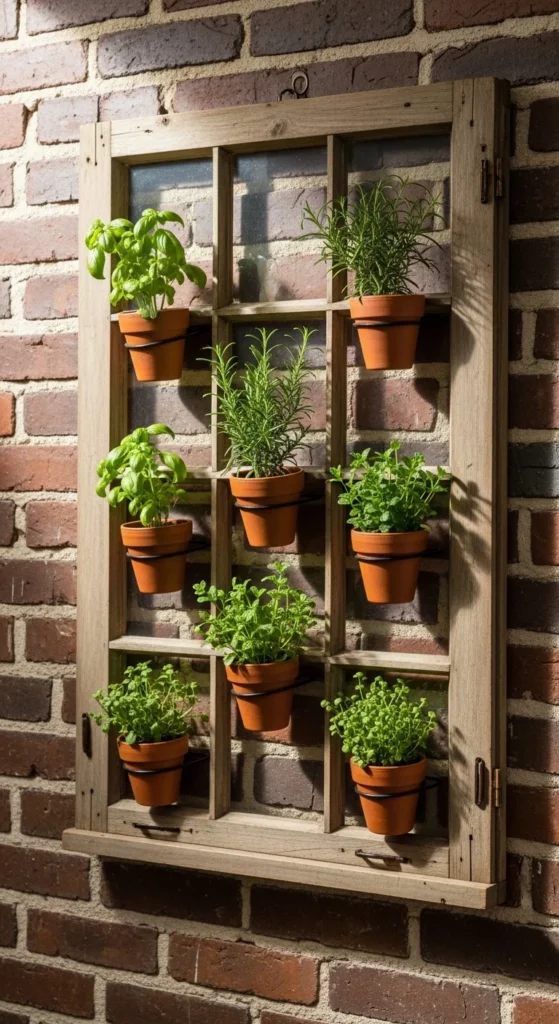
Old window frames create an attractive herb display. Attach small containers to each pane section. Paint the frame for character. Mount it securely and fill containers with soil. Grow thyme, oregano, or chives here because they stay compact. Water lightly to avoid spills. This piece becomes both garden and wall art, adding charm to any corner.
11. Stacked Hanging Buckets
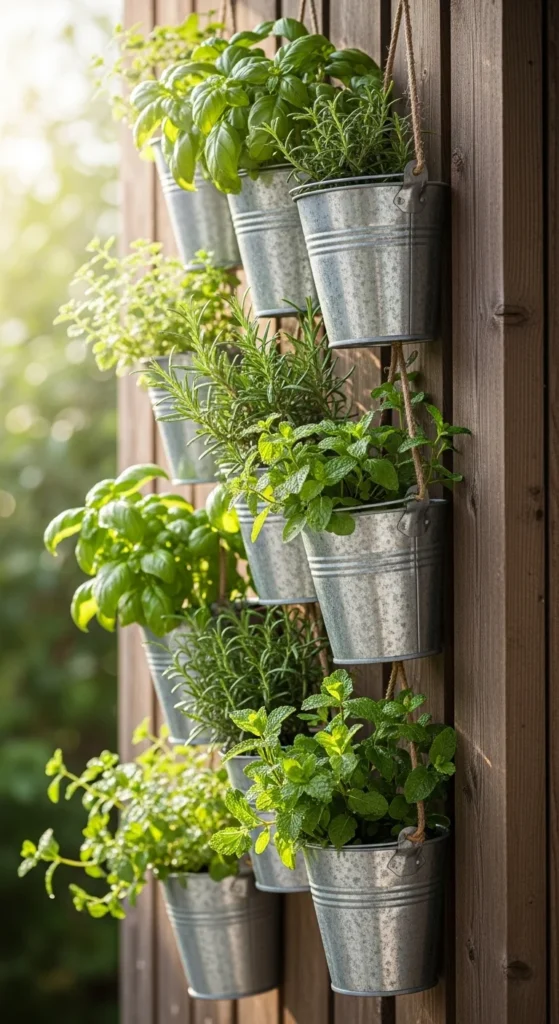
Hanging buckets create a tall string of greenery. Attach hooks to a wall and hang buckets one under another. Drill drainage holes and use lightweight soil. Choose herbs that handle occasional dryness. You can switch buckets anytime if a plant needs extra care. This design is simple, affordable, and visually striking.
12. Compact Terracotta Herb Wall
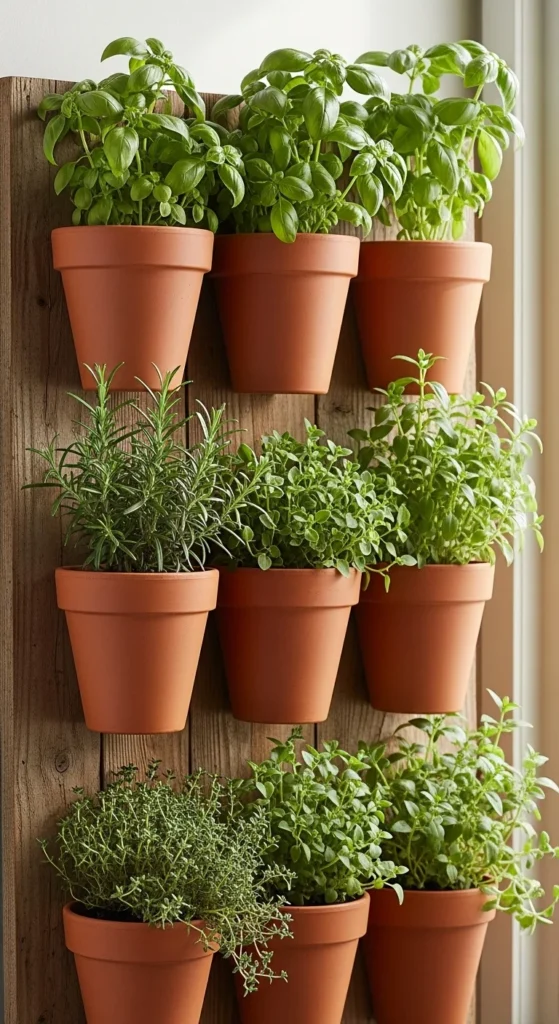
Terracotta pots look classic and help regulate moisture. Mount a wooden panel on a wall, then attach metal rings to hold each pot. Fill pots with soil and plant your favorite herbs. Because terracotta dries quickly, water more often. The panel keeps everything organized and stylish. This layout is perfect near a kitchen door or balcony.
13. Mini Crate Pockets
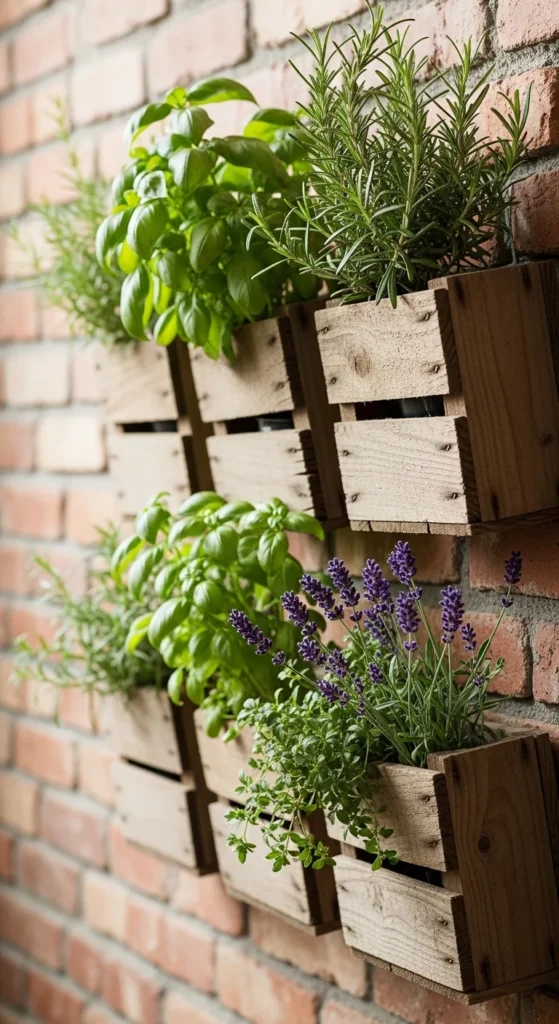
Mini crates work like deep pockets for herbs. Mount them securely and fill with soil. Each crate acts as a little planter box. Plant herbs that don’t need deep soil, such as chives or parsley. Water slowly so soil stays in place. Crates add a rustic texture that stands out on any wall.
14. Vertical Pipe Herb Columns
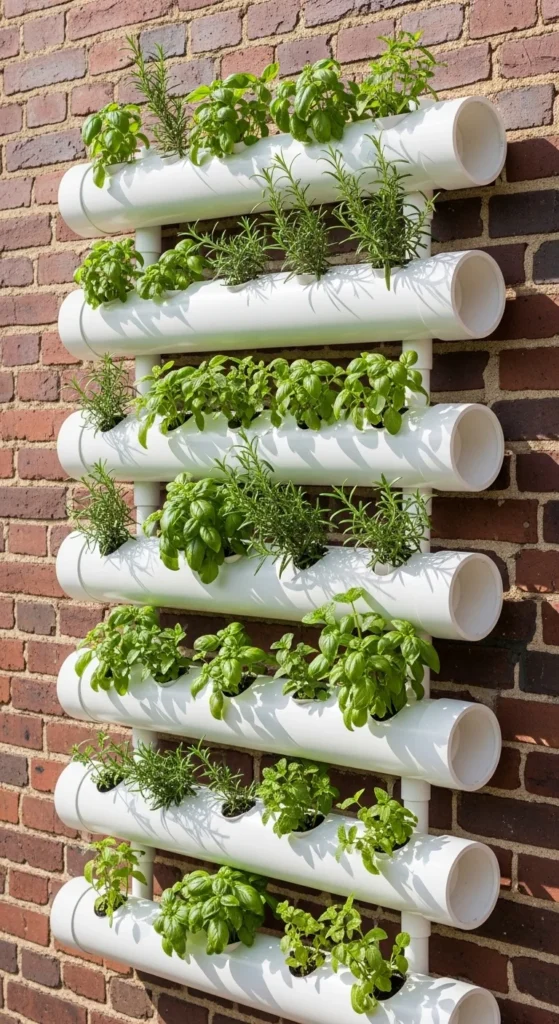
Vertical pipe columns create tall herb towers that take almost no space. Cut pockets into each pipe, fill with soil, and plant herbs in the openings. Secure the pipes to a wall. Water from the top so moisture trickles through. This system works well for balconies that need tall, narrow gardens. Replace plants easily by sliding out pockets.
15. Magnetic Wall Planters
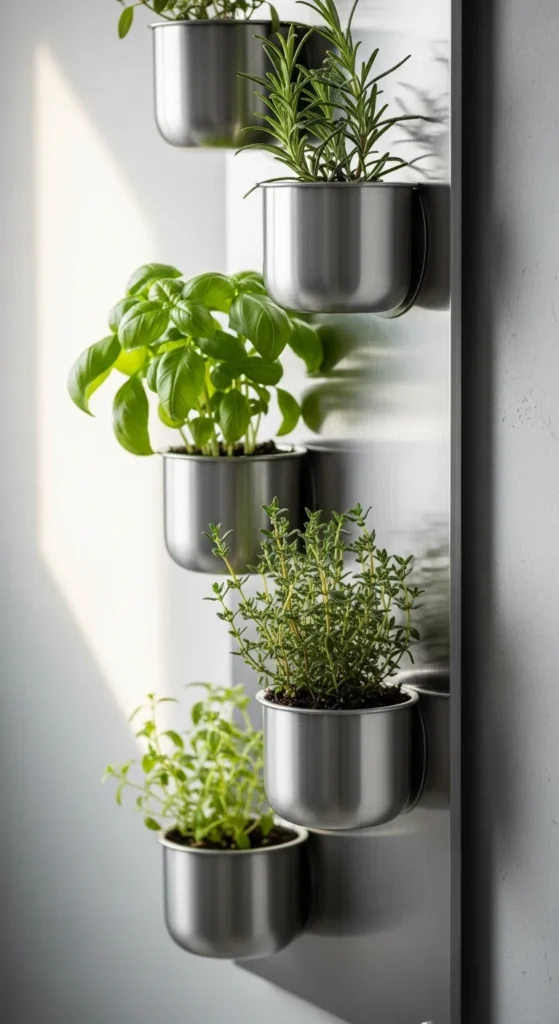
Magnetic planters offer flexibility. Attach a steel sheet to a wall and place magnetic pots wherever you want. Move them around based on sunlight. Keep pot sizes small to maintain stability. These planters are ideal for indoor herb gardens near a kitchen window. They’re easy to clean, move, and replace.
16. Triangular Wall Planter Boxes
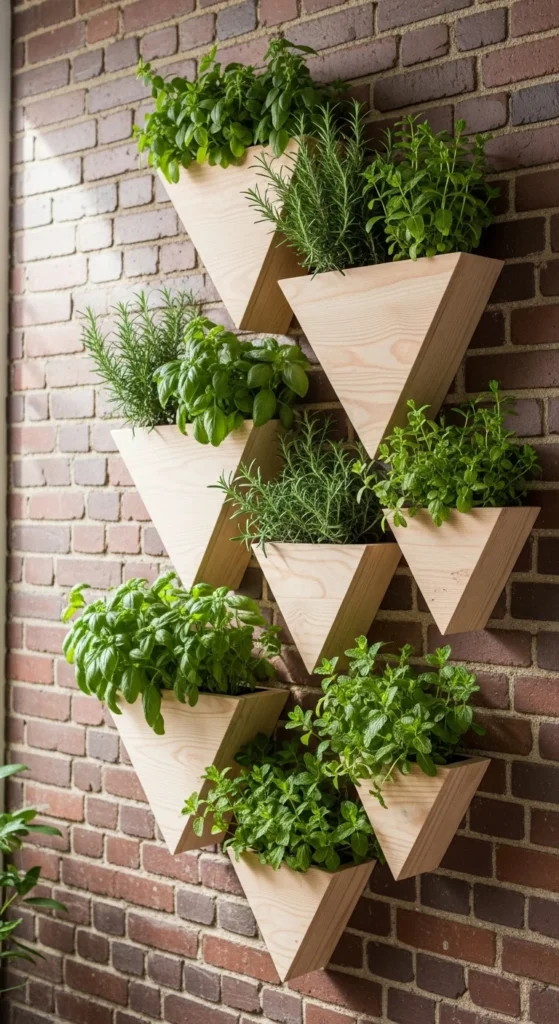
Triangular planters stack in visually striking patterns. Mount them tightly and fill each with soil. Plant herbs that stay relatively low. This geometric layout becomes wall art. Water slowly so soil stays in place. Mix different herb types for contrast. The structure fits oddly shaped walls that other planters can’t use.
17. Metal Scoop-Style Herb Holders
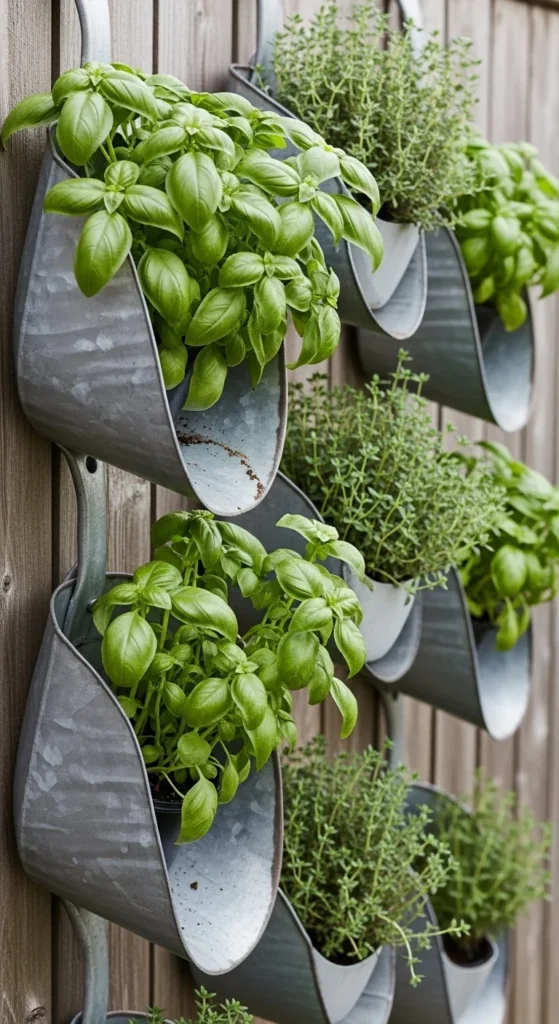
Metal scoop holders create deep pockets for herbs. Attach them to any vertical surface. They’re sturdy and hold more soil than typical pocket systems. This helps herbs grow thicker. Water lightly because scoops drain slowly. Add small stones at the base for better airflow. The metal gives a modern touch to outdoor walls.
18. Recycled Tin Herb Wall
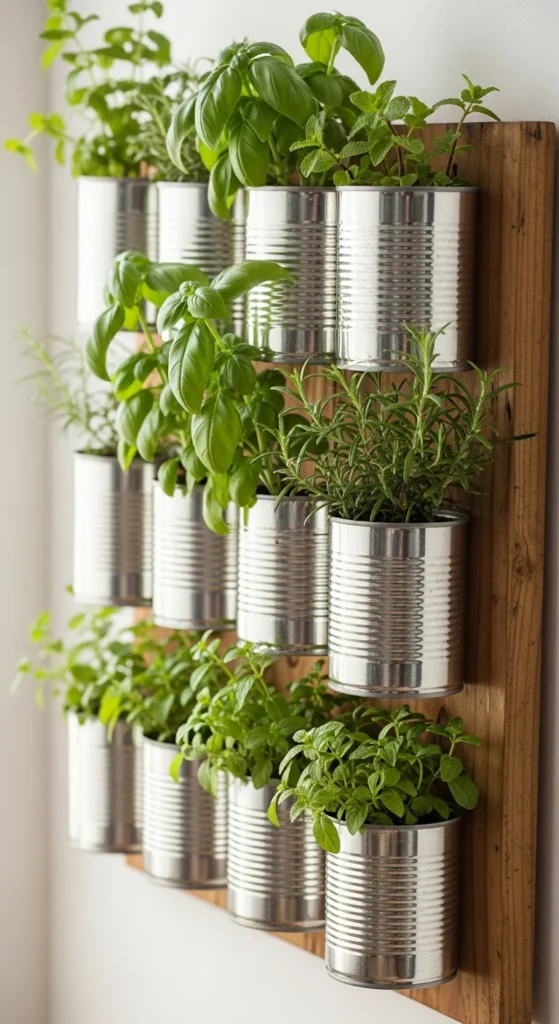
Tin cans make surprisingly effective planters. Clean them, drill holes, and mount them onto a wooden board. Fill with soil and plant herbs. Cans warm quickly in sunlight, helping growth. You can paint them or leave them natural. Water lightly because cans dry fast. This style keeps costs low and saves plenty of space.
19. Grid Shelf Herb Tower
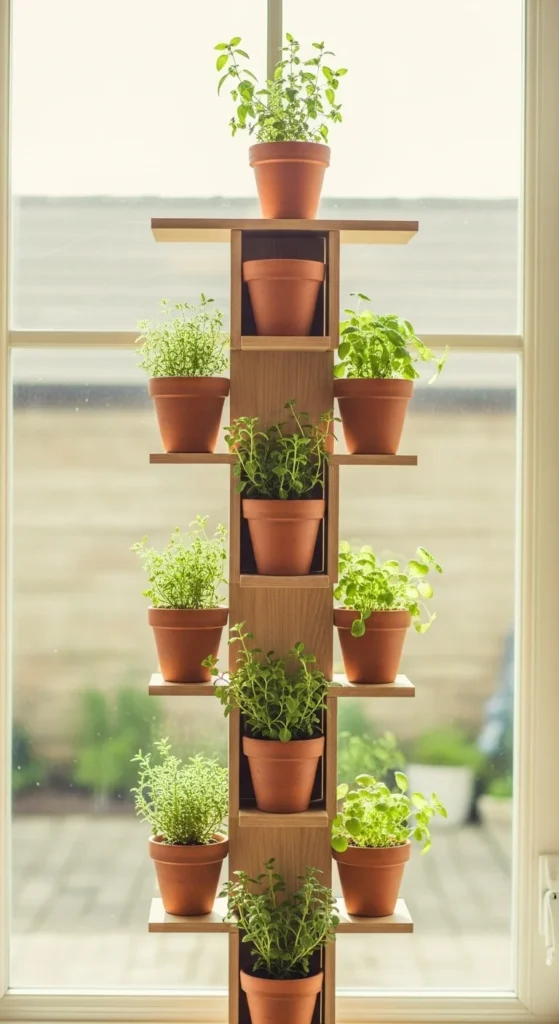
A grid shelf creates many small platforms for herbs. Build a tall, narrow unit and mount it securely. Place one pot per square. This keeps each plant separate while still using minimal wall width. Adjust pot positions to create patterns or color contrast. Great for balconies where walls are the only open area.
20. Hanging Rope-and-Board Herb Strips
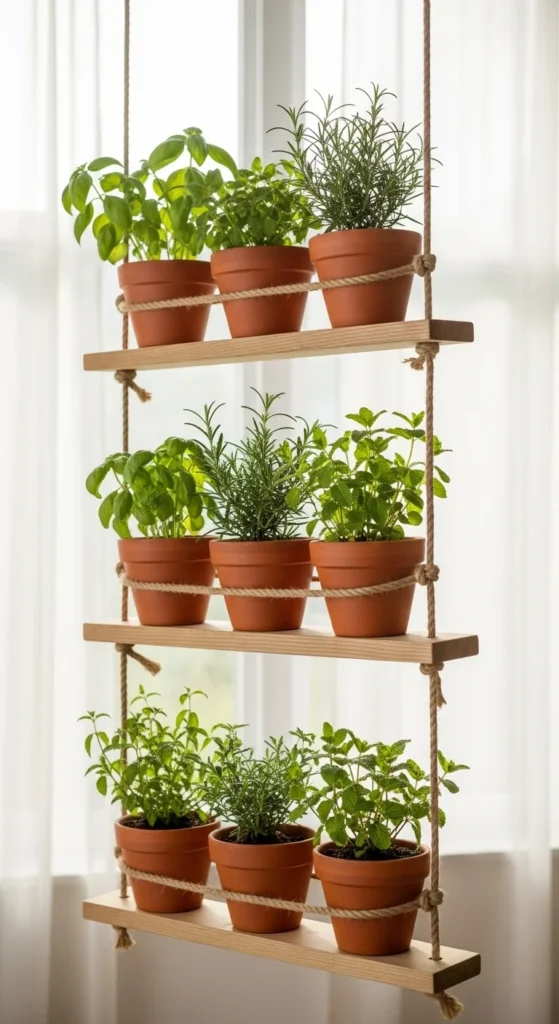
Rope-and-board shelves create a charming hanging structure. Tie knots under each board to keep them level. Place one or two herb pots per board. Hang the whole unit from a sturdy hook. This design moves gently in the breeze and takes very little room. It works beautifully near outdoor windows or patio doors.
21. Wall-Mounted Grow Bag Panels
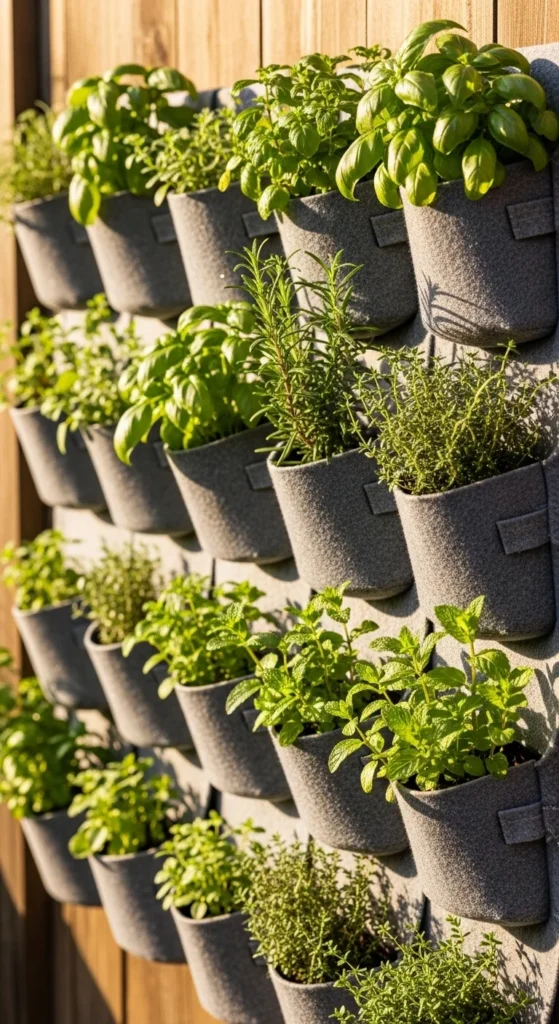
Grow bags mounted on a wall offer great root airflow. Attach several bags using screws or hooks. Fill them with soil and plant herbs that enjoy good drainage. Bags dry faster, so water more frequently. You can replace the bag easily if a plant outgrows its space. This system is practical and lightweight.
22. Vertical Barrel-Half Herb Garden
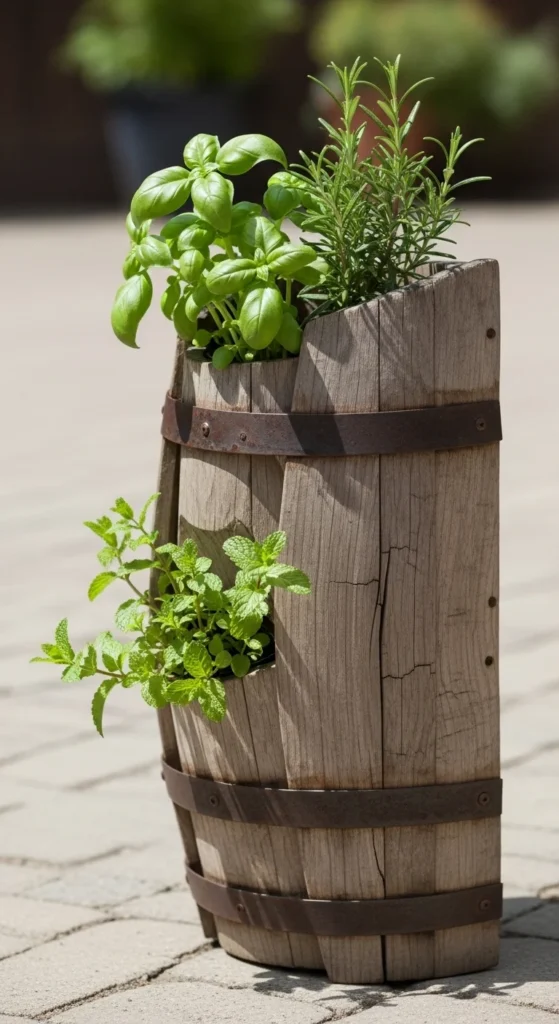
Cutting a barrel vertically creates a tall planter with space for pockets. Carve openings on the sides and fill the inside with soil. Plant herbs in each opening. The barrel holds warmth well, helping growth during cooler days. This piece works well on patios with limited floor area.
23. Brick Wall Herb Slots
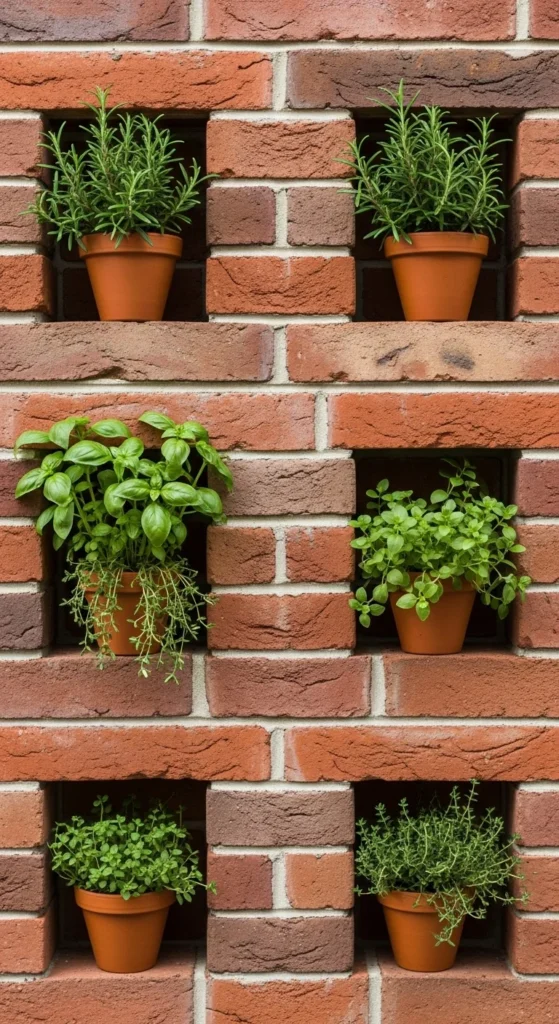
If you have a brick wall, small slots or mounted hooks can turn it into a herb display. Attach mini planters directly to the brick using anchors. Plant hardy herbs that handle outdoor conditions well. Water gently to avoid staining the wall. This setup looks neat and takes almost no space.
24. Slim Corner Vertical Herb Rack
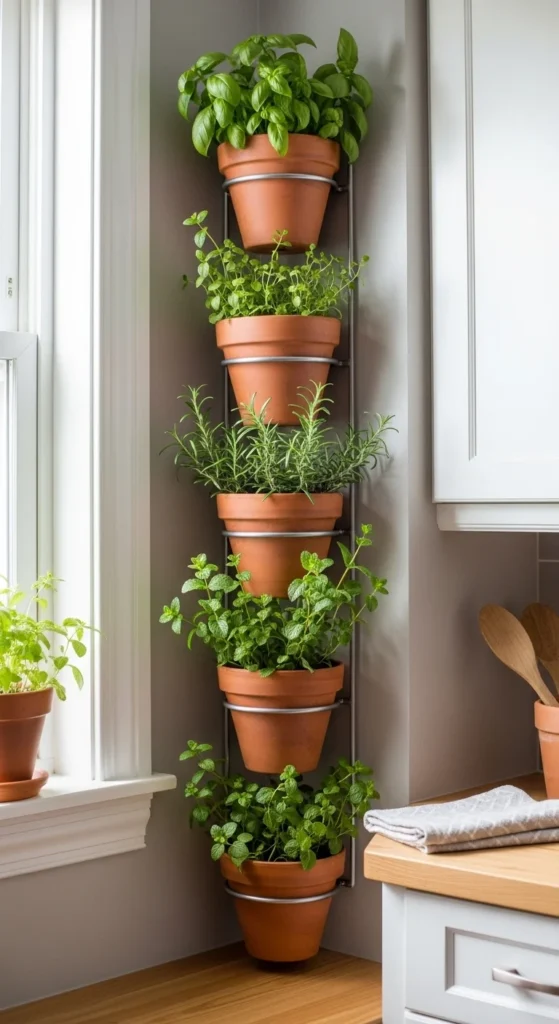
Corners often go unused, making them great for vertical herb racks. Build or buy a slim corner unit that fits tightly against the wall. Place pots on each tier, starting with larger herbs at the bottom. Water slowly to avoid spillover. This layout adds greenery without interrupting walkways or seating areas.
Conclusion
Vertical herb gardens help you grow flavor-rich plants while saving every inch of floor area. With shelves, pockets, grids, crates, and hanging frames, you can fill any wall with productive herbs throughout the New Year. Pick a layout that suits your space, start with a few easy varieties, and enjoy steady harvests right outside your door or window.
Leave a Reply