

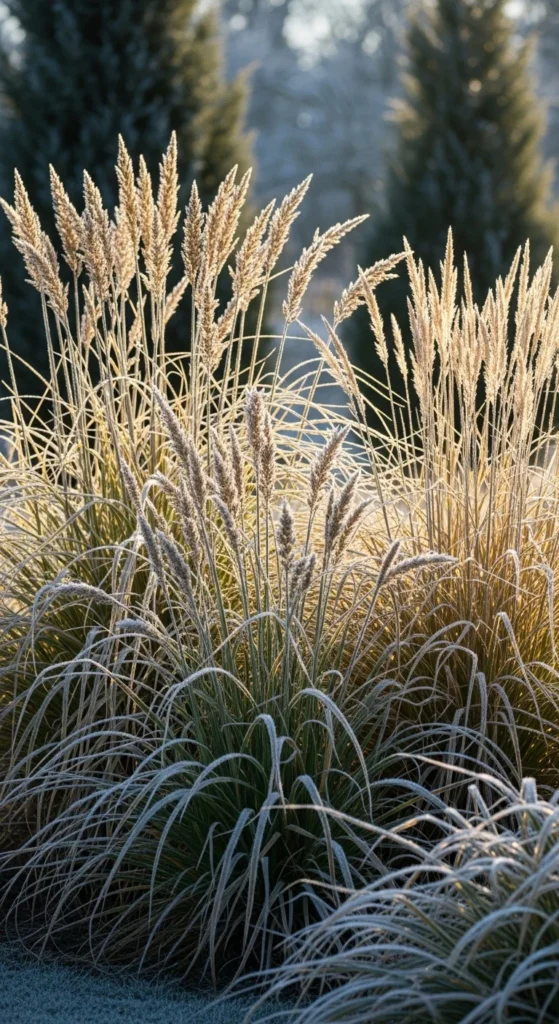
Winter gardens don’t have to look bare. Ornamental grasses keep their shape, sway gracefully in cold winds, and add golden texture when most plants fade. They thrive with little care, survive frost, and bring architectural beauty to every outdoor space. This New Year, transform your garden with 22 striking winter grass plantings that add depth, contrast, and life to even the quietest corners.
1. Feather Reed Grass Elegance
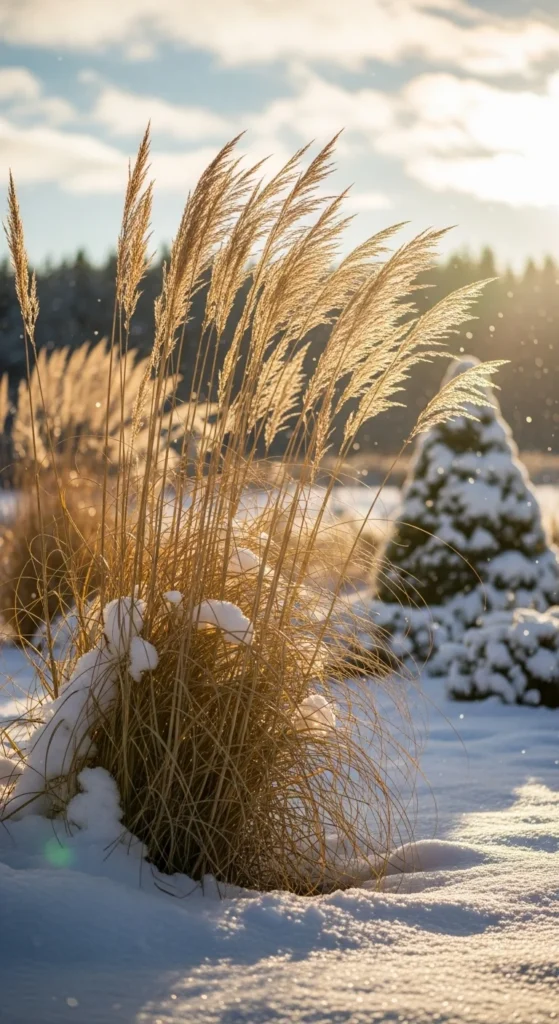
Calamagrostis ‘Karl Foerster’ is a winter favorite for structure. Its tall, upright stems stay strong even after frost. Plant in clusters for dramatic vertical lines that catch morning light beautifully. The dried plumes look sculptural against snow or dark evergreens. Cut back in late February before new growth begins—easy care, lasting texture.
2. Japanese Forest Grass Glow
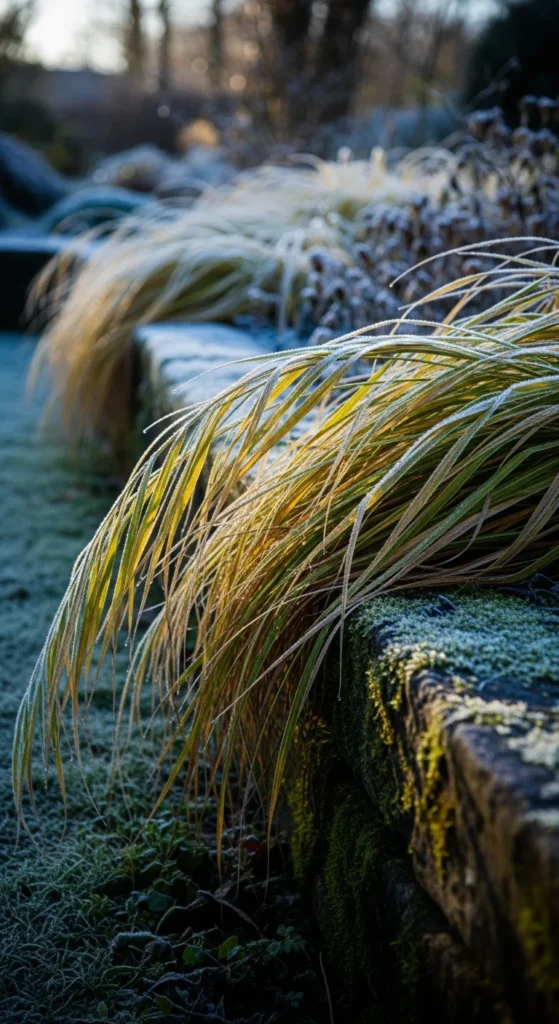
Hakonechloa macra ‘Aureola’ brings color to shaded winter corners. Its arching habit softens pathways and rock edges. The golden blades turn tan in cold months, creating a subtle shimmer under low light. Pair with ferns or hellebores for contrast. Once planted, it spreads slowly and asks for little beyond trimming old leaves in spring.
3. Blue Oat Grass Borders

Compact and tidy, Helictotrichon sempervirens keeps its blue-gray tone all year. It forms neat clumps that suit modern or minimalist gardens. Use it along driveways or paths to add calm order. In winter, the steel-blue blades reflect sunlight like frost itself. Water sparingly and let it dry between rains.
4. Fountain Grass Warmth
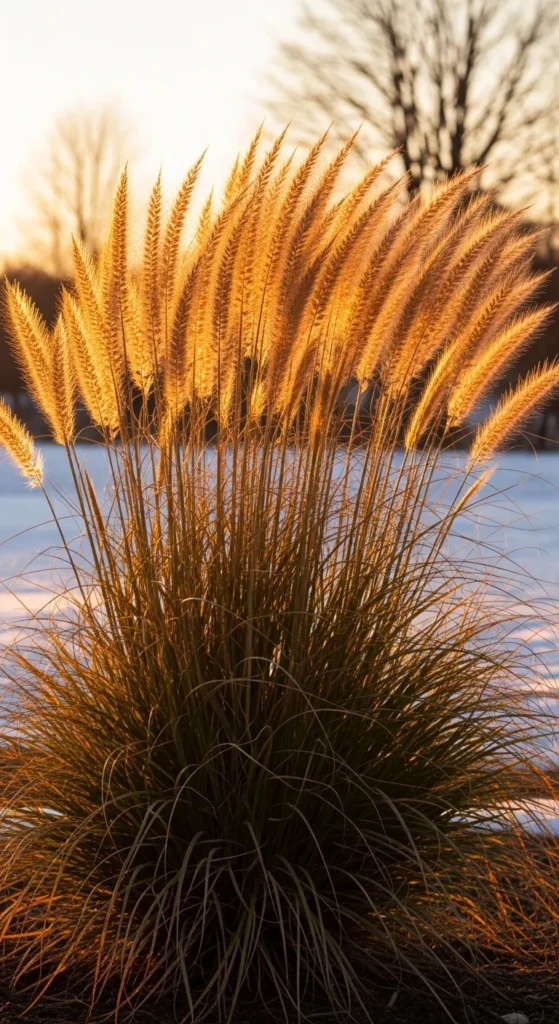
Pennisetum alopecuroides brings cozy texture with its soft plumes. Even dry, they hold shape through the cold. Plant near patios or walkways to enjoy their movement in winter wind. Group three or five plants for fullness. Come early spring, trim them to the ground for a fresh start.
5. Switchgrass for Height
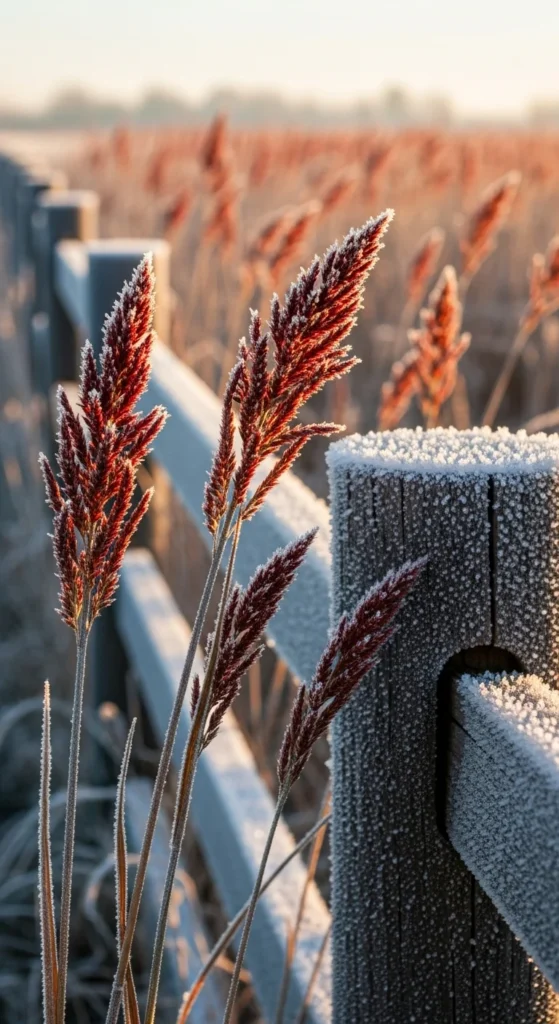
Panicum virgatum ‘Shenandoah’ grows tall and upright, perfect for background structure. Its red-tipped seed heads stand against snow and add color contrast. The rust-colored stems last all season. Once established, it needs almost no watering and thrives in both sun and partial shade.
6. Little Bluestem Color Fade
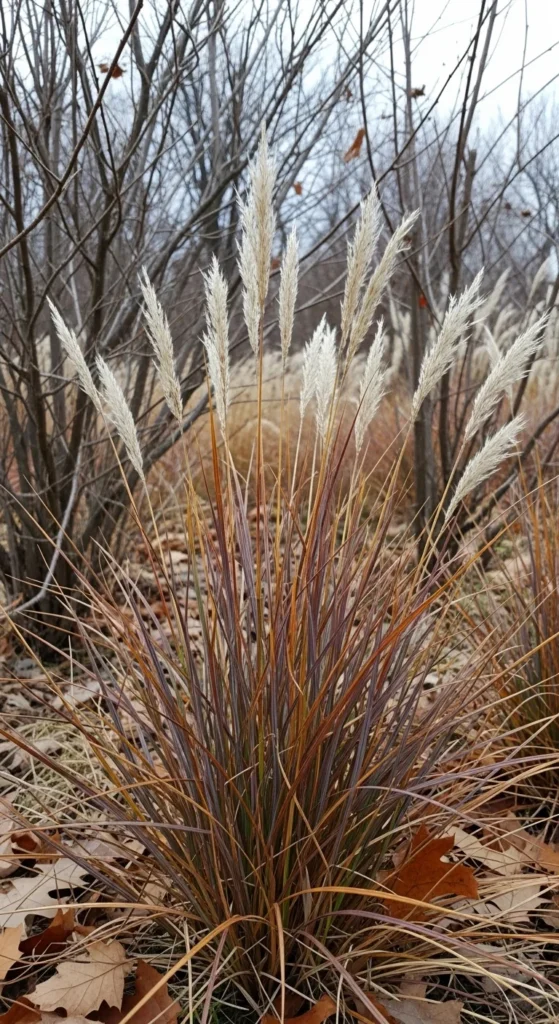
This grass shines when other plants fade. Schizachyrium scoparium shifts from blue-green in summer to copper-orange in winter. Its thin blades look painted at sunrise. Use it in mass plantings for sweeping color. Trim lightly in spring to maintain a tidy form year-round.
7. Tufted Hair Grass in Pots
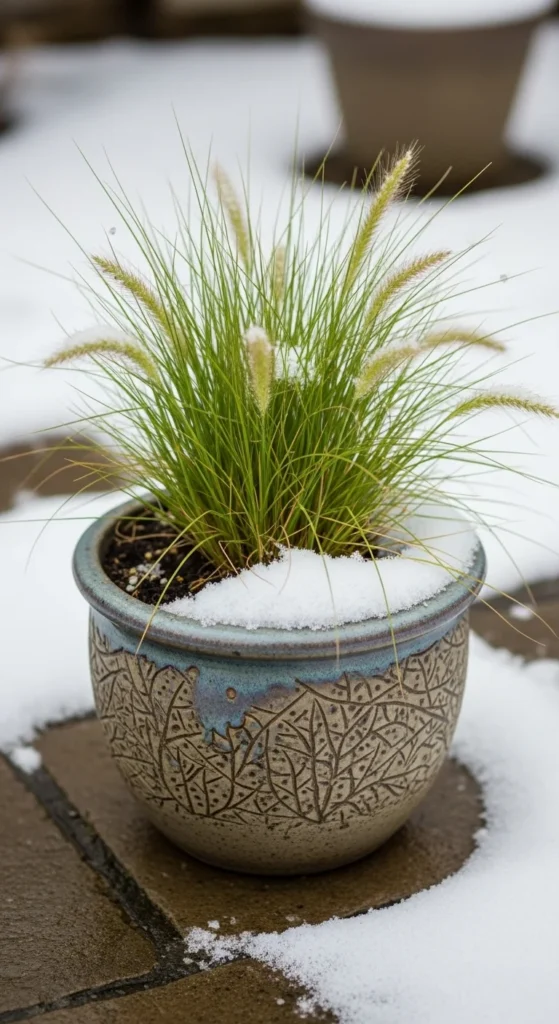
Deschampsia cespitosa is perfect for container displays. Its fine seed heads dance above dense clumps, catching dew and frost like jewelry. Place pots near doors or windows for a soft, natural accent. It’s resilient and grows well in partial light, making it ideal for small urban gardens.
8. Sedge for Shade Corners
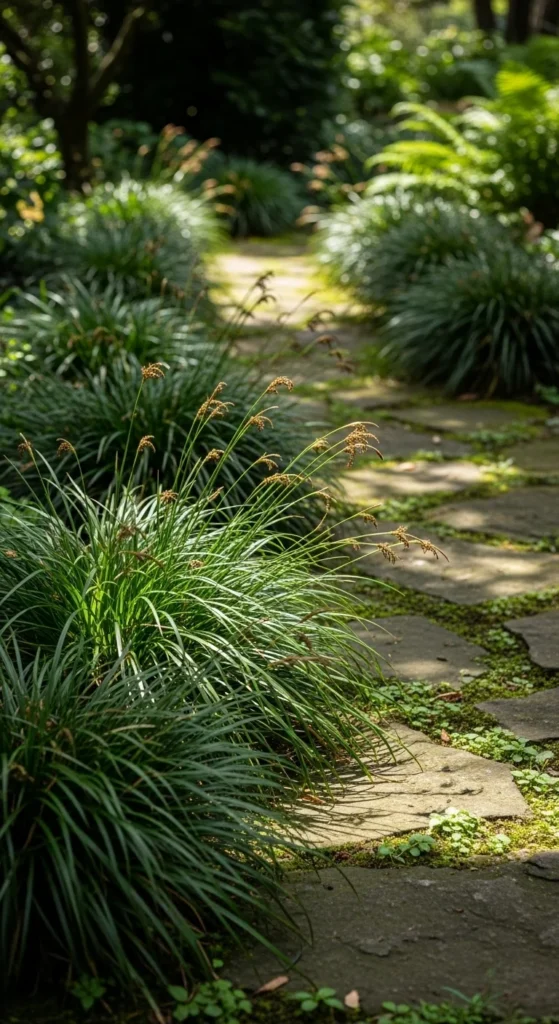
Carex oshimensis ‘Evergold’ adds color to shady winter spots. Its creamy stripes brighten dull spaces where other grasses fade. Use it at the base of shrubs or under trees. Water lightly and let fallen leaves act as insulation during the coldest weeks.
9. Miscanthus Grace in Frost
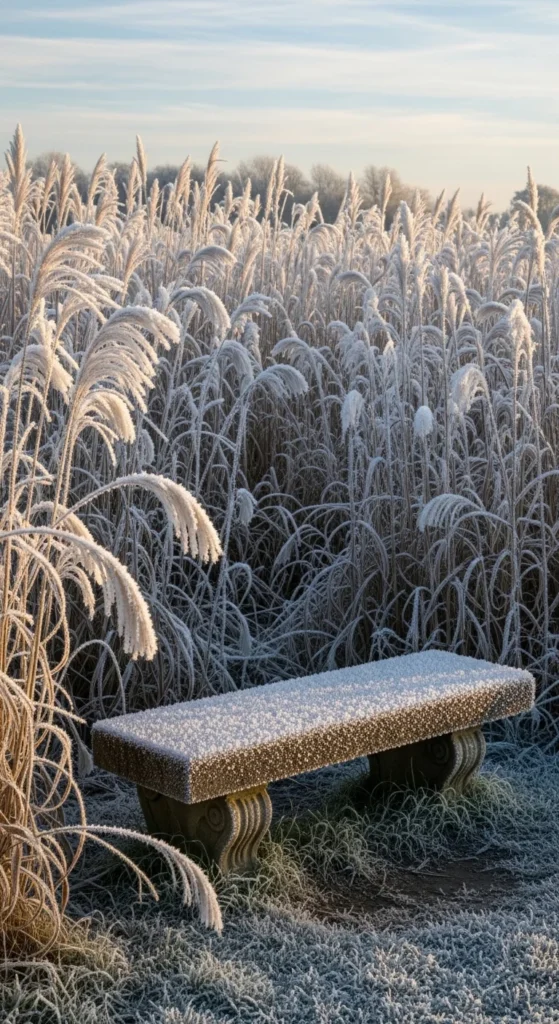
Miscanthus sinensis varieties stand tall through snow and wind. Their arching plumes shimmer when frosted, turning gardens into natural sculptures. Choose smaller cultivars for limited spaces. Leave them uncut all winter—they look best when touched by frost—and prune in spring.
10. Prairie Dropseed Softness
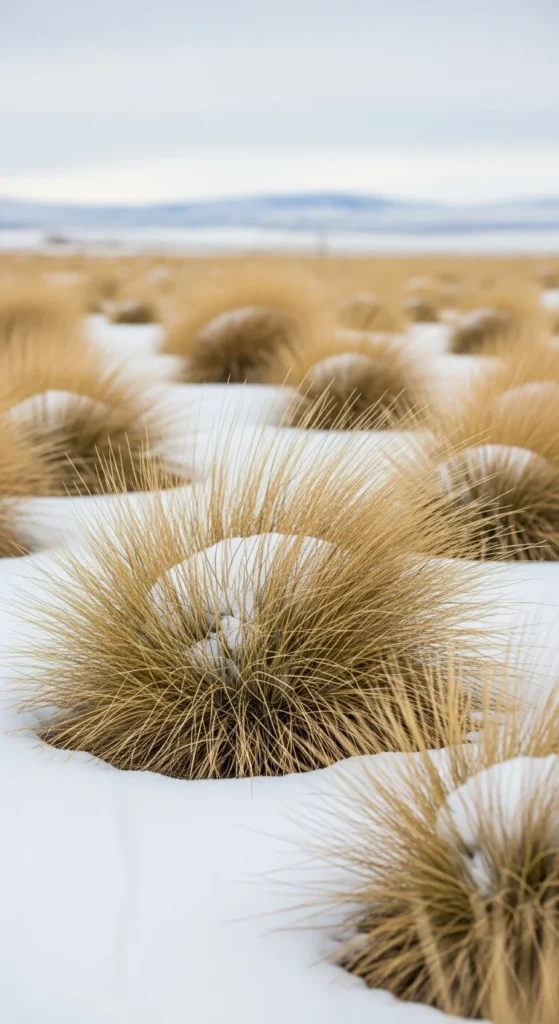
Sporobolus heterolepis forms soft, golden mounds that stay graceful through winter. Plant them in groups for a low, flowing texture. Their fine blades contrast beautifully with rocks or evergreens. It’s drought-tolerant, reliable, and gives off a faint sweet scent on warm days.
11. Reed Grass in Containers
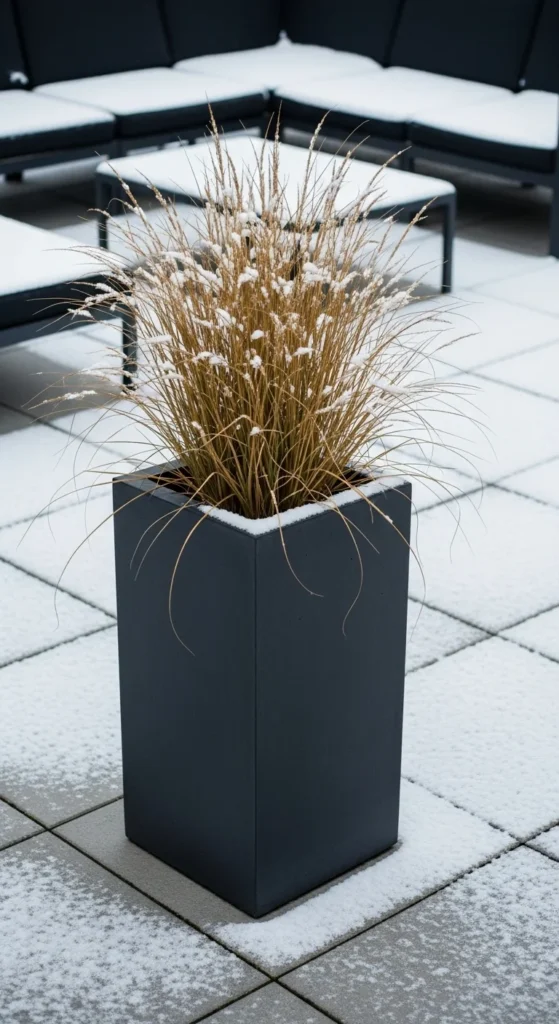
Calamagrostis acutiflora adapts well to containers. Its narrow form fits sleek modern gardens. Use dark pots for contrast against pale plumes. It stands upright even after snowfalls, keeping the patio lively. Water lightly and protect pots from freezing solid by raising them on feet or bricks.
12. Sideoats Grama Accent

Bouteloua curtipendula has charming seed spikes that dangle from one side of the stem, catching frost like ornaments. It’s a compact native grass great for borders. Once established, it handles drought and cold with ease. Let the seed heads stay all winter—they attract birds and add movement.
13. Silver Grass Backdrop

Miscanthus ‘Morning Light’ brings fine, silver foliage and tall plumes that glow in low light. Plant it behind darker evergreens or shrubs for contrast. The reflective tones brighten gloomy winter days, especially near fences or garden edges. It thrives with minimal care in well-drained soil.
14. Mexican Feather Grass Motion

Nassella tenuissima adds delicate motion even in still air. Its wispy blades ripple beautifully in soft winds. Use it along paths or in mixed borders for a gentle look. It’s low-maintenance and loves poor soil. Leave it untrimmed through winter, then shear lightly in spring to renew.
15. Northern Sea Oats Glow
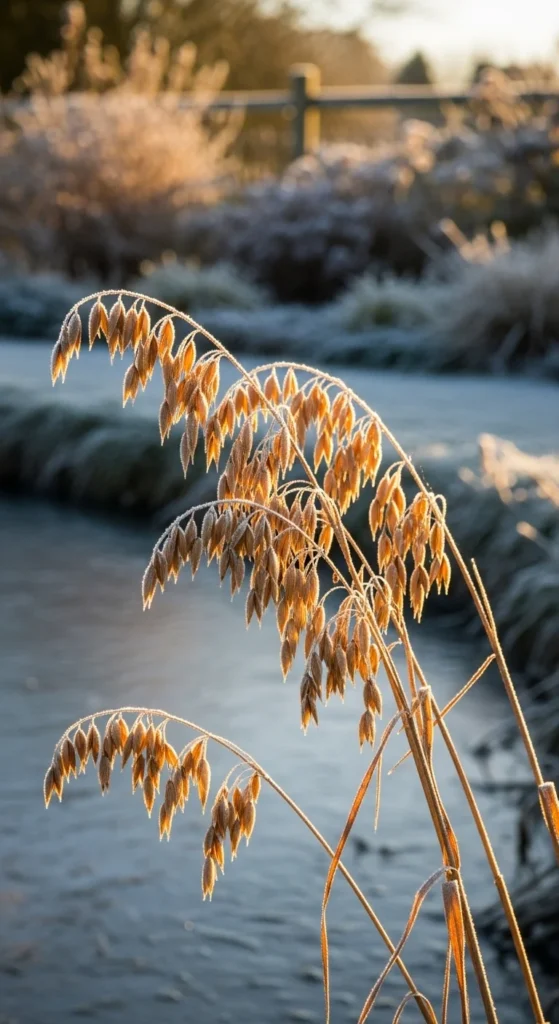
Chasmanthium latifolium is known for its hanging seed clusters that shimmer like small ornaments. These oat-like spikes stay on all winter and sway with elegance. Plant near ponds or under trees for natural drama. In early spring, cut them back to encourage new green shoots.
16. Japanese Silver Grass Border

Planting Miscanthus sinensis ‘Gracillimus’ in borders gives height and privacy. The thin blades turn golden in cold months, and the plumes add softness. It works especially well behind low shrubs or stone edging. Leave seed heads standing for visual interest and bird feeding.
17. Moor Grass Simplicity
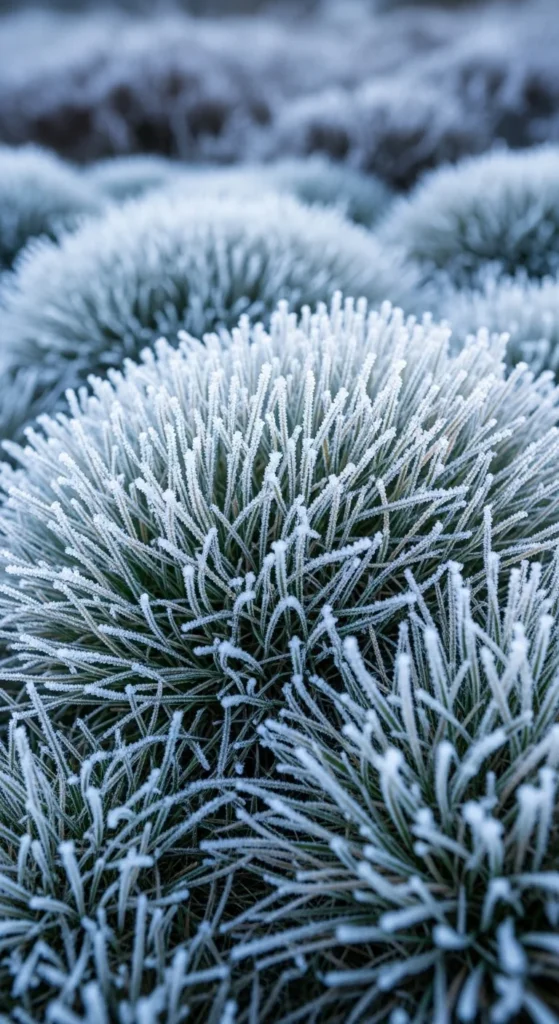
Molinia caerulea ‘Heidebraut’ creates fine-textured tufts perfect for minimalist gardens. It transitions from green to bronze as winter sets in. Plant in groups for natural flow across open spaces. Once dry, it keeps form beautifully without collapsing under snow.
18. Pampas Grass Statement

Few plants create drama like Cortaderia selloana. The tall plumes tower above fences and stay striking through winter. Use it as a focal point or backdrop in large gardens. Trim back only when the weather warms. Handle with gloves—the leaves are sharp but worth the effect.
19. Blue Fescue Border
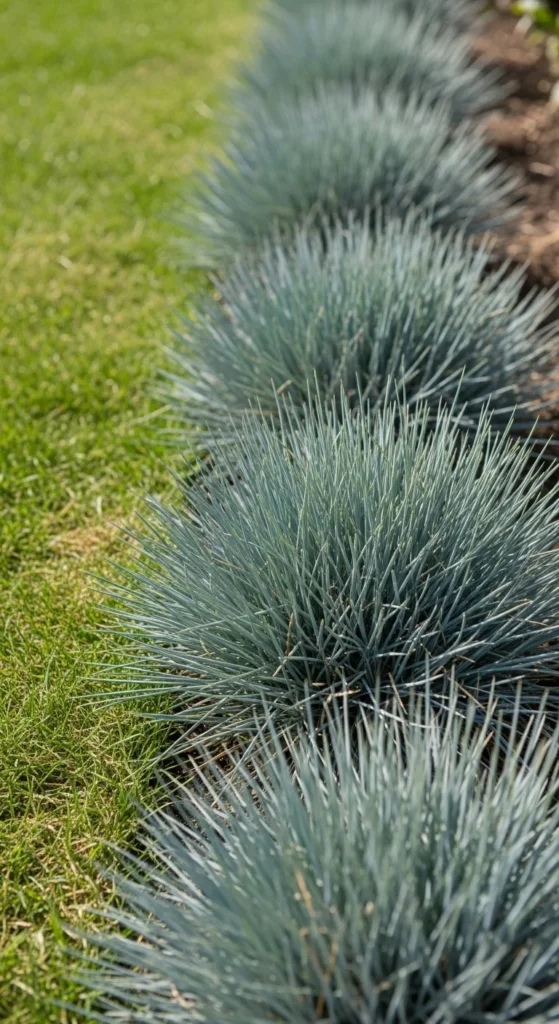
Festuca glauca stays compact and colorful all year. Its blue-gray tone fits modern patios or rock gardens. Line pathways or use as edging for larger plants. Water sparingly and divide clumps every few years for a tidy look. Simple, durable, and always neat.
20. Moor Rush Texture
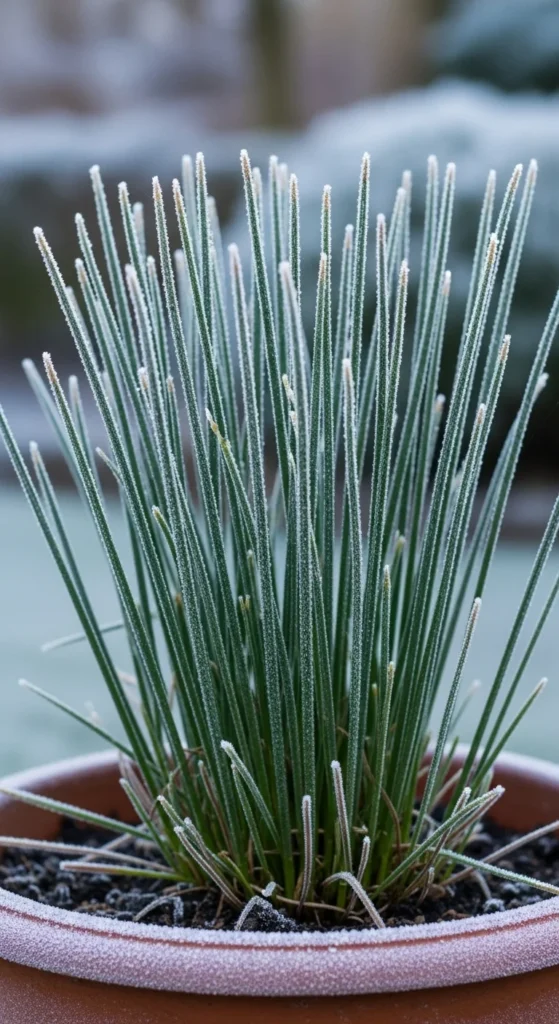
Juncus effusus offers sleek, upright stems that stand out in wet or shaded areas. It keeps its green shine through frost, adding contrast to dull winter beds. Perfect near water features or damp corners. Cut away old stems in early spring for a fresh flush.
21. Sedge Meadow Mix
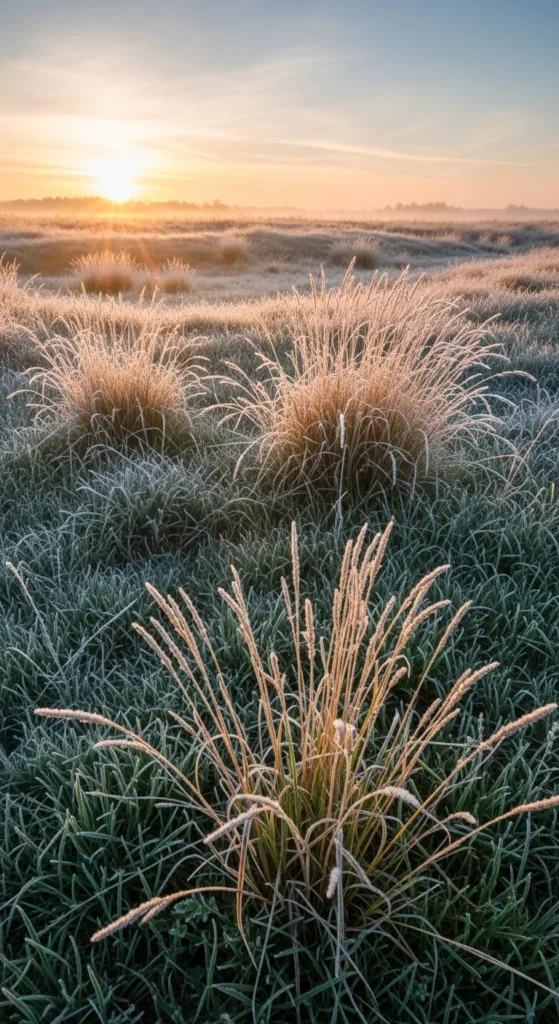
Combine multiple Carex varieties for soft ground coverage. Their subtle color shifts and fine blades look natural in open spaces. They stay evergreen in mild winters and blend well with perennials. Water lightly and avoid compacted soil to keep them full and airy.
22. Giant Miscanthus Drama

Miscanthus giganteus adds grandeur to winter landscapes. Its height creates living walls and movement that catches every breeze. Perfect for screening or defining garden sections. Leave standing through cold months for maximum texture and visual warmth.
Conclusion
Ornamental grasses bring life, structure, and rhythm to quiet winter gardens. Their shapes, tones, and textures capture light when few other plants can. From compact fescue borders to tall miscanthus screens, each variety adds its own personality. Start with one or two types this New Year, and watch your garden stay striking—even in the stillness of winter.

Leave a Reply