

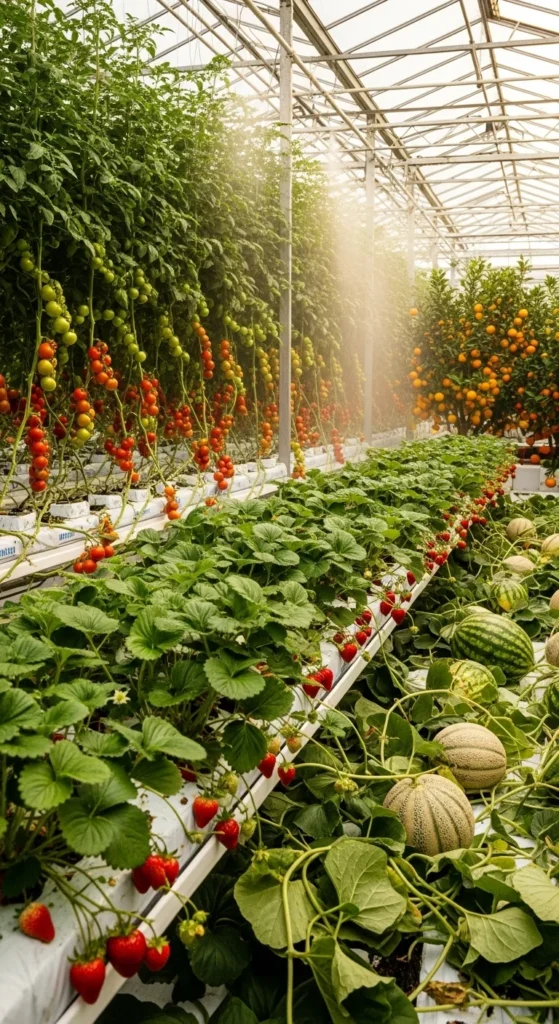
Greenhouse fruit production lets you enjoy longer seasons, healthier yields, and more control over temperature and humidity. With the right strategies, you can turn even a small greenhouse into a highly productive fruit hub. These plans focus on layout, pruning, pollination, container systems, support structures, and practical methods that help fruit crops thrive. Whether you’re growing berries, citrus, vines, or tropical varieties, these ideas make greenhouse fruiting simpler and more rewarding.
1. Vertical Trellis Rows for High-Density Tomatoes
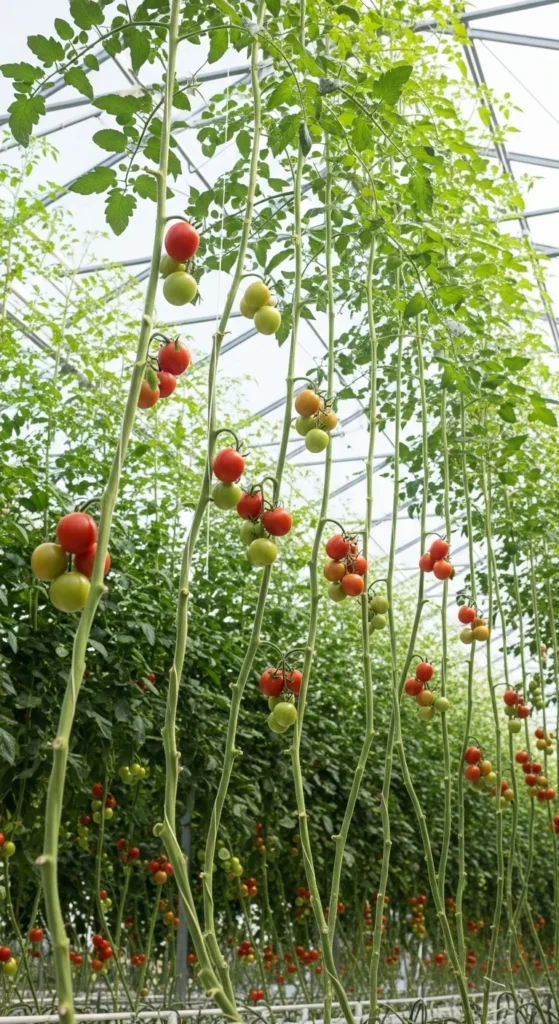
Vertical trellises let tomatoes grow upward instead of spreading across the floor. This saves space and increases airflow. Keep stems supported with clips or soft ties. Train each vine upward and prune lower leaves to improve light distribution.
You can build your trellis using wooden stakes or metal wires stretched across the greenhouse ceiling. For a low-budget approach, use garden twine and PVC pipes. Keep a narrow walkway between rows for easy harvests. Add mulch below to maintain steady moisture. If pests appear, prune lightly so air moves freely and leaves dry faster. This structure helps tomatoes fruit more consistently inside greenhouses.
2. Hanging Strawberry Towers for Continuous Harvest
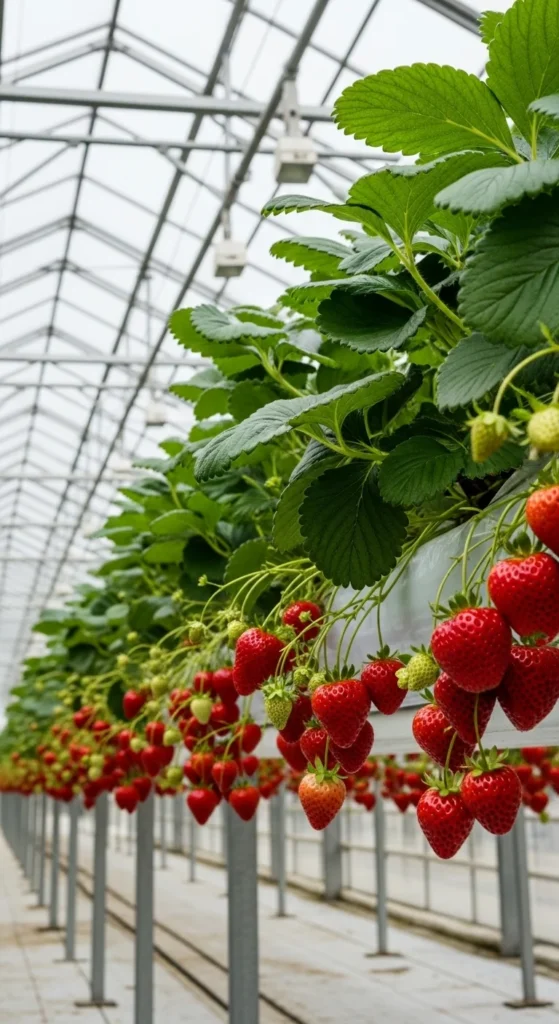
Hanging towers work great for greenhouse strawberries. They let plants cascade downward, saving floor room. Each pocket gets good airflow, helping berries ripen cleanly.
Use stackable pockets or repurposed vertical planters. Place towers near the warmest corner of your greenhouse. Strawberries enjoy consistent moisture, so add a slow-drip bottle at the top. To keep costs down, reuse plastic bottles as planting chambers. Rotate towers weekly for even sun exposure. Trim runners so plants put more energy into fruit.
3. Citrus-in-Tubs for Portable Warmth
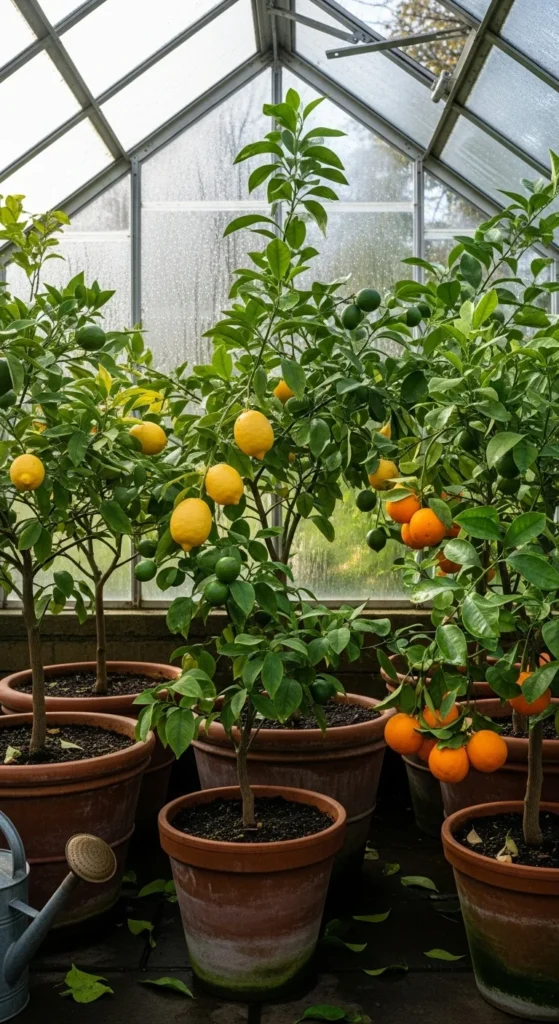
Citrus thrives in the steady warmth of a greenhouse. Growing them in tubs makes moving them easy when space shifts.
Choose dwarf varieties like lemon, mandarin, or kumquat. Use deep tubs with drainage holes. Place them near southern panels for stronger light. A budget trick is to reuse old paint buckets and add wheeled plant stands. Water when the top soil dries. Hand-pollinate blooms with a soft brush for better fruiting. Keep pruning light to maintain shape and airflow.
4. Melon Sling Supports for Heavy Fruits
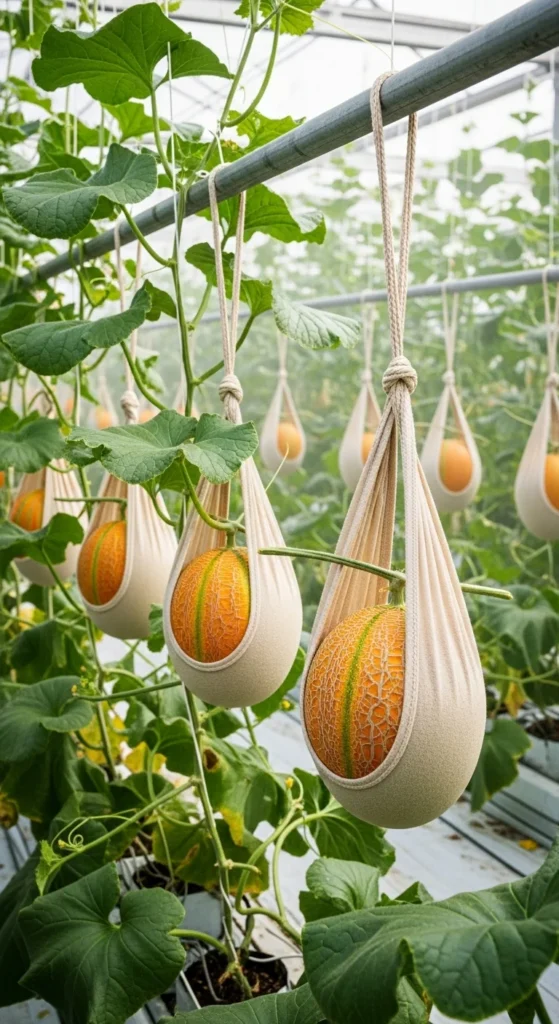
Melons grow surprisingly well in greenhouses when supported properly. Sling supports prevent fruits from pulling vines down.
Use soft cloth or netting to cradle each melon. Attach the sling to hooks above the plant. Vertical training keeps vines neat. You can use recycled fabric for budget slings. Keep soil warm with mulch and water consistently. Hand-pollinate flowers early in the morning using a small brush.
5. Container Raspberries with Pruned Canes
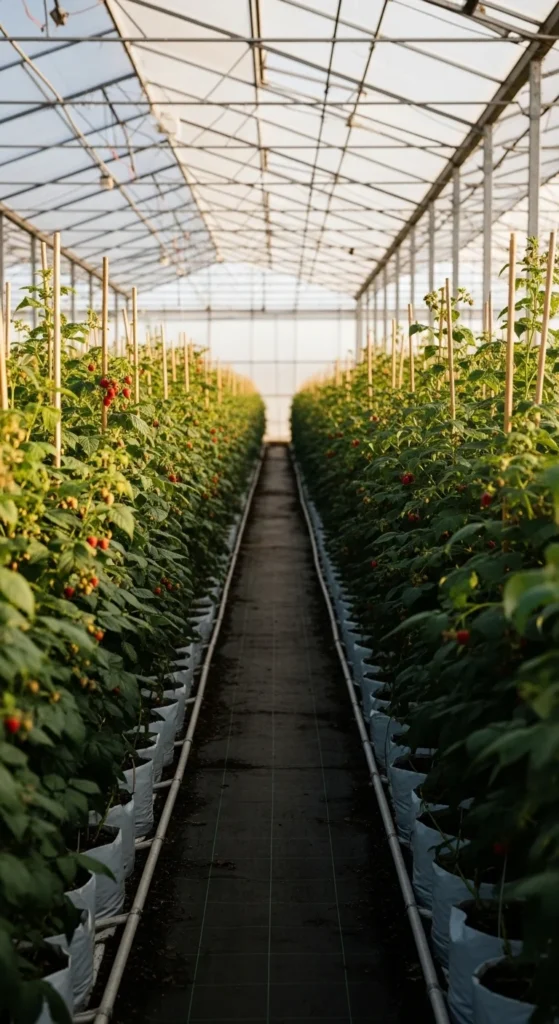
Raspberries grow beautifully in containers inside greenhouses when their canes are pruned correctly.
Use large pots with sturdy stakes. Choose primocane varieties for easier management. Remove old canes after fruiting to make space for new growth. For an affordable setup, repurpose storage tubs as planters. Place them near a ventilated area so humidity stays balanced. Add compost each season for strong cane production.
6. Grape Vine Roof Training for Shade and Fruit
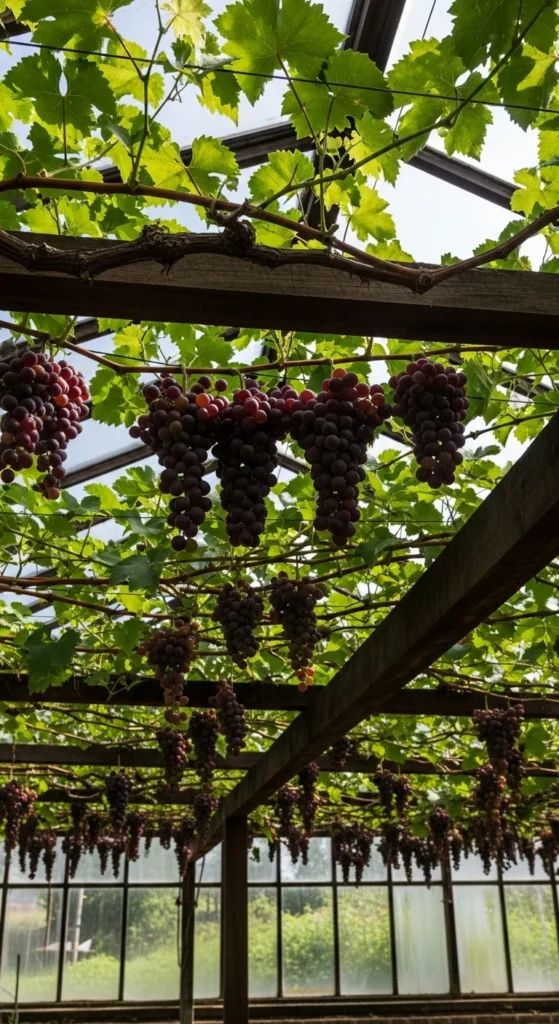
Grapes can be trained across greenhouse ceilings, creating shade and providing high fruit yields.
Pick a single strong vine and guide it along beams. Prune regularly to maintain shape. Grapes enjoy warm ceilings, which help ripen clusters. Build tension wires across the roof if you don’t have beams. Water deeply but less often. Remove extra shoots to keep energy focused on fruit clusters.
7. Blueberry Pots with Acidic Mix
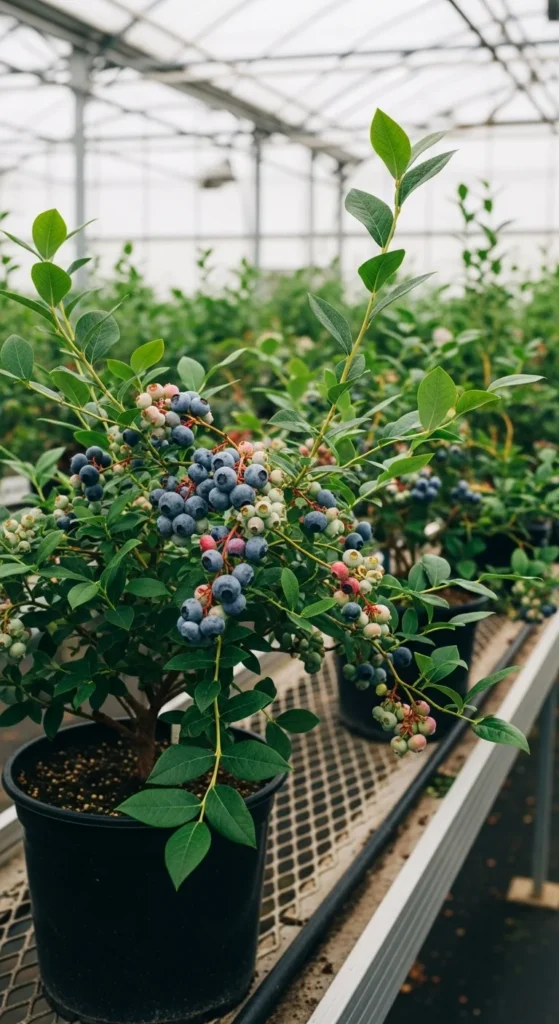
Blueberries thrive in controlled soil mixes. Containers let you maintain acidity easily.
Use large pots filled with peat-heavy mix. Keep pH low for better fruiting. Place pots where they get full sunlight. A budget option is to mix pine bark and peat yourself. Water with rainwater when possible. Trim older branches in winter to encourage new productive growth.
8. Dwarf Fig Trees Against Warm Walls
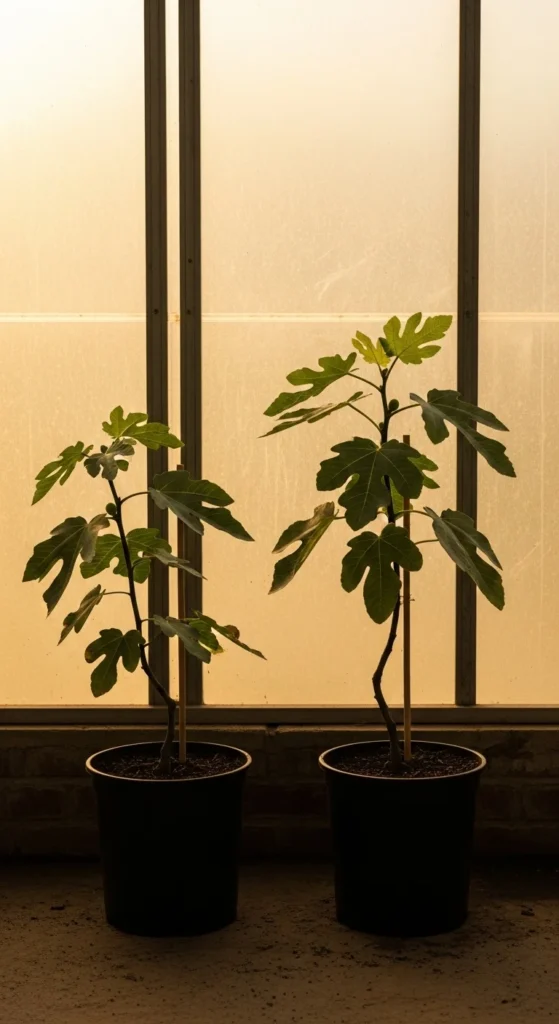
Figs love warmth, making greenhouse walls a great spot.
Grow dwarf varieties in medium containers. Place them where afternoon sun hits the wall so heat radiates back at night. Prune lightly to keep branches low and manageable. Add mulch to keep soil warm. Water sparingly to avoid splitting fruit. For a cheaper approach, reuse ceramic pots from old houseplants.
9. Passionfruit Vines on Overhead Grid
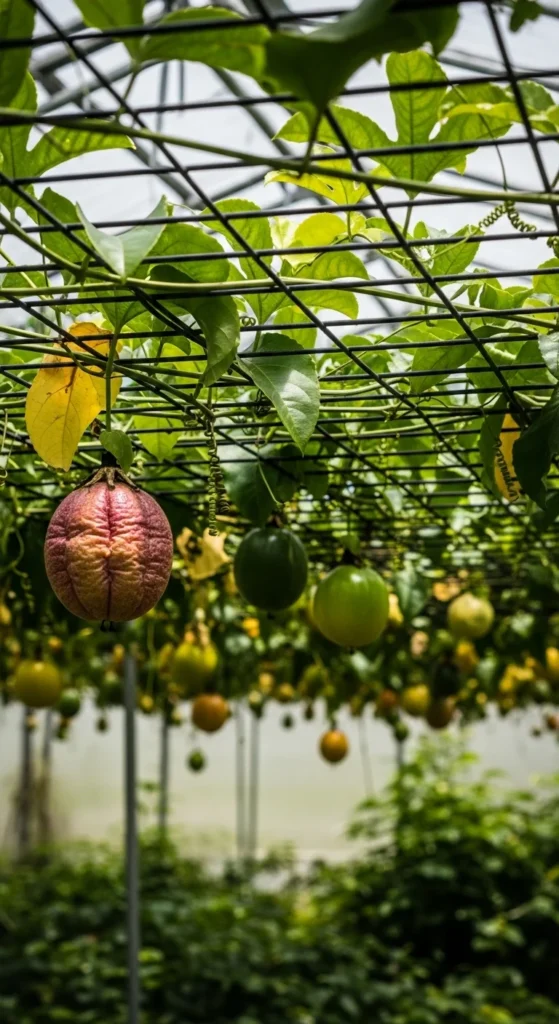
Passionfruit vines grow fast in a greenhouse. An overhead grid keeps them tidy.
Use netting or wire mesh across the ceiling. Train vines upward and let them spread. Provide deep pots and rich soil. Hand-pollinate when flowers open. For a frugal method, stretch fishing net across beams. Maintain pruning so vines do not block light for other fruits.
10. Pineapple Buckets for Tropical Flair
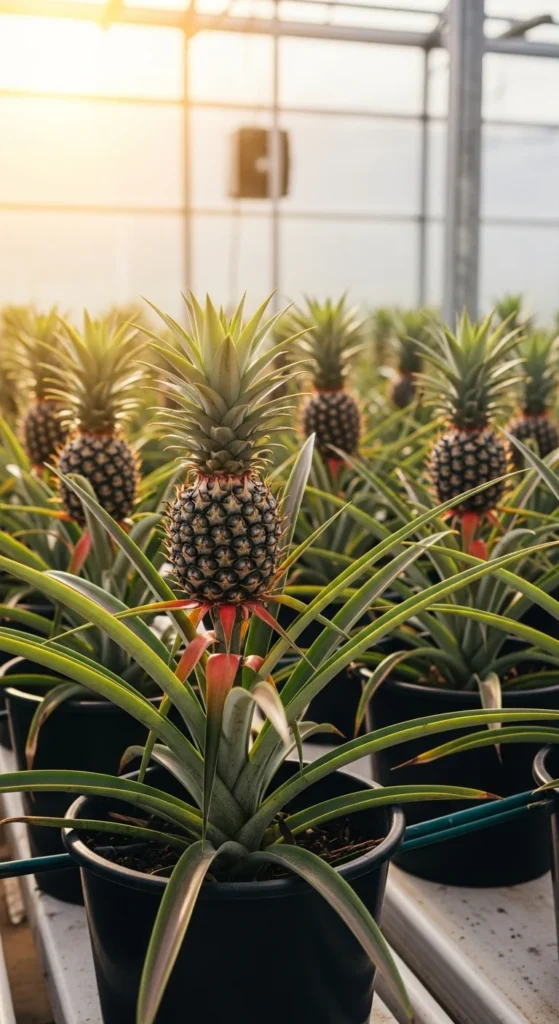
Pineapples grow slowly but produce well in warm greenhouses.
Use buckets or tubs with good drainage. Place them where temperatures stay warm. A budget trick is to plant store-bought pineapple crowns. They root easily in sandy soil. Water lightly and avoid cold drafts. Add gravel around pots to help maintain warmth.
11. Raised Bed Strawberries with Row Covers
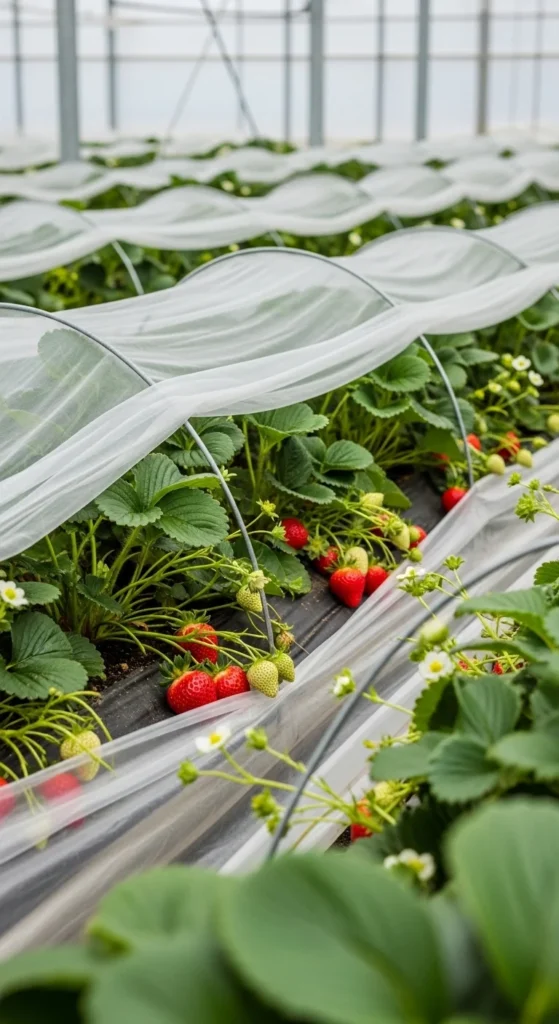
Raised beds warm up faster, helping strawberries ripen earlier.
Add row covers to trap heat around plants. Use lightweight fabric so air circulates. For lower costs, make simple hoops from wire and drape fabric on top. Keep soil moist but not soaked. Remove damaged leaves promptly to prevent humidity issues.
12. Banana Plants in Corner Heat Zones
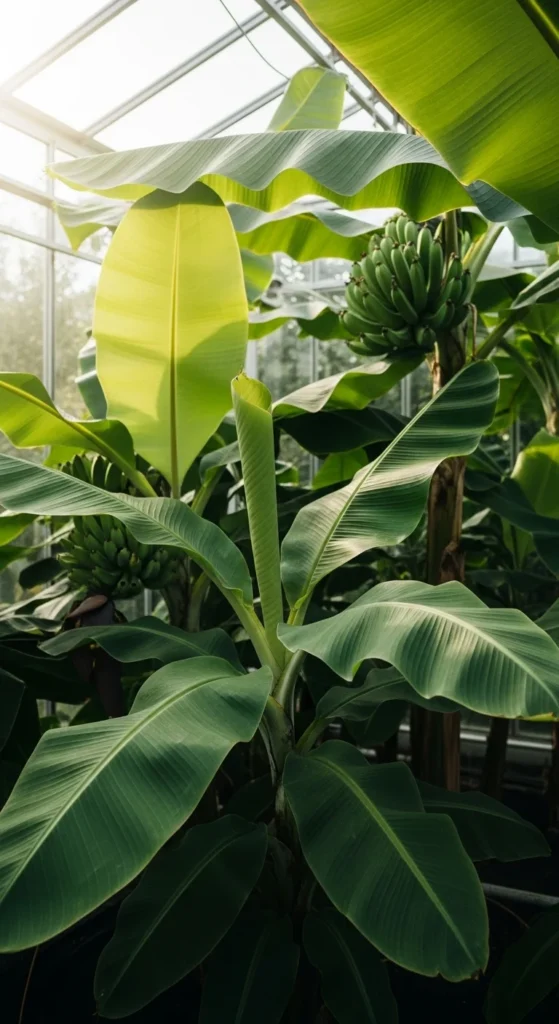
Bananas enjoy the warm pockets inside greenhouses.
Plant dwarf varieties in deep tubs. Keep them in a corner where heat collects. Water regularly and feed lightly. For budget growers, reuse large storage containers as planters. Trim leaves that touch the greenhouse ceiling. Bananas also help raise humidity for nearby fruit crops.
13. Container Peaches with Pruned Branch Structure
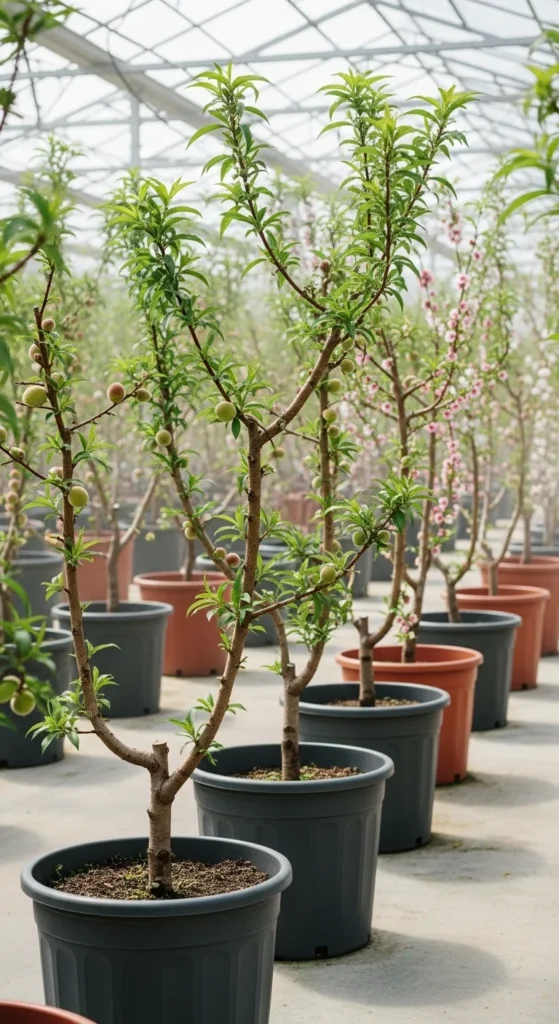
Peaches can fruit well in containers when pruned into open shapes.
Choose dwarf or patio varieties. Use large tubs and prune branches to create an open center so light reaches every part. Place pots in bright, warm zones. Water deeply but allow the top layer to dry between sessions. Thin fruit early so remaining peaches grow larger.
14. Multi-Tier Shelving for Small Berry Varieties
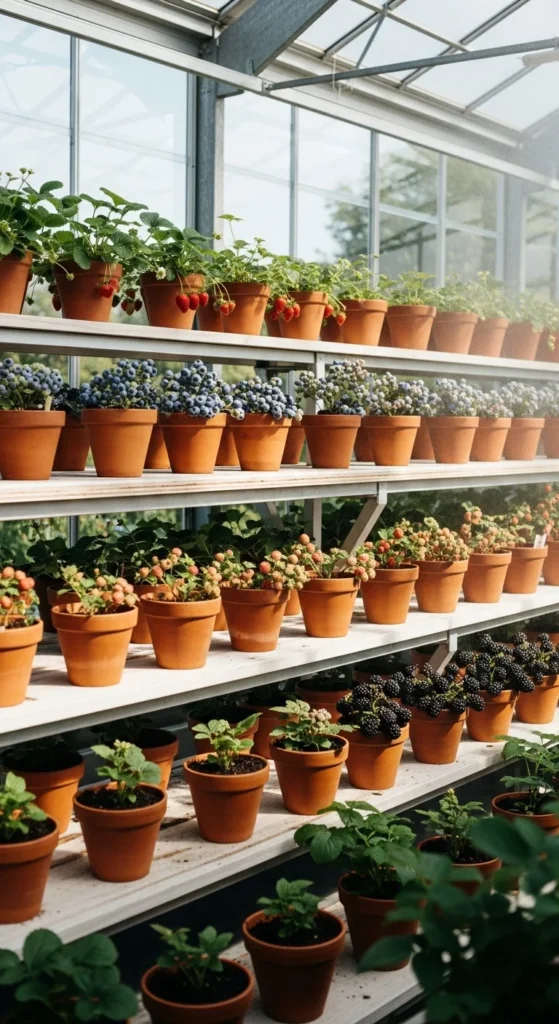
Tiered shelves maximize vertical space for berries like currants or gooseberries.
Use sturdy shelves that allow drainage. Keep taller pots on lower tiers. A budget tip is to reuse metal racks from storage rooms. Rotate pots weekly to keep growth even. Add mulch to help berries stay hydrated.
15. Kiwi Vines Along Side Supports
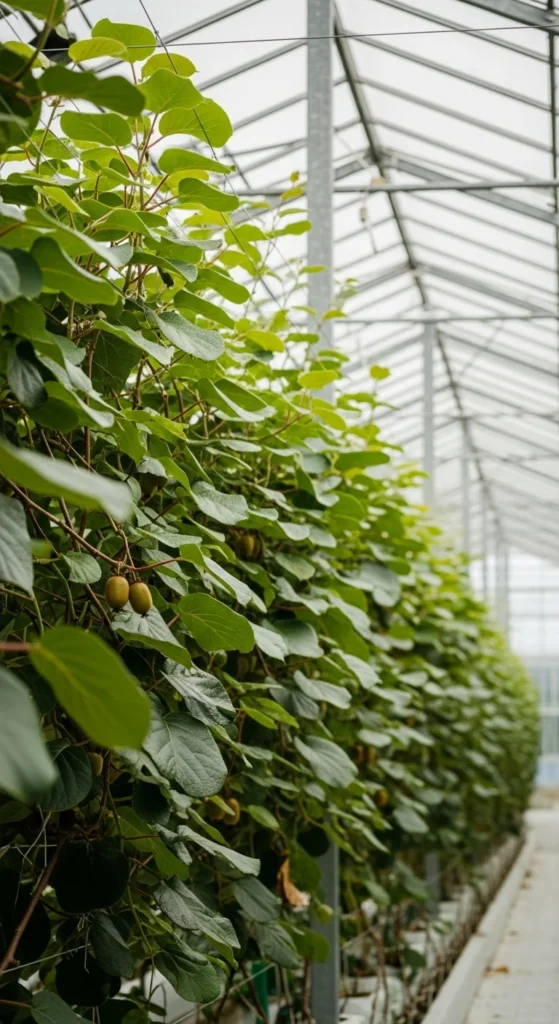
Kiwis grow well in greenhouses when trained properly.
Use strong support wires. Plant male and female vines unless using self-fertile types. Guide vines along the sides to keep the center walkway open. Water regularly and prune when vines grow too dense. For a cheaper support option, stretch rope between posts.
16. Papaya Clusters in Insulated Corners
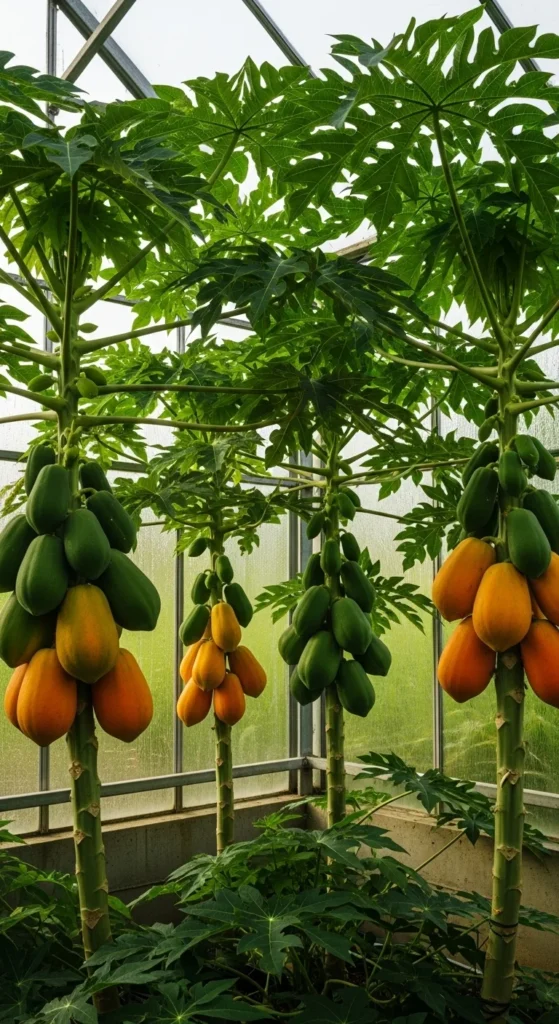
Papayas love heat, making insulated corners ideal.
Grow dwarf types in deep barrels. Keep them near the warmest wall. Water steadily and remove lower leaves. For a low-cost planter, cut a plastic barrel in half. Papayas grow tall quickly, so keep ceilings clear.
17. Guava Trees in Large Tubs
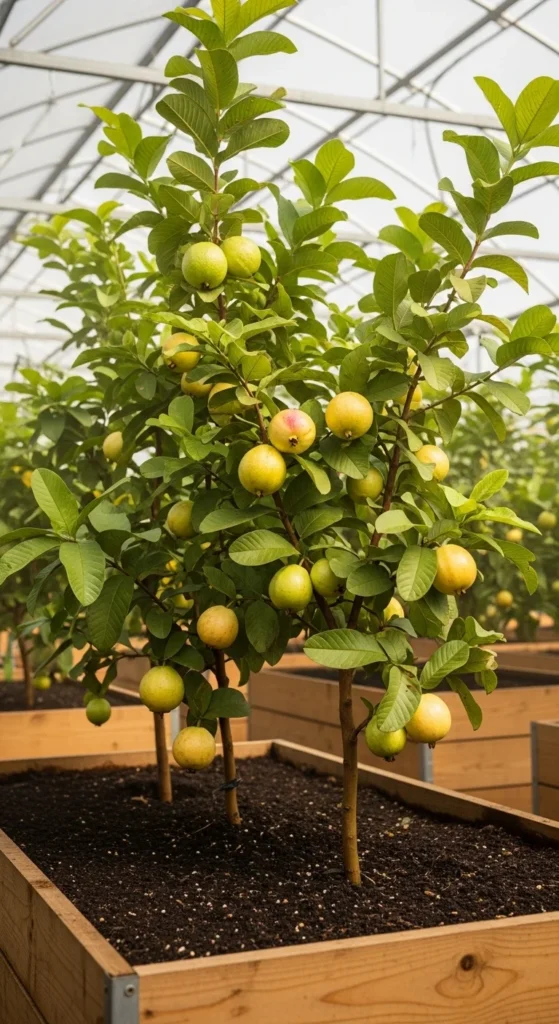
Guavas handle greenhouse warmth very well.
Use large tubs so roots expand comfortably. Place them where airflow is strong to prevent mold. A simple approach is to reuse large clay pots for heat retention. Trim branches lightly for shape and sunlight exposure. Feed trees twice a season for stronger fruit set.
18. Mulberry Mini-Trees in Corner Sections
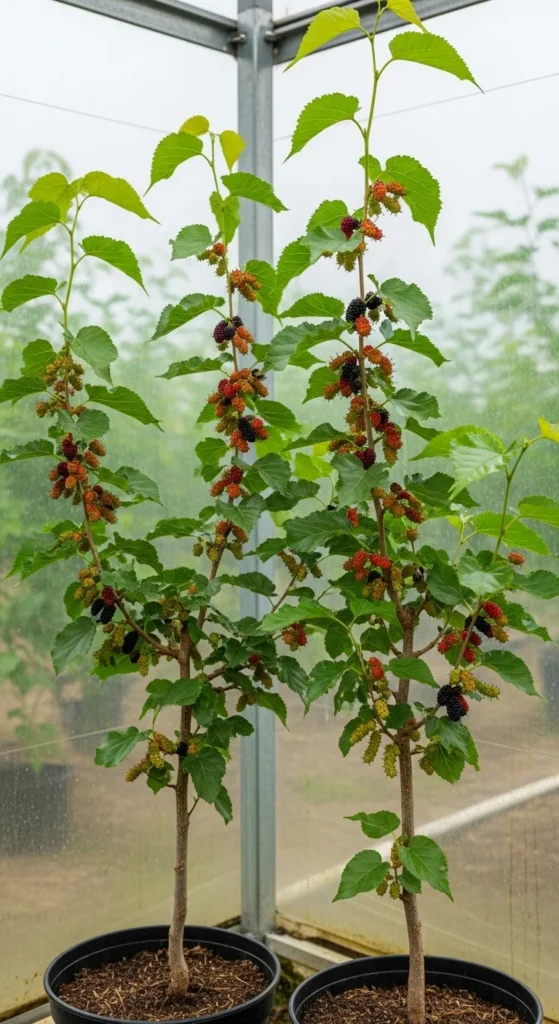
Mulberries grow surprisingly well indoors when pruned into mini forms.
Use medium pots and prune branches yearly. Keep them in corners so fallen berries don’t scatter across pathways. Water regularly and add compost seasonally. A budget strategy is to grow mulberries from cuttings instead of buying trees.
19. Dragon Fruit on Climbing Posts
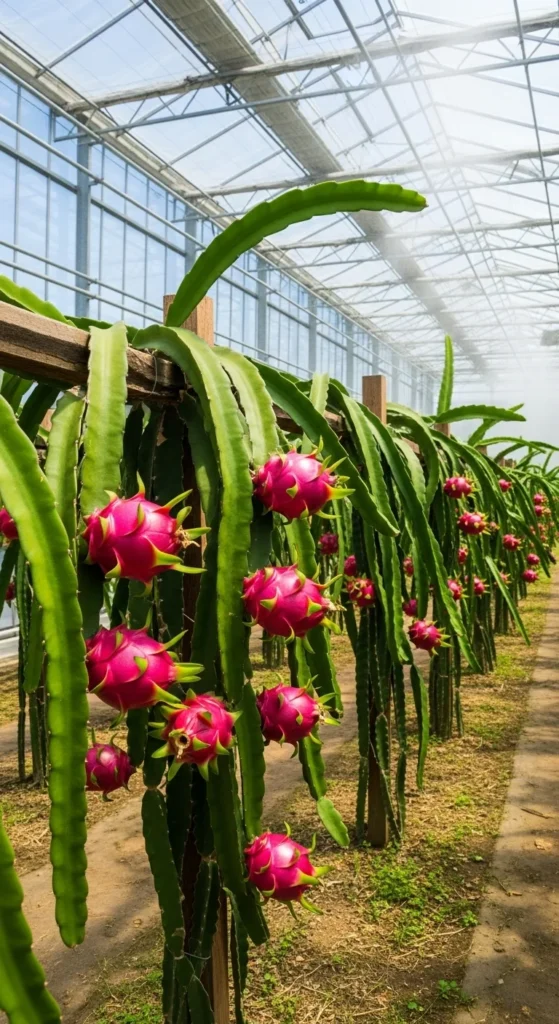
Dragon fruit cacti need warm, bright greenhouse spaces.
Use tall posts and tie stems loosely as they climb. Place them near southern windows. Water lightly. A cheaper option is to plant cuttings in sandy mix and use PVC posts. Trim stems once they reach the top to encourage side growth and flowering.
20. Avocado Plants in Insulated Grow Bags
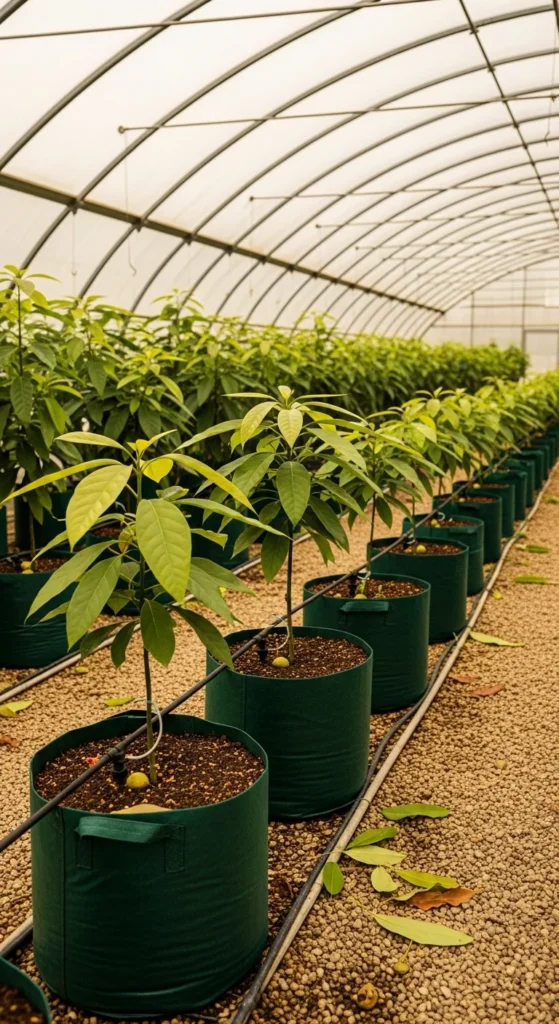
Avocados grow well in controlled climates with consistent warmth.
Use insulated grow bags to keep roots comfortable. Place them near the warmest wall. Water deeply and allow slight drying between sessions. For a budget version, wrap regular grow bags with bubble wrap. Prune lightly to keep the canopy balanced.
21. Mixed Fruit Rows Using Companion Layout
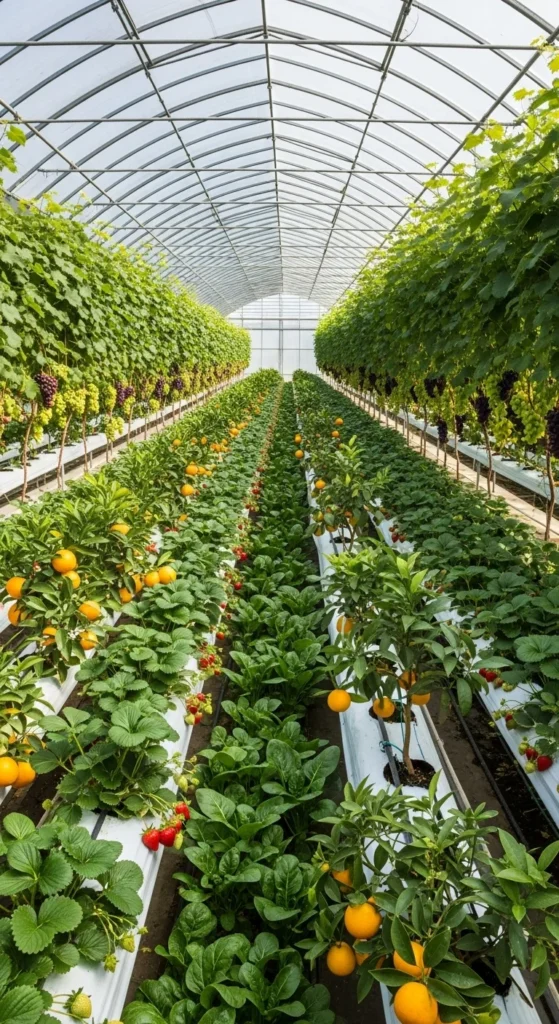
Mixing fruit varieties helps create a balanced greenhouse environment.
Combine tall crops like figs with low crops like strawberries. Use containers to shuffle plants easily. A budget method is to create rows using repurposed crates. Keep taller trees along the back so sunlight reaches all levels. Rotate fruit groups every few weeks for better airflow.
Conclusion
Greenhouse fruit production becomes far more productive when you use space creatively and tailor each crop to its environment. These plans help you grow a mix of berries, vines, tropical fruits, and potted trees even in limited greenhouse areas. Start with a few crops, adjust your layout as plants grow, and experiment with supports, pruning, and container styles. With consistent care, your greenhouse can produce generous fruit harvests throughout the year.
Leave a Reply