

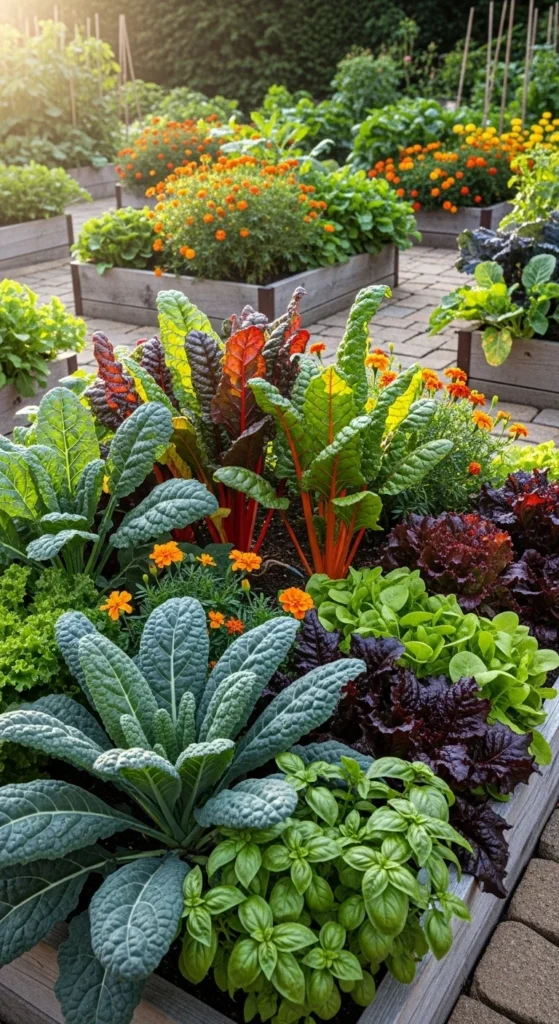
Who says gardens have to choose between beauty and function? Edible foliage gardens prove you can have both—lush leaves that look ornamental while offering fresh food right outside your door. From purple basil borders to kale-lined paths, these ideas turn your yard or balcony into a living pantry. Here are 24 stylish design ideas for a New Year garden that looks stunning, saves space, and serves dinner too.
1. Kale and Chard Color Bed
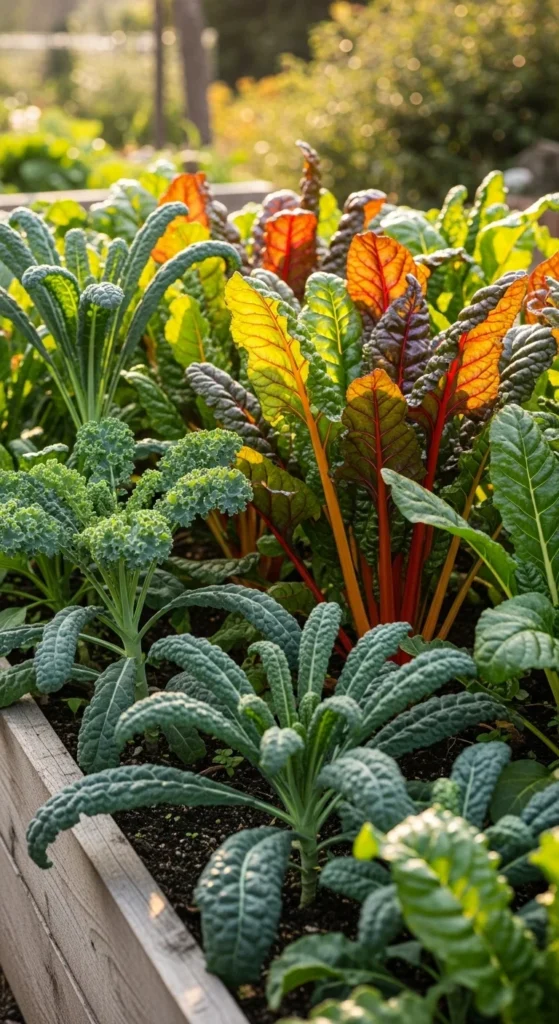
Pair kale and Swiss chard in one raised bed for a painterly mix of textures. Their colorful stems and leafy curls look decorative year-round. Use chard’s bright reds and yellows as visual anchors. Harvest outer leaves regularly to keep the center growing strong. A layer of compost and mulch helps them thrive in cooler months, making this bed both beautiful and practical for winter salads.
2. Lettuce Border Pathway
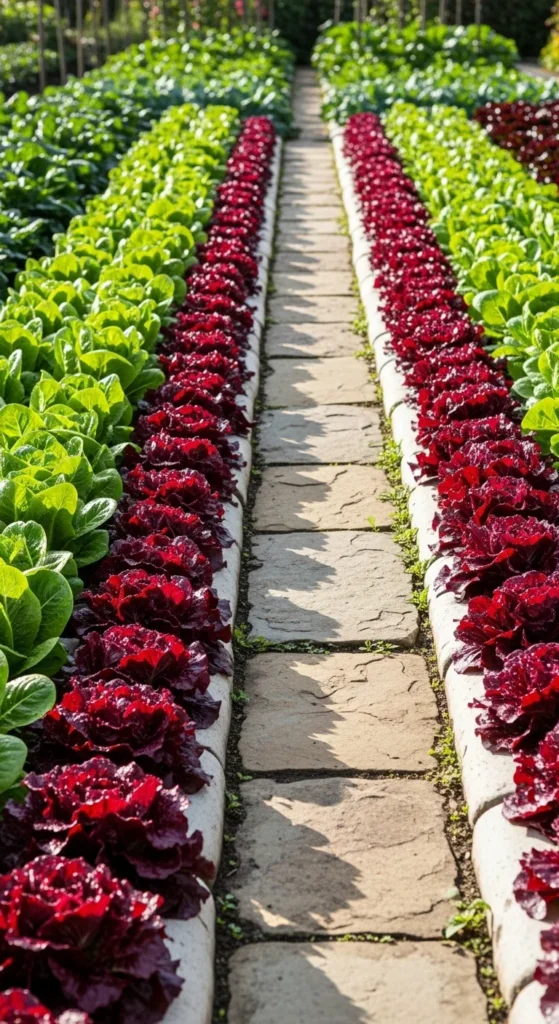
Lettuce grows fast and comes in endless colors. Create a patterned edge along your walkway with butterhead, romaine, and red leaf varieties. Stagger planting for a continuous harvest. The contrast between shades adds polish to your garden path while giving you crisp greens for meals anytime. It’s easy, budget-friendly, and turns utilitarian space into edible decor.
3. Herb Spiral Feature
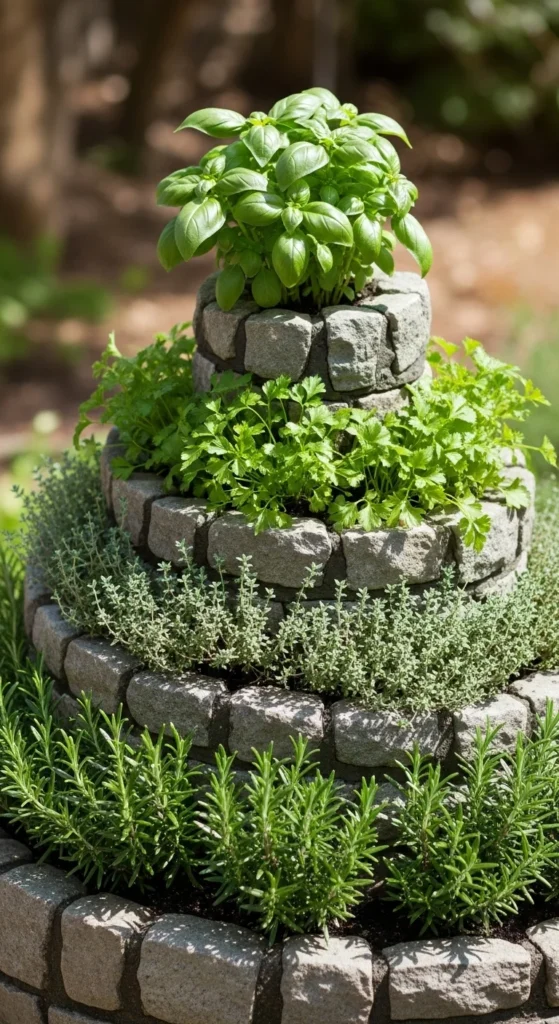
Build a small herb spiral using stones or bricks. Start with taller herbs like rosemary in the center and trailing ones like thyme near the base. This layout saves space, improves drainage, and looks sculptural. It’s an art piece that doubles as a flavor garden—perfect for patios and small spaces.
4. Ornamental Cabbage Corner
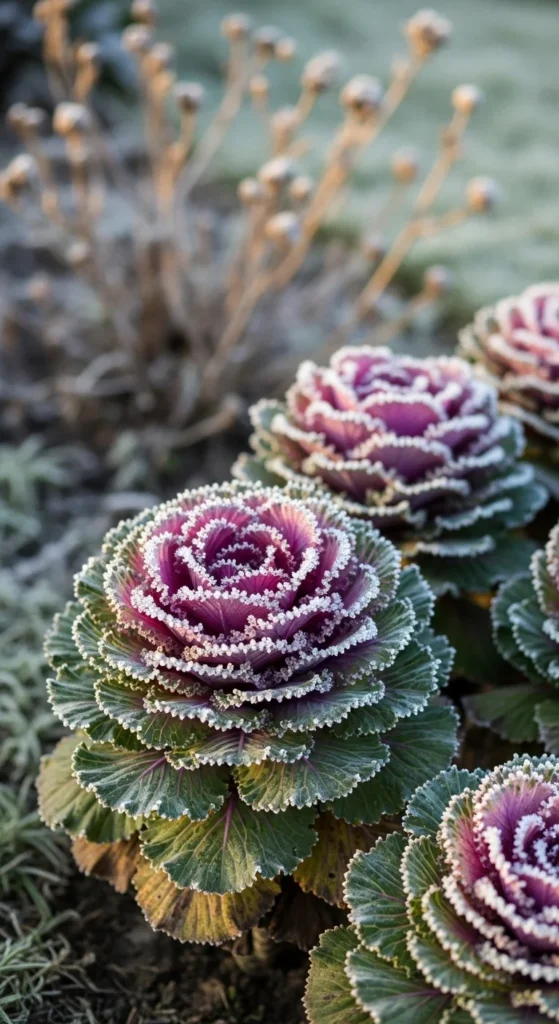
Ornamental cabbages bring stunning rosette forms and edible potential. Mix purple cabbage and savoy varieties for texture and symmetry. Place them in clusters or as a border accent. They tolerate cold, add winter color, and can be used for cooking when leaves are young and tender.
5. Basil Hedge Rows
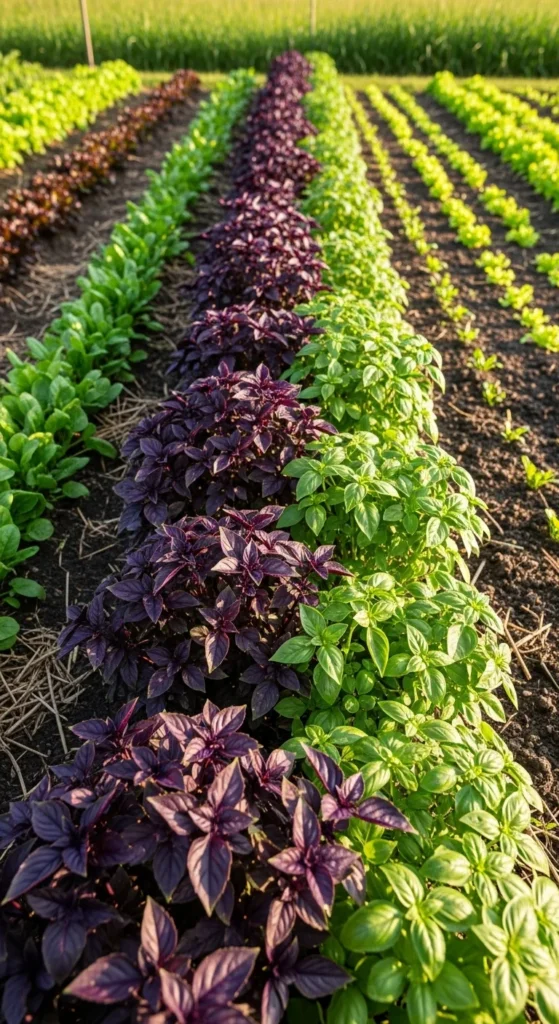
Plant Genovese and purple basil in alternating rows for a scented mini hedge. Trim regularly to keep shape and promote bushy growth. The glossy leaves create a uniform green-and-purple look while staying aromatic. Use cuttings in sauces, salads, or to garnish drinks straight from the garden.
6. Edible Flower Corners
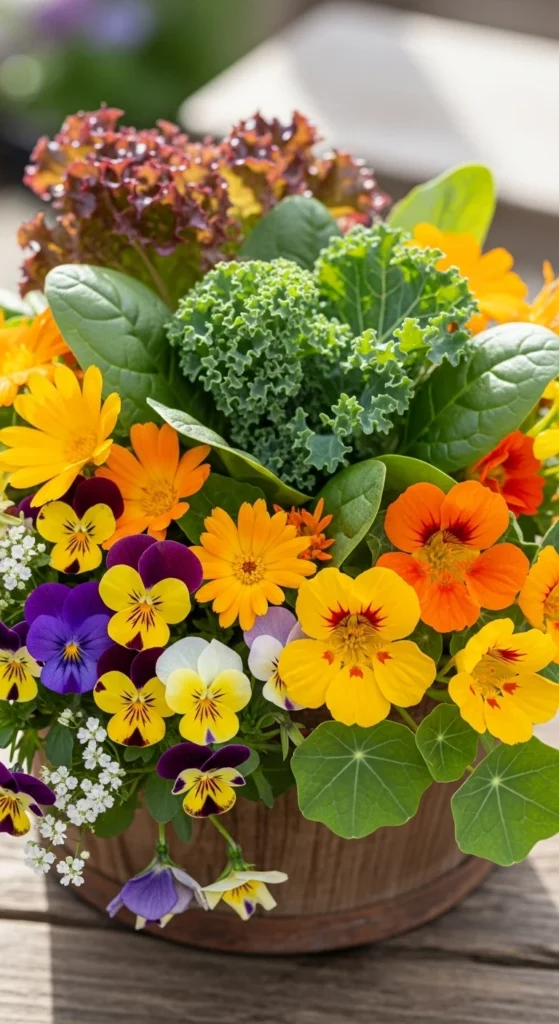
Add edible flowers like nasturtiums and calendula around the edges of leafy greens. Their petals brighten salads and attract pollinators while acting as natural pest control. Mix them into containers or garden corners for color pops that feel both wild and intentional.
7. Red Mustard Accent Pots
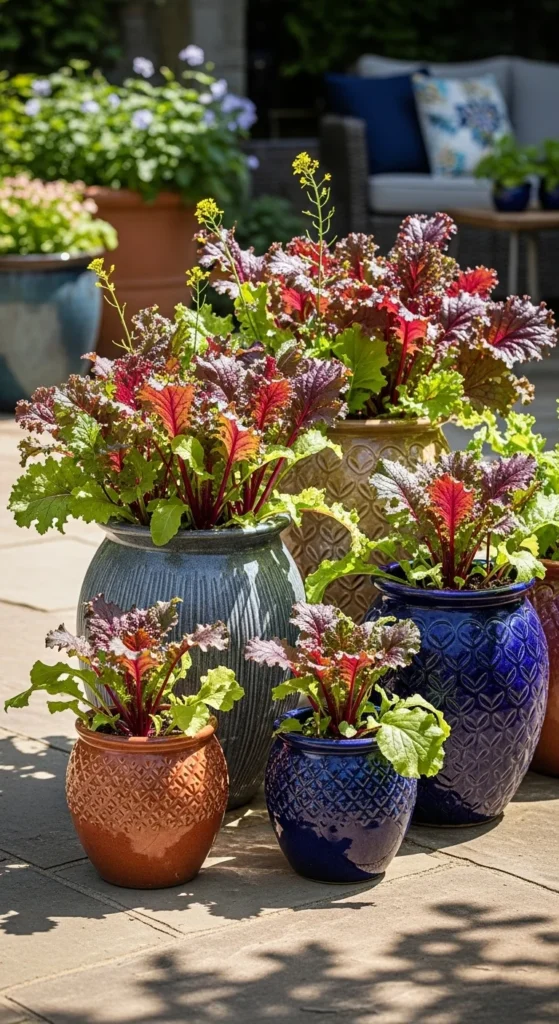
Red mustard greens grow fast and tolerate cool weather. Their maroon foliage stands out beautifully in ceramic pots or terracotta planters. Add them to entryways or balconies for rich contrast. They’re mild enough for stir-fries or fresh salads, making them a functional accent.
8. Mixed Greens Wall Planter
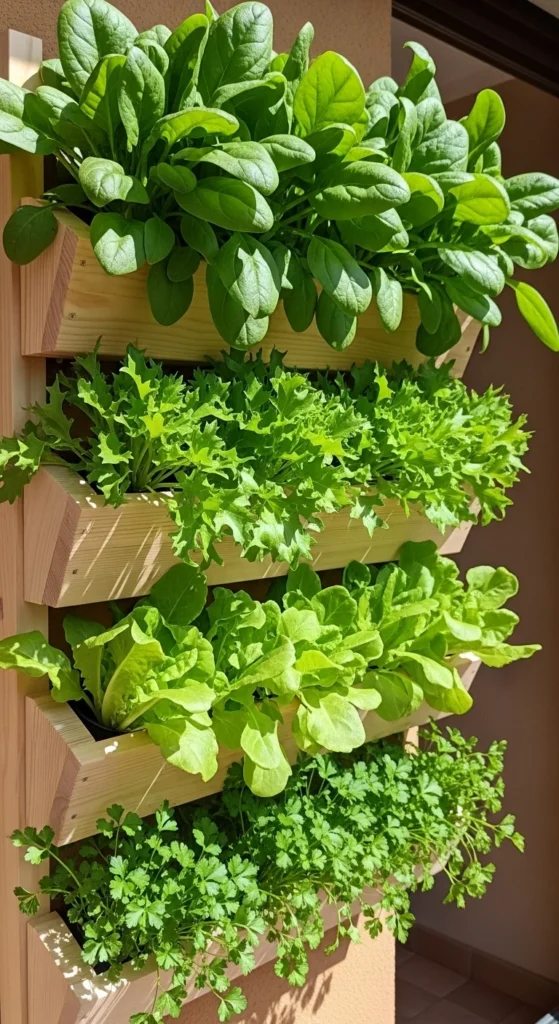
Use a vertical planter to grow edible greens and herbs in tight spaces. The cascading growth adds visual softness while maximizing yield. Mix fast growers like spinach with slower ones like parsley for continuous texture. Keep soil moist and rotate lower trays to sunlight weekly.
9. Beetroot Leaf Showcase
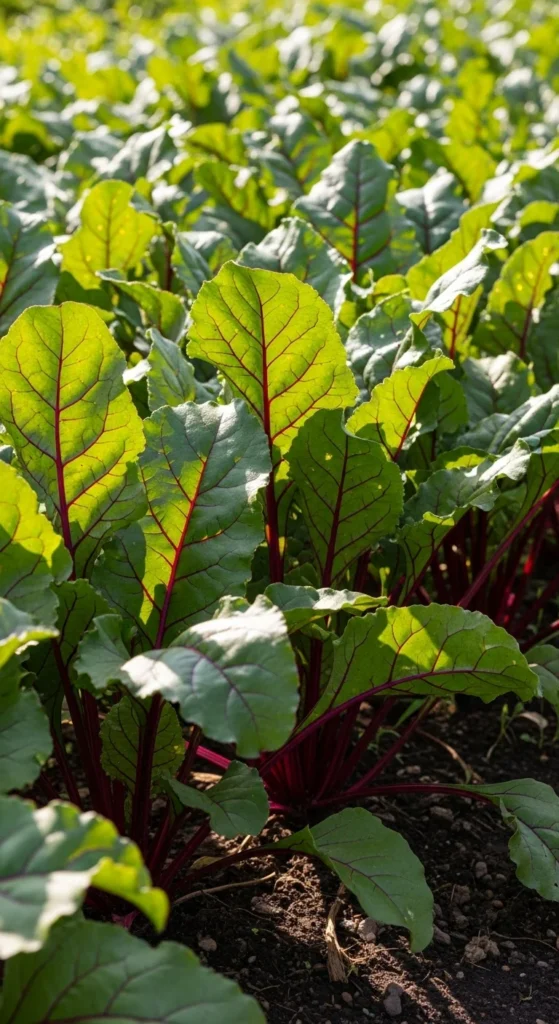
Beet greens are as pretty as the roots. Let a few plants grow mainly for their vibrant foliage, which works beautifully in mixed beds. Their red stems add color depth beside pale greens like lettuce. Harvest young leaves for cooking—sweet and earthy in flavor.
10. Strawberry Pot Fountain
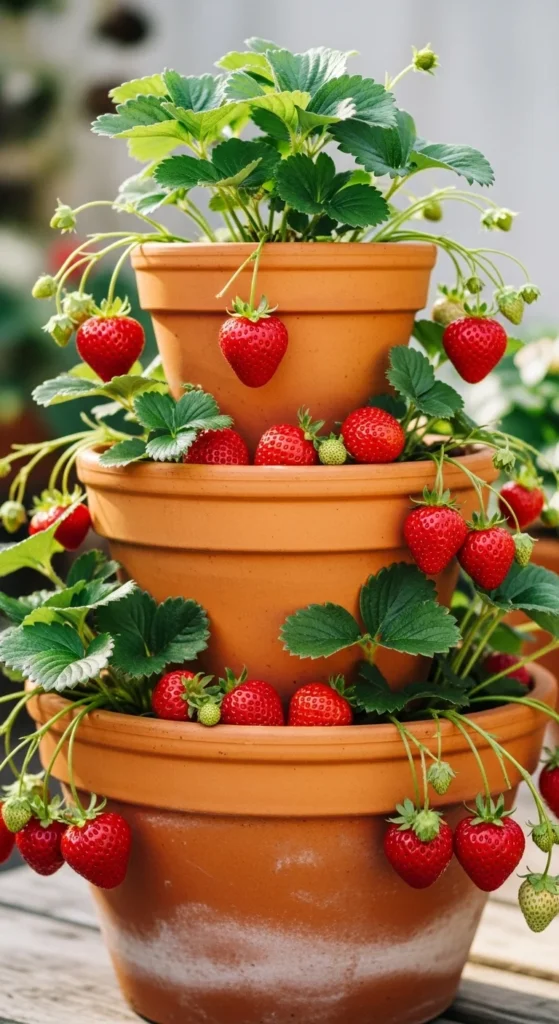
Stacked strawberry pots bring movement and form to small spaces. Their cascading leaves and red fruit catch the eye instantly. Place in sunny spots and water from the top so it trickles through all tiers. It’s a compact, decorative way to enjoy fresh berries even in tight patios.
11. Sage and Thyme Stone Edging
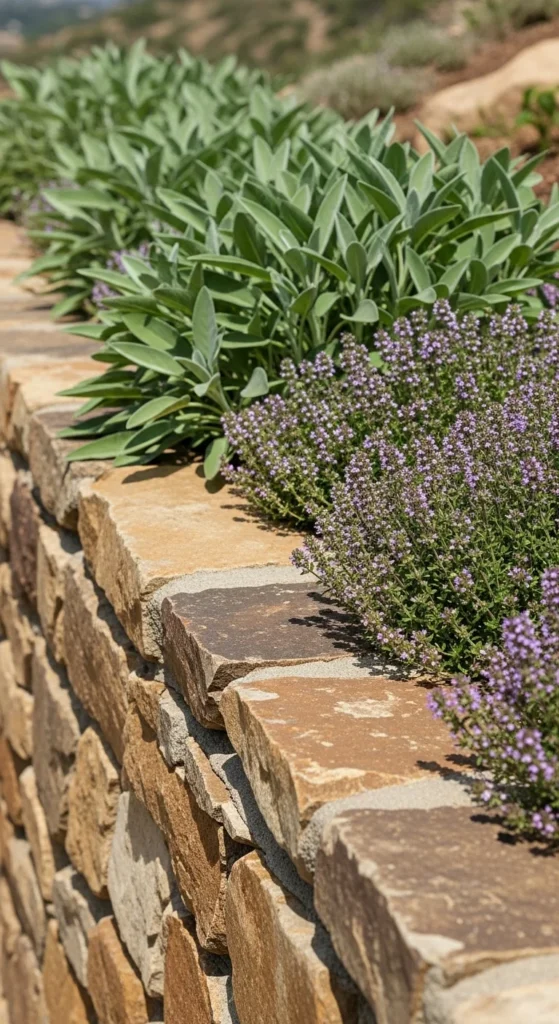
Low-growing sage and thyme create natural edging for paths or raised beds. Their silvery and green tones complement both ornamental and edible plantings. They release fragrance when brushed, adding another sensory layer to your design. Clip sprigs anytime for cooking.
12. Rainbow Spinach Bed
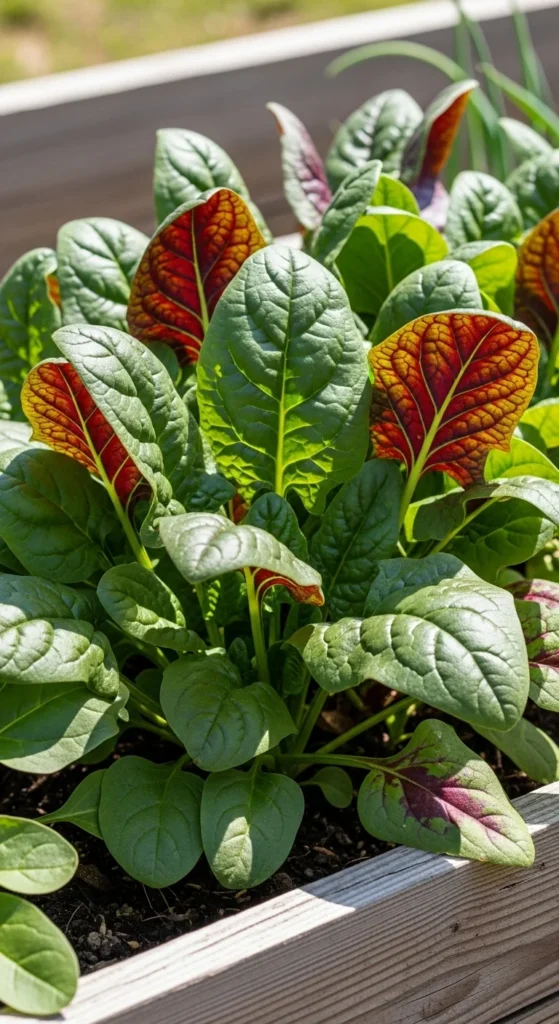
Plant different spinach varieties—‘Red Veined,’ ‘Bloomsdale,’ and ‘Malabar’—for diverse shapes and hues. This combo stays productive in mild winters and early spring. Mix them tightly for lush coverage that looks ornamental and feeds you well. Regular trimming encourages new growth.
13. Mixed Kale Containers
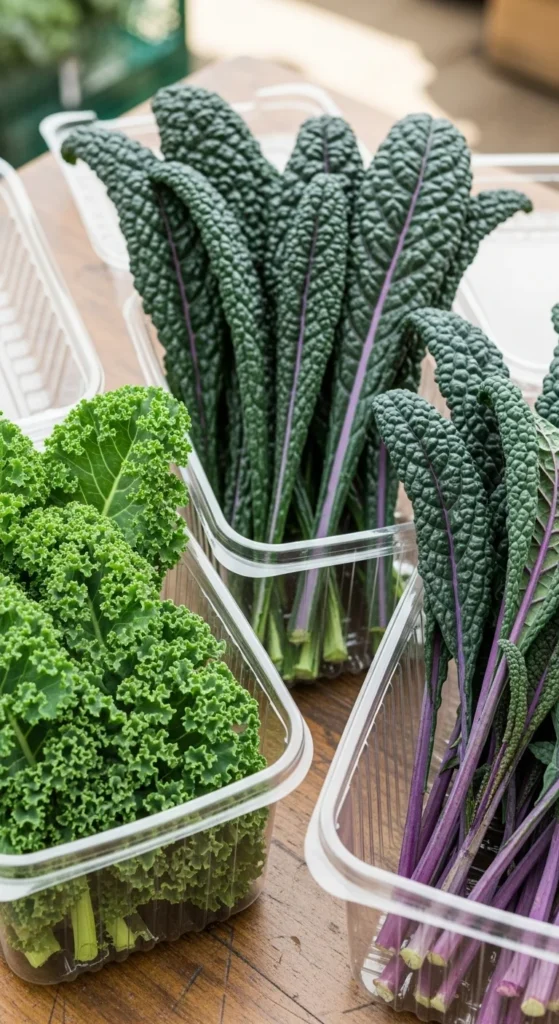
Mix different kale varieties for texture-rich containers. The curls, lances, and colors create depth even in small pots. Water sparingly and keep them near sunny spots. These hardy greens outlast cold spells while adding sculptural beauty to patios or front porches.
14. Mint Barrel Planter
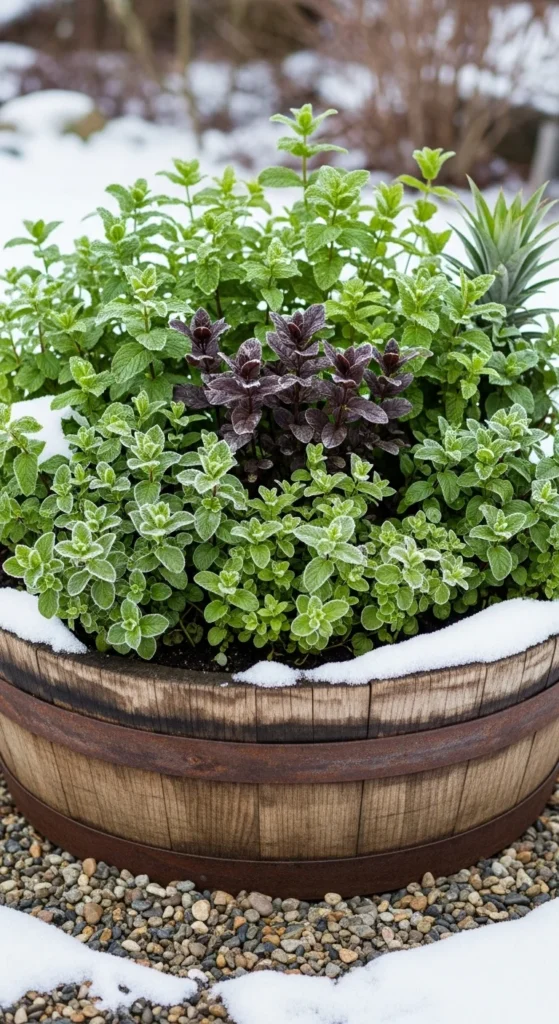
Plant multiple mint types—peppermint, apple mint, and chocolate mint—in one large barrel. Their trailing habit softens the edges while the fragrance uplifts every visit. Mint spreads fast, so keeping it contained avoids garden takeover. Use leaves fresh for tea or desserts all winter.
15. Chive and Garlic Border
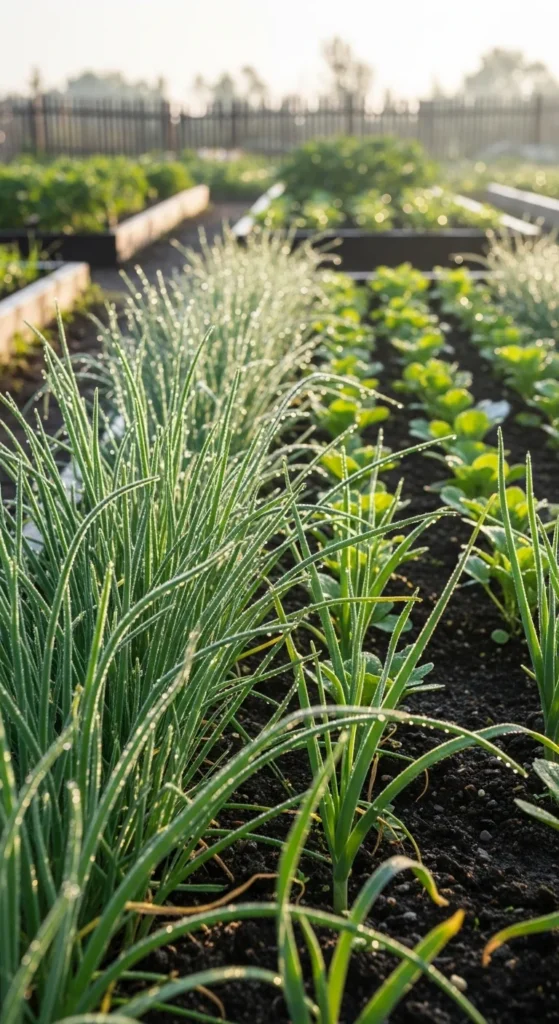
Border vegetable plots with chives and garlic greens for natural pest control and subtle architecture. Their upright form frames beds neatly while feeding your kitchen. Snip tops regularly to encourage new shoots, and enjoy year-round seasoning right at your garden’s edge.
16. Microgreen Windowsill Trays
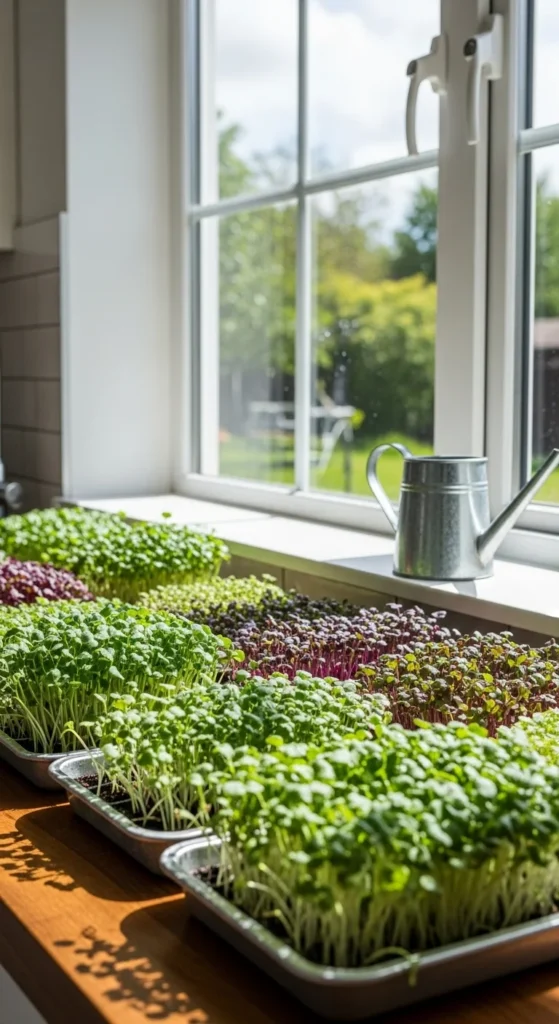
If outdoor space is limited, grow microgreens indoors. Use shallow trays filled with seed mix—radish, mustard, or arugula. Place them near a sunny window for quick growth. They’re ready to harvest in two weeks and look decorative with their lush green mat of baby leaves.
17. Container Citrus Companion
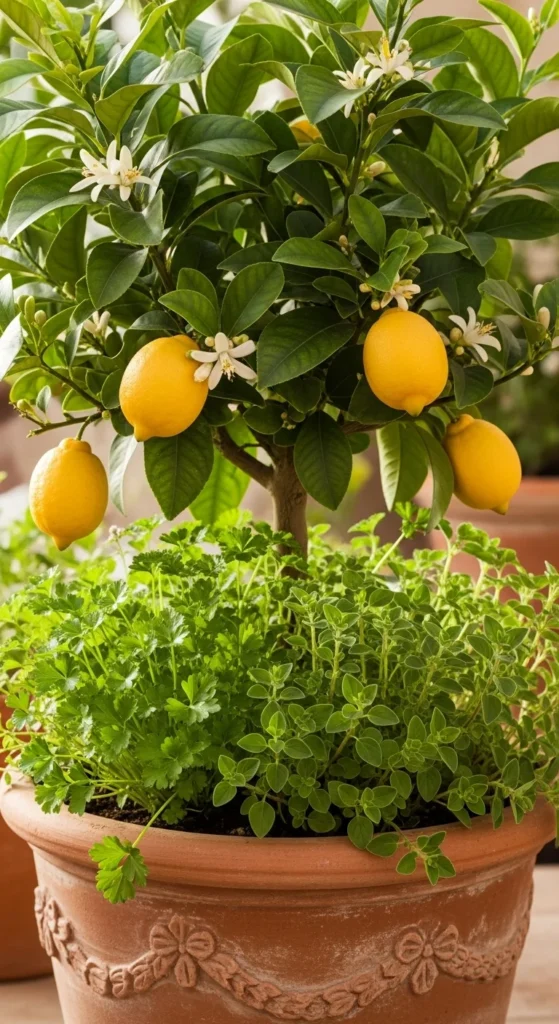
Combine a dwarf citrus tree with leafy herbs in the same pot. The herbs cover the soil, retain moisture, and add a layered visual effect. Citrus leaves and fruit bring brightness even indoors. Use a large terracotta pot for proper drainage and stability.
18. Pea Shoot Trellis
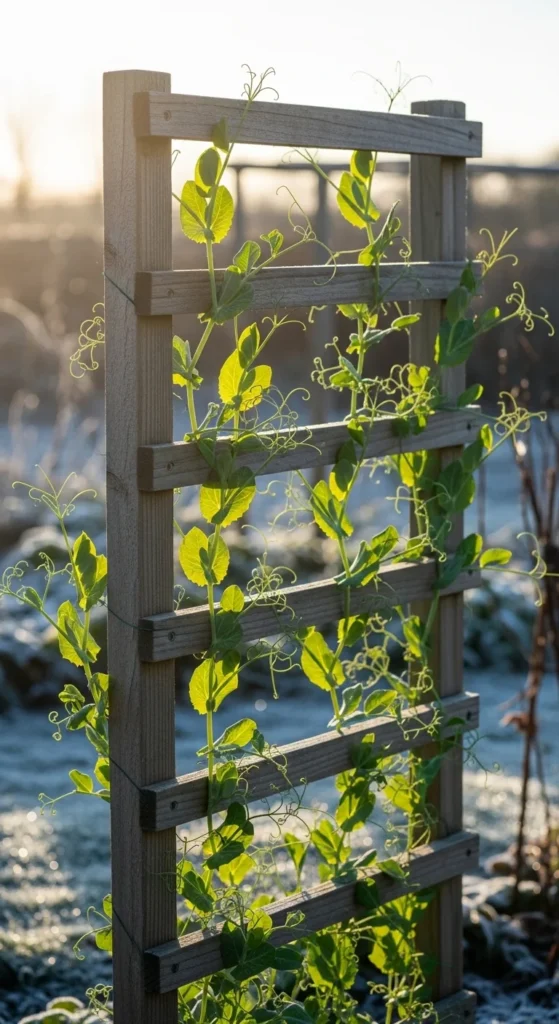
Create vertical interest with a simple trellis for pea shoots. Their delicate tendrils and small leaves look graceful while producing edible greens. Use bamboo sticks or metal mesh for support. Keep soil slightly moist, and harvest shoots when tender for salads or stir-fries.
19. Beetroot and Kale Mosaic
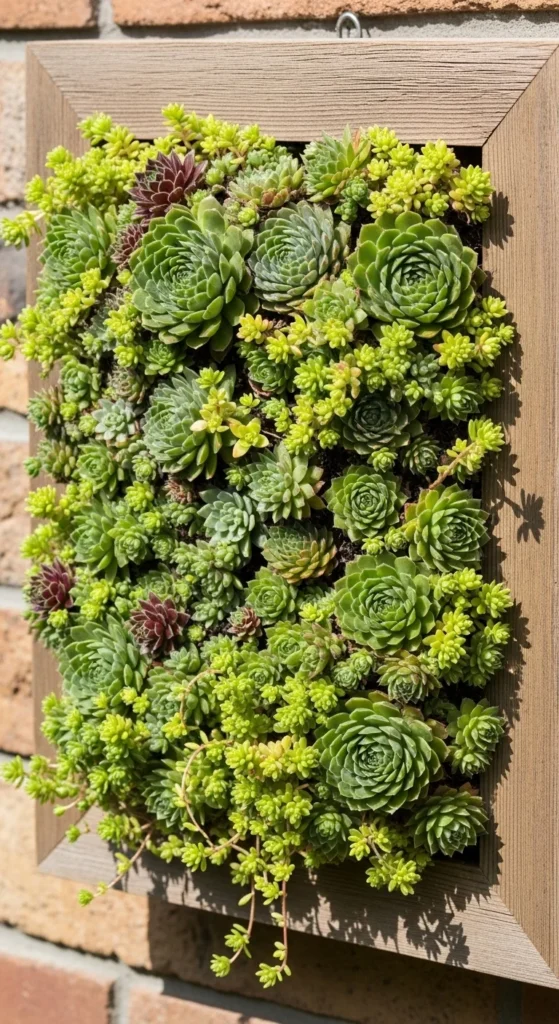
Combine red beet leaves with deep green kale for a living mosaic effect. The alternating rows catch sunlight beautifully and stay productive through cool weather. Use the younger leaves for tender greens and let some mature for late-season soups.
20. Rosemary Topiary Pot
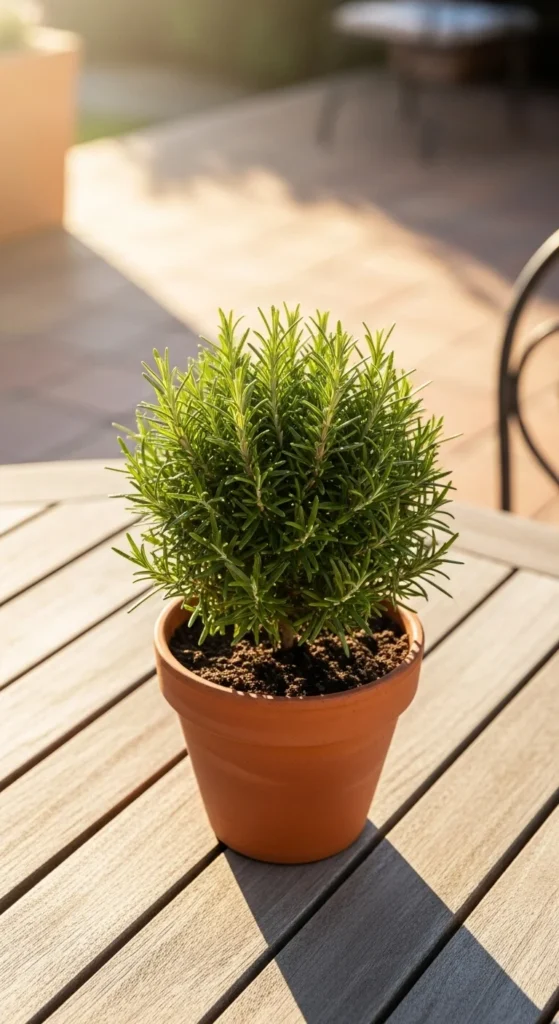
Train rosemary into a small topiary form using pruning shears. It adds structure and fragrance to any garden spot. The evergreen leaves withstand cool conditions and provide year-round culinary use. A simple clay pot keeps it grounded and classic.
21. Edible Fern Corners
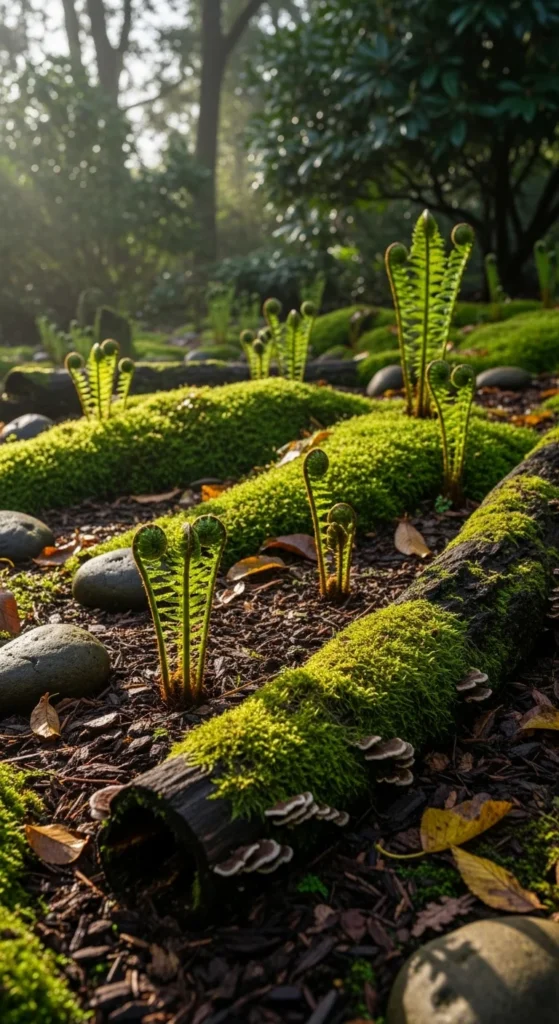
For shaded spots, try planting edible ferns (fiddleheads). They add a lush forest look and edible shoots in early spring. Keep soil damp with compost mulch. It’s an unusual but attractive choice that fits both modern and rustic designs.
22. Mixed Herb Hanging Planter
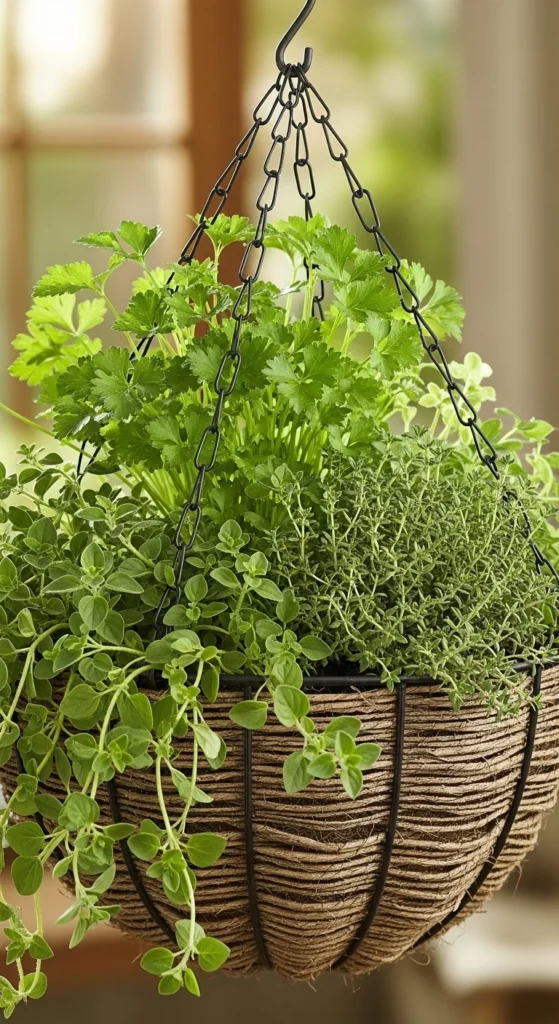
Hang a wire basket lined with coir and fill it with mixed herbs. Oregano and thyme trail beautifully while parsley fills the center. This hanging feature adds texture and scent at eye level, turning plain patios into functional art.
23. Carrot Green Display
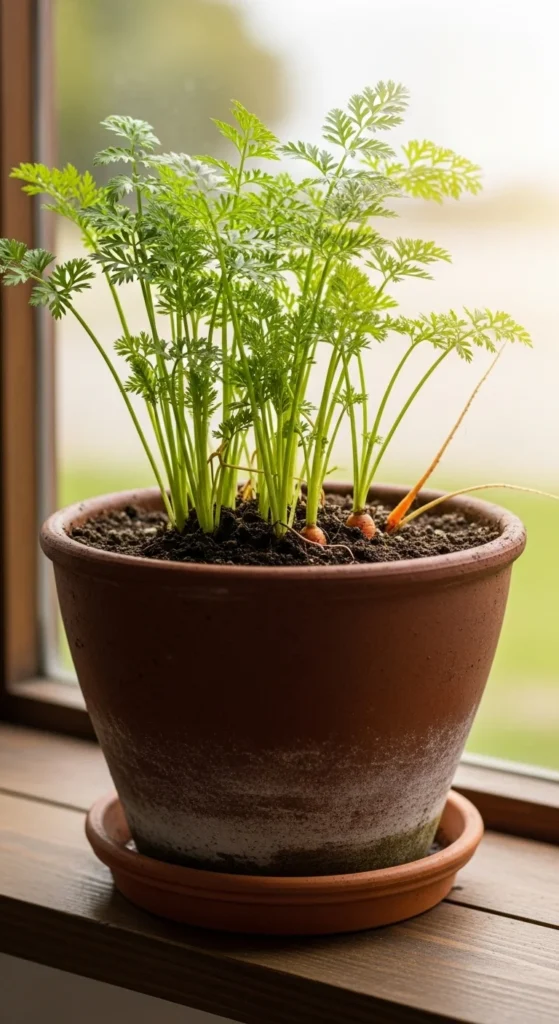
Don’t overlook carrot tops—they’re edible and decorative. Grow short carrot varieties in pots where the leafy tops form a dense crown. The fine-textured greens contrast nicely against heavier foliage plants. Use leaves for pesto or garnish once mature.
24. Purple Perilla Edge
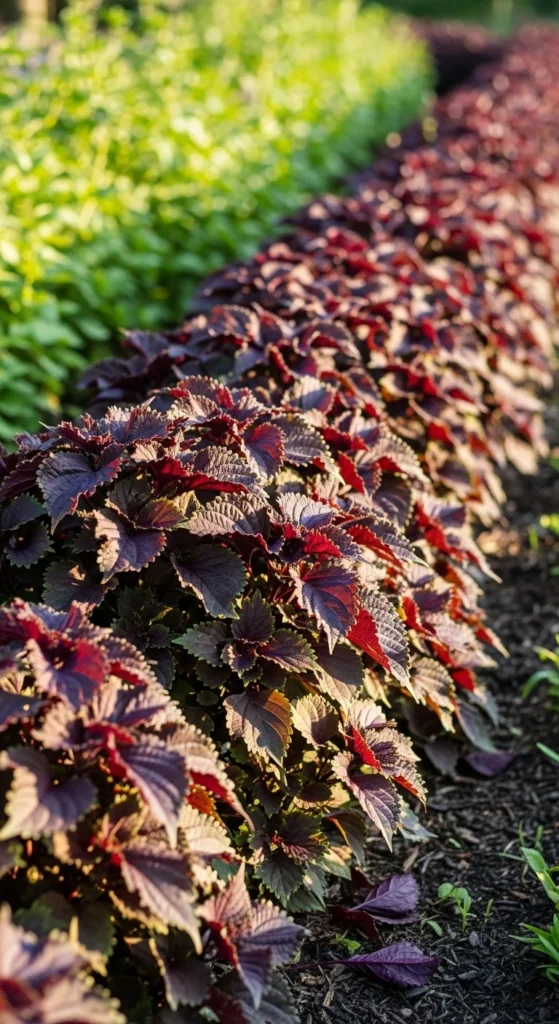
Perilla’s rich color and ruffled leaves make it both stylish and edible. It thrives in containers or borders and pairs well with green vegetables. Use leaves in salads, sushi, or pickling. Its vibrant tone carries visual weight even in minimal gardens.
Conclusion
An edible foliage garden proves that beauty and practicality grow hand in hand. With thoughtful design and hardy plant choices, you can turn any space into a source of food and visual pleasure. These 24 ideas blend structure, color, and taste for a New Year garden that both looks good and feeds well. Start small, experiment, and let every leaf work double duty—decor and dinner.
Leave a Reply