

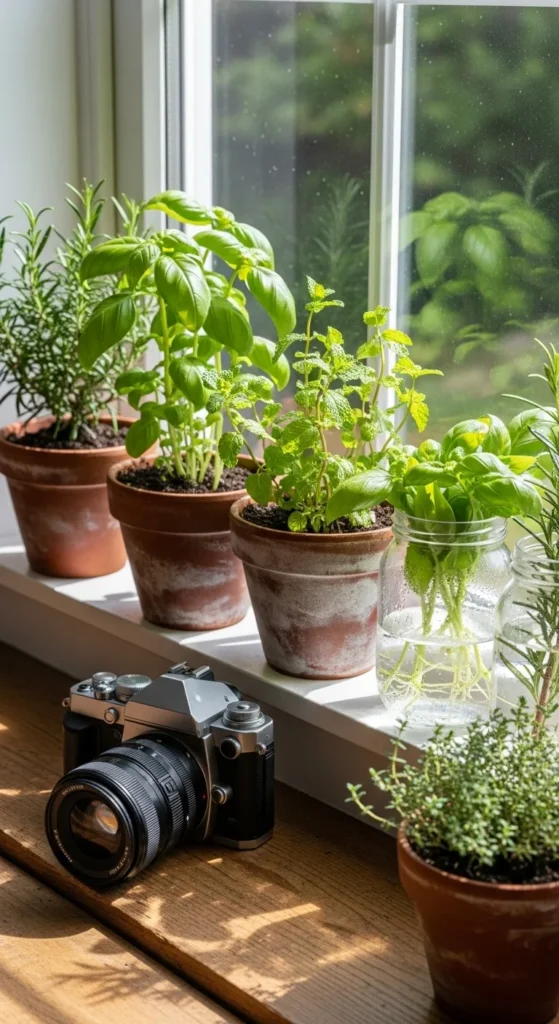
Start the year with simple herb setups that bring real flavour to everyday cooking. Indoor herbs grow well in tight spaces, and you can shape each setup around your kitchen, dining area, or a sunny corner. These ideas help you start small, stay consistent, and enjoy herbs that fit your routine without extra fuss. Each setup works for apartments, small rooms, and busy lifestyles.
Window-Jar Herb Trio
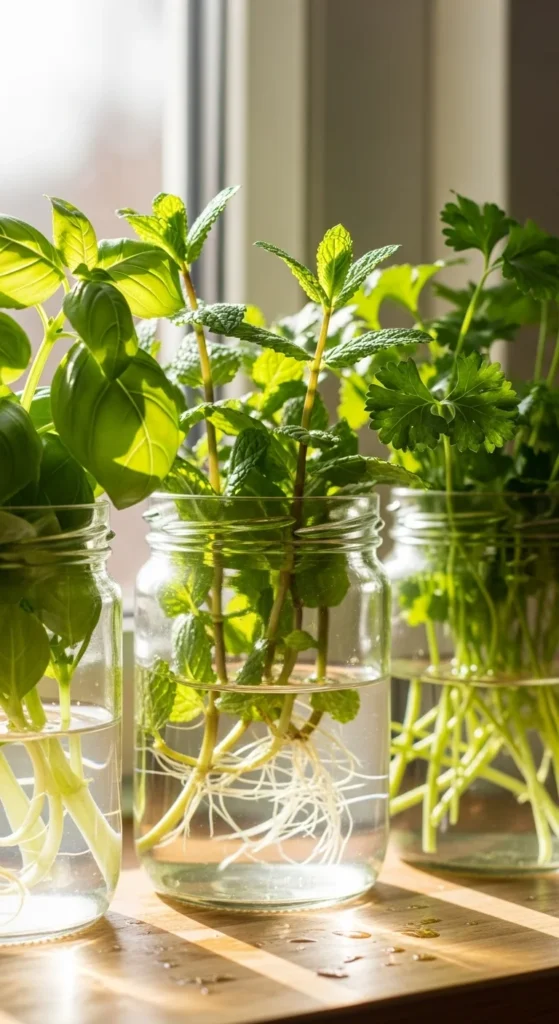
A simple trio of jars can bring steady flavour right to your window. Use recycled glass jars or small drinking glasses. Add water, drop in a few herb cuttings, and keep them near sunlight. Change the water every few days to keep it clean. This setup works well when you want herbs close to your cooking space. You can snip leaves straight from the jar. If the roots grow long, move the cuttings to soil later. Keep the jars wiped clean for a tidy look. You can mix herbs or keep all three the same. Rosemary and thyme root slower, so basil and mint work best for this. Add a small tray under the jars so any extra moisture stays contained. With this setup, your herbs stay visible and easy to grab.
Mini Clay-Pot Shelf Corner
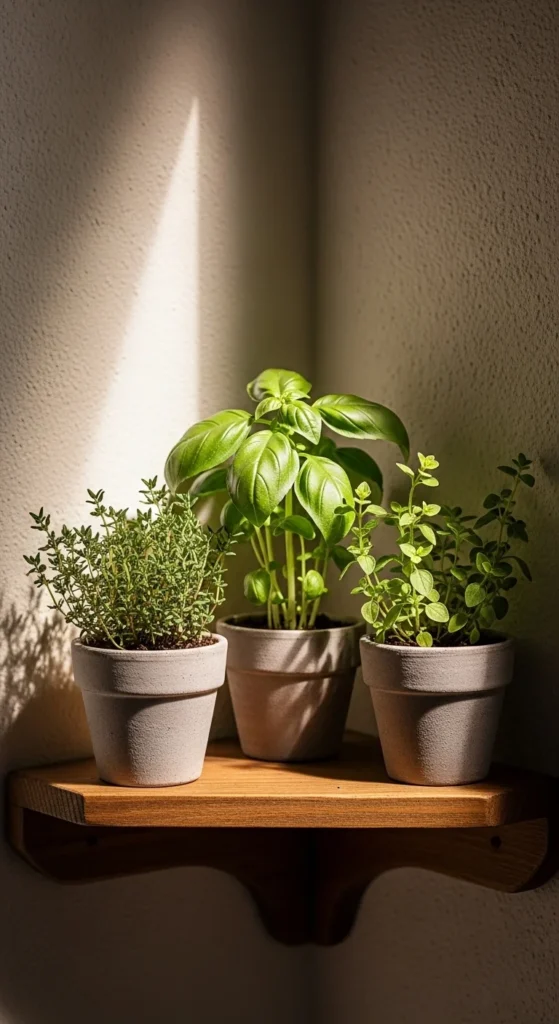
A corner shelf makes a quiet space feel useful. Pick two or three small clay pots and arrange them on a narrow shelf near a window. Clay pots keep roots from staying too wet. Add simple labels so you don’t mix herbs. Water lightly and check the soil by touch. This corner can brighten a tiny kitchen or dining area without taking up counter space. It also helps herbs grow upright because they receive steady light. Add a cheap LED clip light if the corner is dim. Try oregano, thyme, or basil. Keep a small saucer under each pot to avoid dripping on the shelf. This setup works well when your kitchen already feels crowded.
Magnetic Fridge Herb Cups
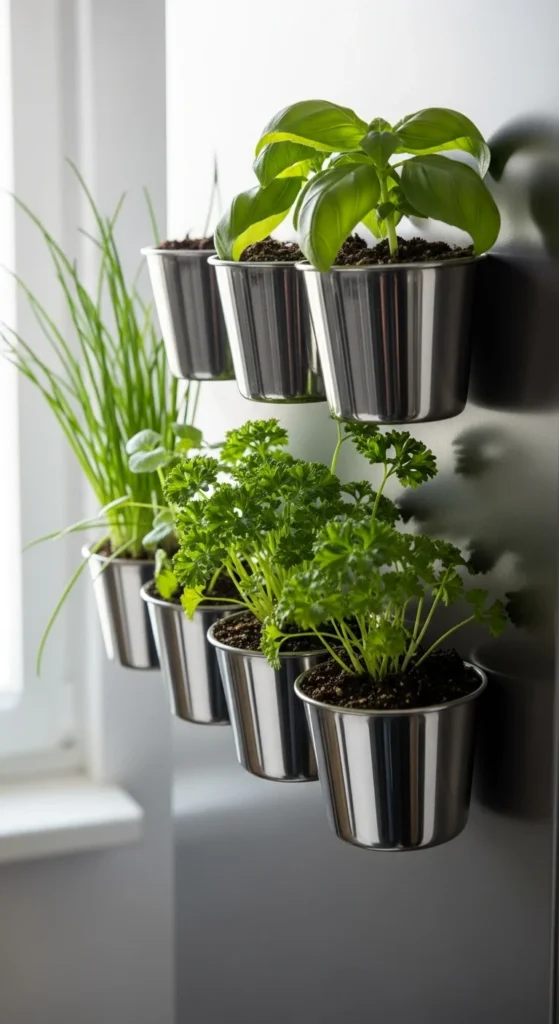
Magnetic cups help you grow herbs without using shelves or counters. Buy metal cups with strong magnets or attach magnets to lightweight containers. Stick them on the fridge door that faces a light source. Add potting mix, plant seeds or small herb starters, and water gently. Keep the soil from getting soggy since cups are small. Grow herbs that stay compact like chives or parsley. Rotate the cups every few days so each one gets enough light. This setup saves space and keeps flavour close to your meal-prep area. When herbs outgrow the cups, transfer them to a bigger container and restart with new seeds.
Mason-Jar Wall Rack
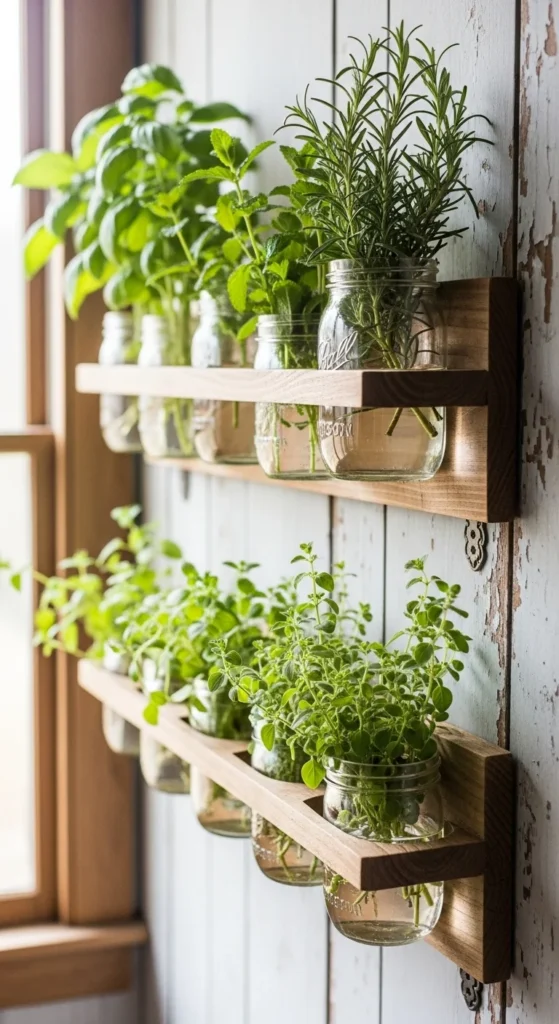
A wall rack with mason jars helps herbs stay organised and easy to pick. Mount a simple wooden board and attach jar holders or clamps. Place jars with drainage stones at the bottom, then fill with soil and herbs. Keep the rack on a wall near sunlight. Mason jars look clean and keep herbs visible so you know when to water. Add a small mist once in a while to keep leaves hydrated. This setup works for basil, mint, or cilantro. If jars feel heavy, reinforce the board with strong screws. It’s great for apartments where counter space is limited.
Countertop Herb Basket
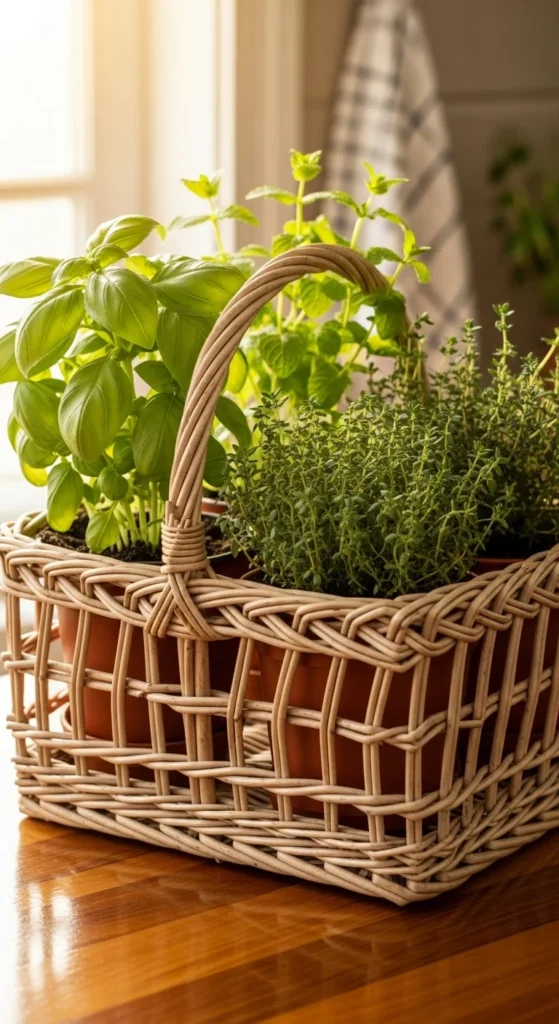
A basket makes herbs easy to move when you want light from different windows. Use a shallow woven basket that fits three or four small pots. Pick herbs that don’t mind being close together. Keep the basket in a spot with gentle light, then move it when you cook. You can place small stones at the bottom to catch extra water. This setup is helpful when you don’t want pots directly on your counter. Basil and mint stay lush with regular watering. Add a pair of scissors in the basket so you can trim leaves anytime.
Herb Ladder Stand
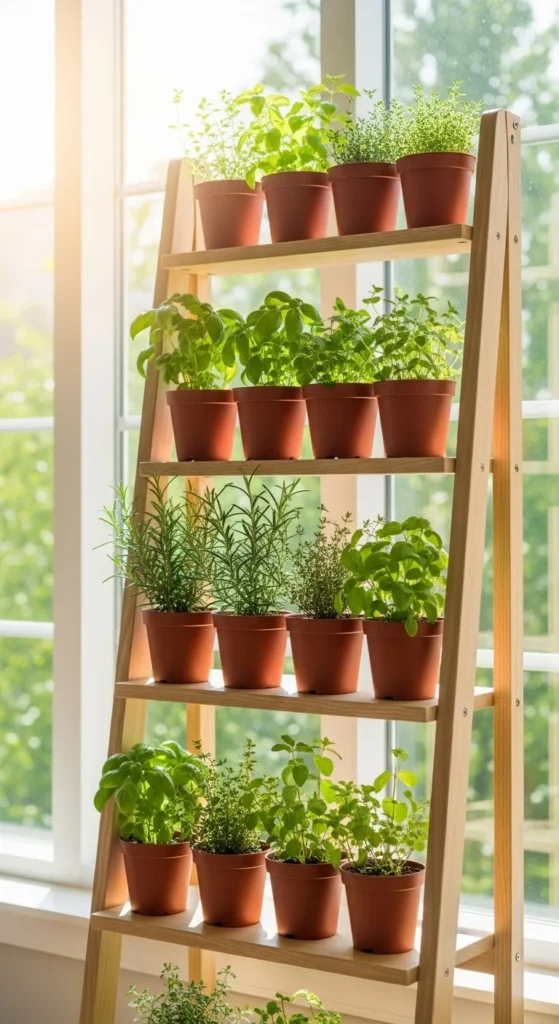
A ladder stand fits small spaces and offers room for many herbs. Use lightweight pots so the shelves stay balanced. Place thyme and rosemary on the higher steps where light is stronger. Put mint and chives lower. Water carefully since the upper pots dry faster. The staggered design helps each plant get light without shading others. This type of stand looks neat in the kitchen or living room. Add small saucers to keep the stand clean. If you pick a foldable ladder, you can store it when not in use.
Floating Window Rod Herb Line
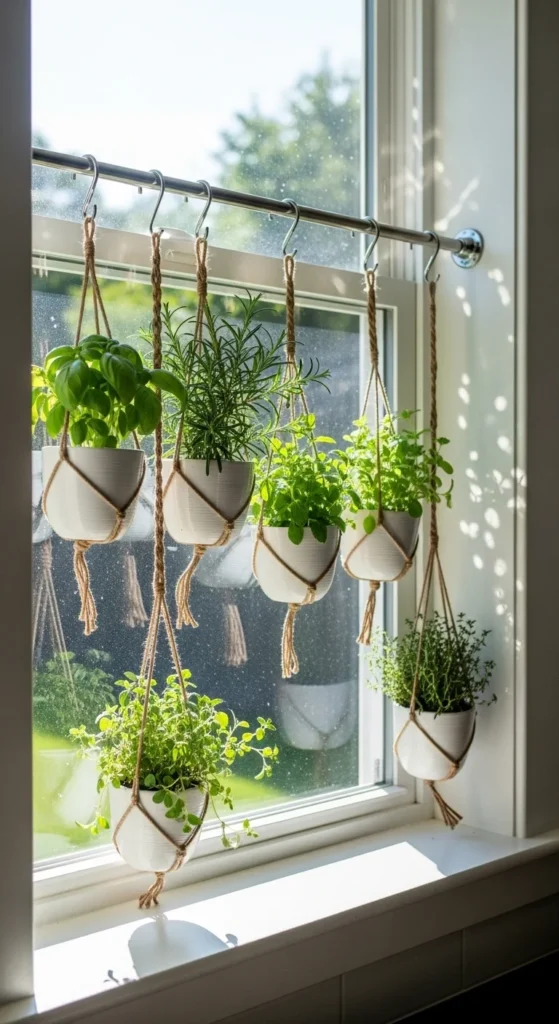
A tension rod can hold several small hanging pots. Place the rod in a window frame so herbs receive light from all sides. Choose lightweight planters to avoid strain on the rod. Add drainage holes and a tray to catch any drips. Let herbs hang at eye level so you can pick leaves easily. This works well for basil, cilantro, and parsley. If the rod shifts, tighten it or use adhesive pads for grip. Keep plants trimmed so they don’t become top-heavy.
Tea-Tin Herb Set
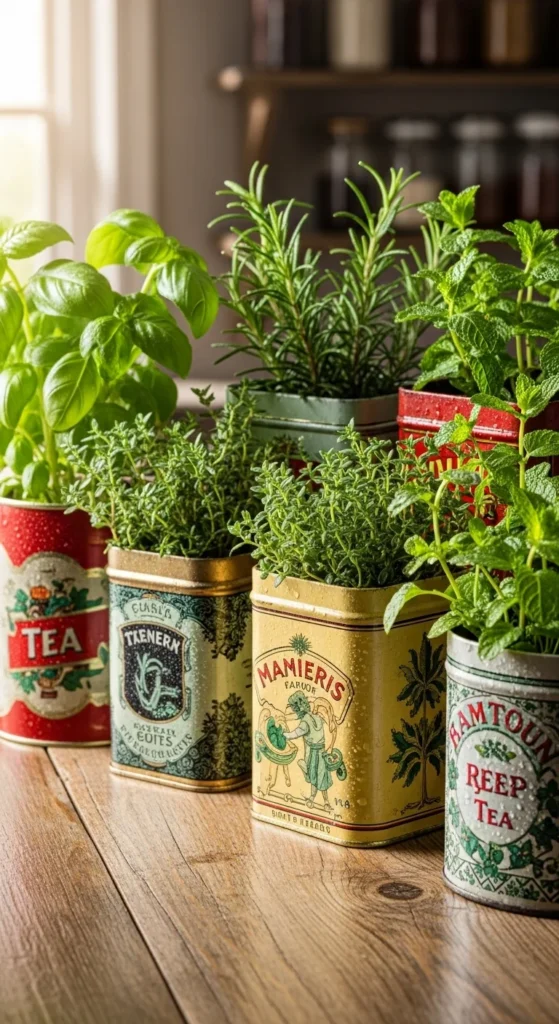
Old tea tins make charming, compact herb containers. Wash and dry the tins, then punch small drainage holes in the bottom. Add soil, plant small herb starters, and set them near light. These tins fit even the smallest spaces. Group three or four together for variety. Basil, thyme, and mint work great. The metal warms quickly, so water lightly. Pair this with a small tray to protect your counter. Tea tins help you recycle items while keeping herbs within reach.
Under-Cabinet LED Herb Strip
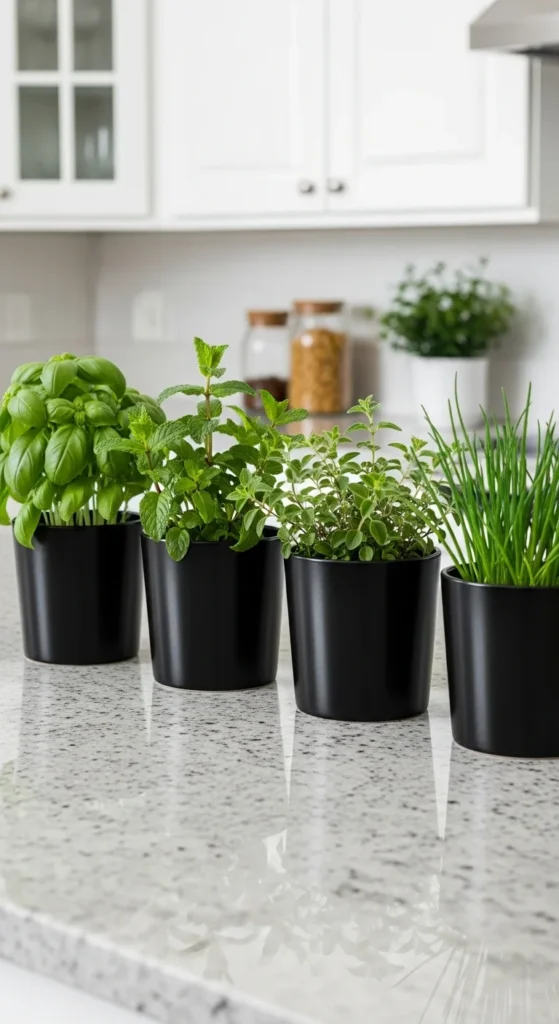
Install a thin LED strip under your cabinets and place a row of small pots beneath it. The light helps herbs stay strong even in kitchens with few windows. Use clay or ceramic pots so roots stay healthy. Place basil, lemon balm, and chives in this spot. Water gently and keep the leaves trimmed. The strip stays on for a few hours each day. This setup looks tidy and keeps herbs right where you cook.
Ceramic Bowl Herb Cluster
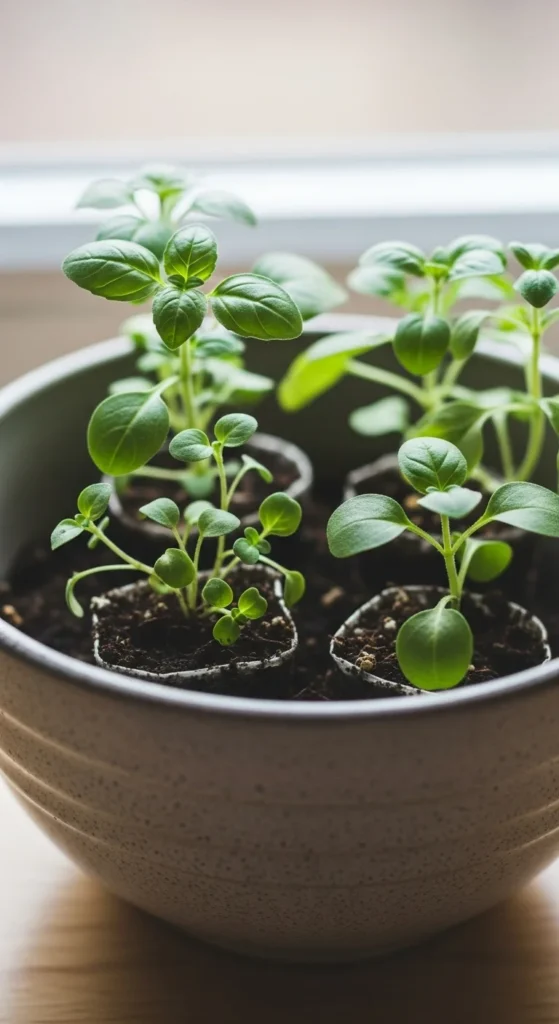
A shallow ceramic bowl can hold a small cluster of herbs. Add pebbles for drainage, then fill with soil. Arrange three herbs together, such as parsley, mint, and basil. Keep the bowl near a window. Water slowly to avoid flooding the center. This clustered design works in tight spaces and brings a little garden look to your table. Add a small spoon for trimming stems gently.
Vertical Wood Board Planters
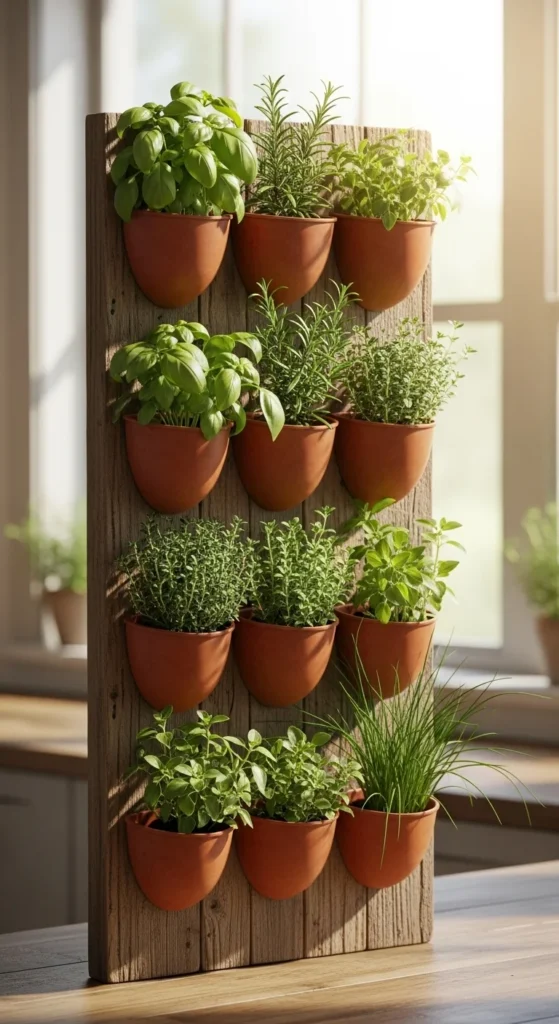
Mount a slim wooden board and attach small fabric pockets or metal holders. Add herb starters and place the board on a wall near light. This setup saves space and keeps herbs easy to reach. Mint, basil, and thyme stay neat in pockets. Water lightly and check for moisture at the bottom. It’s simple, tidy, and fits narrow walls beside kitchen cabinets.
Windowsill Rail Herb Line
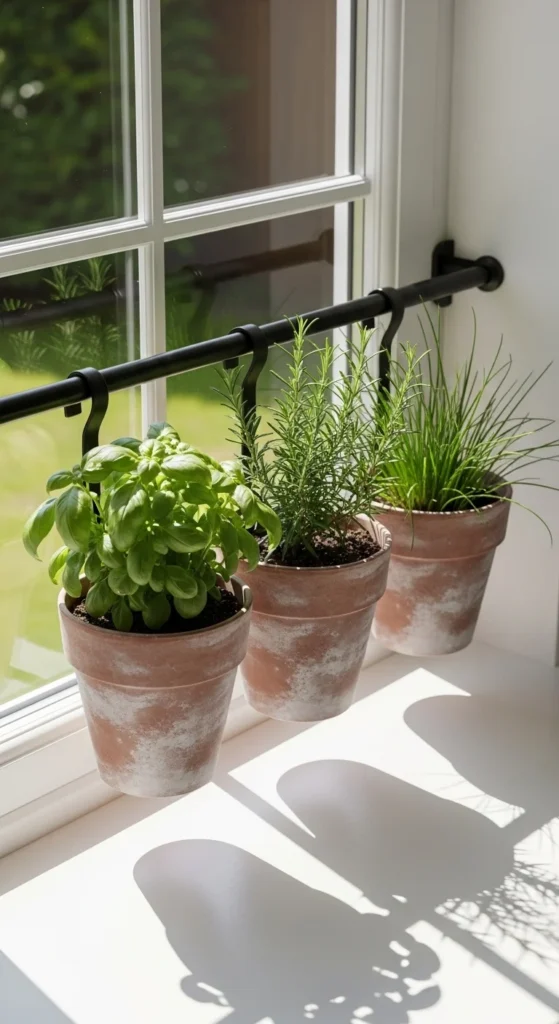
Attach a simple rail to your windowsill and hang tiny herb planters from hooks. The hanging design helps keep the sill clean while giving each pot even light. Grow chives, parsley, or cilantro. Water slowly so soil doesn’t spill. Keep a cloth nearby to wipe any drops. This setup works well for slim windows.
Rotating Table Herb Turntable
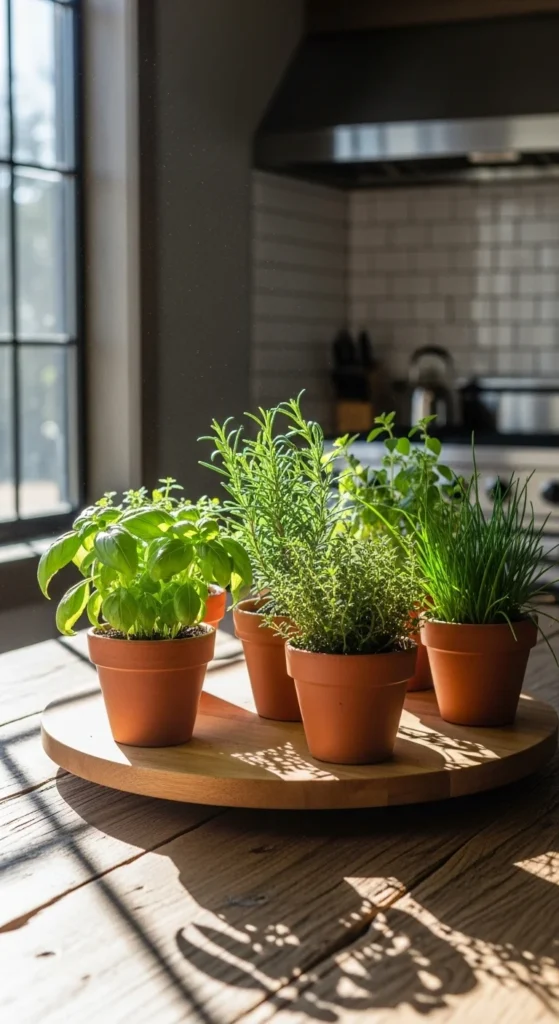
A rotating tray helps each herb receive light evenly. Place pots on a lazy Susan near a bright window. Turn it once a day so every plant grows upright. Basil, mint, and oregano grow well this way. Keep the tray clean and wipe off any soil spills. This design is great when your light source hits only one side of the table.
Tin-Bucket Herb Row
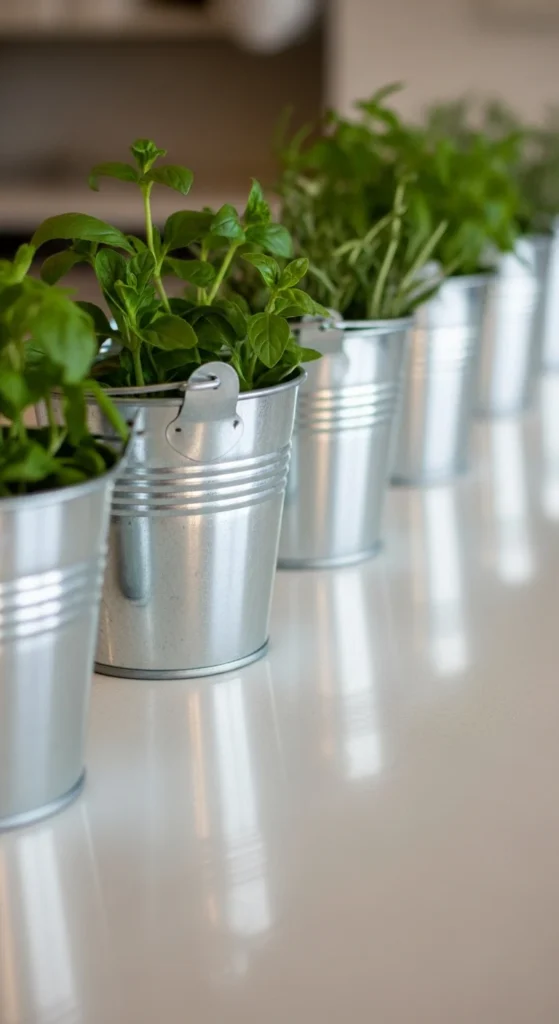
Tin buckets make cute herb containers. Add drainage holes and small saucers. Line them up on a sunny counter. Mint and parsley stay lively with regular watering. Keep each bucket spaced slightly so the leaves get air. You can add pebbles on top of the soil for a neat finish. This row fits kitchens with long counters.
Basket Hanging Herb Pods
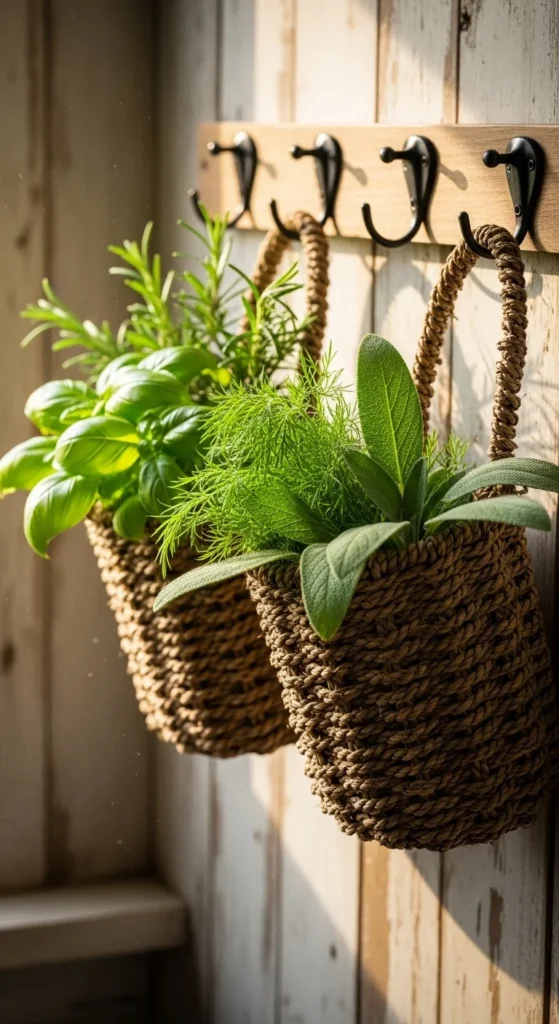
Small hanging baskets free up counter space and add texture to your kitchen. Choose woven baskets with liners to hold soil. Hang them near a window. Basil and mint stay happy in baskets with light watering. If the baskets drip, add a small drip tray beneath. This style adds a natural touch to any room.
Stove-Side Pot Trio
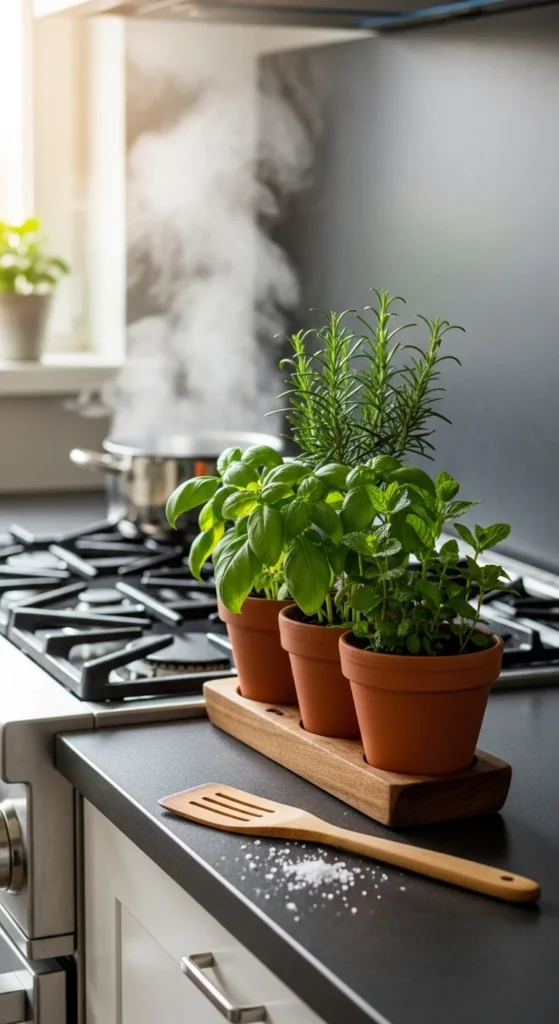
Placing herbs near your stove helps you grab leaves while cooking. Use heat-safe ceramic pots. Keep them just far enough from heat so soil doesn’t dry too fast. Chives, parsley, and basil stay handy here. Water lightly after cooking sessions if the air feels dry. This small trio keeps herbs in your cooking flow.
Herb Drawer Box
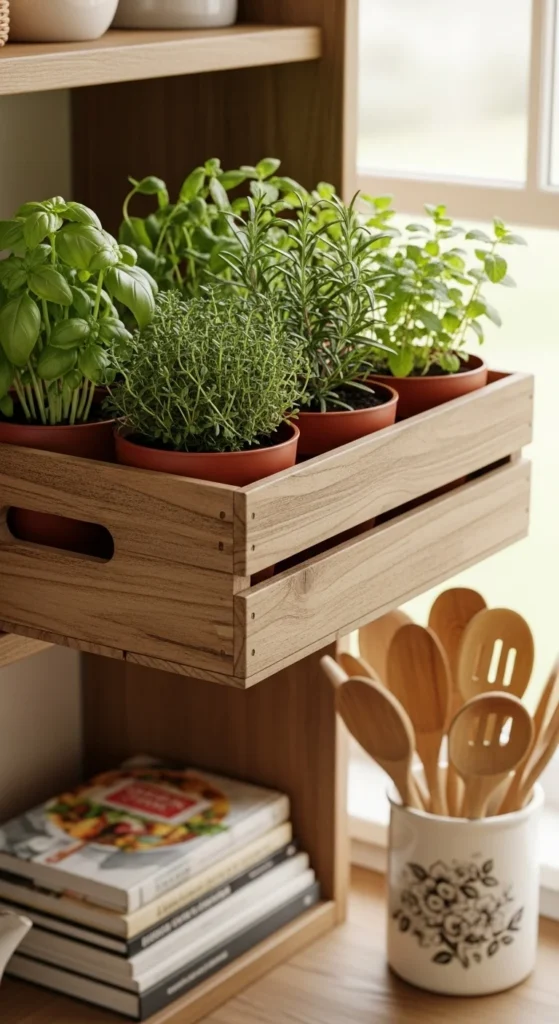
A shallow wooden box can act like a pull-out herb drawer. Place pots inside and slide the box in and out of a shelf. Keep it near a window if possible. This makes watering and trimming simple. Grow mint and basil in this drawer. Add felt pads underneath so the box moves smoothly.
Ceramic Hanging Wall Rings
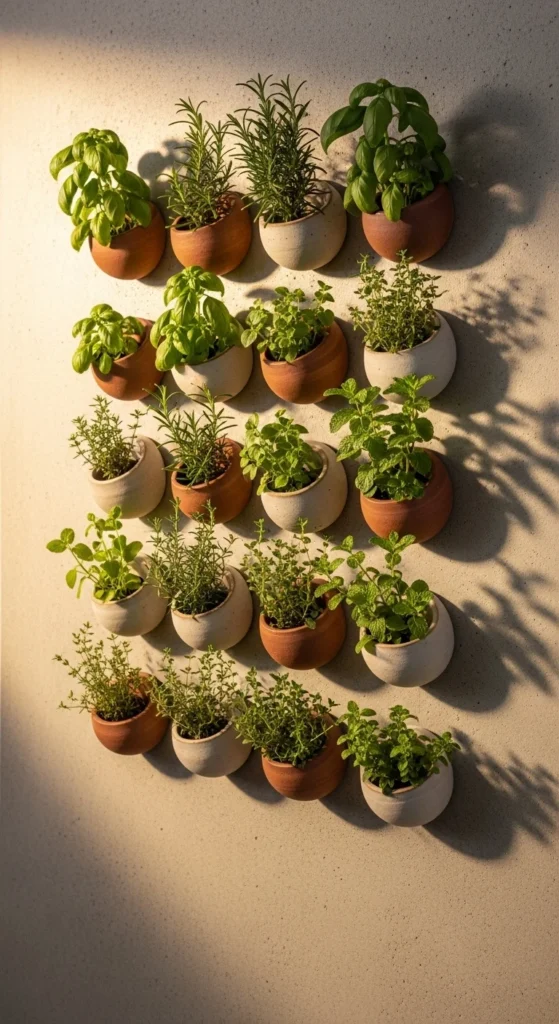
Ceramic wall rings look modern and hold tiny herb starters. Install them on a sunlit wall. Add a small bit of soil and choose compact herbs like thyme or chives. Water sparingly so soil stays firm. This design fits small apartments well.
Herb Tray on a Bar Cart
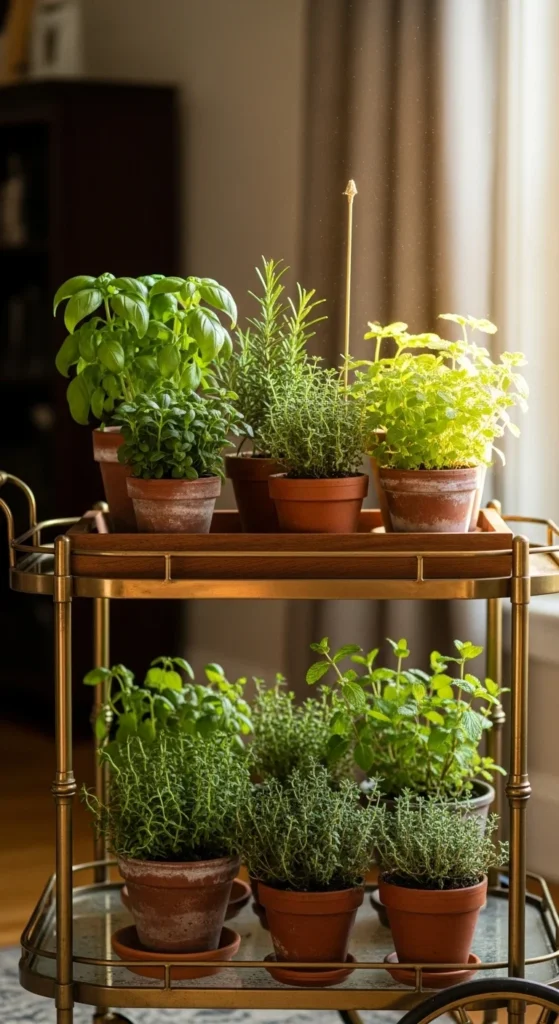
A bar cart can double as a movable herb station. Add a tray on top and place pots on it. Roll the cart toward sunlight during the day. Bring it close to your prep area when cooking. This helps herbs stay healthy even if your kitchen has poor lighting.
Balcony Door Herb Row
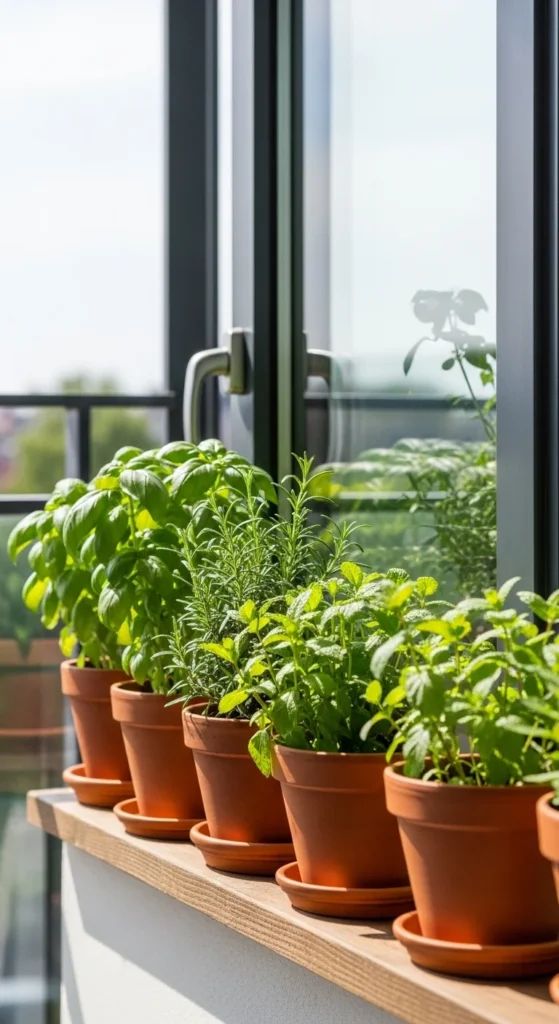
Place small pots along the inside edge of a balcony door where light is strong. Keep herbs lined up in a narrow tray to catch water. Basil and parsley thrive here. Rotate pots weekly for even growth.
Pegboard Hanging Herb Line
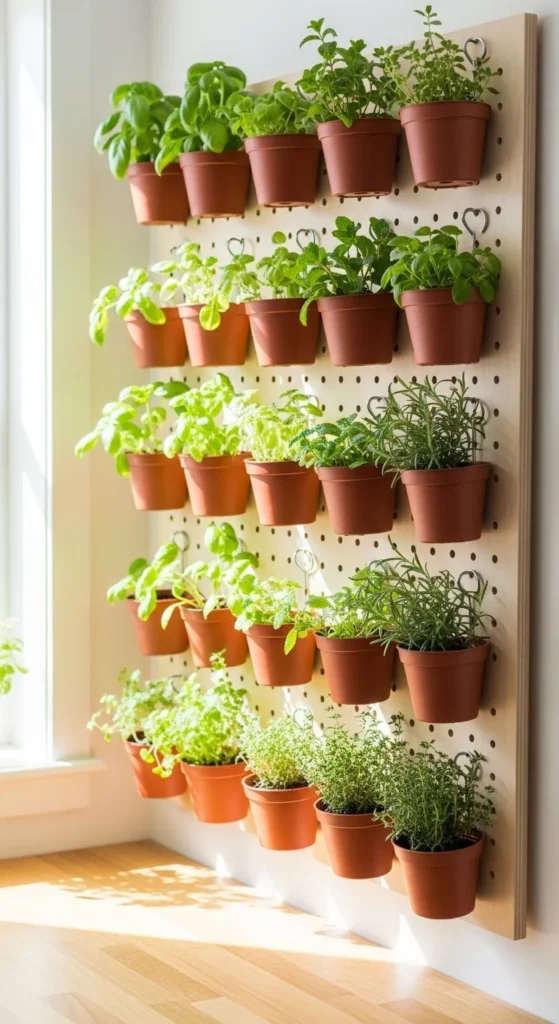
A pegboard gives you flexibility. Hang pots from hooks and rearrange them anytime. Use light containers and trim herbs regularly. This makes a tidy and adjustable indoor herb station.
CONCLUSION
Indoor herb setups can fit any space when you keep things simple and consistent. Start with one or two designs, place them near steady light, and trim herbs often so they stay strong. These setups help you cook better meals all year. Save the ideas you like and start building your own small herb corner today.
Leave a Reply