

There’s something magical about harvesting crisp, green lettuce from your kitchen windowsill — especially when it’s snowing outside. Growing lettuce indoors means you can enjoy fresh, flavorful greens all year long, even if you don’t have outdoor space. With a little light, the right setup, and some easy care, you can have a mini salad garden that keeps producing nonstop.
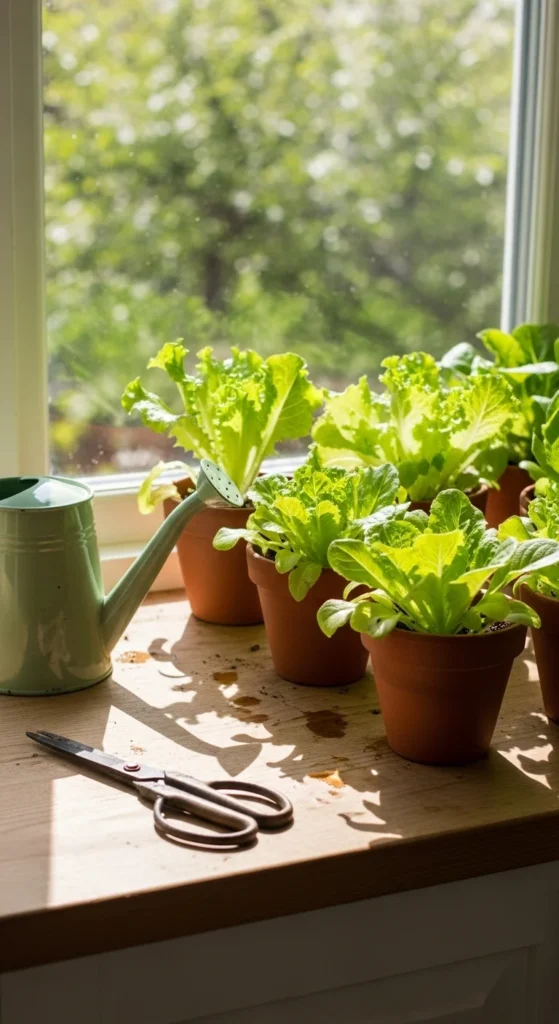
Here’s how to turn your home into a lettuce-growing haven, no matter the season.
Choose the Right Lettuce Varieties
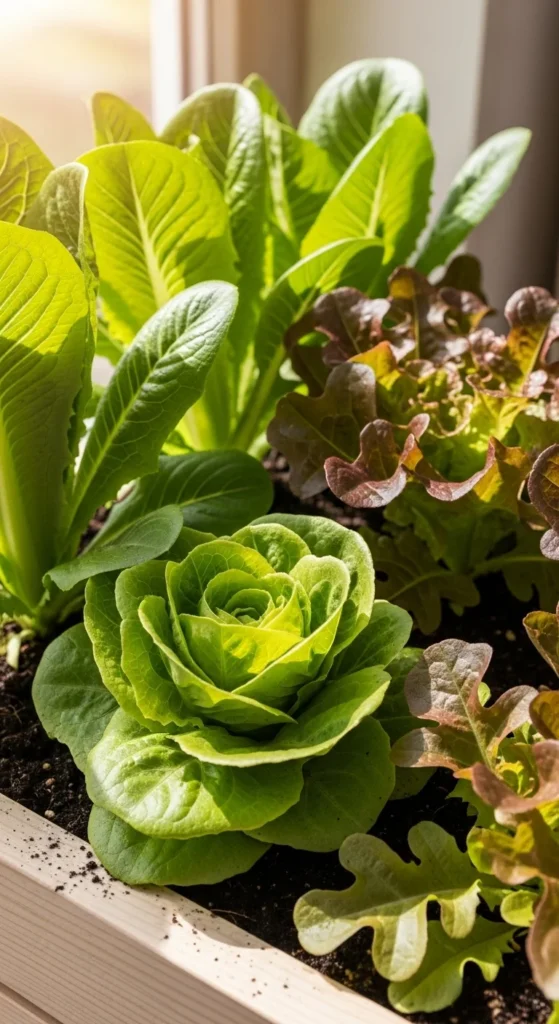
Not all lettuces grow the same indoors. The best varieties are loose-leaf types, which grow fast and can be harvested multiple times.
Top picks for indoor growing:
- Butterhead (like Bibb or Boston): Soft, sweet leaves that thrive in cooler indoor temps.
- Romaine: Crisp texture and upright growth make it easy to manage.
- Loose-leaf (like Salad Bowl or Oakleaf): Fast-growing and perfect for cut-and-come-again harvests.
- Mesclun mixes: A colorful, tasty blend of baby greens that mature quickly.
Avoid heading varieties like iceberg — they take too long and need more space.
Pick the Perfect Growing Setup
Lettuce doesn’t need fancy equipment to thrive indoors — just a few basics.
For soil-based growing:
- Use shallow pots or trays at least 4–6 inches deep.
- Choose containers with drainage holes to prevent soggy roots.
- Fill them with a light, well-draining potting mix (avoid garden soil).
For hydroponic growing:
- Use a simple hydroponic kit or DIY system with water and nutrients.
- Lettuce grows quickly in hydro setups, making it perfect for year-round harvests.
No matter the method, keep containers near a sunny window or under grow lights.
Light It Up
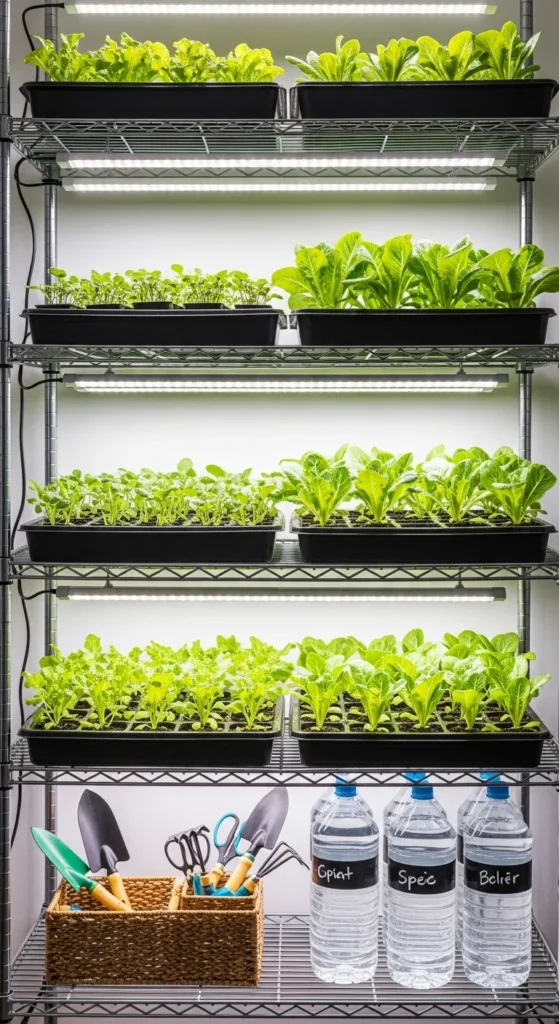
Lettuce loves light — about 12–16 hours per day. Since winter days are short, artificial lighting helps keep plants thriving.
Tips for lighting success:
- Use full-spectrum LED grow lights placed 6–12 inches above your plants.
- Keep lights on a timer to mimic natural daylight cycles.
- Rotate trays weekly so all plants get even exposure.
If you’re using a sunny window, south-facing is best. But for consistent results, grow lights are worth the small investment.
Water and Feed with Care
Lettuce is shallow-rooted, meaning it likes consistent moisture but not soggy soil.
Watering tips:
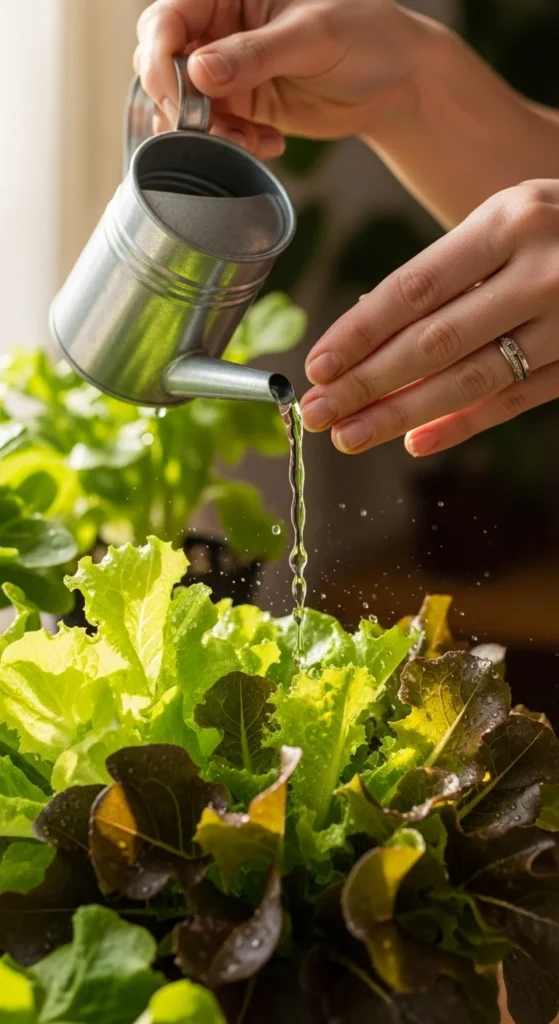
- Water when the top inch of soil feels dry.
- Use a spray bottle or gentle watering can to avoid splashing leaves.
- Make sure excess water can drain freely.
Fertilizing:
- Every two weeks, feed with a diluted liquid fertilizer or compost tea.
- If you’re growing hydroponically, use nutrient-rich water formulated for greens.
Keep humidity moderate and avoid placing plants near heating vents — dry air can stress them.
Maintain Temperature and Airflow
Lettuce thrives in cool indoor temperatures — between 60°F and 70°F (15–21°C).
If your home runs warm, try these tricks:
- Place plants near a window with cooler air.
- Run a small fan nearby for gentle airflow.
- Mist the air occasionally if your space is dry.
Good airflow prevents mildew and keeps leaves crisp and healthy.
Harvest Smartly for Continuous Growth
The best part of growing lettuce indoors is how quickly you can start picking. Most varieties are ready to harvest in 30–45 days, but baby greens can be snipped as early as 3 weeks.
For cut-and-come-again harvesting:
- Snip outer leaves about 1 inch above the base, leaving the center intact.
- New leaves will keep sprouting for several more weeks.
- Rotate trays to always have new greens growing as older ones rest.
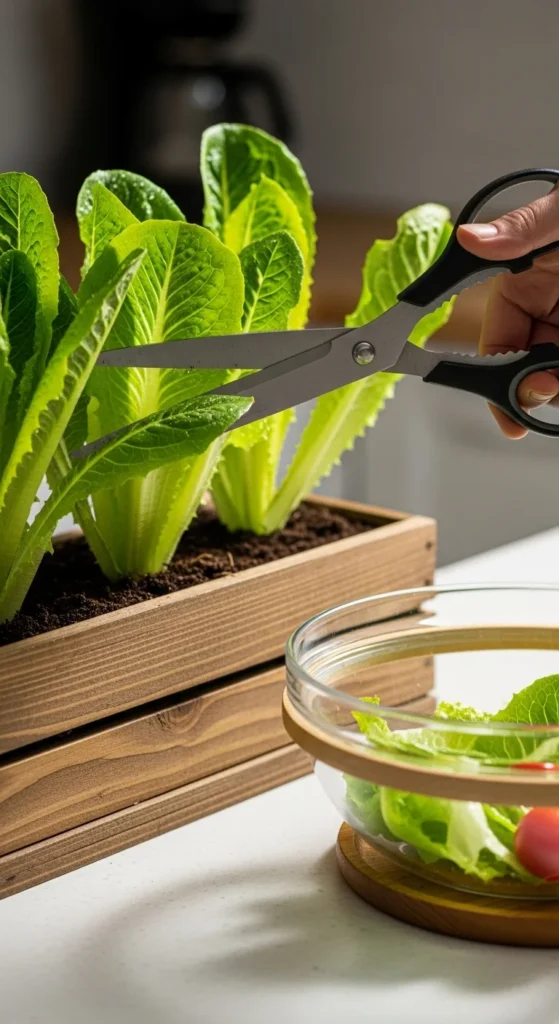
If you prefer full heads, wait until they mature completely, then harvest the entire plant.
Troubleshooting Common Issues
Even with indoor control, small problems can pop up. Here’s how to fix them fast:
- Leggy growth: Not enough light — move closer to a window or add grow lights.
- Yellow leaves: Overwatering or poor drainage — let soil dry slightly before watering again.
- Pale color: Add organic fertilizer or liquid compost for extra nitrogen.
- Pests (rare indoors): Wipe leaves with a damp cloth or spray a gentle neem oil solution.
With a little attention, your lettuce will stay lush, green, and pest-free.
The Takeaway
Growing lettuce indoors year-round is easier than you might think — and once you taste homegrown greens, store-bought lettuce will never compare. With the right variety, good lighting, and steady care, you can harvest fresh salads in every season.

Leave a Reply