

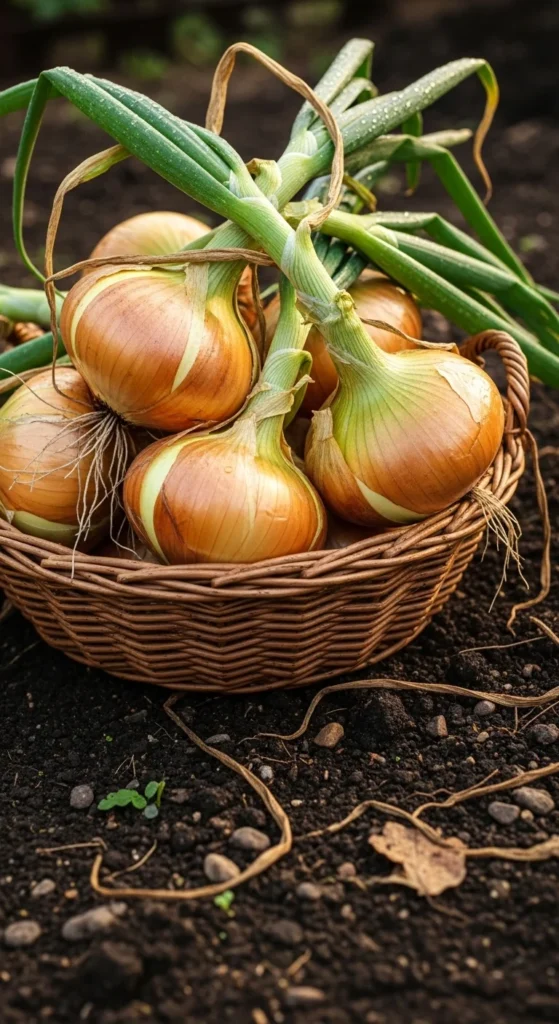
If you’ve ever dreamed of pulling up giant, golden onions from your own garden — the kind that make store-bought ones look tiny — you’re in luck. Growing big onions isn’t about fancy fertilizer or secret tricks. It’s about giving them what they love most: time, sunlight, and space. With the right setup, you can harvest bulbs that are not only huge but full of sweet, mild flavor.
Choose the Right Onion Type
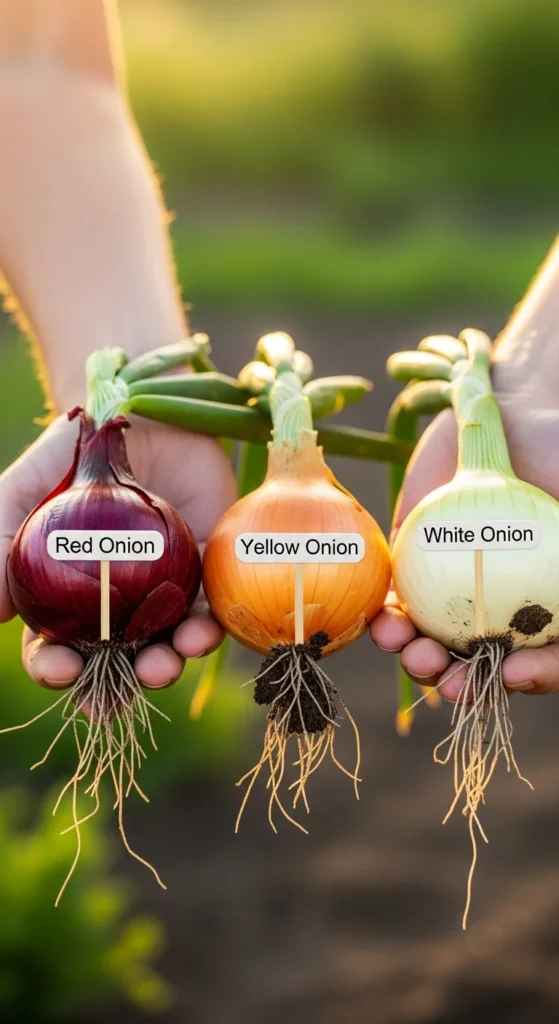
Not all onions are created equal. To grow big bulbs, start by picking the right variety for your climate and daylight hours.
- Short-day onions: Best for southern gardeners with mild winters. They form bulbs when days reach about 10–12 hours of sunlight.
Examples: ‘Texas Early Grano,’ ‘Red Creole.’ - Long-day onions: Perfect for northern regions, needing 14–16 hours of daylight to bulb up.
Examples: ‘Walla Walla,’ ‘Yellow Sweet Spanish.’ - Intermediate-day onions: Great for middle zones where days hit around 12–14 hours.
The key: Match your onion type to your location — that’s half the secret to big bulbs.
Prepare Rich, Loose Soil
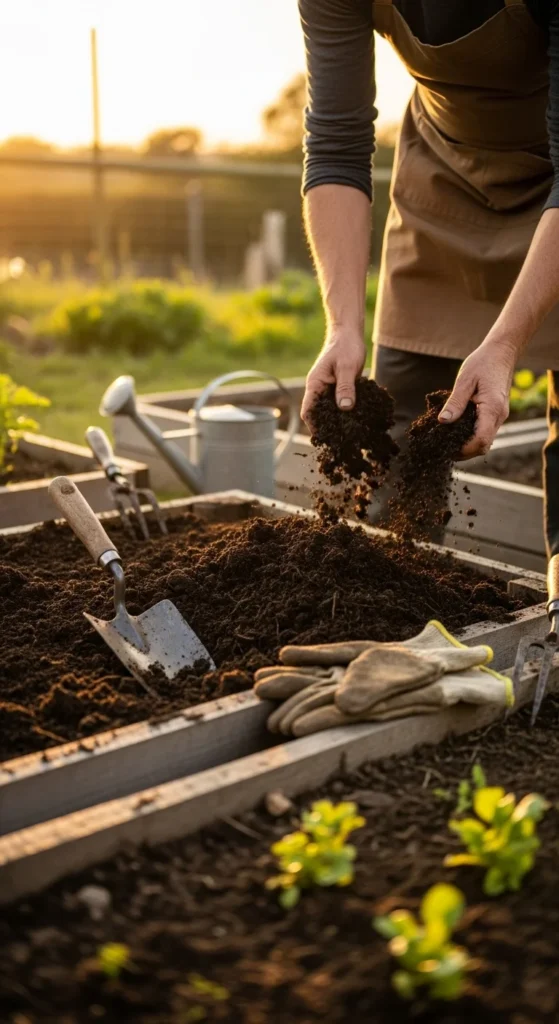
Big onions need room to stretch, both above and below ground. Dense or compacted soil will stunt their growth.
Here’s how to prep it right:
- Go deep: Loosen soil at least 10–12 inches. Onions grow shallow roots but need space for bulb expansion.
- Enrich with compost: Mix in well-rotted compost or aged manure before planting for slow, steady nutrition.
- Keep it neutral: Onions prefer a soil pH of 6.0–7.0 — slightly acidic to neutral.
Avoid fresh manure — it encourages leafy growth instead of bulbs.
Plant Early and Give Them Space
Timing is everything. Onions need a long growing season, so start early — as soon as the soil can be worked in spring.
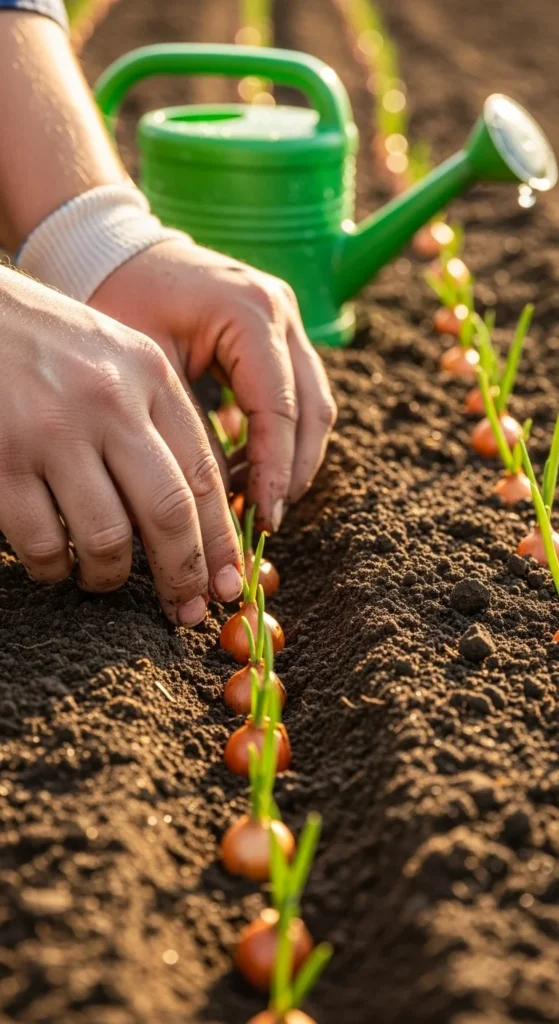
- Plant onion sets or transplants 4–6 weeks before your last frost date.
- Spacing: Give each plant at least 4 inches apart in rows 12 inches wide. Crowding leads to small bulbs.
- Depth: Set bulbs just 1 inch deep, with the tip barely showing above soil level.
After planting, water well to help roots settle in.
Feed Regularly and Water Deeply
Onions are heavy feeders, and consistency is the key to size.
Feeding:
- Use a balanced fertilizer (like 10-10-10) or an organic mix with nitrogen every 2–3 weeks until bulbs begin forming.
- Once bulbs start swelling, switch to low-nitrogen fertilizer to focus energy on bulb size instead of leaf growth.
Watering:
- Onions love steady moisture — aim for 1 inch of water per week.
- Avoid letting the soil dry out completely, but don’t overwater either. Soggy soil can cause rot.
Mulching with straw or compost helps regulate moisture and keep weeds at bay.
Keep Weeds Away
Weeds are the silent enemies of big onions. Since onions have shallow roots, they hate competition for nutrients and water.
- Hand-weed often: Avoid disturbing the bulbs by pulling weeds gently.
- Use mulch: A 2-inch layer of straw or shredded leaves keeps weeds down and moisture in.
- Stay consistent: A few minutes each week saves you hours later — and helps your onions grow larger.
Know When to Harvest
As your onions mature, their tops will start to yellow and flop over — that’s your cue.
- Stop watering: Once most tops fall, stop watering for about a week.
- Lift carefully: Use a fork or hands to loosen the soil and pull onions out gently.
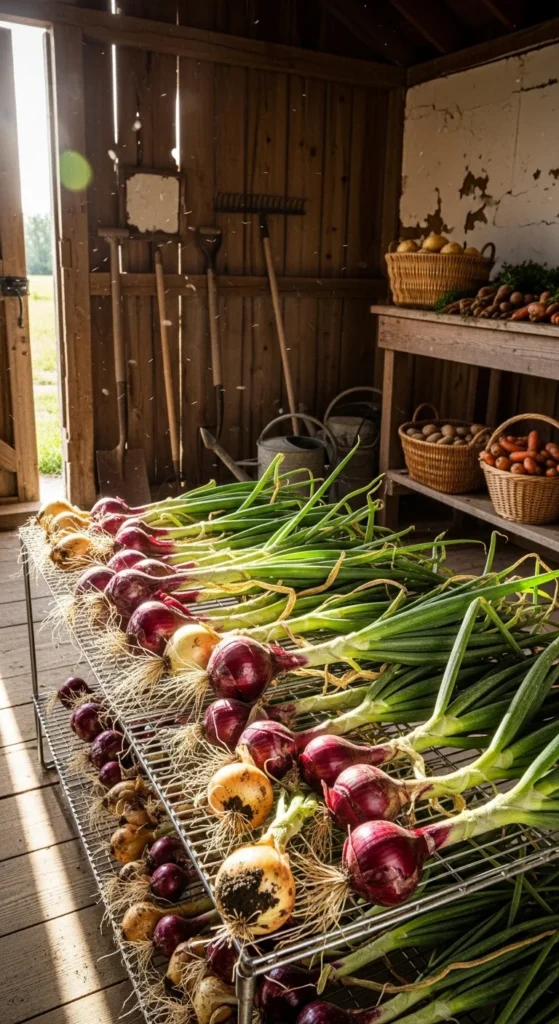
- Cure for storage: Lay them in a dry, shaded area for 1–2 weeks until outer skins turn papery.
Proper curing helps your onions last months in storage without spoiling.
Common Mistakes to Avoid
Even experienced gardeners can run into trouble. Here are quick fixes for common onion-growing issues:
- Bulbs not forming: Check your onion type — it might not match your daylight zone.
- Small bulbs: Likely caused by crowding or too much nitrogen.
- Rotting bulbs: Overwatering or poor drainage is usually the culprit.
The Final Reward
There’s nothing more satisfying than lifting hefty, golden onions from your own backyard — each one proof of your patience and care. With the right soil, sunlight, and timing, you’ll have baskets full of sweet, homegrown onions ready for your kitchen.
Leave a Reply