

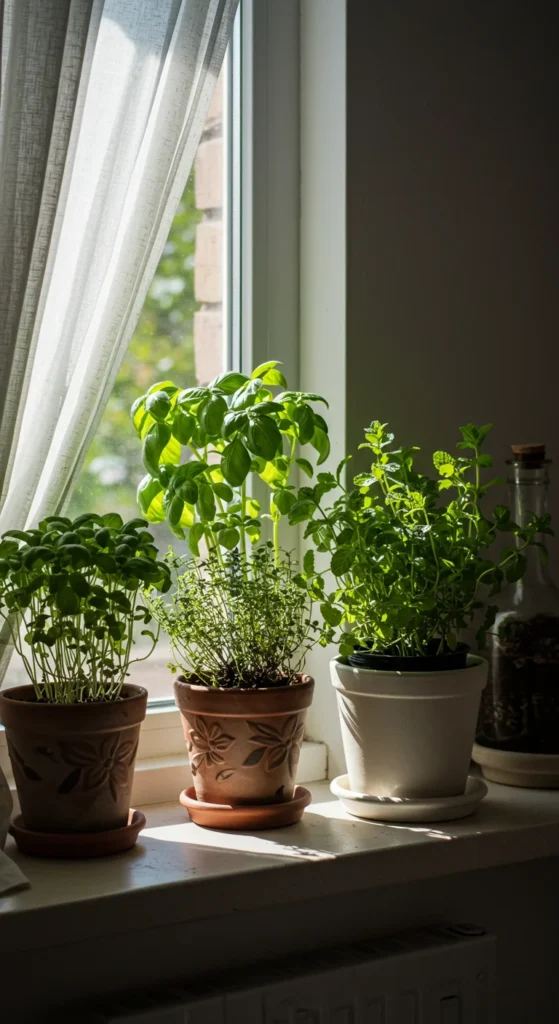
Even the tiniest apartment can hold a thriving herb garden. With the right tricks, you can grow fresh herbs indoors—no backyard or fancy equipment required. From clever containers to sunlight hacks, these simple ideas help you bring nature into your kitchen and flavor into every meal. Whether you’re a beginner or an urban gardener, these 22 indoor herb garden hacks make growing easy, fun, and beautifully practical.
1. Use Mason Jars for Small Herbs
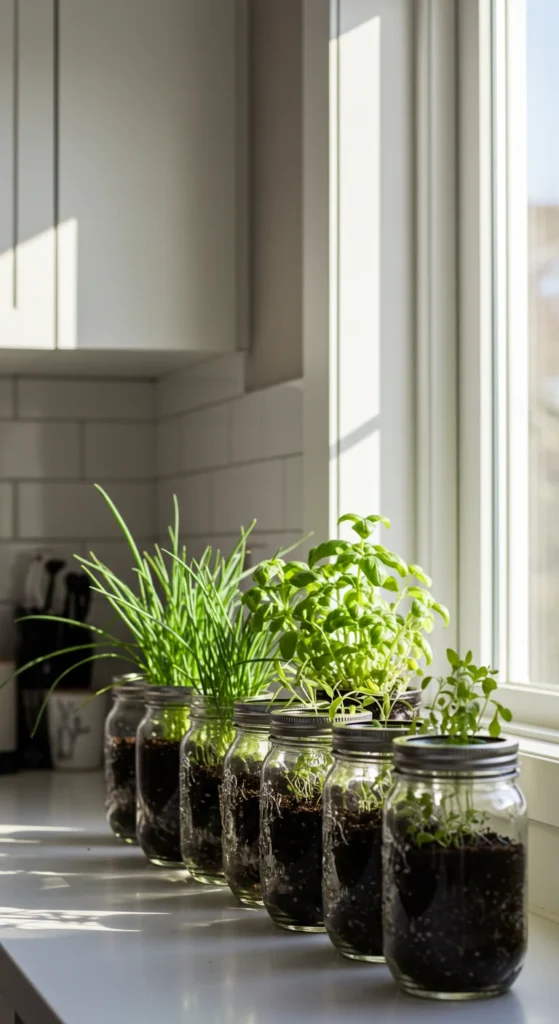
Mason jars are perfect for compact herb gardens. They look stylish and fit anywhere—from window ledges to shelves. Just add small pebbles at the bottom for drainage, fill with quality potting soil, and plant herbs like parsley, thyme, or mint. Label each jar with a chalk marker for an organized look. It’s a simple, low-cost way to grow herbs while adding rustic charm to your kitchen.
2. Create a Hanging Herb Wall
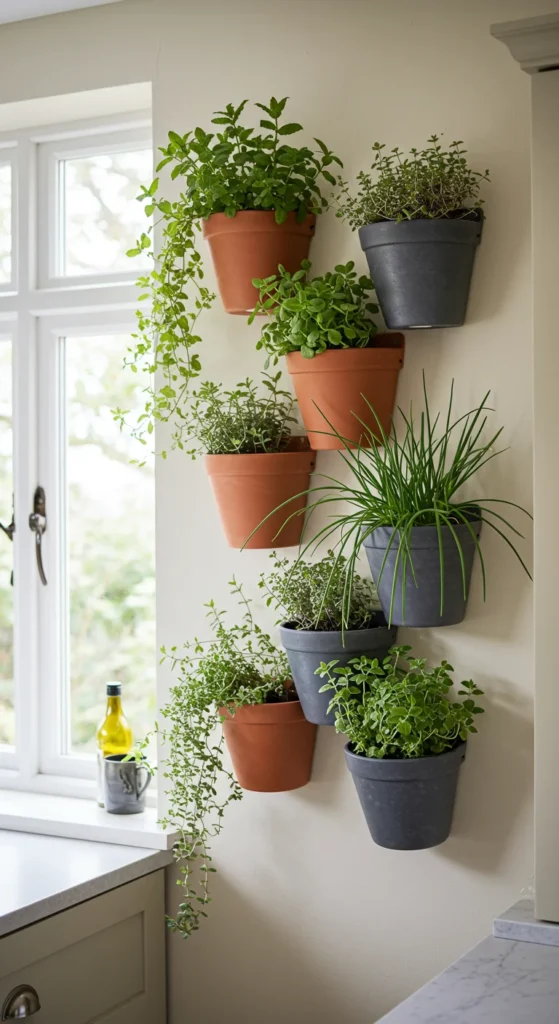
Running out of counter space? Go vertical! Use hanging planters or wall-mounted containers to grow herbs like basil, oregano, and rosemary. It saves space and doubles as living wall art. Use lightweight containers and hang them near a window for sunlight. Choose trailing herbs for extra visual appeal.
3. Reuse Tin Cans as Planters
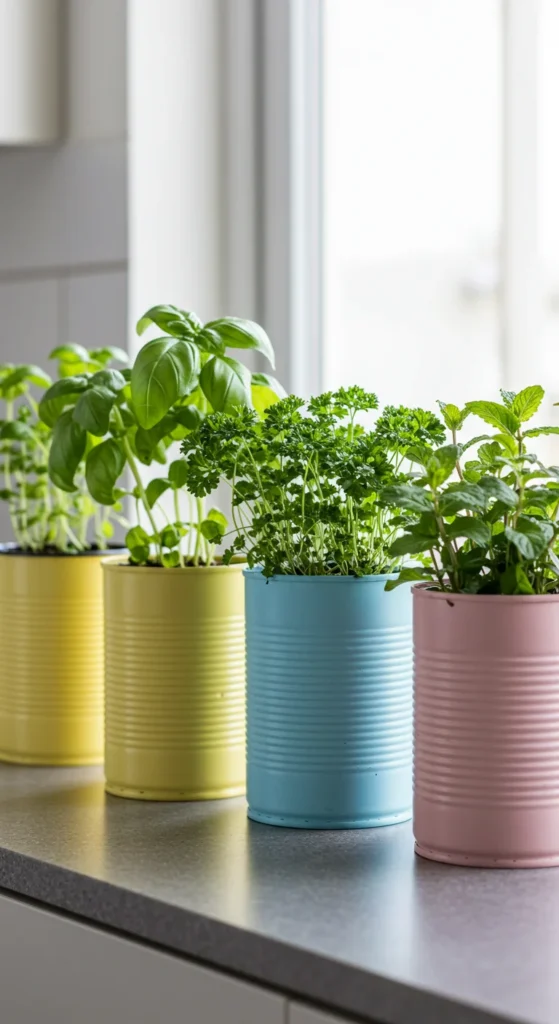
Don’t toss those soup cans—repurpose them! Clean and paint them, punch a few holes in the bottom, and you have perfect mini planters. They’re great for herbs like chives, cilantro, and mint. Place them on a tray to catch extra water. It’s an eco-friendly, stylish project anyone can do on a weekend.
4. Use Grow Lights for Dark Corners
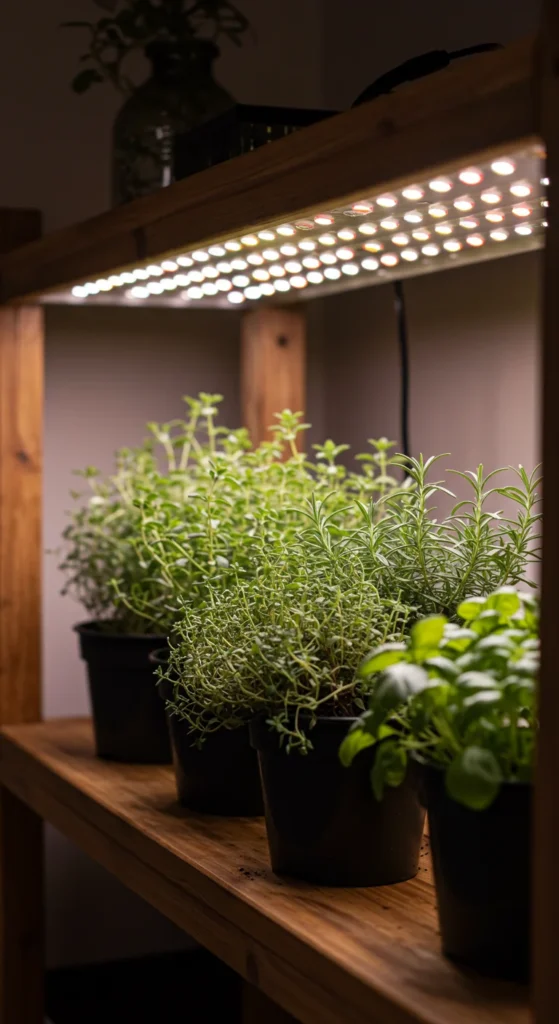
If your apartment lacks sunlight, install LED grow lights. They mimic natural light, helping your herbs thrive year-round. Position lights 6–12 inches above plants and set a timer for 12–14 hours daily. Compact grow lights fit easily under cabinets or shelves, turning any space into a mini indoor garden.
5. Set Up a Kitchen Counter Garden
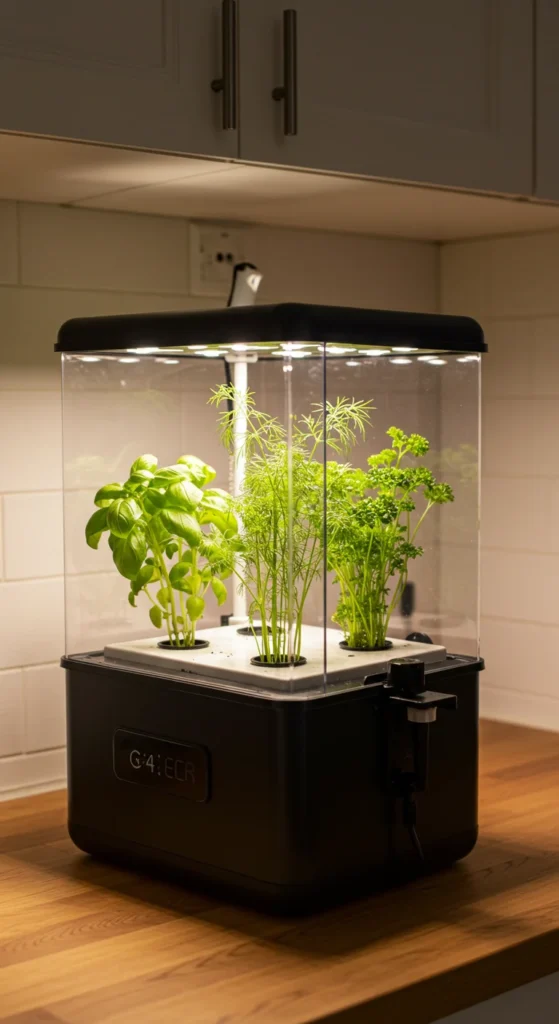
Turn part of your kitchen counter into a herb-growing station. Use a small tray or hydroponic unit for herbs you use most often—like basil, parsley, or thyme. Keep scissors nearby for quick harvesting while cooking. It’s efficient, clean, and keeps everything within reach.
6. Repurpose Wine Crates
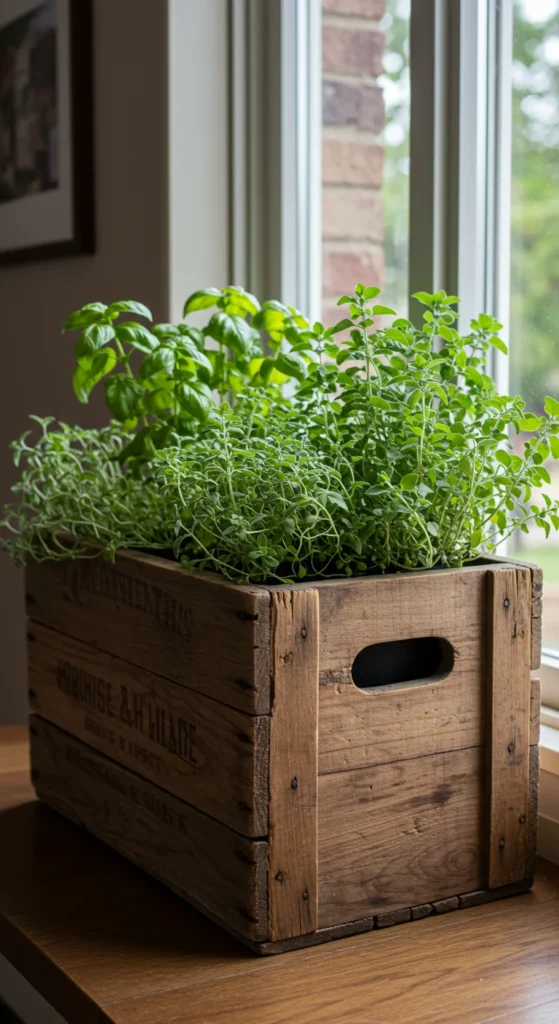
Old wine crates make beautiful multi-herb planters. Line the crate with plastic to prevent leaks, fill with soil, and plant a mix of herbs. It fits perfectly under a sunny window or on a balcony. The rustic look pairs beautifully with green leaves, creating a farmhouse feel even in small apartments.
7. Label Herbs with Chalk Tags
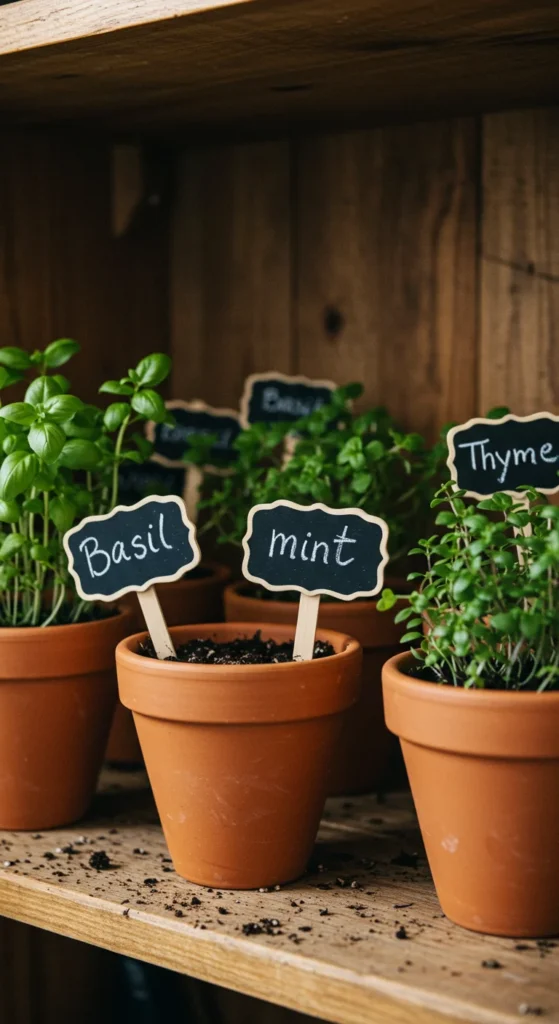
Stay organized by labeling each pot. Use chalkboard tags or reusable plant markers. It helps you quickly identify herbs—especially if you’re growing similar-looking ones like oregano and marjoram. It’s a small detail that adds personality and makes your indoor garden feel polished.
8. Grow Herbs in Teacups
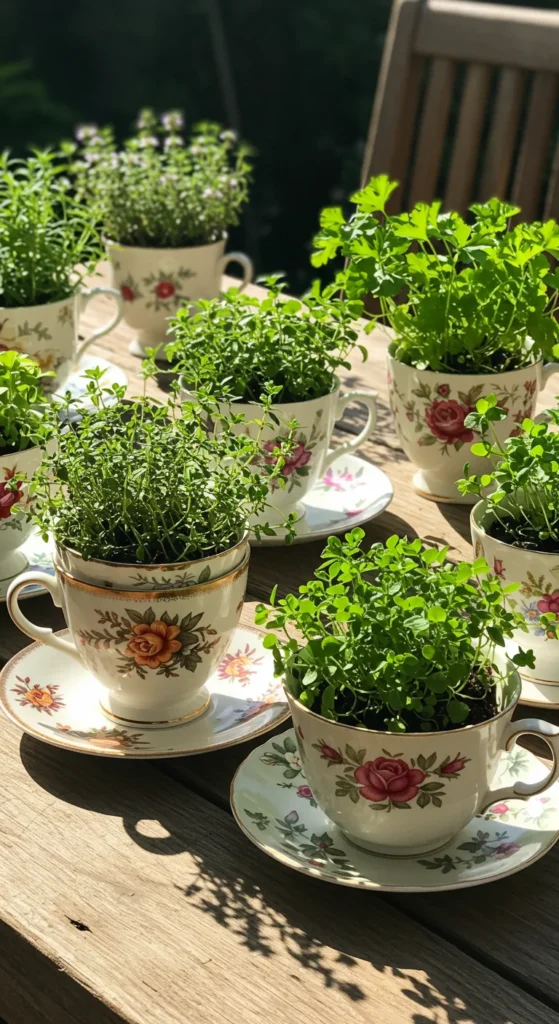
Tiny herbs like thyme, parsley, or mint grow beautifully in teacups. Choose ones with drainage holes or add pebbles before soil. Arrange them on a windowsill or table for a charming, cottage-style display. It’s perfect for apartments where space is limited but creativity is endless.
9. Make a Magnetic Herb Garden
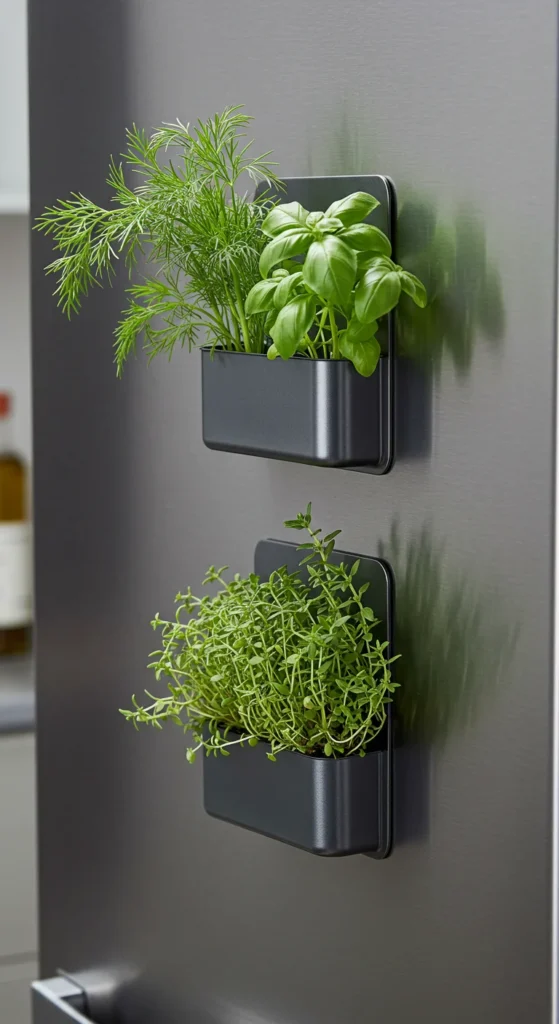
Attach small magnetic planters to your fridge for a quirky, space-saving garden. Use lightweight herbs like basil or cilantro. These mini planters are easy to move and care for, adding greenery right where you grab your ingredients. It’s functional and surprisingly fun to maintain.
10. Start from Kitchen Scraps
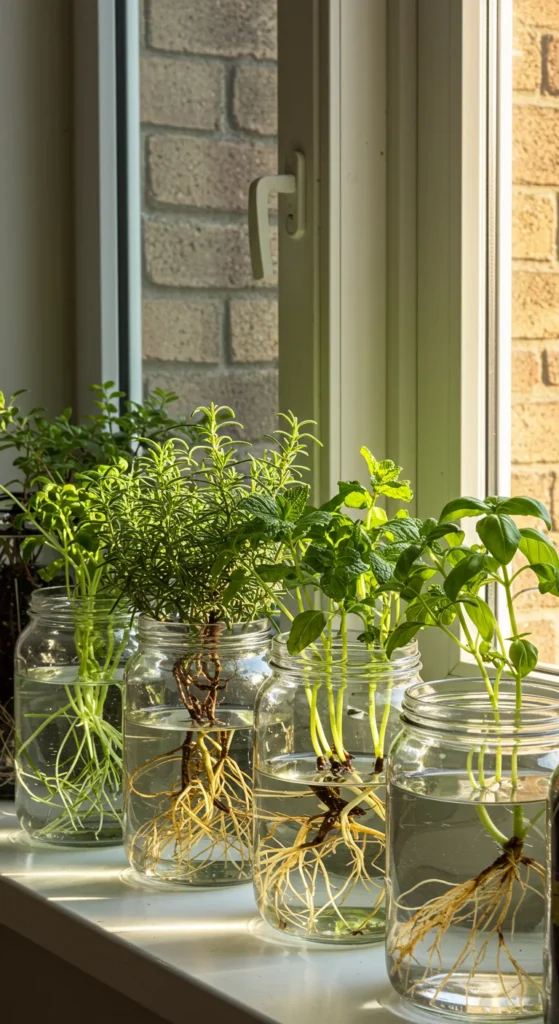
Regrow herbs from kitchen scraps to save money. Cut stems from basil or mint just below a leaf node and place them in water until roots form. Then transfer to soil. You’ll have new plants within weeks—no seeds required. It’s sustainable and rewarding.
11. Add Pebbles for Better Drainage
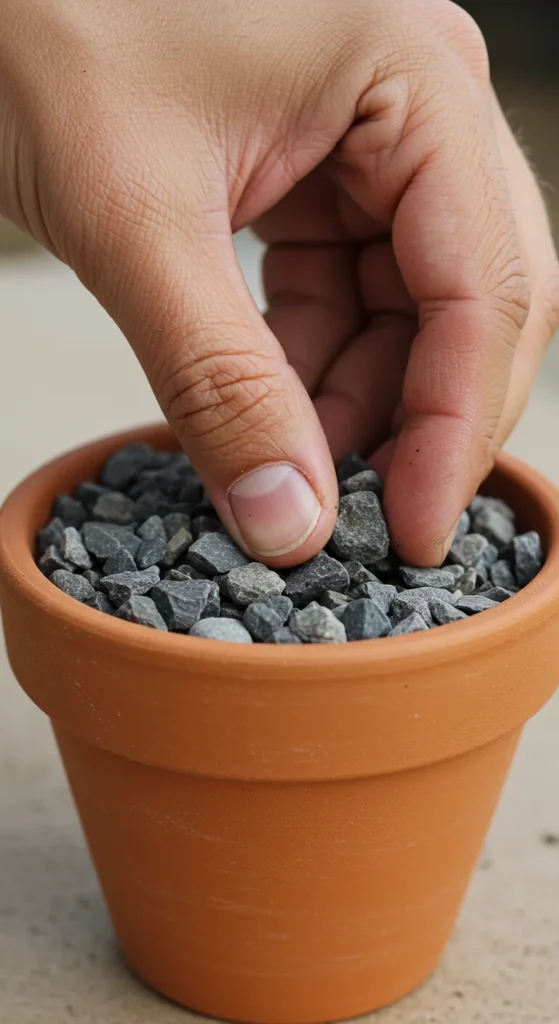
Indoor herbs hate soggy soil. Add a layer of small pebbles or gravel at the bottom of pots before planting. It prevents root rot and keeps plants healthy. For extra protection, use pots with drainage holes and saucers to catch excess water.
12. Choose Compact Varieties
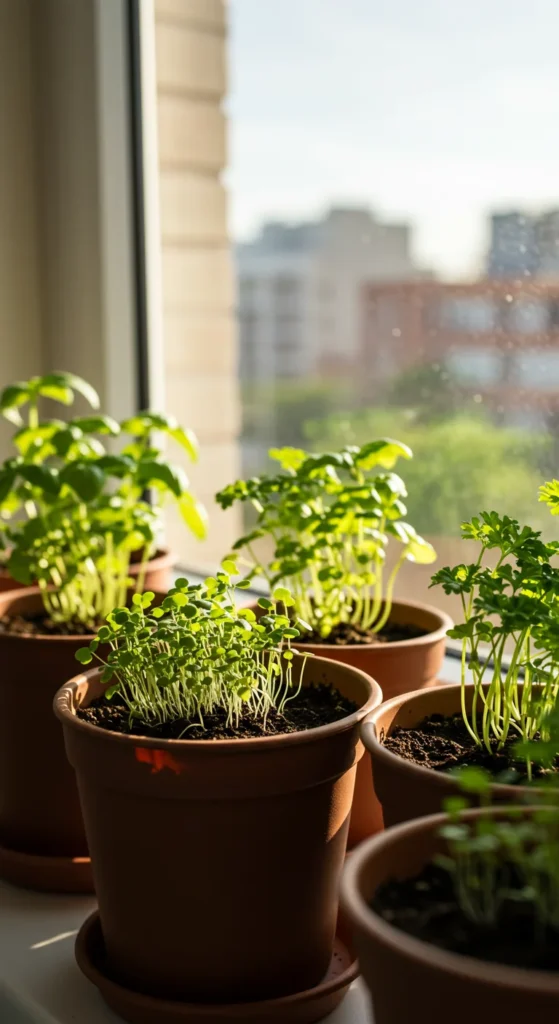
Go for smaller herb types designed for containers—like dwarf basil or compact parsley. They stay manageable in small pots and don’t overwhelm your space. You’ll still get great yields without the hassle of frequent pruning.
13. Use a Ladder Shelf
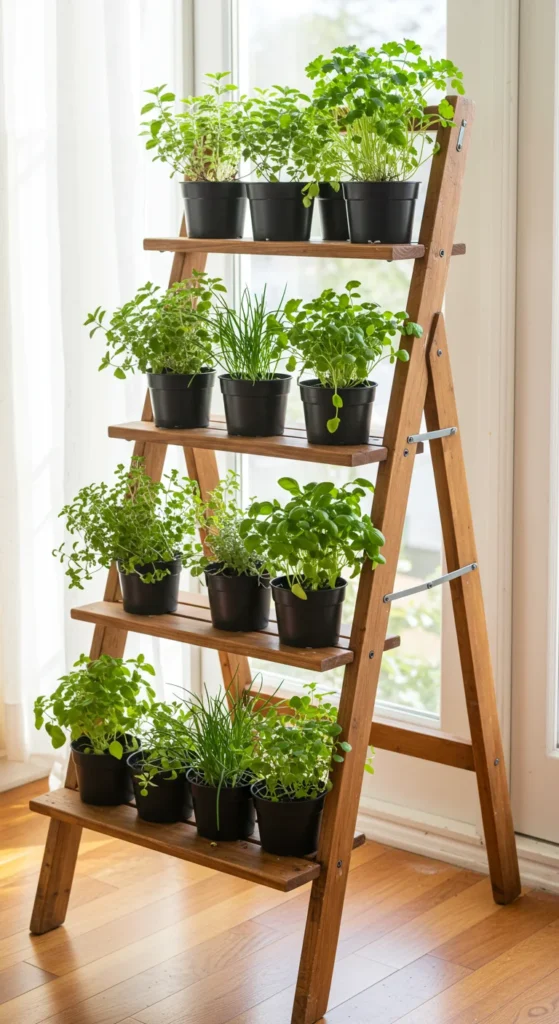
A ladder shelf adds both style and vertical space. Place herbs that need the most light on the top shelf and shade-tolerant ones like mint on the lower levels. It turns a small corner into a green, functional focal point.
14. Try Hydroponic Growing Kits
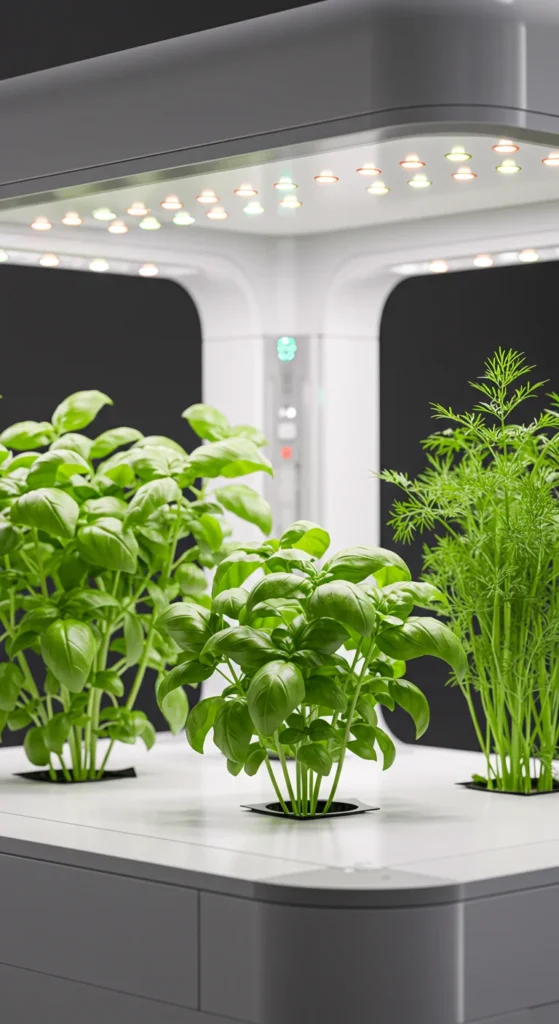
Hydroponic kits are perfect for apartments. They use water and nutrients—no messy soil needed. They’re compact, self-watering, and practically foolproof. Great for busy apartment dwellers who still want fresh herbs at their fingertips.
15. Rotate Pots Weekly
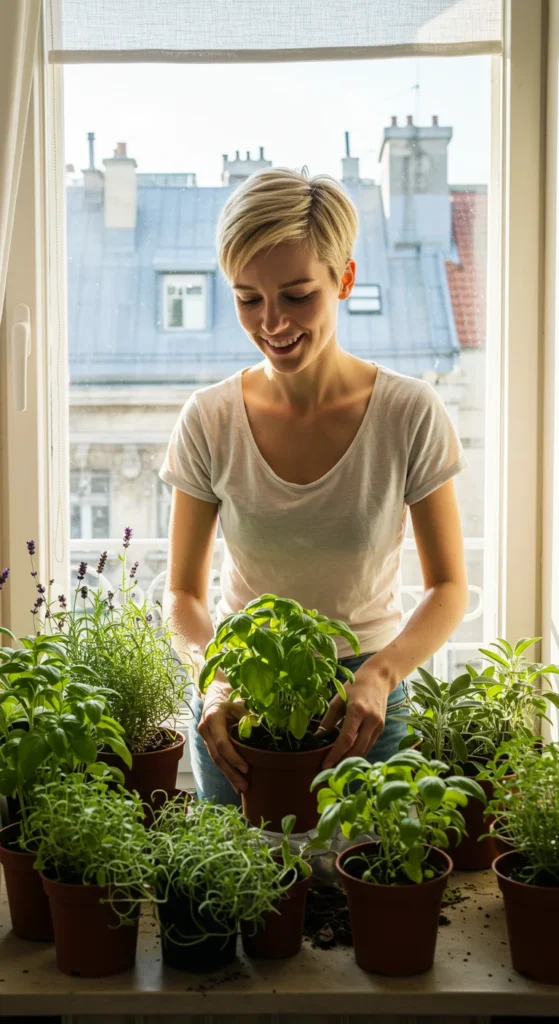
To help your herbs grow evenly, rotate pots every few days. It keeps all sides getting sunlight, preventing plants from leaning or becoming leggy. This simple habit promotes stronger, more balanced growth.
16. Mix Decorative and Edible Plants
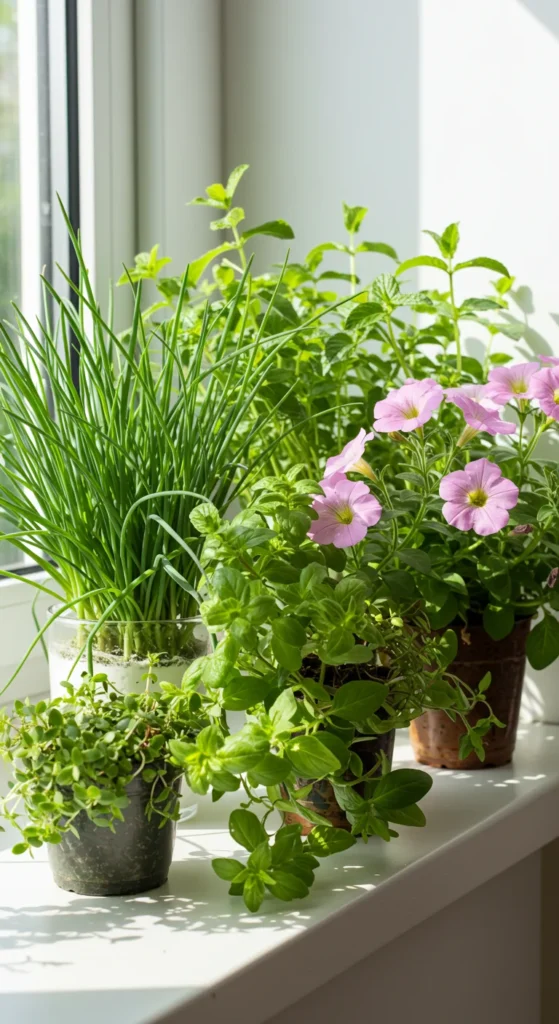
Combine herbs with decorative plants like succulents or flowers. This creates visual interest while keeping your space practical. For example, basil pairs well with marigolds—both pretty and pest-resistant.
17. Grow Herbs Near the Stove
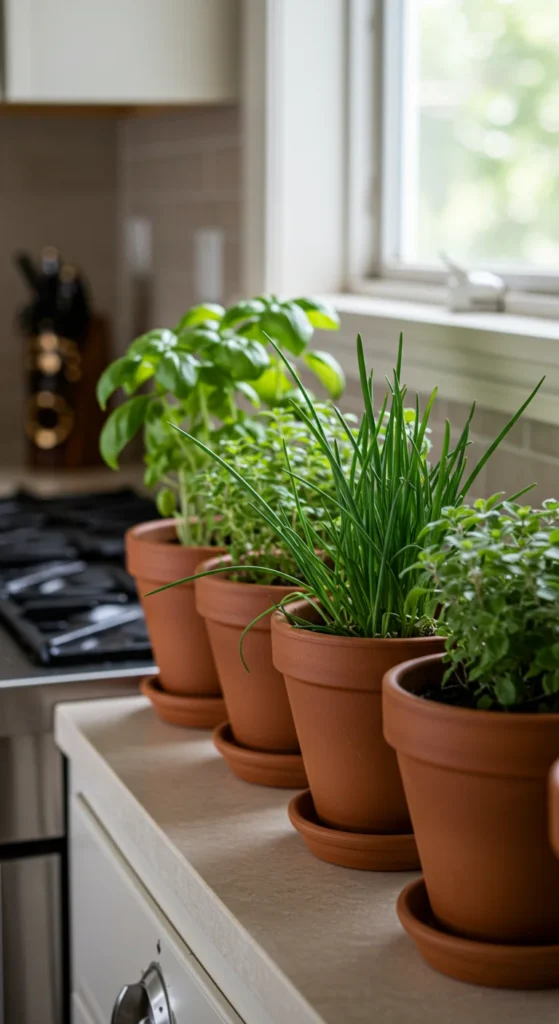
Keep herbs close to where you cook. A few pots of parsley, oregano, or thyme near your stove make seasoning meals effortless. Just clip what you need while preparing dishes—it’s convenience at its finest.
18. Use Transparent Containers for Root Watching
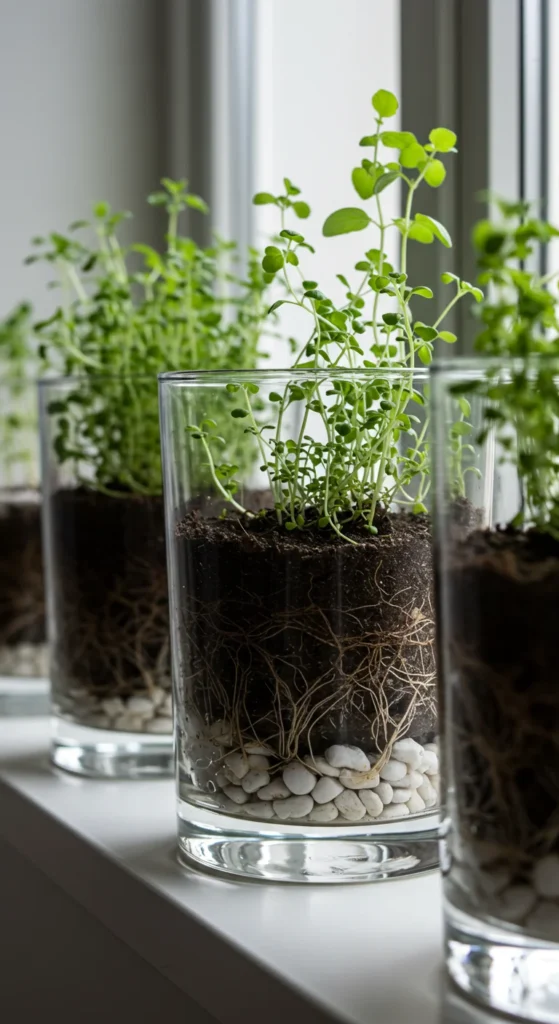
Transparent containers let you watch roots develop. It’s educational and helps monitor soil moisture. They also add a modern, minimalist look to your space.
19. Make a DIY Self-Watering System
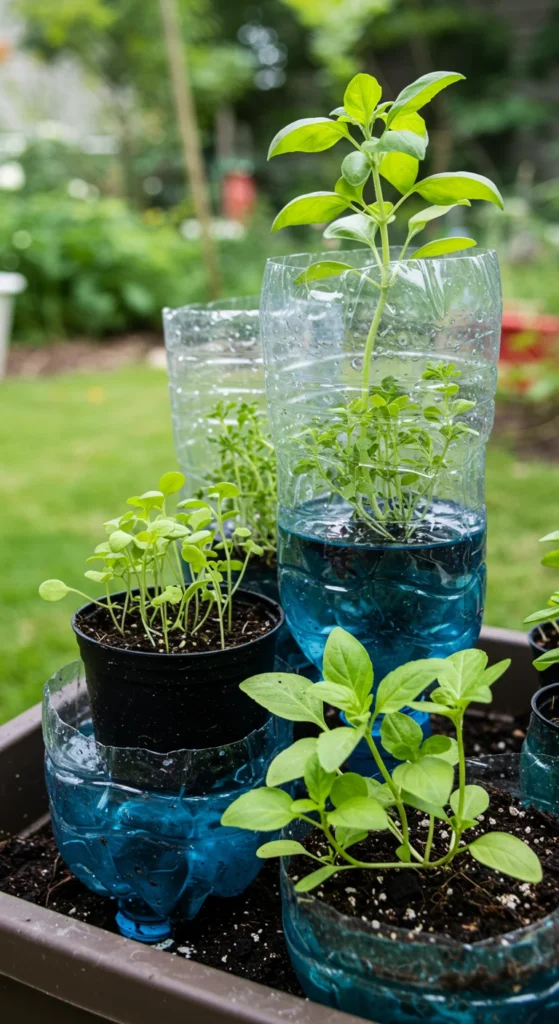
Turn an empty water bottle into a self-watering system. Fill it, poke a few holes in the cap, and place it upside down in your pot. It slowly releases moisture, perfect for those who travel or forget to water.
20. Choose the Right Soil Mix
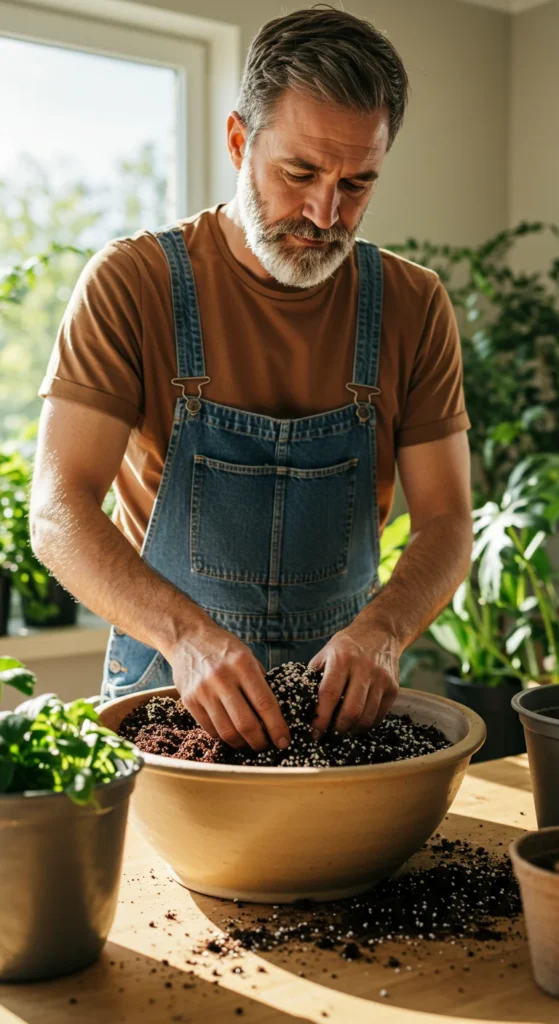
Use light, well-draining soil made for containers. Mix compost and perlite to keep it airy. This helps roots breathe and prevents overwatering issues. Healthy soil is the foundation of strong herbs.
21. Keep Herbs Trimmed Regularly
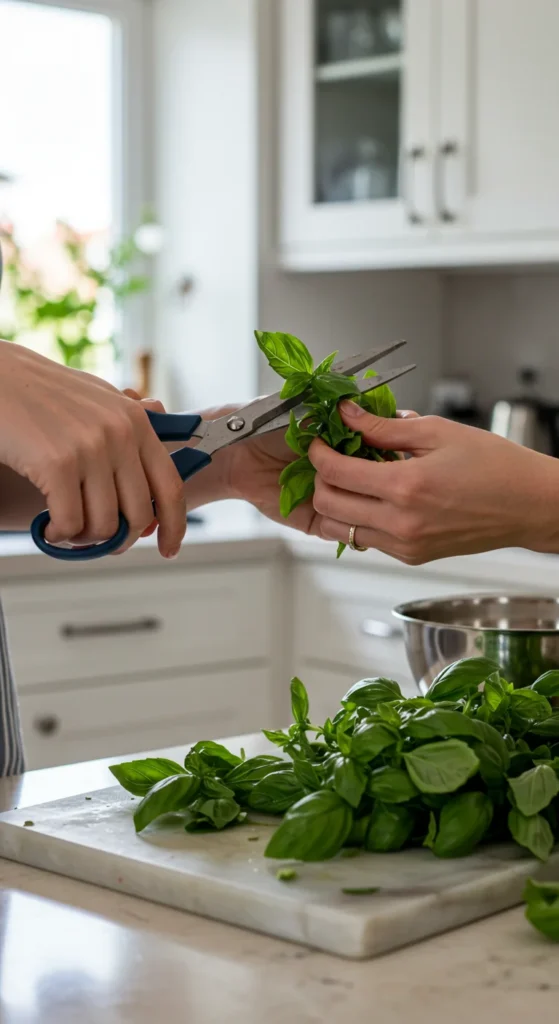
Prune herbs often to encourage bushy growth. Snip just above leaf nodes and use the trimmings in meals. Regular harvesting keeps plants full, prevents flowering, and extends their lifespan.
22. Add Fairy Lights for Ambiance
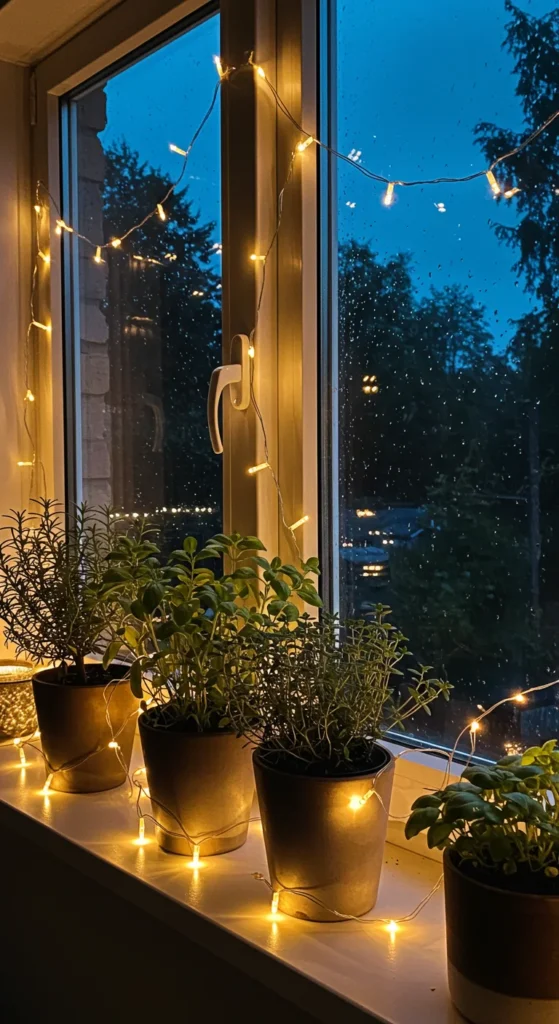
Give your herb garden a cozy glow by wrapping small fairy lights around the pots or shelf. It adds warmth to your kitchen, especially at night. It’s functional decor that makes your greenery shine—literally.
Conclusion
Growing herbs indoors doesn’t take a backyard—it just takes creativity. With these 22 clever hacks, you can turn any small apartment into a green sanctuary filled with scent, color, and flavor. Start small, stay consistent, and you’ll soon enjoy cooking with herbs you’ve grown yourself. 🌿
Leave a Reply